Garden Decoration Ideas to Transform Your Outdoor Space

Garden Decoration Ideas to Transform Your Outdoor Space

Your garden is basically a blank canvas — and most people leave it half-finished. A few plants, maybe a plastic chair, and call it done. But here’s the thing: the best garden decoration ideas don’t require a massive budget or a landscape architect on speed dial. What they require is a little intention and a decent sense of what you actually want your outdoor space to feel like.
Whether you’ve got a sprawling backyard, a narrow side yard, or a tiny balcony that you’re calling a garden out of sheer optimism — this guide has something for you. We’re covering styles, budgets, materials, step-by-step approaches, and all the beginner mistakes that quietly ruin an otherwise lovely outdoor space.

Why Garden Decoration Ideas Matter More Than You Think
Most people put careful thought into decorating their living rooms and bedrooms. Then they step outside and… nothing. The garden becomes the forgotten room.
That’s a missed opportunity. A well-decorated outdoor space can genuinely change how you live. It becomes somewhere you actually want to spend time — morning coffee, evening drinks, a book on a Sunday afternoon. Research consistently shows that time spent in nature reduces stress. Your garden can give you that, but only if it’s a space you’re drawn to rather than one you avoid.

Good garden decor also adds real property value. Curb appeal isn’t just a real estate buzzword — first impressions are shaped heavily by what people see the moment they approach your home. A beautiful, thoughtfully decorated garden makes the whole property feel more cared-for.
And honestly? A great garden just makes you feel good. That alone is reason enough.
Popular Garden Decoration Ideas by Style
Before you start buying anything, it helps to know what direction you’re heading in. Here are four of the most popular outdoor garden styles — each with a distinct mood and set of decorating choices.
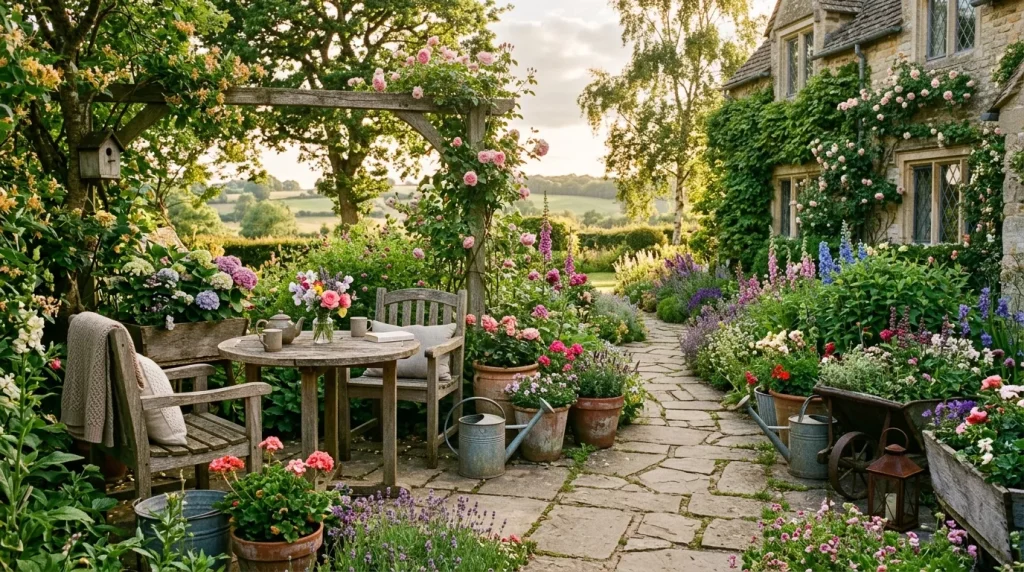
1. Rustic and Cottage Garden Decor

This is the style that leans into imperfection. Think weathered wood, vintage terracotta pots, overgrown climbing roses, and mismatched garden furniture that looks like it was found at a market stall (because it might have been).
Key elements:
- Reclaimed wood planters and raised beds
- Old watering cans repurposed as planters
- Stone pathways with moss growing between the cracks
- Wrought iron gates, arches, and trellises
- Wildflower beds rather than formal flower arrangements
The beauty of cottage-style garden decor is that it’s forgiving. Plants are allowed to ramble. Nothing has to be perfectly symmetrical. It’s one of the easiest styles for beginners to nail.

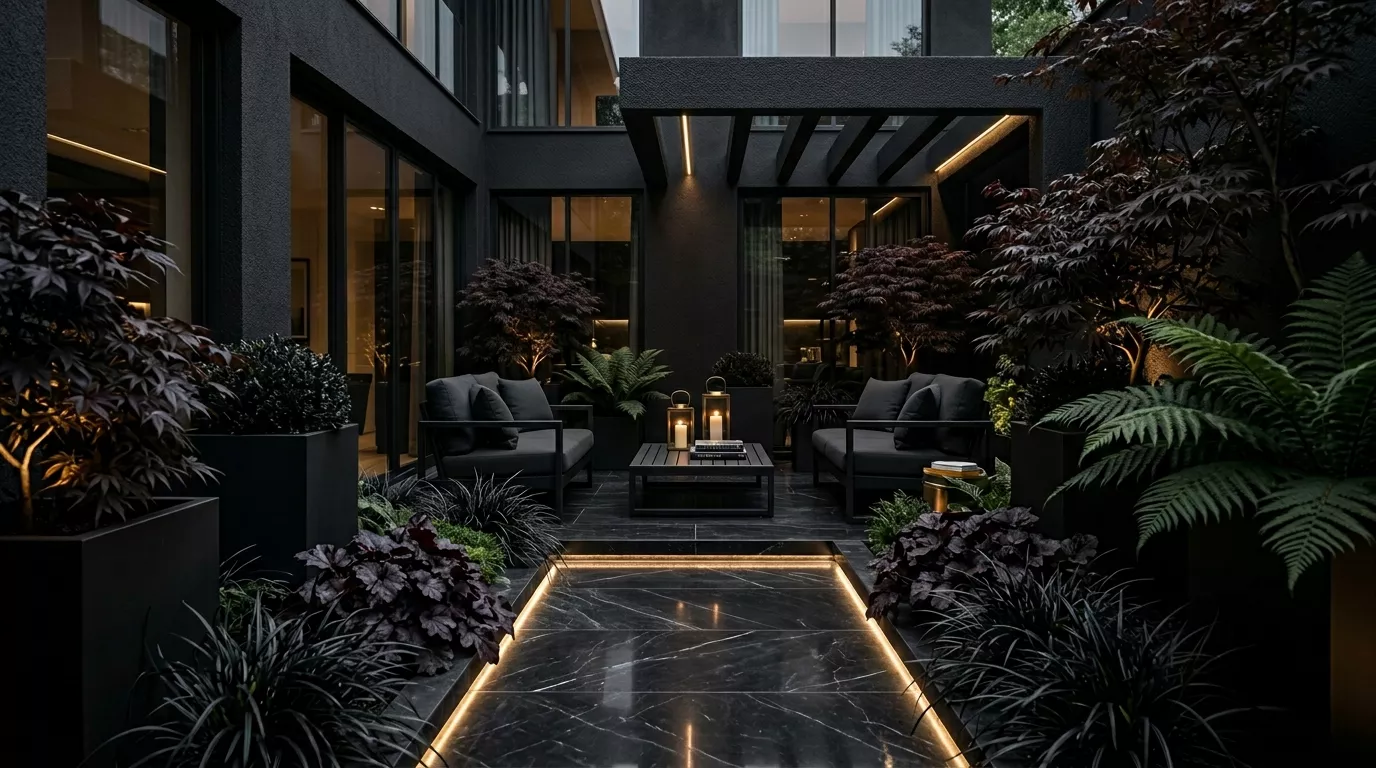
2. Modern Minimalist Outdoor Decor
Minimalist doesn’t mean bare. It means intentional. This style uses clean lines, a restrained color palette, and high-quality materials rather than a lot of accessories.
Key elements:
- Concrete or corten steel planters
- Structured, architectural plants (ornamental grasses, agaves, box hedging)
- Monochrome outdoor furniture in black, white, or warm gray
- Sleek outdoor lighting — recessed ground lights or simple post lights
- Gravel or decking rather than lawns

Minimalist garden decoration ideas reward patience. Start with less than you think you need. You can always add — it’s much harder to edit back.
3. Bohemian Garden Style
The boho garden is where pattern, color, and collected objects come together in cheerful, deliberate chaos. It’s maximalist by nature but in the most joyful way possible.
Key elements:

- Macramé wall hangings on outdoor walls or fences
- Mismatched colorful tiles on a garden table or step risers
- Hammocks, hanging chairs, and floor cushions
- Wind chimes, dreamcatchers, and lanterns
- Lush, layered planting with bold tropical leaves
This style suits creative personalities who have strong collecting instincts. The risk is it can tip into clutter — the difference between bohemian and chaotic is usually about having a loose color theme tying everything together.
4. Tropical and Jungle-Inspired Gardens
More and more people are leaning into the lush, dramatic look of a tropical garden — even in non-tropical climates. The key is going BIG with foliage.

Key elements:
- Large-leafed plants: banana plants, elephant ears, cannas, gunnera
- Bamboo screening or fencing
- Natural wood or rattan outdoor furniture
- Tiki torches or warm-glowing string lights
- Water features — even a small one adds the right ambient sound
You don’t need to live in the tropics to pull this off. Shelter from wind and a south-facing aspect help, and many dramatic-looking plants are hardier than they appear.
Garden Decoration Ideas: A Step-by-Step Guide to Getting It Right

Decorating a garden without a plan usually leads to a frustrating (and expensive) mess. Here’s a simple process that actually works:
Step 1: Assess What You’re Working With Walk around your garden at different times of day. Note where sunlight falls, where it’s shaded, any existing features you want to keep, and any genuine eyesores you want to hide (a neighbor’s fence, a utility box, an ugly wall).
Step 2: Define How You Want to Use the Space A garden you use for entertaining looks completely different from one designed for quiet solo relaxation. Do you want dining space? Play space for kids? A cutting garden for flowers to bring indoors? A kitchen herb patch? Know your priorities before anything else.
Step 3: Choose Your Style Direction Pick one of the style families above (or a blend of two). Having a reference direction prevents you from making impulse purchases that don’t actually fit together.
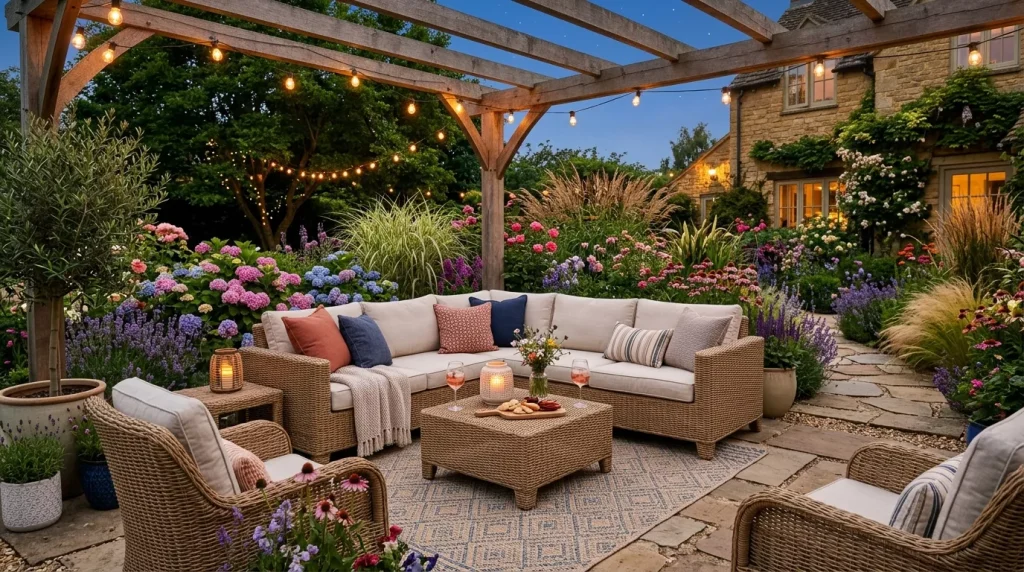
Step 4: Map Out Your Zones Even small gardens benefit from having distinct zones — a seating area, a planting area, a path that connects them. Zones create a sense of purpose and prevent the garden from feeling like a shapeless plot.
Step 5: Start With Structure, Then Layer Structure first — furniture, large planters, any built features like arches or raised beds. Then add planting. Then add decorative accessories last. This order stops you from cluttering a space before you’ve figured out the bones of it.
Step 6: Add Lighting Garden lighting transforms the space after dark and can make even a modest garden feel magical. Start with string lights — they’re cheap, warm, and universally flattering — and build from there.
Step 7: Edit and Refine Give it a season. Live in the space. Then edit. Move things that aren’t working, add more of what is. The best gardens are rarely finished — they evolve.
Comparing the Most Popular Garden Decoration Elements

Not all decorative elements are equal in what they add to a space. Here’s a practical comparison:
| Element | Visual Impact | Cost Range | Maintenance | Best For |
|---|---|---|---|---|
| Garden lighting | Very High | Low–Moderate | Low | All garden styles |
| Water features | Very High | Moderate–High | Moderate | Relaxation, focal points |
| Garden furniture | High | Moderate–High | Low–Moderate | Entertaining spaces |
| Planters & pots | High | Low–High | Moderate | Flexibility, color |
| Trellises & arches | Moderate–High | Low–Moderate | Low | Vertical interest |
| Garden sculptures | Moderate | Low–Very High | Very Low | Style statement |
| Outdoor rugs | Moderate | Low–Moderate | Low | Defining seating zones |
| Wind chimes | Low | Very Low | Very Low | Ambient sensory detail |
Use this table to prioritize where you put your money. Lighting and a good quality seating set will always outperform a collection of cheap garden ornaments.

Pros and Cons of the Most Popular Garden Decor Approaches
DIY Garden Decor
Pros:
- Far cheaper than buying ready-made
- Completely customizable to your space and taste
- Genuinely satisfying to make and use
- Can repurpose items you’d otherwise throw away
Cons:
- Time-consuming, especially for beginners
- Results can vary if your skills are still developing
- Some projects (concrete, tiling) require tools most people don’t own
Buying Quality Statement Pieces
Pros:
- Long-lasting and often weather-resistant
- Elevates the whole garden instantly
- Saves time compared to DIY
Cons:

- Higher upfront cost
- Risk of choosing something that looks great in a showroom but wrong in your actual space
- Heavier pieces can be difficult to reposition if you change your mind
Garden Decoration Ideas for Small Spaces
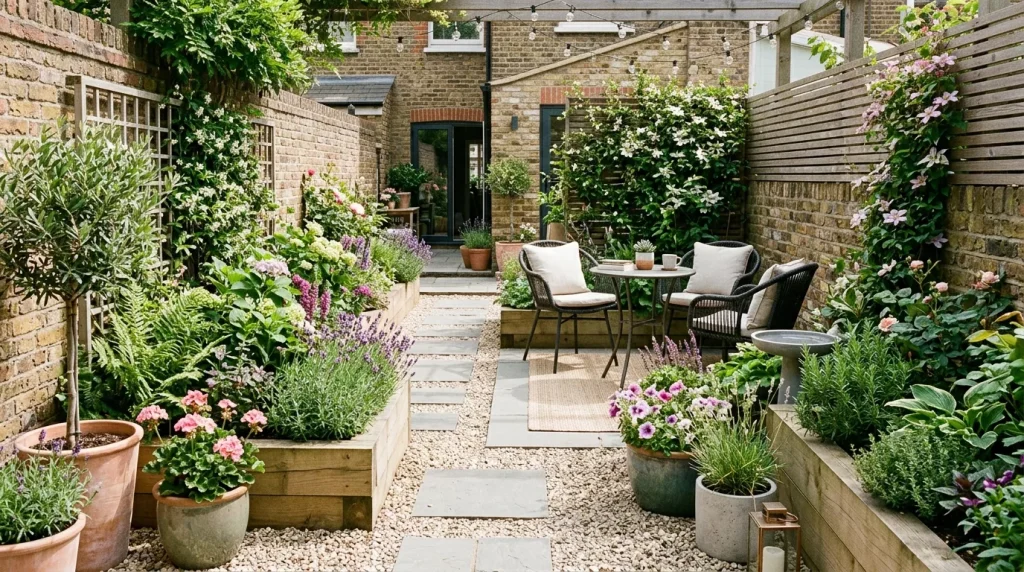
Small garden? The constraints are actually a creative opportunity. Here’s how to make a compact outdoor space feel deliberately designed rather than cramped:

- Go vertical. Wall-mounted planters, vertical garden panels, and trellis systems turn fence lines and walls into living decoration. You’re adding greenery without using floor space.
- Use mirrors. An outdoor-rated mirror on a fence or wall reflects light and creates the visual illusion of depth. It sounds like a trick, but it genuinely works.
- Choose multi-purpose furniture. A storage bench. A table that converts to a planter. Nesting stools. Each piece should earn its place.
- Keep the floor plan simple. Resist the urge to fill every inch. One clear seating zone with a defined rug underneath it will look more spacious and intentional than a crowded mix of mismatched elements.
- Use bold plants, not many plants. One large, dramatic plant in a beautiful pot does more for a small space than ten scraggly ones in plastic nursery containers.
Tips for Getting Your Garden Decoration Right

These are the insights that usually only come after one expensive, frustrating mistake:
- Sample your plant palette before committing. Just like paint chips, take a photo of a plant you love and hold it against your existing elements before buying in quantity.
- Invest in the seating first. If your outdoor furniture is uncomfortable or flimsy, you won’t use the garden. Everything else is secondary.
- Consider scent, not just sight. Jasmine, lavender, roses, sweet peas — a garden that smells beautiful is a garden you’ll want to live in.
- Choose weatherproof materials from the start. Teak, powder-coated steel, concrete, and treated hardwood all hold up outdoors. MDF, untreated softwood, and cheap resin do not. Buy once, buy right.
- Use odd numbers. Three pots look better than two or four. Five lanterns along a path look better than six. This is a basic visual design principle and it works beautifully in gardens.
- Don’t neglect the edges. Neat lawn edges, a freshly painted fence, a clean path border — these finishing touches make the whole garden look more polished than any amount of accessories.
Common Mistakes in Garden Decoration (And How to Avoid Them)

Even well-meaning garden decorators fall into these traps repeatedly:
1. Buying Everything at Once This is how you end up with a garden full of things that don’t quite go together. Give yourself at least one season before making big decorating purchases. Live in the space first.
2. Choosing Style Over Function Beautiful outdoor furniture that you can’t comfortably sit in. Planters in spots that never get sun. A water feature that splashes onto your only paved seating area. Function always comes before aesthetics.
3. Ignoring Scale A tiny birdbath in a large garden disappears. A massive garden sculpture in a tiny courtyard is overwhelming. Scale everything relative to your actual space, not to what looks good in a catalog.

4. Skipping the Lighting Most people treat garden lighting as an afterthought. It shouldn’t be. Good lighting extends the usability of your garden by hours every single day and completely changes the atmosphere after dark.
5. Over-Planting for Instant Impact It’s tempting to pack plants in densely so the garden looks full immediately. But plants grow. What looks great in April becomes an overcrowded, competitive mess by August. Plant for the future, not the present.
6. Choosing Trendy Over Timeless Trends in garden decor come and go just like interior trends. A solar-powered flamingo might feel fun in 2024 — but will it feel fun in 2029? Invest in pieces with genuine staying power and use trendy accessories sparingly.
Conclusion: Your Garden Decoration Journey Starts With One Decision
The best garden decoration ideas aren’t necessarily the most expensive or the most elaborate. They’re the ones that reflect how you actually want to live what brings you calm, joy, or a sense of connection with the outdoors.
Start small if you need to. Pick one corner, one style direction, one weekend project. Then build on it. The gardens that people love the most didn’t happen in a single shopping spree they were layered, adjusted, and lived in over time.
Frequently Asked Questions (FAQs)
Q1: What are the easiest garden decoration ideas for beginners
? Start with three things: a comfortable seating set, a few large pots with structural plants, and string lights. These three elements alone will transform a blank garden into a space you actually want to spend time in — and none of them require specialist skills or tools. From there, add layers over time as you get a better feel for what your space needs.
Q2: How do I decorate a garden on a tight budget?
Focus on DIY and repurposing. Old pallets become raised planters. Vintage crates become herb gardens. Mason jars become lanterns. Buy plants from local garden sales or propagate from cuttings. Charity shops and online marketplace apps are excellent sources for garden furniture at a fraction of retail price. You don’t need money — you need creativity and patience.
Q3: What are the best garden decorations for privacy?
Tall screening plants like bamboo, photinia, or pleached trees create natural living privacy screens. Trellises with climbing plants — jasmine, clematis, wisteria — are beautiful and effective. Decorative outdoor panels and sail shades also work well for more structured privacy solutions and double as stylish design features.
Q4: How do I make my garden look more expensive without spending much
? Focus on the details that signal care: clean, defined edges on lawn and borders; freshly painted or stained fences and furniture; cohesive pot groupings in matching or complementary materials; and decent outdoor lighting. These finishing touches cost relatively little but dramatically elevate how a garden reads to the eye.
Q5: Are garden water features worth the investment?
For many people, yes — absolutely. Even a small water feature adds ambient sound that masks street noise, attracts wildlife, and creates a genuine focal point in the garden. Modern solar-powered options have removed the need for complex electrical installation, making them accessible and affordable. The key is choosing a size and style that’s proportionate to your space.
Q6: How do I add color to a garden that’s mostly green?
Flowering plants are the obvious answer, but they require maintenance. For lower-effort color: painted pots (terracotta takes outdoor paint beautifully), colored gravel or glass mulch, outdoor-rated cushions and throws in bold patterns, and painted fence panels or walls. A single painted accent wall behind a seating area can add dramatic color with very little ongoing effort.
Q7: What garden decorations last the longest outdoors?
Materials matter enormously here. The most durable options are: solid teak wood (naturally weather-resistant), powder-coated steel or aluminum, concrete and stone ornaments, and galvanized or stainless steel planters. Avoid cheap resin, untreated softwood, and anything described only as “outdoor-use” without specifying the material — those tend to degrade within a season or two.