Backyard Garden Ideas: Inspiration for Every Yard

Backyard Garden Ideas: Inspiration for Every Yard & Style

There’s a certain kind of joy that comes from stepping outside into a backyard you actually love. Not just a patch of grass you mow out of obligation — but a real, living, breathing outdoor space that feels designed, intentional, and completely yours. Whether you have a sprawling half-acre lot or a narrow strip of earth behind a terraced house, backyard garden ideas can genuinely transform how you use — and feel about — your home.
The good news? You don’t need a landscape architect or a five-figure budget to make it happen. What you need is a clear starting point, a few smart decisions, and the willingness to start small and build over time.

This guide covers everything — from layout and planting ideas to garden structures, seasonal tips, and the mistakes most beginners make. Let’s get your hands dirty.
Why Your Backyard Garden Deserves More Attention
Most people underuse their backyard. It becomes a dumping ground for garden tools, a dog toilet, or just an afterthought. But even modest outdoor spaces have enormous potential.
A well-designed backyard garden adds measurable value to your home — both financially and in quality of life. Studies consistently show that time spent in green spaces reduces stress, improves mood, and even boosts focus. And when that green space is literally outside your back door? You’ll use it far more than you’d expect.

Beyond the lifestyle benefits, a thoughtfully planted backyard also supports local wildlife, improves drainage, reduces heat around your home, and — if you grow edibles — cuts down on your grocery bills. These aren’t small things.
Backyard Garden Ideas for Every Style and Space
The best garden design always starts with honestly assessing what you have. Don’t copy someone else’s Pinterest board if your space is nothing like theirs. Work with your light, soil, climate, and existing features.

Here are some of the most popular and practical ideas to consider.
1. Raised Garden Beds — A Game-Changer for Beginners
If you only take one idea from this article, make it this one. Raised garden beds have transformed backyard gardening for millions of people, and the reason is simple: they work.

You control the soil quality completely, which means better drainage, fewer weeds, and healthier plants from the start. They warm up faster in spring, extending your growing season. And they’re easier on your back — especially if you build them at a comfortable standing or sitting height.
What to grow in raised beds:
- Tomatoes, peppers, courgettes, and aubergines (summer vegetables)
- Lettuce, spinach, kale, and herbs (cool-season crops)
- Root vegetables like carrots, beetroot, and radishes
- Strawberries and compact fruit bushes
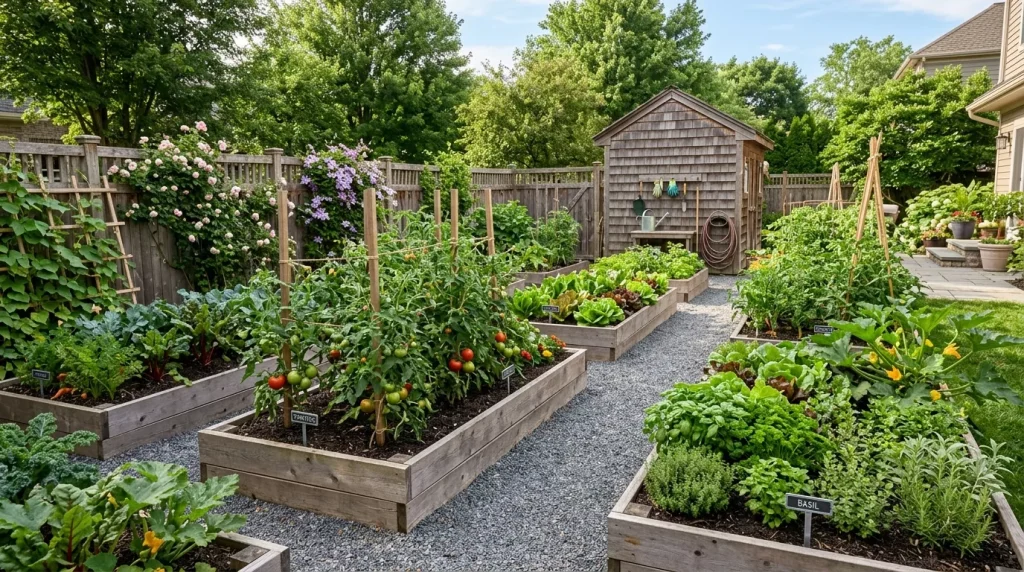
Cedar is the classic material for raised bed frames — it’s naturally rot-resistant and looks beautiful as it weathers. Treated timber, galvanized metal, and even recycled composite decking boards all work well too. Build them at least 30–40 cm deep for most vegetables, deeper for root crops.
Space them at least 60 cm apart so you can comfortably walk between them without compacting the soil.

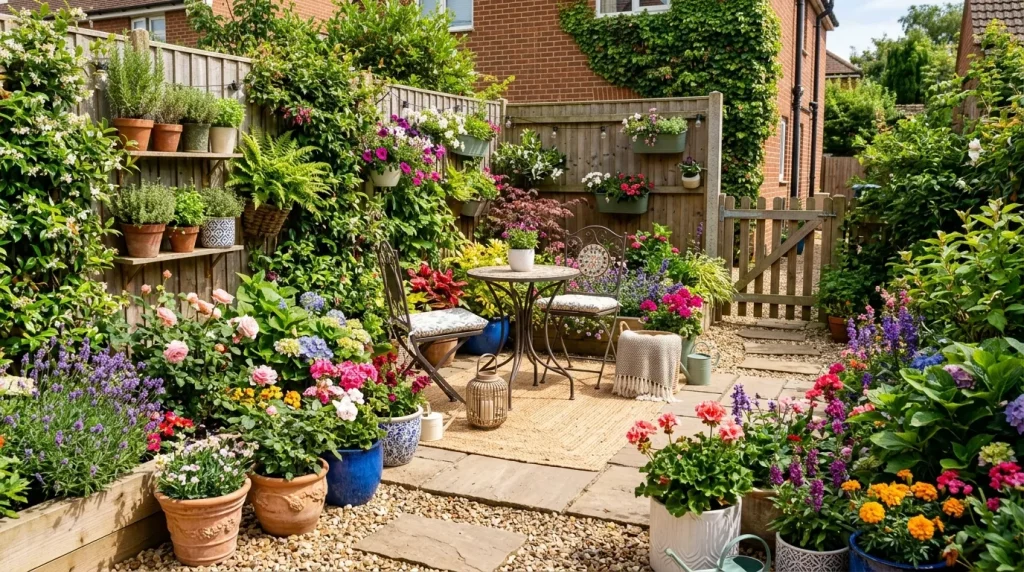
2. Backyard Garden Ideas for Small Spaces
A small backyard is not a lost cause — it’s a design challenge. And some of the most beautiful gardens in the world are tiny.
The trick is to think vertically and layer thoughtfully.
Vertical gardening options:

- Wall-mounted planter pockets for herbs and trailing plants
- A freestanding trellis with climbing roses, jasmine, or clematis
- A lean-to greenhouse against a sunny fence
- Tiered plant stands for container plants at different heights
- A living green wall using a modular panel system

When floor space is limited, every fence, wall, and pergola post becomes an opportunity. Hanging baskets, window boxes fixed to fence rails, and wall-mounted containers can add dozens of extra planting spots without taking up any ground space.
Keep paths narrow but functional — a 60–70 cm flagstone or gravel path is enough to walk comfortably. Use large-leaved plants to create a sense of drama and make the space feel intentional rather than cramped.

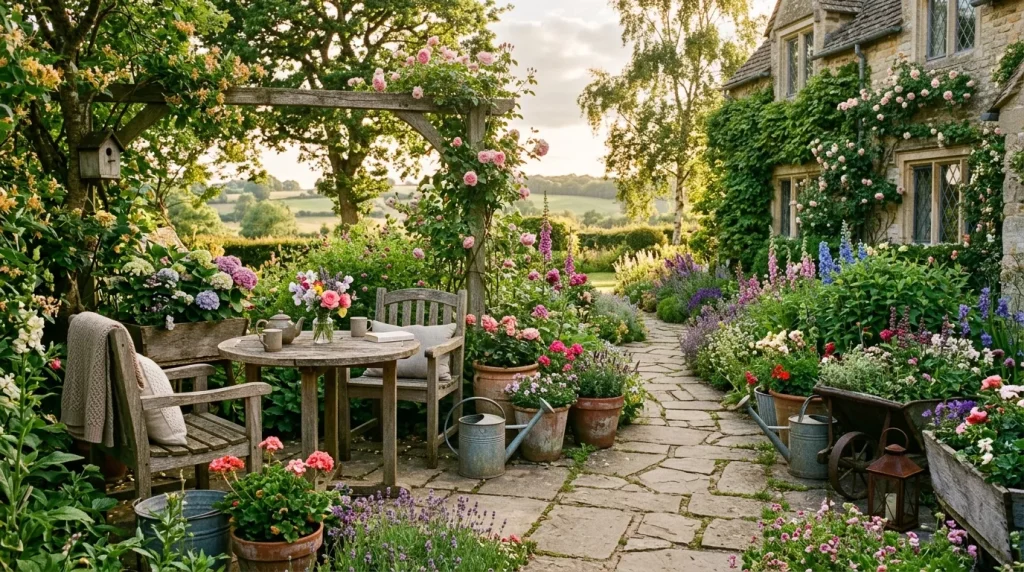
3. Cottage Garden Style — Effortlessly Beautiful, Surprisingly Low-Maintenance
Cottage garden planting is having a serious moment right now, and honestly, it’s earned it. This romantic, slightly wild aesthetic is also one of the most forgiving styles for beginner gardeners.
The idea is to mix flowering perennials and self-seeding annuals together in a way that looks lush and abundant without being rigidly structured. Think lavender spilling over path edges, foxgloves rising behind sprawling geraniums, sweet peas scrambling up a rustic wooden obelisk.
Classic cottage garden plants:

- Lavender, salvia, and nepeta (catmint) — pollinators love them
- Roses, foxgloves, hollyhocks, and delphiniums — for height and structure
- Geranium (hardy cranesbill), alliums, and achillea — for mid-level filler
- Calendula, nigella, and sweet alyssum — easy self-seeders that pop up every year
Once established, a cottage garden mostly takes care of itself. You cut back spent plants in autumn, divide clumps every few years, and let self-seeders do their thing. It’s relaxed gardening that rewards patience.

4. Backyard Garden Ideas for a Productive Vegetable Patch
Growing your own food is one of the most rewarding things you can do with a backyard. The taste of a tomato you grew yourself — still warm from the afternoon sun — is something you genuinely cannot replicate with a supermarket purchase.
A productive kitchen garden doesn’t need to be large. A 3m x 3m plot, properly managed, can provide a family with salad greens, herbs, and seasonal vegetables throughout much of the year.
Layout tips for a productive veg patch:

- Divide your space into four rotating sections (rotate crop families annually to prevent disease)
- Position taller plants (climbing beans, sweetcorn) on the north side so they don’t shade shorter plants
- Plant herbs near the kitchen door for easy access when cooking
- Include at least one compost bin within reach of the growing area
- Use companion planting: basil near tomatoes, marigolds near brassicas
Start with fast-growing, high-yield crops to build your confidence: courgettes, salad leaves, radishes, runner beans, and herbs. These reward quickly and don’t require much experience.

5. Creating a Backyard Seating Area Surrounded by Garden
The most used backyards are the ones where you can actually sit, eat, and relax outside. A garden without a seating area is a garden you’ll admire from the kitchen window but never truly inhabit.
Even a small patio, deck, or gravel terrace fundamentally changes how you interact with your outdoor space.
Ideas for integrating garden and seating:
- Frame a patio with raised planting beds on two or three sides
- Use tall ornamental grasses or bamboo screens to create privacy around a seating area
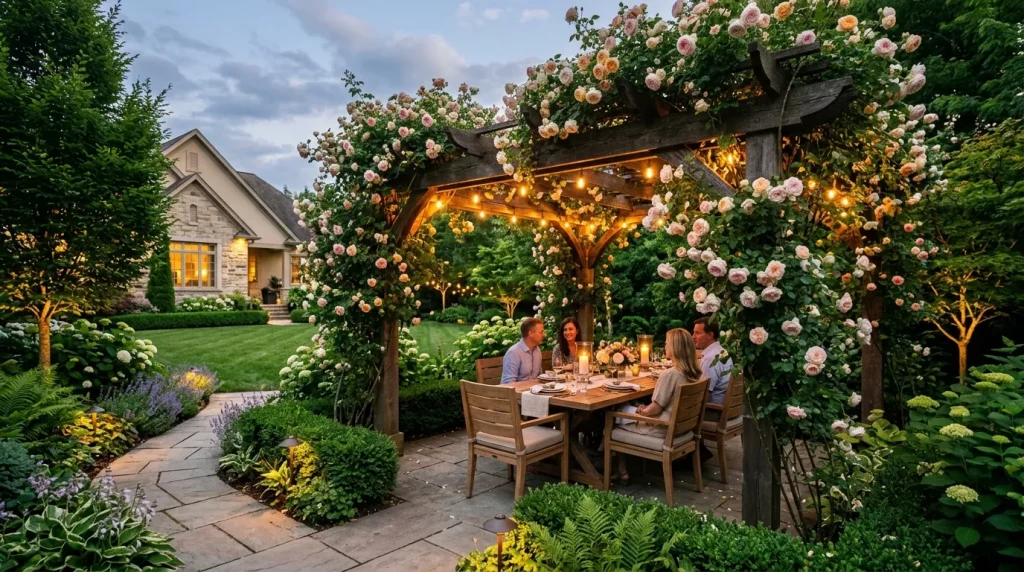
- Hang string lights above an outdoor dining area for evening use
- Place large container plants at the corners of a deck to define the space
- Add a fire pit or chiminea to extend the seasons you can comfortably sit outside
A curved garden bench nestled into a planting border, a bistro table in a sun-trap corner, or a hammock slung between two established trees — these small investments return enormous amounts of pleasure over years.
Backyard Garden Styles Compared
Not sure which garden style suits your space and personality? Here’s a quick overview.
| Garden Style | Best For | Maintenance Level | Key Features |
|---|---|---|---|
| Cottage Garden | Relaxed, romantic look | Low–Medium | Perennials, self-seeders, informal paths |
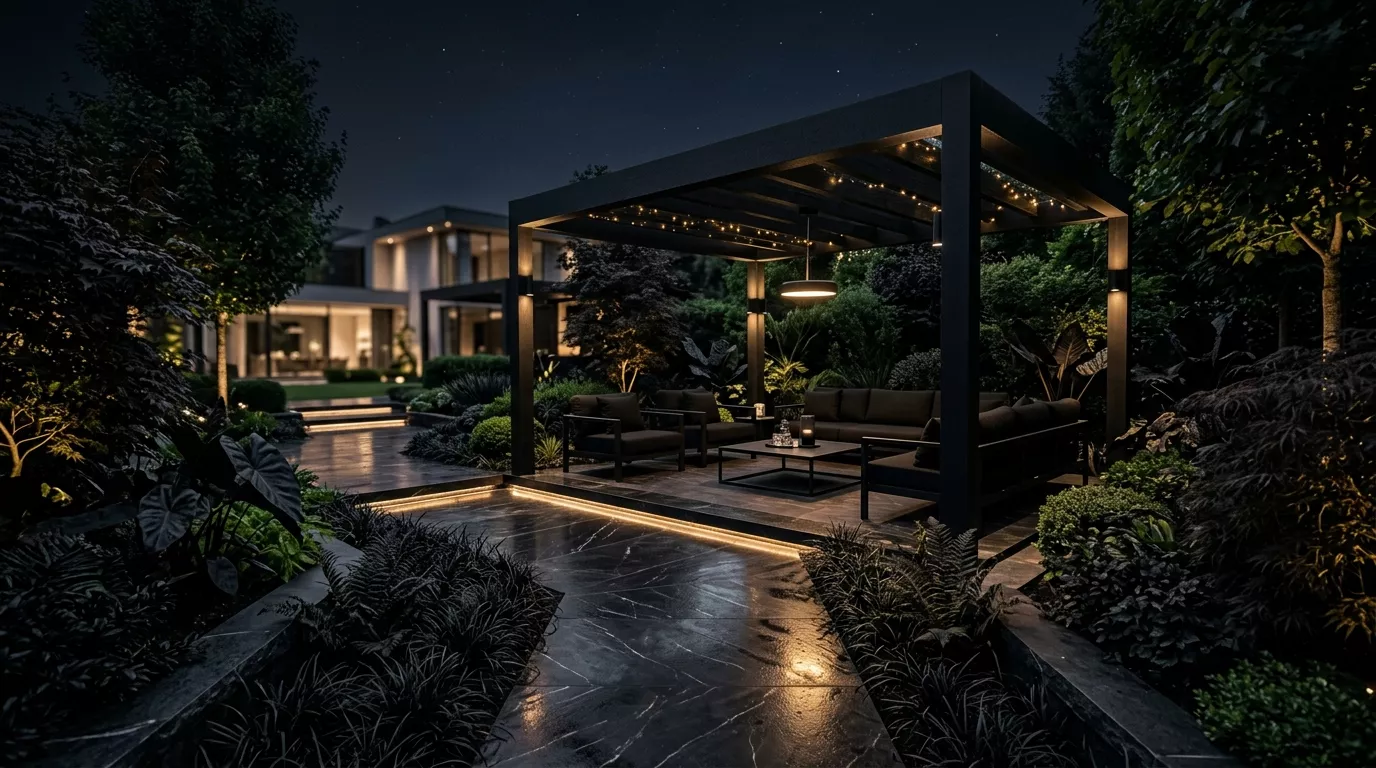
| Modern Minimalist | Clean, contemporary homes | Low | Structured planting, clean lines, limited palette |
| Kitchen Garden | Food growers, families | Medium–High | Raised beds, vegetable crops, composting |
| Wildlife Garden | Eco-minded gardeners | Very Low | Native plants, log piles, pond, no pesticides |
| Zen / Japanese | Small, peaceful spaces | Medium | Gravel, rocks, moss, architectural plants |
| Tropical Style | Warm or sheltered spots | Medium–High | Large-leaved plants, bold colour, lush density |
| Formal Garden | Grand or symmetrical spaces | High | Clipped hedges, topiary, geometric layout |
There’s no wrong answer. The best garden style is the one you’ll actually maintain and enjoy. Be honest with yourself about how much time you want to spend — a formal garden that you neglect is far less attractive than a casual cottage planting that’s allowed to thrive.
Pros and Cons of Different Backyard Garden Approaches
Raised Beds
✅ Pros: Better soil control, fewer weeds, extended season, accessible height, clean look ❌ Cons: Upfront cost for materials, dry out faster in summer, need refilling over time
In-Ground Planting
✅ Pros: Lower initial cost, plants establish deeper root systems, natural drainage ❌ Cons: Harder to manage soil quality, more weeding, slower to warm in spring
Container Gardening
✅ Pros: Incredibly flexible, moveable, great for patios and rental homes, easy to control soil ❌ Cons: Needs regular watering (daily in summer), limited root space, pots can be expensive
Lawn Conversion (removing grass for garden beds)
✅ Pros: Reduces mowing, creates more growing space, better for wildlife and water ❌ Cons: Initial effort to remove turf, can look bare in the first year
Step-by-Step Guide: How to Plan Your Backyard Garden
Follow these steps and you’ll avoid the biggest planning mistakes most gardeners make.
Step 1: Observe before you dig Spend a week watching how the sun moves across your backyard at different times of day. Note where shadows fall in the morning, at noon, and in the afternoon. This single exercise prevents years of planting mistakes.
Step 2: Assess your soil Dig down about 30 cm in a few spots. Is the soil heavy clay that holds water? Sandy and dry? Full of stones? This tells you what you’re working with and whether you need to improve it before planting.
Step 3: Sketch a rough layout You don’t need design software. A piece of squared paper, a pencil, and rough measurements will do. Block out where you want: lawn, beds, paths, seating, compost area, and any structures.
Step 4: Set your priorities You probably can’t do everything at once. Pick the two or three elements that will make the biggest difference to how you use the space — often this is a seating area and one or two garden beds — and start there.
Step 5: Prepare the ground properly Whatever you’re planting, soil preparation is the foundation. Remove weeds thoroughly (roots and all), add organic matter like compost or well-rotted manure, and allow it to settle before planting if possible.
Step 6: Plant in layers Good garden design works in three layers: tall structural plants (trees, large shrubs, climbers), medium-height plants (perennials, large grasses, smaller shrubs), and low groundcover (creeping plants, low perennials, mulch). Layer these and your garden will look intentional and full.
Step 7: Mulch everything Once planted, cover all bare soil with a 5–8 cm layer of organic mulch (bark chippings, garden compost, or leaf mould). It suppresses weeds, retains moisture, and slowly improves your soil. This one step saves hours of future weeding.
Step 8: Water in, then monitor Water new plants in thoroughly. For the first few weeks, check them every couple of days. Look for signs of stress (wilting, yellowing), adjust watering accordingly, and let them settle in.
Tips for a Stunning Backyard Garden
A few habits and tricks that experienced gardeners swear by:
- Repeat plants throughout the space. Using the same plant or colour in three or four spots creates visual rhythm and a sense of intentional design.
- Group containers in odd numbers. Three or five pots clustered together always look better than an even row.
- Add a focal point. Every garden needs something your eye is naturally drawn to: a statement tree, a beautiful pot, a water feature, or an arch. It gives the space purpose.
- Don’t neglect the edges. Neatly edged lawn lines and defined bed boundaries make even an average garden look well-maintained.
- Plant for year-round interest. Mix evergreen structure (box, pittosporum, yew), spring bulbs, summer perennials, autumn seedheads, and winter bark to ensure the garden always has something going on.
- Compost religiously. It sounds unglamorous, but a working compost bin is the single best thing you can do for your garden long-term. It reduces waste and produces incredible free soil improver.
Common Backyard Garden Mistakes to Avoid
Even enthusiastic gardeners fall into these traps. Learning them in advance saves real money and heartbreak.
1. Planting too much, too soon Overstuffing your garden in year one is tempting but expensive and often counterproductive. Plants need room to establish. Start with fewer, better-chosen plants and let them fill the space.
2. Ignoring aspect and shade Planting sun-loving vegetables in a north-facing border that gets two hours of light a day is a very common, very avoidable mistake. Know your light conditions before choosing plants.
3. Not preparing soil Planting directly into compacted, nutrient-poor earth and then wondering why nothing thrives is the number-one beginner frustration. Soil preparation is not optional.
4. Choosing plants for looks alone That beautiful exotic plant that caught your eye at the garden centre may be completely wrong for your climate, soil, or light levels. Always check the label and do five minutes of research before buying.
5. Underestimating watering needs New plantings, containers, and raised beds all need more water than you’d expect — especially in summer. Many first-year plants die not from disease or pests, but from inconsistent watering.
6. Forgetting about winter A garden that looks wonderful in July and completely bare and grey by October is a missed opportunity. Plan for evergreen structure, winter-interest shrubs, and spring bulbs from the very beginning.
7. Starting with the hardest projects first Some people tackle a large lawn conversion or a complex water feature as their very first garden project. Start with something manageable — a single raised bed, a container display, a small herb garden — and build your confidence before taking on bigger jobs.
Conclusion: Your Dream Backyard Garden Starts With One Step
Backyard garden ideas are everywhere — but the best one is the idea you’ll actually follow through on. A beautifully imagined garden that never gets built helps nobody. A modest, imperfect garden that you created with your own hands and genuinely enjoy every day? That’s worth everything.
Start where you are. Work with what you have. Choose plants that suit your soil, light, and lifestyle rather than fighting against them. Build in stages and let the garden evolve with you over time.
The most important truth about garden design is this: you don’t have to get it perfect from the start. Gardens are living systems that change every season, every year. You can always move things, add things, and improve things as you learn.
Your next step: Go outside today. Stand in your backyard for ten minutes and really look at it. Think about one change — just one — that would make you enjoy being out there more. Then make a plan to do exactly that this weekend.
That’s how every great garden begins.
Frequently Asked Questions
Q1: What are the best backyard garden ideas for beginners?
The best starting points for beginners are a small raised vegetable bed, a container herb garden near the kitchen, and a simple patio seating area surrounded by easy-care plants. These three elements give you immediate rewards — fresh food, beauty, and a space to actually enjoy — without overwhelming complexity. Avoid trying to overhaul your entire backyard at once.
Q2: How do I plan a backyard garden on a tight budget?
Start by growing from seed rather than buying plants — seed packets cost a fraction of the price and teach you far more about gardening. Collect fallen leaves for free mulch. Buy compostable material to start a compost bin rather than purchasing bags of compost. Salvage timber for raised beds. Source plants from garden swaps, online freecycle groups, or by dividing existing plants in your garden.
Q3: What’s the easiest low-maintenance backyard garden style?
A wildlife-friendly native plant garden is genuinely one of the lowest-maintenance options available. Once established, native plants need almost no watering (they’re adapted to your local rainfall), minimal pruning, and no feeding. They attract pollinators naturally and suppress weeds through dense coverage. It’s the closest thing to a self-managing garden you’ll find.
Q4: How do I add privacy to my backyard garden?
Tall ornamental grasses (like miscanthus or pennisetum), bamboo in large containers, climbing plants on a trellis, and dense hedging like privet, beech, or yew all create effective garden privacy screens. For instant privacy without years of growing, a combination of timber screening panels with climbing plants trained over them works quickly and looks natural within a season or two.
Q5: Can I create a beautiful backyard garden in a shaded space?
Absolutely. Shade gardening is its own rewarding discipline. Many beautiful plants actually prefer low light: hostas, ferns, astilbe, hellebores, foxgloves, hydrangeas, and bleeding heart (dicentra) all thrive in dappled or partial shade. The key is working with what you have rather than fighting it. Shaded gardens can be some of the lushest, most atmospheric spaces imaginable.
Q6: When is the best time to start a backyard garden?
The honest answer is: whenever you decide to start. That said, spring and early autumn are the most forgiving planting seasons in most climates. Soil is workable, temperatures are mild, and rain is usually more reliable. If you want to plant a vegetable garden, start planning in late winter so you can sow seeds indoors in early spring and be ready to transplant when frosts pass.
Q7: How much does it cost to set up a basic backyard garden?
Costs vary enormously depending on scale and ambition. A basic raised bed setup (one or two beds, soil, seeds, simple tools) can be done for under $200–$300. A full backyard redesign with professional landscaping, structures, and mature plants can run into the thousands. Most gardeners find a middle ground — doing the physical work themselves and spending money on materials and a few well-chosen plants — delivers excellent results without breaking the bank.