Fabric Ceiling 14 Ideas to Transform Any Room

Fabric Ceiling Ideas That Make Rooms Feel Magical
A fabric ceiling is any ceiling treatment that uses draped, stretched, or hung textile to soften a room from above. It can mean a sheer bed canopy, a tapestry ceiling in a dorm, or a tensioned panel system, and most versions cost far less than remodeling.
These 14 fabric ceiling ideas cover hanging fabric from ceiling hooks, ceiling drapery for living rooms, cozy bedroom designs, and ceiling draping for renters. Each one lists supplies, sizes, and safety notes. For more inspiration, browse these bedroom decor ideas before you shop.
Choose lightweight, flame-retardant fabric in one or two colors, measure your ceiling first, and plan hooks around joists. Keep cloth away from hot bulbs and use cool LED lights only. The table below compares cost and time for every idea.
| Idea | Cost | Time | Best For |
|---|---|---|---|
| 1. Sheer voile canopy | $ | 30 minutes | Quick bedroom upgrade |
| 2. Tented pleated ceiling | $$ | 1 weekend | Owners and bedrooms |
| 3. Starry sheer sky | $$ | 1 hour | Cozy night glow |
| 4. Tapestry over sofa | $ | 20 minutes | Reading nooks and lofts |
| 5. Diagonal swags | $$ | 2 hours | Living rooms |
| 6. Fabric pendant shade | $ | 1 hour | Tiny budgets |
| 7. Rental tapestry ceiling | $ | 30 minutes | Apartments and dorms |
| 8. Scarf gradient | $ | 2 hours | Thrifty boho style |
| 9. Moroccan tent ceiling | $$$ | 1 weekend | Dens and guest rooms |
| 10. Tension wire grid | $$ | 3 hours | Swappable panels |
| 11. Stretch panels | $$$$ | 1 day | Seamless, modern finish |
| 12. Acoustic panels | $$$ | 1 weekend | Echoey rooms |
| 13. Cloud ceiling | $$ | 1 afternoon | Kids’ rooms |
| 14. Patio fabric shade | $$$ | 1 weekend | Porches and pergolas |
Fabric Ceiling Ideas for Bedroom Retreats
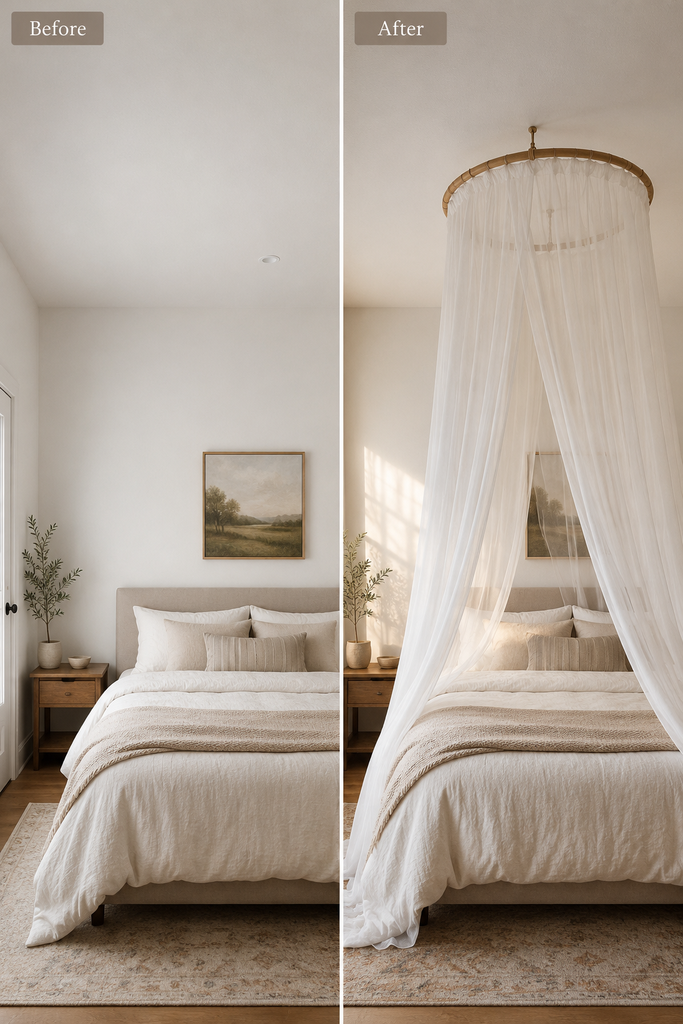
1. Hang a Sheer White Voile Canopy Over the Bed
A sheer voile canopy is the easiest way to try a fabric ceiling in a bedroom. Mount one hook or a wooden hoop above the center of the bed, then let two or three white voile panels fall to the floor in soft folds.
Anchor the hook into a ceiling joist, or use a toggle anchor rated for the load. Voile weighs very little, but a loaded hoop can pull loose from bare drywall. Hang the hoop about seven feet high so the panels never brush lamps.
Choose panels with a combined width about twice the hoop’s circumference for full, flowing drape. Ivory and oatmeal keep the bed airy, while pale sage adds quiet color. Wash the fabric first so it hangs straight, sheds any factory creases, and smells fresh.
Plan about thirty minutes and under fifty dollars for this hanging fabric from ceiling project. Keep every panel six inches from bedside lamps, and choose fabric labeled flame retardant. To remove it, unscrew the hook and patch the small hole.
2. Pleat a Tented Fabric Ceiling From Center
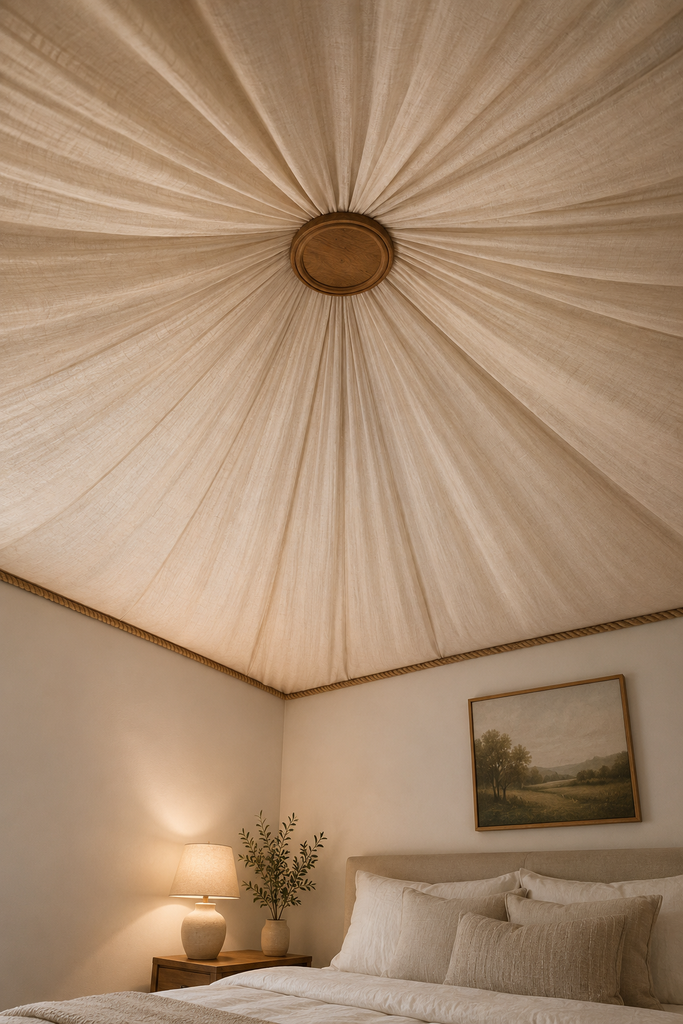
A tented fabric ceiling turns a flat bedroom ceiling into a soft, gathered dome. Fix a wooden ring or decorative medallion at the center, then staple or clip pleated fabric from the ring outward to the walls like umbrella spokes.
Measure from the center point to each wall, then add twelve inches to every length for pleats and sag. Cut equal wedges so the folds line up neatly. Pressing the creases with an iron helps the fabric keep a crisp, tailored shape.
Cotton sateen, linen blends, and polyester crepe all work well, and a solid color looks calmer than a pattern. Cover the wall edge with slim wood trim or rope cord. That hides staples and gives the finish a clean, custom look.
Expect a full weekend and roughly one hundred to two hundred dollars for a standard bedroom. Use a sturdy ladder and a helper, because arms tire quickly overhead. This idea suits owners, since staples and trim make a lasting change.
3. Light Up a Starry Sheer Fabric Ceiling Sky
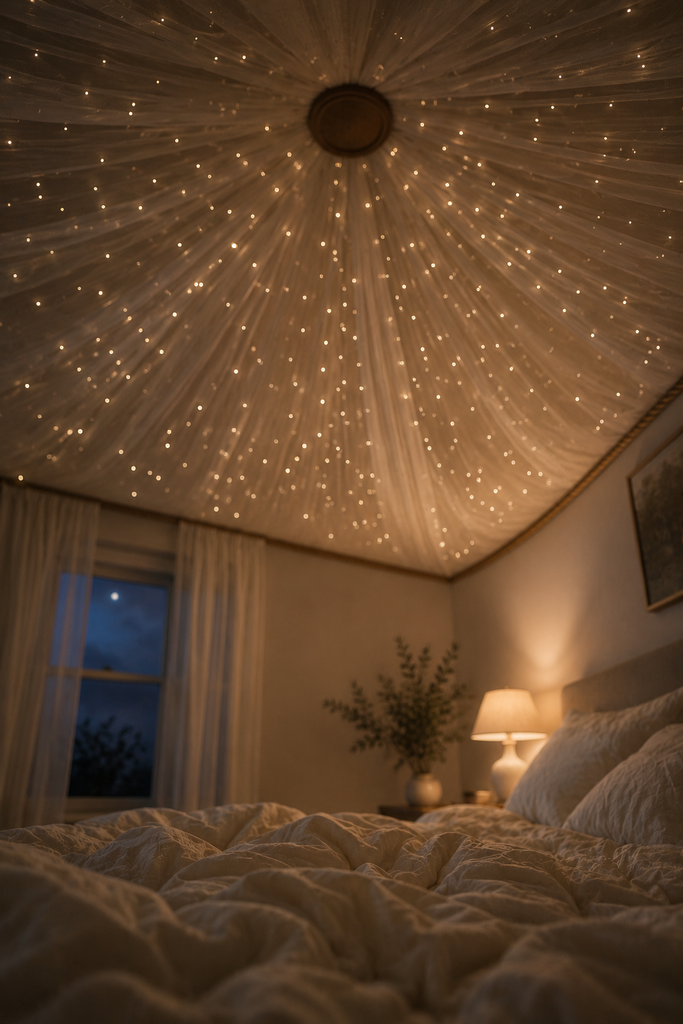
Sheer fabric with warm lights hidden behind it creates a glowing, starry fabric ceiling light effect. Stretch white tulle or chiffon across the ceiling, then tuck an LED string above the cloth so the bulbs shine softly through every layer.
Space the lights about six inches apart for a night-sky look, or cluster them for a cloud-like glow. Choose warm white around 2700 Kelvin for coziness. Cool white feels sterile and can make sheer fabric look slightly gray at night.
Use only LED strings, because they stay cool and draw little power. Leave a two-inch gap between bulbs and fabric, and never wrap lights tightly in cloth. Plug the string into a timer so it shuts off while you sleep.
Count on about one hour and thirty to sixty dollars, depending on room size. Removable ceiling clips keep the project rental safe. Take a quick night photo from the pillow side, since the glow looks best from a lying-down angle.
Ceiling Draping Ideas for Cozy Living Rooms
4. Hang a Tapestry on Ceiling Over the Sofa
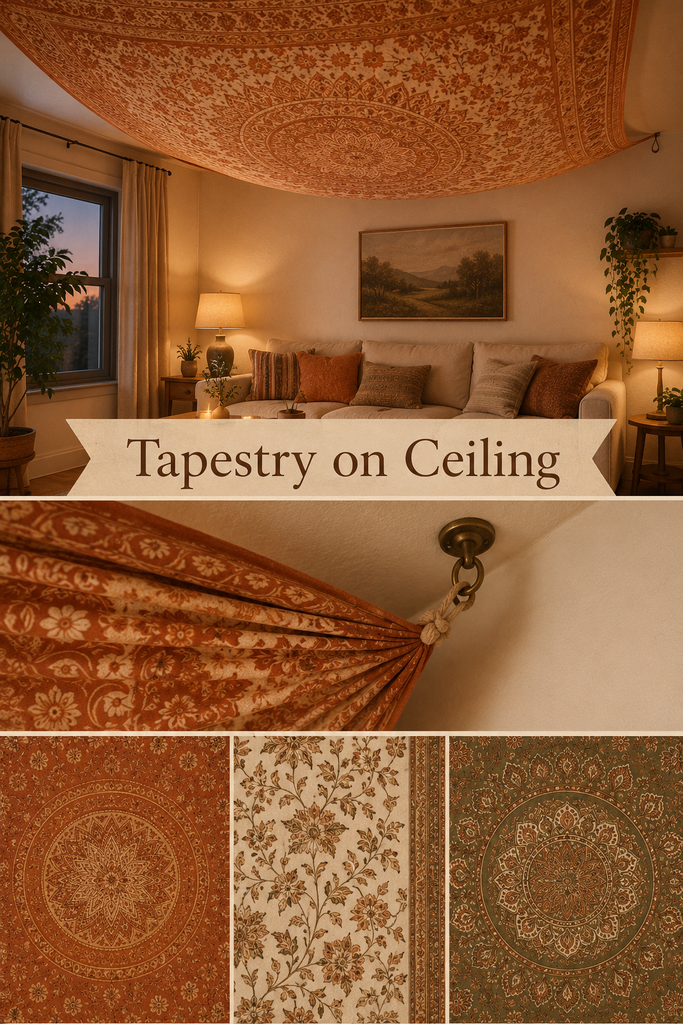
A tapestry on ceiling is an easy upgrade for a reading nook or loft. Choose a tapestry about the size of your sofa and hang it flat above the seating area, and the room instantly feels like a cozy, patterned tent.
Fasten each corner with a removable ceiling hook, then add one hook in the middle so the center does not sag. Lightweight cotton tapestries stay up well, while heavy woven ones need joist anchors. Check the weight on the label first.
Pick a pattern that repeats one or two colors from your rug or pillows. Mandala, floral, and sunset prints work well, while busy designs overwhelm small rooms. Solid or tone-on-tone textiles feel calmer and look more upscale overhead, especially in compact rooms.
This takes about twenty minutes and costs between fifteen and forty dollars. Hang it at least eight feet high so nobody bumps it, and keep it away from candles and heaters. Pair it with a floor lamp for evening comfort.
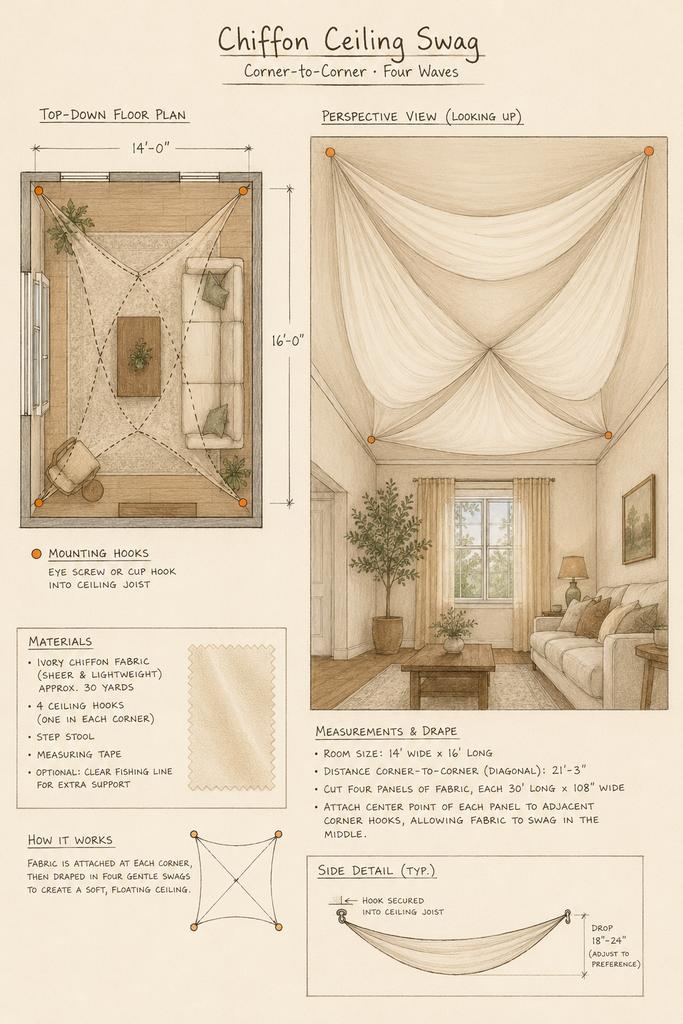
5. Swag Ceiling Draping in Soft Diagonal Waves
Ceiling draping in diagonal swags adds movement to a plain living room ceiling. Run a long length of lightweight fabric from one corner to the opposite corner, then lift it every few feet with small hooks to form three or four soft waves.
Plan the swags before drilling. Mark hook points with painter’s tape about three feet apart, and drape the fabric to check the depth. A drop of twelve to eighteen inches per wave looks graceful without hanging into anyone’s eyeline. Step back and view it from the sofa.
Chiffon, voile, and lightweight linen drape best, while stiff cotton makes angular folds. Pick a shade near your wall color so the swags blend in. Check your furniture layout for a rectangular living room so the waves frame the seating area.
Allow about two hours and sixty to one hundred dollars. Place hooks away from ceiling fans and vents, since moving air can tangle thin fabric. Steam the cloth before hanging, because wrinkles show clearly when light hits the folds from below.
6. Wrap a Pendant in a Fabric Ceiling Light
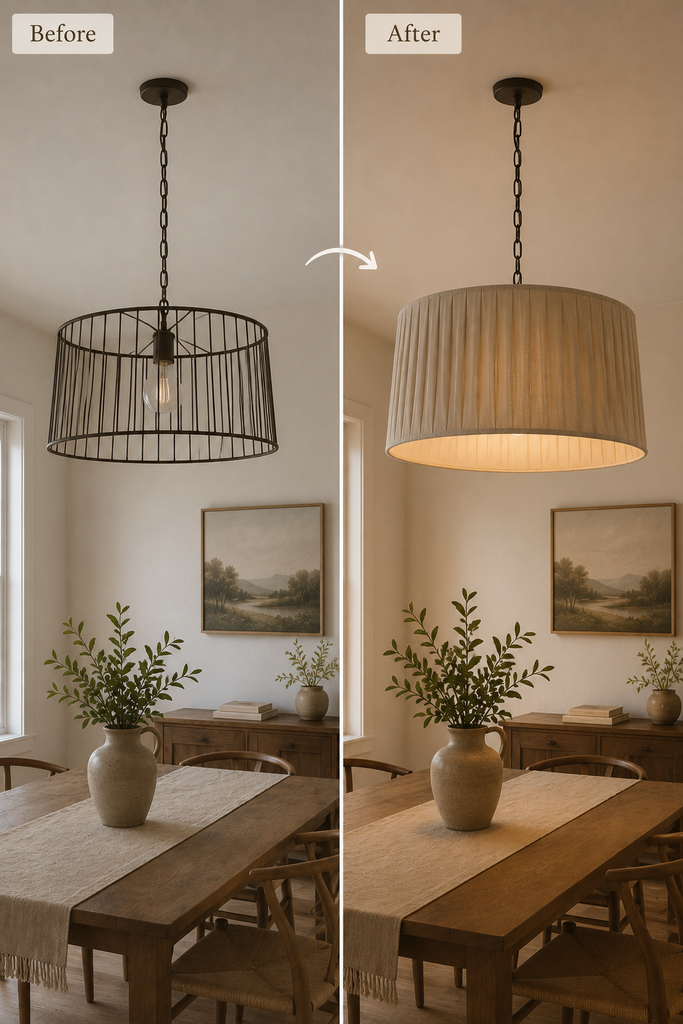
A fabric ceiling light fixture is the smallest way to bring this look into a room. Cover a plain wire drum shade or paper lantern with pleated linen, and the light turns warm, diffused, and far more expensive looking than its price.
Cut fabric about twice the shade’s circumference for gathered pleats, then glue or stitch it to the top and bottom rings. Use fabric adhesive or a cool-setting glue gun, and keep the cloth snug so it never droops toward the bulb.
Choose an LED bulb under ten watts, because incandescent bulbs get hot enough to scorch cloth. A pendant cord with a dimmer switch lets you adjust the glow. Fixtures rated for fabric shades add another layer of safety, so check the product label before buying.
Plan one hour and about thirty dollars. Turn off the power at the breaker before touching any ceiling wiring. If you are not comfortable with electrical work, ask a licensed electrician to hang the fixture while you finish the shade.
Tapestry Ceiling Ideas for a Cozy Boho Look
7. Create a Boho Tapestry Ceiling in a Rental
A tapestry ceiling works well in apartments because it needs no paint and no large holes. Cover the ceiling above your bed or desk with one big tapestry, then secure the edges with adhesive clips designed for light textiles and spaced evenly along every edge.
Clean the ceiling with a dry cloth first, since dust weakens adhesive. Press each clip for thirty seconds and wait an hour before hanging the fabric. Choose clips rated above the tapestry’s weight, and add extra points every two feet.
Style the fabric with plants, rattan lamps, and floor cushions for a boho mood. Rust, terracotta, and cream tapestries suit low light, while indigo prints feel calmer in bright rooms. Repeat one tapestry color in a pillow nearby to tie the whole corner together.
Setup takes about thirty minutes and costs under fifty dollars. Test one clip on a hidden spot for a day before committing, and read your lease for ceiling rules. Remove clips slowly with a hairdryer to soften the adhesive and protect the paint.

8. Layer Scarves for a Gradient Fabric Ceiling
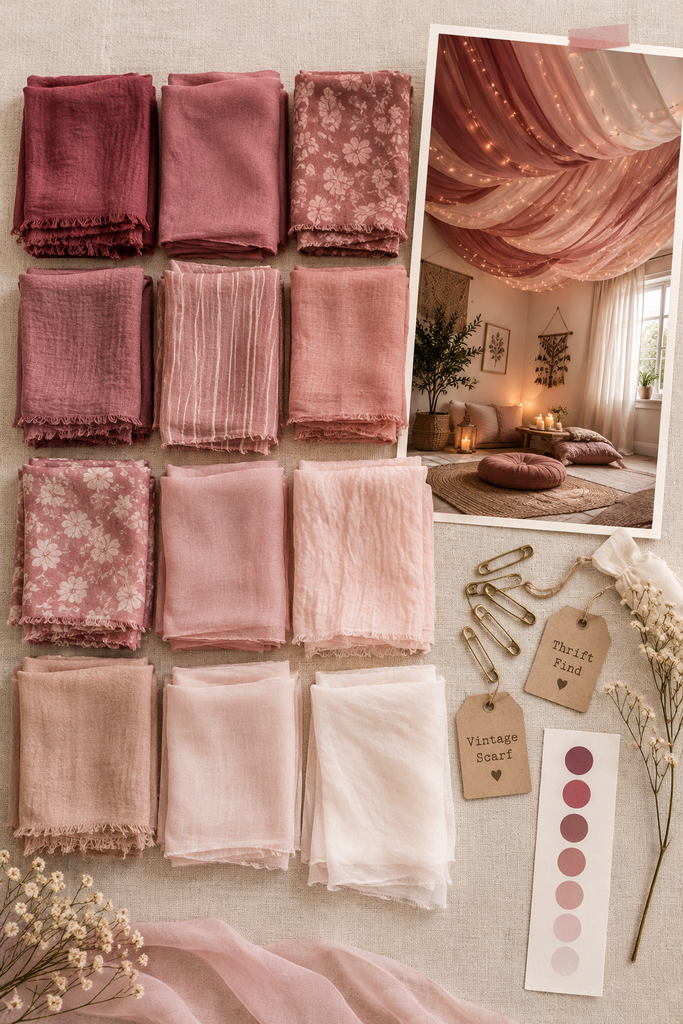
Layered scarves and sarongs create a color-gradient fabric ceiling that looks custom and costs almost nothing. Collect eight to twelve lightweight pieces in one color family, such as blush to deep rose, and overlap them in rows across the ceiling.
Start with the darkest shade at one wall and fade lighter toward the opposite wall. Overlap each piece by about a third so no gaps show. Use small safety pins to join the edges, then hang the joined sheet with hooks every two feet.
Thrift stores and flea markets are the cheapest sources of scarves and sarongs. Wash everything on a gentle cycle first so the colors do not bleed. Mixed textures such as silk, cotton, and gauze add depth while the color stays consistent.
Plan about two hours and ten to forty dollars. Hang it over a bed or meditation corner rather than a kitchen, where steam and grease can stain delicate fabric. Take it down twice a year to launder and rehang so dust never builds up.
9. Build a Moroccan Tent Ceiling in Your Den
A Moroccan tent ceiling brings a luxurious, lounge-style feel to a den or guest room. Gather a heavy fabric such as velvet or damask from the center of the ceiling outward, then fix the folds along the wall edge with decorative trim.
Use a center medallion or gold ring to hide the gathering point, then pin fabric panels evenly around it. Deep jewel tones like emerald, plum, and navy read rich, while a gold stripe adds a classic, palace-inspired detail. Velvet reflects lamplight beautifully at night.
Heavy textiles need real support. Anchor into joists with lag screws, or use a lightweight backing frame screwed to the studs. Never hang heavy velvet from adhesive hooks, since weight and time will pull the cloth down onto the room below.
Expect a weekend and a budget of two hundred to four hundred dollars. Pair the ceiling with floor cushions, brass lanterns, and a low table for the full effect. Hire a pro if your ceiling is taller than nine feet.

Fabric Ceiling DIY and Installation Tips
10. Try a Fabric Ceiling DIY With Tension Wire
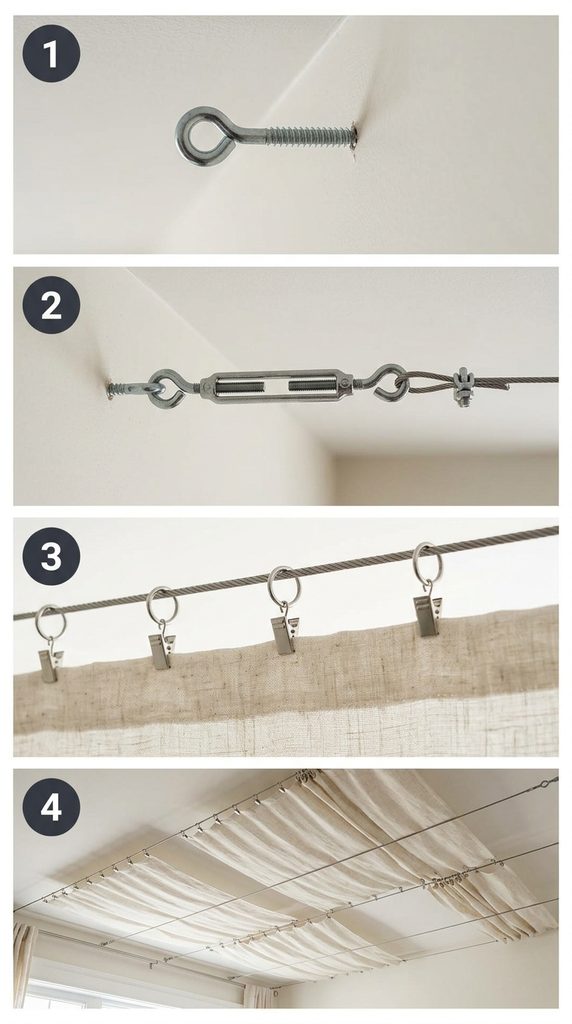
A fabric ceiling DIY with thin tension wire holds cloth flat without bulky frames. Screw small eye hooks into the walls near the ceiling line, run steel cable between them in a grid, and clip fabric to the cable with curtain rings.
Space cables about twenty-four inches apart, and tighten each one with a turnbuckle until it feels firm but not bowed. The grid lets you slide panels back and forth like curtains, so cleaning and seasonal swaps take only minutes. Sheer panels suit summer, heavier ones winter.
This method suits renters who can install hooks in walls rather than ceilings. If you enjoy simple craft projects, try these easy no-sew DIY projects to make matching pillows and complete the scene. Choose steel cable rated well above the total fabric load.
Allow two to three hours and sixty to ninety dollars, including cable, hooks, and turnbuckles. Use wall anchors rated for tension, and test the grid by hanging the heaviest fabric first. Check the wire monthly for loosening, especially near doors that slam.
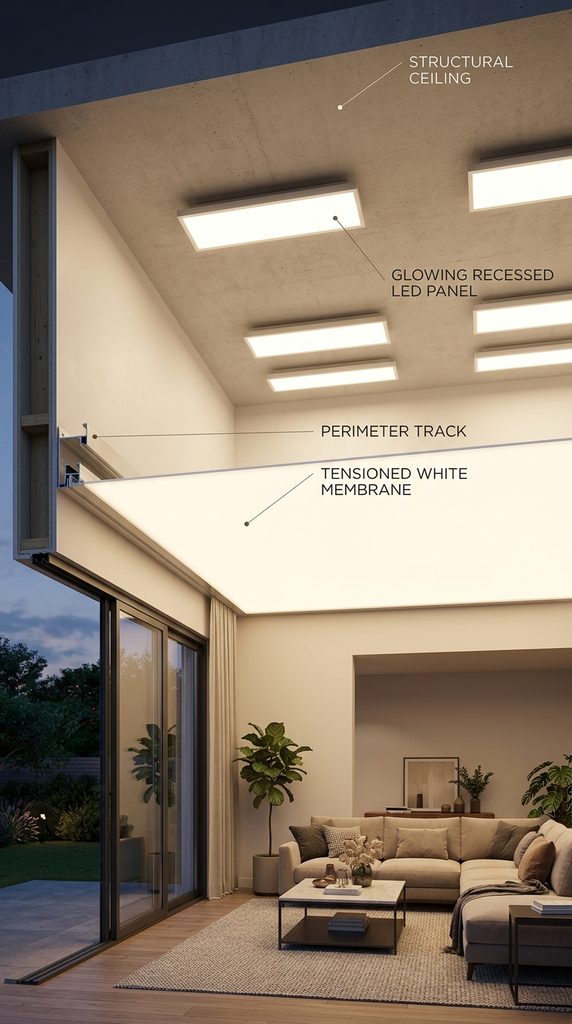
11. Install Seamless Stretch Fabric Ceiling Panels
Stretch ceiling systems give the smoothest fabric ceiling finish, similar to a taut drum. A track is fixed around the room’s perimeter, then a tensioned membrane is stretched across it and tucked in, creating a seamless surface with no sagging.
Because installation involves heat tools, precise measuring, and ceiling lights, most homeowners hire a certified installer. Quotes vary by region and room size, so ask for itemized estimates, warranty terms, and the material’s fire rating before you sign. Compare at least three bids.
Choose a matte finish for a plaster look, or satin for a soft sheen. Recessed LED lights can be mounted behind the membrane to create a glowing panel. Ask the installer whether the system can be removed later without damage.
Installation usually takes one day for a single room. Keep furniture covered and pets out of the area during work. Because the surface is delicate, avoid hanging anything heavy from it, and clean it only with a soft, dry cloth.
12. Soften Echoes With a Fabric Ceiling Treatment
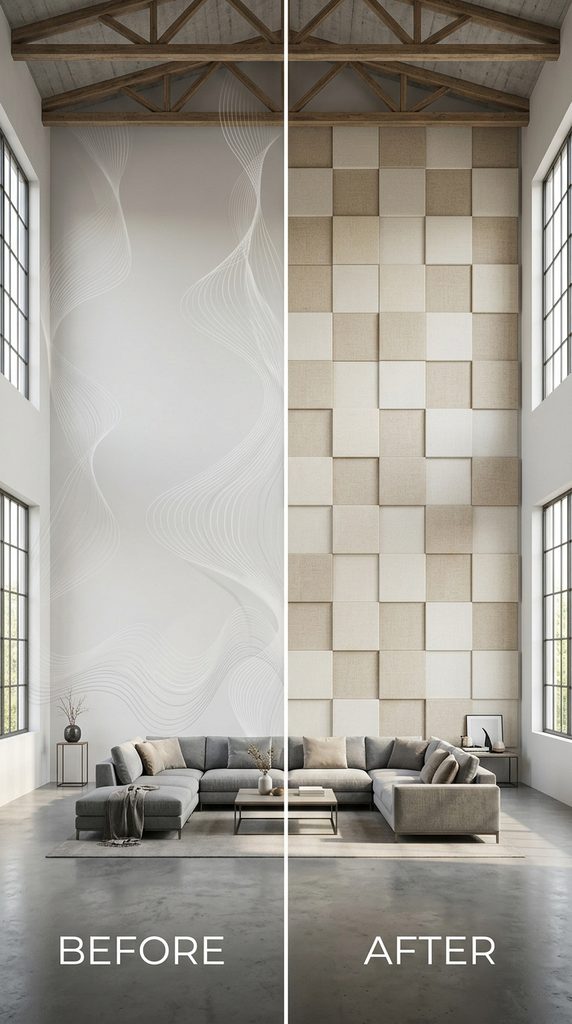
A fabric ceiling treatment can reduce echo in open rooms, home theaters, and playrooms. Fabric-wrapped acoustic panels, usually made from mineral wool or fiberglass, absorb sound before it bounces off hard ceilings and makes voices sound harsh. The fabric simply keeps the look soft and decorative.
Cover each panel with breathable, acoustically transparent fabric such as burlap, speaker cloth, or open-weave linen. Dense fabrics block sound instead of letting it through. Test a sample by blowing through it; if air passes, sound will too. Pre-wash to avoid shrinking.
Mount panels in a checkerboard pattern across the ceiling, or place them above the main seating area. Use ceiling-rated anchors or hanging cables, since a two-by-four-foot panel can weigh several pounds. Choose panels labeled with a fire rating. Securing every corner prevents slow sagging.
Plan a weekend and roughly one hundred to three hundred dollars for a living room. Hang panels four to six inches below the ceiling for extra absorption. Vacuum the fabric lightly every few months to keep dust from building up.
Fabric Ceiling Decor for Kids Rooms and Patios
13. Build a Cloud Fabric Ceiling for Kids Rooms
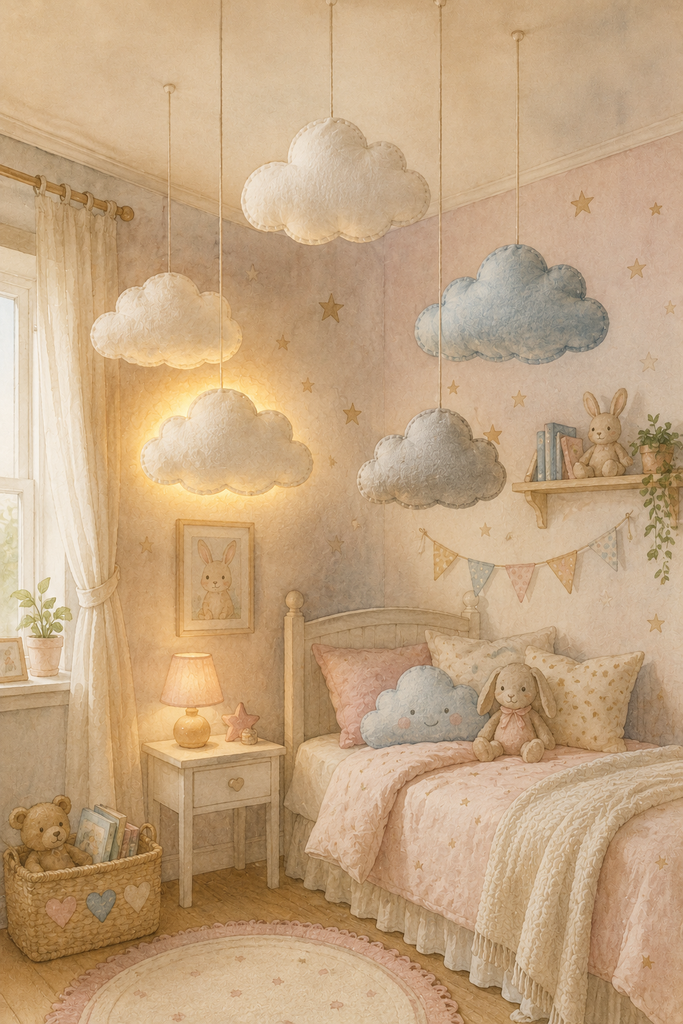
A cloud fabric ceiling turns a child’s room into a dreamy sky. Stuff white batting between two layers of light fabric, sew or glue the edges, and hang the cloud shapes from the ceiling on fishing line at different heights.
Keep every cloud under two pounds and hang each from two points so it cannot swing loose. Use ceiling hooks screwed into joists, not stick-on hooks, because children may tug. Position clouds away from beds and fans. Round every cloud edge to avoid sharp corners.
Add blue and pale gray clouds for depth, and tuck a small LED puck light behind one cloud for a soft night glow. Avoid hanging anything directly above where a child jumps. Flame-retardant fabric is the safest choice for sleep spaces.
Allow an afternoon and about forty dollars for a set of five clouds. Let children help stuff the batting, which turns the project into a family craft. Check hooks and lines every few months for fraying. Replace any line that looks worn or yellowed.
14. Shade Your Patio With Outdoor Fabric Ceiling
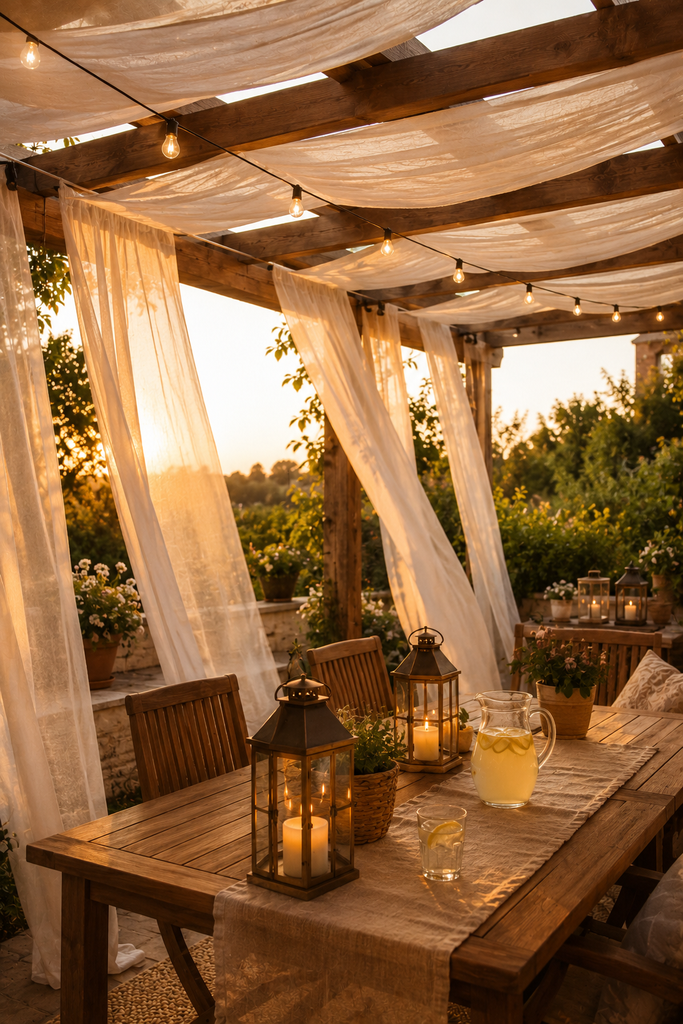
An outdoor fabric ceiling creates shade and a romantic feel on a patio, porch, or pergola. Run sheer panels across the pergola beams, or hang sail-style shades from corner posts, so sunlight filters softly and the space feels cooler. Check that posts are sturdy first.
Choose solution-dyed acrylic or outdoor polyester, which resist sun fading and mildew far better than indoor cotton. Attach panels with outdoor-rated hooks and rings, and leave a slight slope so rain runs off instead of pooling. Skip untreated cotton outdoors, since it absorbs water and rots quickly.
Secure every corner with stainless steel hardware, and take the fabric down before storms or high winds. Add string lights along the beams, keeping bulbs outside the fabric. Mix cream and soft stripes for a coastal look, or deep green for a woodland feel.
Expect a weekend and a budget of eighty to three hundred dollars, depending on size. Wash outdoor fabric with mild soap and let it dry fully before storing. Roll it rather than folding sharply to avoid permanent creases. Store it in a breathable bag.
Fabric Ceiling Questions Homeowners Often Ask
How Much Fabric Do You Need for a Ceiling?
Measure the ceiling length and width, then plan for fullness. A 12 by 12 foot ceiling needs about 11 yards of 54 inch fabric lying flat, and roughly 16 to 22 yards for soft, gathered folds. Always buy extra for pleats, trimming, and mistakes.
Is a Fabric Ceiling Safe to Install at Home?
Yes, when you use flame-retardant fabric, anchor hooks into ceiling joists, and keep cloth away from heat. Choose cool LED lights, and never place candles nearby. Heavy fabric needs rated anchors, and stretch ceilings or wiring work should go to qualified professionals.
What Fabric Works Best for Ceiling Draping?
Lightweight chiffon, voile, and cotton gauze drape best and weigh little, which makes them safe on small hooks. Linen blends and sateen suit tented ceilings, while velvet needs strong anchors. Always choose flame-retardant or treated fabric, and wash it before hanging.
Can Renters Hang Fabric From the Ceiling?
Yes. Removable adhesive clips, tension wires anchored to walls, and lightweight tapestries allow ceiling draping without painting or large holes. Check the clip’s weight rating, test a hidden spot first, and read your lease. Remove clips slowly with a hairdryer to protect paint.
How Do You Keep a Fabric Ceiling From Sagging?
Add support points every two feet, use fabric with some body such as cotton sateen, and pull the cloth taut before fixing it. Wire grids or light frames spread the load. Avoid damp rooms, since humidity relaxes fibers and makes fabric drop over time.
Does a Fabric Ceiling Really Reduce Noise?
A plain fabric layer reduces echo only slightly. Real absorption needs acoustic panels with mineral wool or fiberglass behind breathable fabric. Heavy drapery and layered folds help a little, but dedicated panels hung below the ceiling work far better in home theaters.
Final Thoughts on Your Fabric Ceiling Project
A fabric ceiling is one of the few upgrades that changes how a room feels without construction. Start small with a sheer canopy or tapestry on ceiling clips, then move toward tented designs, ceiling drapery, or stretch panels as your confidence and budget grow.
Always match the method to your ceiling, your lease, and your fabric weight, and put safety ahead of style. Which of these 14 fabric ceiling ideas will you try first? Share your favorite in the comments and pin your best look to Pinterest.
