How to Arrange Furniture in a Rectangular Living Room

How to Arrange Furniture in a Rectangular Living Room: Ideas & Inspiration
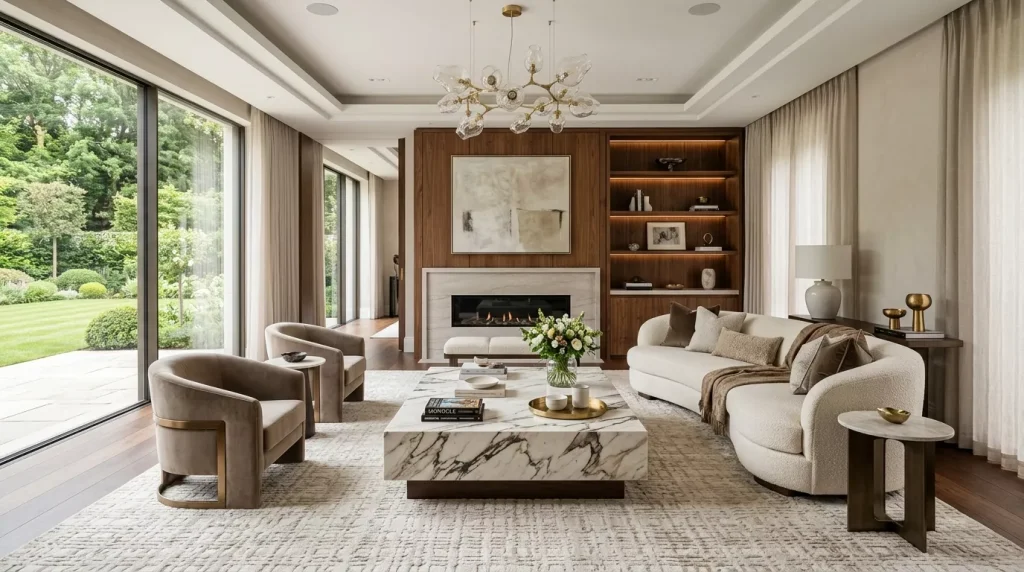
If you’ve ever stood in the middle of your living room wondering why it feels off — like no matter where you place the sofa it looks wrong — you’re not alone. Rectangular living rooms are one of the most common floor plans in homes and apartments everywhere, yet they’re also among the trickiest to furnish well. Knowing how to arrange furniture in a rectangular living room can genuinely transform a long, tunnel-like space into something that feels warm, balanced, and inviting.
This guide breaks everything down from scratch — whether you’re working with a narrow city apartment or a wide suburban living room. By the end, you’ll have a clear plan, real layout options, and the confidence to pull it all together.
Why Rectangular Living Rooms Are Tricky (And How to Fix That)
Most rectangular rooms share the same core challenge: length. The room tends to feel like a hallway stretched out, with one axis much longer than the other. Natural instinct pushes furniture flat against the walls, which actually makes the problem worse — it creates a museum-like emptiness in the middle and weak conversation zones at either end.
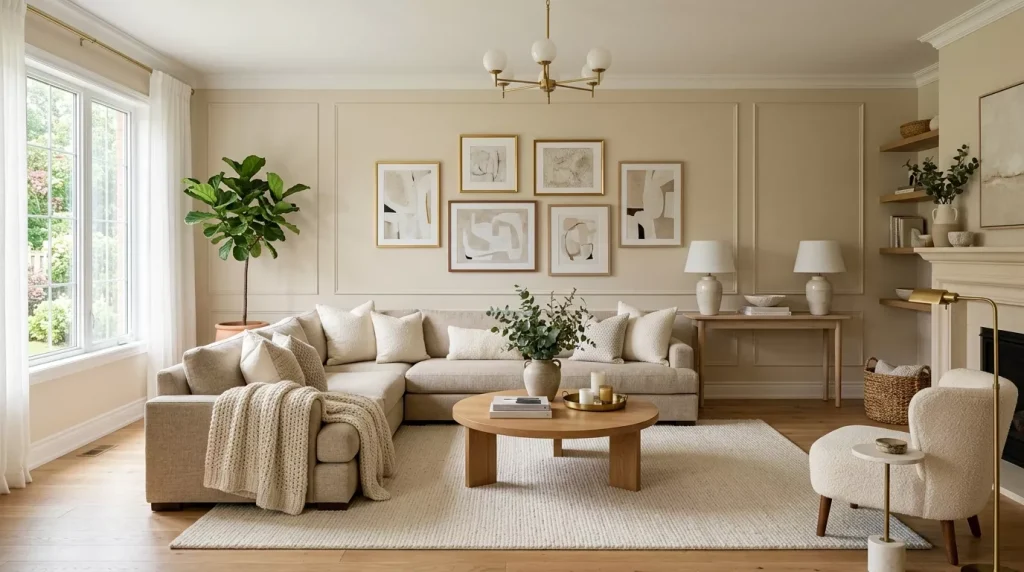
The fix isn’t about spending more money or buying new furniture. It’s about understanding how space, sight lines, and traffic flow work together.
Here’s what typically goes wrong in rectangular rooms:
- Furniture pushed against every wall — makes the room feel cold and disconnected
- No defined focal point — the eye doesn’t know where to land
- Poor traffic flow — pathways cut through conversation areas awkwardly
- Mismatched scale — one giant sofa makes the room feel even longer and flatter
- No area rug — without one, zones blur into each other and nothing feels anchored
Once you understand these pain points, fixing them becomes surprisingly straightforward.
Step-by-Step Guide: How to Arrange Furniture in a Rectangular Living Room

Step 1 — Measure Your Room First
Don’t guess. Grab a tape measure and note the full length and width of your space. Sketch it on paper or use a free room-planning tool. Mark windows, doors, outlets, and any architectural features like a fireplace.
Knowing your exact dimensions lets you scale furniture correctly before you drag anything across the floor.
Step 2 — Identify Your Focal Point
Every living room needs a visual anchor — the thing your eye travels to when you walk in. In a rectangular room, this is almost always one of the following:
- A fireplace or built-in shelving
- A large window with a view
- A TV wall or media console
- A bold piece of artwork or gallery wall

Arrange your primary seating around this focal point, not away from it.
Step 3 — Float Your Furniture Away from the Walls
This is the single most impactful change most people make. Pull your sofa at least 12–18 inches away from the wall and angle it toward the focal point. It immediately creates a cozier, more intentional conversation area.
Floating furniture also creates natural walkways behind seating — a much more elegant traffic flow than a forced pathway down the center of the room.
Step 4 — Create Defined Zones
Rectangular rooms are excellent candidates for multi-zone layouts. Rather than treating the whole length as one giant living area, divide it purposefully:
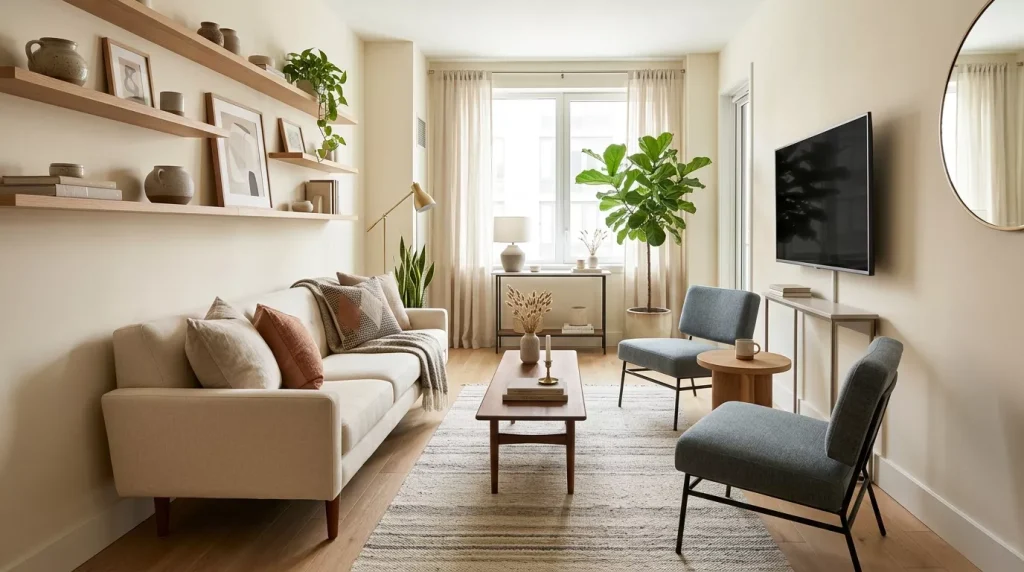
| Zone | Furniture | Function |
|---|---|---|
| Primary seating | Sofa + two chairs | Conversation, TV watching |
| Reading/accent | Armchair + floor lamp | Quiet corner |
| Transition zone | Console table, bar cart | Visual break between zones |
| Entryway buffer | Bench or narrow table | Transition from door |
Using an area rug under each zone helps visually separate them without needing physical barriers.
Step 5 — Choose the Right Seating Configuration
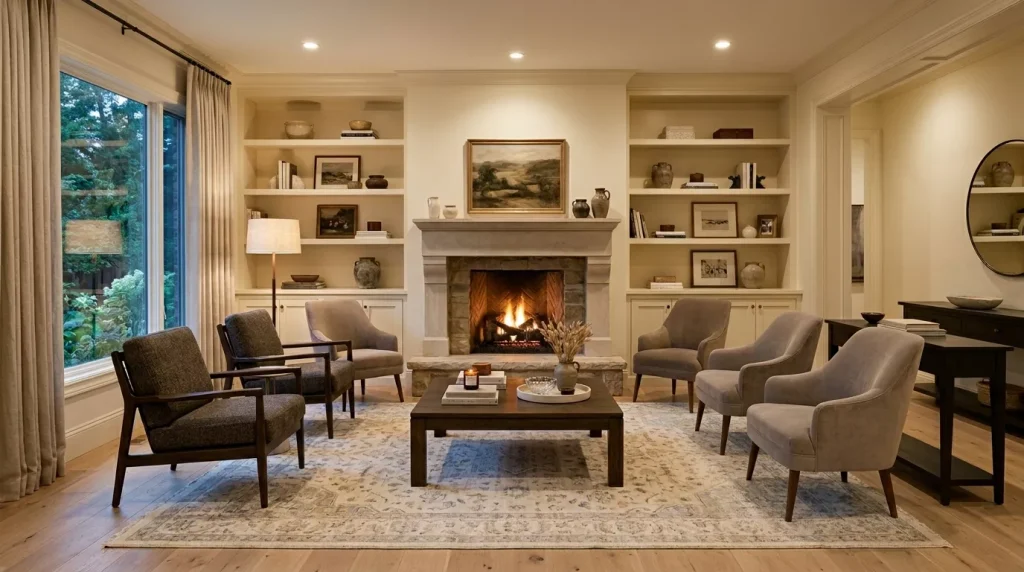
The layout of your sofas and chairs shapes the entire feel of the room. Here are the most effective configurations for rectangular living rooms:
The L-Shape Layout A sectional or sofa + chaise combination works brilliantly here. It defines one end of the room cleanly and leaves the rest open for other uses.
The Parallel Sofa Layout Two sofas facing each other with a coffee table in between — a classic arrangement that works especially well in longer rooms. It creates an intimate conversation zone and uses the length of the room deliberately.
The U-Shape Layout A sofa flanked by two accent chairs in a U-shape around a central coffee table. This is the most conversation-friendly layout and works best when the room is wide enough to prevent it from feeling cramped.
The Angled Layout Slightly angling your sofa or chairs (usually at 45 degrees from the wall) can soften the linear quality of a rectangular room and add visual interest. This works especially well in rooms where the TV and fireplace are on different walls.

Step 6 — Anchor Everything with an Area Rug
An area rug does more than decorate — it defines the boundaries of a furniture grouping and visually tells the room where one zone ends and another begins.
For a rectangular living room, choose a rug large enough that at least the front legs of all major seating pieces rest on it. A rug that’s too small is one of the most common decorating mistakes people make.
Step 7 — Balance Your Vertical Elements
Rectangular rooms often feel flat because all the furniture is roughly the same height. Break up this horizontal monotony by mixing in taller pieces:
- Tall bookshelves or floor-to-ceiling shelving
- Floor lamps beside chairs or sofas
- Tall plants (fiddle leaf figs, snake plants, or palms work great)
- Artwork hung higher than eye level to draw the gaze upward
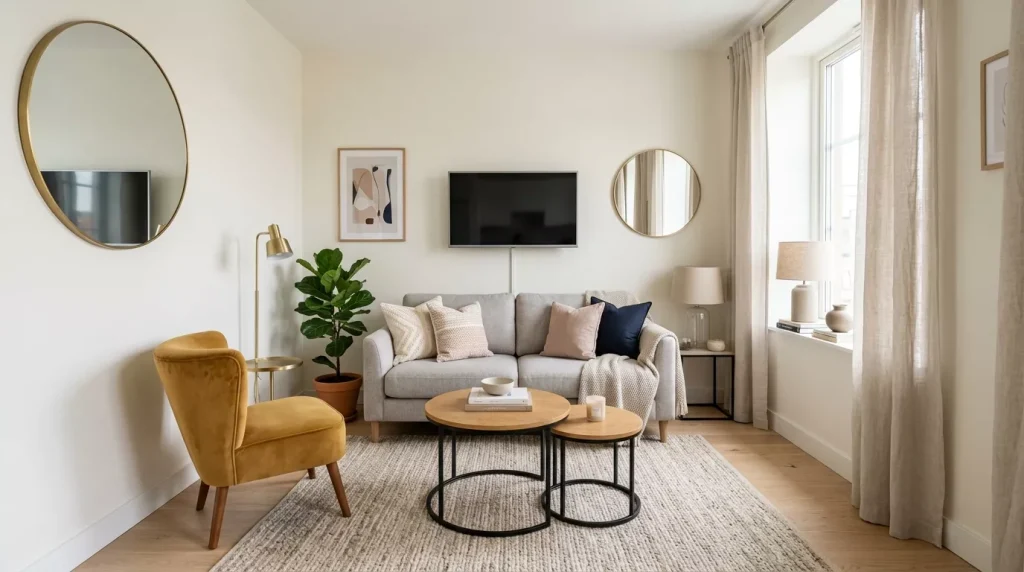
Best Furniture Layout Ideas for a Rectangular Living Room
Layout 1 — The Classic Conversation Circle
Place a sofa facing the focal point. Add two accent chairs on either side at slight angles, all three pieces facing inward toward a central coffee table. This layout works beautifully for socializing and makes the room feel intentional and curated.
Best for: Medium to large rectangular rooms, families, social entertainers
Layout 2 — The Divided Long Room
For a very long rectangular room — say 20 feet or more — divide the space into two distinct functional areas. The front half becomes the main living room with sofa and TV. The back half becomes a reading nook, home office, or secondary seating area.
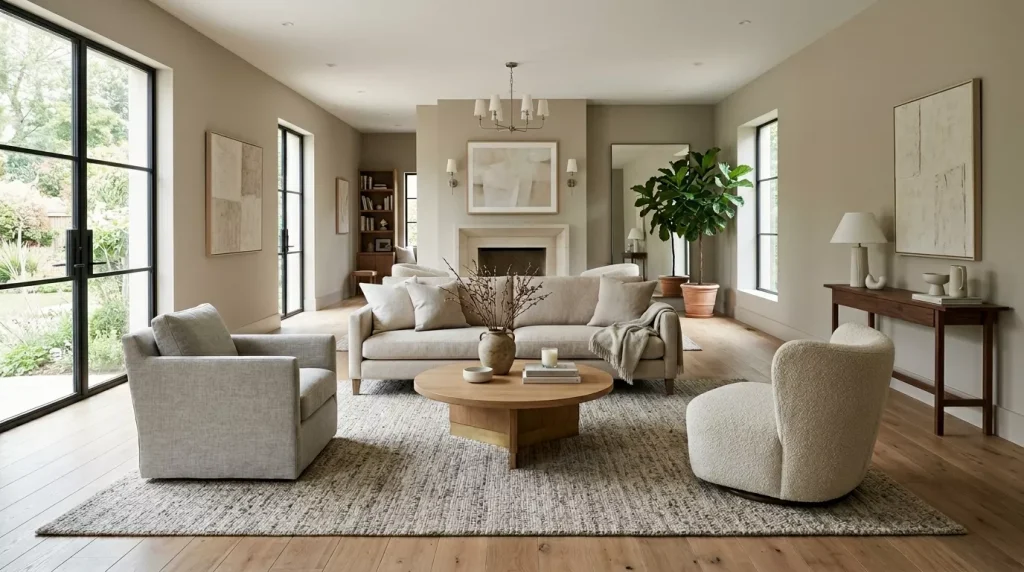
A console table or open bookshelf placed perpendicular to the wall acts as a subtle room divider without blocking light.
Best for: Long narrow rooms, open plan spaces, multipurpose living areas
Layout 3 — The Sectional Statement
A large L-shaped sectional placed in one corner instantly anchors a rectangular room. Pair it with a rectangular coffee table and a floating entertainment unit. This layout is modern, comfortable, and handles the room’s proportions without trying to fill all of it.
Best for: Contemporary homes, smaller rectangular rooms, TV-focused households
Layout 4 — The Symmetrical Arrangement
Two sofas facing each other, matched side tables at each end, and a matching pair of accent chairs flanking the focal point. Symmetry calms down the elongated shape of a rectangular room and creates a formal but welcoming atmosphere.
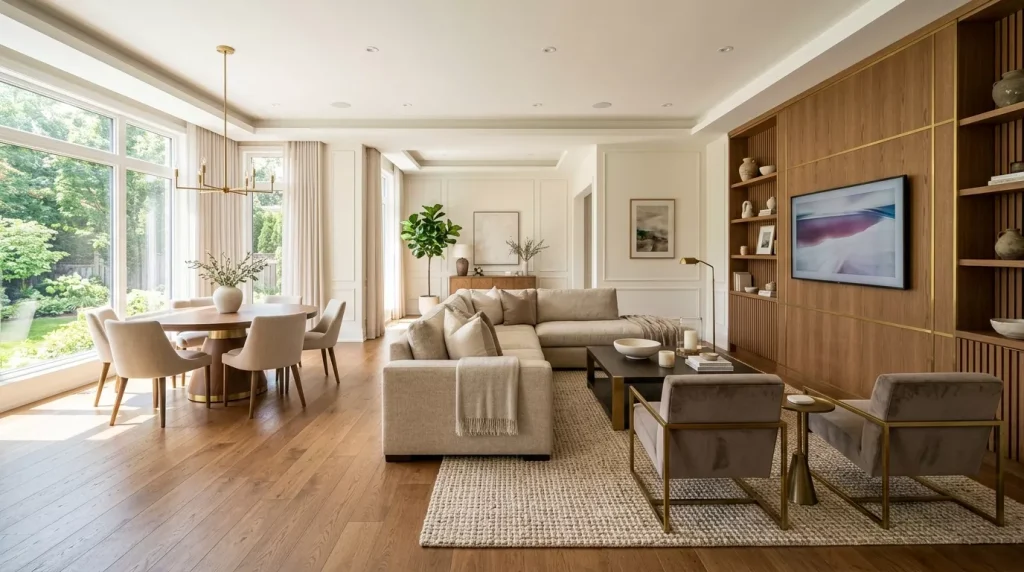
Best for: Traditional or transitional style homes, wider rectangular rooms
Pros and Cons of Common Rectangular Living Room Arrangements
| Layout Style | Pros | Cons |
|---|---|---|
| Floating furniture | Opens traffic flow, creates coziness | Feels risky to many homeowners |
| Furniture against walls | Maximizes open space | Cold, disconnected feel |
| Parallel sofas | Great conversation, classic look | Requires wider rooms |
| Sectional + open space | Modern, practical | Can overwhelm small rooms |
| Two zones | Maximizes long rooms | Requires more planning |
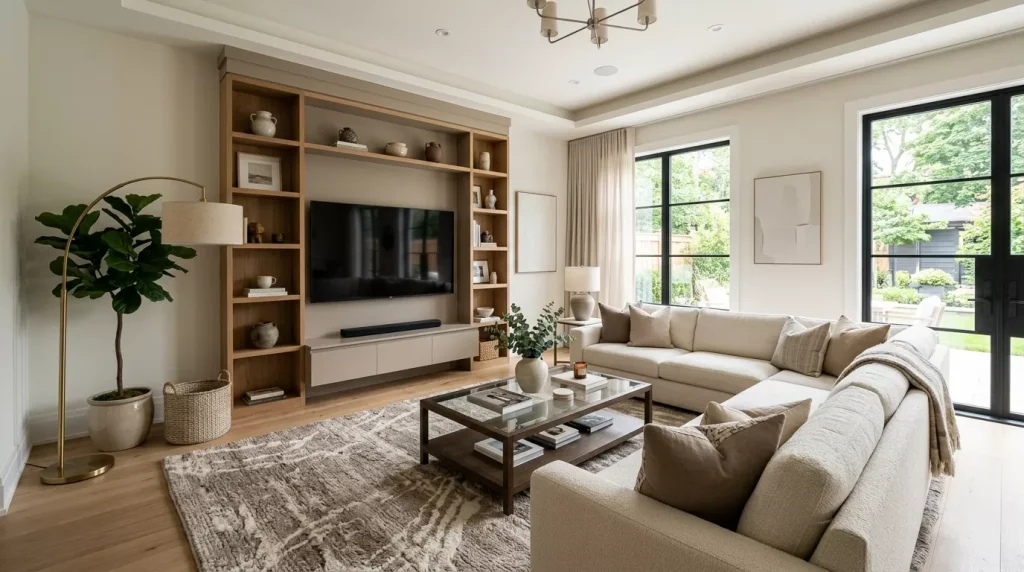
Furniture Arrangement Tips for Small Rectangular Living Rooms
Working with a smaller rectangular floor plan? These adjustments make a real difference:
- Choose legs over bulk. Sofas and chairs with visible legs feel lighter and let the eye travel under the furniture — the room reads as bigger.
- Use a loveseat instead of a full sofa. In a narrow room, scale matters more than anything else.
- Go vertical. Tall, narrow bookshelves draw the eye up and create the illusion of more ceiling height.
- Mirrors are your friend. A large mirror on the shorter wall of the rectangle visually doubles the perceived depth of the room.
- Skip the oversized coffee table. Opt for a pair of round nesting tables instead — they’re easier to navigate around and look less blocky.
- Light every corner. Dark corners make small rooms feel smaller. Floor lamps in the corners opposite your main light source balance the light and open up the space.
Common Mistakes to Avoid When Arranging a Rectangular Living Room
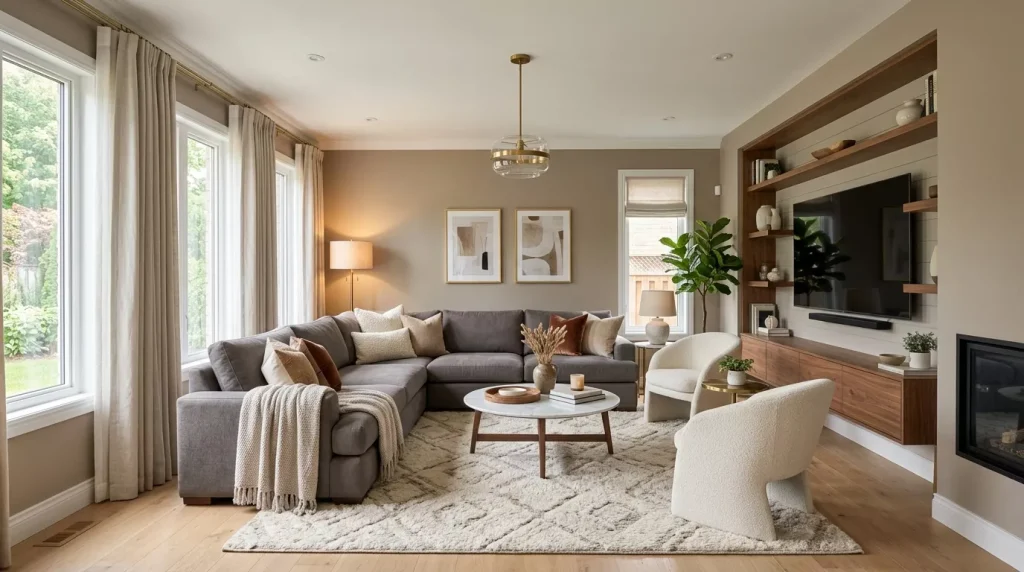
1. Pushing All Furniture Against the Walls
This is the number one mistake. It creates dead space in the middle and kills the sense of intimacy. Float your furniture.
2. Ignoring Traffic Flow
Furniture should never block a natural pathway through the room. Leave at least 30–36 inches for main walkways and 18–24 inches between pieces within a seating group.
3. Using a Rug That’s Too Small
A tiny rug floating under just the coffee table looks like a postage stamp on a large floor. Bigger is almost always better.
4. No Clear Focal Point
Without an anchor, the eye doesn’t know where to rest. If you don’t have a fireplace or strong architectural feature, create one with a large piece of artwork, a gallery wall, or a well-styled media console.
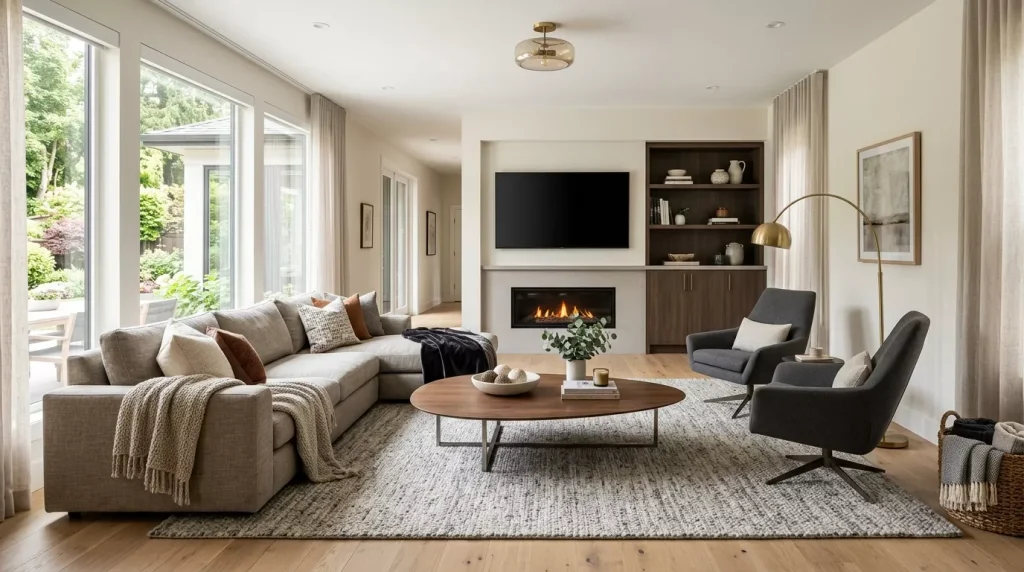
5. All Furniture at the Same Height
This creates a flat, uninspiring silhouette. Mix low seating with tall shelves, lamps, and plants.
6. Forgetting About Lighting
Overhead lighting alone creates a harsh, flat look. Layer your lighting with floor lamps, table lamps, and accent lighting to create warmth and dimension.
7. Placing the TV Too High
A TV mounted at eye level when seated is comfortable and natural. Many people mount theirs far too high, causing neck strain and making the room feel unbalanced.
Quick Tips for a Better Rectangular Living Room

Tip 1: Draw it on paper before moving a single piece of furniture. A rough sketch saves your back and your patience.
Tip 2: Use painter’s tape on the floor to outline furniture before buying anything new. This trick alone prevents countless expensive mistakes.
Tip 3: If your room has two windows on the long wall, center your sofa between them rather than in front of one.
Tip 4: A round coffee table softens the angular geometry of a rectangular room. It also makes navigation easier.
Tip 5: Don’t underestimate plants. A tall plant in an empty corner is often all a room needs to feel finished and alive.
Tip 6: Match your rug shape to your seating shape — rectangular seating arrangement gets a rectangular rug; circular or U-shaped gets a round rug.
Comparison: Open Plan vs. Closed Rectangular Living Room Layouts
| Feature | Open Plan Rectangular Room | Closed Rectangular Room |
|---|---|---|
| Zoning need | High — must create visual boundaries | Lower — walls do the work |
| Furniture floating | Essential | Recommended |
| Area rug importance | Very high | High |
| Noise management | Challenging | Easier |
| Flexibility | More flexible with layout | More structured |
| Best furniture style | Modular, multi-functional | Traditional, defined pieces |
Open plan rectangular rooms benefit most from the “two zone” approach, while closed rectangular rooms can work beautifully with a single, well-anchored conversation group.
FAQs: How to Arrange Furniture in a Rectangular Living Room
Q1. What is the best sofa placement in a rectangular living room?
The best placement is to float the sofa away from the wall, facing your room’s main focal point — whether that’s a fireplace, TV wall, or large window. Avoid pushing it flat against the longest wall, as this spreads the room out too much and kills any sense of coziness.
Q2. How do you make a long narrow rectangular living room feel wider?
Place furniture across the width of the room rather than along the length. Use a sofa on the shorter wall facing inward, add accent chairs on the sides, and hang a large mirror or piece of horizontal artwork on the longest wall. Light-colored walls, rugs with horizontal patterns, and low-profile furniture also help widen the visual field.
Q3. Can you put a sectional sofa in a rectangular living room?
Absolutely. A sectional works beautifully in a rectangular room when placed in one corner, with the longer section running parallel to the longer wall. This anchors the space without cramming furniture against every wall, and leaves room for other zones or open space to breathe.
Q4. Where should the TV go in a rectangular living room?
Ideally, the TV should be on one of the shorter walls of the rectangle. This allows seating to face it naturally along the room’s length, without everyone having to crane sideways. Avoid placing it on the longest wall, which tends to flatten the room and disrupt the natural proportions of the seating arrangement.
Q5. Should the area rug be placed under all the furniture or just part of it?
The most practical rule is that the front legs of all primary seating pieces — sofa and accent chairs — should rest on the rug. This anchors the conversation group without requiring an enormous rug. However, if your room is large and the rug is big enough, having all four legs of each piece on the rug is perfectly fine and looks very intentional.
Q6. How do I divide a very long rectangular living room into two areas?
Use a console table, low bookshelf, or open shelving unit placed perpendicular to the wall as a soft divider between zones. Alternatively, define each zone with its own area rug — the two separate rugs create a visual boundary without any physical barrier. Varying the lighting (a floor lamp in one zone, a pendant in another) also reinforces the separation.
Q7. What size rug works best in a rectangular living room?
For most standard rectangular living rooms, an 8×10 foot rug is the go-to starting point. Larger rooms (over 15 feet long) often benefit from a 9×12. The key is that the rug should be large enough for at least the front legs of your sofa and chairs to rest on — anything smaller will look undersized and unanchored.
Conclusion: Your Rectangular Living Room Has More Potential Than You Think
Arranging furniture in a rectangular living room isn’t about fighting the room’s shape — it’s about working with it. Once you understand the basics of floating furniture, creating a focal point, defining zones, and balancing vertical and horizontal elements, even the most awkward long room can become a space you genuinely love spending time in.
The biggest takeaway? Stop pushing everything against the walls. Float your sofa. Anchor it with a proper rug. Create a conversation zone that feels intentional. Everything else falls into place from there.
Ready to transform your space? Start with a tape measure and a pencil sketch — map out one of the layout ideas in this guide and see how it works for your specific room dimensions. You don’t need to renovate. You don’t need new furniture. You just need a better plan.
If this article helped you think differently about your rectangular living room, share it with someone who’s been wrestling with the same challenge. Great design isn’t about perfection — it’s about making your space work for the life you actually live.