14 Beautiful Garden Gazebo Ideas to Transform Your Outdoor Space

Garden Gazebo Ideas That Transform Backyards
Garden gazebo ideas range from rustic cedar cottages to sleek metal hardtops and airy pergola styles. A well-placed gazebo adds shade, shelter, and a defined spot for dining, reading, or entertaining, and it turns an unused corner of the yard into the favorite room of the house.
These 14 ideas cover wood and metal gazebos, DIY builds, pergolas, seating areas, and gazebo decorating ideas for a party garden. Each one lists materials, sizes, rough costs, and safety tips, so you can plan a beautiful outdoor gazebo for any backyard.
Measure your space first, check local planning rules and HOA requirements, and call before you dig to locate buried utilities. Choose materials suited to your climate, from sunny desert patios to rainy British lawns. The table below compares cost and time for each idea.
| Idea | Cost | Time | Best For |
|---|---|---|---|
| 1. Octagonal cedar gazebo | $$$$ | 1 weekend | Classic garden centerpiece |
| 2. Rustic timber-frame | $$$$ | Several weekends | Woodland and pond settings |
| 3. Modern slatted wood | $$$$ | 1 weekend | Contemporary homes |
| 4. Hardtop metal | $$$ | 1 day | Low-maintenance yards |
| 5. Wrought iron | $$$ | 1 day | Formal and cottage gardens |
| 6. Pergola with retractable roof | $$$$ | 1 to 2 days | Changeable weather |
| 7. DIY wood gazebo | $$ | 2 to 3 weekends | Budget builders |
| 8. DIY pergola with vines | $$ | 1 long weekend | Natural, growing shade |
| 9. Built-in bench seating | $$ | 1 weekend | Outdoor rooms |
| 10. Fabric gazebo | $ | 1 afternoon | Parties and rentals |
| 11. Curtains and lights | $$ | 1 afternoon | Romantic evenings |
| 12. Party decorations | $ | 2 to 4 hours | Birthdays and showers |
| 13. UK weatherproofing | $$$ | 1 weekend | Wet, windy gardens |
| 14. Spot, size, and base | $ | 1 day planning | Every build |
Wood Gazebo Ideas for Warm, Natural Style
1. Build a Classic Octagonal Cedar Garden Gazebo
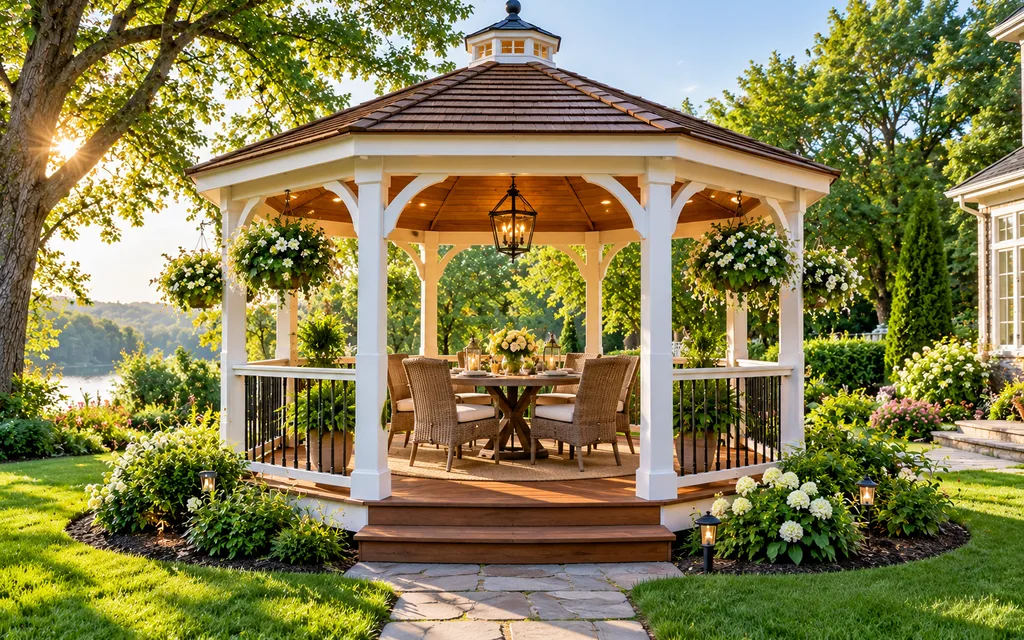
An octagonal cedar gazebo is the classic centerpiece for a garden. Eight sides, a peaked shingled roof, and railings create a timeless look that suits cottage gardens, large lawns, and traditional homes, and the shape feels welcoming from every angle.
Most kits measure ten to twelve feet across and come with pre-cut cedar posts, rafters, and railings. Set the base on a concrete pad, pavers, or a pressure-treated deck platform. Cedar resists rot naturally, but a clear sealer helps it age evenly.
Add a cupola on the roof for ventilation, and paint the trim white for a crisp contrast against green foliage. Place a round table and six chairs inside, since the octagon shape suits circular dining and conversation far better than a rectangle.
Expect 3,000 to 9,000 dollars for a quality kit, plus a weekend of assembly with two helpers. Check local permit rules, and level the base carefully. Reseal the wood every two to three years to keep it looking fresh. Use stainless screws near ground level.
2. Raise a Rustic Timber-Frame Garden Gazebo
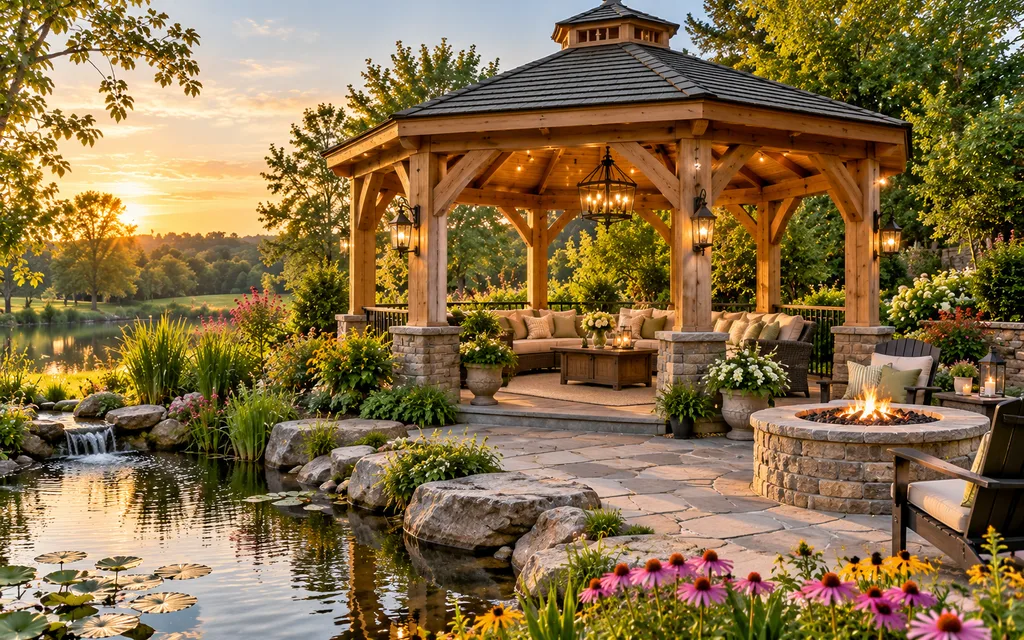
A rustic timber-frame gazebo brings craftsmanship and warmth to a garden. Chunky posts, exposed beams, and a pitched roof create a lodge-style shelter that looks at home near woods, ponds, and wildflower borders, and ages beautifully with weather. Its sturdy look feels permanent and welcoming.
Use rough-sawn cedar, Douglas fir, or larch posts about six by six inches, joined with galvanized brackets or traditional mortise and tenon joints. Keep spans modest, around ten feet, to avoid sagging. A cedar shake or standing seam metal roof adds durability.
Finish with a natural oil or semi-transparent stain that lets the wood grain show. Add a stone fire pit nearby, a slate floor, and wrought iron lanterns. Keep any fire pit at a safe distance from the roof and local rules in mind.
Plan 4,000 to 12,000 dollars for materials and a skilled carpenter, or build it yourself over several weekends. Get posts set on concrete piers below the frost line. Inspect joints each spring, and tighten any hardware that has loosened. Treat all end grain before assembly.
3. Choose a Modern Slatted Wood Gazebo Design
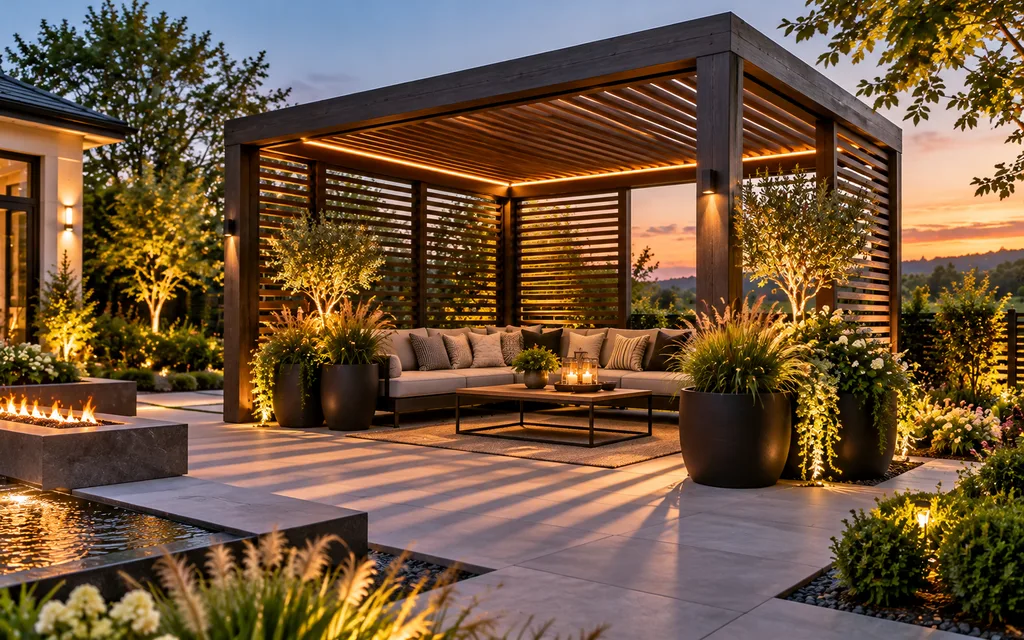
A modern slatted wood gazebo gives a garden clean lines and dappled shade. Evenly spaced horizontal slats on the roof and sides create striking shadows, and the minimalist frame suits contemporary houses and small, tidy gardens. The look is calm, architectural, and surprisingly warm.
Build with cedar or thermally modified timber in a dark charcoal, natural, or warm walnut finish. Space one-by-three slats about one inch apart for balanced shade and airflow. Use stainless steel screws, which resist rust and stains on the wood.
Keep furniture simple: a low sofa, a slim table, and a few outdoor rugs. Add built-in LED strips along the beams for a soft glow. Plants in large black planters echo the frame and soften the sharp lines. Choose weatherproof cushions in neutral tones.
Expect 3,000 to 10,000 dollars, depending on size. Slats offer partial shade only, so add a retractable canopy for rain. Reapply stain every one or two years, and check screws after storms. Hire a licensed electrician for any permanent wiring, and use outdoor-rated fixtures only.
Metal Gazebo and Pergola Ideas for Outdoors
4. Pick a Hardtop Metal Gazebo for Easy Care
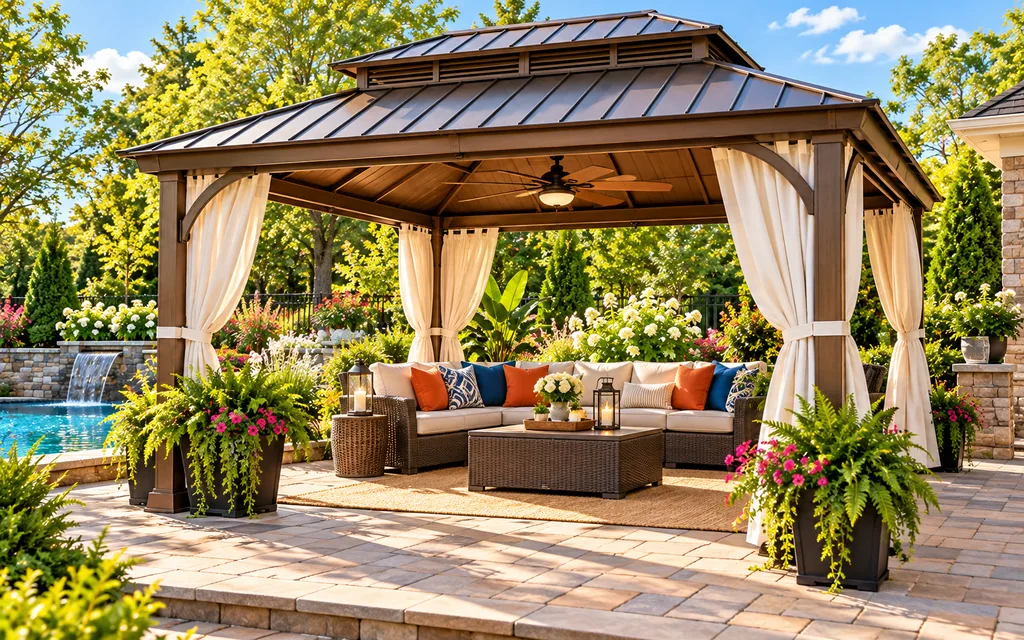
A hardtop metal gazebo is the easiest option for busy gardeners. Powder-coated aluminum or galvanized steel frames resist rot, insects, and weather, and the solid roof keeps seating dry during surprise showers and shaded through summer afternoons. It is a smart pick for rentals and busy families.
Choose a rust-resistant frame with a double-tiered roof for ventilation, and look for a snow load rating if you live in a cold region. Anchor the legs into concrete or a deck with the bolts supplied, never just stakes. Ask about wind ratings before buying.
Metal gazebos pair well with outdoor curtains, mosquito nets, and bright cushions. A neutral frame in bronze, black, or gray blends into planting beds. Add a slim ceiling fan in warm climates for steady airflow. Frames in muted tones look less industrial and age gracefully outdoors.
Expect 800 to 4,500 dollars for most hardtops. Assembly takes two people about a day. Check the warranty for rust and roof coverage, and tighten bolts each spring since metal can shift with temperature changes. Keep spare bolts and touch-up paint handy for quick fixes.
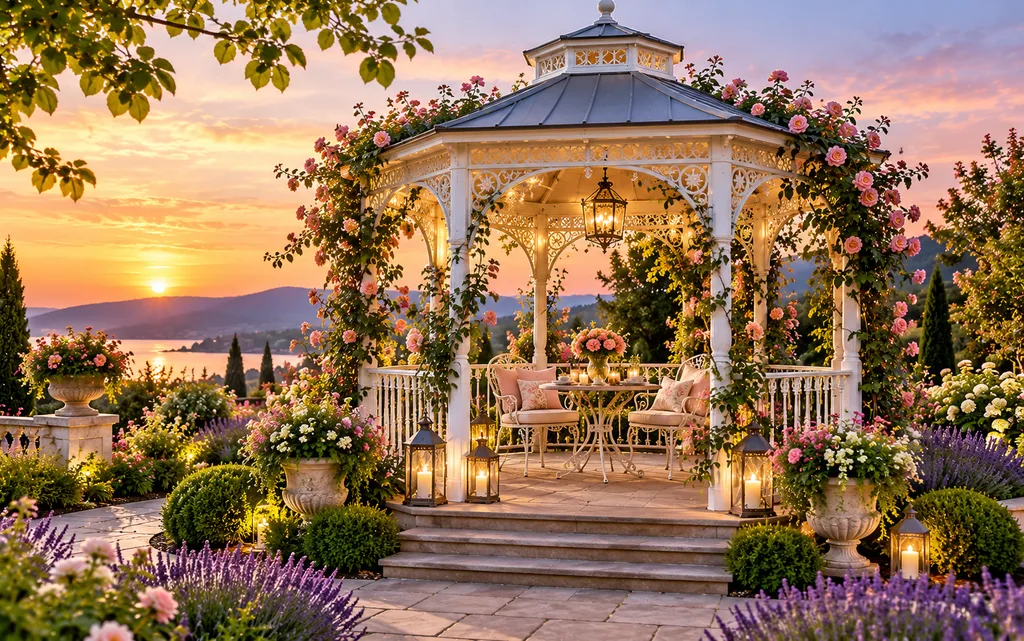
5. Add Victorian Charm With a Wrought Iron Gazebo
A wrought iron gazebo adds romantic Victorian charm to formal and cottage gardens. Scrollwork, curved roof lines, and a delicate frame create an elegant focal point that looks stunning with roses, lavender, and climbing clematis. Small-scale designs suit compact lawns and shady corners particularly well.
Choose powder-coated cast aluminum or wrought iron with a protective finish, since bare iron rusts. Pair it with a stone or brick base for stability. Keep the footprint around eight to ten feet for a classic, intimate scale. Check that joints are welded, not glued.
Furnish it with a wrought iron bistro set, a lantern, and a pot of seasonal flowers. Allow roses to climb the frame, trimming gently each year. A white or deep green finish suits traditional planting schemes beautifully. Keep cushions light in color to brighten the dark frame.
Plan 1,200 to 7,000 dollars, depending on detail and material. Touch up chips with rust-inhibiting paint right away. Anchor into a solid base, and clean the frame twice a year with mild soap and water. Repaint every few years to keep the finish smooth and rust-free.
6. Try a Pergola Gazebo With a Retractable Roof
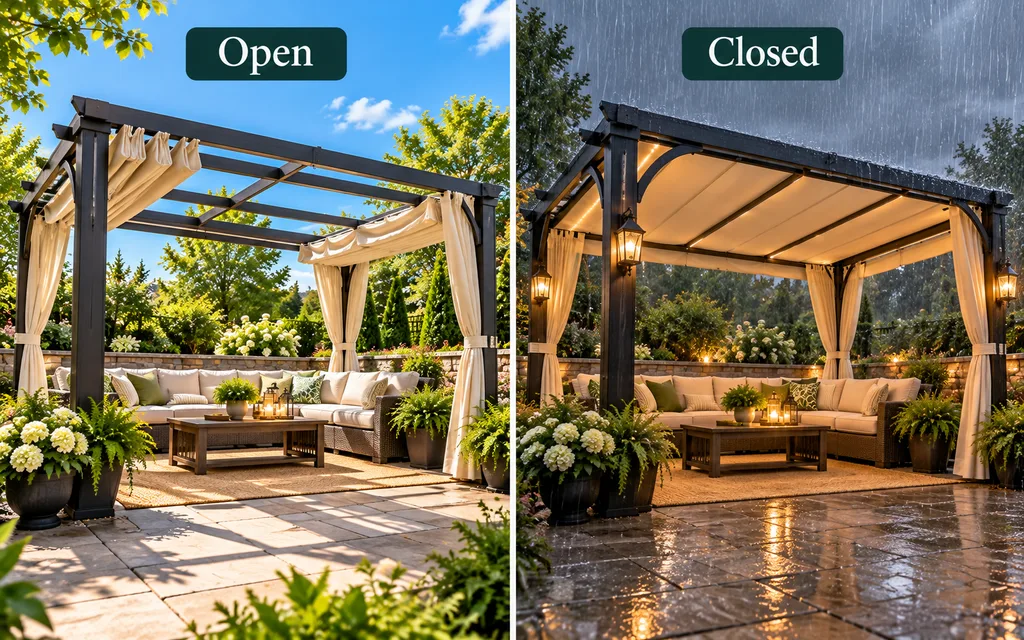
A pergola-style gazebo with a retractable roof gives you open-air airiness and shelter in one structure. Slatted beams or louvers filter sun, while a fabric canopy or louvered panels close when rain or harsh sun arrives. It is a flexible choice for changeable weather.
Use four-by-six cedar or aluminum posts, and mount tracks along the top beams for a retractable canopy. Aluminum louvered roofs can open and close with a remote, but they cost more. Anchor posts securely, because canopies catch wind. Pre-drill holes to prevent splitting near the ends.
Plan the layout around seating or dining, with the longest side facing your best view. Add sheer curtains, climbing vines, or hanging planters on the sides for privacy. Choose outdoor-rated fabric for the canopy to resist fading. Leave a clear path to the entrance.
Budget 2,500 to 12,000 dollars, depending on the roof system. Retract fabric before heavy wind, snow, or storms. Check local rules, because attached structures often require permits, and call utilities before digging footings. Ask installers for warranties on motors, tracks, and fabric before you sign.
DIY Gazebo Ideas for Seating Areas on a Budget
7. Assemble a DIY Wood Gazebo From Basic Lumber
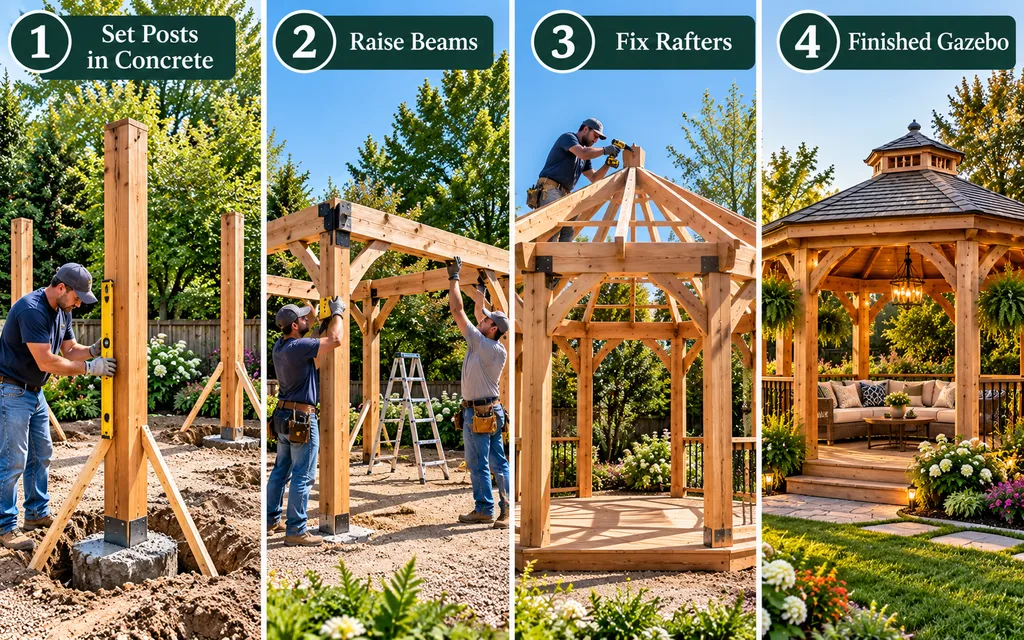
A DIY wood gazebo from basic lumber is the most budget-friendly way to get a custom structure. With a ten by ten foot footprint, six posts, and a simple pitched roof, a confident beginner can finish the build in two or three weekends.
Set four-by-four or six-by-six posts into concrete footings or onto metal post bases, and level every post before bracing. Use two-by-six beams and two-by-four rafters, and sheathe the roof with plywood before adding shingles or metal. Check each post with a level on two sides.
Pressure-treated lumber lasts longest on the ground-contact parts, while cedar looks better above. Stain all cut ends and use galvanized or stainless fasteners. Download free plans from reputable home improvement sites, then adjust sizes to fit your garden. Pre-drill holes to avoid splitting boards.
Expect 1,000 to 3,500 dollars in materials. Wear eye and ear protection, use a stable ladder, and have a helper for roof work. Check permit requirements first, and call 811 or your local utility locator before digging. Keep a first-aid kit nearby while building.
8. Train Vines Over a DIY Pergola Gazebo Frame
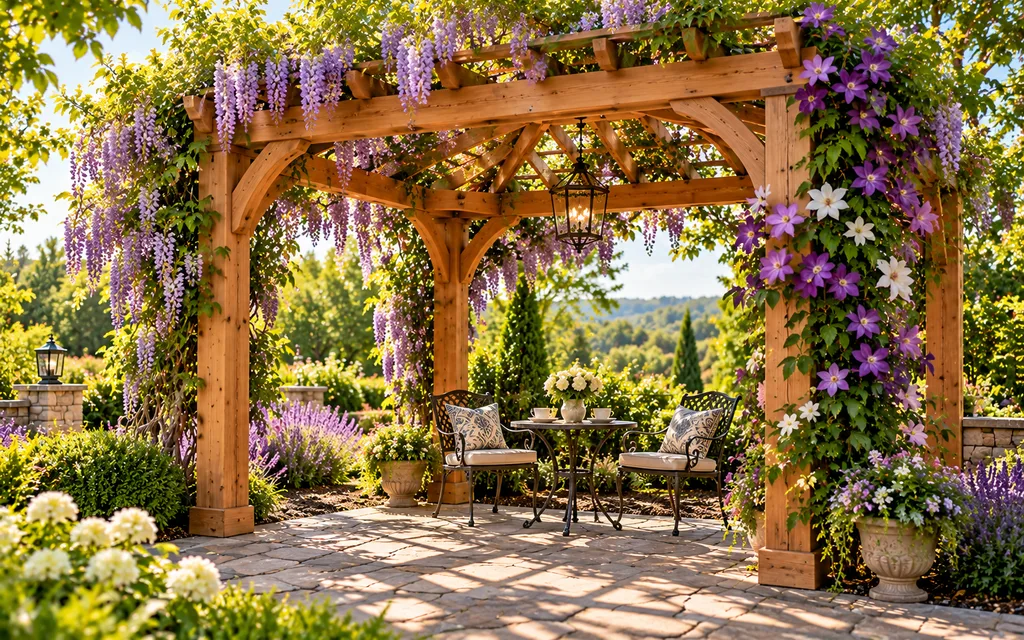
A DIY pergola gazebo frame covered in vines combines a gazebo’s presence with a pergola’s open charm. Four posts and crossbeams support climbing plants that grow into a living roof, creating shade that changes with the seasons. It is a rewarding project that improves every year.
Build the frame from cedar or pressure-treated posts, spacing rafters about twelve inches apart. Add wire or trellis panels on the sides to guide climbers. Choose plants that suit your climate, such as wisteria, clematis, jasmine, or grapevines. Space posts evenly so loads stay balanced.
Vines take two to three growing seasons to cover the top, so add a sheer fabric panel or slatted shade cloth for early shade. Prune each year after flowering to keep the structure healthy and the plants from overloading the beams.
Plan 600 to 2,500 dollars and a long weekend. Avoid heavy vines like mature wisteria on weak frames, because they can grow very heavy. Inspect the posts annually for rot where wood meets soil or concrete. Keep vines trimmed back from roofing and gutters.
9. Add Built-In Benches for a DIY Seating Area
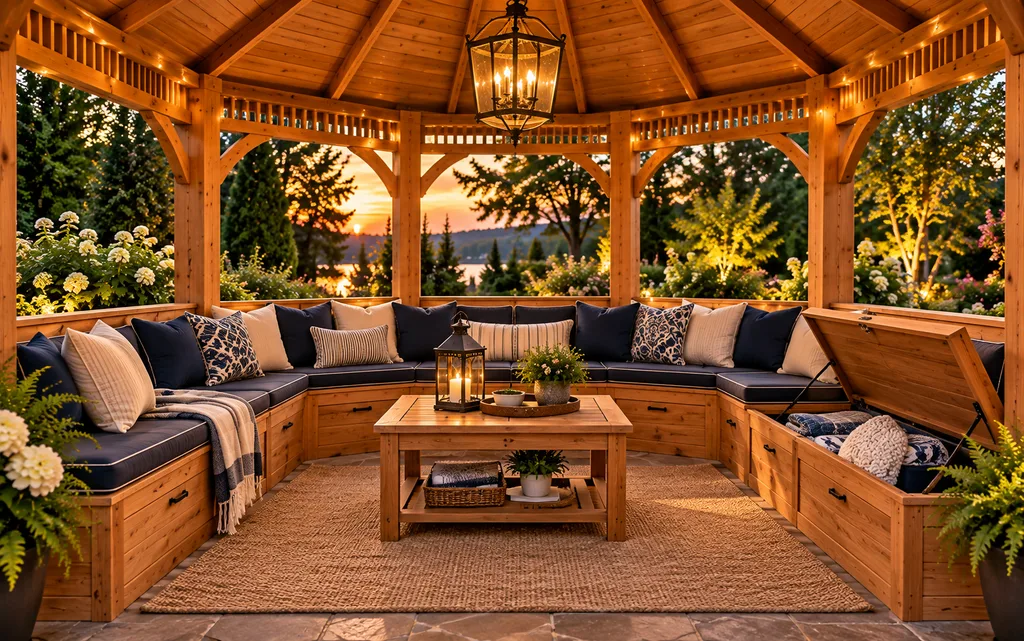
Built-in benches turn a DIY gazebo into a true outdoor room. Seating along two or three sides saves space, gives everyone a place to sit, and lets you use the center for a table or fire-safe lantern display. The setup feels cozy and organized.
Frame benches with two-by-fours about eighteen inches high and sixteen to twenty inches deep, and top them with cedar boards spaced one-eighth inch apart for drainage. Add hinged lids to create storage for cushions and blankets. Slope seats slightly so rain drains away.
Cover benches with weather-resistant cushions in cream, navy, or sage, and add throw pillows for color. For matching covers, try these easy no-sew DIY pillow projects and swap fabrics seasonally. A small coffee table finishes the setup. Pick quick-dry foam to prevent mildew.
Allow a weekend and 200 to 700 dollars for lumber and hardware. Seal the seats and lids with exterior finish. Keep hinges rust-resistant, and store cushions inside during long rainy periods to prevent mildew. Wipe cushions and lids regularly, and tighten bench screws each spring.
10. Pitch a Budget Fabric Gazebo in One Afternoon
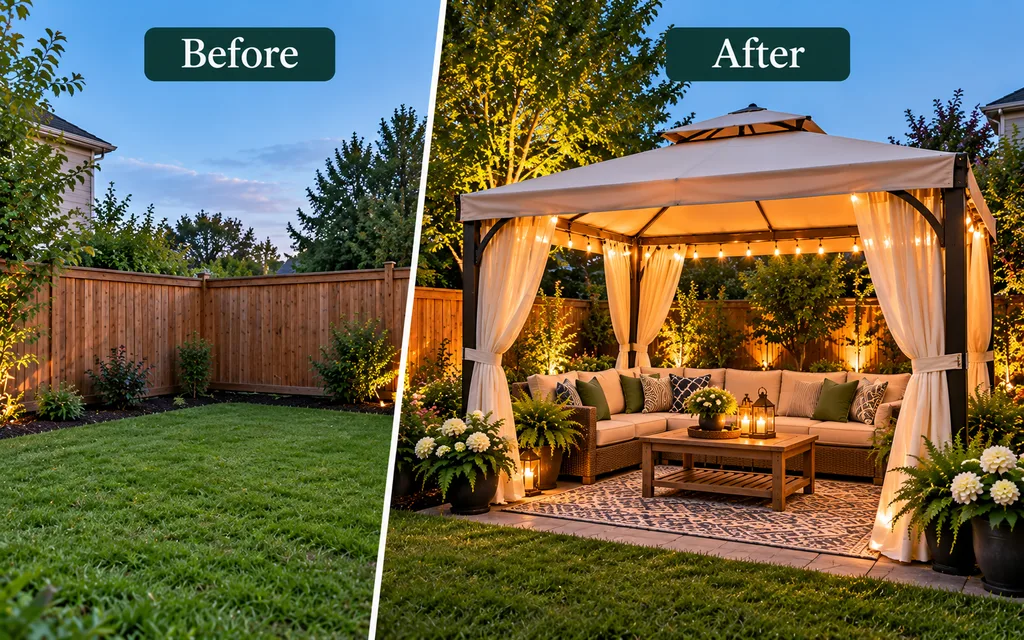
A fabric gazebo is the fastest budget solution. A steel or aluminum frame and a waterproof canopy go up in an afternoon, giving instant shelter for parties and everyday lounging without any digging, cutting, or permanent construction. It also works well for temporary events and rentals.
Look for a frame with powder-coated steel legs, a vented top for wind, and a polyester canopy with UV protection. Add sidewalls or mosquito netting for privacy. Weight each leg with sandbags, or bolt them to a deck. Choose a canopy with taped seams.
Upgrade the look with outdoor curtains, a rug, and string lights. Neutral canopy colors blend with plants, while striped fabric adds a cheerful, casual touch. Keep the canopy taut so water runs off instead of pooling. A small rug defines the seating area nicely.
Budget 150 to 800 dollars. Fabric gazebos are not storm-proof, so take down the canopy during heavy wind, snow, or hail. Dry fabric completely before storing it, and replace worn canopies instead of patching them repeatedly. Check the manufacturer’s wind rating before the season begins.
Gazebo Decorating Ideas for a Party Garden
11. Layer Curtains and Lights for Gazebo Decor
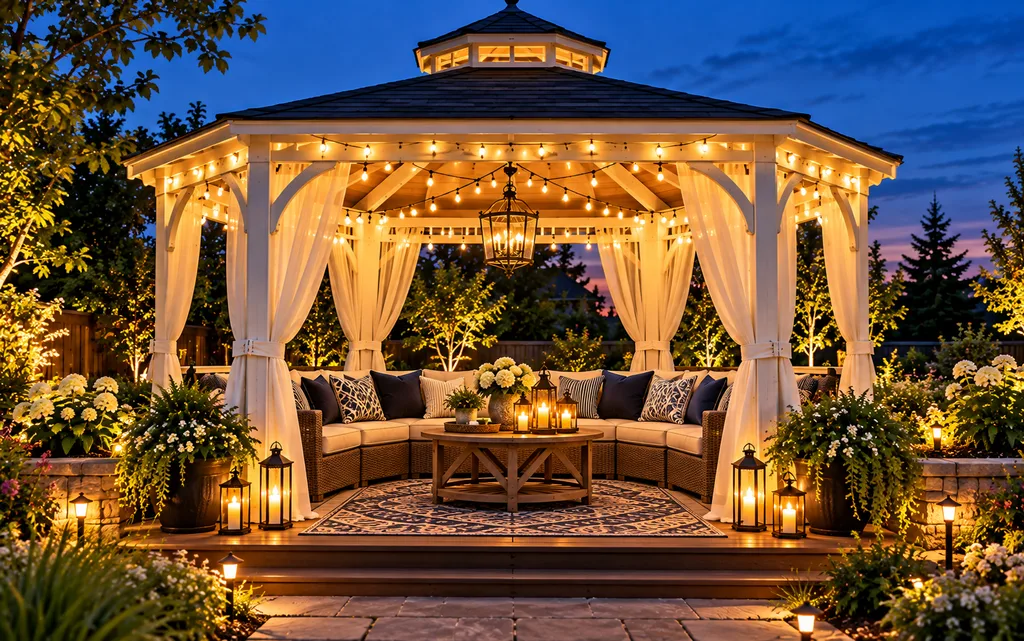
Garden gazebo decoration ideas start with curtains and lights. Sheer panels soften the frame, string lights create a glowing ceiling, and lanterns add warmth, turning a plain structure into a romantic retreat from sunrise to well after dark. The effect feels intimate yet grand.
Hang outdoor-rated curtains from rods or ceiling hooks, and tie them back with rope or ribbons. Choose UV-resistant fabric in white, cream, or soft sage. Drape warm white LED string lights across the roof beams in a zigzag pattern. Test the zigzag pattern before fastening anything permanently.
Add layers with a large outdoor rug, a lantern cluster on the table, and potted plants on the steps. Use flameless candles for safety around fabric. Mix textures such as linen, rattan, and woven cushions for a collected look. Repeat colors for a calm, cohesive scheme.
Plan 100 to 500 dollars for curtains, lights, and accessories. Use outdoor-rated extension cords and a weatherproof timer. Bring cushions inside during rainy weather, and wash curtains seasonally to keep them looking crisp and fresh. Label light strands by section so storage and setup stay simple.
12. Decorate a Gazebo for a Garden Party Night
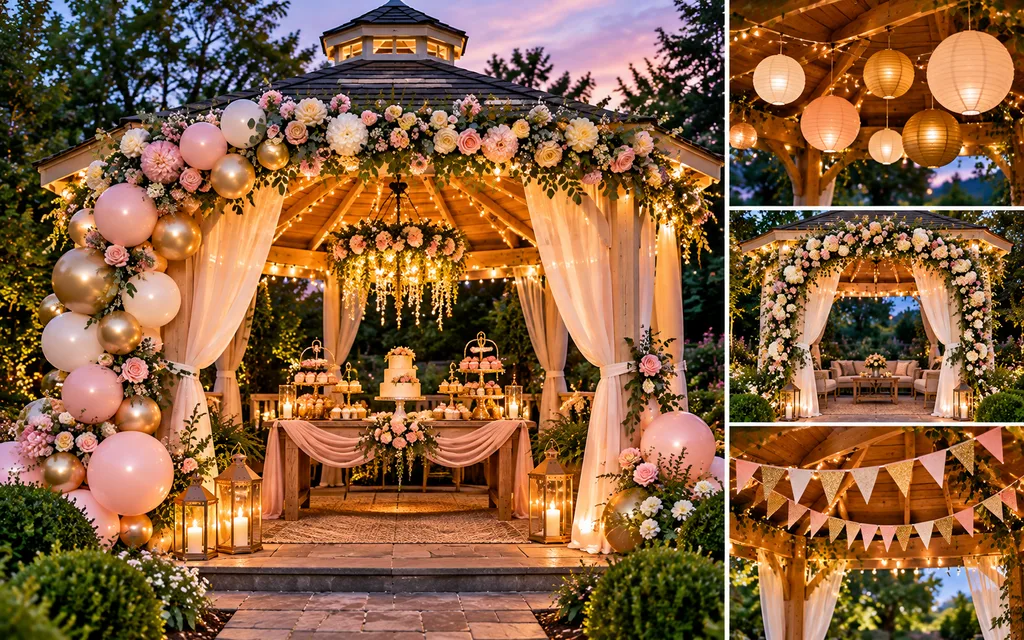
Gazebo decorating ideas for a party garden transform the structure into a festive stage. Use balloon garlands, paper lanterns, flower arches, and bunting to create a welcoming scene for birthdays, bridal showers, anniversaries, and summer evening dinners. Pick a theme early so every purchase fits together.
Hang floral garlands along the roofline and wrap each post in greenery and ribbon. Place a buffet table or cake stand under the gazebo, and add a signature color palette, such as blush and gold. Fairy lights make photos glow.
Use removable adhesive hooks, floral wire, and outdoor-safe ties instead of nails. Keep walkways clear, and place a trash bin and drinks station nearby. Add a sign or chalkboard at the entrance to welcome guests. Test adhesive hooks on a small area first so paint stays intact.
Allow two to four hours to decorate and 80 to 300 dollars for supplies. Check the weather forecast and have a rain plan. Remove balloons and paper decor before storms, and never leave candles unattended near drapes. Keep a basket of spare ties and tape on hand.
Plan Your Gazebo for UK and US Backyards
13. Weatherproof a Gazebo for Wet UK Gardens
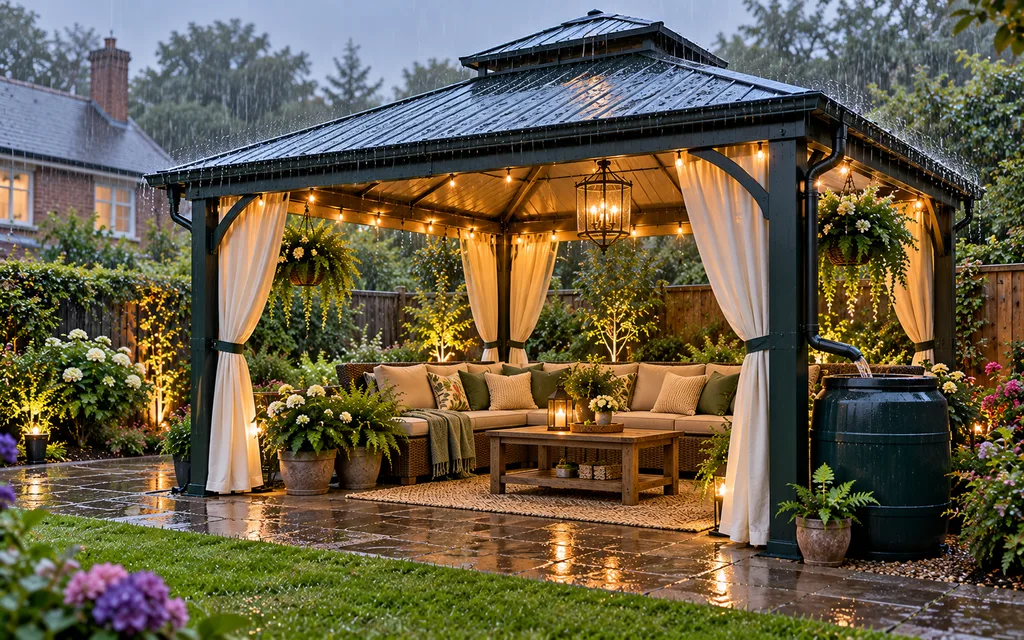
Wet UK gardens need a gazebo that handles rain, wind, and damp. A solid hardtop roof, treated timber or powder-coated aluminum, and good drainage keep the structure sound through mild, soggy winters and breezy summer evenings. Choose finishes made for damp climates and coastal salt air.
Choose pressure-treated softwood or hardwood like larch, and raise posts on metal shoes above ground level so water cannot sit on end grain. Add a slight roof pitch and guttering that runs to a water butt for neat drainage. Treat cut ends with preservative before assembly.
In England, gazebos usually count as outbuildings under permitted development, with height limits near boundaries, such as 2.5 metres within two metres of a fence. Listed buildings and conservation areas differ, so always check with your local council. Rules change, so verify them before ordering.
Expect roughly 600 to 6,000 pounds for most kits. Fix the base to paving slabs or concrete with strong bolts. Treat timber every year, and sweep leaves from the roof to prevent moss and rot during damp seasons. Choose timber with a long guarantee against rot.
14. Pick the Right Spot, Size, and Foundation
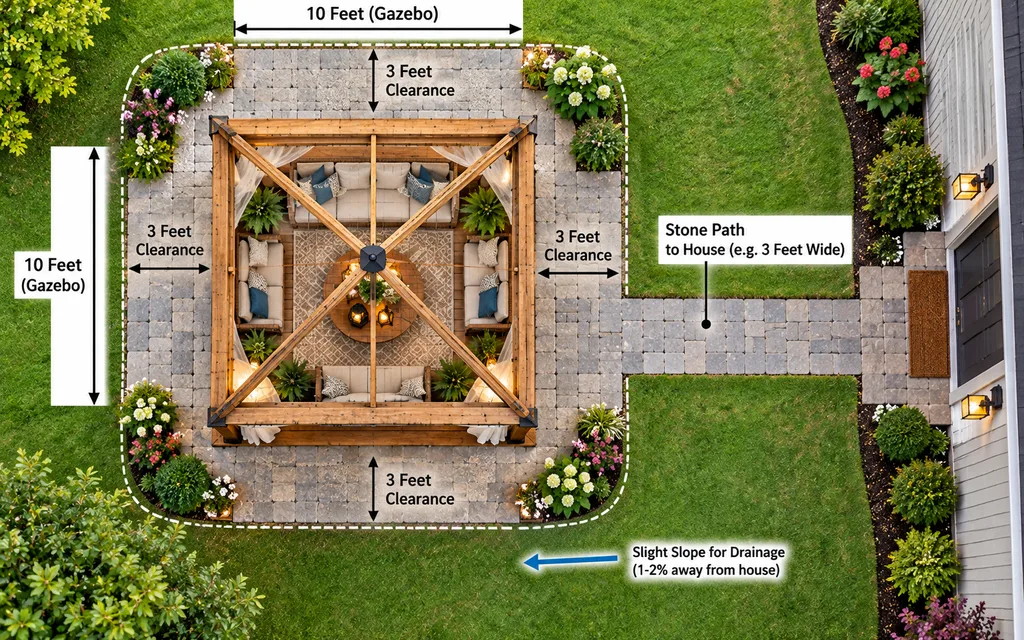
Planning is the secret to a gazebo that looks and feels right. Choose a spot with good views, easy access from the house, and a level surface. Avoid low areas where water collects, and keep trees at a safe distance.
Measure the footprint, and for garden gazebo ideas that work, allow at least three feet of clearance around the structure. A ten by ten foot gazebo seats six comfortably, while twelve by twelve feet suits dining for eight. Mark the outline with spray paint first.
Pick a foundation that matches the structure: a concrete slab, pavers, or a pressure-treated deck platform. Slope the ground away from the base for drainage. For outdoor gazebo ideas backyards beautiful garden designs, add a stone path leading to the entrance.
Check HOA rules, planning permissions, and property setbacks before buying. Call your utility locator before digging footings. Photograph the area and sketch the gazebo on top, which helps you judge scale before you spend any money. Keep receipts and manuals together for warranty claims.
Gazebo Questions Answered for Every Garden
What Is the Best Material for a Garden Gazebo?
Cedar and redwood look beautiful and resist rot naturally, while powder-coated aluminum and galvanized steel need almost no upkeep. Vinyl is low maintenance but less natural looking. Choose the material for your climate, budget, and style, and always check the warranty for the roof.
How Much Does a Garden Gazebo Cost to Build?
A basic DIY wood gazebo may cost 800 to 3,000 dollars in materials, while prefab metal or cedar kits often run 1,500 to 8,000 dollars. Custom builds can exceed 15,000 dollars. In the UK, expect roughly 600 to 6,000 pounds for most kits.
Do You Need Planning Permission for a Gazebo?
Often not for small garden structures, but rules vary. In England, a gazebo usually counts as an outbuilding with height and placement limits near boundaries, and listed or conservation areas differ. In the US, check city permits and HOA rules. Always confirm locally before building.
Gazebo vs Pergola: What Is the Difference?
A gazebo has a solid roof and often walls or screens, so it shelters you from rain and sun. A pergola has an open slatted top that gives partial shade and supports vines. Choose a gazebo for shelter, and a pergola for airy style.
How Do You Anchor a Gazebo Against Wind?
Bolt posts to concrete footings or a slab with galvanized brackets, and use ground anchors for lightweight kits. Add diagonal bracing, and remove curtains or fabric panels before storms. Check fasteners each season, because wind loosens hardware over time, especially on lightweight frames.
How Can You Make a Garden Gazebo Feel Cozy?
Add outdoor curtains, a rug, plenty of cushions, and warm string lights. Include a small side table, a throw blanket, and a lantern. Plants soften the edges, while a fire-safe heater or fire pit nearby extends the season on cool evenings.
Final Thoughts on Your Dream Garden Gazebo
Garden gazebo ideas make it easy to add shade, shelter, and charm to any yard. Start with the style that fits your home, choose durable materials, and layer in lighting, curtains, and plants to make the space truly yours each season.
Anchor every structure securely, follow local rules, and use outdoor-rated electrics. Safety always comes before style, especially with lights and fabric. Which of these 14 gazebo ideas will you try first? Share your favorite in the comments and pin your best garden makeover to Pinterest.
