15 Build a Deck Ideas That Create Your Dream Outdoor Space | Deck Building Guide

Introduction
A deck is more than just an outdoor structure. It’s your summer dining room, your morning coffee spot, your weekend gathering place, and your escape from the indoors.
Building a deck is one of the best investments you can make in your home. It adds usable living space, increases property value, and gives you a place to enjoy the outdoors without leaving your yard.
But where do you start? What size should you build? What material is best? Ground level or raised? With a pergola or without?
In this guide, I’ll share 15 deck ideas to help you plan and build the outdoor space of your dreams. Whether you have a tiny backyard or a sprawling property, you’ll find inspiration here.
Let’s get started.
1. Ground Level Deck
A ground level deck sits directly on the ground or just a few inches above it. It’s the simplest deck to build, requires no railings, and is perfect for flat backyards.
How to do it: Choose pressure-treated lumber or composite decking. Build a frame directly on concrete blocks or a gravel base. No stairs, no railings needed for decks under 30 inches.
Why it works: Ground level decks are budget-friendly, beginner-friendly, and perfect for yards that are already flat. They create an instant outdoor living area with minimal construction.
2. Raised Deck
A raised deck is built off the ground, typically 2-4 feet high. It’s perfect for homes with a walkout basement or yards that slope away from the house.
How to do it: Use concrete footings and support posts to raise the deck. Add stairs to access the yard. Railings are required for decks over 30 inches.
Why it works: Raised decks maximize your view and create a defined outdoor room. They’re perfect for uneven ground and create a natural transition from house to yard.
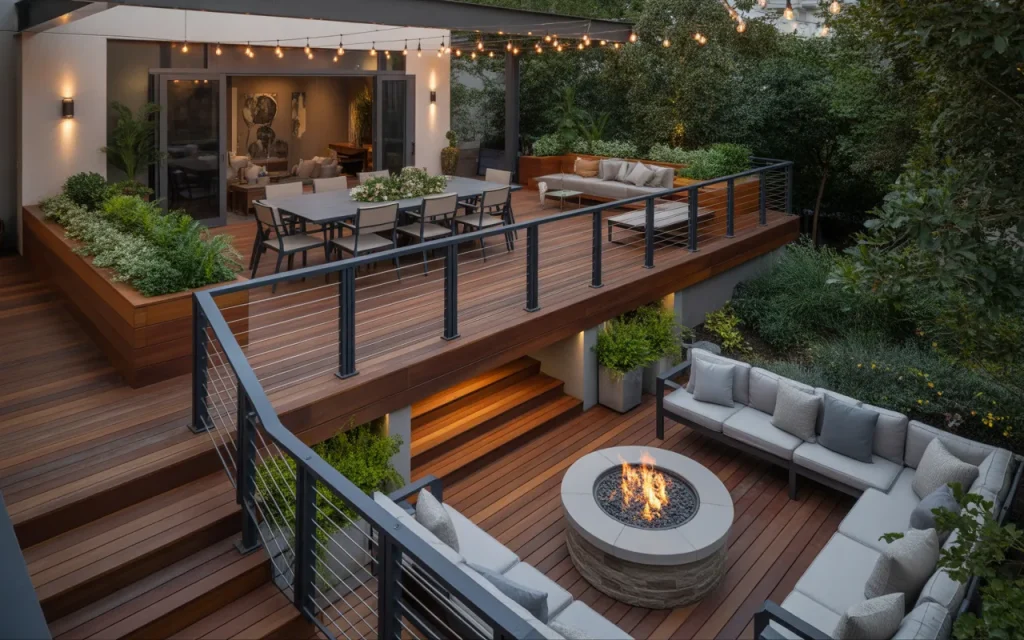
3. Multi-Level Deck
A multi-level deck has two or more platforms at different heights, connected by stairs. It’s perfect for sloped yards or creating separate zones for different activities.
How to do it: Plan each level for a specific use — upper level for dining, lower level for lounging or a fire pit. Use stairs to connect the levels. Add railings where needed.
Why it works: Multi-level decks maximize space on challenging terrain. They create distinct zones and add architectural interest.
4. Deck with Pergola
A pergola adds shade, style, and architectural interest to your deck. It creates a defined outdoor room and provides a structure for hanging lights, plants, or curtains.
How to do it: Build a pergola over part or all of your deck. Choose wood, vinyl, or metal. Add a retractable canopy for adjustable shade. Plant climbing vines for natural shade.
Why it works: Pergolas define the space and add vertical interest. They provide partial shade and make your deck feel like an extension of your home.
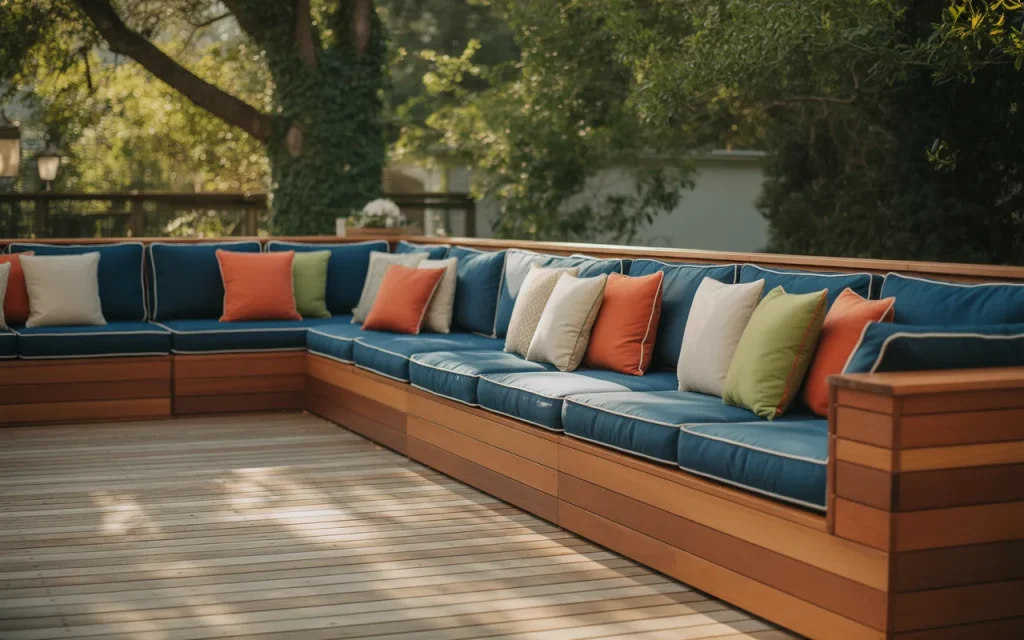
5. Deck with Built-In Seating
Built-in benches are a smart addition to any deck. They maximize seating without taking up floor space and create a clean, streamlined look.
How to do it: Build benches along the perimeter of your deck or around a corner. Use the same decking material for a seamless look. Add cushions for comfort.
Why it works: Built-in seating is space-efficient and permanent. It eliminates the need for outdoor furniture and creates a custom, built-in feel.
6. Deck with Fire Pit Area
A fire pit turns your deck into a year-round gathering spot. Build a dedicated area for the fire pit with a heat-resistant surface and comfortable seating.
How to do it: Create a separate zone for your fire pit. Use stone or concrete pavers around the fire pit for safety. Leave space between the fire pit and decking.
Why it works: Fire pits extend your deck season. They create a cozy gathering spot for cool evenings and add value to your outdoor space.
7. Deck with Outdoor Kitchen
An outdoor kitchen takes your deck to the next level. Add a built-in grill, counter space, sink, and storage for the ultimate entertaining setup.
How to do it: Plan the kitchen area during deck design. Run gas, water, and electrical lines before building. Use weather-resistant materials for countertops and cabinetry.
Why it works: An outdoor kitchen makes entertaining easy. It keeps the mess outside and creates a natural gathering spot.

8. Wraparound Deck
A wraparound deck wraps around two or more sides of your house. It’s perfect for corner lots, homes with multiple outdoor entrances, or maximizing views.
How to do it: Design the deck to follow the shape of your house. Create multiple seating areas for different times of day. Use the deck to connect different rooms.
Why it works: Wraparound decks maximize outdoor living space. They provide morning sun on one side and afternoon shade on another.
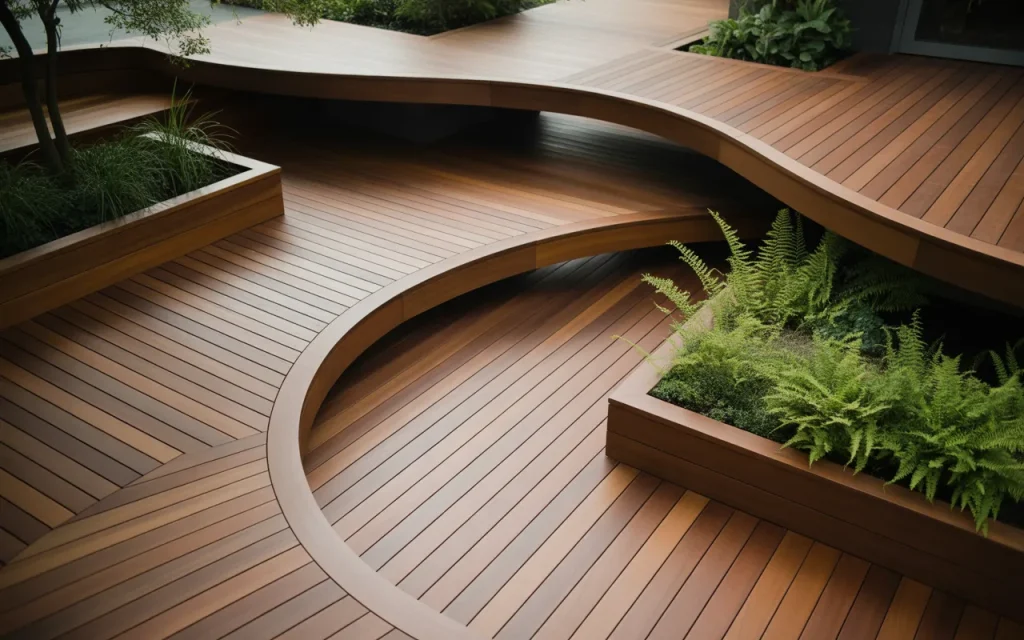
9. Curved Deck
A curved deck adds softness and architectural interest. The flowing lines create a natural, organic feel that complements any landscape.
How to do it: Use flexible decking materials or cut curves into traditional boards. Plan the curves during design. Curved decks are more challenging to build but worth the effort.
Why it works: Curved decks are visually striking. They soften the lines of your house and create a unique, custom look.
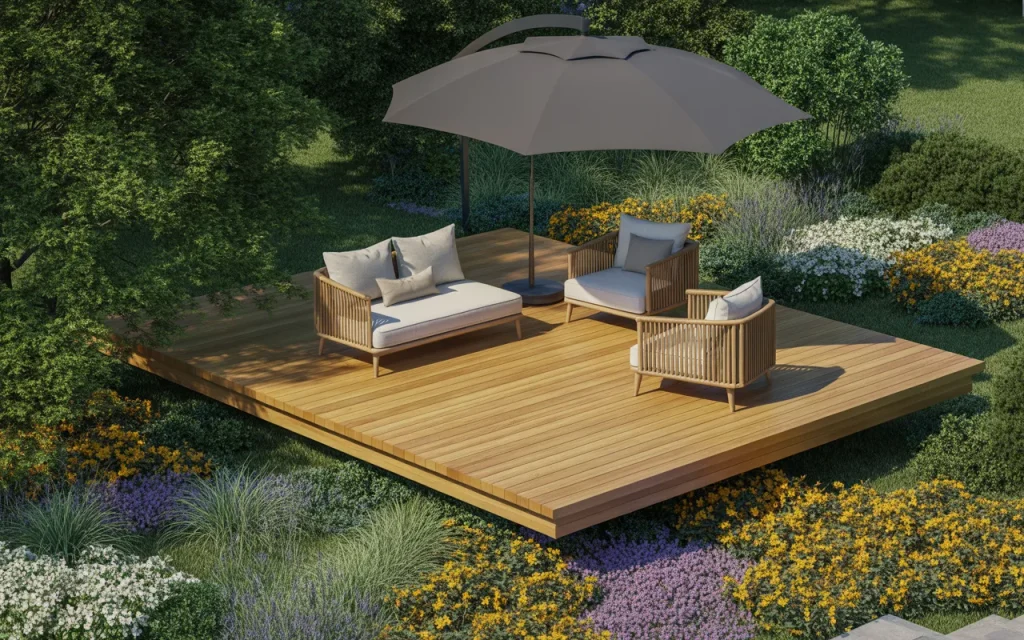
10. Floating Deck
A floating deck is a freestanding deck not attached to your house. It’s perfect for yards where you want a deck away from the house, or for uneven ground.
How to do it: Build the deck on concrete blocks or a gravel base. Keep it low to the ground (no railings needed). Use as a seating area, dining space, or garden feature.
Why it works: Floating decks are flexible and don’t require attaching to your house. They’re perfect for yards with mature trees or for creating a destination in your garden.
11. Deck with Integrated Planters
Built-in planters add greenery and soften the look of your deck. They’re perfect for decks on small lots or for adding privacy.
How to do it: Build planter boxes into the deck design. Use the same decking material for a cohesive look. Add drainage holes and liner before planting.
Why it works: Integrated planters add life and color. They create privacy and soften the hard lines of the deck.
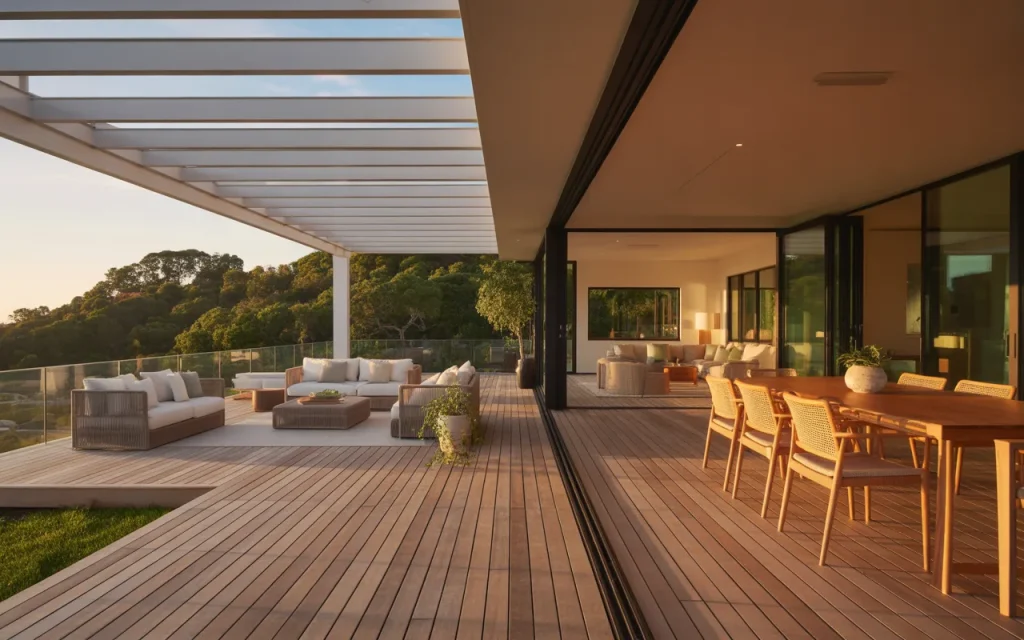
12. Deck with Privacy Wall
A privacy wall or screen creates a secluded retreat. It’s perfect for decks that face neighbors or busy streets.
How to do it: Build a partial wall on one side of your deck. Use lattice, horizontal slats, or solid wood. Add climbing plants for extra privacy.
Why it works: Privacy walls make your deck feel like a private oasis. They block unwanted views and create a cozy, intimate space.
13. Covered Deck
A covered deck has a solid roof, making it usable in rain or harsh sun. It’s perfect for homes in areas with unpredictable weather or for year-round use.
How to do it: Extend your roof over the deck or build a freestanding roof structure. Add ceiling fans for comfort. Use weather-resistant lighting.
Why it works: A covered deck is usable in any weather. It protects your furniture and extends your outdoor season.
14. Deck with Hot Tub
A hot tub adds luxury and relaxation to your deck. Plan the space to support the weight and provide privacy for soaking.
How to do it: Reinforce the deck structure to support the weight of a filled hot tub (8-10 pounds per gallon). Add steps for easy access. Plan for privacy and easy maintenance.
Why it works: A hot tub turns your deck into a spa retreat. It’s perfect for relaxation and adds value to your home.
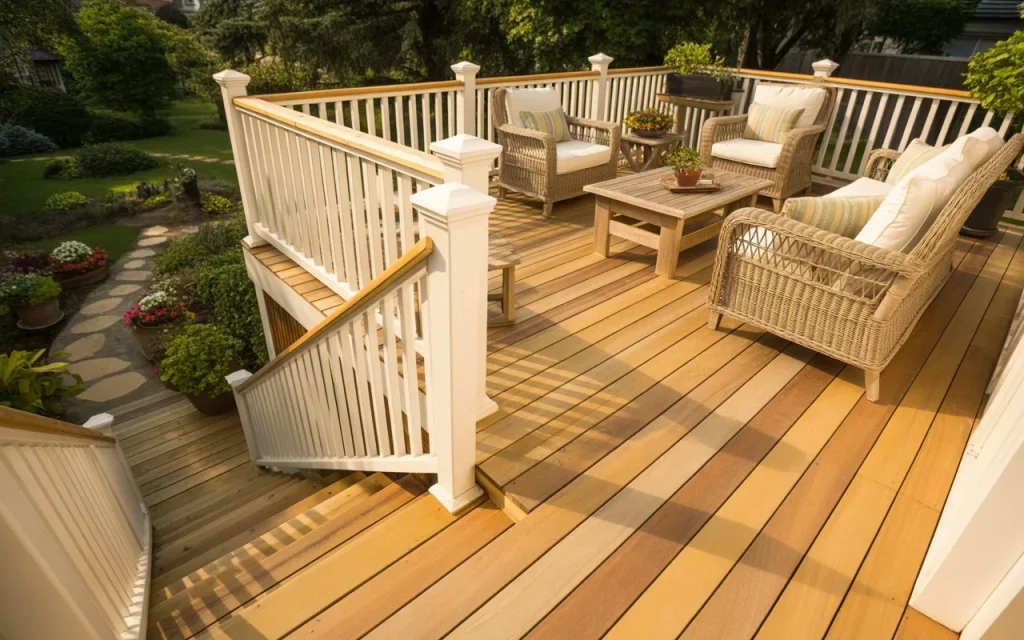
15. Minimalist Deck
A minimalist deck is simple, clean, and understated. It’s perfect for modern homes or for those who prefer a less-is-more approach.
How to do it: Choose simple, clean lines. Use a single material throughout. Skip railings if the height allows. Keep furniture minimal and let the deck itself be the statement.
Why it works: Minimalist decks are timeless and elegant. They focus on quality materials and clean design rather than elaborate features.
Material Comparison Table
| Material | Durability | Maintenance | Cost | Best For |
|---|---|---|---|---|
| Pressure-Treated Wood | 15-20 years | High (seal every 1-2 years) | $ | Budget-friendly, DIY |
| Cedar/Redwood | 20-30 years | Medium (seal every 2-3 years) | $$ | Natural beauty, rot resistance |
| Composite | 25-30 years | Low (wash occasionally) | $$$ | Low maintenance, longevity |
| PVC/Vinyl | 30+ years | Very low (wash occasionally) | $$$ | No rot, no splinters |
Common Mistakes to Avoid
Mistake 1: Building Without a Permit
Many municipalities require permits for decks over a certain size or height. Building without one can result in fines or having to remove the deck.
How to fix: Check with your local building department before starting. Get the necessary permits. Follow local building codes.
Mistake 2: Wrong Footings
Footings that are too shallow or not deep enough for your climate can cause your deck to shift or settle.
How to fix: Dig footings below the frost line. Use concrete footings sized for your deck’s weight. Check local requirements.
Mistake 3: Poor Drainage
Decks built without proper drainage can trap water, leading to rot and damage.
How to fix: Slope the deck away from the house. Leave gaps between boards for drainage. Plan for water runoff.
Mistake 4: Incorrect Spacing
Joists spaced too far apart cause bouncy decks. Ledger boards attached incorrectly can pull away from the house.
How to fix: Follow building codes for joist spacing. Use proper lag bolts for ledger attachment. Hire a professional if unsure.
Mistake 5: Forgetting Future Needs
Built a deck but now wish you had included stairs, lighting, or a spot for a hot tub?
How to fix: Plan for future additions during initial construction. Run electrical and gas lines even if you’re not using them now. Design with flexibility.
Before & After: Building a Deck
Before:
The Johnsons had a beautiful backyard they never used. The ground was uneven, there was no defined seating area, and stepping from the house onto the grass felt awkward. They dreamed of an outdoor space for family dinners and summer parties.
The Problem:
The yard was unusable. Uneven ground made furniture placement impossible. There was no transition from house to yard. The space felt disconnected.
The Changes:
- Built a 20×16 ground-level deck off the back door
- Used composite decking for low maintenance
- Added built-in benches along two sides
- Added a pergola over half the deck
- Added string lights and outdoor furniture
- Planted around the deck for privacy
After:
The deck transformed their backyard. It’s now the most-used space in their home. Family dinners happen outside. Weekend parties are effortless. The composite decking looks beautiful with zero maintenance. The Johnsons finally have the outdoor living space they always wanted.
Budget vs. Luxury: Deck Materials on Any Budget
Budget-Friendly Options:
- Pressure-Treated Wood: Most affordable, DIY-friendly — $10-20 per square foot
- DIY Deck Kits: Pre-cut materials with plans — $15-25 per square foot
- Basic Design: Rectangular, ground level, no railings — lowest cost
Splurge-Worthy Investments:
- Composite Decking: Low maintenance, long-lasting — $25-40 per square foot
- PVC/Vinyl Decking: No rot, no splinters, very low maintenance — $30-50 per square foot
- Custom Design: Curves, multiple levels, built-ins, pergola — $50-100+ per square foot
- Exotic Hardwood: Ipe, mahogany, tigerwood — $30-60 per square foot
Size Guide: How Big Should Your Deck Be?
Small Decks (100-200 sq ft):
- Best for: Bistro table and chairs, small seating area
- Size: 10×10 to 12×16
- Seating: 2-4 people
- Features: Ground level, simple design
Medium Decks (200-400 sq ft):
- Best for: Dining table, lounge area, grill
- Size: 12×20 to 16×24
- Seating: 6-8 people
- Features: Built-in benches, stairs, simple pergola
Large Decks (400+ sq ft):
- Best for: Multiple zones, outdoor kitchen, fire pit, hot tub
- Size: 20×20 and up
- Seating: 10+ people
- Features: Multi-level, pergola, built-ins, lighting
Frequently Asked Questions
Q: How much does it cost to build a deck?
A: Costs vary widely based on size, materials, and complexity. Basic pressure-treated decks start at $10-20 per square foot. Composite decks are $25-40 per square foot. Get multiple quotes and plan for 10-20% contingency.
Q: What’s the best decking material for low maintenance?
A: Composite and PVC decking require the least maintenance. They never need staining or sealing. Just wash occasionally with soap and water.
Q: Do I need a permit to build a deck?
A: Most areas require permits for decks over 30 inches high or larger than 200 square feet. Check with your local building department before starting.
Q: How long does it take to build a deck?
A: A simple ground-level deck can be built in a weekend by a skilled DIYer. Larger decks with stairs and railings take 2-4 weeks for a professional crew.
Q: Can I build a deck myself?
A: Yes, if you have basic carpentry skills. Start with a ground-level deck. Watch tutorials, get permits, and follow building codes. Hire a professional for complex designs or if you’re unsure.
Q: What’s the best wood for a deck?
A: Pressure-treated pine is most affordable. Cedar and redwood are naturally rot-resistant and beautiful. Ipe and mahogany are premium hardwoods that last decades.
Conclusion
A deck is more than an addition to your home — it’s an addition to your life. It’s where you’ll share meals, watch sunsets, and make memories with the people you love.
Whether you choose a simple ground-level deck or a multi-level design with all the features, the right deck will transform your backyard into a space you’ll use every day.
Take your time. Plan carefully. Choose materials that fit your budget and lifestyle. And build the deck of your dreams.
Ready to build your deck? Start by measuring your space, setting a budget, and sketching your ideas. Your perfect outdoor space is waiting.