Dave Chappelle Biography: Netflix Specials, Comedy and Latest New

Who Is Dave Chappelle? Understanding the Man Behind the Microphone
Dave Chappelle stands as one of the most recognizable names in comedy today. His sharp wit, fearless social commentary and ability to make audiences laugh while thinking critically have earned him a permanent place in entertainment history.
Born on August 24, 1973, in Washington D.C., David Khari Webber Chappelle grew up surrounded by political and intellectual energy. His parents were both professors, which shaped his analytical approach to comedy from an early age.
What makes this comedian different from others? It’s his willingness to tackle uncomfortable topics with honesty and humor. He doesn’t shy away from controversial subjects and that authenticity has built him a loyal fan base that spans generations.
Complete Biography: Early Life and Family Background
Growing up in a politically active household gave young Dave a unique perspective on American society. His father, William David Chappelle III, worked as a statistician and professor at Antioch College. His mother, Yvonne Seon, was a professor and Unitarian Universalist minister who worked for Patrice Lumumba in the Congo.
After his parents separated when he was young, Dave split his time between Washington D.C. and Yellow Springs, Ohio. This dual upbringing exposed him to both urban and small town American life, experiences that would deeply influence his comedy.
Yellow Springs wasn’t just a place he visited as a child. The small Ohio town, with a population of around 3,700, became significant throughout his life journey and eventually his permanent home.
The intellectual environment of his childhood fostered his love for reading and critical thinking. His parents’ academic backgrounds meant dinner table conversations often touched on politics, social issues and cultural analysis.
Dave attended Woodlin Elementary School in Silver Spring, Maryland, where he was bused to a predominantly white school as part of desegregation efforts. This experience gave him early insights into racial dynamics that would later inform his comedy.
He has described his childhood as being raised in a “very intellectual household” where education and awareness were highly valued. This foundation became crucial to developing his unique comedic voice.

The Beginning of a Comedy Career
Dave Chappelle knew he wanted to be a comedian from a remarkably young age. At just 14 years old, he began studying the craft seriously, watching comedy legends and practicing his timing and delivery constantly.
His first professional performance came when he was only 14 at an amateur night at the Gaiety Theater in Washington D.C. The crowd booed him off stage. Instead of giving up, this brutal experience fueled his determination to improve and prove himself.
By age 18, he moved to New York City to pursue comedy full time. He performed at the famous Apollo Theater’s Amateur Night in Harlem, where he again faced a notoriously tough crowd. But Dave persisted, learning from each performance and refining his voice.
His early years in New York comedy clubs taught him invaluable lessons about timing, audience connection and material development. He opened for established comedians and slowly built his reputation in the competitive stand up scene.
During this period, he performed at venues like the Boston Comedy Club and other Manhattan establishments, often doing multiple sets per night to gain stage time and experience.
Breaking Into Hollywood
The early 1990s saw Dave Chappelle transition from comedy clubs to television and film. He made appearances on various shows and started landing small movie roles that introduced him to wider audiences.
His film debut came in 1993 with Mel Brooks’ Robin Hood: Men in Tights, where he played Ahchoo. While it was a small role, it opened doors for future opportunities in Hollywood and gave him valuable on camera experience.
In 1996, he landed a lead role in The Nutty Professor alongside Eddie Murphy, playing Reggie Warrington. The same year, he appeared in the cult classic stoner film Half Baked, which he also co-wrote with Neal Brennan.
Throughout the 1990s, he appeared in films like Con Air (1997), You’ve Got Mail (1998) and Blue Streak (1999). He also had his own short lived ABC sitcom called Buddies in 1996, which was cancelled after only four episodes.
His stand up continued to be his primary focus during this period. He toured constantly, perfecting his craft and building a following among comedy fans who appreciated his unique perspective and fearless material.
The Chappelle’s Show Revolution
In 2003, everything changed when Comedy Central launched Chappelle’s Show. The sketch comedy series, co-created with Neal Brennan, became an instant cultural phenomenon that redefined television comedy.
The show featured Dave’s hilarious characters and sketches that addressed race, pop culture and social issues with unprecedented boldness. Sketches like “Clayton Bigsby” (a blind Black white supremacist), “Charlie Murphy’s True Hollywood Stories,” and “Rick James” became part of everyday conversation across America.
The show’s first season was a moderate success but the second season exploded in popularity. Season two averaged 3.1 million viewers per episode, making it one of the highest rated shows on cable television.
Ratings soared as audiences connected with the show’s fearless humor. It wasn’t just funny; it was smart, provocative and unlike anything else on television at the time. The show won an Emmy Award and earned multiple nominations.
The show’s success made Dave one of the biggest names in entertainment. Comedy Central offered him a $55 million contract for two additional seasons, which would have been one of the largest deals in television history at that time.

The Shocking Decision to Walk Away
At the height of his success in May 2005, during production of the third season, Dave made a decision that shocked the entertainment industry. He abruptly left the show and traveled to South Africa, walking away from the massive contract.
He left without warning, leaving producers, fans and the media confused and speculating wildly about what happened. Rumors ranged from drug addiction to mental breakdowns, none of which were accurate.
In later interviews, Dave explained his reasons more fully. He felt immense pressure from the network and production demands. He worked grueling hours and felt the creative environment had become toxic and stressful.
More importantly, he became concerned about how audiences were receiving certain sketches. He recalled a moment during filming when someone laughed at a racial sketch in a way that felt wrong to him, making him question whether the humor was challenging stereotypes or reinforcing them.
The network pressure to produce more content faster, combined with concerns about losing creative control, contributed to his decision. He felt the show was becoming something different from his original vision.
Additionally, the sudden fame overwhelmed him. He went from a respected comedian to a mega celebrity almost overnight and the constant media attention felt suffocating and invasive.
This move demonstrated something rare in Hollywood: a willingness to sacrifice financial security and career momentum for personal principles and mental health. It became one of the most talked about moments in entertainment history.
Life After Walking Away: The Quiet Years
After leaving the show, Dave returned to Yellow Springs, Ohio, where he had spent part of his childhood. He purchased a 65 acre farm where he chose a quiet life away from Hollywood’s chaos.
He continued performing stand up comedy, though on a much smaller scale. He showed up unannounced at comedy clubs in New York, Los Angeles and other cities, keeping his skills sharp while avoiding the mainstream spotlight.
Comedy Central aired the incomplete third season episodes in 2006 as Chappelle’s Show: The Lost Episodes, which Dave did not participate in promoting. He expressed disappointment with how the network handled the material.
This period allowed him to reconnect with what he loved about comedy without the corporate pressures and media attention. He focused on his family, raising his three children away from the Hollywood environment.
For nearly a decade, he maintained a relatively low profile. He appeared occasionally on shows or in small roles but never fully returned to the spotlight in the way fans expected.
He also dealt with the financial aftermath of his decision. While he walked away from $55 million, he had to navigate contract disputes and financial obligations from the abrupt departure.
The Gradual Return to Stand Up
Around 2013, Dave slowly increased his stand up performances. He began touring again with shows titled “Chappelle’s Controlled Danger,” and audiences eagerly welcomed his return to the stage.
His material had evolved significantly, reflecting his experiences with fame, his decision to walk away and his observations about society’s changes during his absence. He addressed his hiatus directly in his performances.
Comedy fans appreciated his honesty about his struggles with the industry and his commitment to authenticity. His shows sold out quickly whenever he announced tour dates, demonstrating that his fanbase had remained loyal.
In 2013, he performed 50 dates during his summer tour. In 2014, he embarked on another extensive tour with multiple dates across the country, often performing at smaller venues that allowed for more intimate connections with audiences.
This gradual return demonstrated that his talent and appeal hadn’t diminished during his time away. If anything, his perspective had deepened, his comedy had matured and audiences were hungry for his voice.
He also began headlining major festivals like Oddball Comedy Festival in 2013 and 2014, sharing stages with other major comedians and reestablishing his position in the comedy hierarchy.
The Netflix Partnership That Changed Everything
In November 2016, Dave Chappelle signed a groundbreaking deal with the streaming platform Netflix. This partnership would produce multiple stand up specials and reintroduce him to a new generation of fans.
The deal was reportedly worth tens of millions of dollars for multiple specials, making it one of the most lucrative comedy deals in history, though the exact financial terms were never officially disclosed by either party.
This partnership proved perfect for both parties. Netflix gained prestige content from a comedy legend during its aggressive expansion into original programming, while Dave found a platform that respected his artistic vision without network interference.
The announcement generated massive excitement among comedy fans who had waited years for new professionally produced material from the comedian. Social media buzzed with anticipation about his return.
Netflix’s global reach meant Dave’s comedy would reach international audiences in ways traditional television never could, expanding his influence beyond American borders.

Complete Netflix Specials Collection
Since partnering with the streaming service, Dave has released multiple specials that have garnered critical acclaim and massive viewership. Here’s the complete chronological list of Dave Chappelle Netflix specials:
The Age of Spin (March 21, 2017) Filmed at the Hollywood Palladium in Los Angeles, this special earned him an Emmy Award for Outstanding Variety Special. He reflects on his career journey and delivers hilarious stories, including his famous encounter with O.J. Simpson.
Deep in the Heart of Texas (March 21, 2017) Filmed at Austin City Limits Live, this special was released simultaneously with The Age of Spin. It showcases his storytelling abilities with personal anecdotes and social observations.
Equanimity (December 31, 2017) Filmed at the Warner Theatre in Washington D.C., this Emmy winning special demonstrates his continued relevance and sharp observational humor. He addresses topics ranging from the opioid crisis to celebrity culture.
The Bird Revelation (December 31, 2017) A more intimate performance filmed at the Comedy Store in Los Angeles, this special addresses serious topics including the entertainment industry’s exploitation of artists. It was released alongside Equanimity.
Sticks and Stones (August 26, 2019) Perhaps his most controversial Netflix release, filmed at the Bridgestone Arena in Nashville. This special generated significant discussion about comedy’s boundaries and earned him an Emmy Award despite criticism.
8:46 (June 11, 2020) Released on YouTube and subsequently on Netflix, this powerful special addresses the police killing of George Floyd. Named after the length of time the officer kneeled on Floyd’s neck, it’s more serious in tone than his typical work.
The Closer (October 5, 2021) Billed as the final chapter in his Netflix series of specials, this performance sparked widespread debate about his material and approach, particularly regarding his commentary on transgender issues.
The Dreamer (December 31, 2023) His latest special addresses his experiences with controversy, cancel culture and includes personal stories about his family and career.
Each Dave Chappelle Netflix special has generated significant attention and conversation, proving his continued cultural relevance and ability to spark national dialogue through comedy.
Impact and Influence on Modern Comedy
Dave’s influence on contemporary comedy cannot be overstated. Countless comedians cite him as an inspiration and major influence on their own work, including names like Kevin Hart, Hasan Minhaj and many others.
His willingness to address difficult topics has given other comedians permission to be more honest and fearless in their material. He expanded what comedy could discuss and how deeply it could examine social issues.
The sketch format he popularized on his television show influenced numerous comedy programs that followed, including Key and Peele, Inside Amy Schumer and many others. His creative approach became a template.
Young comedians study his specials to understand timing, audience connection and how to build compelling narratives within stand up performances. His influence extends across generations.
His decision to walk away from success also inspired discussions about artist autonomy, mental health in entertainment and the importance of maintaining creative control over one’s work.
Awards and Recognition Throughout His Career
Throughout his career, Dave has received numerous accolades recognizing his contributions to comedy and entertainment, cementing his legacy as one of the greatest comedians of all time.
He has won six Emmy Awards, including Outstanding Variety Special for The Age of Spin, Equanimity and Sticks and Stones. These awards validate his excellence in the craft.
In 2017, he won the prestigious Mark Twain Prize for American Humor at the Kennedy Center, one of the highest honors in comedy. The award recognized his lifetime achievement and cultural impact on American comedy.
He has won five Grammy Awards for Best Comedy Album, including awards for The Age of Spin and Deep in the Heart of Texas, Equanimity and The Bird Revelation and Sticks and Stones.
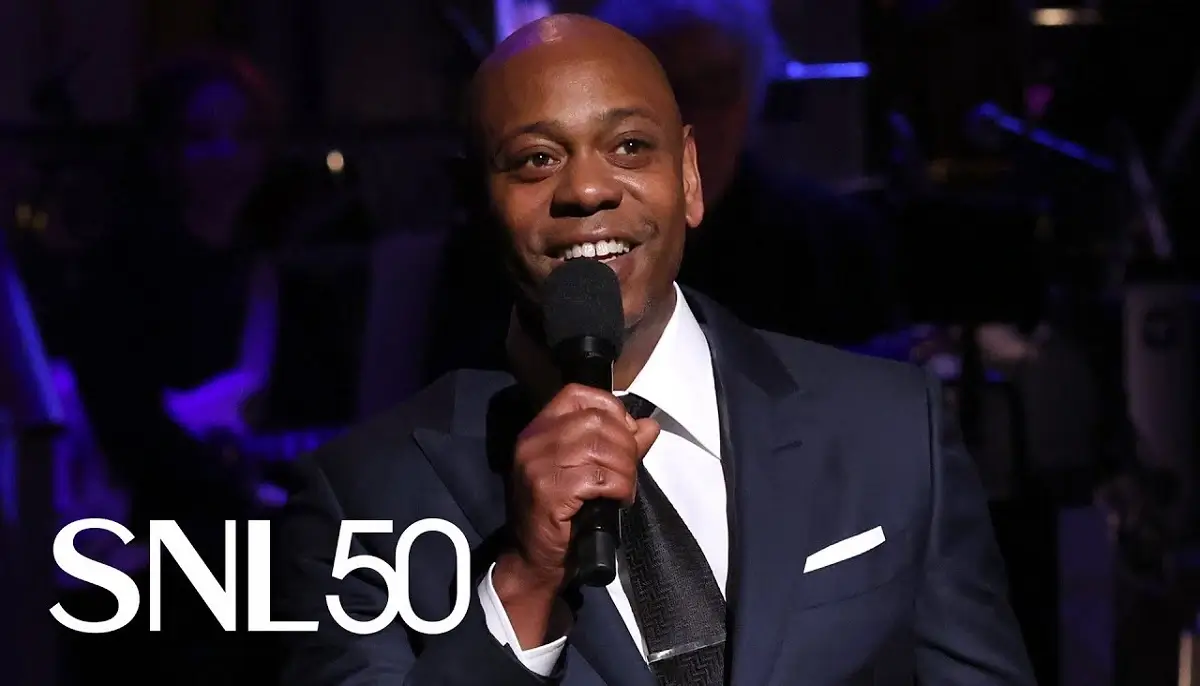
In 2020, he hosted Saturday Night Live the weekend after the presidential election, delivering an opening monologue that earned him another Emmy Award for Outstanding Guest Actor in a Comedy Series.
These awards represent industry recognition of his talent, though his greatest achievement might be the lasting impact on audiences worldwide and his influence on comedy as an art form.
Personal Life and Family Values
Despite his fame, Dave has maintained a relatively private personal life, carefully protecting his family from the spotlight that consumed him during his Chappelle’s Show years.
He married Elaine Mendoza Erfe in 2001 and they have three children together: sons Sulayman and Ibrahim and daughter Sanaa. His family life remains largely shielded from public view.
The family lives on a 65 acre farm in Yellow Springs, Ohio, far from Hollywood’s spotlight. This choice reflects his values and desire for normalcy, allowing his children to grow up away from celebrity culture.
He converted to Islam in 1998 and his faith plays an important role in his life, though he rarely discusses religious matters publicly in detail. His spiritual beliefs inform his worldview and values.
His commitment to his community is evident in his involvement in local Yellow Springs affairs. He has appeared at town council meetings, supported local businesses and invested in the community’s wellbeing.
During the COVID 19 pandemic, he organized outdoor comedy shows in Yellow Springs, bringing comedians to his hometown and supporting local venues during difficult economic times.
Comparison: Dave Chappelle’s Career Evolution
| Years | Age Range | Primary Focus | Style and Approach | Platform | Cultural Impact |
|---|---|---|---|---|---|
| 1980s 1990s Early Years | 14 30 | Breaking into industry, building reputation | Raw, observational, developing voice | Comedy clubs, small TV/film roles | Building foundation, learning craft |
| 2003 2005 Peak TV Era | 29 31 | Sketch comedy, character work | Bold, provocative, character driven, racially charged | Cable television (Comedy Central) | Revolutionary cultural phenomenon, mainstream stardom |
| 2005 2013 Hiatus Period | 31 39 | Personal growth, selective performances, family | Mature, reflective, unpolished | Small venues, surprise appearances | Maintained mystique, became legend through absence |
| 2013 2016 Comeback Years | 39 43 | Stand up tours, rebuilding presence | Seasoned, introspective, honest about struggles | Mid size venues, comedy festivals | Proved enduring appeal, reconnected with audiences |
| 2016 Present Netflix Era | 43 51 | Polished stand up specials, cultural commentary | Controversial, storytelling focused, socially conscious | Streaming platform (global reach) | Reestablished dominance, sparked national conversations |
The Controversy and Public Discourse
Dave’s recent work has generated significant discussion and debate, particularly his Netflix specials from 2019 onward. Some of his material has been labeled controversial by critics, advocacy groups and commentators.
His special Sticks and Stones received criticism from some LGBTQ+ advocacy organizations for jokes about transgender individuals, while many comedians and fans defended his right to artistic expression.
The Closer in 2021 sparked the most intense backlash, with some Netflix employees staging a walkout in protest. The special included commentary on transgender issues that many found offensive, leading to accusations of transphobia.
Dave has defended his material by stating he’s not targeting any group with malice but rather commenting on social dynamics and the complexities of identity politics in modern America.
Supporters argue that comedy should challenge audiences and address uncomfortable truths without censorship. They see his work as brave, necessary and protected under artistic freedom.
Critics contend that some material crosses lines and can contribute to harm against marginalized communities. They question whether certain jokes serve a constructive purpose or simply reinforce prejudice.
The debate highlights broader tensions in comedy about the balance between artistic freedom and social responsibility, with Dave positioned at the center of this cultural conversation.
Netflix has consistently supported Dave throughout controversies, with co CEO Ted Sarandos defending the company’s decision to stand by the specials while acknowledging differing perspectives.
Analyzing His Comedy Style and Technique
What makes Dave’s comedy so effective? Several elements work together to create his unique voice and approach that distinguishes him from other comedians.
First, his storytelling ability sets him apart. He constructs narratives that build tension and deliver perfectly timed punchlines that feel earned rather than forced. His stories feel conversational and authentic.
Second, his observational skills allow him to notice details about human behavior and society that others miss. These observations become the foundation of his material, offering fresh perspectives on familiar topics.
Third, his willingness to be vulnerable and honest creates genuine connections with audiences. He shares personal struggles and experiences openly, including his doubts, fears and mistakes.
Fourth, his timing and delivery are impeccable. Years of practice have honed his ability to maximize the impact of every word and pause. He knows when to speed up and when to let silence work.
Fifth, his physical comedy and impressions add another dimension. He embodies characters fully, using voice, posture and movement to bring sketches and stories to life.
Finally, his intelligence and cultural awareness allow him to weave complex social commentary into accessible humor. He makes people think while making them laugh.
The Business Side of Comedy and Artist Rights
Dave’s career decisions reveal a sophisticated understanding of the entertainment business. His choices have been strategic, even when they appeared risky or financially illogical to outsiders.
Walking away from Chappelle’s Show, while shocking, ultimately increased his value and mystique. It demonstrated that he couldn’t be controlled by money alone and valued integrity over profit.
His Netflix deal came at the perfect time when streaming platforms were investing heavily in content and competing for prestige programming. He negotiated from a position of strength.
He has been vocal about fair compensation for comedians and artists, advocating for proper payment for creative work. In 2020, he publicly addressed Comedy Central’s continued profiting from Chappelle’s Show without fairly compensating him.
He asked fans to boycott the show on streaming services until he received fair compensation. Netflix eventually removed the show in support of his position, demonstrating his leverage and principles.
In 2021, he announced he had reached a settlement with Comedy Central’s parent company, ViacomCBS, finally receiving proper compensation for the show he created. This victory represented vindication for his stance on artist rights.
His advocacy has inspired discussions about how streaming residuals work, how creators should be compensated when content moves between platforms and the importance of owning one’s work.
Cultural Commentary Through Comedy
Dave uses comedy as a vehicle for cultural commentary in ways that few entertainers can match. His observations about American society resonate because they contain uncomfortable truths.
He addresses racial issues with a perspective that comes from lived experience as a Black man in America. His material explores the complexity of race relations rather than offering simplistic solutions or comfortable narratives.
His commentary on fame and celebrity culture comes from someone who experienced its highest peaks and consciously chose to step away from it, giving him unique credibility on the topic.
He discusses class, politics and social justice issues through a comedic lens that makes difficult conversations more accessible to broad audiences. He translates complex ideas into relatable humor.
His willingness to critique all sides of political and social debates, rather than adhering to partisan positions, makes his commentary feel more honest, though it also means he sometimes alienates people across the political spectrum.
Dave Chappelle’s Lasting Legacy
Dave’s legacy in comedy is already secure, even as his career continues. He has fundamentally changed what stand up comedy can be and what audiences expect from comedians.
He proved that comedians can walk away from success on principle and return stronger. His career arc defies conventional entertainment industry wisdom about maintaining momentum and visibility.
His influence extends beyond comedy into broader conversations about race, class, fame, mental health, artist rights and American identity. He’s transcended being simply an entertainer.
Future generations will study his work not just for comedic technique but as cultural artifacts that captured specific moments in American history and social evolution.
His willingness to risk controversy for honesty has inspired comedians to be braver in their material, even as it’s also sparked important discussions about comedy’s responsibilities.
Tommy Flanagan Biography: Scottish Actor Amazing Journey
Current Status and Future Prospects
As of 2024, Dave continues to perform stand up comedy, though he’s more selective about projects and appearances than earlier in his career. He occasionally announces tour dates that sell out quickly.
He remains based in Yellow Springs, Ohio, where he’s become an integral part of the community. He’s invested in local businesses and continues to support the small town he calls home.
While The Closer was initially billed as his final Netflix special, The Dreamer arrived in late 2023, suggesting he’s not finished creating new material for the platform.
Whether he produces more specials or not, his existing body of work has secured his position as one of the greatest stand up comedians in history, alongside legends like Richard Pryor, George Carlin and Eddie Murphy.
His influence on contemporary comedy remains profound, with younger comedians citing him as inspiration and adopting his fearless approach to difficult topics and social commentary.
Lessons From His Remarkable Journey
What can we learn from Dave’s remarkable career? Several lessons emerge from his journey through entertainment, fame and personal growth that apply beyond comedy.
Authenticity matters more than money: His decision to walk away from $55 million proved that staying true to yourself is worth more than any paycheck, even when the world questions your sanity.
Patience pays off: His gradual return to prominence shows that rushing back isn’t always necessary. Good work will always find an audience when you’re ready to share it.
Evolution is essential: His comedy has grown and changed with him, reflecting new experiences and perspectives rather than repeating old formulas that brought previous success.
Community grounds you: His choice to live in a small town away from Hollywood helped him maintain perspective, sanity and connection to real life beyond celebrity culture.
Mental health matters: His willingness to prioritize his wellbeing over career momentum helped normalize conversations about mental health in entertainment and beyond.
Stand up for your worth: His fight for fair compensation from Comedy Central showed that principles can prevail against powerful corporations when you’re willing to fight.
My Final Thoughts on the Comedy Legend
After examining Dave Chappelle’s incredible journey from comedy clubs to becoming one of the most influential voices in entertainment, one thing becomes absolutely clear: he’s far more than just a comedian.
He’s a cultural force who has shaped conversations, influenced countless performers and demonstrated that comedy can be both hilarious and profoundly meaningful. His willingness to risk everything for his principles sets him apart in an industry driven by profit.
The Dave Chappelle Netflix partnership represents the perfect marriage of talent and platform, giving him creative freedom while reaching massive global audiences. Each special adds to his already impressive legacy, even when controversial.
Whether you agree with all his material or not, you can’t deny his impact on comedy and culture. He makes people laugh while forcing them to think critically about themselves, society and the uncomfortable truths we often avoid.
His story proves that success isn’t always about taking every opportunity or maximizing earnings. Sometimes the bravest choice is walking away, finding yourself, rediscovering what matters and returning on your own terms.
Dave Chappelle remains unstoppable not because he never faces obstacles but because he overcomes them while staying true to his artistic vision and personal values. That authenticity is his greatest strength and the reason his work continues to resonate.
In an entertainment landscape filled with manufactured personas and corporate controlled content, Dave stands as a reminder that genuine voices still matter. His courage to speak truth through humor makes him truly unforgettable.
The comedian who walked away from $55 million and returned stronger proves that real talent, combined with unwavering integrity, creates something far more valuable than any contract could ever offer. That’s the unstoppable legacy of Dave Chappelle, a legacy that will influence comedy and culture for generations to come.
Frequently Asked Questions
How many Netflix specials does Dave Chappelle have?
Dave has released eight stand up specials through Netflix, starting with The Age of Spin and Deep in the Heart of Texas in 2017, followed by Equanimity and The Bird Revelation (2017), Sticks and Stones (2019), 8:46 (2020), The Closer (2021) and The Dreamer (2023). These specials have earned him multiple Emmy and Grammy Awards.
Why did Dave Chappelle leave his show?
He left Chappelle’s Show in 2005 due to multiple factors: extreme pressure from network demands, concerns about losing creative control, exhaustion from grueling production schedules, worries that some sketches were reinforcing rather than challenging stereotypes and overwhelming sudden fame. He later negotiated fair compensation for the show in 2021.
Where does Dave Chappelle live now?
He lives with his wife Elaine and their three children on a 65 acre farm in Yellow Springs, Ohio, where he spent part of his childhood. This small town of about 3,700 people provides the peace and normalcy he values away from Hollywood.
What makes Dave Chappelle’s comedy unique?
His combination of sharp social commentary, masterful storytelling ability, fearless topic selection, impeccable timing, vulnerability and willingness to address uncomfortable truths creates a distinctive voice. He blends intellectual analysis with accessible humor, making people think while they laugh.
Is Dave Chappelle still performing?
Yes, he continues to perform stand up comedy and released his latest Netflix special, The Dreamer, in December 2023. He’s more selective about projects than earlier in his career but still tours occasionally and performs surprise sets at comedy clubs.
What awards has Dave Chappelle won?
He has won six Emmy Awards, five Grammy Awards for Best Comedy Album and received the prestigious Mark Twain Prize for American Humor in 2017. His Netflix specials have earned numerous awards recognizing his excellence in stand up comedy.
Disclaimer
This article is intended for informational and entertainment purposes only. While we strive for accuracy, facts about public figures may change over time. The views and opinions expressed are based on publicly available information and do not represent financial, legal or professional advice. Readers are encouraged to verify current information independently.