15 Hidden Walk in Pantry Ideas That Maximize Your Storage

Introduction
Imagine a pantry that appears to be a bookshelf. Or a mirror. Or just a wall.
Now imagine opening that hidden door to reveal a fully stocked, beautifully organized walk-in pantry.
It sounds like something from a movie. But hidden pantries are real — and they’re one of the smartest storage solutions for any home.
A hidden walk-in pantry lets you have the storage space you need without sacrificing kitchen aesthetics. It hides clutter behind a beautiful facade. It turns dead space into valuable storage. And it adds a wow factor that guests will talk about for years.
In this guide, I’ll share 15 hidden walk in pantry ideas to help you create your own secret storage space. From bookshelf doors to under-stair pantries, you’ll find inspiration for every home.
Let’s get started.
1. Bookshelf Hidden Pantry Door
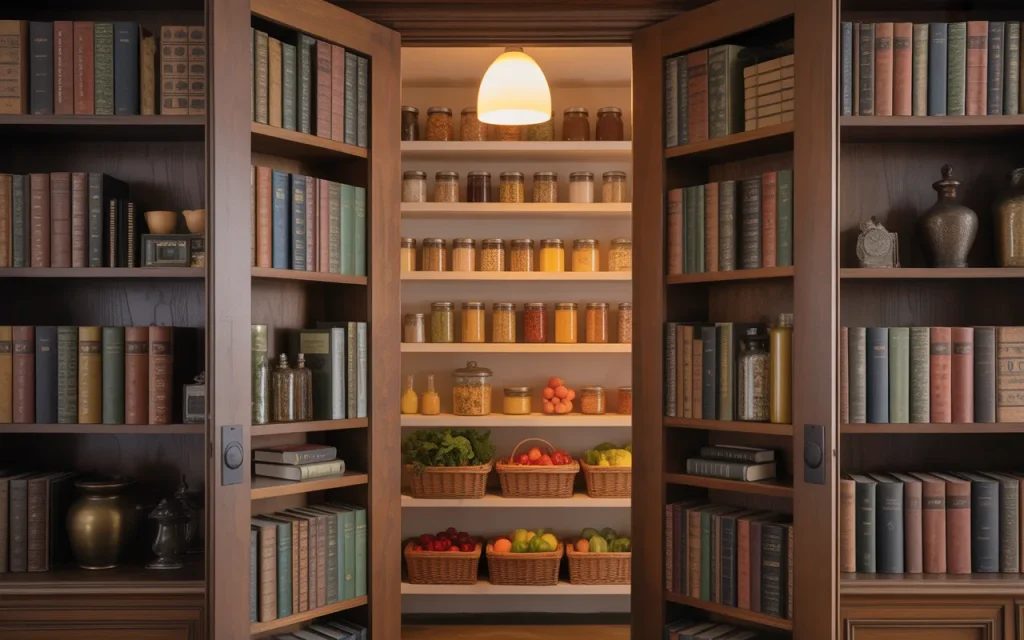
The classic hidden pantry: a bookshelf that swings open to reveal a walk-in pantry. It’s functional, beautiful, and endlessly charming.
How to do it: Install a bookshelf on heavy-duty hinges. Fill it with real books, decorative objects, or a mix. Behind it, create a walk-in pantry with shelves and storage.
Why it works: Bookshelf doors are the ultimate secret storage. They blend seamlessly into your kitchen or dining room, and no one would guess what’s behind them.
2. Under-Stairs Hidden Pantry
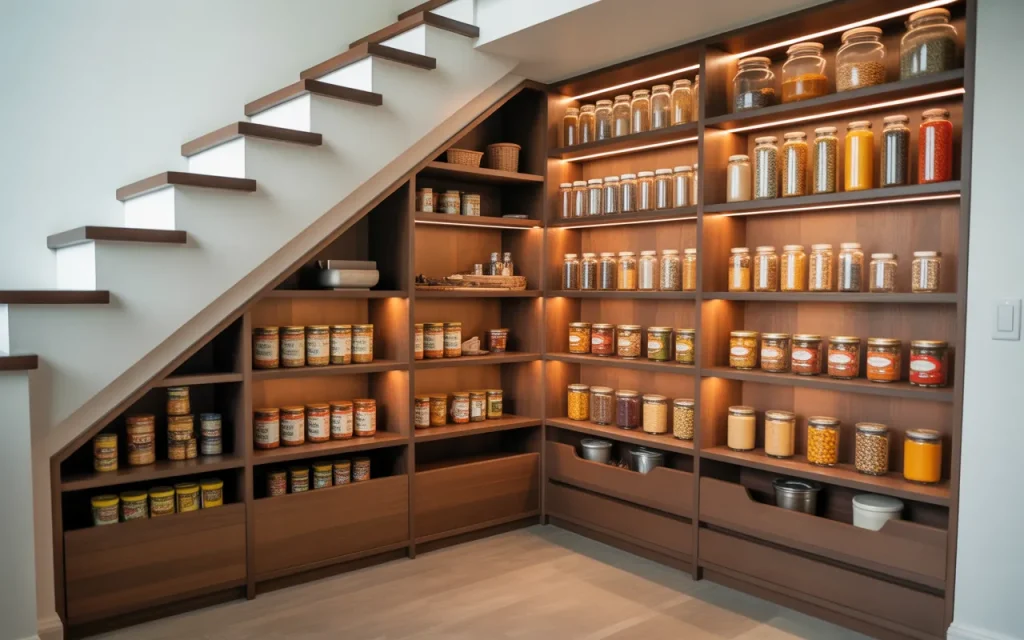
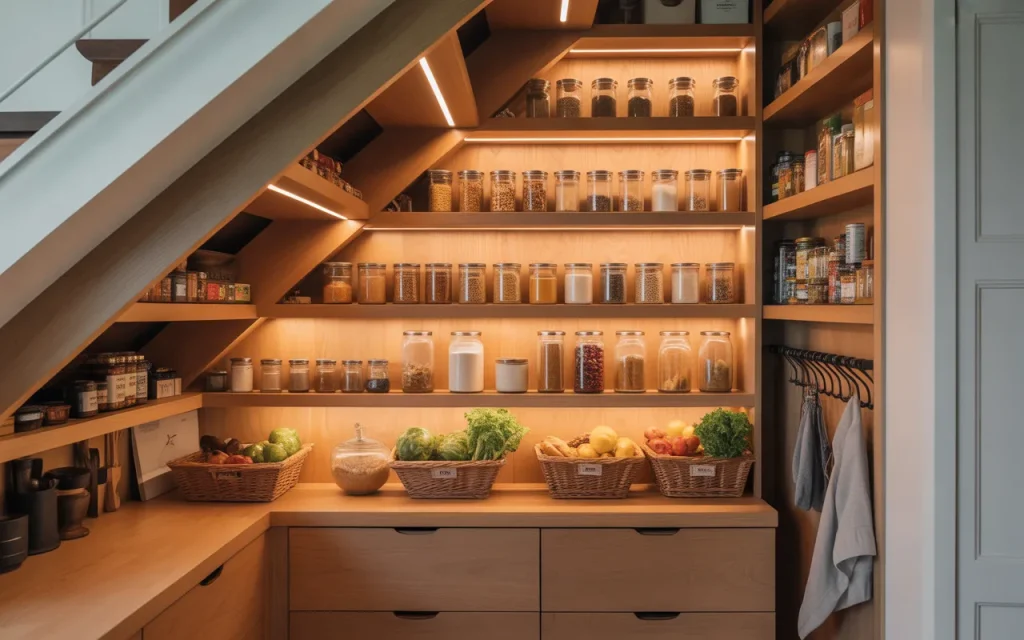
The space under your stairs is often wasted. Transform it into a hidden walk-in pantry.
How to do it: Frame out the under-stair space. Install a door that matches your wall for a seamless look. Add custom angled shelves to fit the space.
Why it works: Under-stair pantries use space that would otherwise be empty. The angled shape is perfect for canned goods, bottles, and smaller items.
3. Mirror Door Hidden Pantry
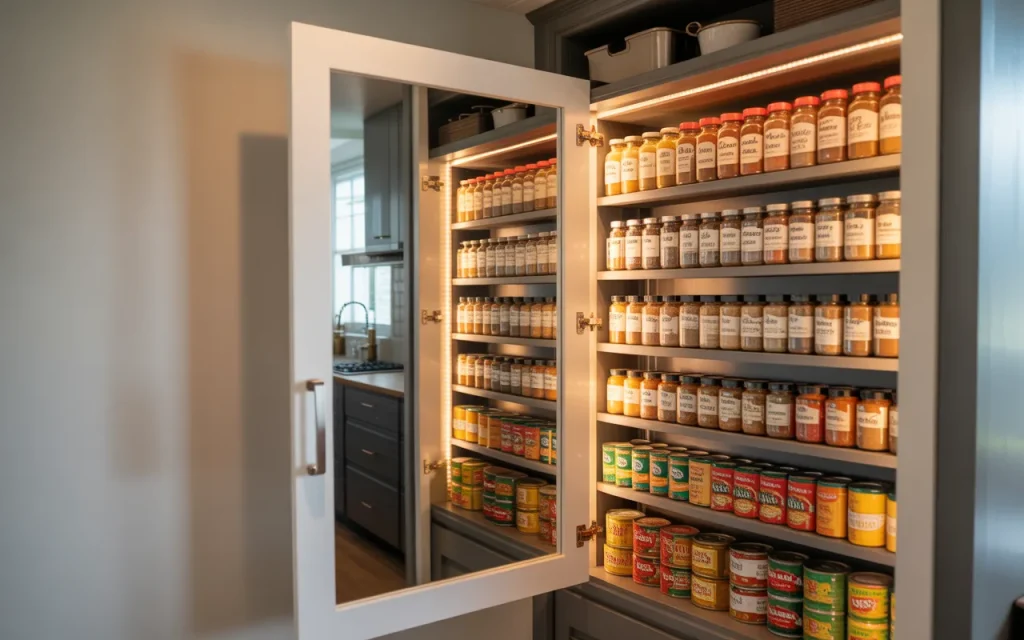
A mirror that swings open to reveal a pantry is both functional and glamorous. It’s perfect for kitchens or dining rooms where you want to add light and space.
How to do it: Install a large mirror on a hidden hinge system. Behind it, create a shallow pantry for spices, oils, and frequently used items.
Why it works: Mirrors make a room feel larger and brighter. A mirror door serves double duty — it’s decor and hidden storage.
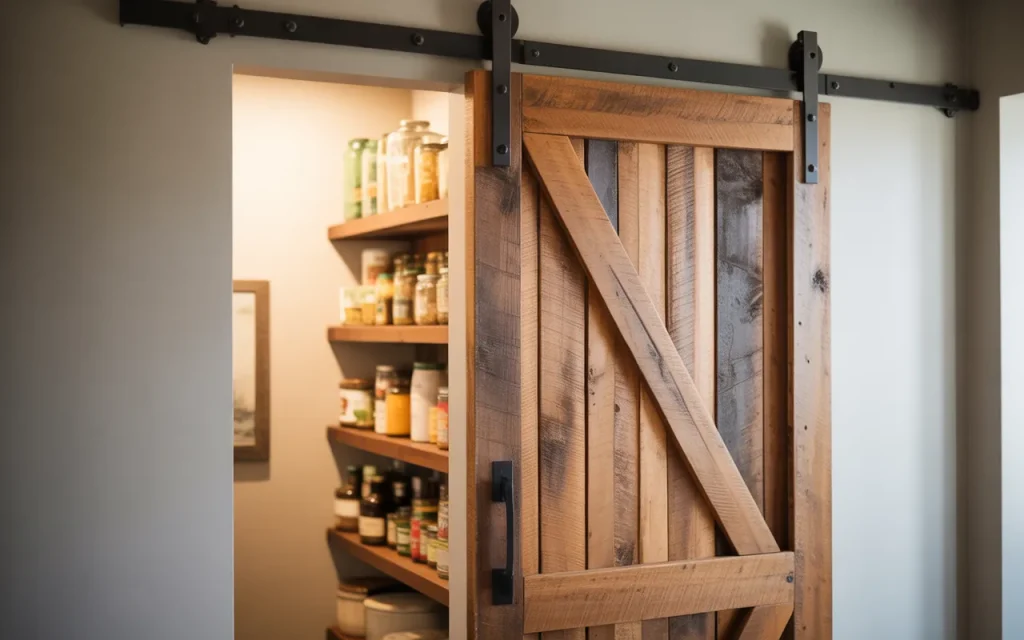
4. Sliding Barn Door Pantry
A sliding barn door adds farmhouse charm while hiding a walk-in pantry. It’s a functional and stylish solution.
How to do it: Install a sliding barn door track. Choose a door that matches your style — reclaimed wood, painted, or metal. Behind it, create a walk-in pantry.
Why it works: Barn doors save space (no swing room needed) and add architectural interest. They’re perfect for kitchens where a swinging door would be awkward.
5. Wallpapered Hidden Door
A door that disappears into the wall with matching wallpaper is a sleek, modern solution. You’d never know it was there.
How to do it: Install a flush door. Cover it with the same wallpaper or paint as the surrounding wall. Add a small, hidden latch to open.
Why it works: A wallpapered door completely disappears. It’s the ultimate hidden pantry — only you know it’s there.
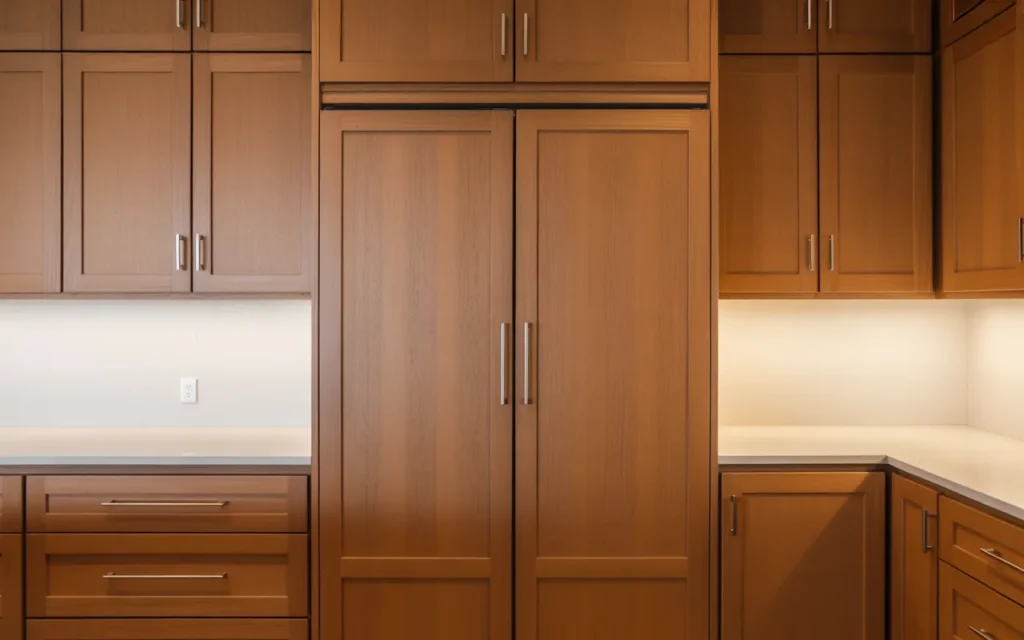
6. Cabinet Door Pantry
A pantry hidden behind what looks like a standard cabinet is simple and effective. It blends seamlessly into your kitchen cabinetry.
How to do it: Use a full-height cabinet door that matches your kitchen cabinets. Behind it, install a walk-in pantry with adjustable shelves.
Why it works: Cabinet doors blend perfectly with your existing kitchen. It’s a hidden pantry that looks like it was always there.
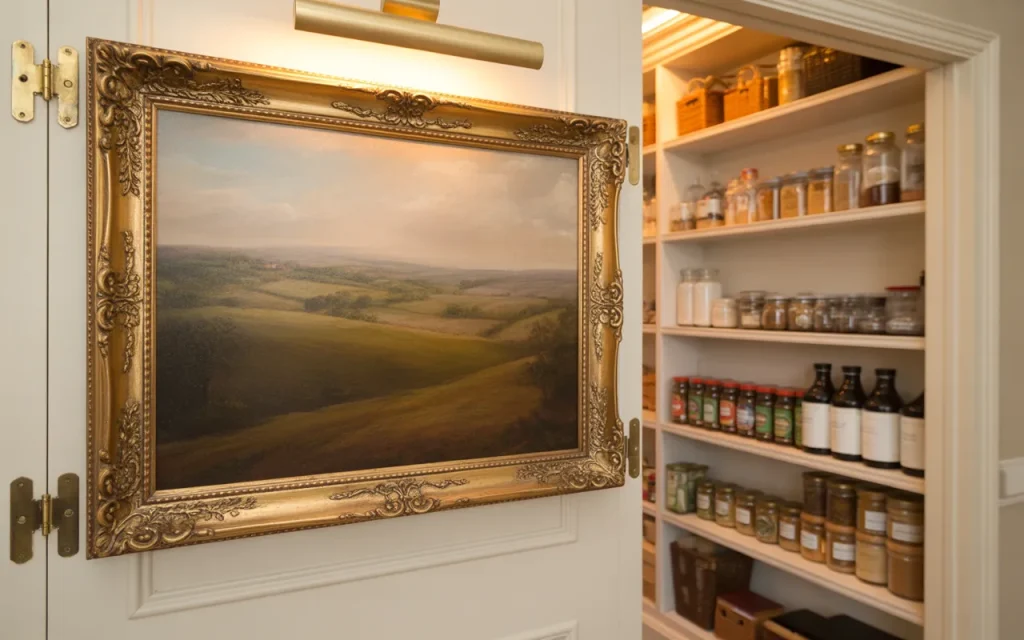
7. Picture Frame Hidden Door
A large picture or piece of art can hide a pantry door. It’s a creative solution that adds personality to your space.
How to do it: Mount a large piece of art on a hinged panel. Behind it, create a shallow or deep pantry. Use heavy-duty hinges to support the weight.
Why it works: Artwork adds beauty to your room while hiding storage. It’s a conversation starter and a functional solution.
8. Pocket Door Pantry
A pocket door pantry slides into the wall, saving floor space and creating a clean, seamless look.
How to do it: Install a pocket door system in the wall. The door disappears completely when open. Behind it, create a walk-in pantry.
Why it works: Pocket doors take no floor space. They’re perfect for narrow kitchens or tight spaces where a swinging door won’t work.
9. Between-Studs Hidden Pantry
The space between your wall studs is only about 6 inches deep, but that’s plenty for cans, jars, and spices. Create a shallow hidden pantry in a dead space.
How to do it: Cut into the wall between two studs. Install custom shallow shelves. Add a flush door that matches the wall.
Why it works: Between-stud pantries use space you didn’t know you had. They’re perfect for spices, canned goods, and small items.
10. Curtained Hidden Pantry
A simple curtain can hide a pantry while adding softness and texture to your kitchen. It’s an affordable, renter-friendly option.
How to do it: Install a curtain rod above a recessed area or between two walls. Hang a curtain in a fabric you love. Behind it, install open shelving.
Why it works: Curtains are soft, flexible, and easy to install. They hide clutter while adding color and texture to your kitchen.
11. Glass Door Pantry
A glass door adds elegance while hinting at what’s inside. It’s a hidden pantry that’s not completely hidden — but still beautiful.
How to do it: Install a glass-panel door that matches your style. Use frosted or textured glass for partial privacy. Behind it, keep your pantry beautifully organized.
Why it works: Glass doors add light and elegance. They encourage you to keep your pantry organized since it’s partially visible.
12. Ladder Pantry
A ladder that pulls down from the ceiling can hide a high pantry. It’s perfect for storing items you don’t need daily.
How to do it: Install a ceiling-mounted ladder that pulls down. Behind it, create storage in the attic space or above the ceiling.
Why it works: Ladder pantries use vertical space that’s otherwise wasted. They’re perfect for seasonal items and bulk storage.

13. Murphy Door Pantry
Murphy doors are designed to look like built-in bookshelves, cabinets, or panels. They swing open to reveal a room behind.
How to do it: Purchase a pre-made Murphy door system or build your own. Choose a style that matches your home — bookshelf, cabinet, or panel.
Why it works: Murphy doors are specifically designed for hidden rooms. They come with heavy-duty hinges and magnetic latches for security.
14. Corner Hidden Pantry
The corner of your kitchen can hide a surprising amount of storage. Create a hidden walk-in pantry in an unused corner.
How to do it: Frame out a corner space. Install a door at a 45-degree angle or use a sliding door. Inside, add angled shelves for maximum storage.
Why it works: Corners are often underutilized. A corner pantry uses that space efficiently while staying hidden.
15. Behind-the-Fridge Pantry
The space behind or beside your refrigerator can become a narrow hidden pantry. It’s perfect for storing tall items.
How to do it: Build out a shallow pantry next to your refrigerator. Use a door that matches your cabinets. Inside, install pull-out shelves or narrow shelving.
Why it works: The area next to the fridge is often wasted. A narrow pantry uses that space for storage you’ll actually use.
Hidden Pantry Type Comparison Table
| Type | Best For | Difficulty | Cost |
|---|---|---|---|
| Bookshelf Door | Living room, dining room | High | $$$ |
| Under-Stairs | Homes with stairs | Medium | $$ |
| Mirror Door | Kitchens, dining rooms | Medium | $$ |
| Sliding Barn Door | Kitchens with space | Medium | $$ |
| Between-Studs | Small kitchens, dead space | High | $ |
| Curtained | Renters, temporary | Low | $ |
| Pocket Door | Narrow spaces | High | $$$ |
Common Mistakes to Avoid
Mistake 1: Wrong Hinges
Hidden doors are heavy. Regular hinges won’t support the weight and will sag over time.
How to fix: Use heavy-duty concealed hinges designed for hidden doors. Murphy door systems come with appropriate hardware.
Mistake 2: No Ventilation
Pantries need airflow. A completely sealed space can lead to musty smells and spoiled food.
How to fix: Add ventilation grilles or leave gaps at the top and bottom of the door. Ensure air can circulate.
Mistake 3: Insufficient Depth
A hidden pantry that’s too shallow to be useful is a missed opportunity.
How to fix: Plan your pantry depth based on what you’ll store. Standard shelves are 12-24 inches deep. Between-stud pantries are shallow (6 inches) and best for cans and spices.
Mistake 4: Poor Lighting
A hidden pantry is only useful if you can see inside. Dark pantries lead to forgotten items.
How to fix: Install motion-sensor lights inside. Battery-operated LED lights are easy to install and don’t require wiring.
Mistake 5: Forgetting About Access
A pantry that’s hard to open or awkward to use won’t get used.
How to fix: Choose door hardware that’s easy to use. Make sure there’s enough room to open the door fully. Consider pocket or sliding doors for tight spaces.
Before & After: Creating a Hidden Pantry
Before:
The Johnsons had a blank wall in their kitchen that wasn’t being used. They needed more storage but didn’t want to add bulky cabinets that would make the kitchen feel smaller. Their pantry was a small, cluttered closet around the corner.
The Problem:
They had dead space in the kitchen and inadequate pantry storage elsewhere. They wanted more storage without sacrificing kitchen aesthetics.
The Changes:
- Framed out a 6-foot-wide section of the blank wall
- Installed a bookshelf door with heavy-duty hinges
- Filled the bookshelf with real books and decorative items
- Inside, installed floor-to-ceiling shelving
- Added motion-sensor LED lighting
- Added pull-out drawers for lower shelves
After:
The Johnsons now have a spacious walk-in pantry hidden behind a beautiful bookshelf. Guests have no idea it’s there until they’re shown. The kitchen looks unchanged, but storage has more than doubled. The hidden pantry has become their favorite feature.
Budget vs. Luxury: Hidden Pantry on Any Budget
Budget-Friendly Options:
- Curtained Pantry: Curtain rod and fabric — $50-150
- Between-Studs Pantry: DIY shelves and flush door — $100-300
- Cabinet Door Pantry: Use existing cabinet door — $50-200
- Under-Stairs DIY: Basic shelving and door — $200-500
Splurge-Worthy Options:
- Custom Bookshelf Door: Built-in, seamless look — $2000-5000
- Murphy Door System: Pre-made hidden door hardware — $1000-3000
- Professional Installation: Custom design and build — $3000-10000
- Custom Shelving: Pull-out drawers, custom spacing — $500-2000
- Integrated Lighting: Hardwired, motion-sensor — $200-500
Space Type Guide: Best Hidden Pantry for Your Home
Small Kitchen:
- Best option: Between-stud pantry, cabinet door pantry, pocket door pantry
- Why: These options take minimal floor space and use existing walls or cabinets.
Medium Kitchen:
- Best option: Sliding barn door, under-stairs pantry, cabinet door pantry
- Why: Medium kitchens can accommodate more substantial hidden pantries without feeling cramped.
Large Kitchen:
- Best option: Bookshelf door, mirror door, custom built-in
- Why: Large kitchens have space for dramatic hidden pantry features that become conversation pieces.
Open Concept:
- Best option: Bookshelf door, wallpapered door, barn door
- Why: Open concept spaces benefit from hidden pantries that don’t disrupt the open flow.
Frequently Asked Questions
Q: How much does a hidden walk-in pantry cost?
A: Costs vary widely. A simple curtained pantry can cost under $100. A custom bookshelf door with professional installation can cost $3000-10000.
Q: Can I install a hidden pantry myself?
A: Yes, for simpler options like curtained or cabinet door pantries. Bookshelf doors and pocket doors require more skill. Consider hiring a professional for complex installations.
Q: What’s the best hidden pantry for a rental?
A: A curtained pantry or a freestanding bookshelf on hinges (if you can attach to the wall) are rental-friendly options that can be removed when you leave.
Q: How deep should a hidden pantry be?
A: Standard pantry shelves are 12-24 inches deep. Between-stud pantries are about 6 inches deep and work well for cans, jars, and spices. Choose depth based on your space and storage needs.
Q: Do hidden pantries need ventilation?
A: Yes. Add ventilation grilles or leave gaps at the top and bottom of the door. This prevents musty smells and helps food stay fresh.
Q: How do I open a hidden pantry door?
A: Use magnetic latches, push-to-open mechanisms, or small, hidden pulls. For bookshelf doors, you can pull on a book or use a concealed latch.
Conclusion
A hidden walk-in pantry is the ultimate kitchen upgrade. It gives you the storage space you need without sacrificing the clean, uncluttered look you want. It turns dead space into valuable storage. And it adds a touch of magic to your home.
Whether you choose a bookshelf door, an under-stairs pantry, or a simple curtained solution, a hidden pantry transforms how you use your space. No more cluttered countertops. No more overstuffed cabinets. Just beautiful, organized storage hidden behind a beautiful facade.
Ready to create your hidden pantry? Start by identifying dead space in your kitchen — a blank wall, an under-stairs area, a forgotten corner. Your secret storage is waiting.