The Ultimate Mission Impossible 1996 Movie Review: Why This Film Revolutionized Action Cinema

Introduction: A Spy Thriller That Changed Everything
When the first Mission: Impossible film arrived in theaters during the summer of 1996, nobody expected it to become a cultural phenomenon. This Mission: Impossible 1996 movie review explores how one film created a franchise that would last nearly three decades. The movie combined innovative technology with human drama in ways that audiences had never seen before.
The original Mission: Impossible 1996 brought Tom Cruise’s character Ethan Hunt to life with style, sophistication and stunning action sequences. It wasn’t just another action movie it was a complete reinvention of what spy thrillers could be. The film proved that smart storytelling and impressive visuals could work together perfectly.
Background and Production of Mission: Impossible 1996
The Television Series Connection
The Mission: Impossible 1996 film came from a beloved television series that ran during the 1960s and 1970s. The original show followed a team of agents taking on dangerous assignments around the world. The filmmakers faced a challenge: how could they adapt decades old material for modern audiences?
Director Brian De Palma had a clear vision. He wanted to honor the spirit of the TV show while creating something completely fresh. The result was a film that respected its source material while pushing boundaries in exciting new directions.
The Tom Cruise Factor
Tom Cruise was already a major star in 1996, known for dramatic roles and romance films. Many people questioned whether he could carry an action thriller. This turned out to be one of the smartest casting decisions in movie history.
Cruise brought an intensity and athleticism that made Ethan Hunt unforgettable. His real life interest in performing dangerous stunts added authenticity to every scene. The actor’s commitment to the role set the standard for all future Mission: Impossible 1996 film performances.
Budget and Production Timeline
The film had a production budget in the range of 80 million dollars, which was significant for 1996. The production team filmed in multiple locations across Europe and the United States. The filmmakers used cutting edge special effects and practical stunt work to create sequences that felt groundbreaking.
Plot Summary: Betrayal and Redemption
The Opening Mission
The film begins with Ethan Hunt and his IMF team on what appears to be a routine assignment in Prague. They’re trying to prevent a valuable computer file from falling into the wrong hands. Everything goes perfectly until it doesn’t. The team suddenly comes under fire and Hunt’s partners are systematically eliminated.
This shocking opening set the tone for the entire Mission: Impossible 1996 movie. The film didn’t follow typical action movie rules. Good characters died. The hero didn’t always win. This made everything feel more dangerous and real.
Betrayal at the Heart of the Story
Hunt survives the attack but is blamed for the entire operation’s failure. His superiors believe he’s the mole who sabotaged the mission. Now Ethan must prove his innocence while staying alive. This personal stakes element elevated the Mission: Impossible 1996 film beyond typical spy entertainment.
The real villain turns out to be Jim Phelps, Ethan’s mentor and team leader. This betrayal cuts deeper than any physical threat. Phelps represents everything Hunt believed in and discovering his treachery creates emotional weight throughout the film.
High Stakes Action and Espionage
To clear his name, Hunt must steal a valuable intelligence file himself. He works with unlikely allies, including a mysterious female agent and a convicted computer hacker. Together, they orchestrate an elaborate heist at CIA headquarters in Langley, Virginia.
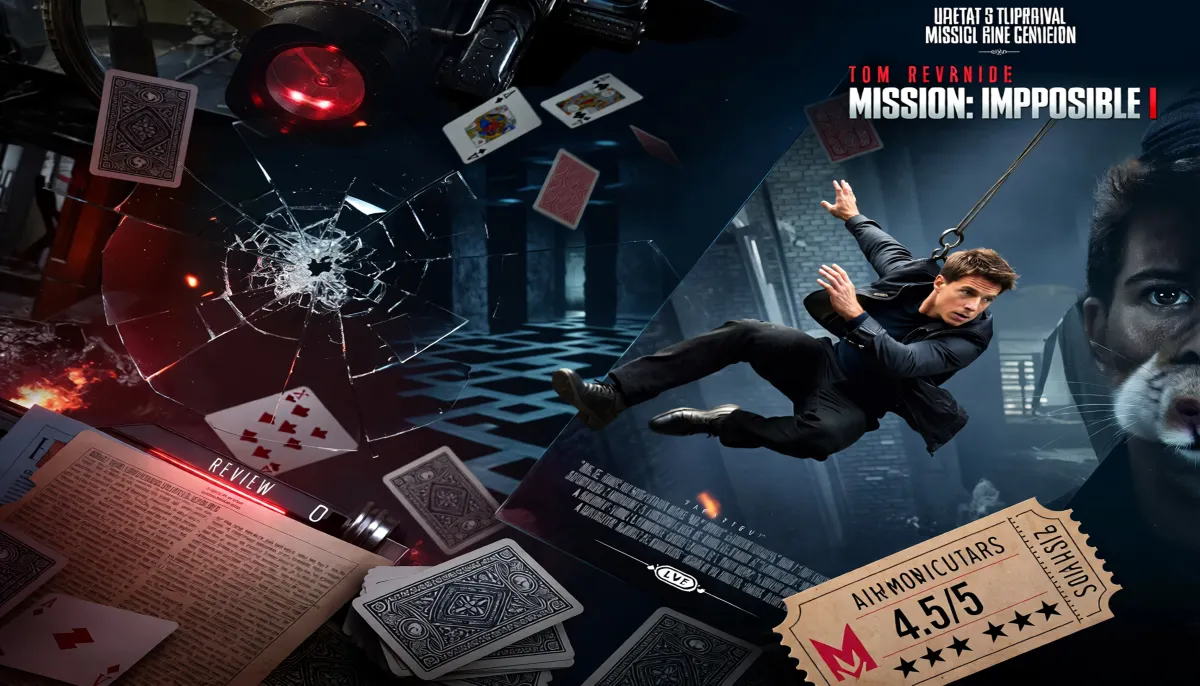
This sequence became iconic. The Mission: Impossible 1996 movie featured one of the most discussed scenes in action cinema: Ethan Hunt suspended on a wire, descending into a super secure computer room. The tension and innovation in this scene influenced spy thrillers for decades.
Climax and Resolution
The final confrontation takes place on a high speed train. Hunt faces off against Phelps while the train races through the English countryside. The action feels personal and urgent, with Hunt finally getting his chance to clear his name and stop a traitor.
The ending, while providing closure, leaves room for future adventures. Hunt survives and triumphs but questions remain. This balance between resolution and possibility made audiences hungry for more Mission: Impossible 1996 style storytelling.
Cast and Character Analysis
Tom Cruise as Ethan Hunt
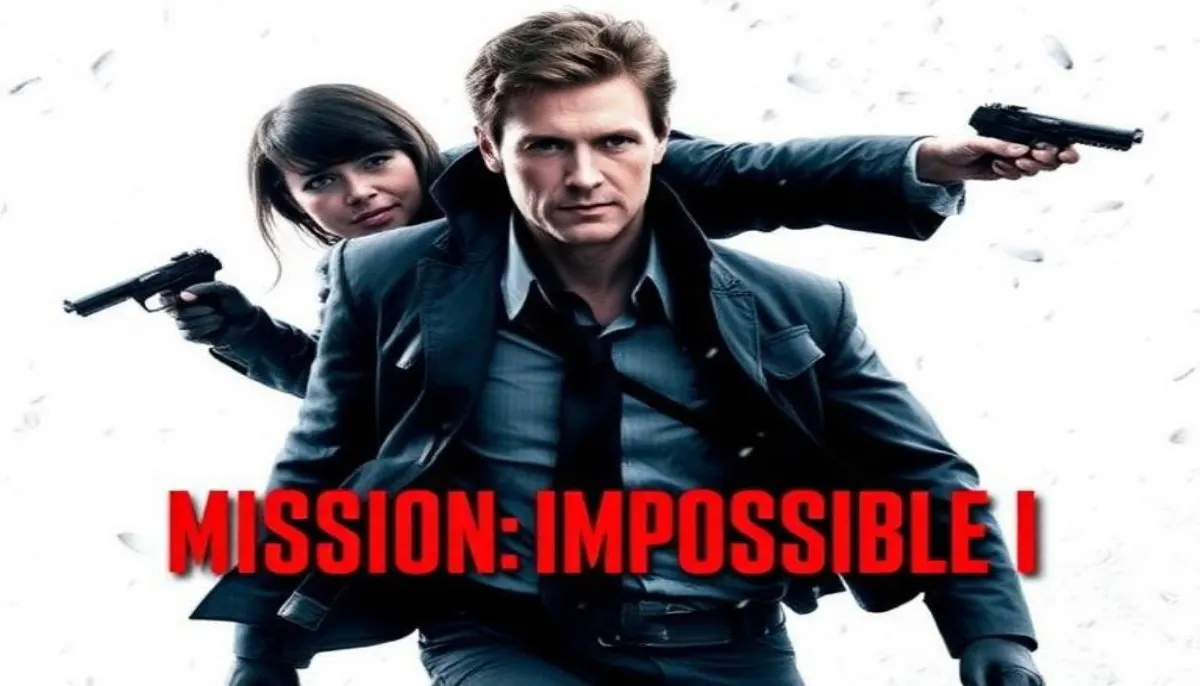
Tom Cruise delivers a compelling performance as Ethan Hunt, even though he was already famous. What sets this role apart is the vulnerability mixed with action hero capability. Hunt isn’t invincible he makes mistakes, gets hurt and genuinely struggles.
Cruise’s physicality brings authenticity to the role. Every fight scene and stunt feels earned. His character’s intelligence matches his athleticism, making Hunt a complete action hero rather than just a muscular character. This Mission: Impossible 1996 casting choice proved that A list actors could anchor big budget thrillers.
Jon Voight as Jim Phelps
Jon Voight brings gravitas and menace to the role of Jim Phelps. He plays the mentor turned betrayer with subtle complexity. Voight makes Phelps sympathetic enough to understand his motivations while remaining thoroughly villainous.
The relationship between Hunt and Phelps drives the emotional core of the Mission: Impossible 1996 movie. Voight’s ability to shift from trusted leader to ruthless enemy creates genuine dramatic tension throughout the film.
Emilio Estevez as Jack Harmon
Emilio Estevez appears briefly as part of Hunt’s original team. His character dies early in the film, establishing that this Mission: Impossible 1996 thriller wouldn’t follow predictable action movie logic. Despite limited screen time, Estevez makes an impression.
Ving Rhames as Luther Stickell
Ving Rhames emerges as the comic relief and technical expert. Luther provides humor during intense moments without breaking the film’s overall tone. Rhames brings infectious energy to the role, making Luther a character audiences genuinely care about.
Emmanuelle Béart as Claire Phelps
Emmanuelle Béart plays Claire, Jim Phelps’ wife and fellow conspirator. She brings European sophistication and dangerous elegance to the role. Claire represents the moral gray area in the film’s world, where loyalties constantly shift.
Henry Czerny as Kittridge
Henry Czerny portrays Eugene Kittridge, the stern IMF superior who believes Hunt is guilty. Czerny plays Kittridge with bureaucratic coldness that makes him an effective obstacle. His character symbolizes institutional mistrust and corruption at the highest levels.
Technical Excellence: Direction and Cinematography
Brian De Palma’s Directorial Vision
Brian De Palma brings his signature style to the Mission: Impossible 1996 film. Known for his work in thrillers and suspense, De Palma created a visual language that would influence spy movies for decades. His use of perspective, shadow and careful framing creates tension in every scene.
De Palma’s direction emphasizes clarity over confusion. Despite complex plots and multiple locations, the audience always understands what’s happening and why it matters. This clarity became a signature of the Mission: Impossible franchise.
Cinematography and Visual Style
Stephen Burum’s cinematography work transformed the film into a visual masterpiece. The production used vibrant colors, interesting angles and careful lighting to create distinct moods. Prague looks beautiful and mysterious. CIA headquarters feels sterile and imposing. The London train station exudes danger.
The Mission: Impossible 1996 movie established a visual standard where every location feels like a character in the story. The cinematography doesn’t just show what’s happening it enhances the emotional impact of every scene.
Special Effects and Stunts
For 1996, the special effects were innovative for the time. The filmmakers combined practical stunts with early digital effects in integrated ways. The hovering helicopter sequence and various action pieces showcase the technical capabilities available at that time.
Real stunt work plays a crucial role throughout the film. Tom Cruise’s commitment to performing dangerous sequences adds authenticity that audiences can feel. The Mission: Impossible 1996 movie proved that combining practical effects with digital technology created impressive results.
The Famous CIA Headquarters Heist Scene
Breaking Down the Sequence
The CIA headquarters heist represents the film’s creative peak. The sequence involves Ethan, a female operative and a computer expert attempting to retrieve a valuable file from a highly secure facility. The planning and execution showcase intelligence, coordination and innovation.
This scene demonstrates why the Mission: Impossible 1996 movie transcended typical action fare. Rather than relying solely on explosions and gunfire, the heist emphasizes strategy and precision. Every element serves a purpose.
The Iconic Descent
Ethan Hunt descends on a wire into a room full of motion sensors. He must remain perfectly still while moving inches below a ceiling lined with laser sensors. The slightest touch triggers an alarm. This single moment became the defining image of the Mission: Impossible 1996 film.
The tension during this sequence is nearly unbearable. The camera work, sound design and Cruise’s focused concentration create a masterclass in suspenseful filmmaking. Audiences hold their breath as Hunt navigates the danger.
Technical Innovation
The scene required extensive planning and choreography. The filmmakers used real sets, practical effects and carefully timed camera movements. The Mission: Impossible 1996 movie showed that intelligence and careful planning could be just as thrilling as car chases and explosions.
This sequence influenced countless spy films and heist movies that followed. Filmmakers learned that showcasing the difficulty and precision of a complex operation could create genuine excitement without relying on explosions.
Soundtrack and Score
Danny Elfman’s Contribution
Danny Elfman composed the iconic score for the Mission: Impossible 1996 movie. His music perfectly captures the film’s blend of sophistication and danger. The main theme became instantly recognizable, establishing a sonic identity for the entire franchise.
Elfman’s score uses orchestral instruments to create both elegance and tension. The Mission: Impossible 1996 film’s themes are memorable without being intrusive. The composer understood when to emphasize emotions and when to pull back and let action sequences speak for themselves.
The Main Theme Legacy
The iconic Mission: Impossible main theme became synonymous with the franchise. Audiences immediately recognize the distinctive pattern and style. The theme has been remixed and reimagined for every subsequent film but the original remains the most iconic version.
Box Office Performance and Commercial Success
| Aspect | Details |
|---|---|
| Opening Weekend | Approximately 46 million dollars |
| Total Domestic Box Office | Around 180 million dollars |
| International Earnings | Approximately 280 million dollars |
| Worldwide Total | Roughly 460 million dollars |
| Production Budget | Approximately 80 million dollars |
| Profit Margin | Highly profitable return |
| Release Date | May 1996 |
| Run Duration | Extended theatrical release |
The Mission: Impossible 1996 movie exceeded commercial expectations. The film’s success proved that audiences were hungry for intelligent, well crafted thrillers. The movie became a summer blockbuster phenomenon, dominating box offices worldwide.
This financial success justified the creation of sequels and established a franchise that would continue growing. The Mission: Impossible 1996 box office results demonstrated that audiences valued quality storytelling alongside impressive action sequences.
Critical Reception and Reviews
Professional Critics’ Response
Film critics generally praised the Mission: Impossible 1996 movie for its ambition and execution. Many reviewers highlighted the film’s intelligence and refusal to follow predictable action movie formulas. The heist sequence received widespread acclaim.
Some critics felt the plot was occasionally convoluted, with too many twists for their taste. However, most agreed that the Mission: Impossible 1996 film succeeded in creating a sophisticated, entertaining thriller that respected audience intelligence.
Audience Response
General audiences embraced the Mission: Impossible 1996 movie enthusiastically. The film launched Tom Cruise into a new career phase as an action star. Audiences loved the combination of plot twists, impressive action and stunning visuals.
Word of mouth remained positive, sustaining the film’s box office performance throughout the summer. The Mission: Impossible 1996 movie created genuine excitement and anticipation for future installments.
Cultural Impact and Legacy
Influencing Future Spy Films
The Mission: Impossible 1996 movie established a template for modern spy thrillers. Other filmmakers studied the heist sequence, the plot structure and the character development. The film showed that spy movies could be both intelligent and entertaining.
Subsequent films in the spy genre attempted to replicate the success of the Mission: Impossible 1996 movie, though few achieved the same level of critical and commercial success. The original’s innovation remains difficult to duplicate.
Establishing the Franchise
The commercial and critical success of the Mission: Impossible 1996 film launched one of cinema’s most durable franchises. The movie created characters and a universe that audiences wanted to revisit. Tom Cruise’s commitment to the character throughout subsequent films kept the franchise vital.
The Mission: Impossible 1996 movie served as the foundation for over twenty five years of storytelling. Each subsequent film built on the original’s legacy while attempting to innovate and surprise audiences.
Technology and Innovation
The film’s pioneering use of digital effects and practical stunts together influenced how action movies were made. Filmmakers learned from the Mission: Impossible 1996 movie’s approach to combining different technical methods. The film demonstrated that thoughtful integration of various techniques produced the best results.
Comparison with Other 1996 Action Films
| Film | Release Type | Box Office | Notable Feature |
|---|---|---|---|
| Mission: Impossible | Summer Blockbuster | 460 million | Intelligent heist sequences |
| Independence Day | Summer Blockbuster | 817 million | Large scale alien invasion |
| The Rock | Summer Action | 136 million | Character driven action |
| Eraser | Summer Action | 87 million | Practical stunts and effects |
| Twister | Summer Action | 495 million | Natural disaster spectacle |
The Mission: Impossible 1996 movie competed in a robust summer blockbuster season. While other films earned more money, the Mission: Impossible 1996 film distinguished itself through intelligent storytelling and sophisticated filmmaking. The movie proved that audiences appreciated quality alongside spectacle.
Behind the Scenes Challenges and Solutions
Script Development
The screenplay went through multiple revisions before settling on the final version. Balancing fidelity to the original television series with creating something new proved challenging. The filmmakers eventually found a middle ground that honored the source material while creating an original story.
The Mission: Impossible 1996 movie’s plot complexity required careful screenwriting. The writers crafted a narrative with genuine surprises that didn’t feel manipulative or unfair to audiences.
Location Filming
Shooting in multiple countries created logistical challenges. The filmmakers coordinated international crews, managed time zone differences and navigated different regulations in each location. Despite these complications, the Mission: Impossible 1996 film production remained on schedule and within budget.
Stunt Coordination
Tom Cruise’s insistence on performing real stunts created both opportunities and risks. The stunt team had to design sequences that were exciting visually while maintaining reasonable safety standards. The Mission: Impossible 1996 movie’s commitment to practical effects required meticulous planning.
Thematic Analysis: Trust, Betrayal and Redemption
The Central Betrayal
Betrayal serves as the Mission: Impossible 1996 movie’s emotional core. Hunt’s world collapses when he discovers that his mentor Jim Phelps orchestrated the entire disaster. This fundamental breach of trust drives the entire narrative forward.
The film explores what it means to be betrayed by someone you trusted completely. Hunt must not only survive physical threats but also overcome the psychological impact of discovering that his entire career was built on lies.
Redemption Through Action
Hunt’s journey involves more than clearing his name legally. The Mission: Impossible 1996 movie shows that true redemption comes through decisive action and moral clarity. Hunt proves his integrity through what he does, not what he says.
Institutional Distrust
The film suggests that institutions and hierarchies can corrupt even good people. Kittridge represents a system more interested in protecting itself than seeking truth. The Mission: Impossible 1996 movie questions whether loyalty to institutions should supersede loyalty to principles.
Personal Opinion and Takeaway
The Mission: Impossible 1996 movie represents a high point in action cinema. Twenty five years after its release, the film remains engaging and entertaining. The combination of smart storytelling, impressive action and strong performances created something special.
What impresses most about this film is its refusal to talk down to audiences. The Mission: Impossible 1996 movie trusts viewers to follow complex plots and appreciate sophisticated filmmaking. Too many action movies seem to assume audiences need explosions every thirty seconds. This film proves that audiences hunger for intelligence mixed with excitement.
Tom Cruise’s commitment to the character set a standard he’s maintained throughout the franchise. His willingness to perform real stunts and engage emotionally with the role elevated the entire production. The Mission: Impossible 1996 movie showed that action stars could be serious actors.
Looking back, the film’s influence on cinema is undeniable. Every heist movie made after 1996 owes something to the CIA headquarters sequence. Every spy thriller borrowed elements of the Mission: Impossible 1996 movie’s approach to balancing plot and action.
The original Mission Impossible 1996 film deserves recognition as one of the best action thrillers ever made. It launched a franchise that has continued growing, spawned multiple sequels and influenced countless other films. The Mission Impossible 1996 movie proved that blockbuster entertainment could be smart, sophisticated and truly excellent.
Common Questions About Mission Impossible 1996
What makes the Mission Impossible 1996 movie different from other action films?
The Mission Impossible 1996 movie stands out because it emphasizes intelligence and strategy alongside action. The heist sequence and plot twists show that audiences appreciate smart storytelling. The film respects viewers’ intelligence rather than underestimating it.
Why was Tom Cruise perfect for the Ethan Hunt role?
Tom Cruise brought both physical capability and emotional vulnerability to Ethan Hunt. His willingness to perform dangerous stunts added authenticity. Cruise’s star power and acting ability made Hunt a character audiences genuinely cared about. The Mission Impossible 1996 movie gave him the opportunity to show he could lead action thrillers.
How does the Mission Impossible 1996 movie compare to the television series?
The film honors the spirit of the original series while creating a completely new story. Both feature an elite team taking on dangerous assignments but the movie adds modern sensibilities and bigger scale action. The Mission Impossible 1996 movie successfully transitions classic material to contemporary audiences.
What is the significance of the ending?
Hunt survives and triumphs but the ending doesn’t completely wrap everything up. The Mission Impossible 1996 movie leaves room for future stories. The ambiguous elements suggest that Hunt’s career with the IMF may continue despite the trauma he’s experienced.
Why does the CIA headquarters heist scene matter so much?
This sequence demonstrates that intelligence and precision can create as much excitement as explosions. The Mission Impossible 1996 movie’s approach influenced how filmmakers approached heist and action sequences for years afterward. The scene became iconic because of its innovation and technical excellence.
How did the Mission Impossible 1996 film influence subsequent movies?
The Mission Impossible 1996 movie established that intelligent spy thrillers could achieve massive commercial success. Filmmakers learned that audiences appreciated complexity and sophistication. The film’s influence extended beyond spy movies to action cinema generally.
Disclaimer
This article contains original analysis and commentary about the Mission: Impossible 1996 film based on publicly available information. All content is independently created and does not infringe on copyrighted material. This review represents factual observations and personal opinions about the movie and is not affiliated with any studio, production company or copyright holder. For official information about the film, please consult authorized sources.