Sage Green Bedroom Decor Ideas for a Calm, Stylish Space

Sage Green Bedroom Decor Ideas That Transform Your Space Into a Sanctuary
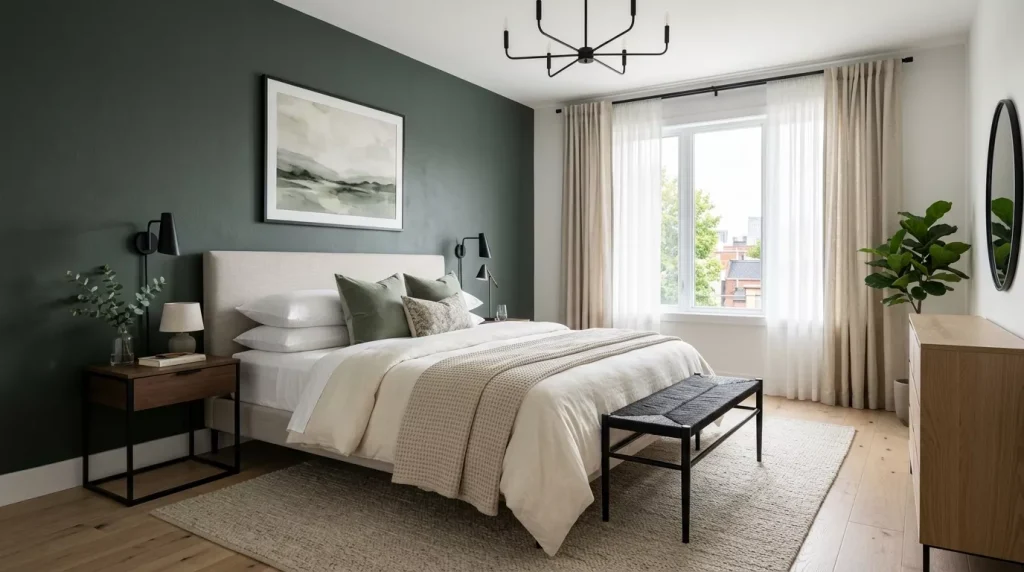
If you’ve been scrolling through home design feeds lately, you’ve seen it everywhere — that soft, muted, quietly beautiful color that makes every room look like a deep breath. That’s sage green bedroom decor, and it’s taken over for a very good reason.
Sage green isn’t loud. It doesn’t demand attention the way a bold navy or terracotta does. Instead, it settles into a room and makes everything around it feel more considered, more grounded, and more peaceful. For a bedroom — a space that’s supposed to restore you — that’s exactly what you want.
Whether you’re thinking of painting all four walls, testing one accent wall, or just swapping out your bedding, this guide covers every angle. Let’s get into it.

Why Sage Green Is the Bedroom Color People Can’t Stop Choosing
Color psychology is real, and sage green sits in a genuinely rare sweet spot. It’s close enough to nature to feel calming — the human brain associates muted greens with forests, plants, and open outdoor spaces — but it’s soft enough to feel refined rather than overpowering.
Studies on color and sleep consistently point to green tones as some of the most restful choices for bedroom walls. It reduces visual stimulation without making a room feel cold (the way some blues and greys can) and without the energy-boosting effect of brighter greens.
In short — it’s hard to get wrong. Which makes it an excellent choice even for first-time decorators.
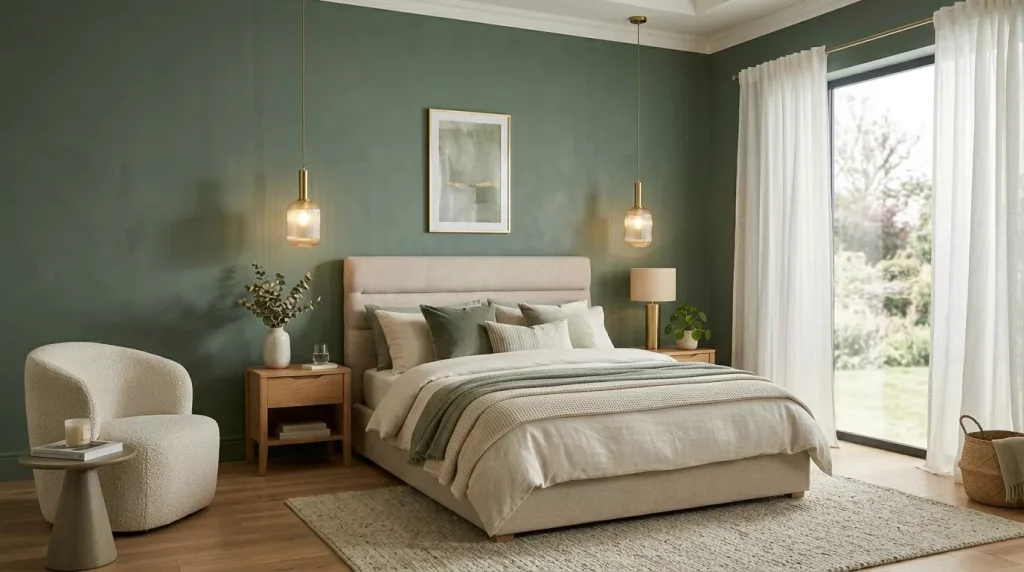
Beyond the science, sage green is also one of the most versatile colors in home decor. It plays well with warm tones like blush, terracotta, and honey wood. It works equally well with cool neutrals like white, grey, and linen. It suits modern rooms, bohemian rooms, cottagecore rooms, and traditional rooms.
Sage Green Bedroom Decor Ideas That Actually Work
1. Paint All Four Walls and Own the Commitment
There’s something brave and beautiful about going all in on a color. Full sage green walls create an immersive, cocooning atmosphere that feels like sleeping inside a forest clearing. When the light hits in the morning, the room glows.
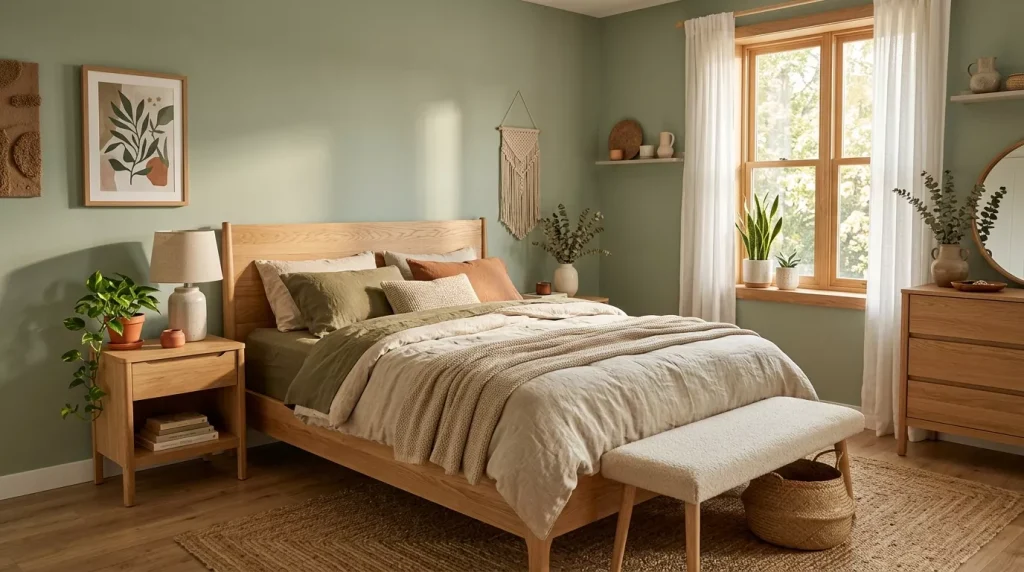
For this to work at its best:
- Choose a matte or flat finish — it absorbs light softly and makes the color look richer
- Keep furniture and bedding relatively light — cream, off-white, or warm beige
- Add warm wood furniture (oak, walnut, or pine all look exceptional against sage)
- Let the walls breathe — avoid overcrowding with art or shelving on all four walls
Recommended sage green paint shades to consider:
- Muted mid-sage — sits between grey-green and true sage, works in most light conditions
- Dusty sage — leaning grey, more sophisticated, suits modern or Scandi-style rooms
- Warm sage — slight yellow-green undertone, cozier and more botanical in feel
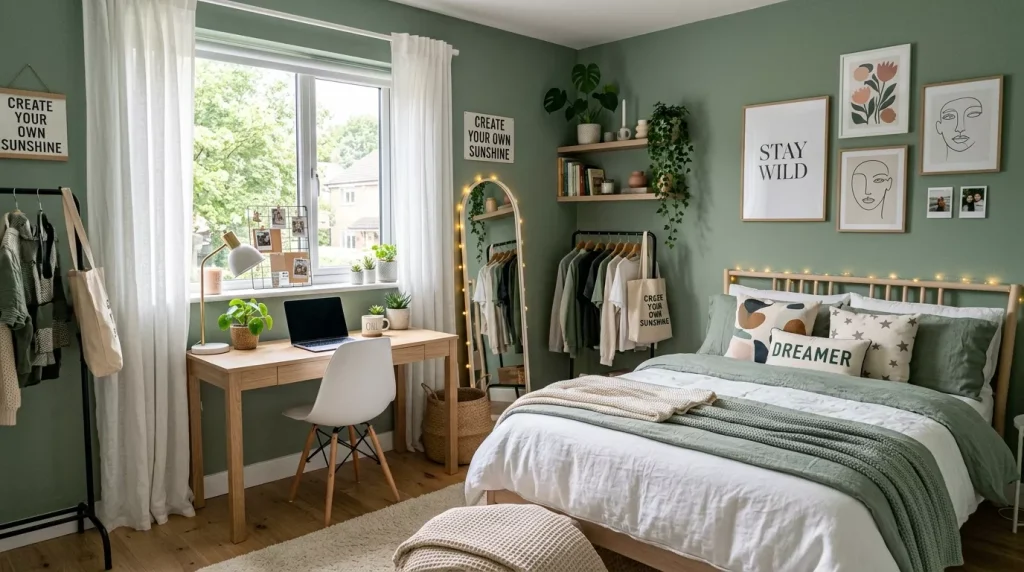
Test your chosen shade in the actual room, at different times of day, before committing. Sage green can shift dramatically between morning light and artificial evening light.
2. Try a Sage Green Accent Wall Behind the Bed
If committing to four walls feels like too much, an accent wall is the most popular entry point into sage green decor — and it works beautifully. Position it behind the bed to anchor the room and create a focal point that draws the eye immediately.
An accent wall also lets you be bolder with texture. Consider:
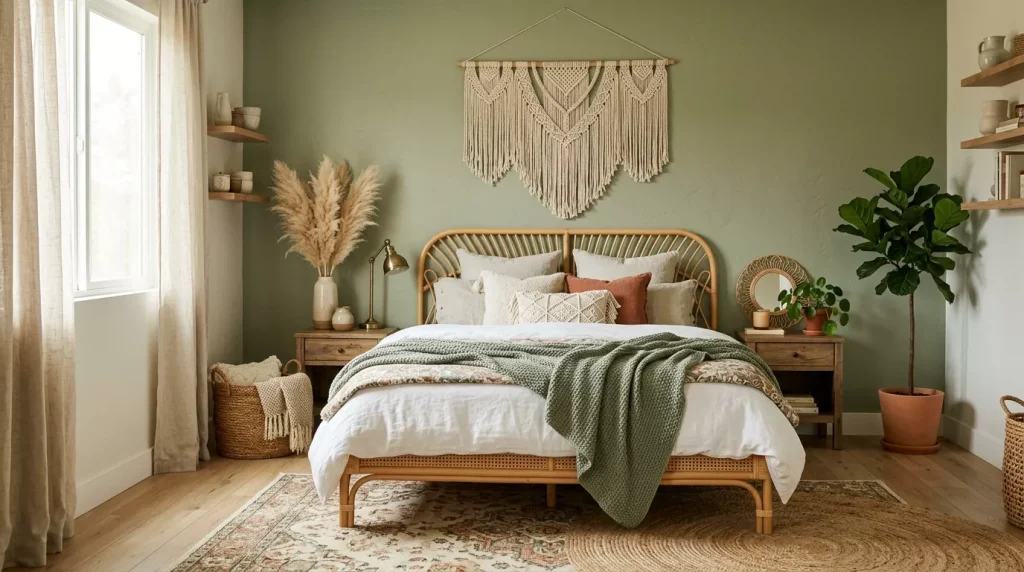
- Limewash sage green paint for a soft, layered, Old World feel
- Sage green paneling or board-and-batten for architectural interest
- Sage wallpaper with a botanical or linen print to add pattern without chaos
Pair this wall with white or cream on the remaining three walls. The contrast is clean and visually balanced.
3. Use Sage Green Bedding as a Low-Risk Starting Point

Not ready to paint yet? Sage green bedding is the lowest commitment, highest-impact swap you can make. A sage linen duvet cover transforms a bedroom’s color story without a paintbrush in sight.
Bedding combinations that work with sage green:
| Sage Green Paired With | Overall Mood |
|---|---|
| Cream and warm white | Soft, romantic, airy |
| Dusty terracotta and rust | Earthy, bohemian, warm |
| Blush pink and sand | Feminine, delicate, soothing |
| Charcoal grey and black | Moody, modern, sophisticated |
| Natural linen and beige | Organic, minimal, grounded |
| Deep navy and off-white | Classic, preppy, polished |
Linen is the ideal fabric for sage green bedding — it has a natural, slightly lived-in texture that suits the earthy quality of sage beautifully. Cotton percale works well for a crisper look.
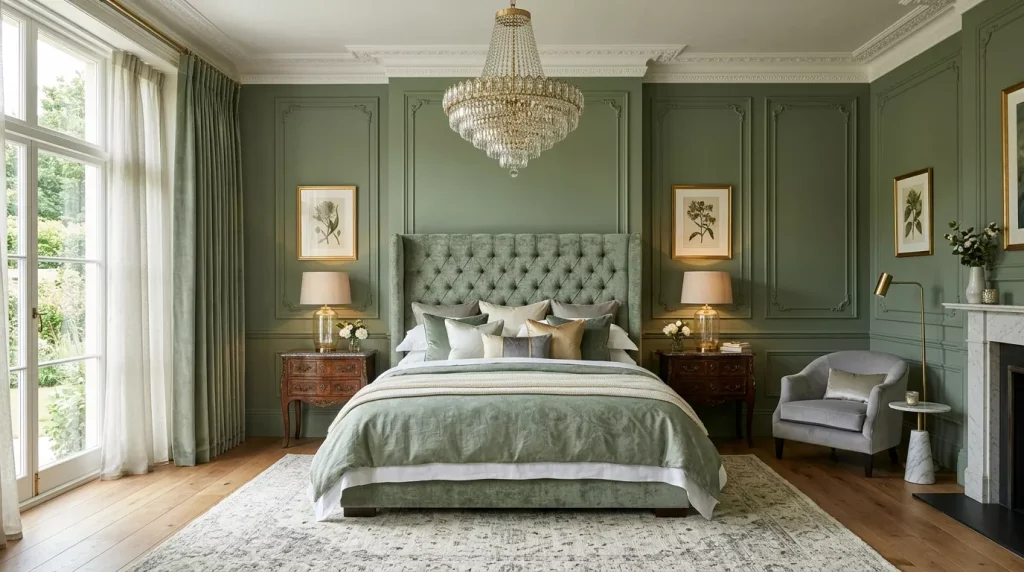
4. Bring in Sage Green Through Accessories and Accents
Sometimes the best approach is restraint. Rather than committing paint or bedding to sage, bring the color in through accessories that can be swapped when your taste evolves.
Sage green accent ideas for the bedroom:
- Sage green ceramic vases on the nightstand or dresser
- Velvet cushions or throw pillows in dusty sage
- A sage-painted wooden picture frame gallery wall
- Sage green woven baskets for storage
- A sage candle or sage wax melt holder on a shelf
- Sage green curtains or linen drapes alongside neutral walls

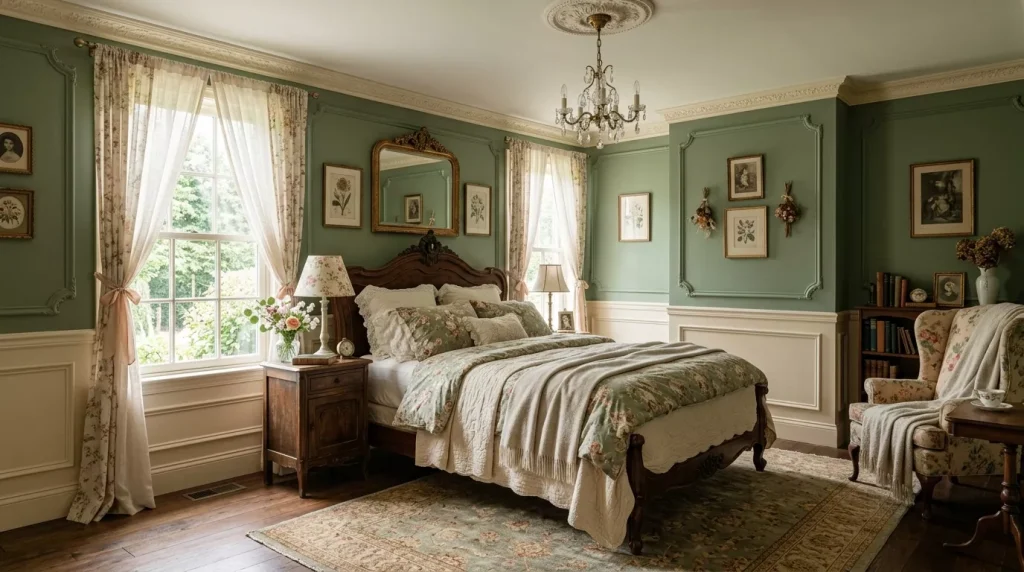
This approach is especially good for renters who can’t paint, or for anyone who wants to test the color’s effect in their specific room before making a bigger commitment.
5. Combine Sage Green with Natural Materials for a Grounded Look
Sage green and natural materials are a match that almost never fails. The muted, earthy quality of sage resonates with organic textures in a way that feels cohesive and intentional.
Best natural material pairings:
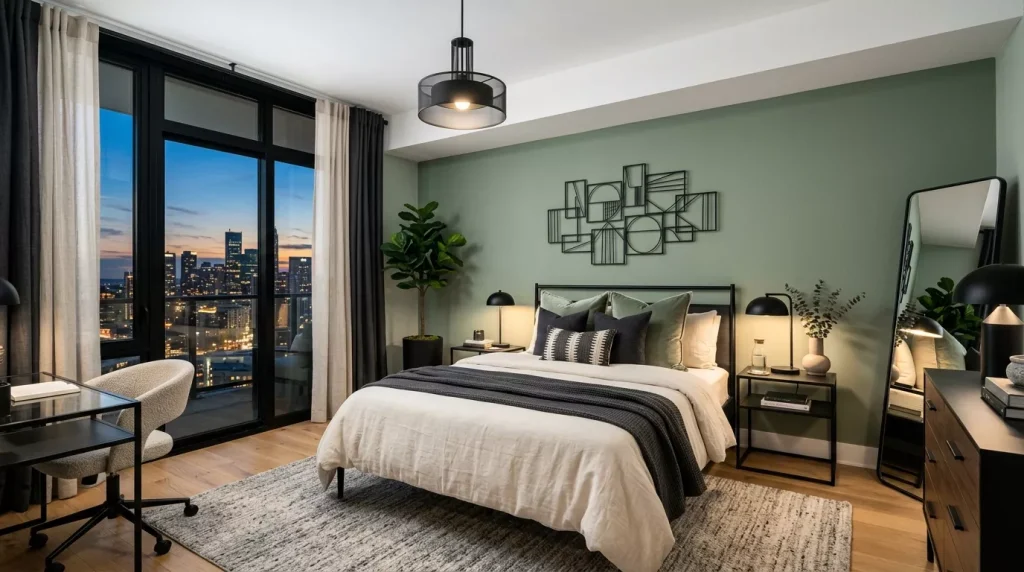
- Rattan or cane furniture — a rattan headboard with sage green walls is practically a design cliché at this point, but it’s a cliché because it genuinely looks incredible
- Raw linen bedding and curtains — the slight roughness of linen complements sage’s earthy character
- Oak or pine wood floors and furniture — warm wood tones bring out the warmth in sage
- Jute or sisal rugs — natural fiber underfoot keeps the room feeling grounded
- Terracotta plant pots — a classic botanical pairing that always looks fresh
If you want one word to guide your sage green bedroom: organic. Every material and texture should feel like it could exist in nature.

Color Combinations That Pair Perfectly with Sage Green
One of sage’s greatest strengths is its ability to harmonize with an unusually wide range of colors. Here are the most popular pairings and what each creates:
Sage + White — The cleanest, most universally appealing combination. Crisp and fresh without being cold.
Sage + Warm Beige or Cream — Adds warmth and softness. Ideal for bedrooms where you want maximum coziness.
Sage + Blush Pink — A delicate, romantic pairing. Works particularly well in smaller bedrooms that benefit from soft feminine energy.
Sage + Terracotta — An earthy, nature-inspired combination that feels grounded and warm. Very popular in bohemian and Mediterranean-inspired rooms.
Sage + Warm Gold or Brass — The metallic quality of brass against sage green creates a quiet luxury feel. Use brass in lamp bases, picture frames, and cabinet hardware.
Sage + Deep Charcoal — A more dramatic pairing that suits modern or masculine bedrooms. High contrast without being harsh.
Sage Green Bedroom Decor by Style
Boho Sage Green Bedroom
The bohemian approach leans into natural layers — a rattan headboard, mismatched throw pillows in sage, cream and rust, macramé wall hangings, a woven jute rug, and trailing plants in terracotta pots. Nothing matches perfectly, but everything belongs together.
Key boho elements: Layered rugs, fringe details, collected artwork, plant-heavy styling, mixed textures.
Modern Minimalist Sage Green Bedroom
Here, sage is used as a single deliberate statement against an otherwise spare backdrop. One sage wall, a low-profile platform bed in natural oak, white linen, a single oversized plant, and nothing else. The restraint is the point.
Key minimalist elements: Clean lines, hidden storage, limited accessories, quality over quantity.
Cottagecore Sage Green Bedroom
Cottagecore is arguably the style most naturally suited to sage green. Floral-print sage wallpaper, iron bed frames with white cotton bedding, dried flower arrangements, vintage dressers, and warm candle lighting. It feels plucked from a countryside novel.
Key cottagecore elements: Vintage furniture, botanical prints, soft florals, handmade details, cozy layering.
Scandi Sage Green Bedroom
Scandinavian design pairs sage with warm white walls, light pine furniture, clean lines, and minimal accessories. The color brings warmth to the typically cool Scandi palette without overcomplicating the visual simplicity.
Key Scandi elements: Functional furniture, light wood, white walls, simple greenery, layered neutrals.
Step-by-Step Guide: How to Decorate a Sage Green Bedroom From Scratch
Follow this process and you’ll avoid the common pitfalls that make sage green rooms miss the mark.
Step 1: Define your goal. Are you creating a full sage room or testing with an accent? Know your commitment level before you buy anything.
Step 2: Choose your shade carefully. Get three to five sage paint samples. Apply them to large pieces of card (at least A3 size) and observe them against your flooring, in the morning light and in the evening under your current lighting.
Step 3: Pick a style direction. Boho? Minimalist? Cottagecore? This shapes every purchase decision that follows. Don’t skip this step.
Step 4: Start with the rug. The rug anchors the room. Find one in natural jute, cream wool, or a subtle pattern and build around it.
Step 5: Choose your bedding. This is the largest soft surface in the room and has the most visual impact. Sage linen, cream cotton, or a combination are the most versatile choices.
Step 6: Select your headboard. This frames the entire bed wall. Rattan, upholstered linen, or painted wood all complement sage beautifully.
Step 7: Choose curtains. Floor-length linen curtains in white, cream, or sage itself are the most cohesive choices. Avoid blackout curtains in heavy synthetic fabrics — they break the organic feel.
Step 8: Add warmth with lighting. Warm bulbs (2700K) in a table lamp with a linen or rattan shade add the amber glow that makes sage rooms feel dreamy. Avoid cool white overhead lighting.
Step 9: Bring in plants. Even one medium-sized plant in a terracotta or ceramic white pot connects the sage palette to the natural world. Snake plants, pothos, and eucalyptus sprigs all work beautifully.
Step 10: Edit and curate. Sage green rooms look best when they’re not overcrowded. Add pieces gradually, remove anything that feels off, and give the room space to breathe.
Pros and Cons of Sage Green Bedroom Decor
✅ The Real Advantages
- Genuinely calming — the muted green tone supports relaxation and sleep
- Works in every bedroom size — equally effective in small and large rooms
- One of the most versatile bedroom colors in terms of pairing options
- Suits multiple design styles without adaptation
- Feels current without being trend-dependent — sage has proven staying power
- Brings a connection to nature that brightens everyday wellbeing
❌ The Honest Drawbacks
- Undertones vary wildly between brands — what looks sage in the store may look yellow or grey on your walls
- Requires careful lighting — cool overhead lights can make sage look dull or grey
- Can feel too muted in rooms that already lack natural light
- Harder to shift if you change your mind compared to neutral wall colors
- Some sage green furniture or bedding can lean too olive or too grey, making coordination tricky
Sage Green vs. Other Green Bedroom Shades: What’s the Difference?
| Green Shade | Feel | Best Used For | Works With |
|---|---|---|---|
| Sage green | Soft, muted, earthy | Calm, restful bedrooms | Neutrals, wood, blush |
| Olive green | Warm, rich, slightly dark | Moody, sophisticated rooms | Brass, cream, rust |
| Forest green | Deep, dramatic, luxurious | Bold statement bedrooms | White, gold, dark wood |
| Mint green | Fresh, cool, light | Bright, playful spaces | White, pink, chrome |
| Hunter green | Classic, formal, intense | Traditional or library-style rooms | Navy, tartan, leather |
| Eucalyptus | Silvery, cool, sophisticated | Modern minimal rooms | Grey, silver, white |
Sage is the most universally flattering for bedrooms specifically because of its muted, restful character. Forest and olive work in spaces where you want drama. Mint and hunter are more niche and harder to live with long-term
Common Mistakes to Avoid with Sage Green Bedroom Decor
Mistake 1: Choosing a Shade Without Testing It First
This is responsible for most disappointing sage green bedrooms. A sage that looks perfect on a paint chip can look completely different at scale on four walls. Always test samples in your actual room, across multiple light conditions.
Mistake 2: Pairing Sage with Cool-Toned White
Cool-white paint (with blue or grey undertones) makes sage look muddy and dull. Choose a warm white for trim and adjacent walls — it brings out the warmth in sage and the whole room glows.
Mistake 3: Using Too Much Artificial Cool Light
Sage green is a warm color at heart. Under cool fluorescent or LED lighting, it can look like an unpleasant grey-green. Swap to warm-spectrum bulbs and the transformation is immediate.
Mistake 4: Ignoring the Ceiling
Most people paint the ceiling bright white and don’t think twice. But a ceiling in a very slightly lighter or warmer version of the wall sage color creates an envelope effect that makes the room feel intentional and immersive. It’s a subtle change with a surprisingly large impact.
Mistake 5: Overloading with Green Accessories
When the walls are sage, restraint with green accessories is crucial. One or two sage accents reinforce the palette; ten sage objects make it feel like a theme park.
Mistake 6: Skipping Texture
Muted colors like sage rely on texture for visual interest. Flat paint, flat bedding, and flat curtains on sage walls produce a room that looks underwhelming. Vary every surface.
Expert Tips for Getting Your Sage Green Bedroom Right
Tip 1: Sample on large boards. Paint your test colors on A2 or larger card rather than small swatches. Small swatches always look different at scale — larger boards show you what the wall will actually look like.
Tip 2: Use warm-toned metals throughout. Brass, antique gold, and bronze work with sage in a way that chrome and silver don’t. Warm metal hardware on nightstands, curtain rods, and picture frames adds richness.
Tip 3: Layer different sage tones. Slightly different shades of sage in the curtains, bedding, and walls create a sophisticated tonal layering effect. Everything reads as the same color family from a distance while up close there’s beautiful variation.
Tip 4: Keep bedside tables symmetrical. In a sage green bedroom where the color is already doing expressive work, asymmetrical or mismatched bedside furniture can feel chaotic. Matching or near-matching tables create visual calm.
Tip 5: Add dried botanicals. Dried pampas grass, dried eucalyptus, or dried lavender in a simple vase suits sage green’s earthy character perfectly — and requires zero maintenance.
Tip 6: Don’t underestimate the power of white trim. Even in a full sage room, keeping the window and door trim crisp white defines the architecture beautifully and prevents the room from feeling cave-like.
Tip 7: Consider a sage green feature piece of furniture. If you don’t want to paint, a sage green dresser, wardrobe, or bedside cabinet introduces the color in a furniture-first approach. Paint a vintage chest of drawers in sage and it can become the most interesting piece in the room.
Conclusion: Your Sage Green Bedroom Is Closer Than You Think
Sage green bedroom decor isn’t a passing trend. It’s a design choice rooted in what bedrooms are actually supposed to do — restore you, calm you, and give you somewhere that feels genuinely good to be in.
The color does so much of the heavy lifting. Pair it with natural materials, warm lighting, and considered layering, and you’ll create a bedroom that feels like a proper retreat — the kind of room you actually want to spend time in.
The best part? You don’t need a huge budget or a designer’s eye to get this right. A pot of paint, a linen duvet cover, and one good lamp can completely change how a bedroom feels. Start small, build slowly, and trust the process.
Pick your shade this weekend. Your sage green sanctuary is one decision away.
5. FAQs
Q1. What is the best sage green paint shade for a bedroom?
The best shade depends on your room’s light and your preferred mood. For warm, cozy bedrooms, a sage with slight yellow undertones works beautifully. For a more sophisticated, modern feel, a grey-sage (sometimes called dusty sage) is ideal. Always test at least three samples at A3 size or larger before deciding, and check them in both morning daylight and evening lamplight — sage green shifts more than most colors across different light conditions.
Q2. Does sage green work in a small bedroom?
Yes, and sometimes better than in large rooms. Sage green’s muted, calming quality keeps a small room from feeling cramped or stimulating. Pair it with light-toned furniture, large mirrors, and sheer curtains to maintain openness. Avoid very dark sage in tiny, windowless rooms — opt for a lighter, warmer sage tone that reflects rather than absorbs the available light.
Q3. What colors go best with sage green in a bedroom?
Sage pairs most naturally with warm neutrals like cream, linen, and off-white. For warmth, add terracotta or rust accents. For softness, blush pink is a beautiful complement. For modern sophistication, charcoal or dark grey works well. Natural wood tones — oak, pine, walnut — all harmonize with sage effortlessly and are an almost foolproof pairing.
Q4. Is sage green too trendy? Will it date quickly?
Sage green has genuine longevity as a color. Unlike trend-specific choices that feel dated within five years, sage is rooted in nature’s palette — it’s been appearing in interior design for centuries in various forms. The current popularity is more of a rediscovery than a trend. If you love the color genuinely and not just because you’ve seen it on social media, it’s a very safe long-term choice.
Q5. Can I use sage green in a bedroom with limited natural light?
You can, but with some adjustments. In low-light rooms, choose a warmer sage with slight yellow or beige undertones rather than a cool grey-sage. Use warm-spectrum artificial lighting (2700K bulbs) in multiple sources to compensate. Keep furniture and bedding lighter in tone. Hang a large mirror to amplify whatever natural light the room does receive. With these adjustments, sage can work beautifully even in rooms that don’t get direct sunlight.
Q6. What type of bedding works best with sage green walls?
Natural linen in cream or warm white is the most popular pairing — the raw texture of linen complements sage’s earthy quality perfectly. High-thread-count white cotton gives a crisper, hotel-like result. For a bolder look, sage walls with rust or terracotta bedding creates a warm, bohemian feel. Avoid stark, cool white bedding against sage walls — the contrast can look harsh rather than crisp.
Q7. How do I update my sage green bedroom without repainting?
Swap out soft furnishings first — a new linen duvet cover and two or three new cushions can change the room’s entire mood. Change your lampshades to warm rattan or linen. Add a large plant in a terracotta pot. Replace hardware on furniture (nightstands, dressers) with brushed brass. Hang a large botanical print or an abstract canvas in sage-complementary tones. These changes can refresh the room completely without touching the walls.