Neutral Bathroom Ideas: Calm & Stylish Designs

Neutral Bathroom Ideas: Calm & Stylish Designs for Every Home
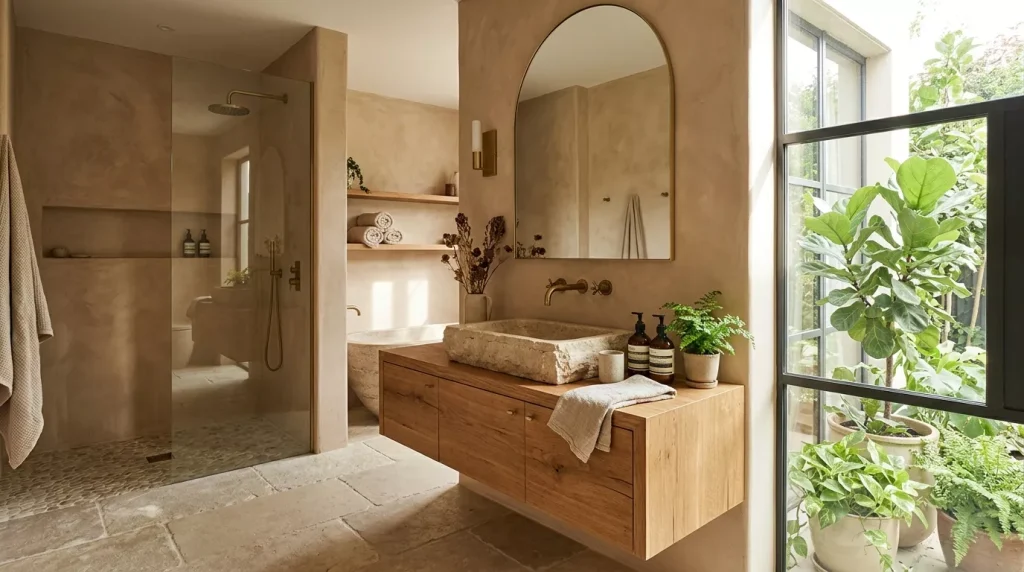
There’s a reason neutral bathrooms keep appearing at the top of every interior design list year after year. Walk into a space layered in soft beiges, warm stone tones, or creamy off-whites and something shifts immediately — your shoulders drop, your pace slows, and the room just works. The neutral bathroom is timeless in a way that bold, trend-driven designs simply can’t match.
Whether you’re drawn to sandy earthy tones, cool greiges, warm whites, or organic travertine textures, a neutral palette suits almost any bathroom — small or large, modern or traditional, rented or owned. Done right, it looks effortlessly elevated without trying too hard.
This guide walks you through everything: color selection, tile ideas, fixture choices, budget-friendly upgrades, styling tips, and the most common mistakes people make along the way.
What Exactly Is a Neutral Bathroom — and Why Does It Work?
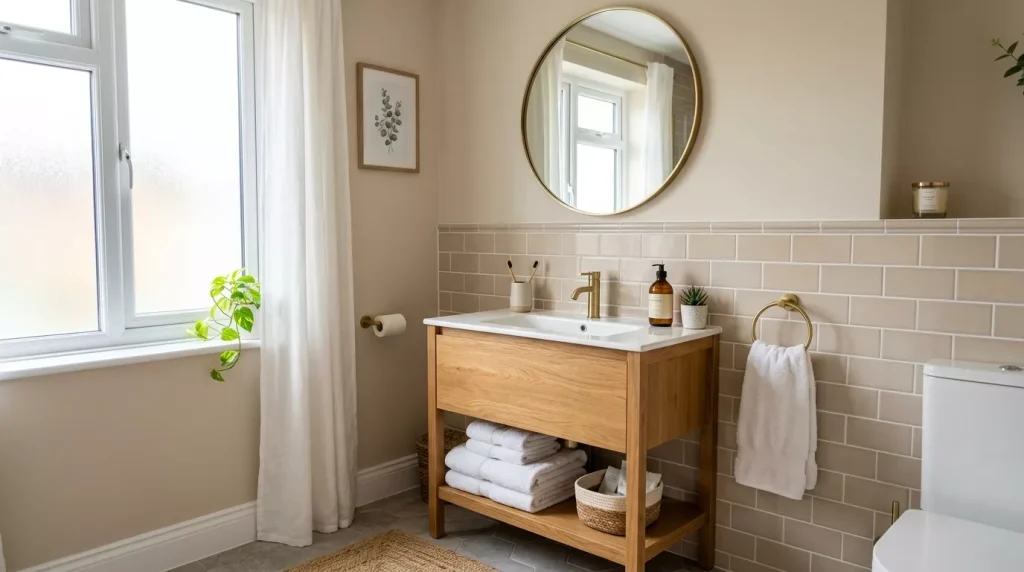
A neutral bathroom is built around a palette of understated, non-saturated tones — whites, creams, beiges, taupes, greiges, warm greys, and soft earthy browns. No punchy blues, no jewel-toned greens, no heavy charcoal walls. Just quiet, cohesive tones that feel natural together.
The reason this palette works so reliably comes down to a handful of design principles:
- Visual rest — muted tones don’t compete for attention; they give the eye somewhere calm to settle
- Timelessness — neutral bathrooms look just as relevant today as they did fifteen years ago
- Versatility — almost any towel color, accessory, or plant you add will sit comfortably within a neutral backdrop
- Perceived space — lighter neutral tones reflect more light, making bathrooms feel larger and airier
- Broad appeal — from a resale perspective, neutral bathrooms are safe in the best possible sense; they alienate almost no one
Choosing a neutral bathroom isn’t a lack of design confidence. It’s a deliberate, considered decision that proves restraint has its own kind of sophistication.
Neutral Bathroom Colour Palettes: Finding the Right Tone for Your Space
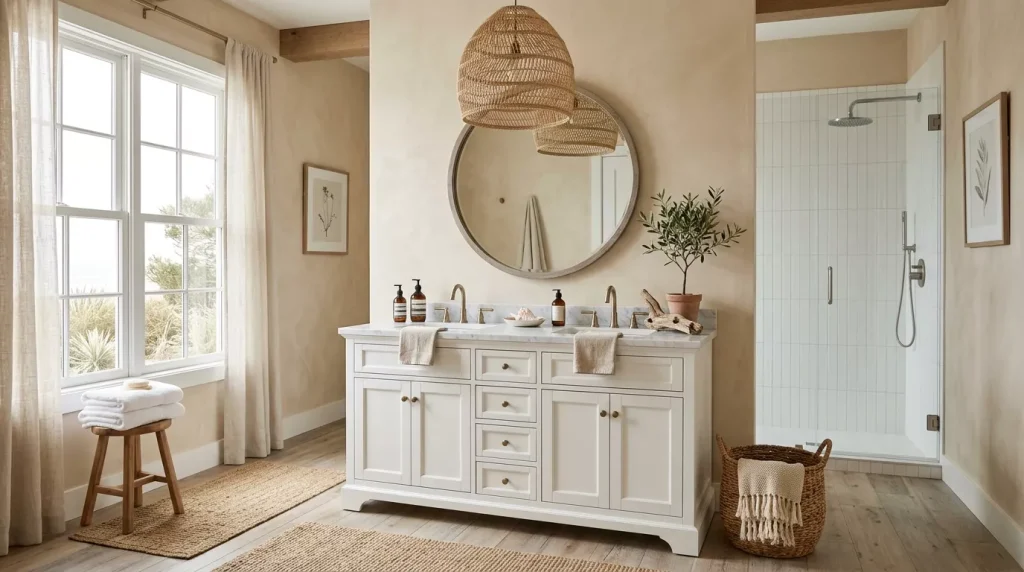
Not every neutral is the same — and choosing the wrong one for your light conditions can leave a bathroom feeling cold, yellow, or flat. Here’s a breakdown of the most-used neutral tones in bathroom design and where each performs best:
| Neutral Tone | How It Reads | Works Best When… |
|---|---|---|
| Warm White | Slightly creamy, never icy | You have cool north-facing light to warm up |
| Beige | Classic, sandy, comforting | Paired with warm wood tones and brass hardware |
| Greige | Grey-beige hybrid, balanced | You want warmth without committing to full beige |
| Taupe | Deeper, more earthy neutral | Adding visual depth in larger bathrooms |
| Travertine | Warm stone-inspired beige | Used as tile for a premium, textural finish |
| Warm Grey | Soft grey with brown undertones | Pairing with natural oak and soft lighting |
| Sand | Golden-brown neutral | Paired with linen, rattan, and terracotta |
One crucial thing to understand: every neutral has an undertone — pink, yellow, green, or blue — and those undertones become far more obvious under artificial light. Always test paint or tile samples directly in your bathroom, under your actual lighting, before committing to anything. What reads as “beautiful warm beige” in a bright showroom can look pale orange or grey-lilac on your wall.
Neutral Bathroom Tile Ideas That Define the Whole Room
Tiles cover the most surface area in any bathroom and set the visual tone for everything else. In a neutral bathroom, getting the tile right means the rest of the room practically designs itself.
Large Format Stone-Effect Tiles
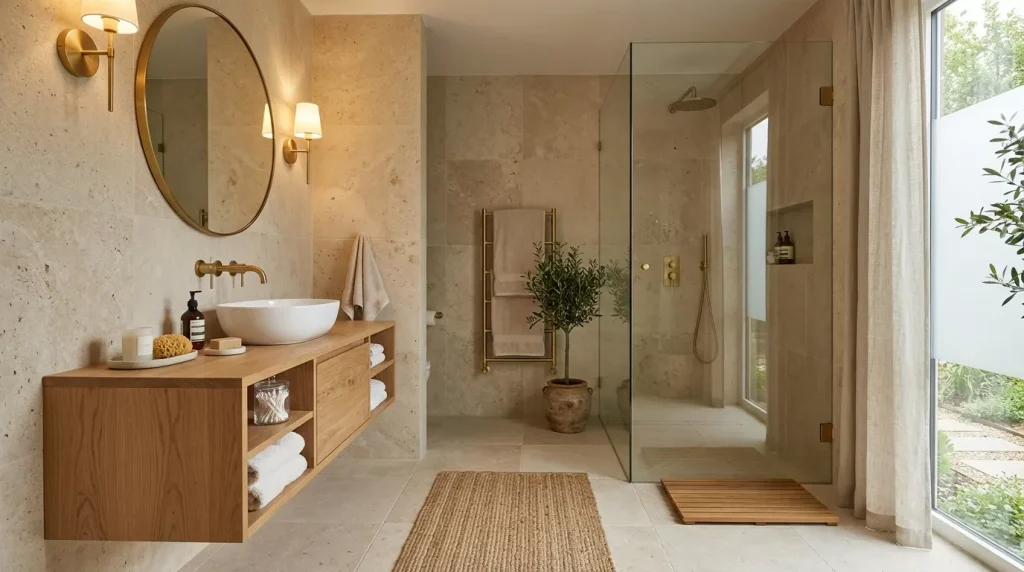
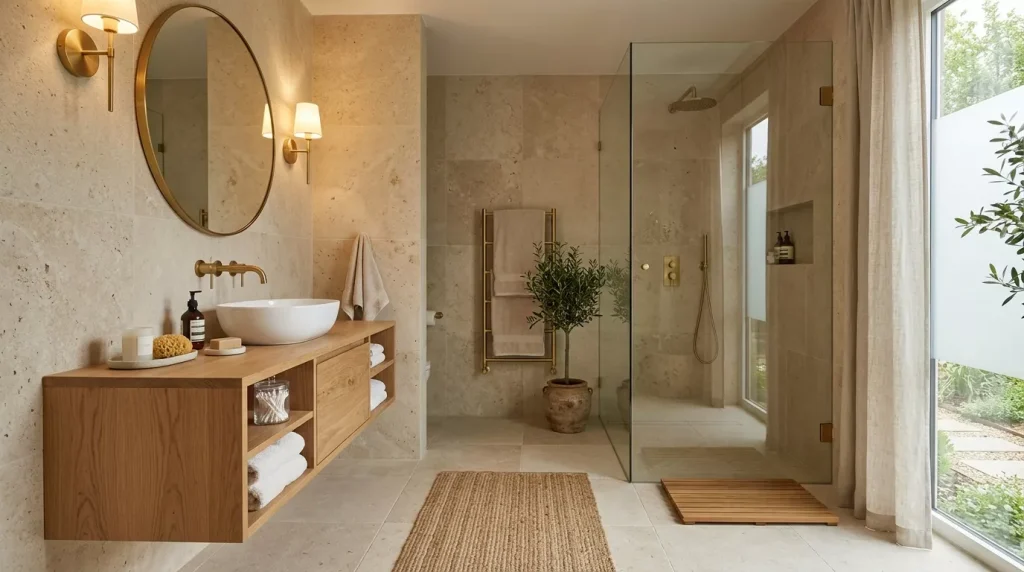
Large-format tiles in a limestone, travertine, or sandstone effect are the defining trend of neutral bathroom design right now — and they’ve earned it. Minimal grout lines create an almost seamless surface that reads as calm, expensive, and considered.
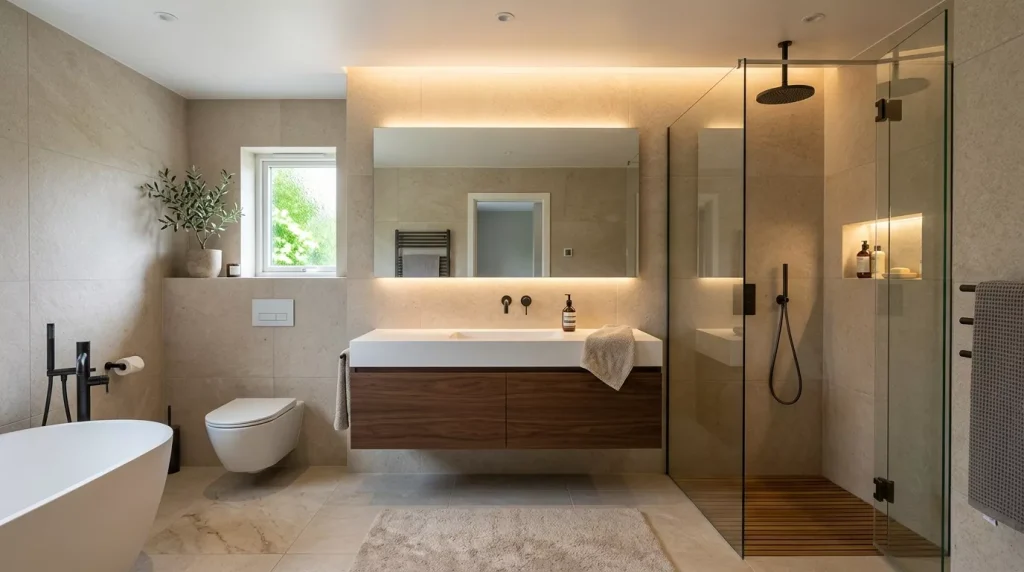
- 60x120cm and 80x80cm formats work especially well
- Matte or honed finishes feel more organic than high-gloss
- Warm beige and sandy tones integrate effortlessly with natural wood and brass
Subway Tiles in Warm Whites and Creams
Classic subway tile never really disappeared — it just evolved. In warm white, ivory, or soft off-white, subway tiles provide a clean, versatile backdrop that works equally well in a modern flat or a period home.
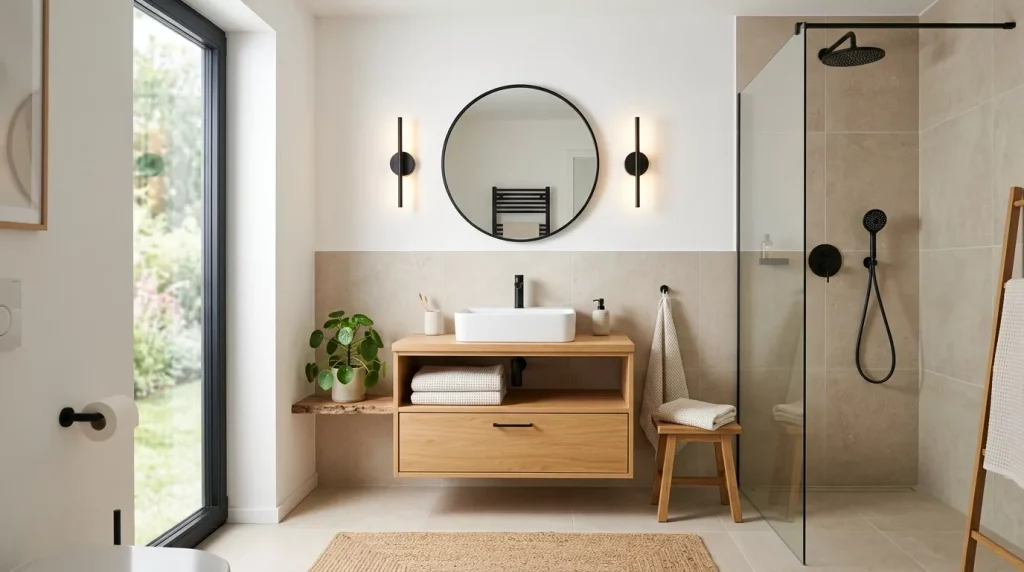
Try a vertical stack pattern or a herringbone layout rather than the standard brick offset to add quiet visual interest without disrupting the neutral calm of the room.
Textured and Relief Tiles
Fluted, ripple, bas-relief, and three-dimensional tiles in stone tones and sandy neutrals add extraordinary depth and shadow play without introducing any colour. These tiles are particularly impactful as a feature wall in a shower enclosure or behind a freestanding bath — the texture does the work that color might do elsewhere.
Terracotta and Warm Earth Tones
Raw or glazed terracotta tiles sit confidently within the neutral family when used thoughtfully. Their warmth and organic irregularity bring a handcrafted quality to a bathroom. Pair them with limewash walls, natural wood open shelving, and woven accessories for a Moroccan-Mediterranean warmth that still feels serene.
Neutral Bathroom Design Styles: Four Interpretations Worth Knowing
The neutral palette is flexible enough to express several distinct design personalities. Here are the four most popular approaches:
Warm Minimalist Neutral Bathroom
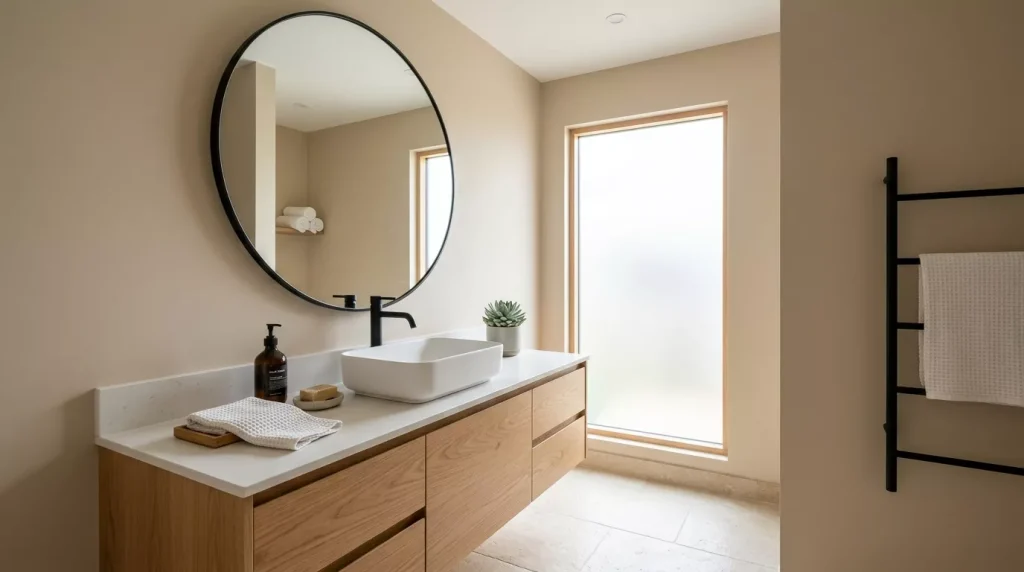
Warm whites, stone tones, and clean lines. Surfaces are clear, clutter is invisible, and every piece of furniture earns its place. A floating vanity, frameless glass shower screen, and a single piece of unframed art on an otherwise bare wall sum this style up perfectly.
Organic and Natural Neutral Bathroom
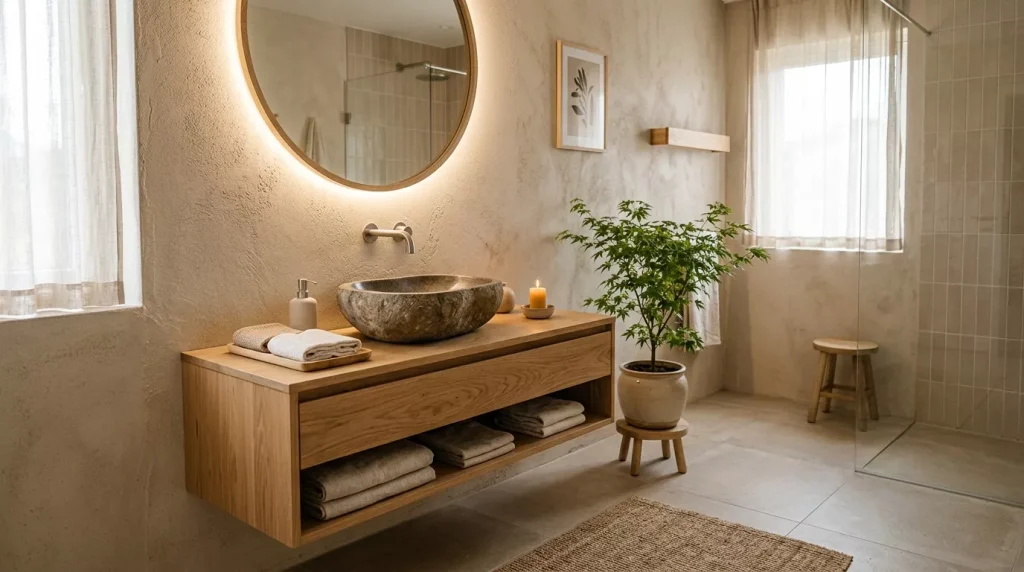
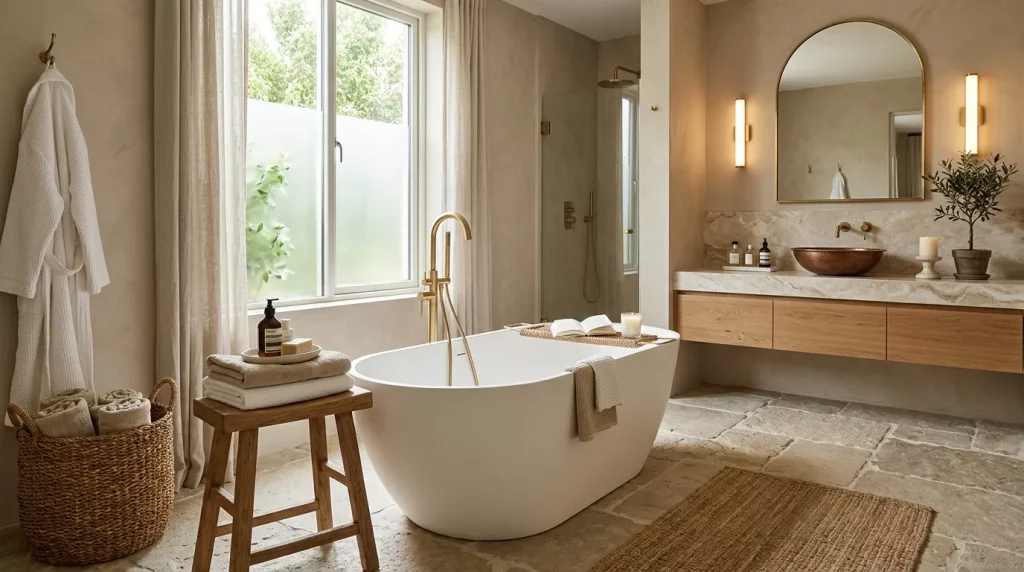
This approach leans deliberately into natural materials — raw stone tiles, wooden shelving, linen towels, rattan baskets, terracotta pots, and woven bath mats. The palette stays warm and earth-toned, but the textures are layered and rich. It feels like a high-end wellness retreat rather than a bathroom.
Japandi Neutral Bathroom
A hybrid of Japanese minimalism and Scandinavian warmth. Muted stone tones, natural oak, architectural simplicity, and deliberately sparse styling define this look. Nothing is accidental, nothing is decorative for decoration’s sake. Everything serves a purpose and looks beautiful doing it.
Classic Elegant Neutral Bathroom
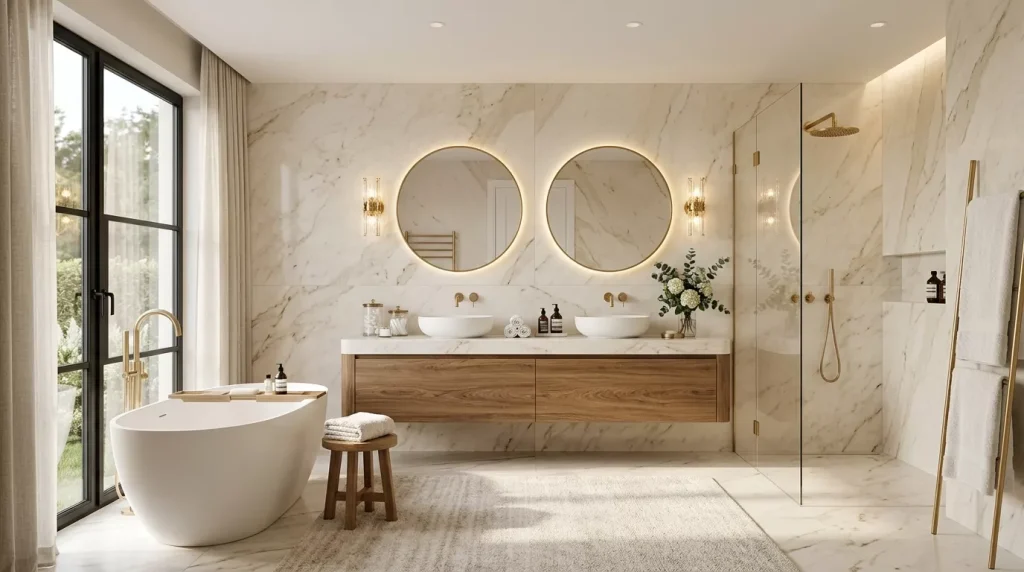
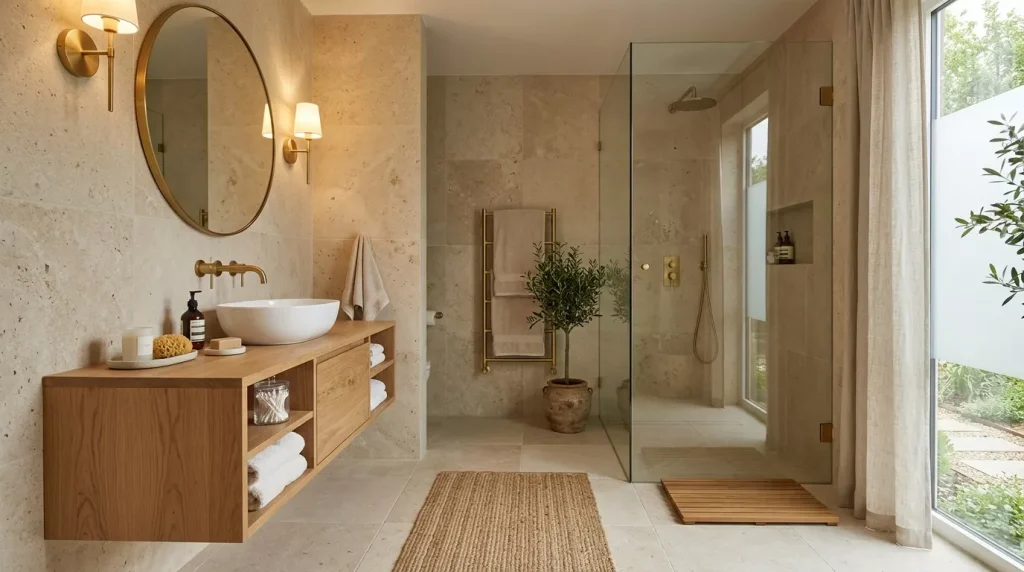
The refined, traditional take on the neutral bathroom. Marble-effect tiles or genuine marble, chrome or brushed nickel hardware, painted wainscoting in warm white, and carefully curated accessories. It feels enduring and polished rather than trend-driven — the kind of bathroom that looks just as good in twenty years.
Neutral Bathroom Fixtures: Choosing What Grounds the Design
Basin and Vanity
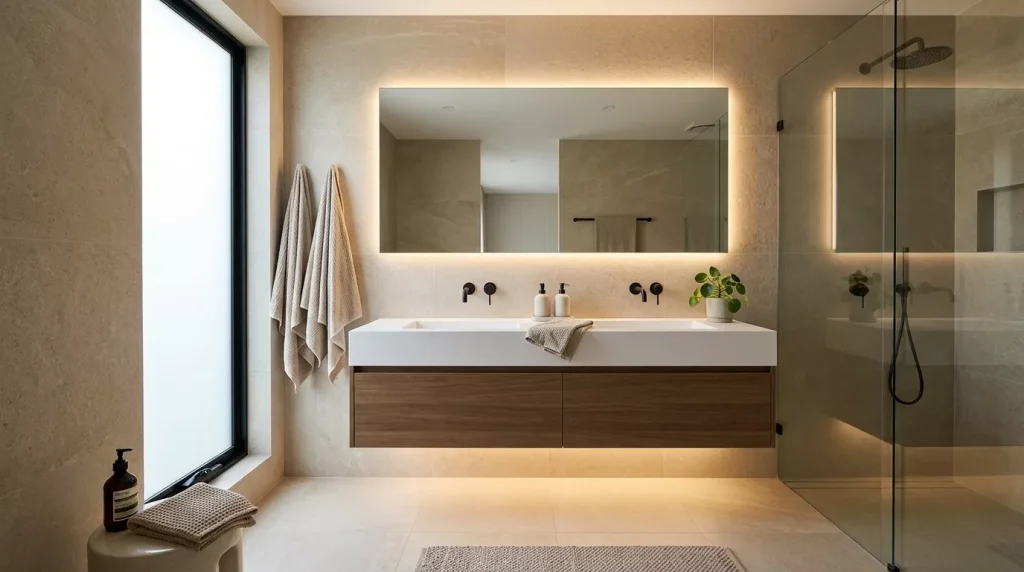
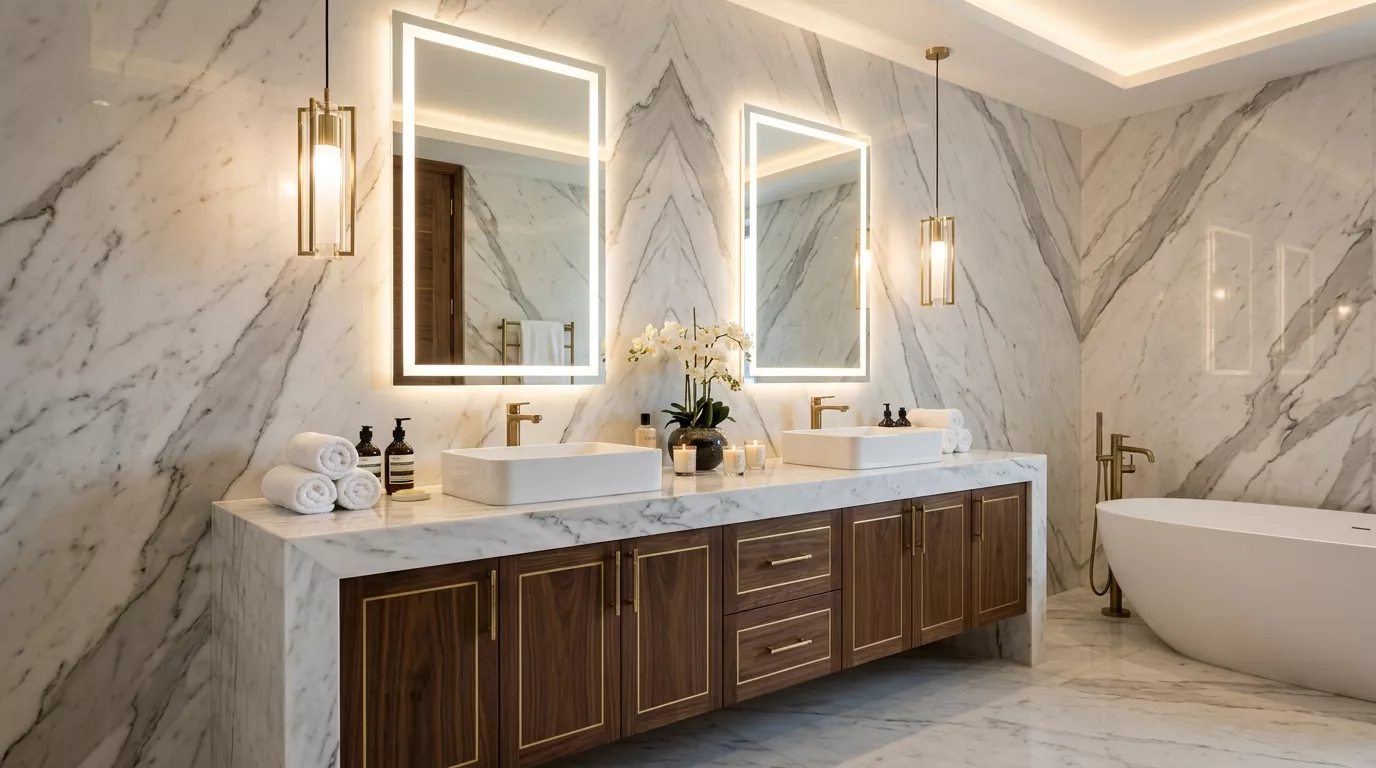
A wall-hung vanity in natural oak, warm walnut, or matte white with an integrated or under-counter basin creates an upscale, uncluttered aesthetic. For something more sculptural, a vessel basin in matte stone, white concrete, or hand-thrown ceramic adds personality without visual noise.
Taps and Hardware
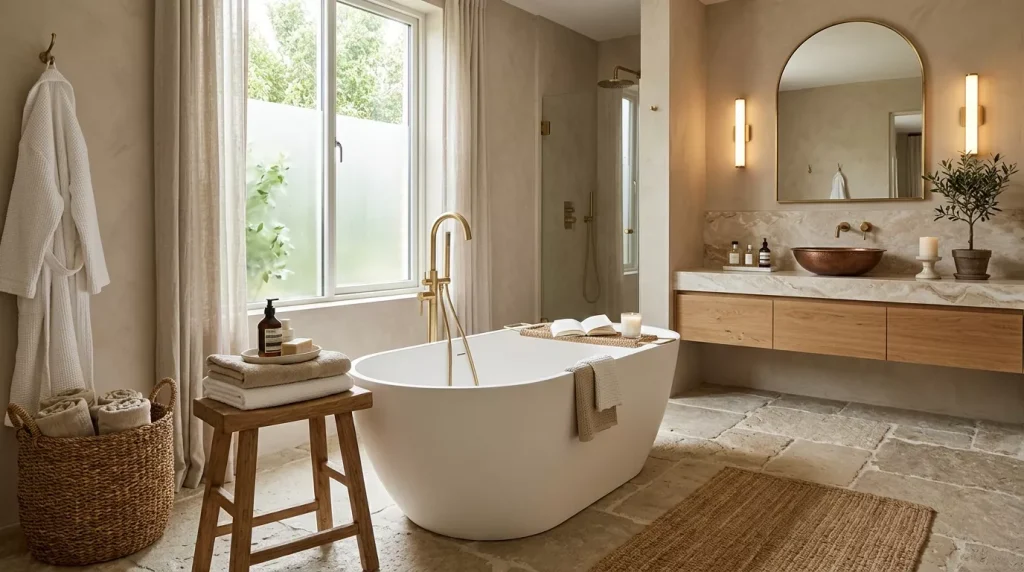
Brushed gold and brushed brass are the warmest hardware choices for a neutral bathroom — they complement beige, taupe, and earthy tiles beautifully without dominating them. Brushed nickel or matte chrome suits cooler neutral palettes. Whatever you choose, stay consistent — mixing multiple metal finishes across the same room quickly undermines the carefully considered look you’re building.
Bathtub
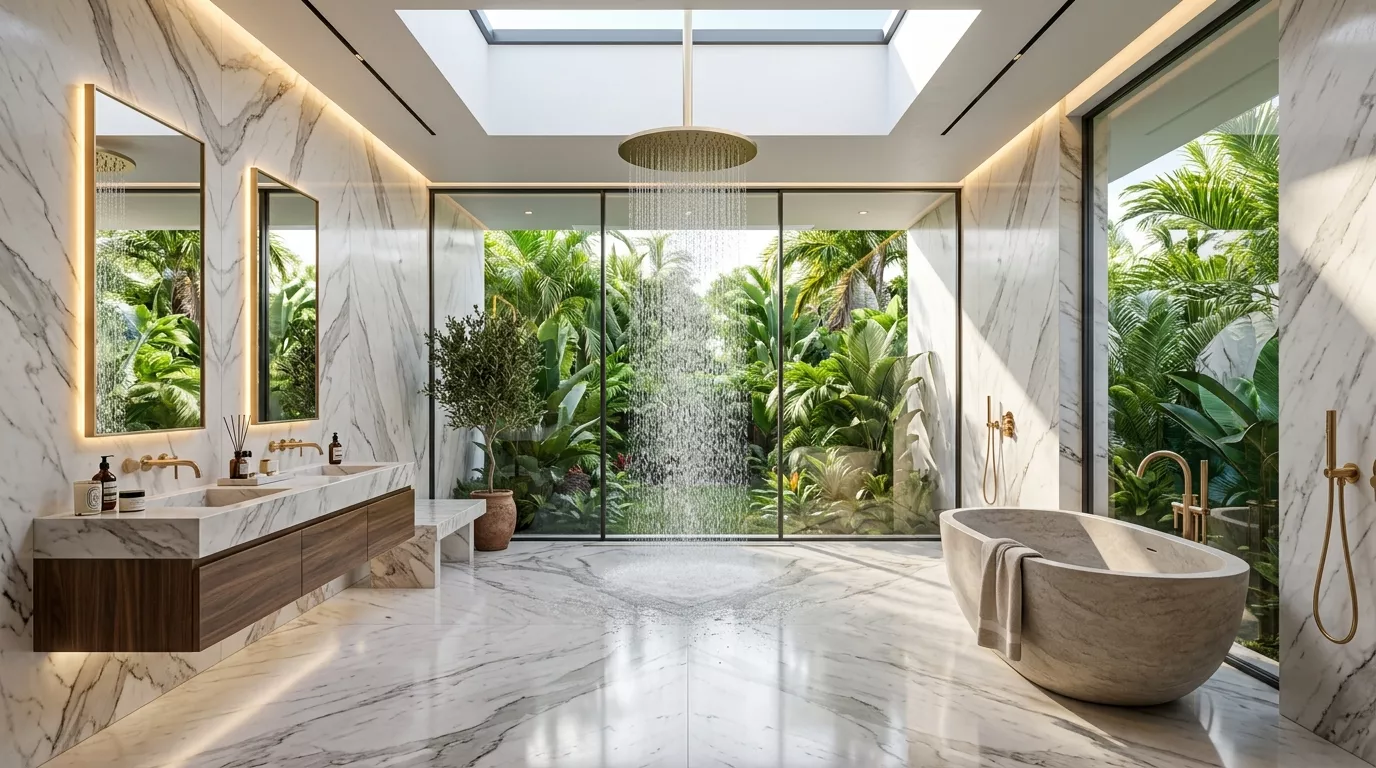
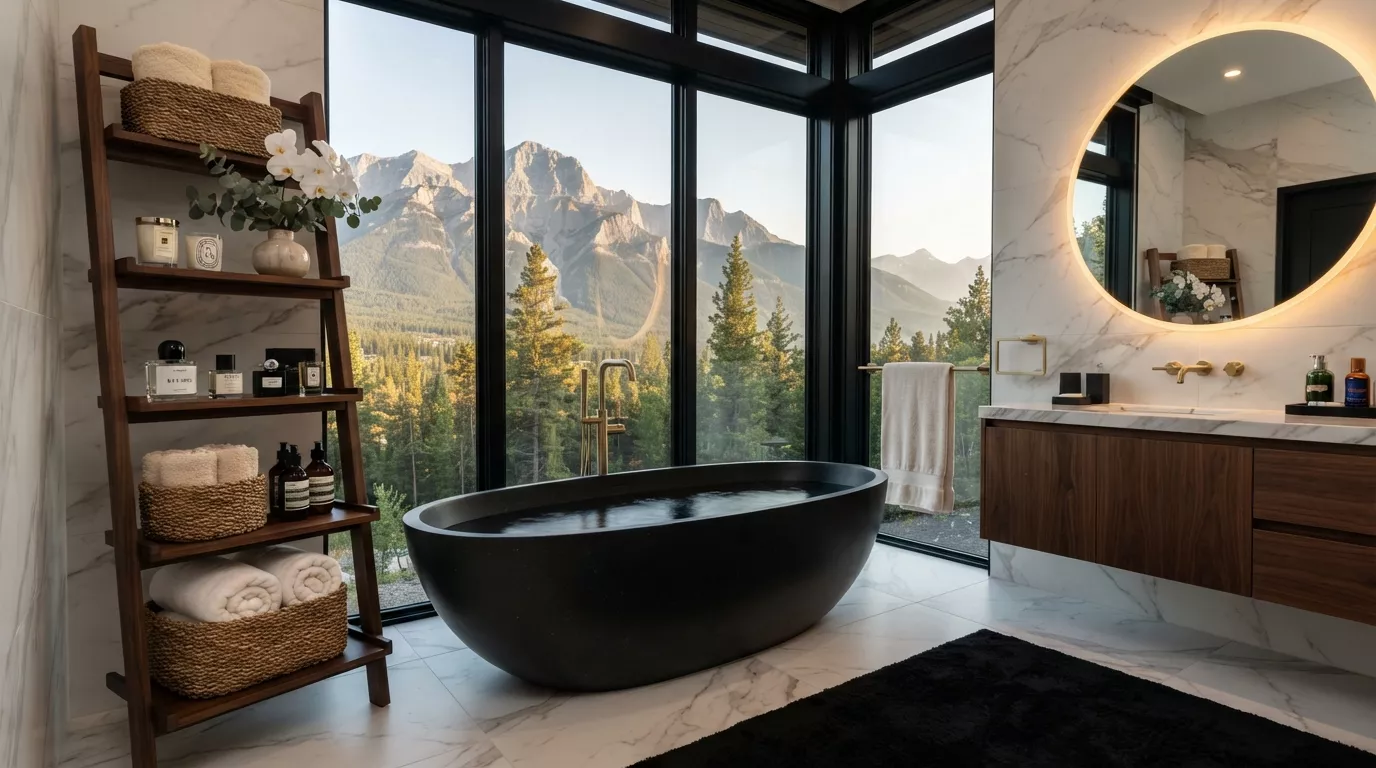
A freestanding bath in matte white or stone resin is the natural centrepiece of an organic neutral bathroom. Position it beneath a window or against a feature wall of large stone-effect tiles for maximum visual impact. Avoid bright gloss white if the rest of your palette is warm — look for a warm white or natural stone finish instead.
Shower
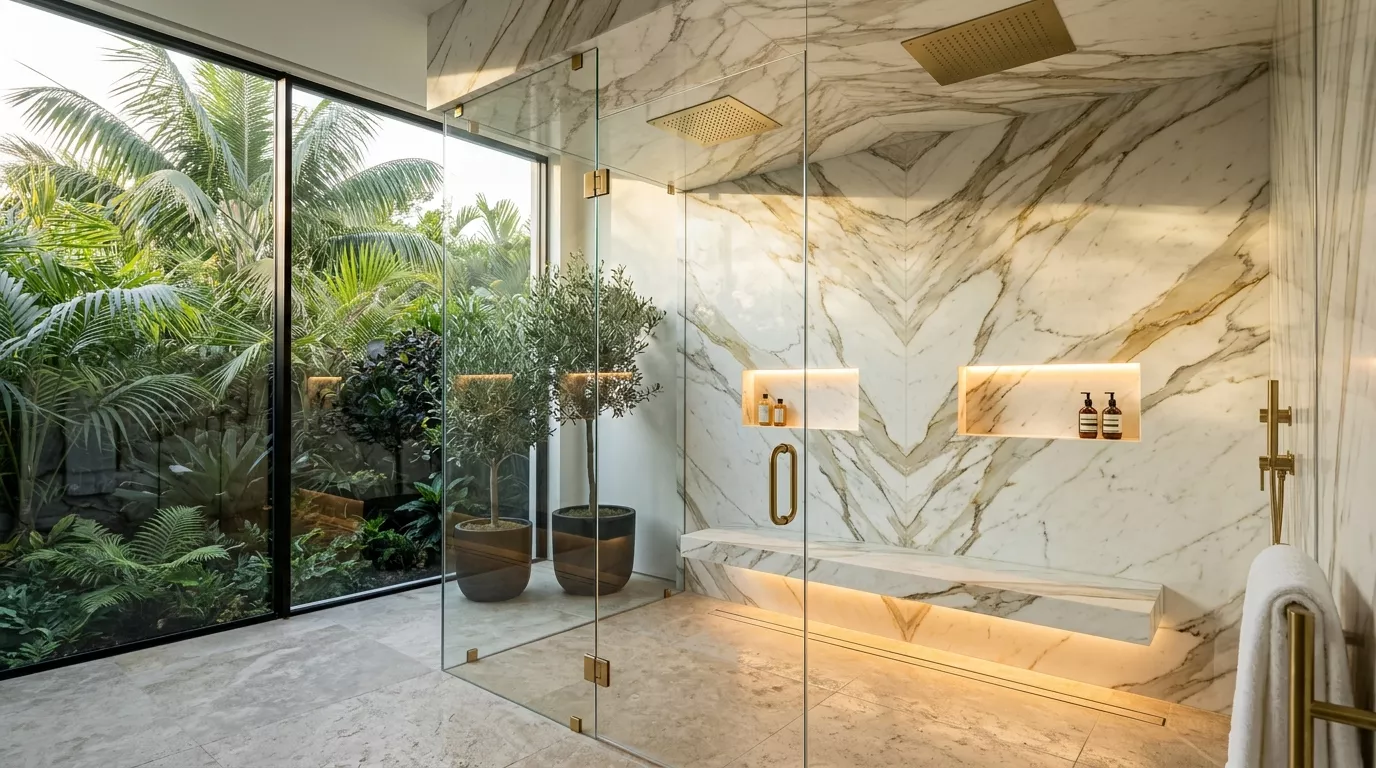
A frameless glass enclosure is the standard choice for neutral bathrooms — it allows the tile and palette to remain fully visible throughout the shower zone. Pair with a ceiling-mounted rainfall head and a simple linear drain in a matching metal finish for a seamless, spa-like result.
Neutral Bathroom on a Budget: Smart Changes, Real Results
A full renovation isn’t the only route to a beautiful neutral bathroom. These targeted upgrades deliver genuine visual impact without major spend:
Paint the walls first. A warm neutral on the walls — soft putty, warm greige, or creamy white — transforms the atmosphere of a bathroom faster than anything else. Use a moisture-resistant formula. This single change can cost as little as the price of a tin of paint and a weekend afternoon.
Replace your textiles. Swap synthetic or brightly coloured towels for linen, waffle-weave, or organic cotton in stone, oatmeal, or warm white. This sounds like a small change. It genuinely isn’t — it’s one of the most impactful visual upgrades in a neutral bathroom.
Upgrade your hardware. Replace mismatched chrome accessories — soap dispensers, toilet roll holders, towel rails — with a matching set in brushed brass or matte black. A coordinated set of three items makes a room look curated at minimal cost.
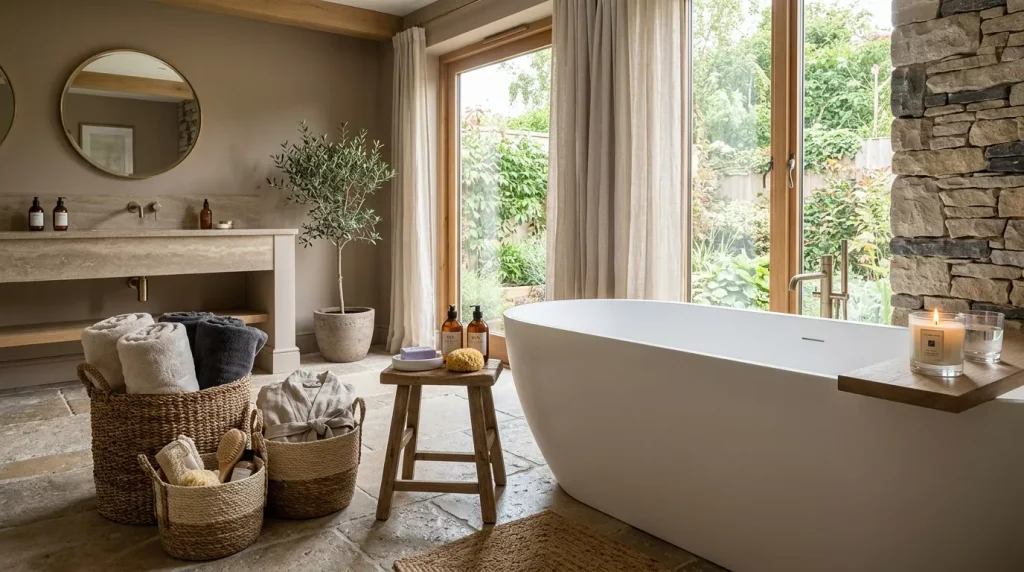
Add natural materials. A wooden bath tray, a stone soap dish, a terracotta plant pot, a woven rattan basket for towel storage — these small organic additions shift a bathroom from purely functional to genuinely intentional.
Regrout the tiles. If you can’t replace dated tiles, regrouting in a warm sand or stone tone can completely transform how they read. It’s inexpensive, time-consuming, but remarkably effective.
Neutral Bathroom vs Bold Bathroom: An Honest Side-by-Side
Some homeowners resist neutral bathrooms, worried they’ll feel uninspired or sterile. Here’s a balanced comparison to help you decide:
| Design Aspect | Neutral Bathroom | Bold / Coloured Bathroom |
|---|---|---|
| Longevity | Ages exceptionally well over time | Bold trends shift; may feel dated in 5–7 years |
| Resale value | Broad appeal; strong selling point | Can polarize buyers; may require updating |
| Accessory flexibility | Almost anything works within it | Accessories must coordinate tightly |
| Perceived room size | Light neutrals visually expand space | Dark bold tones can feel smaller |
| Mood and atmosphere | Calm, restorative, spa-like | Energising, expressive, high-personality |
| Maintenance | Hides discolouration better over time | Fading or wear can be more visible |
| Design risk | Very low | Higher — bolder choices are harder to reverse |
The takeaway? If you’re making a long-term investment in a bathroom — particularly one in a home you may sell in the future — a neutral design is almost always the more commercially and aesthetically durable decision.
Step-by-Step Guide: Designing Your Neutral Bathroom From the Ground Up
Follow this sequence to make confident decisions and avoid costly missteps:
Step 1: Define your warmth preference Decide early whether you want a warm neutral (beiges, sandy tones, travertine) or a balanced cool neutral (soft greige, warm grey). This one decision shapes every other choice in the room.
Step 2: Lock in your tiles first Tiles cover the most surface area and are the hardest and most expensive thing to change. Choose them before selecting paint, hardware, or accessories. Everything else gets built around them.
Step 3: Choose your fixtures to match Once tiles are confirmed, select your basin, taps, shower, and bath. Match the metal finish to the warmth of your tile — warm tiles call for warm metals, cooler tiles suit cooler hardware finishes.
Step 4: Plan your vanity and storage A floating vanity in a warm timber tone looks exceptional against stone-effect tiles. Include a recessed tile niche inside the shower — it’s both practical and visually seamless.
Step 5: Select wall paint last After tiles and fixtures are confirmed, choose a wall colour that unifies the elements already in place. In many neutral bathrooms, a simple warm white on the walls is entirely sufficient — the tiles do the heavy lifting.
Step 6: Layer your lighting thoughtfully Install recessed ceiling lights for ambient illumination, a backlit mirror or LED vanity strip for task lighting, and consider a pendant over a freestanding bath for atmosphere. Always use warm-white bulbs in the 2700–3000K range.
Step 7: Style and edit with textiles and accessories Add linen towels, a natural wood bath mat, a rattan basket, a small trailing plant, and a stone soap dish — then step back. Edit ruthlessly. A neutral bathroom breathes best with space in it.
Pros and Cons of Neutral Bathroom Design
✅ Pros
- Timeless — will not feel dated in five or ten years
- Creates a naturally calm, spa-like atmosphere daily
- Works with almost every colour of towel, accessory, or plant
- Lighter tones make compact bathrooms feel significantly more spacious
- Strong resale appeal — broadly attractive to future buyers
- Easy to refresh over time by simply changing small accessories
❌ Cons
- Can feel flat or clinical if texture and material variation are ignored
- Requires deliberate styling to avoid looking sparse or unfinished
- Some neutral tones — particularly lighter beiges — can show limescale more visibly
- Getting undertones wrong can make a bathroom feel unintentionally cold or washed-out
- Limited opportunity for bold, expressive personal colour statements
Common Mistakes That Undermine a Neutral Bathroom
1. Ignoring Undertones The most common and costly mistake. A beige tile that appeared beautiful in a showroom can look pink or grey on your bathroom wall. Test samples in situ — always.
2. Using Only One Texture A room of flat, uniform neutrals reads as dull rather than sophisticated. Vary your materials at every level: a rough linen towel beside a smooth ceramic basin, a matte floor tile against a glossy wall surface, a rough stone tray on a polished shelf.
3. Using the Wrong Lightbulbs Cool, bright overhead lighting strips all warmth from a neutral palette. Use warm-white LED bulbs throughout — 2700K to 3000K is the ideal range for a bathroom.
4. Mixing Too Many Neutral Shades Neutral doesn’t mean anything goes. Using five different beiges with different undertones together creates visual noise rather than harmony. Pick two to three tones maximum and maintain consistency.
5. Forgetting the Grout White grout with beige tiles looks fine. Sand, stone, or warm grey grout makes a tiled surface look continuous and intentional. It’s a small detail with an outsized impact.
6. Undersized Accessories One small plant on a large empty shelf. A tiny soap dish on an oversized vanity. Proportional mismatches undermine an otherwise well-considered neutral bathroom.
Tips for Getting Your Neutral Bathroom Exactly Right
- Follow the 60-30-10 rule — 60% dominant neutral (tiles and walls), 30% secondary neutral (vanity, fixtures), 10% accent (hardware, plants, accessories)
- Add a natural element at every scale — one large plant, one medium wood shelf, one small stone tray; this prevents the space from tipping into sterile
- Invest in quality towels — waffle-weave, linen, or organic cotton in oatmeal or warm white makes a difference you notice every single day
- Use grout colour deliberately — a sand or stone grout rather than stark white makes the tile surface feel more seamless and expensive
- Consider limewash or tadelakt plaster on one wall — these textured plaster finishes in warm neutral tones add visual depth that no flat paint can replicate
- Establish a room scent — a reed diffuser or beeswax candle in cedar, sandalwood, or vetiver completes the sensory experience of a spa-like neutral bathroom
- Keep the window dressing simple — a plain roller blind in warm linen or a sheer Roman blind in off-white keeps light flowing and maintains the clean neutral aesthetic
Conclusion
The neutral bathroom is one of those rare design decisions that pays dividends every single day. When done with real intention — the right tones, the right textures, thoughtful lighting, and a considered approach to layering — it becomes genuinely restorative. Not just a room you walk through, but a space that actually helps you feel better.
From warm sandy travertine tiles to organic linen towels, from brushed brass taps to natural oak vanities, every element of a well-designed neutral bathroom reinforces the same quiet message: this space was built to make you feel good.
Start with your tiles, build your palette outward, layer your textures thoughtfully, and never underestimate what warm, well-placed lighting can achieve. The neutral bathroom doesn’t announce itself — it simply makes everything feel a little more right.
Ready to take the first step? Start today. Order three tile samples, pick up a warm neutral paint tester, or simply swap your towels for natural linen. Even the smallest change in the direction of a neutral bathroom is one you’ll notice — and appreciate — every morning.
Frequently Asked Questions (FAQs)
Q1: What is the best neutral color for a small bathroom?
For a small bathroom, warm white or a soft light greige are the strongest choices. Lighter neutral tones reflect more light, visually opening up a compact space. Avoid dark neutrals — deep taupe or charcoal — in very small or windowless bathrooms, as they absorb light and make the room feel smaller. Pair your light neutral tile choice with large-format tiles and minimal grout lines to further reduce visual fragmentation and maximize the perception of space.
Q2: How do I add personality to a neutral bathroom without ruining the palette?
Texture and material variety are your tools here. A ripple-effect tile feature wall, a hand-thrown ceramic basin, a carved wooden shelf, an unusual pendant light fitting — these add visual interest and personality without introducing any colour. Organic objects like dried grasses in a stone vase, a trailing plant on a shelf, or a beautifully grained piece of timber inject personality through natural variation rather than colour contrast.
Q3: What metals work best with a warm neutral bathroom palette?
Brushed brass and brushed gold are the most complementary choices for warm neutral bathrooms (beige, sandy, travertine tones). They enhance the warmth of the palette without overpowering it. For bathrooms with slightly cooler neutral tones — greige, soft warm grey — brushed nickel or polished chrome integrates more naturally. The key rule: choose one primary metal finish and keep it consistent across taps, towel rails, toilet roll holders, and light fittings.
Q4: How do I prevent my neutral bathroom from looking too plain or boring?
Layering is the answer — specifically, layering textures, materials, and tones within the neutral family. Flat, uniform neutrals on every surface look bland. But rough linen against smooth stone, matte tile against a polished basin, warm wood beside cool marble — these contrasts create visual richness without introducing colour. Scale matters too: vary the size of your natural elements from large (a statement plant) through medium (a wooden shelf) to small (a pebble soap dish).
Q5: Are neutral bathrooms still in style in 2025?
Very much so — and for good reason. Neutral bathrooms have remained a constant in high-quality interior design precisely because they don’t depend on any single trend for their appeal. The materials have evolved (travertine and organic textures are particularly popular right now), but the underlying principle of calm, cohesive, natural tones has endured for decades and shows no sign of changing. In a design climate where maximalism and bold colour regularly cycle in and out of fashion, the neutral bathroom remains a reliably beautiful constant.
Q6: What type of flooring works best in a neutral bathroom?
Large-format stone-effect porcelain tiles are the most popular and practical choice — they’re durable, water-resistant, easy to clean, and look genuinely luxurious in warm beige or travertine tones. Natural stone (limestone, travertine, marble) is beautiful but requires sealing and more careful maintenance. For a softer, more organic feel, smaller hexagonal tiles in a sandy or off-white tone add gentle pattern without disrupting the neutral calm. Whatever you choose, a non-slip matte finish is always recommended for bathroom floors.
Q7: How do I stop neutral tiles from making my bathroom look yellow?
Yellowing usually comes from one of two sources: a tile or paint with a warm yellow undertone that becomes exaggerated under artificial light, or warm-white bulbs that are too amber in tone. To avoid this, always test tile samples under your bathroom’s specific lighting conditions before purchasing. When selecting light bulbs, stay in the 2700–3000K range — warm enough to feel comfortable and flattering, but not so amber that it distorts neutral tones toward yellow. If your bathroom has very limited natural light, opt for a neutral with a slightly cooler, more balanced undertone.