Luxury Bedroom Ideas: Top Design Inspirations

Luxury Bedroom Ideas: Transform Your Space Into an Elegant Retreat
When most people hear “luxury bedroom ideas,” they picture sprawling hotel suites or celebrity homes with sky-high budgets. But here’s the honest truth — a truly luxurious bedroom is far more about intention than price tags. It’s the way a room makes you feel the moment you step inside. Calm. Cared for. Wrapped in something beautiful.
Whether you’re redesigning from scratch or just craving a few meaningful upgrades, this guide walks you through everything — furniture choices, color psychology, lighting tricks, bedding quality, and the small details that separate an “okay” bedroom from an extraordinary one.
Luxury, done right, is about quality, harmony, and thoughtful restraint. Let’s explore what that actually looks like.
What Actually Makes a Bedroom Feel Luxurious?
Before diving into aesthetics and shopping lists, it’s worth understanding what separates a high-end bedroom from a simply “nice” one. It usually comes down to three things working together:
- Sensory richness — how the room looks, feels, and even smells
- Purposeful restraint — knowing exactly when less creates more impact
- Quality over quantity — one beautifully crafted piece beats ten mediocre ones
A luxury bedroom doesn’t announce itself loudly. It draws you in quietly — through soft textures, layered light, and a palette that seems to breathe. Every detail feels considered, but nothing feels overdone.
Once you understand this principle, every design choice becomes clearer.
Luxury Bedroom Ideas for Every Style and Taste
Not all luxurious bedrooms look the same — and they shouldn’t. Here are the four most popular directions, each with its own version of elevated living.
1. Modern Luxury
This is the clean-lined, serene approach. Think platform beds with low profiles, floor-to-ceiling curtains in ivory or warm grey, and one or two sculptural statement pieces. Nothing competes. Everything coordinates.
Key elements:
- Monochromatic or neutral palette (cream, taupe, warm charcoal)
- Oversized abstract art as the only “loud” element
- Egyptian cotton or linen bedding in muted tones
- Recessed lighting paired with sleek bedside sconces
2. Classic and Traditional Luxury
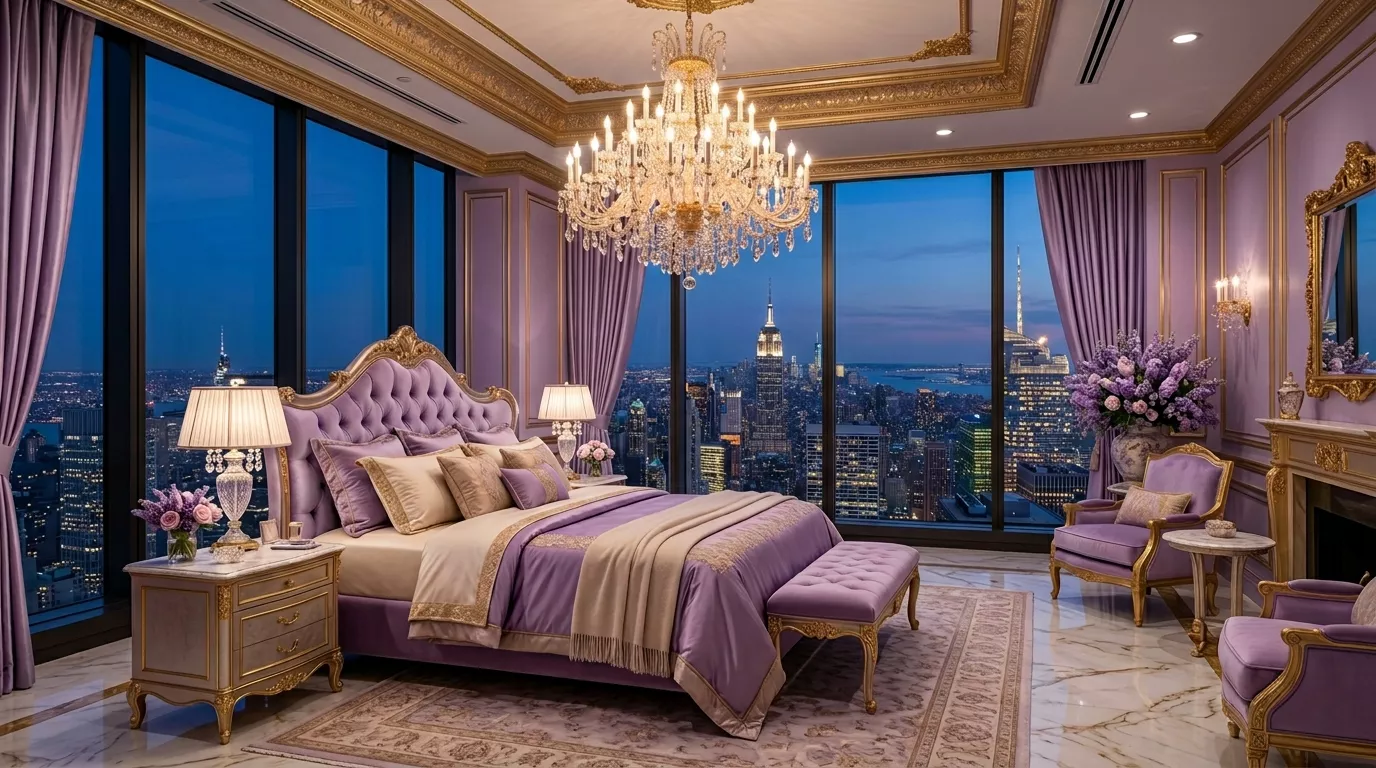
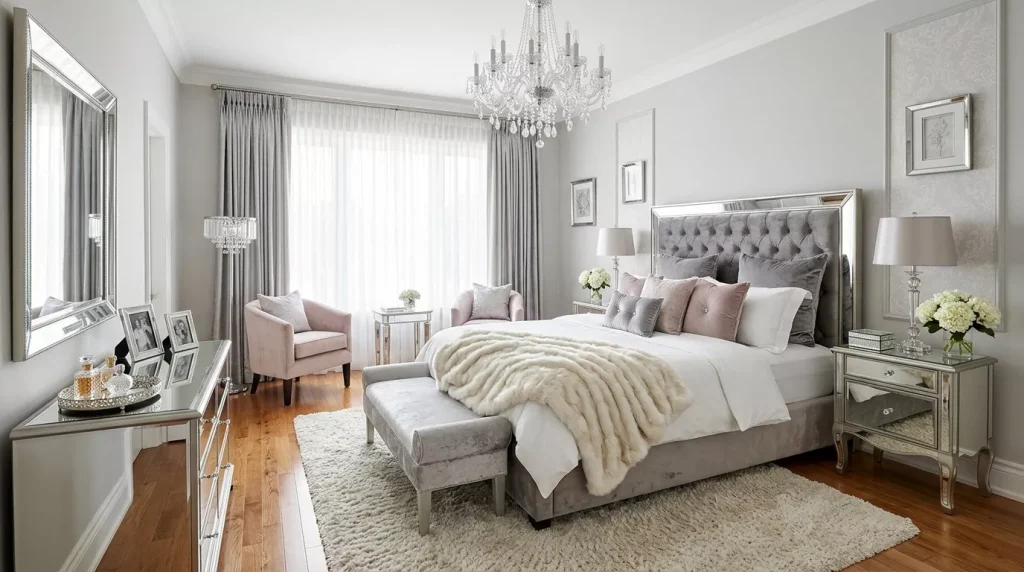
Here, grandeur is the goal. Think tall upholstered headboards, rich carved woodwork, and jewel-toned fabrics that feel like they belong in a Georgian estate.
Key elements:
- Four-poster or canopy beds as the room’s crown jewel
- Deep colors — navy, burgundy, bottle green, or chocolate
- Heavy drapes with lining, falling to the floor in clean breaks
- Antique-style mirrors and ornate picture frames
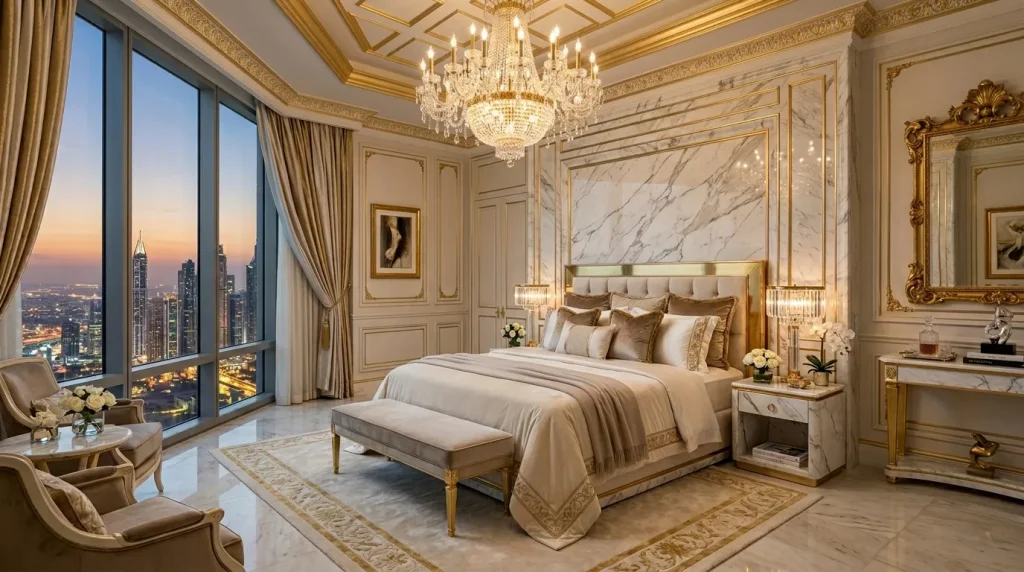
3. Contemporary Glam
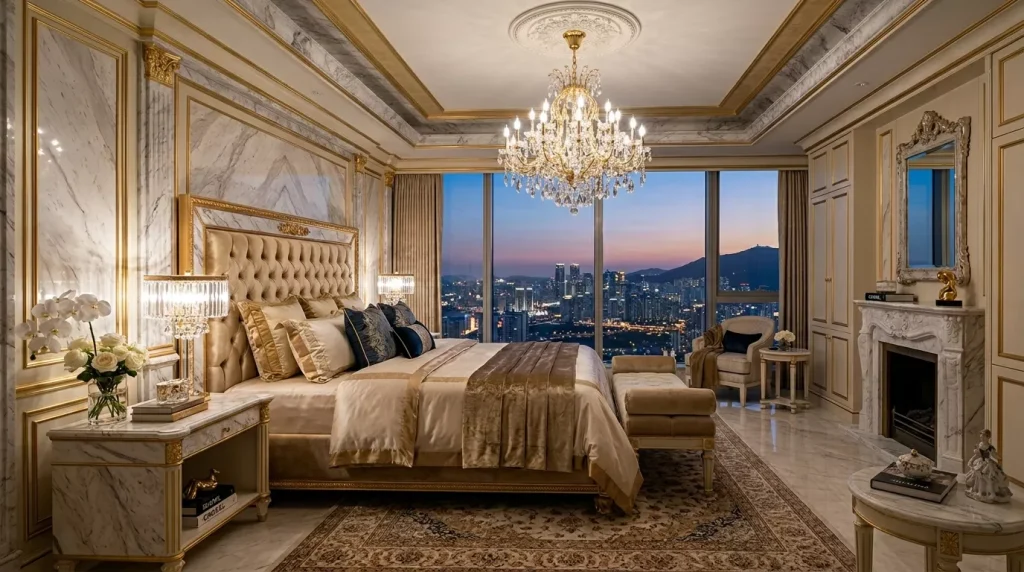
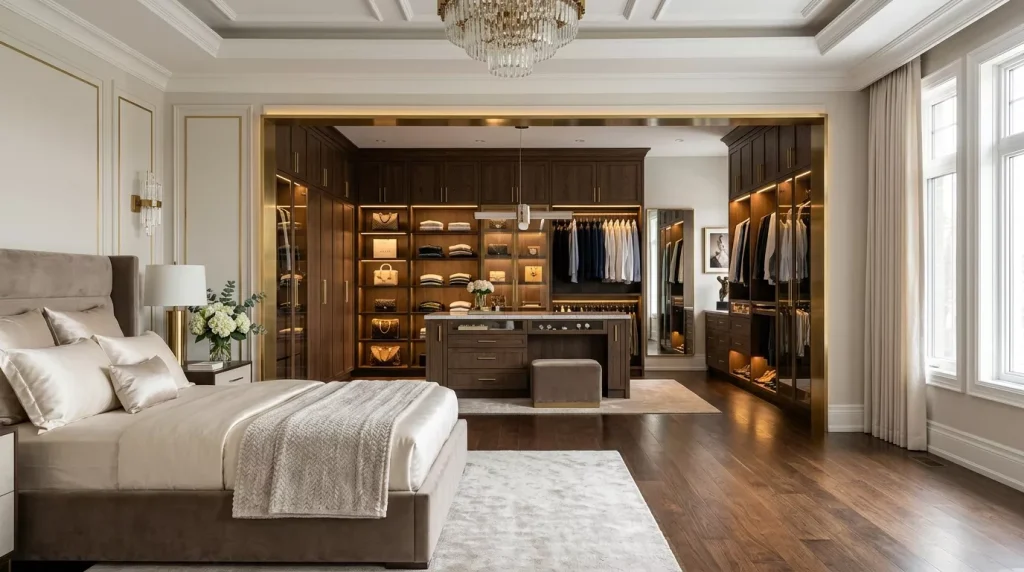
Unapologetically indulgent. Velvet, gold, mirrored surfaces — this style borrows Hollywood Regency drama and brings it into the present day.
Key elements:
- Velvet upholstered headboard (dusty pink, emerald, or midnight blue)
- Brass or gold hardware throughout
- Mirrored or high-gloss lacquered furniture
- Layered textures — faux fur, silk cushions, metallic throws
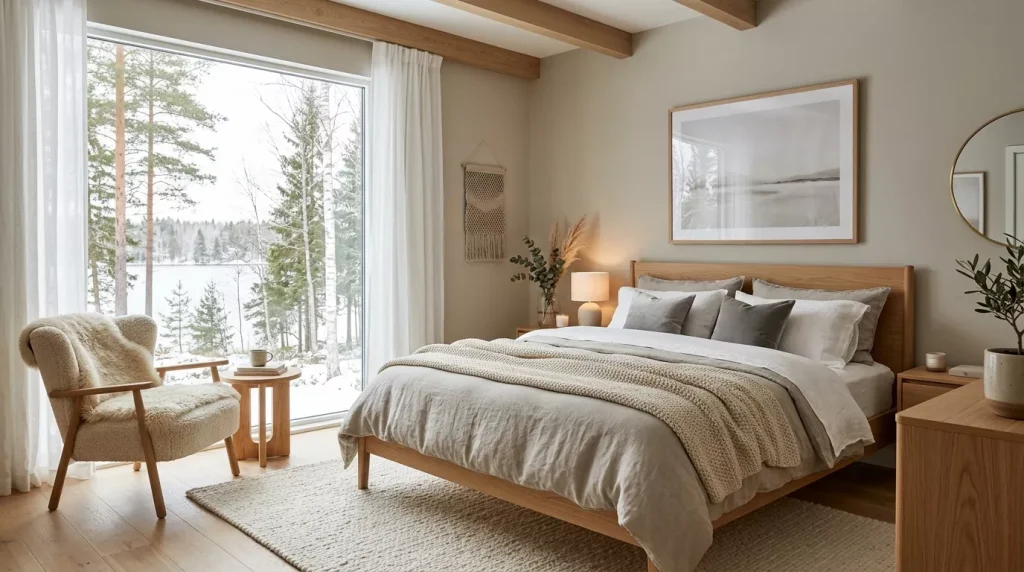
4. Scandinavian Luxury
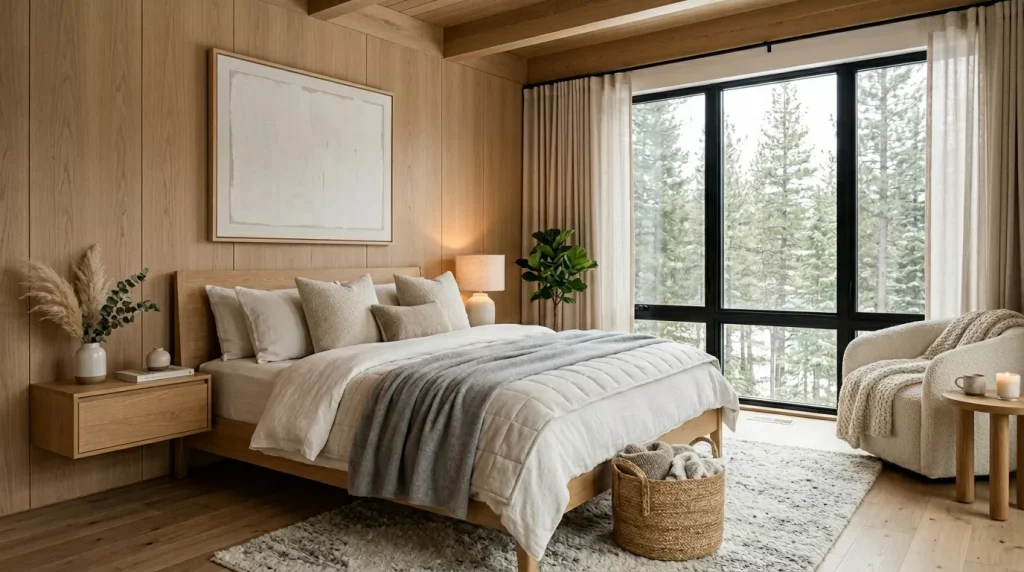
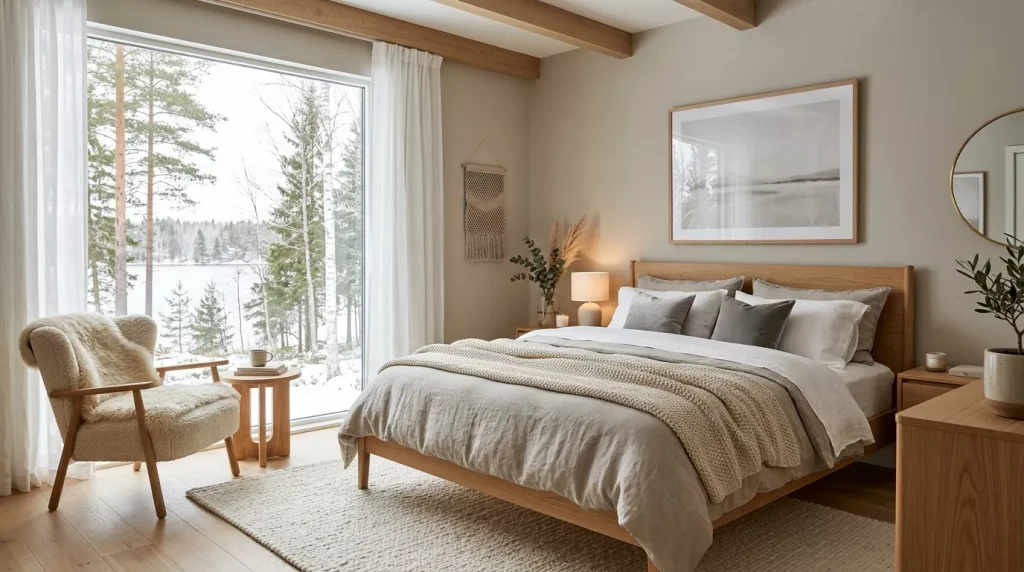
Warmth through simplicity. This style is proof that luxury doesn’t require excess — it just requires exceptional quality in every humble piece.
Key elements:
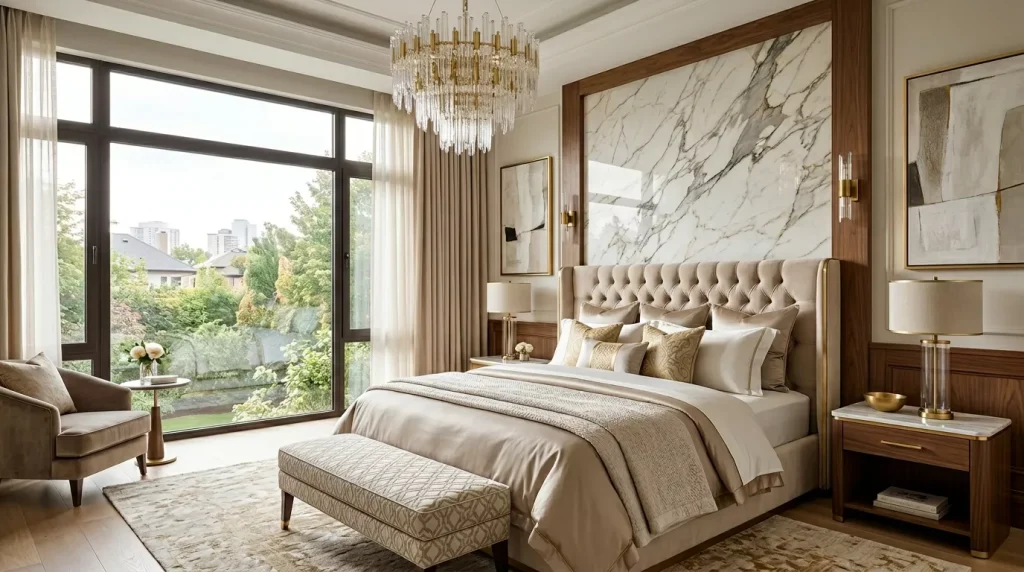
- Natural wood tones: oak, ash, and walnut
- Sheepskin throws, linen bedding, and knit textures
- Warm-toned, ambient lighting with zero harshness
- Completely clutter-free surfaces — nothing unnecessary in sight
Luxury Bedroom Furniture Ideas That Define the Space
The furniture you choose shapes everything else. Get this right and the rest of the room falls into place naturally.
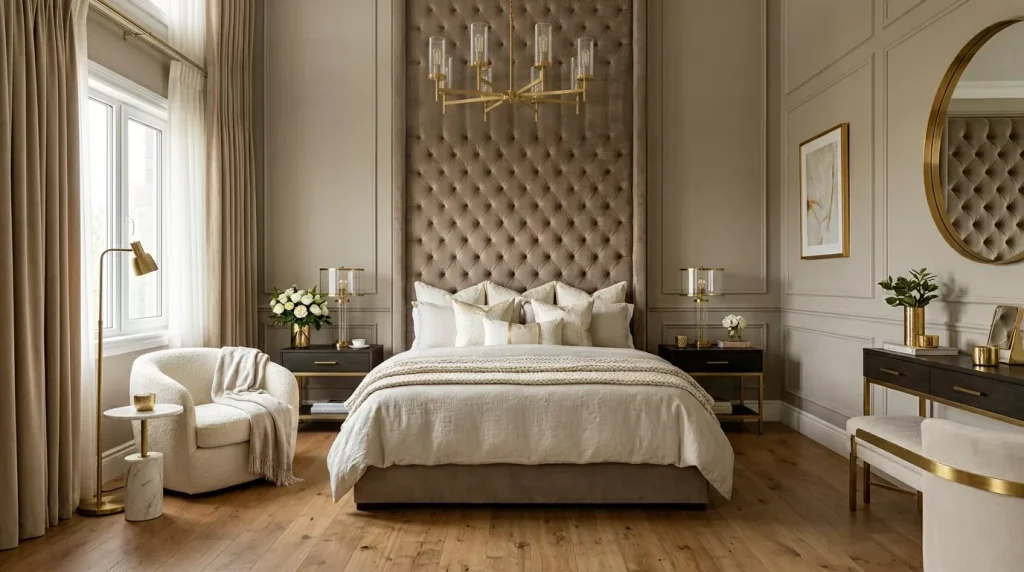
The Bed Frame This is your anchor piece — it deserves the most attention and, usually, the most budget. An upholstered bed with a tall padded headboard in boucle, velvet, or linen creates an instant focal point. A headboard that nearly fills the wall behind it signals scale and intention.
Bedside Tables Here’s a counterintuitive tip: mismatched bedside tables often look more designer than a matching pair. A marble-topped table on one side and a small wooden drum table on the other reads as curated and intentional rather than off-the-shelf.
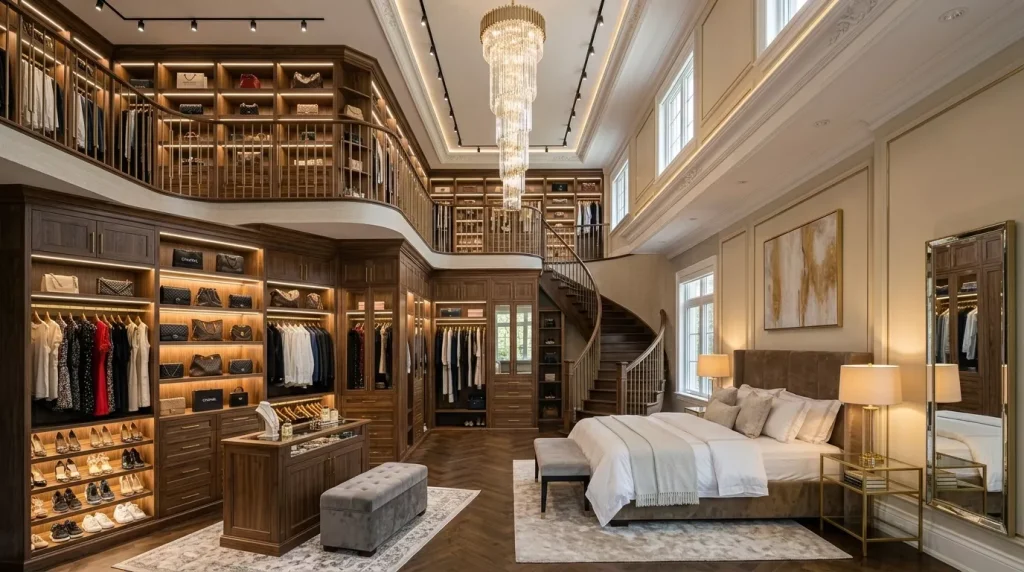
Wardrobes and Storage Built-in wardrobes with push-to-open doors, integrated LED lighting, and mirrored panels are the gold standard for upscale bedrooms. If that’s not in the budget, a large freestanding armoire in a complementary finish works beautifully — especially if it doesn’t look like it came from the same catalogue as everything else.
A Seating Nook Even a single armchair in the corner of a bedroom — paired with a floor lamp and a small side table — transforms the room’s entire purpose. Suddenly it’s not just a place to sleep; it’s a space you actually want to be in.
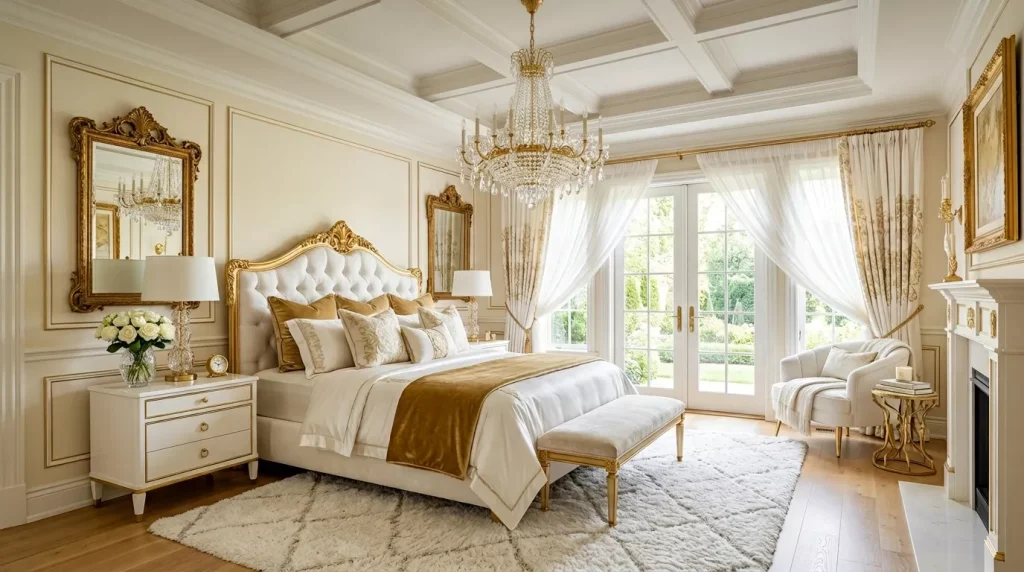
Luxury Bedroom Color Palettes: What Works and Why
Color sets the emotional temperature of a room before you’ve touched a single piece of furniture. These pairings work consistently in high-end bedrooms:
| Palette | Best Suited For | Mood It Creates |
|---|---|---|
| Ivory + Warm Gold | Modern / Classic hybrid | Serene and quietly opulent |
| Deep Navy + Brushed Brass | Traditional / Glam | Bold, sophisticated, dramatic |
| Blush + Champagne | Contemporary Glam | Romantic, refined, feminine |
| Slate Grey + Pure White | Modern Minimalist | Calm, elevated, architectural |
| Sage Green + Walnut | Scandinavian / Organic | Grounded, natural, luxurious |
| Charcoal + Warm Cream | Modern Luxury | Dramatic contrast, polished |
One important rule: always test paint colors on a large swatch — at least A3 size — on the actual wall. Light changes everything. A color that reads warm grey in a store can look distinctly purple or lavender in your room depending on which way the windows face.
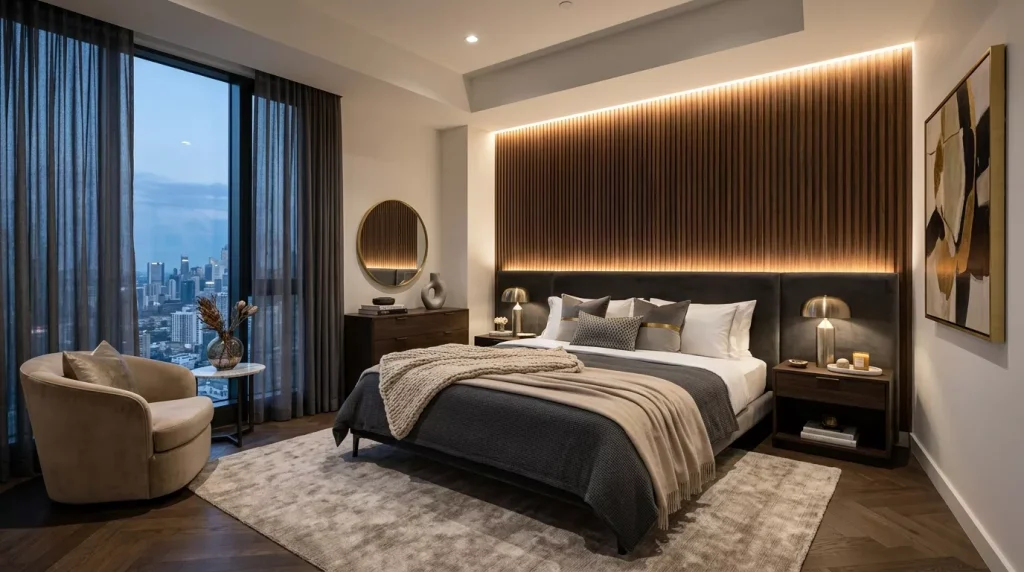
Luxury Bedroom Lighting: The Most Underestimated Element
Lighting might be the single highest-impact design decision in any bedroom — and it’s consistently the most overlooked one. A luxury bedroom never relies on one overhead light source. Instead, it layers multiple light types:
- Ambient lighting — Soft, diffused overall light. Recessed ceiling lights on a dimmer, or a central pendant with a shade that disperses light gently.
- Task lighting — Wall-mounted sconces at bedside height, or adjustable reading lamps that direct light exactly where needed.
- Accent lighting — LED strip lights behind the headboard, inside wardrobes, or beneath a floating bed frame. These create depth and atmosphere.
- Decorative lighting — A sculptural chandelier, an art deco floor lamp, or a designer table lamp that’s beautiful even when it’s switched off.
The single most transformative change you can make? Install dimmers on everything. The ability to dial your bedroom down to a 10% warm glow at 10pm is, genuinely, a game changer for both ambience and sleep quality.
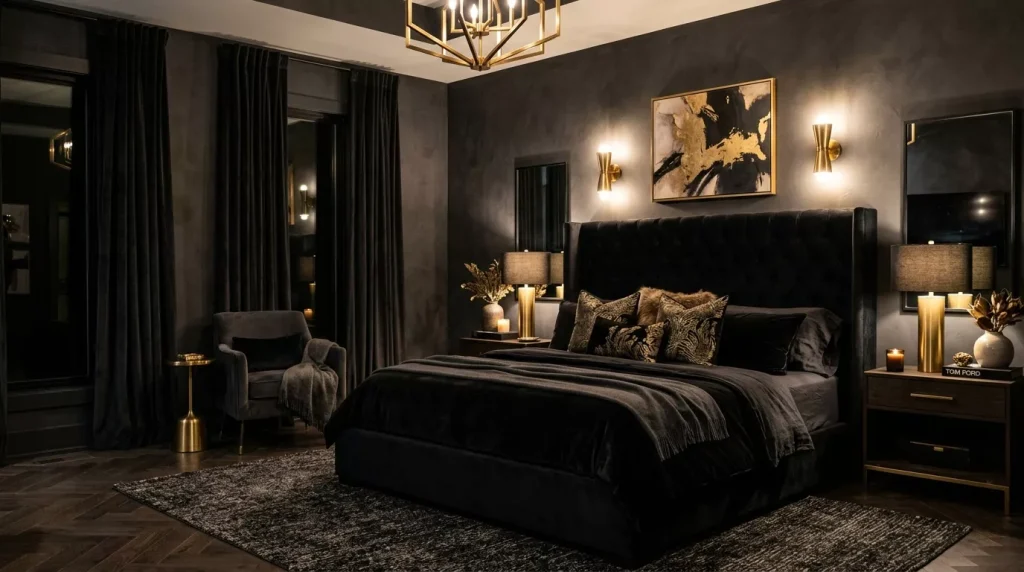
Luxury Bedding: Where Comfort Becomes an Aesthetic Choice
If there’s one area worth serious investment, it’s your bedding. This is luxury you feel every single night — it’s not decorative; it’s functional and deeply personal.
Material Matters More Than Thread Count
The thread count myth persists, but material is the real determining factor:
- Egyptian cotton (400–600 TC) — The classic choice. Crisp, breathable, grows softer and better with every wash
- Sateen weave — Silky smooth with a subtle natural sheen; excellent for cooler climates
- Linen — Relaxed, airy, beautifully textured; ideal for warm sleepers and relaxed aesthetics
- Bamboo — Eco-friendly, naturally temperature-regulating, and impressively soft
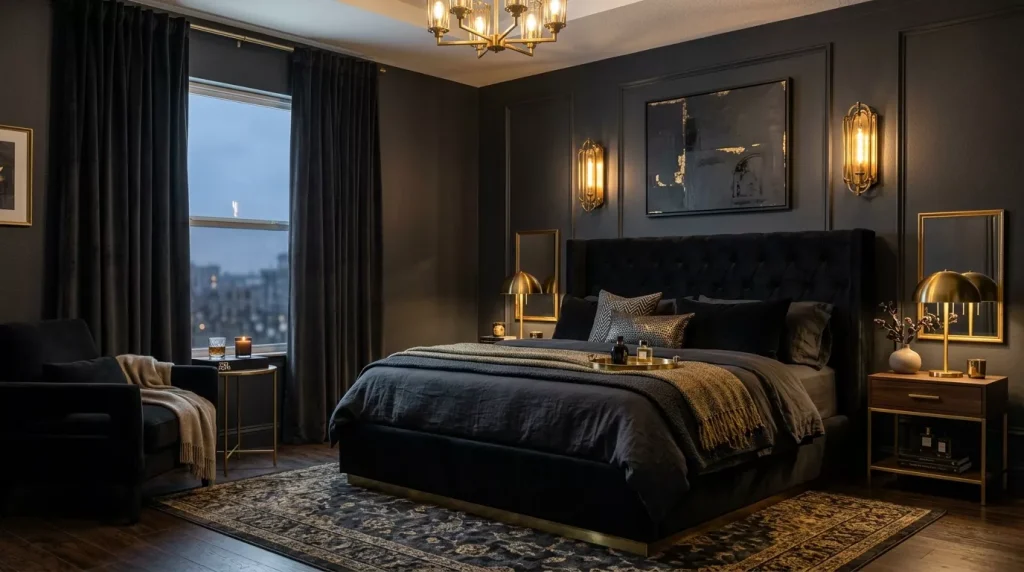
The Layering Method
Luxury hotel beds look so effortlessly styled because they layer: fitted sheet → flat sheet → duvet → coverlet or quilt → two European square pillows → two standard pillows → two accent cushions (maximum). Keep colors cohesive and let textures vary.
The Finishing Throw
Drape a cashmere, merino, or quality faux-fur throw loosely across the foot of the bed — not folded neatly, but casually arranged. It adds texture, warmth, and that last layer of visual richness.
Luxury Bedroom Ideas on a Budget: Smart Shortcuts That Work
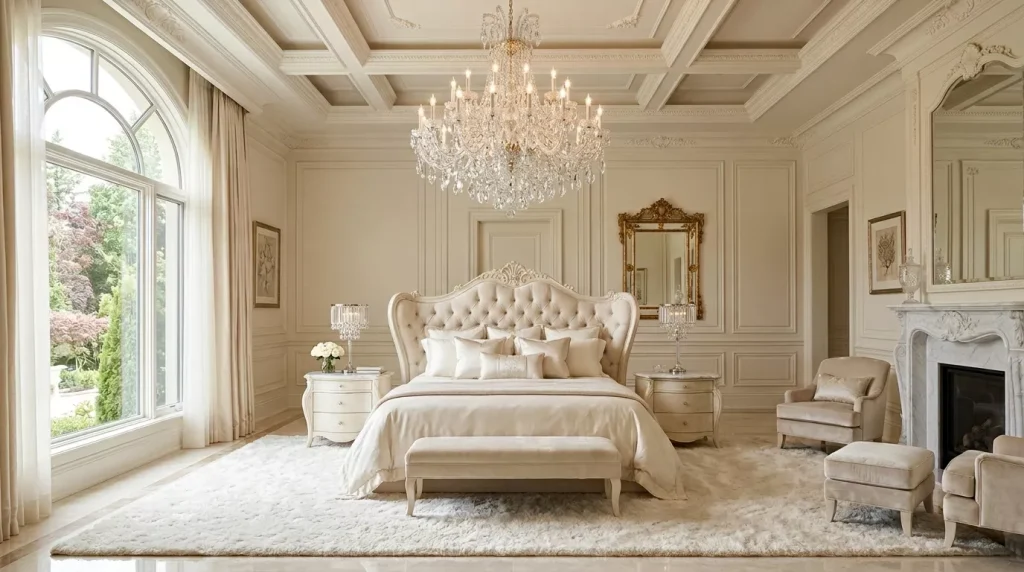
Here’s the good news: high-end results don’t always require high-end spending. These strategic investments and tricks deliver serious impact at a fraction of the cost.
Hang Curtains High Mount curtain rods as close to the ceiling as possible and let the fabric fall to the floor. This single change makes any room look taller and infinitely more expensive — and the fabric itself doesn’t have to be costly.
Upgrade Your Hardware Swap drawer pulls and cabinet handles for brushed brass, matte black, or polished chrome equivalents. A full set often costs under $50 but makes furniture look custom.
Add an Oversized Mirror A large leaner mirror or an ornate framed mirror on the wall adds glamour, reflects light, and creates depth. It’s one of the best value-to-impact purchases in bedroom design.
Layer Your Rugs Place a large neutral area rug under the bed — it should extend at least 60cm out on each side. Add a smaller, more interesting rug on top for a layered, designer aesthetic. It looks intentional because it is.
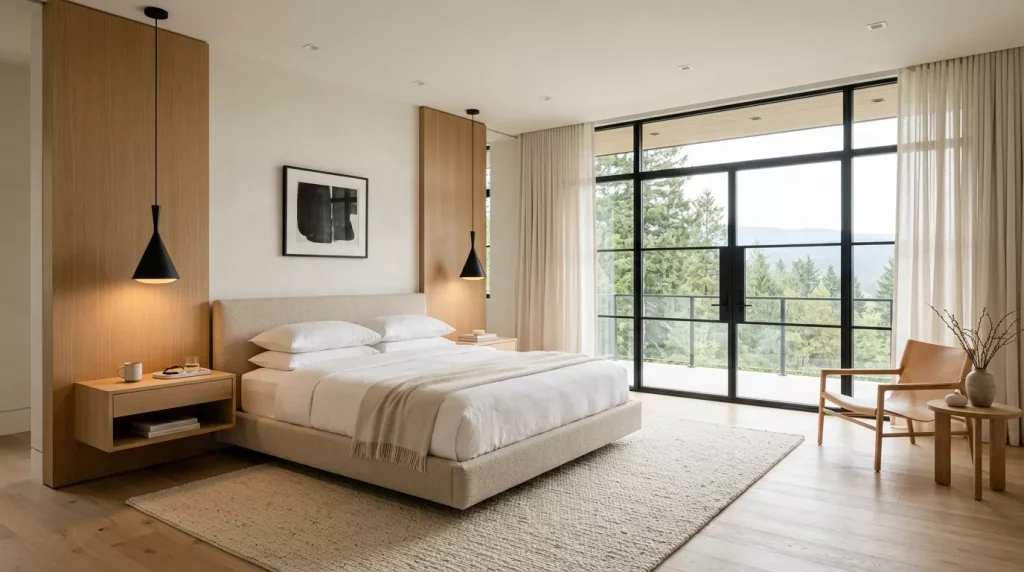
Invest in One Hero Piece Rather than spreading budget thin across many average items, save up and invest in one genuinely beautiful statement piece — a headboard, a lamp, a piece of wall art. It anchors the whole room.
Step-by-Step Guide: Planning Your Luxury Bedroom Redesign
Follow this sequence to make the process manageable and avoid costly mistakes:
Step 1: Define Your Style Clearly Save 20–30 inspiration images. Look for recurring themes: colors, furniture shapes, textures. Those patterns are your style.
Step 2: Set a Realistic, Prioritized Budget A useful rough split: 40% on bed + bedding, 20% on lighting, 20% on curtains, 20% on accessories and art.
Step 3: Lock In Your Color Palette Choose two main colors and one accent. Three maximum. Consistency is what makes a room look designed rather than decorated.
Step 4: Plan the Furniture Layout First Position the bed so it faces the door without being directly in line with it. Symmetry on either side of the headboard immediately elevates the look.
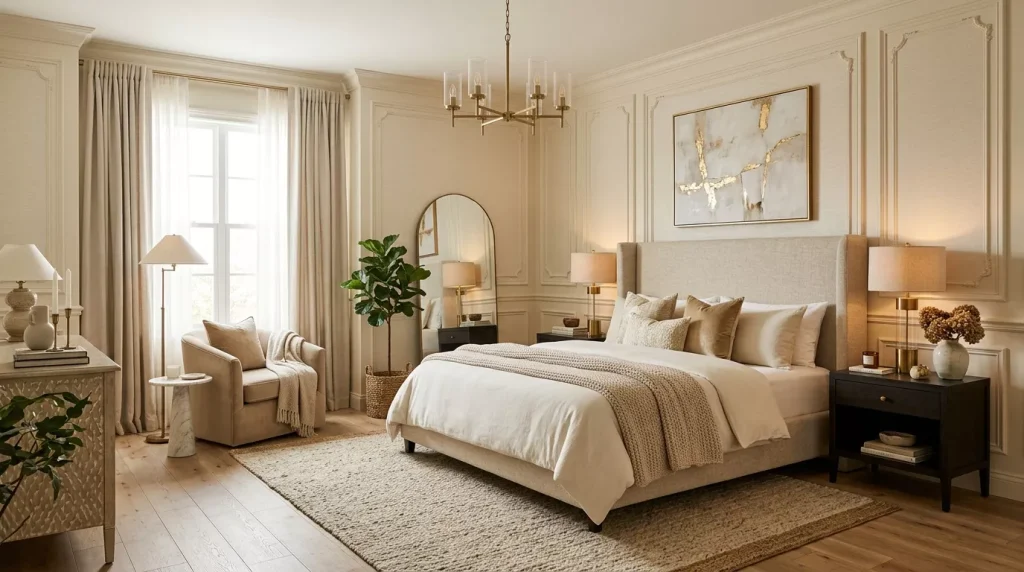
Step 5: Source Lighting Early Hardwired wall sconces need an electrician — plan these before painting or finishing floors. They’re worth it.
Step 6: Dress the Bed Last Build outward from the bed once the room’s bones are in place. A beautifully dressed bed on a plain backdrop still looks amazing. The reverse is rarely true.
Step 7: Edit Ruthlessly Before Adding Accessories Live in the space for a week before adding plants, candles, books, or decorative trays. You’ll see exactly what the room needs — and what it doesn’t.
Pros and Cons of Luxury Bedroom Design
✅ Pros
- Creates a genuine personal sanctuary that reduces stress daily
- Quality furniture and materials last longer and age better
- Meaningfully improves sleep quality, mood, and morning mindset
- Adds measurable value to a property — especially master bedrooms
- Makes the space genuinely enjoyable for reading, relaxing, and winding down
❌ Cons
- Quality pieces require higher upfront investment
- Highly curated spaces need consistent maintenance to stay pristine
- Very refined aesthetics can feel “too perfect” for practical family use
- Heavily trend-forward choices may feel dated within a few years
- Requires more research, planning, and decision-making than basic design
Common Mistakes That Undermine a Luxury Bedroom
Even well-intentioned redesigns go wrong in the same predictable ways. Avoid these:
1. Overcrowding the Room More furniture does not equal more luxury. Breathing space is a hallmark of high-end design — not a sign of an unfinished room.

2. Ignoring Proportions and Scale An undersized rug, a bedside lamp that’s too small, or a headboard that disappears on a large wall — scale mismatches are immediately visible and make a space feel amateur.
3. Cheap Curtains Thin, sheer, or synthetic curtains destroy a luxury aesthetic almost instantly. Floor-length, lined curtains in a natural or semi-natural fabric are non-negotiable.
4. Mixing Too Many Metal Finishes A little variation is fine — but chrome nightstands, brass pendants, bronze handles, and matte black lamps together look chaotic. Pick one primary metal finish and keep it consistent.
5. Forgetting the Ceiling The “fifth wall” is almost always ignored. A coffered ceiling, a well-placed pendant, or even a paint color one shade deeper than the walls adds enormous architectural interest.
6. Neglecting Scent Luxury is multisensory. A beautiful room that smells stale misses the point entirely. A consistent room fragrance — a quality candle, reed diffuser, or linen spray — is part of the experience.
Tips for Elevating Your Bedroom Even Further
- Hotel-fold your pillowcases — a simple tucking technique that makes beds look professionally dressed
- Use a bedside tray — it corrals phone, book, and glass neatly and looks completely intentional
- Introduce one living thing — a plant, fresh flowers, or even a single stem in a bud vase adds life
- Establish a signature room scent — one consistent fragrance creates a memorable, multi-sensory luxury experience
- Hang art at eye level — the center of any artwork should sit approximately 145–150cm from the floor
- Declutter before you decorate — the most luxurious spaces have almost nothing in sight that doesn’t belong there
Conclusion
Creating a luxury bedroom doesn’t demand a designer’s budget or an interior architecture degree. What it does demand is intention — a clear sense of what you want the space to feel like, followed by deliberate choices that support that vision.
Start with the foundations: a beautiful bed frame, quality bedding, and properly layered lighting. From there, build outward — adding texture, warmth, and personal detail at each stage. Stay consistent with your palette, ruthless about clutter, and patient enough to do it right rather than fast.
Your bedroom is the one room that belongs entirely to you. You begin and end every single day in this space. It deserves the same care and thought you’d give any other meaningful investment in your life.
Start with one change from this guide today. Whether it’s hanging curtains higher, upgrading your pillowcases, or installing a single dimmer switch — every step toward your ideal bedroom is worth taking. You’ll feel the difference every morning you wake up in it.
Frequently Asked Questions (FAQs)
Q1: What is the single most important element in a luxury bedroom?
The bed frame and bedding together form the most important foundation — they’re the focal point of the room and the primary driver of comfort. However, lighting is an extremely close second. Proper layered lighting changes the mood of a bedroom more dramatically than almost any other change, and it’s the element most commonly overlooked until it’s too late in the renovation process.
Q2: How can I make my bedroom look luxurious without a large budget?
Focus on high-impact, low-cost changes: hang curtains ceiling-high to add height and drama, add an oversized mirror to expand the perceived space, upgrade hardware on furniture, layer bedding with a quality throw, and declutter aggressively. These changes cost very little but transform how polished and intentional the space feels. Prioritize your spend on curtains and bedding before anything else.
Q3: What color scheme works best for a luxury bedroom?
The most enduring luxury bedroom palettes use warm neutrals (ivory, cream, camel), deep moody anchors (navy, charcoal, forest green), or sophisticated soft tones (blush, sage, dusty blue). The secret isn’t the specific colors — it’s choosing two mains and one accent and staying consistent throughout. Too many colors, even beautiful ones, undermine the sense of harmony that luxury design depends on.
Q4: How do I choose the correct rug size for a bedroom?
For a king or queen bed, a 9×12 foot (approximately 270x360cm) rug is the standard recommendation — it should extend at least 60cm beyond both sides of the bed and past the foot. Undersized rugs are one of the most common and most costly-looking mistakes in bedroom design. If a large rug isn’t possible, a runner on each side of the bed is a reasonable alternative.
Q5: Are built-in wardrobes really worth the investment?
Yes, for most homeowners, built-in wardrobes represent one of the strongest value-to-investment ratios in bedroom design. They create a seamless, hotel-like finish that freestanding furniture rarely replicates, maximize usable storage, eliminate visual clutter, and meaningfully increase the perceived value of the room — and the property as a whole.
Q6: What type of bedding material is best for a luxury bedroom?
Egyptian cotton at 400–600 thread count is the classic benchmark — breathable, crisp, and it genuinely improves with washing. For a silkier feel, sateen weave is excellent. Linen suits warm sleepers and relaxed aesthetics beautifully. Whichever you choose, prioritize 100% natural fiber — it looks better, performs better, and lasts significantly longer than synthetic blends, making it the more economical choice long-term.
Q7: How important is symmetry in luxury bedroom design?
Very important, particularly around the bed. Balanced bedside tables, matching lamps, and a centered headboard all create visual harmony that reads as intentional and elevated. That said, contemporary luxury design increasingly embraces curated asymmetry — where mismatched pieces are deliberately chosen to complement each other. The key distinction is that it looks deliberate, not accidental.