Luxury Bathroom Ideas to Transform Your Space Character

Luxury Bathroom Ideas to Transform Your Space

There’s a reason people lose hours scrolling through bathroom renovation photos online. A beautifully designed bathroom isn’t just about aesthetics — it’s about how the space makes you feel. Step into a room with warm natural stone, soft layered lighting, and a rainfall shower, and something shifts. It stops being a functional room and starts becoming an experience.
Luxury bathroom ideas have evolved dramatically over the past decade. The era of plain white tiles and a basic white tub is long gone. Today’s high-end bathrooms blend spa-like calm with intelligent design — combining premium materials, smart technology, and considered detail in a way that feels genuinely personal.
Whether you’re planning a full renovation or simply looking to upgrade key elements of your existing bathroom, this guide walks you through everything: design styles, materials, layout strategies, and the mistakes that are surprisingly easy to make. By the end, you’ll have a clear picture of exactly where to invest your time and money.

What Actually Makes a Bathroom Feel Luxurious?
Plenty of people spend serious money on a bathroom renovation and still end up with something that feels flat. That’s because luxury isn’t purely about budget — it’s about intention and cohesion.
A truly high-end bathroom tends to share certain qualities, regardless of style:
- Consistency: Every element — from the tiles to the towel hooks — follows a single, unified design language
- Material quality: Natural stone, solid brass, and real timber look and feel different from their cheaper alternatives in ways you genuinely notice every day
- Layered lighting: A single overhead light makes even a beautiful bathroom feel clinical. Layered ambient, task, and accent lighting changes everything
- Visual calm: Luxury bathrooms are rarely cluttered. Clean surfaces and built-in storage are non-negotiable
- Sensory details: The warmth underfoot, the weight of a tap, the sound of a rainfall showerhead — these things matter more than you’d think
Think of it less as copying a hotel and more as creating a space that consistently makes you feel better. That’s the real goal.
Top Luxury Bathroom Ideas Worth Considering
1. Freestanding Bathtubs — The Ultimate Statement
If one piece of furniture could define a luxury bathroom, it’s the freestanding bathtub. These sculptural pieces command attention the moment you walk into a room, and they immediately communicate that this is a space designed around indulgence rather than efficiency.

Modern freestanding baths have moved well beyond the traditional clawfoot style. Today you’ll find sleek oval shapes in stone resin, deep rectangular soaking tubs in acrylic, and even hand-hammered copper pieces that age beautifully over time. The key is pairing the tub with a floor-mounted faucet — it elevates the whole setup and keeps the visual lines clean.
Best suited for: Bathrooms with at least 8 feet of open floor space; works best when positioned in front of a window or against a feature wall.
2. Walk-In Showers With High-End Fixtures
The walk-in shower has quietly overtaken the bathtub as the true centrepiece of the contemporary luxury bathroom — and it’s easy to understand why. A well-designed shower gets used every single day, while the tub often sits idle for weeks.

Going beyond a basic showerhead makes an enormous difference. Here’s what transforms a good shower into a great one:
- Rainfall ceiling showerhead: That wide, immersive downpour effect is genuinely different from a standard head
- Body jets along the side walls: Effectively a hydro-massage, without leaving home
- Handheld attachment: Practical, flexible, and useful for rinsing and cleaning
- Steam generator: Converts your shower into a full steam room — an upgrade that sounds extravagant but is surprisingly achievable
For the enclosure, frameless glass panels keep the space visually open. Pair with large-format floor tiles (60×60cm or larger) to reduce visible grout lines and create that seamless, gallery-like finish you see in high-end hotel bathrooms.

3. Heated Floors and Warmed Towel Rails
This is the kind of detail that sounds modest until you experience it. Stepping onto a warm stone floor on a cold morning, or wrapping yourself in a toasty towel straight from the rail — these small moments consistently rank among the most appreciated features in high-end bathroom renovations.
Underfloor radiant heating works beautifully beneath stone and porcelain tiles. Modern systems are programmable, energy-efficient when properly zoned, and fully invisible once installed. The installation cost is modest relative to the daily return.
Heated towel rails serve a double purpose: they keep towels warm and properly dried between uses (which extends their life significantly), and they add a sleek, wall-mounted design element. Brushed nickel, matte black, and gunmetal grey all work exceptionally well in contemporary spaces.
4. Custom Vanities and Double Sink Configurations
The vanity is where most people spend the majority of their bathroom time. It makes sense — both practically and aesthetically — to invest properly here. A custom-built vanity, sized to your exact space and specification, offers substantially more storage and visual refinement than anything you’ll find in a showroom.
For larger bathrooms, a double sink vanity removes one of the most common morning frustrations — competing for mirror space — while also adding a sense of generosity and scale to the room.
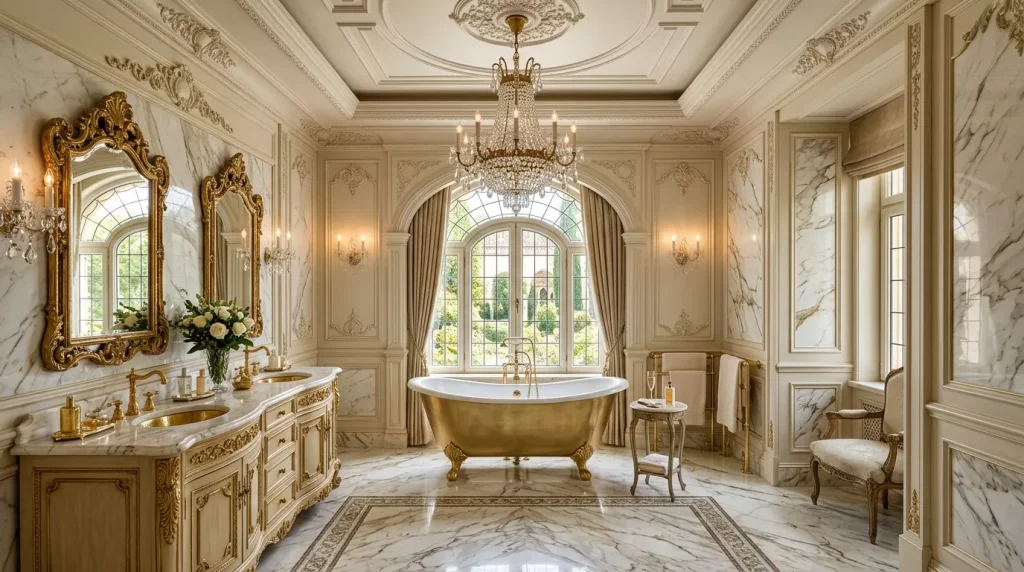
Material selection is critical at the countertop level. Natural marble, quartzite, and granite each bring a depth and warmth that engineered alternatives still can’t fully replicate. Pair with an undermount sink (which sits beneath the countertop rather than dropping into it) for the cleanest possible finish.

Popular vanity finishes compared:
| Finish | Aesthetic Style | Maintenance Level | Best Paired With |
|---|---|---|---|
| Matte White | Minimal / Scandi | Low | Chrome or brushed nickel |
| Walnut Timber | Warm, Contemporary | Medium | Matte black hardware |
| Painted Shaker | Classic, Timeless | Low | Brass or antique bronze |
| Lacquered Gloss | Bold, High-end | Medium | Minimalist black fixtures |
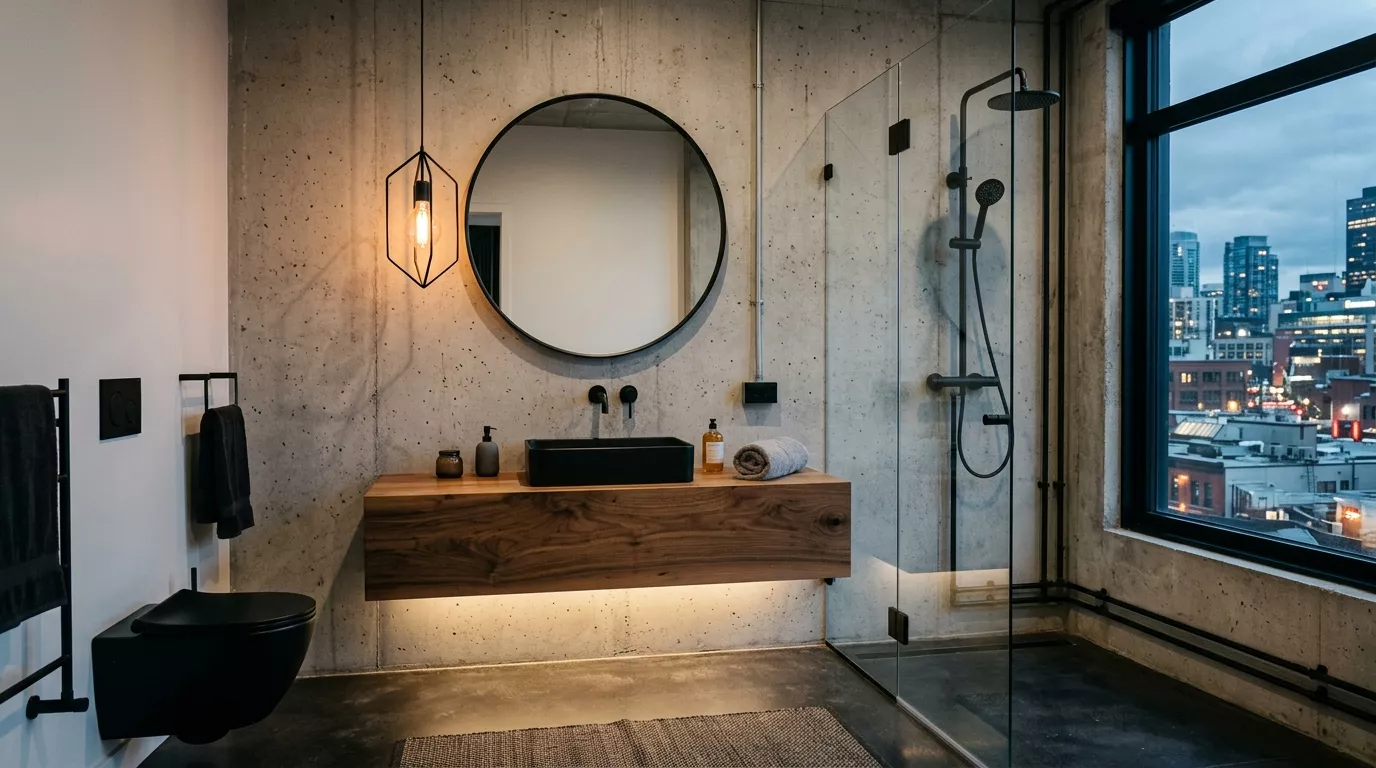
| Raw Concrete | Industrial, Modern | Medium–High | Stainless or matte black |
5. Smart Bathroom Technology That Actually Gets Used
Smart home technology has arrived in the bathroom in a serious way — and while some of it feels gimmicky, certain upgrades deliver daily value that’s hard to give up once you’ve experienced them.
Worth considering:
- Digital shower controls: Dial in your exact water temperature before stepping in — no more standing outside waiting for the water to settle
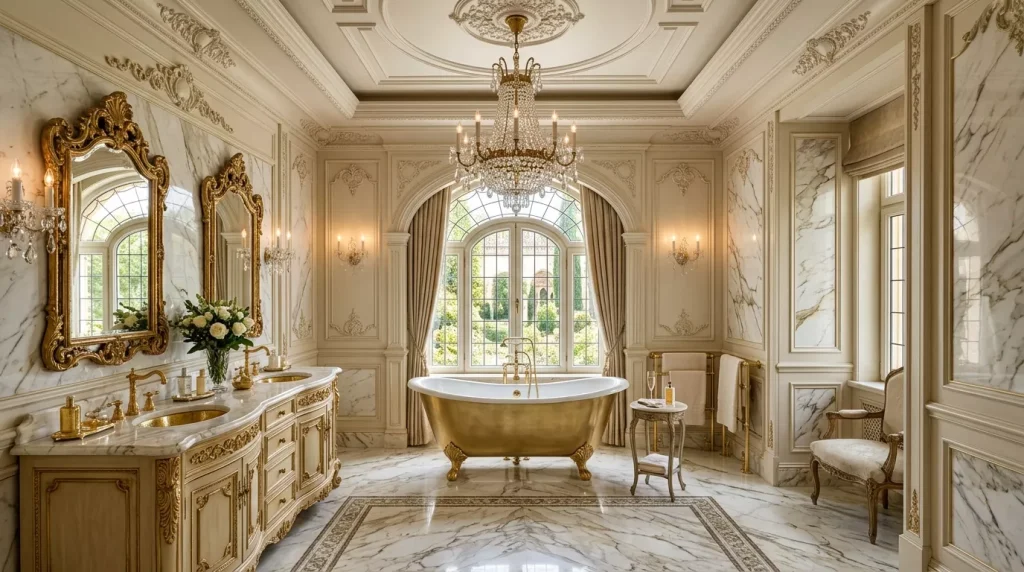
- Smart mirrors: These often include built-in LED lighting strips, touch-screen controls, anti-fog functionality, and in some cases integrated Bluetooth speakers
- Underfloor heating thermostats: Set your floors to reach temperature before your alarm goes off
- Motion-sensing taps: More hygienic, genuinely water-saving, and increasingly affordable
- Heated smart toilet seats: Commonplace in Japan for decades, gaining strong traction in Europe and North America
You don’t need to install every one of these at once. Even a single smart addition — a programmable shower, a smart mirror — can meaningfully shift how modern your bathroom feels.

Luxury Bathroom Materials: What to Use and Why
Materials define a bathroom more than any other single decision. Here’s a practical breakdown:
Marble
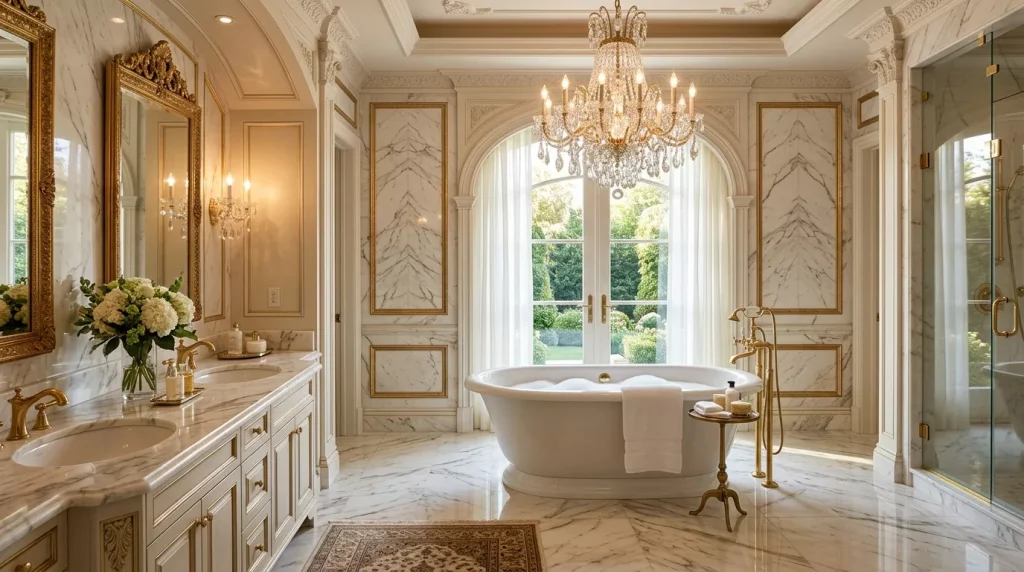
The benchmark for bathroom luxury. Carrara marble brings elegance through its soft grey veining, while Calacatta marble delivers bolder, more dramatic movement. Both work on floors, feature walls, and countertops.
Be aware: marble is porous and needs sealing once or twice a year. It’s also sensitive to acidic cleaners (yes, that includes vinegar). Treat it well, and it genuinely improves with age.
Travertine and Natural Stone
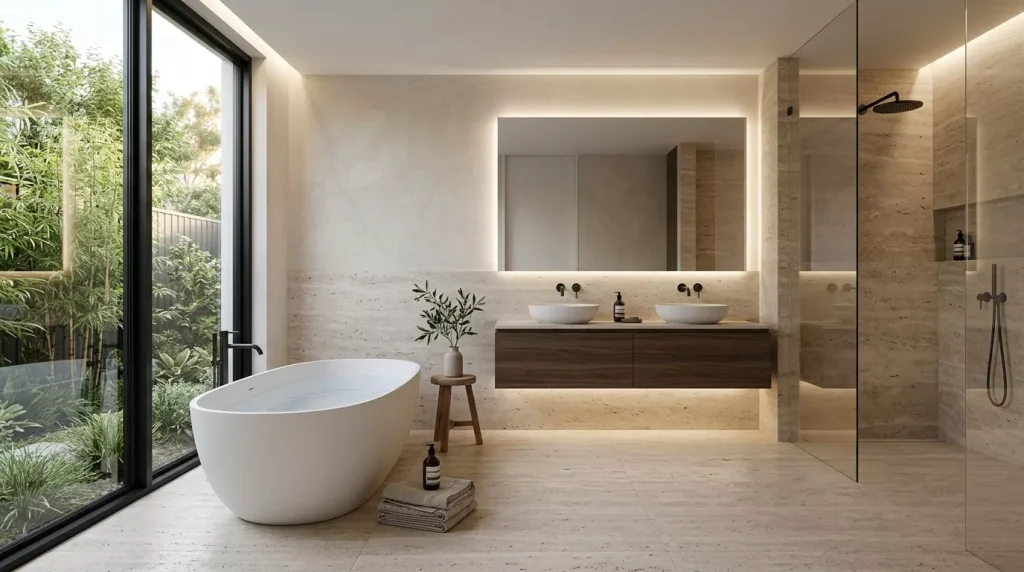
For a warmer, more textural feel, travertine, limestone, and slate are excellent alternatives to marble. These materials have an earthy authenticity that pairs particularly well with timber accents and warm-toned lighting.
Matte Black Hardware
Matte black taps, showers, towel bars, and cabinet handles have dominated bathroom design for several years — and they continue to deliver. The contrast against white marble or light stone is genuinely striking, and the finish hides fingerprints far better than chrome.
Timber and Wood-Effect Finishes
Nothing softens a bathroom quite like wood. Floating timber shelves, teak shower benches, and wood-effect porcelain tiles all bring warmth into what would otherwise be a hard, cool space. For wet areas, stick to teak (which is naturally water-resistant) or high-quality wood-effect porcelain for the floor.
Luxury Bathroom Color Palettes That Consistently Work
Color has an outsized psychological impact in a bathroom. The palettes below reliably produce a high-end result:
- Soft White + Warm Stone Grey: The most timeless combination. Works in virtually any style and never dates
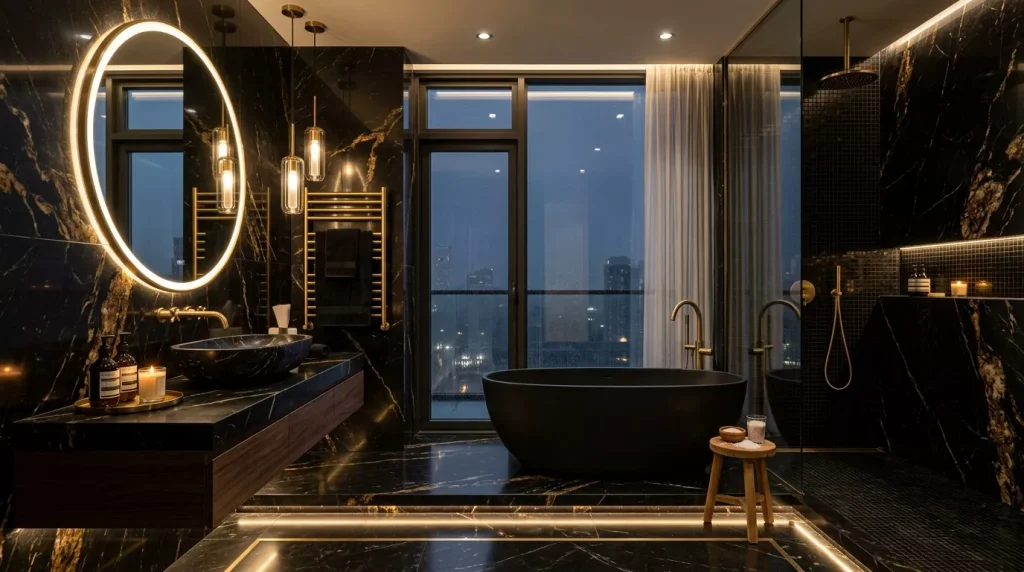
- Charcoal + Aged Brass: Dramatic, rich, and deeply sophisticated
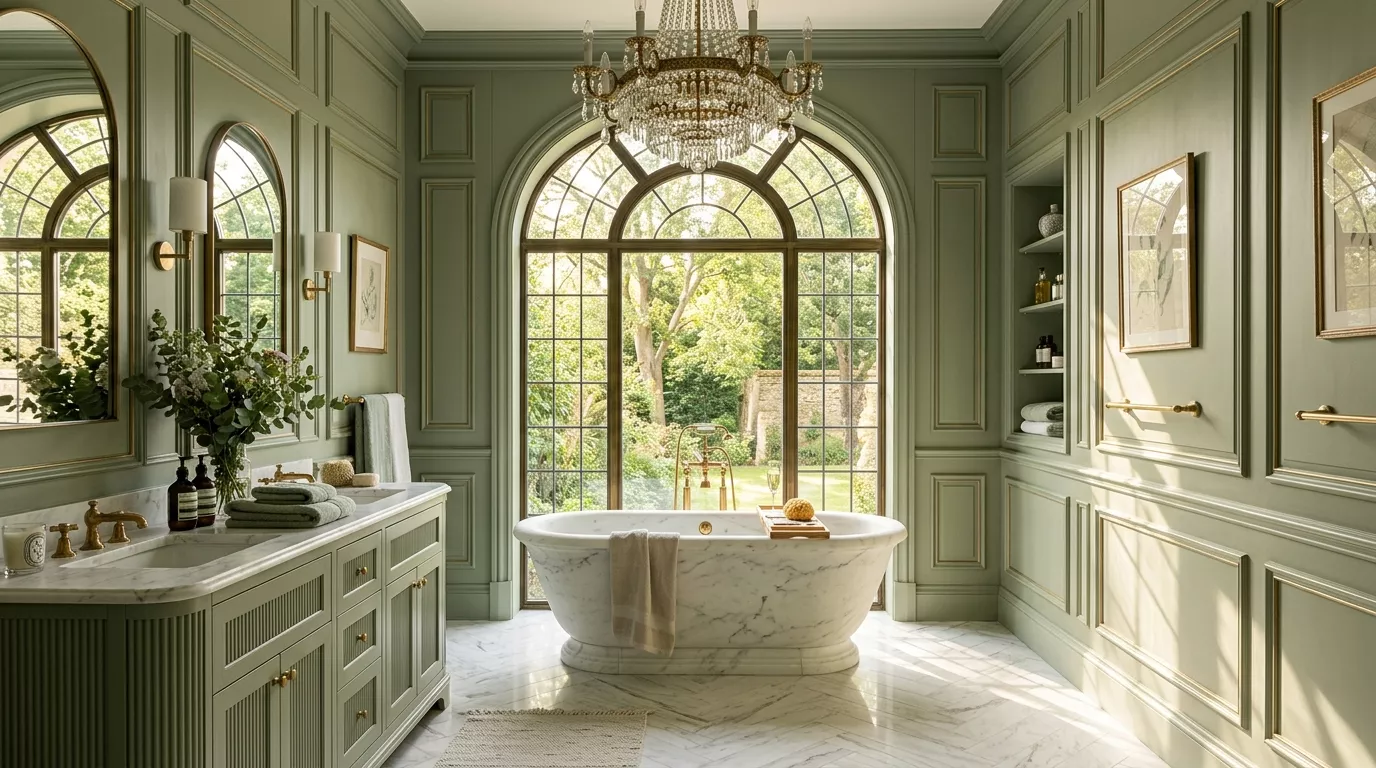
- Forest Green + Warm Brass: Surprisingly calming. The botanical quality makes it feel both luxurious and organic
- Warm Cream + Natural Oak: Japandi-inspired. Perfect for a bathroom built around rest and decompression
- Glossy Black + Crisp White: High-contrast and graphically bold — best with exceptional lighting
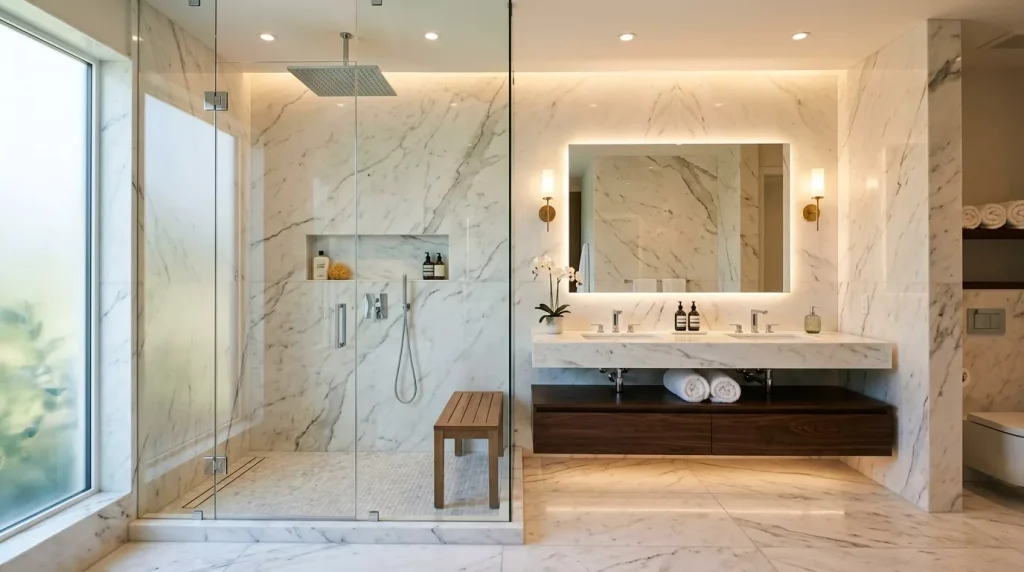
One firm rule: resist using more than three distinct tones in a single bathroom. In a luxury space, variety comes from texture and material, not color chaos.
Comparing Popular Luxury Bathroom Design Styles
| Style | Defining Features | Ideal Setting |
|---|---|---|
| Modern Minimalist | Clean lines, concealed storage, monochrome palette | Urban apartments, new builds |
| Traditional / Classic | Clawfoot tub, ornate fixtures, wainscoting panels | Period homes, Georgian terraces |
| Japandi | Natural materials, neutral tones, minimal decoration | Wellness-focused, calm spaces |
| Industrial | Exposed concrete, raw edges, matte black fixtures | Loft conversions, warehouse spaces |
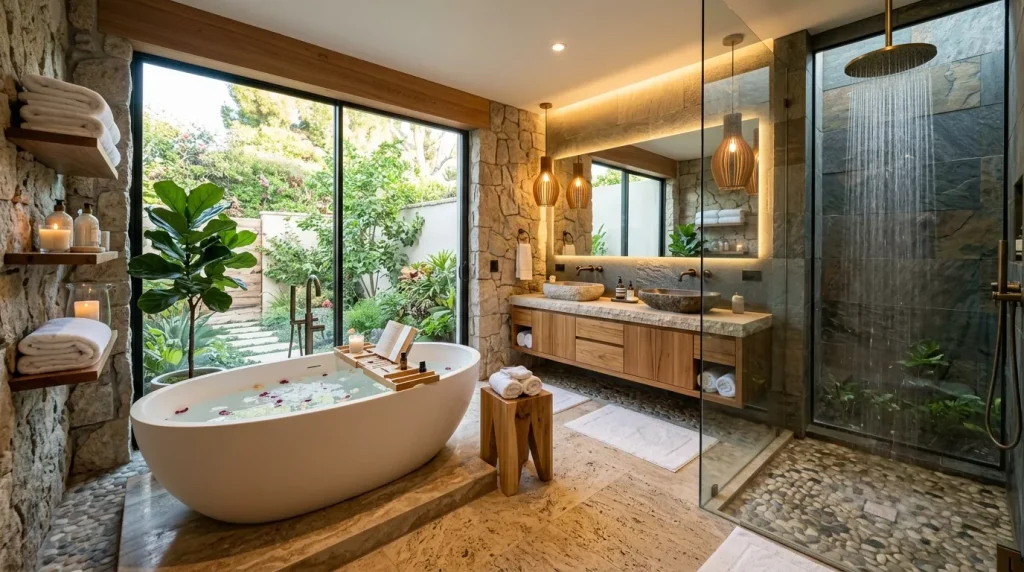
| Spa Retreat | Rainfall shower, stone surfaces, ambient lighting | Relaxation-first primary bathrooms |
| Coastal / Organic | Rattan, bleached timber, sandy tones, ocean blues | Beach houses, countryside retreats |

Pros and Cons of Designing a Luxury Bathroom
✅ Pros
- Strong return on investment: A well-executed bathroom renovation reliably adds property value — often one of the highest-returning home improvements
- Daily quality of life improvement: Unlike a guest room or dining room, you use your bathroom every single day. The impact is cumulative and significant
- Long-lasting materials: High-quality stone, solid brass, and premium tiles typically outlast budget alternatives by fifteen to twenty years
- Complete personalisation: You’re not choosing from a showroom display; you’re designing around your own life and preferences
- Creates a genuine retreat: Increasingly, people are investing in their homes as places of wellbeing — and a great bathroom is at the centre of that

❌ Cons
- High upfront costs: Quality materials and skilled labour are expensive. There’s no shortcut that doesn’t compromise the result
- Longer project timelines: Custom elements — bespoke vanities, specialty stone — take weeks to source and arrive
- Planning-intensive: Mistakes made during the design phase are expensive to reverse once tiles are set and walls are sealed
- Ongoing maintenance commitment: Natural stone, real timber, and unlacquered brass require regular attention to maintain their appearance
- Risk of over-personalising: Very specific design choices can narrow your buyer pool if you sell in the future
Step-by-Step Guide to Planning Your Luxury Bathroom
A luxury bathroom renovation done without a plan almost always costs more and delivers less than expected. Work through these steps before spending a single penny.
Step 1 — Set a Realistic Budget Determine your total spend and immediately set aside 15–20% as contingency. Even the best-planned renovations uncover surprises once the walls come open.
Step 2 — Decide on the Layout Establish early whether you’ll be moving plumbing. Repositioning drains, pipes, or the toilet is costly. If you can work within the existing layout, you’ll preserve significant budget for materials and finishes.
Step 3 — Choose a Design Direction Pick one style and commit to it. Create a focused mood board (physical or digital) before purchasing anything. Mixing too many references is where bathrooms lose coherence.
Step 4 — Select Your Major Materials First Your stone, tile, and surface choices should come before fixture selection — not after. The materials establish the visual language; the fixtures respond to it.
Step 5 — Hire the Right People A skilled bathroom designer, an experienced tiler, and a qualified plumber will save more than they cost. Get three quotes minimum, check recent references, and look at portfolios.
Step 6 — Plan Your Lighting Before Finalising the Electrics Lighting is consistently treated as an afterthought — and the results show. Map out your ambient, task, and accent lighting before the first cable is run.
Step 7 — Visit the Site During Installation Regular site visits catch small issues before they become expensive problems. A five-minute look at the tile layout before grouting can save hours of rework.
Common Mistakes to Avoid in Luxury Bathroom Design
These are the errors that most consistently undermine an otherwise good renovation:
- Underestimating lighting: A single ceiling downlight ruins expensive materials. Always layer your lighting plan
- Prioritising looks over daily usability: A striking tap that’s difficult to operate becomes infuriating within a week. Function and form need equal weight
- Skipping proper ventilation: Inadequate extraction destroys even the most expensive tiles and stonework over time. A high-quality extractor fan is essential, not optional
- Over-mixing tile patterns: Too many textures, sizes, or formats makes a bathroom feel restless and small. Restraint is a luxury hallmark
- Leaving storage as an afterthought: A beautifully designed bathroom with nowhere to put things immediately looks cluttered. Plan storage into the architecture, not around it
- Choosing budget grout with premium tiles: Poor-quality grout stains, cracks, and discolours rapidly. Epoxy grout costs slightly more and performs dramatically better
- Ignoring scale: Fixtures, tiles, and furniture that don’t relate proportionally to the room will always feel slightly off, even if you can’t immediately identify why
Tips for a Better Luxury Bathroom Experience
💡 Dim everything. Install dimmers on all bathroom lighting circuits. The ability to shift from bright morning light to soft evening ambiance makes the room genuinely work differently across the day.
💡 Invest in your towels. A genuinely thick, heavy-weight towel from a quality manufacturer adds to the luxury experience in a way that’s disproportionate to its cost.
💡 Keep your countertop completely clear. Products stored in drawers and built-in niches are invisible; products left on the countertop immediately make even expensive stone look cluttered.
💡 Go large with your tiles. Large-format tiles mean fewer grout lines — which means a cleaner look and significantly less cleaning. An underappreciated practical benefit alongside the aesthetic one.
💡 Use scent deliberately. A reed diffuser, a quality candle, or a fragrant plant (eucalyptus works beautifully in shower steam) adds a sensory dimension that makes the space feel genuinely spa-like.
💡 Install a niche, not a caddy. A built-in recessed niche in the shower holds products flush with the wall, eliminating the visual clutter of wire or suction-cup shower caddies entirely.
💡 Consider a heated mirror. An anti-fog mirror pad keeps your mirror clear during and after showering — a small detail that makes a disproportionately big daily difference.
Conclusion: Your Luxury Bathroom Starts With One Good Decision
Luxury bathroom ideas aren’t out of reach — they’re the result of clear priorities, patient planning, and a willingness to invest in the things you interact with every single day. You don’t need to execute everything at once. A phased approach, starting with the elements that matter most to you, can deliver remarkable results without overwhelming your budget or timeline.
Whether it’s the grounding warmth of underfloor heating, the visual impact of a freestanding bathtub, or the daily pleasure of a perfectly designed walk-in shower — each upgrade compounds over time into a bathroom that genuinely improves your life.
Your bathroom is one of the few truly private spaces in your home. It deserves to be beautiful.
Take one idea from this guide and make it your first step. Talk to a designer, pull together a mood board, or simply decide which material you love most. The best luxury bathroom is the one you actually start planning today.
FAQs: Luxury Bathroom Ideas
Q1: How much does a luxury bathroom renovation realistically cost?
Costs vary significantly based on size, location, and material choices. A mid-range luxury bathroom typically runs between $15,000 and $35,000. High-end projects incorporating custom stonework, bespoke cabinetry, smart technology, and premium fixtures can reach $60,000 or considerably more. Always hold 15–20% in contingency — even the best projects encounter unexpected costs once construction begins.
Q2: What is the single most impactful upgrade in a luxury bathroom?
Most experienced designers point to lighting as the element that most dramatically transforms a bathroom relative to its cost. Premium tiles and stone need proper illumination to read at their best. Layered lighting — ambient overhead, warm task lighting at the mirror, and subtle accent lighting — delivers an impact that no other single upgrade can match at a comparable price point.
Q3: Can a small bathroom feel luxurious?
Absolutely — and in some cases, small spaces achieve a more intense sense of luxury than larger ones because every detail is closer and more present. Use large-format tiles to reduce grout lines and create continuity, install a wall-mounted floating vanity to free up floor space, choose a frameless glass shower screen to keep the sightlines open, and invest in exceptional lighting. The guiding principle remains the same: quality over quantity.
Q4: Is marble the best material for a luxury bathroom floor?
Marble is visually unmatched, but it requires real commitment. It’s porous (needs sealing regularly), sensitive to acidic cleaners, and can be slippery when wet — which makes finish selection important. Honed or brushed marble is more slip-resistant than polished. If you want the look without the maintenance, high-quality large-format porcelain slabs that replicate marble veining have improved dramatically in quality and are a serious alternative worth considering.
Q5: How do I make my bathroom look more expensive without doing a full renovation?
Several targeted upgrades deliver outsized visual impact at reasonable cost. Replacing your existing taps and showerhead with brushed brass or matte black alternatives is often transformative. Installing a large, well-framed mirror (or a full-width backlit mirror) adds depth and light. Swapping basic ceiling downlights for something more architectural, adding heated towel rails, and decluttering the countertops entirely all contribute meaningfully to a higher-end feel without touching the tiles or plumbing.
Q6: What’s currently trending in luxury bathroom design?
The strongest directions right now include Japandi aesthetics (the hybrid of Japanese minimalism and Scandinavian warmth), organic and curved forms in baths and basins replacing the hard rectangular shapes of the past decade, fluted tile detailing on feature walls, integrated recessed niches in lieu of visible storage, and a broader shift toward nature-inspired materials — travertine, rattan accents, live-edge timber shelving, and earthy, terracotta-adjacent tones. Smart technology integration continues to accelerate, particularly programmable showers and smart mirrors.