Dusty Rose Home Decor Ideas to Elevate Every Room

Dusty Rose Home Decor Ideas That Feel Timeless, Warm, and Beautifully You
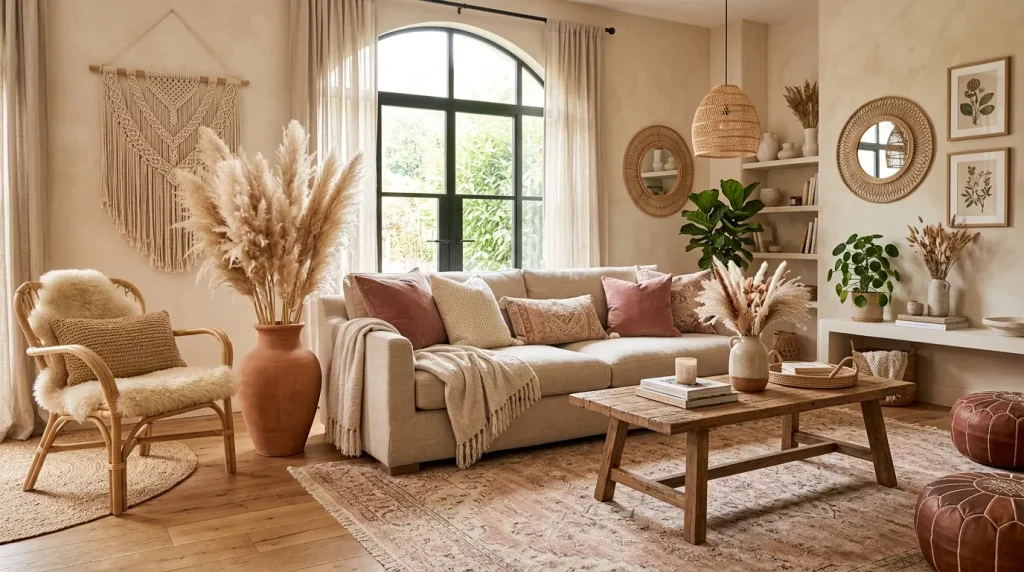
There’s something about dusty rose that stops people mid-scroll. It’s that warm, muted pink — not too sweet, not too bold — that somehow manages to look both vintage and completely fresh at the same time. If you’ve been drawn to this shade lately, you’re in good company.
Dusty rose home decor has quietly moved from trend status into genuine staying power. It works in bedrooms, living rooms, kitchens, and even bathrooms. It pairs well with almost every neutral and holds its own against richer, deeper tones. And best of all, it suits practically every decorating style — from cottagecore to contemporary.
This article is your complete guide to using dusty rose in your home — practically, beautifully, and without making it look like you stumbled into a Valentine’s Day pop-up shop.
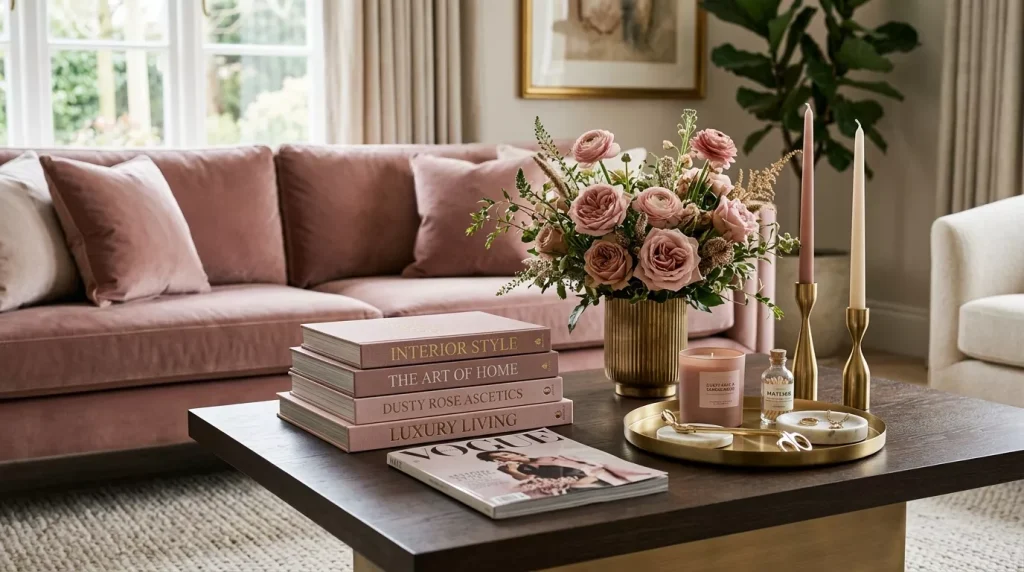
Why Dusty Rose Is More Than Just a Trend
Let’s get something straight: dusty rose is not bubblegum pink. It’s not hot pink or pastel pink either. Dusty rose sits in its own lane — a warm, earthy, slightly greyed-out shade of pink that leans more toward terracotta than candy.
That muted quality is exactly what gives it longevity. Unlike brighter trend colors that feel exciting for a season and dated the next, dusty rose ages gracefully. It has the warmth of a warm neutral and the personality of a true color — which makes it incredibly easy to live with.
Designers have embraced it for its versatility. On walls, it creates an intimate, enveloping atmosphere. In textiles, it adds softness without looking precious. As an accent color, it brings warmth to rooms that might otherwise feel a little cold or bland.
If you’ve been wondering whether it’s the right choice for your home, the short answer is: it probably works better than you think.
Dusty Rose Home Decor Ideas Room by Room
Let’s break this down by space, because the way you use dusty rose in a bedroom is very different from how it works in a kitchen. Context matters, and the right approach in each room makes all the difference.
Dusty Rose Living Room Ideas
The living room is where dusty rose really shines. It’s social, warm, and immediately sets a mood — and this color delivers exactly that.
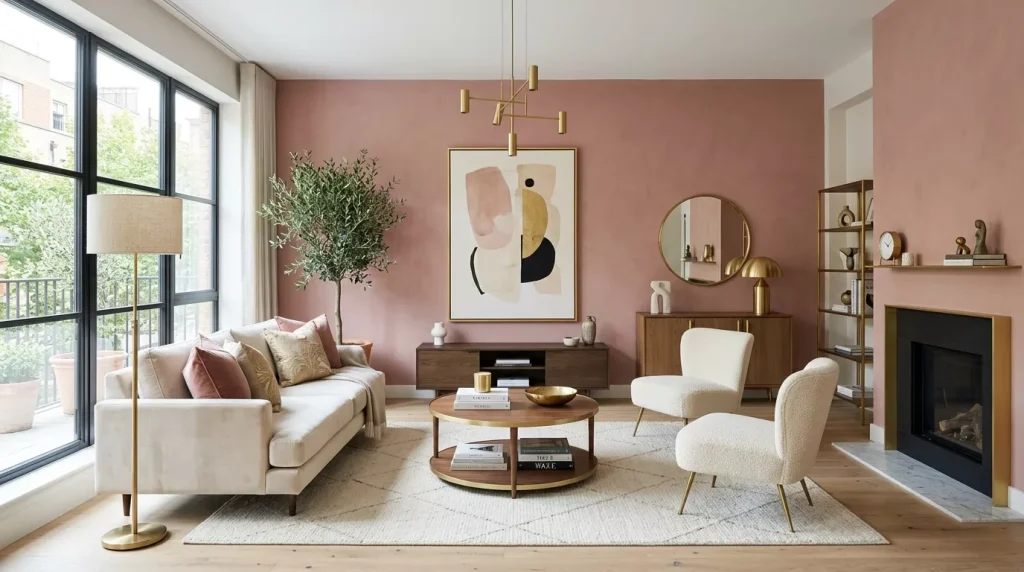
The anchor approach: Start with a dusty rose sofa or armchair as your statement piece. Keep the rest of the room in neutrals — cream walls, natural wood furniture, a woven jute rug. Let the sofa do the talking.
The wall approach: If you’d rather not commit to pink upholstery, dusty rose walls are a gorgeous alternative. Pair with a cream or oatmeal sofa, soft sage green cushions, and warm metallic accents in brass or antique gold.
The accessory approach: Not ready for either? Test the palette with cushions, a dusty rose throw blanket, ceramic vases, and candles. It’s the lowest commitment and still makes an impact.
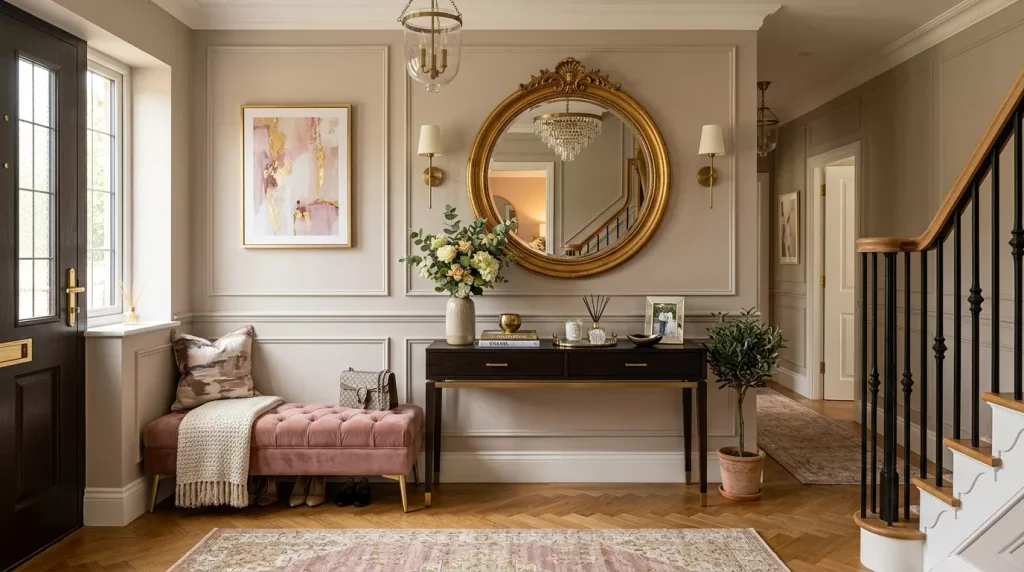
Key pieces to incorporate:
- Dusty rose velvet cushion covers (even one or two changes the feel entirely)
- A terracotta or dusty rose wool area rug
- Rose-toned ceramic table lamps or pendant shades
- Abstract artwork featuring dusty pink, cream, and sage tones
Dusty Rose Bedroom Ideas
The bedroom is probably the most natural home for dusty rose, and it’s where this color feels most personal and intentional.
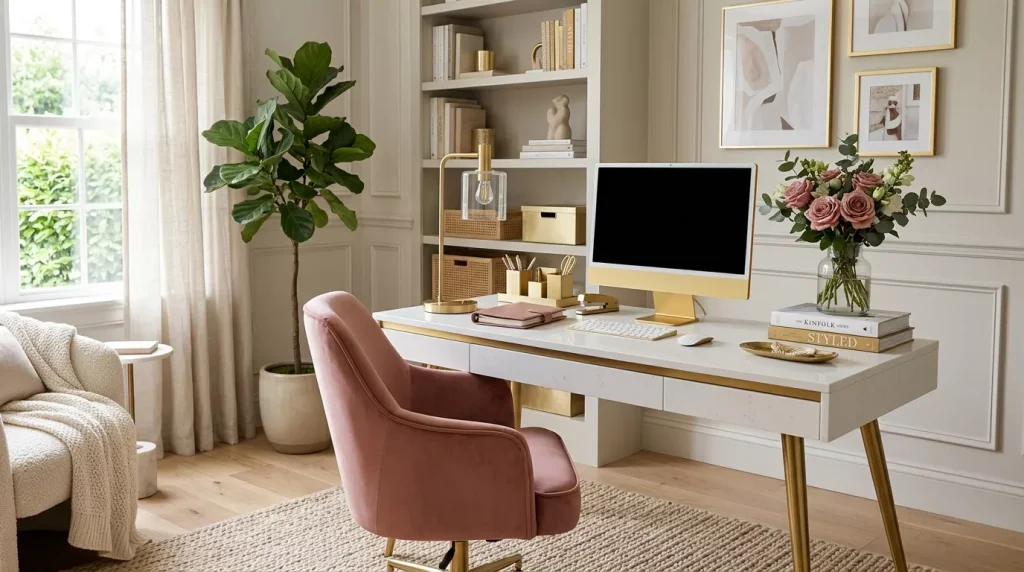
Dusty rose bedroom decor leans naturally romantic without being overdone. It creates a restful, cocooning feeling — the kind of room you actually want to wake up in.
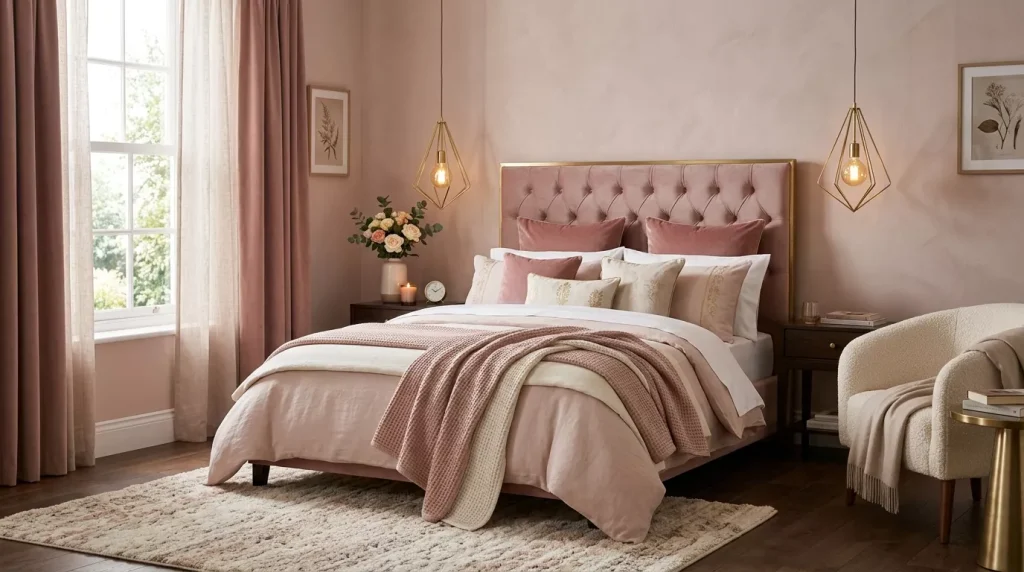
For a cozy, layered look: Use dusty rose as your primary bedding color. Layer a muted pink duvet with cream linen pillowcases, a terracotta knitted throw, and a single deep wine or burgundy accent pillow for depth.
For a more minimal approach: Keep bedding white or cream and bring in dusty rose through curtains, a padded bedhead, or a bedside lamp shade. This keeps the color present without making the whole room feel “pink.”
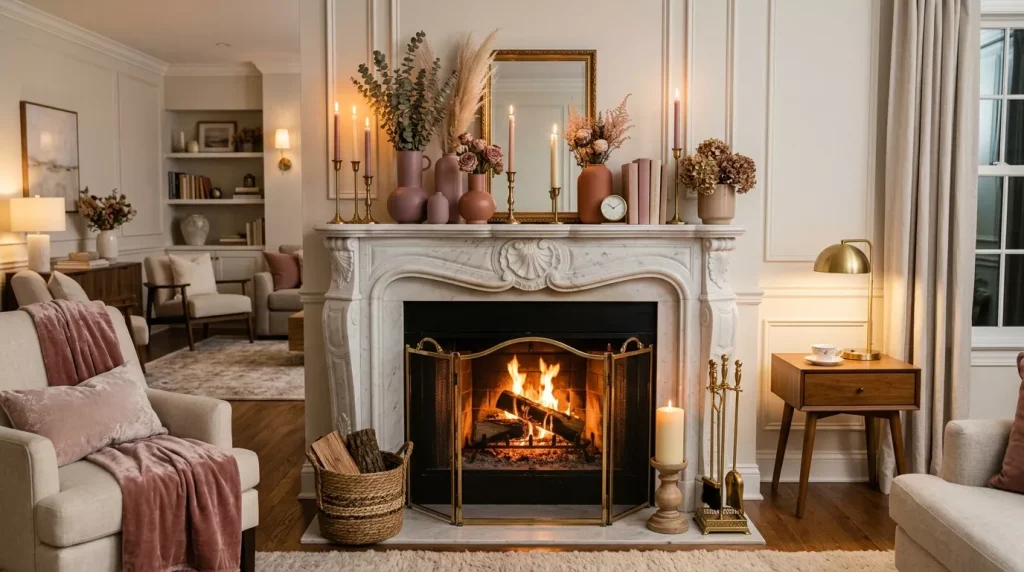
Feature wall option: Dusty rose paint on one wall behind the bed — particularly with soft lighting — creates an incredibly intimate atmosphere. It doesn’t need to be paired with matching accessories; white linen and warm timber furniture do all the work.
Dusty Rose in the Kitchen and Dining Room
This one surprises people. Pink in the kitchen? Absolutely — and it works better than you’d expect.
In a kitchen, dusty rose works best as an accent rather than a dominant color. Think dusty pink ceramic canisters, a terracotta-rose backsplash tile, blush-tinted pendant lights over an island, or a dusty rose feature wall in an open-plan dining area.
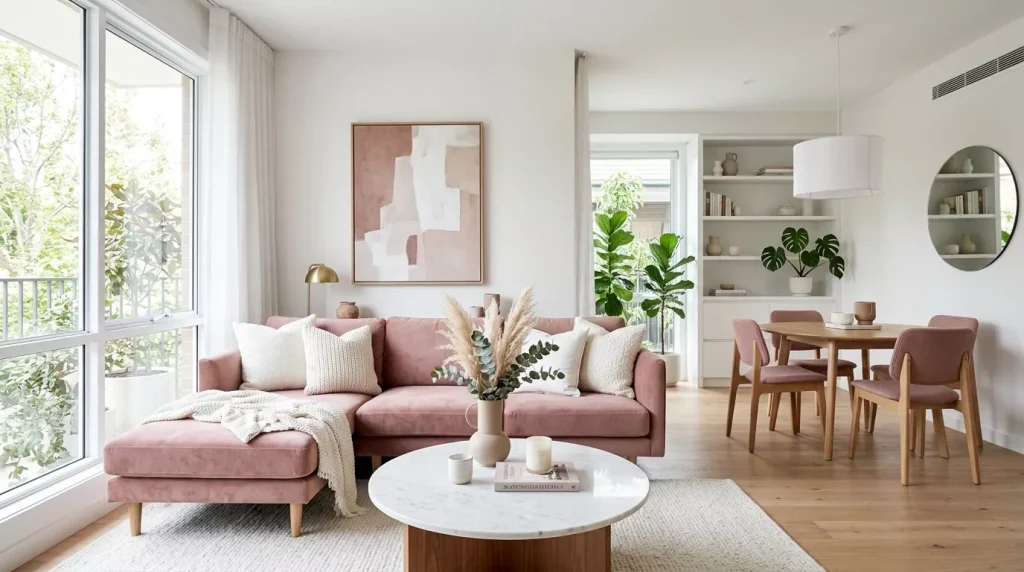
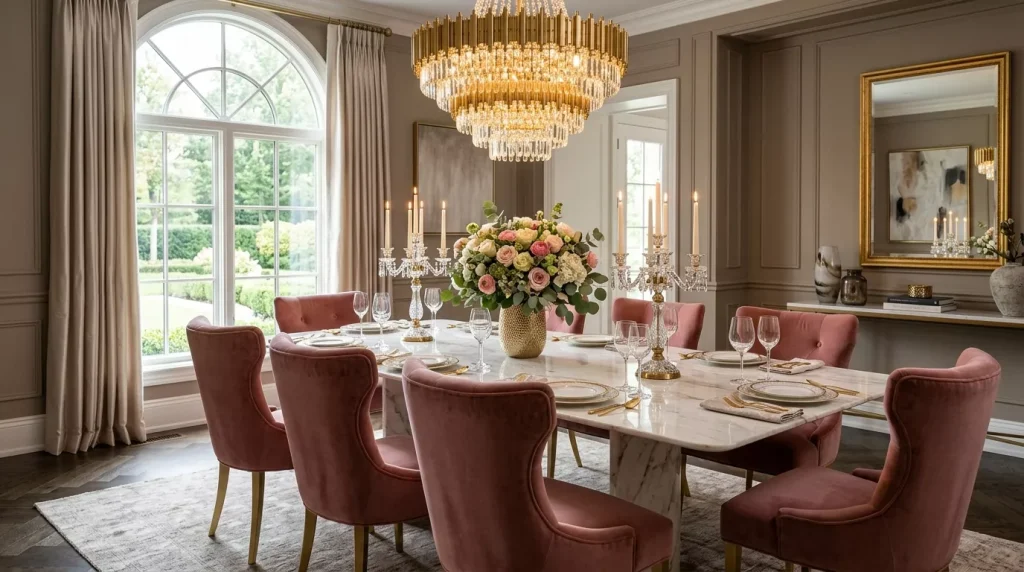
In the dining room, dusty rose linen napkins and tablecloths immediately elevate any table setting. A statement dusty rose chandelier or pendant above the dining table creates an intimate, bistro-like ambience that’s genuinely lovely for entertaining.
Pair these elements with matte black, brushed brass, or warm white and the result feels curated rather than quirky.
Dusty Rose Bathroom Decor
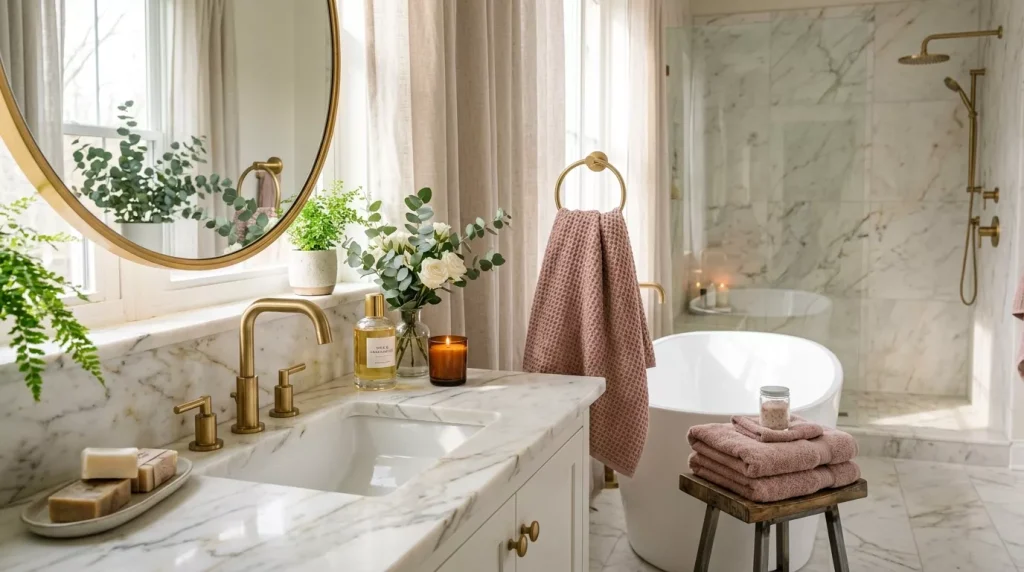
Bathrooms are smaller spaces where color has a bigger impact per square foot. Dusty rose in a bathroom feels luxurious and spa-like when done right.
Options include:
- Dusty rose subway tiles as a feature wall
- Rose-tinted marble (real or peel-and-stick) on vanity surfaces
- Blush pink towels and bath mat as an easy, low-cost update
- A dusty rose candle, soap dispenser, and toothbrush holder for instant cohesion
- Rose-toned grout between white tiles for a subtle, unexpected detail
Paired with matte black fixtures, brass taps, and warm timber shelving, a dusty rose bathroom feels boutique hotel-level without the price tag.
Best Color Pairings for Dusty Rose Home Decor
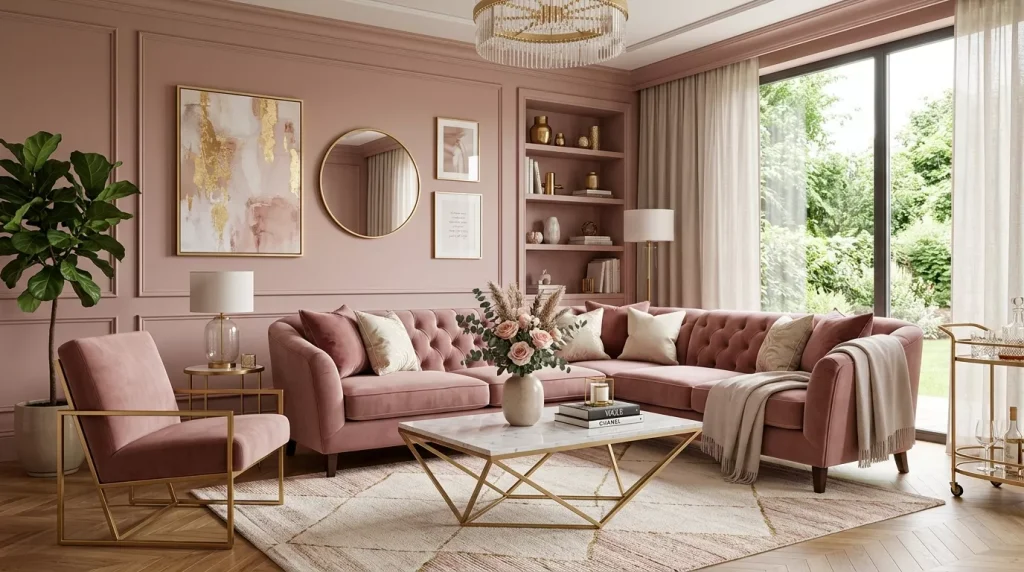
One of the best things about this shade is how forgiving it is in terms of what it works with. Here’s a breakdown of the most successful combinations:
| Paired Color | Effect Created | Best Used In |
|---|---|---|
| Warm White / Cream | Soft, romantic, airy | Bedrooms, living rooms |
| Sage or Olive Green | Earthy, organic, grounded | Living rooms, kitchens |
| Deep Charcoal / Slate | Dramatic, modern, striking | Feature walls, accent pieces |
| Brass / Antique Gold | Glamorous, warm, rich | Lighting, hardware, frames |
| Terracotta / Clay | Boho, sun-baked, warm | Dining rooms, eclectic spaces |
| Navy Blue | Unexpected, editorial, bold | Maximalist living rooms |
| Ivory and Natural Linen | Quiet, Scandi-inspired, calm | Minimalist bedrooms |
A practical rule: dusty rose is a warm undertone color, so it pairs best with other warm tones. Cool-based greys or icy blues can make it look a little dull or tired. Stick to warm neutrals as your base and you’ll rarely go wrong.
Dusty Rose Decor Styles: Which One Matches Your Home?
Dusty rose isn’t tied to a single aesthetic — it adapts. Here’s how it shows up across different interior styles:
Cottagecore and Vintage
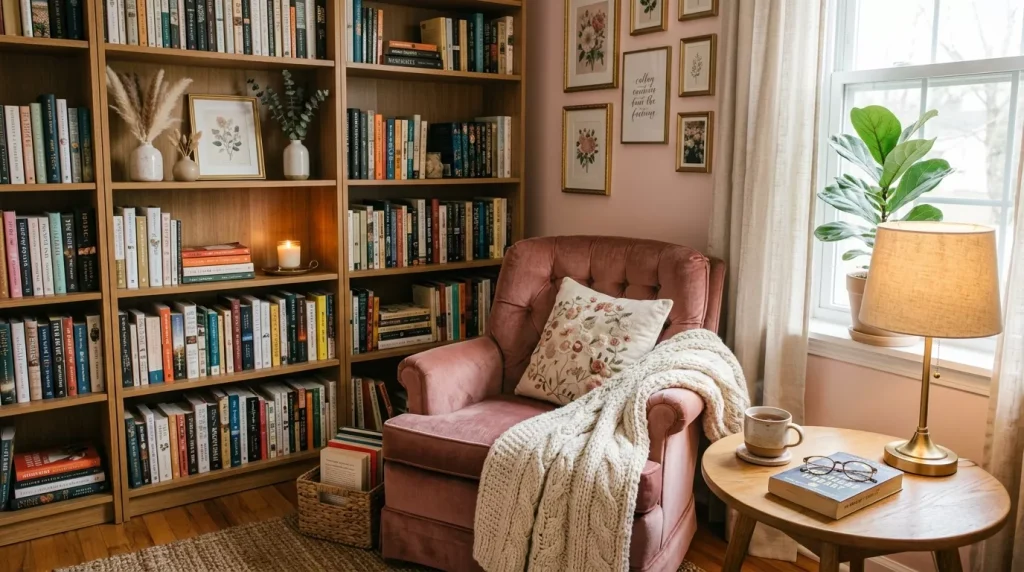
This is probably the most natural home for dusty rose. Floral wallpaper with rose tones, lace curtain panels, a vintage dressing table, mismatched rose-pink crockery on open shelving — it all works together to create that warm, slightly nostalgic atmosphere that cottagecore does so well.
Modern and Contemporary
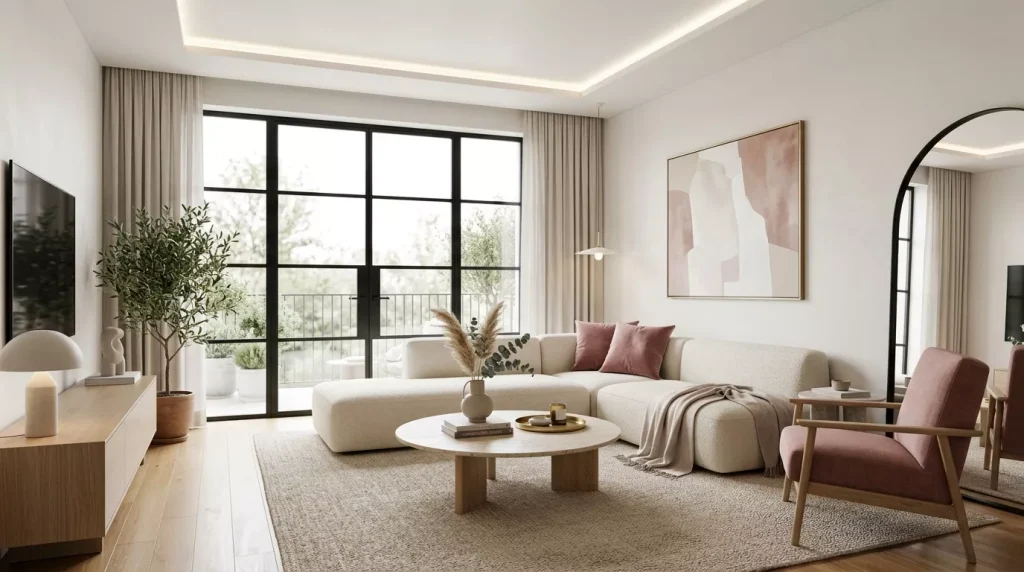
Yes, dusty rose works in a modern home — you just use it more sparingly and pair it with clean lines. A single dusty rose armchair in an otherwise minimal white and grey room becomes the focal point without competing with the architecture. Keep accessories minimal and let the color speak for itself.
Bohemian and Eclectic
Boho spaces embrace dusty rose through layered textiles, natural materials, and handmade objects. Think a dusty rose macramé wall hanging, a blush-toned kilim rug, layered throw cushions in terracotta, sand, and rose, plus trailing plants and rattan furniture. It’s warm, tactile, and effortlessly personal.
Romantic and Maximalist
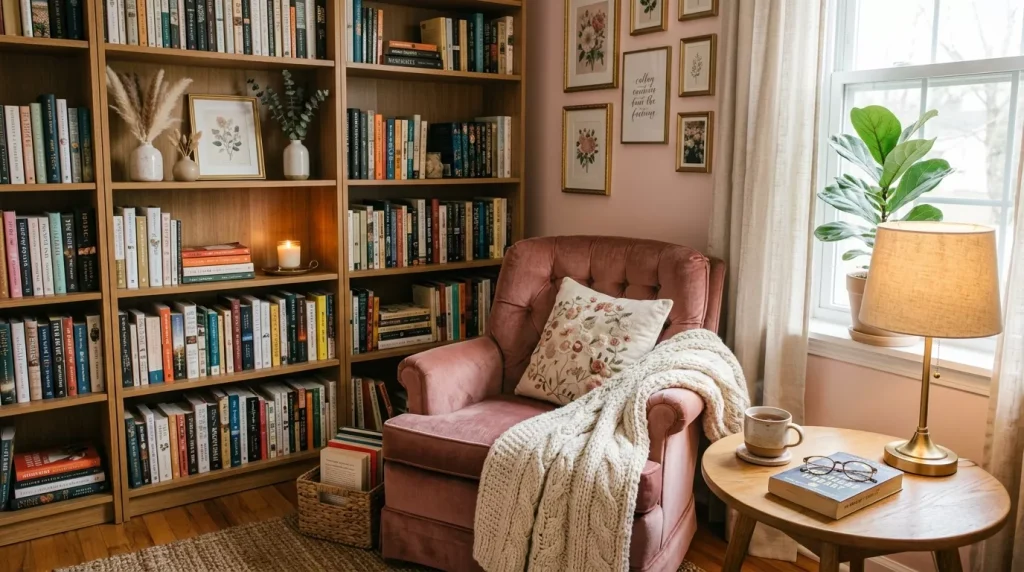
For those who love rich, layered spaces, dusty rose pairs beautifully with deep jewel tones — emerald green, wine, or deep teal — along with ornate mirrors, velvet upholstery, and chandelier lighting. This version is unapologetically indulgent and absolutely gorgeous when executed with a consistent thread of dusty rose running through it.
Step-by-Step Guide: How to Decorate with Dusty Rose at Home
If you’re starting with a blank slate (or just a space you want to refresh), here’s a simple approach that prevents overwhelm.
Step 1: Identify Your Starting Point Decide whether dusty rose will be your dominant color, your secondary color, or your accent. This affects every decision that follows. Most beginners do best starting with it as an accent and building from there.
Step 2: Establish a Neutral Base Paint walls in a warm neutral — warm white, soft cream, warm grey, or greige. This creates the canvas for dusty rose to show up properly. Avoid cool-toned whites; they make dusty rose look flat.
Step 3: Choose One Large Dusty Rose Element This is your anchor — a sofa, a bedhead, a rug, a curtain panel. This element ties the room to the palette and gives you something to build around.
Step 4: Layer Supporting Colors Now bring in your secondary and accent tones. If you chose sage green and brass as your supporting palette, introduce these through cushions, lamp shades, plant pots, and hardware.
Step 5: Add Texture in the Same Tones Texture is what makes dusty rose interiors feel rich rather than flat. Mix velvet, cotton, linen, ceramic, and natural wood. Keep most textures in your palette range — dusty rose, cream, warm brown, sage.
Step 6: Accessorise Thoughtfully Books with neutral spines, dried flowers in terracotta and blush tones, ceramic objects in rose and cream — these final touches tie everything together. Style in odd numbers and vary the heights of objects on shelves and sideboards.
Step 7: Adjust and Edit Once the room is styled, live in it for a few days. Notice what feels too much and what’s missing. Editing is the secret skill — removing the things that don’t quite belong is just as important as adding the right pieces.
Pros and Cons of Dusty Rose Home Decor
Pros
- Warmer and more lived-in than standard pink, making it suitable for adult spaces
- Incredibly versatile — works across multiple decorating styles and rooms
- Timeless undertone means it won’t date as quickly as brighter trend colors
- Pairs well with a wide range of neutrals, metals, and accent tones
- Accessible at every price point — from budget homeware stores to high-end boutiques
- Works in both small and large spaces without overwhelming the room
Cons
- Too much of it in one room can feel heavy or one-dimensional
- Light dusty rose upholstery can show dirt and marks more easily than darker fabrics
- Finding the exact right shade can take time — undertones vary widely between products and brands
- Can feel overly feminine in shared spaces if not balanced with contrasting elements
- Doesn’t suit every existing furniture set — may require some pieces to be refreshed or repainted
Common Mistakes to Avoid with Dusty Rose Decor
Even a genuinely beautiful color can miss the mark if you fall into these traps.
Mistake 1: Confusing dusty rose with baby pink Baby pink is lighter, cooler, and far more delicate. Dusty rose has more earth and grey in it. Using the wrong shade makes the whole room feel younger or thinner than intended. Always check undertones before purchasing.
Mistake 2: Not having a dark anchor Without at least one element that grounds the room — a dark throw, a charcoal frame, a deep-toned plant pot — dusty rose spaces can look washed out and faded. Contrast is your best friend here.
Mistake 3: Matching everything too precisely A dusty rose rug, dusty rose curtains, dusty rose sofa, dusty rose cushions — this creates a flat, single-note look. Vary the depth of the shade and mix with other tones to create something layered and interesting.
Mistake 4: Forgetting about warm lighting Dusty rose looks completely different under cool lighting — it can appear almost grey and dull. Warm white bulbs (2700K–3000K) bring out the warmth and richness of the tone.
Mistake 5: Going all in without testing first Painting a whole room or buying a large piece of upholstered furniture before testing the shade in your space is a costly gamble. Always sample first. Paint a large swatch, buy a single cushion, hang a fabric sample in natural light before committing.
Tips for Getting Dusty Rose Home Decor Just Right
- Dried flowers are your secret weapon. Dried pampas grass, dried roses, dried bunny tail grass, and dried lavender all have natural dusty rose and terracotta tones that complement this palette beautifully — and they require no maintenance.
- Mix patterns mindfully. If you use a floral pattern in dusty rose, balance it with at least one solid dusty rose piece and one textured neutral. Never mix more than two patterns in the same room without a clear common color thread.
- Use odd numbers when styling shelves. Group objects in threes or fives — it’s a basic styling principle but it makes an enormous visual difference.
- Don’t neglect the ceiling. A ceiling painted in the very palest dusty rose — barely-there, almost a blush — creates a beautiful cocoon effect in bedrooms without feeling overwhelming.
- Freshen the palette seasonally. Keep your base pieces permanent and swap accent cushions, throws, and vases between seasons to keep the room feeling current.
- Invest in quality for large pieces. A dusty rose velvet sofa from a quality maker will hold its color and texture for years. Cheaper upholstery in this shade can fade unevenly and look tired quickly.
FAQs
1. What is the difference between dusty rose and blush pink?
Dusty rose is a darker, more muted shade with warm grey or earthy undertones. Blush pink is lighter, cooler, and more delicate. Dusty rose tends to feel more sophisticated and adult, while blush reads as softer and more romantic. Both are beautiful, but they create different atmospheres in a room.
2. What colours go best with dusty rose in home decor?
The most successful combinations include warm white, sage green, terracotta, brass, antique gold, deep charcoal, cream, and natural linen. Warm undertone neutrals work best alongside dusty rose. Avoid pairing it with cool-toned greys or icy blues, which can make the shade look flat or washed out.
3. Is dusty rose a good colour for living room walls?
Yes — dusty rose walls in a living room create a warm, intimate atmosphere that feels welcoming without being overwhelming. It works particularly well in rooms that receive warm, natural afternoon light. Pair with cream or white trim, warm timber furniture, and brass or antique gold accessories for a cohesive result.
4. How can I add dusty rose to my home without repainting?
There are plenty of no-paint options. Start with cushion covers, throw blankets, ceramic vases, candles, or a table lamp in dusty rose. A dusty rose area rug is one of the most impactful changes you can make without touching a single wall. Dried flowers and artwork with rose tones are also great starting points.
5. Does dusty rose work in a modern or minimalist home?
It does, as long as it’s used with restraint. In a minimalist space, one dusty rose piece — an armchair, a single cushion, or a ceramic vase — becomes the focal point of the whole room. Keep everything else clean and neutral. The contrast between the warm rose tone and a crisp minimal backdrop is striking.
6. What flooring works best with dusty rose decor?
Warm toned flooring works best — light or medium oak, pine, walnut, or warm-toned tile. Grey engineered wood or cool-toned tiles can fight against dusty rose’s warmth. If you have cool flooring, a large area rug in warm neutrals or terracotta tones creates a bridge between the floor and your dusty rose palette.
7. Can men live comfortably in a dusty rose home?
Absolutely. When paired with stronger contrasts — charcoal, deep green, natural leather, dark wood — dusty rose reads as a warm accent rather than a feminine statement. Many high-end hotel interiors and restaurant spaces use dusty rose in exactly this way: as a warm, rich tone among other strong elements. It’s all about balance.
Conclusion: Let Dusty Rose Work Its Magic in Your Home
Dusty rose home decor is one of those rare design choices that rewards you over time. It doesn’t shout. It doesn’t date quickly. It simply creates warmth, depth, and a sense of quiet personality that harder, cooler tones just can’t replicate.
Whether you go all-in with dusty rose walls and velvet upholstery, or you test the waters with a cushion and a ceramic vase, this palette has a way of making a house feel more like a home.
You’ve got the ideas, the pairings, the step-by-step guide, and the common mistakes to avoid. The only thing left is to start — even with something small.
Pick one room. Try one piece. See how it makes you feel. That’s always how the best interiors begin.