Olive Green Home Decor Ideas to Transform Every Room

Olive Green Home Decor Ideas That Transform Any Room in Your House

There’s a reason olive green has quietly taken over mood boards, renovation projects, and interior design feeds everywhere. It’s earthy without being boring, bold without being aggressive, and warm without leaning too casual. Olive green home decor ideas sit right at the intersection of nature-inspired calm and sophisticated style — a rare sweet spot that very few colors manage to occupy.
Whether you’re thinking about a single accent wall, a new sofa, or a full-room refresh, olive green is the kind of color that rewards commitment. It plays beautifully with warm neutrals, aged metals, natural wood, terracotta, and even soft blush tones. And unlike trendy pastels or statement brights, it has a timeless quality that won’t date the moment a new season arrives.
This guide covers everything — from room-by-room inspiration to color pairings, style approaches, common pitfalls, and a practical step-by-step decorating plan.
Why Olive Green Deserves a Place in Your Home
Olive green sits in a fascinating middle ground on the color wheel. It’s not quite yellow, not quite brown, and not quite the kind of green you’d find in a forest. That in-between quality is precisely what makes it so versatile in interiors.
It has strong roots in the biophilic design movement — the idea that connecting interior spaces to the natural world improves our sense of wellbeing. Earthy tones like olive mimic the colors found in dried herbs, sun-lit foliage, and dusty landscapes. Being surrounded by them, even indirectly, has a genuinely grounding effect.
There’s also a psychological warmth to olive. Because it carries yellow undertones, it reads as cozier and more inviting than cooler greens like sage or eucalyptus. It doesn’t make a room feel cold or sterile. Instead, it adds depth and a sense of age — like a color that has always belonged there.

Olive Green Home Decor Ideas Room by Room
The most useful way to approach this palette is to think about how it works in each specific space. Olive green behaves differently in a sun-drenched living room versus a north-facing bedroom, so context matters.
Olive Green Living Room Ideas
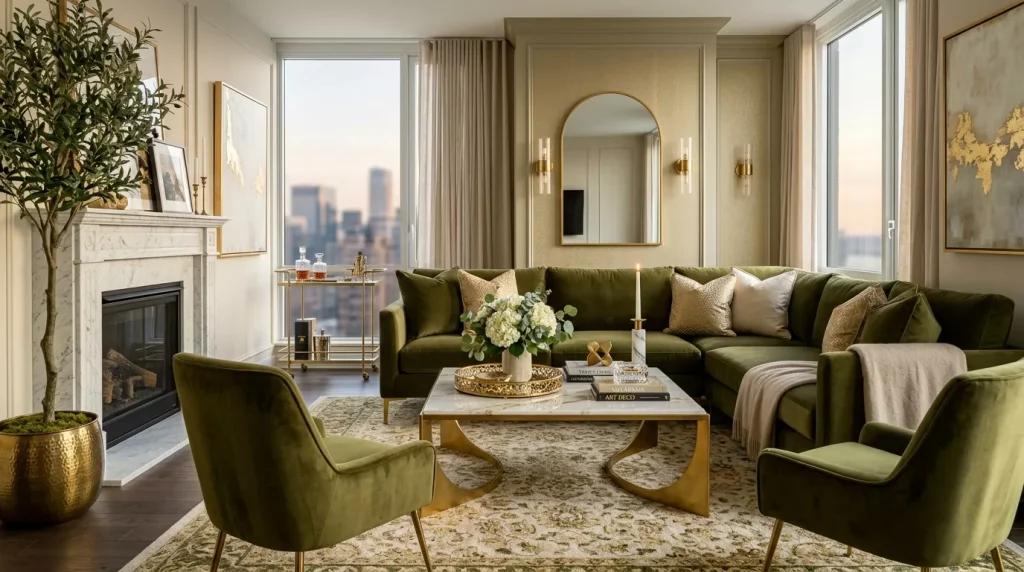
The living room is where olive green makes its most dramatic impact. A full olive green accent wall behind a sofa creates a moody, sophisticated anchor for the entire space. Pair it with warm-toned wooden furniture, a chunky jute rug, and cream or off-white upholstery for maximum contrast.

For a less committed approach, an olive green velvet sofa against white or pale grey walls is equally stunning. The richness of the velvet texture elevates what might otherwise feel like a muted, understated color.
Styling tips for the olive living room:
- Layer burnt orange or rust cushions for a complementary earthy pop
- Choose aged brass or matte gold hardware and light fittings
- Add indoor plants in terracotta pots to reinforce the botanical feel
- Use natural fiber textiles — linen, jute, wool — for softness and warmth
Olive Green Bedroom Ideas

In the bedroom, olive green creates exactly the kind of enveloping, cocoon-like atmosphere most people are chasing. It’s calm enough to sleep in but characterful enough to feel intentional and well-designed.
Painting all four walls in a deep olive — especially when paired with warm linen bedding, dark wood furniture, and low-level lighting — produces a genuinely luxurious result. If that feels too committed, try an olive green bedhead, a single painted wall behind the bed, or even olive green curtains as a softer entry point.
Olive also pairs exceptionally well with cream, camel, mushroom, and soft peach tones in a bedroom context, keeping the atmosphere warm and restful rather than heavy.

Olive Green Kitchen Ideas
The kitchen is one of the most exciting places to use olive green right now. Painted or stained cabinetry in this tone — whether flat-front or shaker style — brings a richness and warmth that white kitchens simply can’t offer.
Pair olive green cabinets with:
- Warm white or cream walls to prevent the room from closing in
- Butcher block, walnut, or light oak countertops for organic warmth
- Brass or unlacquered bronze hardware for aged sophistication
- Patterned zellige or handmade ceramic tiles as a backsplash

Even if full cabinet replacement isn’t in your budget, repainting existing cabinets in an olive tone is one of the most cost-effective kitchen transformations available.
Olive Green Bathroom Ideas
Bathrooms in olive green feel inherently spa-like. The color recalls botanical steam rooms, forest retreats, and the kind of spaces where you’re encouraged to slow down. Combined with natural stone, brushed brass fixtures, and dark wood accessories, an olive green bathroom becomes a proper sanctuary.
Consider olive green wall tiles (especially zellige or subway formats), painted vanity units, or even a single dark olive wall behind a freestanding bath. Layering white and cream towels against olive surfaces creates a crisp, clean contrast that reads as luxurious.

Best Colors to Pair With Olive Green Home Decor
Getting the color combinations right is essential. Olive is warm-toned and muted, so it generally plays best with other warm, earthy, or deeply saturated tones rather than cool, icy, or overly bright colors.
| Color Pairing | Effect | Best Room |
|---|---|---|
| Olive + Cream/Off-White | Classic, warm, easy to live with | Any room |
| Olive + Terracotta | Bold, earthy, bohemian | Living room, bedroom |
| Olive + Mustard Yellow | Rich, warm, maximalist | Kitchen, dining room |
| Olive + Rust/Burnt Orange | Dramatic, autumnal | Living room, study |
| Olive + Warm Blush | Soft, romantic, feminine | Bedroom, bathroom |
| Olive + Aged Brass | Sophisticated, vintage | Kitchen, bathroom |
| Olive + Dark Walnut Wood | Moody, grounded, rich | Any room |
| Olive + Deep Navy | Unexpected, bold, editorial | Living room, study |
The combinations to generally avoid are olive with cool grey, stark white, or pastel blue — these clash with the warm undertones in olive and can make the overall palette feel muddy or indecisive.

Olive Green Home Decor Ideas by Interior Style
One of olive green’s most impressive qualities is how differently it reads depending on the surrounding style context.
Bohemian and Earthy
This is perhaps the most natural pairing for olive. In a boho setting, olive green sits among layers of woven textiles, macramé, patterned cushions, rattan furniture, and abundant greenery. The palette tends toward warm, dusty tones — burnt sienna, camel, deep plum — and olive acts as a grounding, unifying presence throughout.
Modern Minimalist

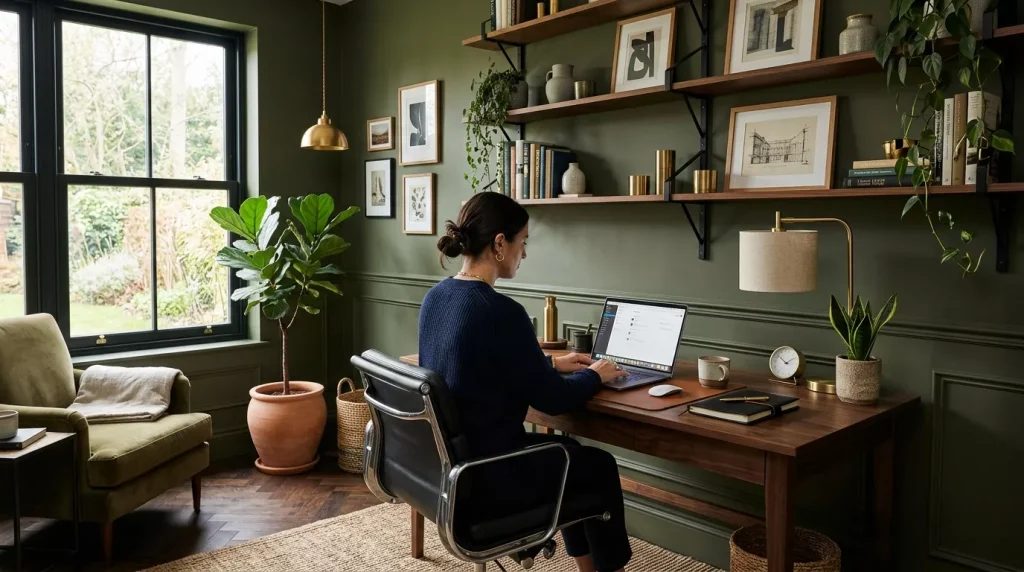
In a minimal setting, olive green works best in restrained doses: a single painted wall, a statement lounge chair, or a set of linen cushions. The warmth of olive prevents the space from feeling stark, and its earthiness adds an organic counterpoint to clean architectural lines.
Rustic and Farmhouse
Olive green feels completely at home in a farmhouse or rustic interior. Against exposed timber beams, raw stone walls, and worn wooden floors, olive looks like it grew there naturally. Painted kitchen cabinets, ceramic crocks in olive glazes, and linen tea towels in earthy tones all reinforce this connection.
Mid-Century Modern
The mid-century palette — with its love of mustard, burnt orange, teak, and walnut — is incredibly compatible with olive green. Think an olive green sofa on a geometric-patterned rug, surrounded by walnut furniture and iconic pendant lighting in warm brass. It looks considered and layered without trying too hard.

Pros and Cons of Olive Green Home Decor
Pros
- Genuinely versatile — works across almost every room and interior style
- Timeless quality — unlike trend-driven colors, olive feels enduring and rooted
- Warm and welcoming — yellow undertones prevent the coldness of some greens
- Pairs beautifully — complementary to a wide range of palettes and materials
- Biophilic benefits — connection to natural tones supports a calm, grounded atmosphere
- Flattering to skin tones — warm earthy greens photograph and film beautifully alongside people
Cons
- Tricky undertones — can shift toward brown or khaki in poor lighting; always test samples first
- Heavy in dark rooms — north-facing rooms with limited natural light can feel cave-like if overdone
- Not universally loved — its associations with military or utilitarian aesthetics put some people off
- Difficult to match — getting the exact right shade consistently across different product types (paint, fabric, tiles) can be a challenge
- Can overwhelm small spaces — deep olive on all surfaces in a compact room risks making it feel smaller than it is

Olive Green vs. Other Earthy Tones: Which Should You Choose?
| Color | Mood | Warmth | Versatility | Best Feature |
|---|---|---|---|---|
| Olive Green | Earthy, sophisticated, warm | High | Very high | Works in every room |
| Sage Green | Soft, airy, Scandi-fresh | Moderate | High | Pairs with everything effortlessly |
| Forest Green | Bold, lush, dramatic | Low | Moderate | Stunning as an accent wall |
| Terracotta | Warm, rustic, Mediterranean | Very high | Moderate | Instantly cozy, full of character |
| Burnt Orange | Vibrant, energetic, bold | High | Moderate | Great as an accent, harder as dominant |
| Mustard Yellow | Cheerful, retro, warm | High | Moderate | Excellent in kitchens and studies |
Olive green stands out in this comparison for its combination of warmth, versatility, and sophistication. Sage is softer and more delicate. Forest green is more dramatic. Olive lands comfortably in the middle — bold enough to have presence, muted enough to feel liveable every single day.

Step-by-Step Guide to Decorating with Olive Green
Follow this process to introduce olive green into your home without second-guessing every decision.
Step 1: Decide on Your Commitment Level Are you going all-in (walls, furniture, soft furnishings) or keeping it as an accent? Both are valid. Clarity here shapes every decision that follows.
Step 2: Test Your Paint Shade Properly Never choose olive green paint from a tiny chip. Paint at least an A4-sized swatch on your wall and observe it at different times of day and in both natural and artificial light. Olive shifts dramatically between morning sun and evening lamplight.
Step 3: Choose Your Dominant Surface This is the surface that carries the most olive green — usually walls in a bold scheme, or upholstery in a more restrained one. Everything else layers around it.
Step 4: Build Your Supporting Palette Choose two or three complementary tones based on the color pairing table above. Stick to the warm family: cream, terracotta, mustard, rust, camel, or warm wood tones.
Step 5: Select Your Textures Mix smooth and rough: a velvet cushion next to a linen throw, a ceramic vase on a wooden shelf. Texture variety prevents the room from looking flat, especially in a muted palette.
Step 6: Add Metallics Last Aged brass, matte gold, or blackened bronze all work beautifully with olive. Use them in light fittings, drawer pulls, mirror frames, and decorative objects. They act as the finishing touch that pulls everything together.
Step 7: Edit Ruthlessly Once you’ve styled the room, remove anything that doesn’t serve the palette or feel intentional. Olive green spaces look best when they’re curated rather than busy.
Tips for Getting the Most Out of Olive Green Decor
- Lean into natural materials. Rattan, jute, linen, terracotta, and raw wood all intensify the earthy, grounded quality of olive green.
- Don’t underestimate olive green in small doses. A single olive green lamp shade or a set of ceramic mugs can introduce the color into a space gently before you commit further.
- Consider the finish of your paint. Matte and eggshell finishes absorb light and make olive feel softer and more enveloping. Satin finishes add a little reflectivity that brightens the tone.
- Use white strategically. In rooms where olive feels heavy, white on the ceiling and woodwork instantly lifts the space and creates breathing room.
- Mix shades of green. Combining deep olive with lighter sage or eucalyptus accents adds tonal depth without introducing a contrasting color.
- Think about the hardware. Switching out chrome or silver hardware to aged brass in a room with olive green walls is one of the most impactful and affordable upgrades you can make.
Common Mistakes to Avoid with Olive Green Home Decor
1. Choosing the Wrong Undertone Not all olive greens are created equal. Some lean yellow-green, others lean brown-grey, and a few tip into khaki. The undertone you choose should complement your existing flooring, woodwork, and furniture. Always test before committing.
2. Pairing with Cool Tones Olive and cool grey is a combination that almost never works. The warm and cool undertones fight each other, and the result looks muddy rather than sophisticated.
3. Ignoring Lighting Olive green is highly sensitive to light conditions. A shade that looks beautiful in a south-facing showroom can appear dull and olive-drab in a north-facing room. Test. Test again.
4. Using Too Many Competing Earthy Tones Terracotta, mustard, rust, and olive all together can feel chaotic and heavy. Choose one or two supporting tones and use the others as minimal accents only.
5. Over-accessorizing Because olive green already adds richness and depth, it doesn’t need excessive decoration to feel finished. A few well-chosen pieces beat a mantelpiece crowded with objects.
6. Avoiding White Entirely Some decorators go all-earthy and forget to balance the palette with lighter, fresher tones. A little white or cream keeps the space from feeling dark and airless.
Frequently Asked Questions
Q1: Is olive green a good color for a living room?
Absolutely. It’s one of the most liveable, adaptable colors you can use in a living room. It adds warmth and character without overwhelming the space. The key is choosing the right shade for your light conditions and balancing it with cream, natural wood, or warm metallics.
Q2: Does olive green make a room look smaller?
It can, if used heavily on all surfaces in an already compact space. Deep olive on all four walls of a small room will naturally make it feel more enclosed. The solution is to keep the ceiling white, use olive on a single wall or through accessories, and ensure there’s adequate natural and artificial light.
Q3: What furniture colors go with olive green walls?
Warm tones work best. Cream, camel, or tan upholstery creates a soft, harmonious contrast. Walnut and dark oak wood furniture adds depth. Aged leather in cognac or tan is a particularly beautiful pairing. Avoid very cool-toned greys or bright white furniture, as these tend to clash with olive’s warm undertones.
Q4: Can I use olive green in a kitchen?
Yes, and it’s one of the most popular uses for olive green right now. Painted cabinetry in olive — especially shaker-style doors with aged brass hardware — has become one of the defining looks of contemporary kitchen design. It works best when balanced with warm white walls and natural stone or wood countertops.
Q5: What plants look good with olive green decor?
Nearly all plants complement olive green, which makes sense given their shared natural references. Particularly striking pairings include large-leaf varieties like the fiddle-leaf fig, monstera, or rubber plant in terracotta pots. Trailing plants like golden pothos or string of pearls in black or aged brass hanging planters also look exceptional.
Q6: Is olive green a timeless color or just a trend?
Olive green has genuine staying power. Unlike highly saturated trend colors, olive is rooted in natural, earthy tones that have been present in interior design for centuries — from Victorian bottle greens to 1970s earth tones to today’s biophilic interiors. It cycles in and out of peak popularity, but it never disappears entirely. A well-executed olive green room will look just as good in ten years as it does today.
Conclusion: Make Your Home Smarter with Olive Green
Olive green home decor is about more than following a color trend. It’s a decision to bring warmth, depth, and an organic sense of calm into the spaces where you actually live. It works hard across every room, pairs generously with a range of other tones and materials, and holds its own against passing trends.
If there’s one thing this guide should leave you with, it’s this: olive green rewards thoughtfulness. The right shade, in the right light, on the right surface, surrounded by the right textures — that combination doesn’t happen by accident. But when it comes together, few colors deliver that same sense of a space that feels both designed and deeply lived-in.
Ready to take the leap? Start with one room. Pick your shade, test it properly, and build outward from there. Your home will thank you for it.