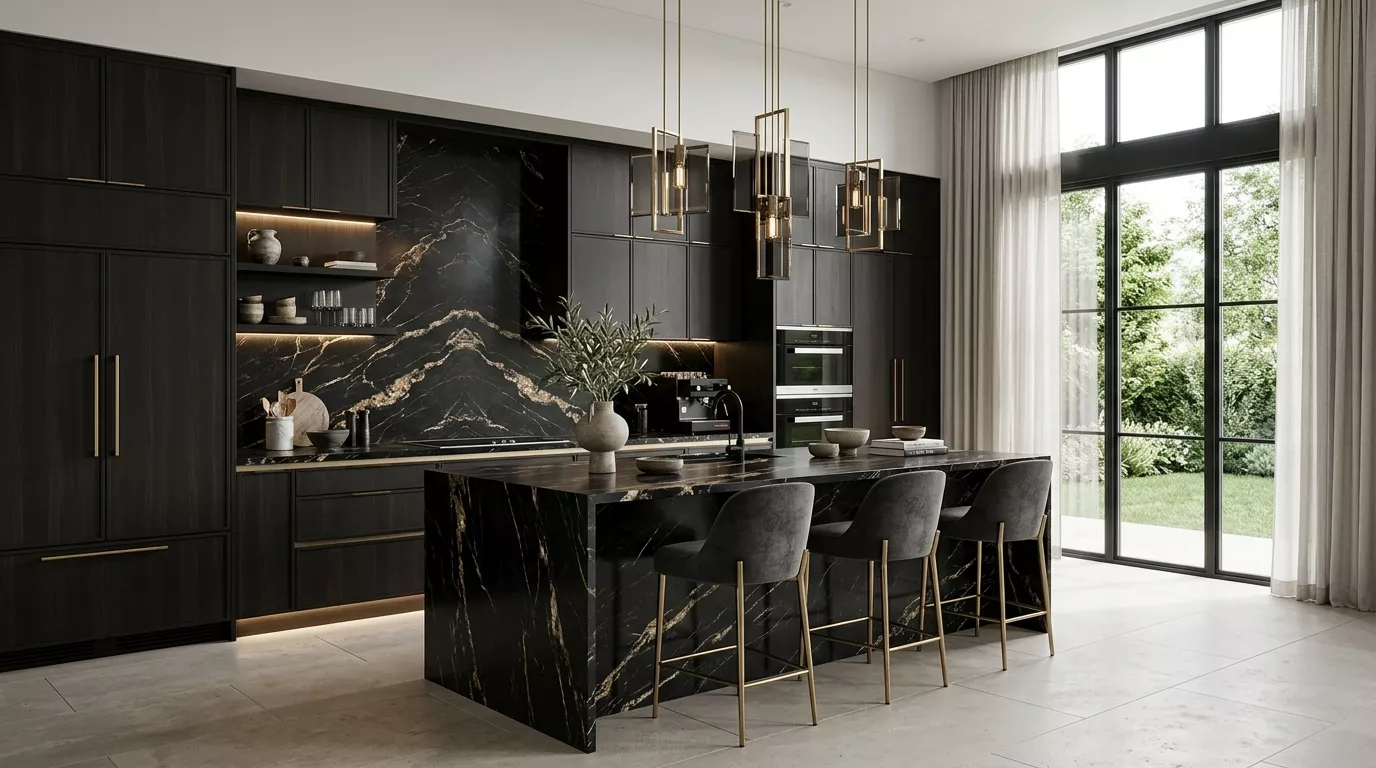
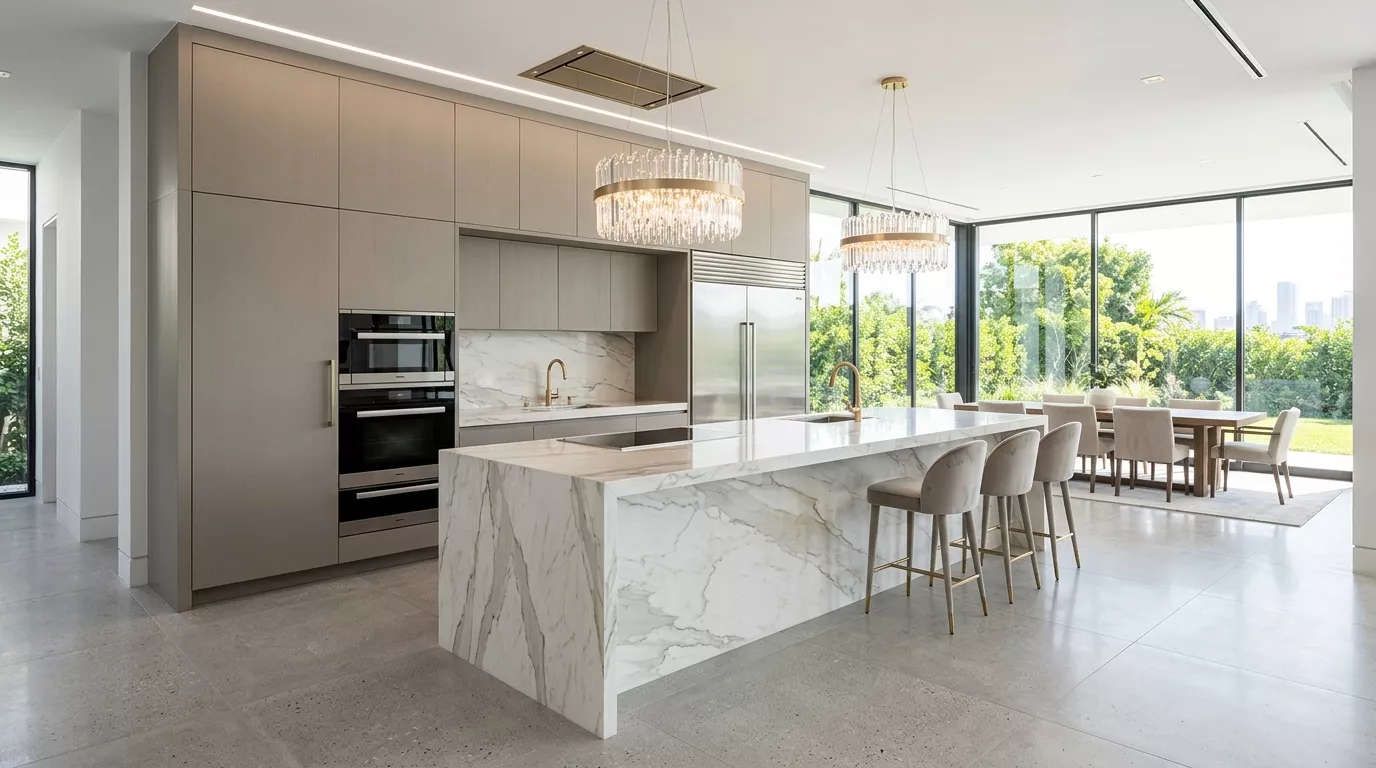
15 Paint Kitchen Cabinets Ideas | That Save You Thousands

Trebding Paint Kitchen Cabinets Ideas That Save You Thousands
A full kitchen renovation can cost $20,000 or more. Painting your kitchen cabinets? A few hundred dollars and a weekend of work.
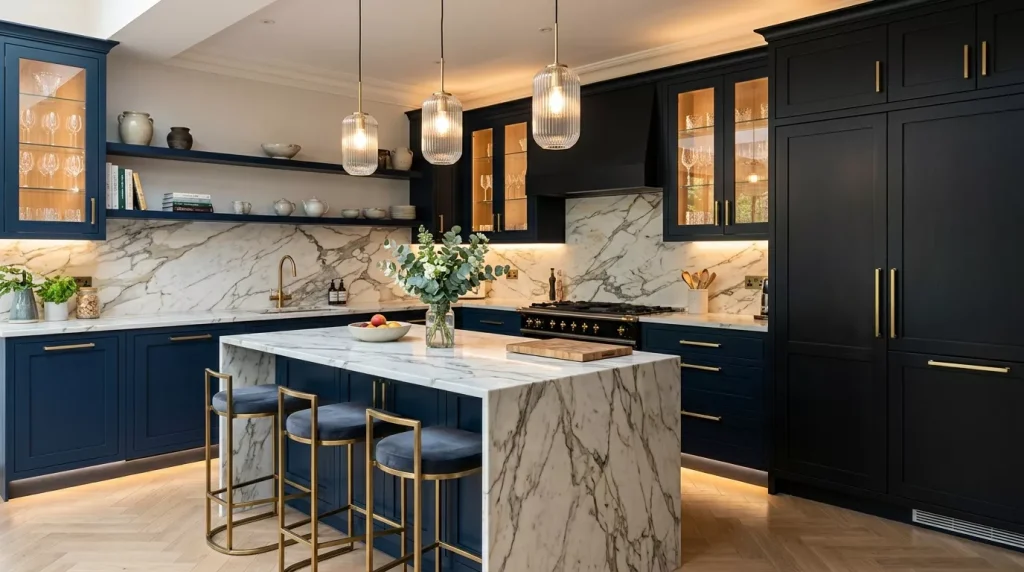
It’s no wonder painting cabinets is one of the most popular kitchen upgrades. It’s affordable, transformative, and can make an outdated kitchen look brand new.
But here’s the thing: painting cabinets isn’t like painting a wall. There’s a right way and a wrong way. Done right, your cabinets will look professionally finished and last for years. Done wrong, you’ll have peeling paint, brush marks, and a project you regret.
In this guide, I’ll share 15 paint kitchen cabinets ideas to help you get professional results. From choosing the right paint to step-by-step application, you’ll learn everything you need to transform your kitchen.
1. Choose the Right Paint
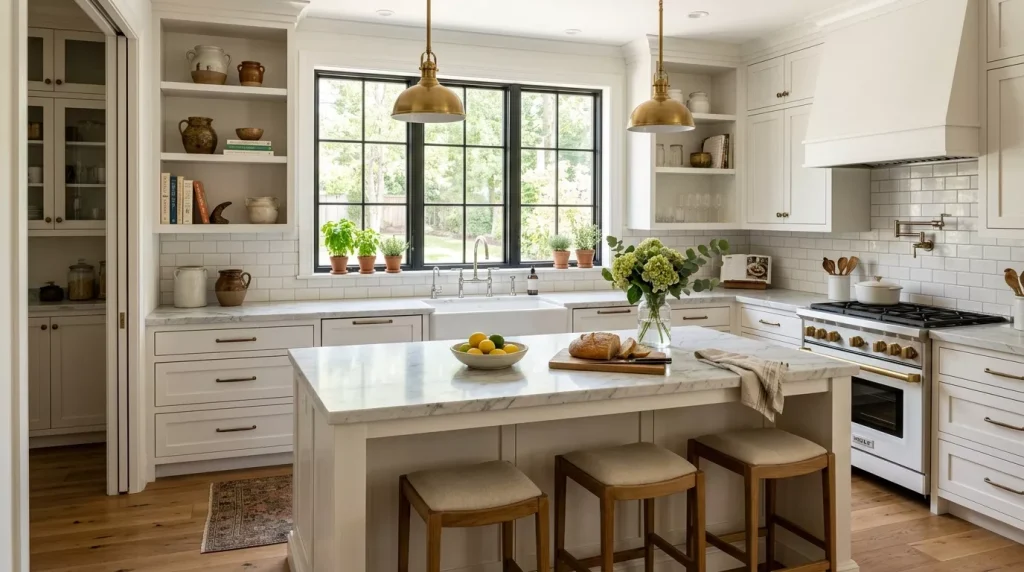
Not all paint is created equal. Using the wrong paint on cabinets is the fastest way to ruin your project.
How to do it: Use a high-quality acrylic alkyd or enamel paint. These paints are durable, washable, and self-leveling. Semi-gloss or satin finishes are best — they’re easy to clean and resist moisture. Avoid flat or matte paints — they won’t hold up to kitchen grease and cleaning.
Why it works: Cabinet paint needs to withstand constant use, cleaning, and moisture. Quality paint ensures your finish lasts.
2. Remove Doors and Hardware
Painting cabinets with doors and hardware in place is a recipe for drips, missed spots, and frustration.
How to do it: Remove all cabinet doors, drawers, and hardware. Label each door and drawer so you know where they go. Remove hinges and pulls. Work in a well-ventilated area.
Why it works: Removing doors gives you access to all surfaces. It also prevents drips and ensures a clean, professional finish.
3. Clean Thoroughly
Grease and grime prevent paint from adhering. If you skip this step, your paint will peel.
How to do it: Use a degreasing cleaner — trisodium phosphate (TSP) or a kitchen degreaser. Scrub all surfaces, including doors, frames, and drawers. Rinse with clean water. Let dry completely.
Why it works: Clean surfaces allow paint to bond properly. Grease is the enemy of adhesion.
4. Sand for Adhesion
Sanding creates a rough surface for paint to grip. Skipping sanding is a common mistake that leads to peeling paint.
How to do it: Lightly sand all surfaces with 120-150 grit sandpaper. You don’t need to remove the old finish — just scuff it up. Wipe away dust with a tack cloth or damp rag.
Why it works: Sanding creates tooth for the primer and paint to grip. It ensures long-lasting adhesion.
5. Use a High-Quality Primer
Primer is essential for adhesion, stain blocking, and a smooth finish. Never skip primer.
How to do it: Use a high-bonding primer designed for cabinets. For oak or dark wood, use a stain-blocking primer to prevent bleed-through. Apply one or two coats, sanding lightly between coats.
Why it works: Primer ensures paint adhesion and prevents wood tannins from bleeding through. It also creates a uniform base for your topcoat.
6. Sand Between Coats
Sanding between coats is the secret to a smooth, professional finish. It removes imperfections and helps the next coat adhere.
How to do it: Lightly sand with 220 grit sandpaper between coats. Use a sanding block for flat surfaces. Wipe away dust with a tack cloth before applying the next coat.
Why it works: Sanding smooths out brush marks, dust nibs, and imperfections. Each coat gets smoother than the last.
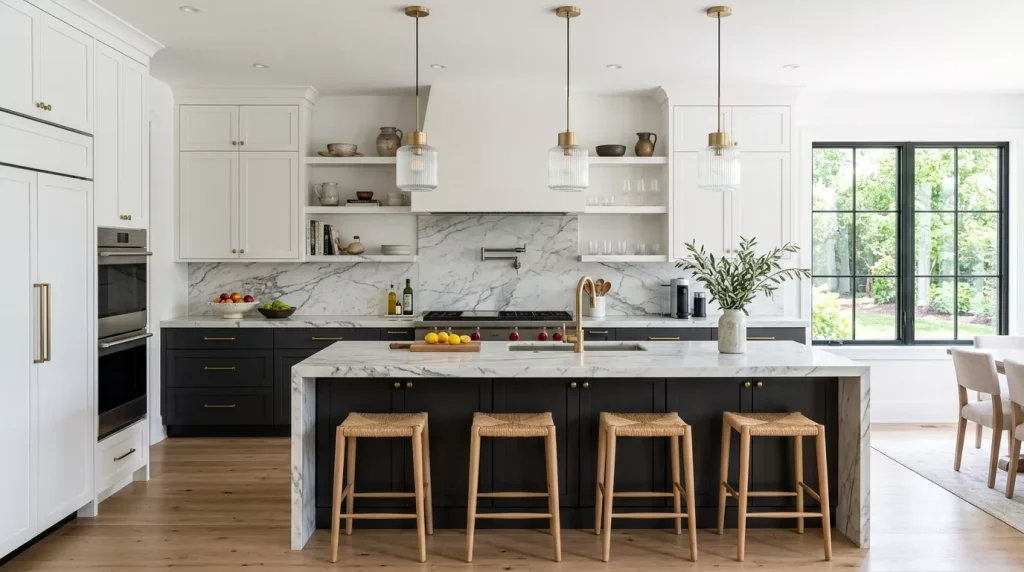
7. Use a Paint Sprayer for a Smooth Finish
A paint sprayer gives the smoothest, most professional finish. It’s especially worth it for large kitchens.
How to do it: Use a paint sprayer designed for cabinets. Practice on cardboard first. Apply thin, even coats. Protect surrounding surfaces with plastic sheeting.
Why it works: Sprayers eliminate brush marks. They create a factory-like finish that’s impossible to achieve with a brush alone.
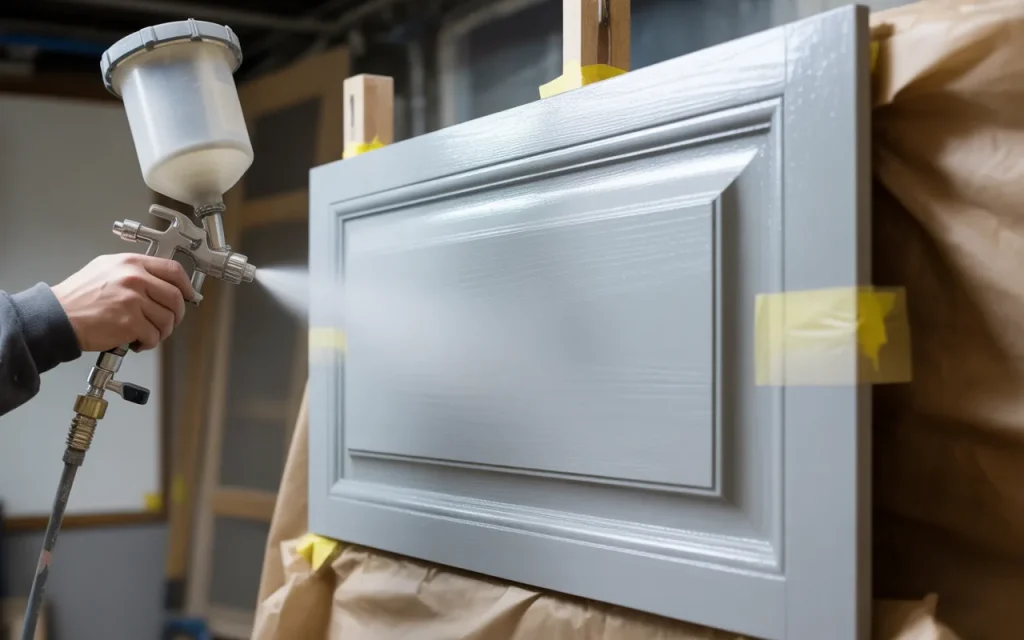
8. Use a Foam Roller and Brush for Small Projects
If you don’t have a sprayer, a foam roller and brush can still give good results. Use a high-density foam roller for smooth surfaces.
How to do it: Use a foam roller for flat areas. Use a high-quality brush for edges and details. Apply thin, even coats. Don’t overload the roller — thin coats prevent drips.
Why it works: Foam rollers leave minimal texture. Combined with quality paint, you can achieve a finish that looks almost sprayed.
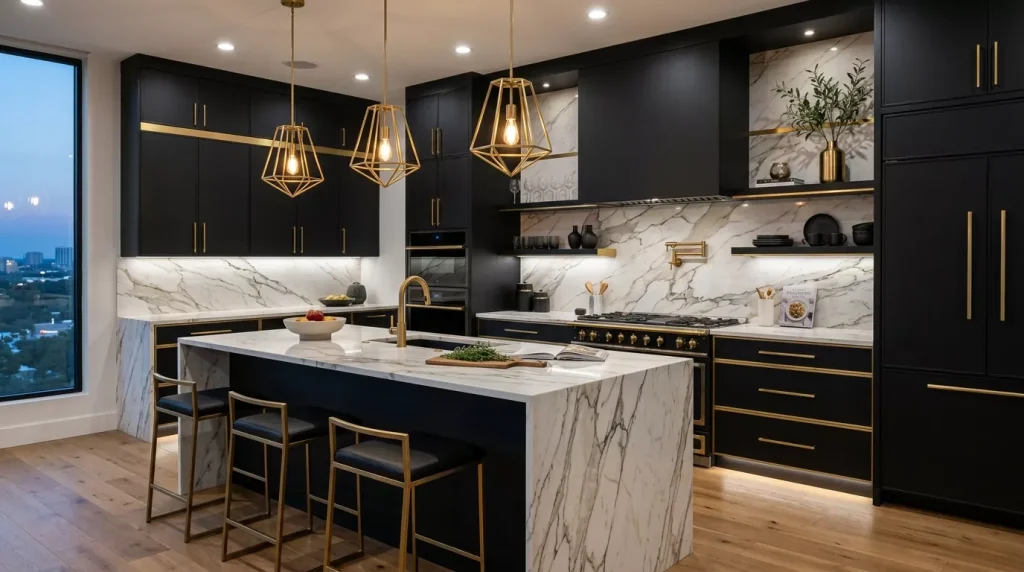
9. Paint in Thin Coats
Thick coats lead to drips, runs, and long drying times. Thin coats dry faster, level better, and give a smoother finish.
How to do it: Apply multiple thin coats rather than one thick coat. Three thin coats are better than two thick ones. Let each coat dry completely before applying the next.
Why it works: Thin coats dry evenly and self-level. They’re less likely to drip or sag.
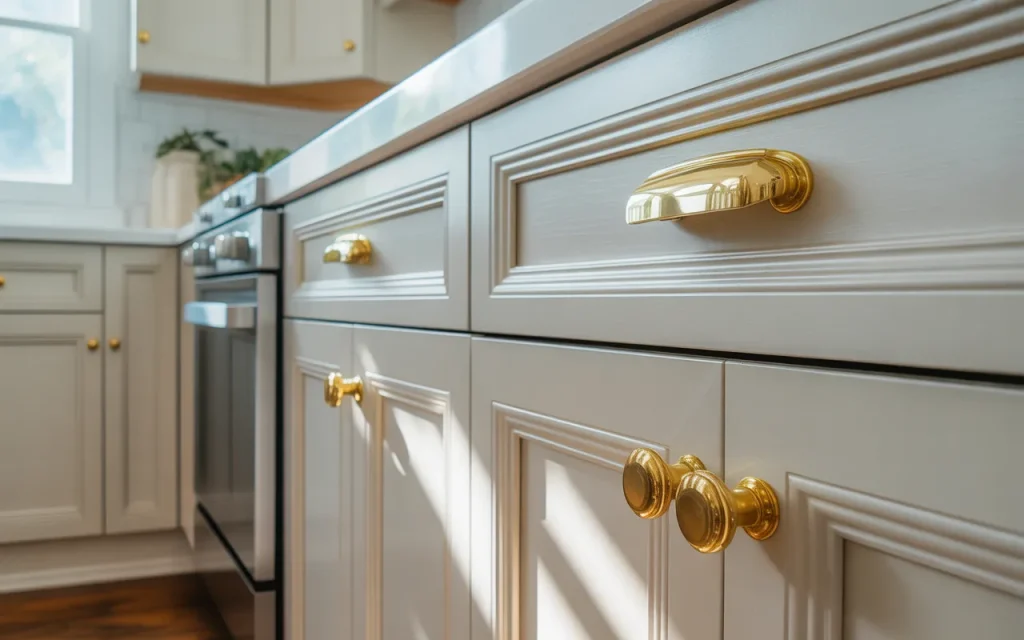
10. Label Everything
Putting cabinets back together is a puzzle if you don’t label. Labeling saves hours of frustration.
How to do it: Label each door and drawer with its location (upper left, lower right, etc.). Label hinges and hardware. Use painter’s tape and a marker. Take photos before disassembly.
Why it works: Labels eliminate guesswork. Reassembly becomes quick and easy.
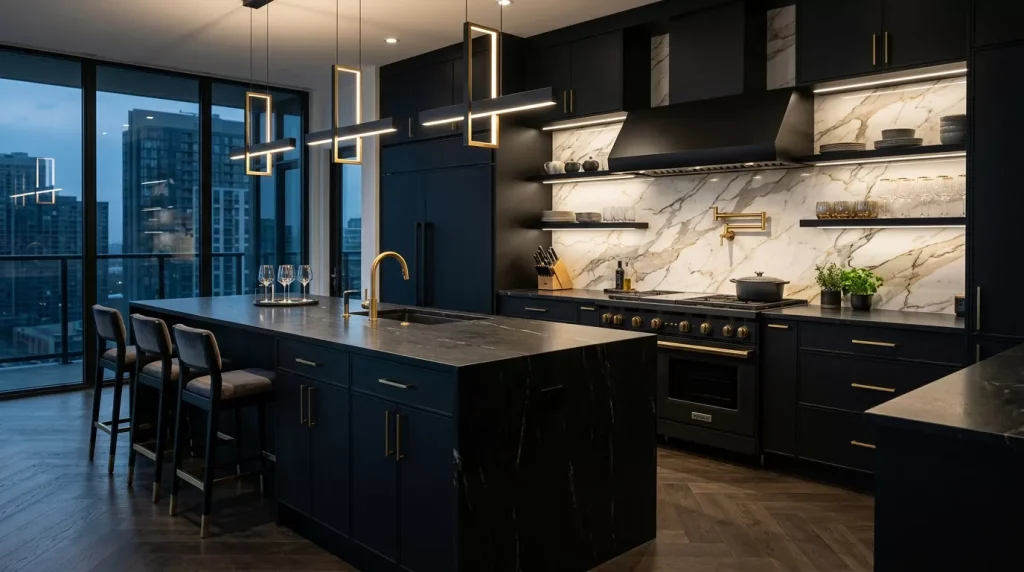
11. Paint the Frames First
Painting the frames before hanging doors makes the job easier. You can access all surfaces without doors in the way.
How to do it: Paint the cabinet frames first. Let them dry completely. Then paint doors and drawers separately. Rehang doors after all pieces are dry.
Why it works: Painting frames without doors is faster and gives better coverage. You can reach corners and edges easily.
12. Work in a Clean Area
Dust, pet hair, and debris ruin a fresh paint job. A clean workspace is essential.
How to do it: Set up a clean area for painting doors and drawers. Cover surfaces with drop cloths. Vacuum before you start. Keep pets and kids away until paint is dry.
Why it works: A clean workspace prevents dust and debris from settling in wet paint. Your finish will be smooth and professional.
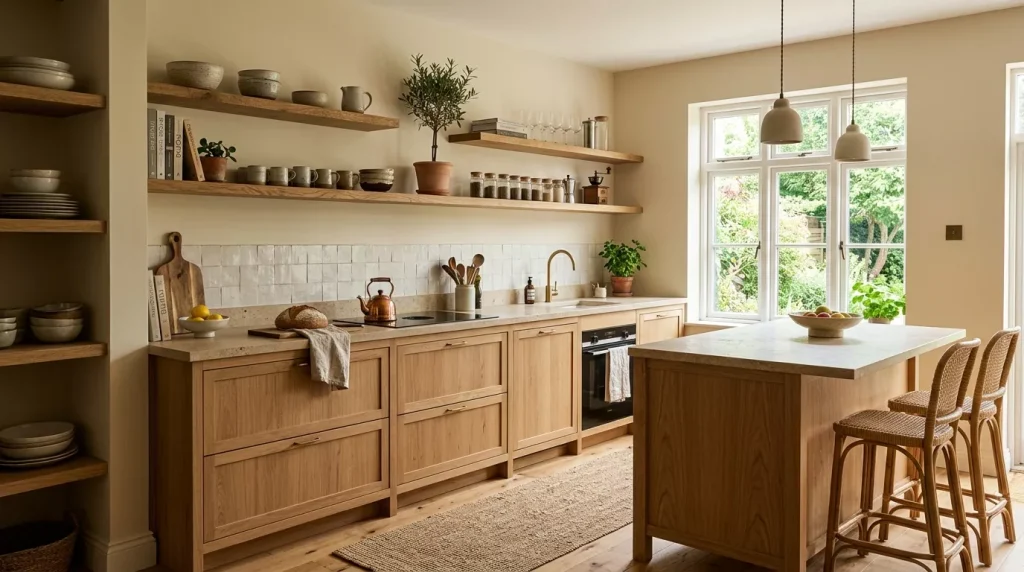
13. Let Paint Cure Completely
Paint may feel dry to the touch in a few hours, but it’s not fully cured. Using cabinets too soon can damage the finish.
How to do it: Let paint dry for 24 hours between coats. Let final coat cure for 3-7 days before using cabinets. Be gentle for the first few weeks.
Why it works: Fully cured paint is hard, durable, and resistant to chipping and scratching. Rushing leads to damage.
14. Update Hardware
New hardware is the finishing touch. Old hardware on newly painted cabinets looks dated. New hardware completes the transformation.
How to do it: Choose hardware that fits your new style — matte black for modern, brass for traditional, brushed nickel for transitional. Use the existing holes if possible. Fill and drill new holes if needed.
Why it works: New hardware adds polish and ties the whole look together. It’s a small investment with a big impact.
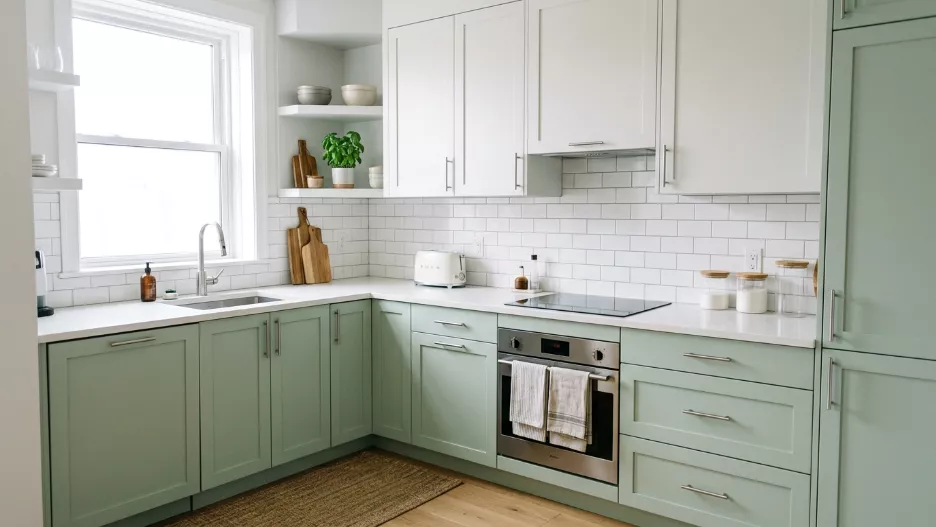
15. Consider Two-Tone Cabinets
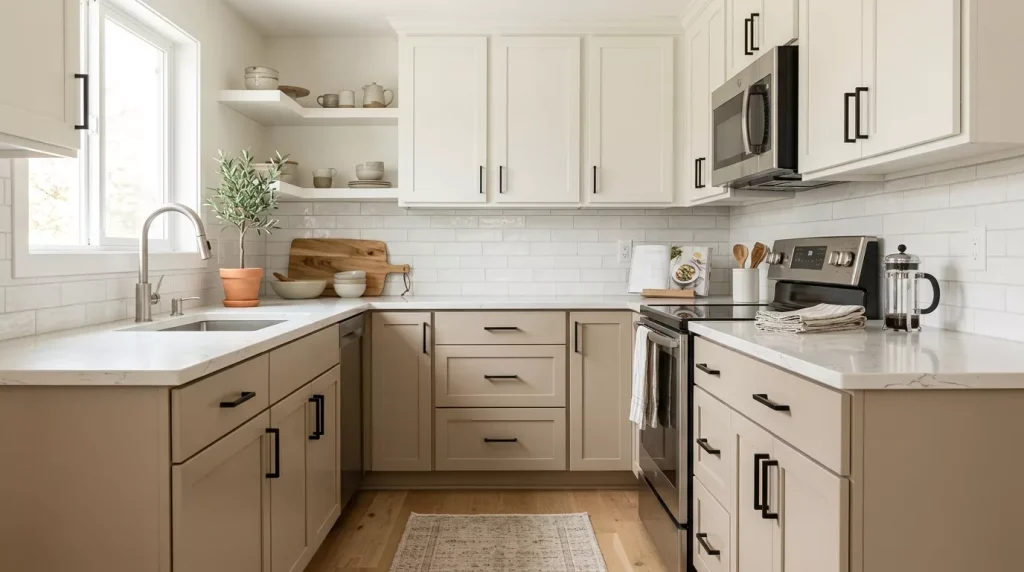
Two-tone cabinets are a popular trend that adds visual interest. Paint upper cabinets one color, lowers another.
How to do it: Paint upper cabinets white or light colors. Paint lower cabinets a darker accent color — navy, green, charcoal. This creates depth and keeps the kitchen from feeling heavy.
Why it works: Two-tone cabinets add dimension. Dark lowers ground the space, light uppers keep it airy.
Paint Type Comparison Table
| Paint Type | Durability | Finish | Best For |
|---|---|---|---|
| Acrylic Alkyd | Excellent | Smooth, self-leveling | Most cabinets |
| Enamel | Excellent | Hard, durable | High-use cabinets |
| Latex | Good | Easy to apply | DIY beginners |
| Chalk Paint | Fair | Matte, distressed | Farmhouse style |
Common Mistakes to Avoid
Mistake 1: Skipping Cleaning
Grease and grime prevent paint adhesion. Paint will peel if surfaces aren’t clean.
How to fix: Clean thoroughly with a degreaser. Rinse well. Let dry completely before sanding or priming.
Mistake 2: Skipping Primer
Primer is not optional. It ensures adhesion, blocks stains, and creates a uniform base.
How to fix: Always use a high-quality primer designed for cabinets. Apply one or two coats.
Mistake 3: Using the Wrong Paint
Wall paint is not durable enough for cabinets. Flat paint shows every mark.
How to fix: Use acrylic alkyd or enamel paint. Choose semi-gloss or satin finish.
Mistake 4: Rushing Drying Time
Applying coats too quickly leads to peeling and poor adhesion.
How to fix: Let each coat dry 24 hours. Let final coat cure 3-7 days before heavy use.
Mistake 5: Not Sanding Between Coats
Skipping sanding leads to a rough finish with visible brush marks and imperfections.
How to fix: Lightly sand with 220 grit between coats. Wipe away dust before applying the next coat.
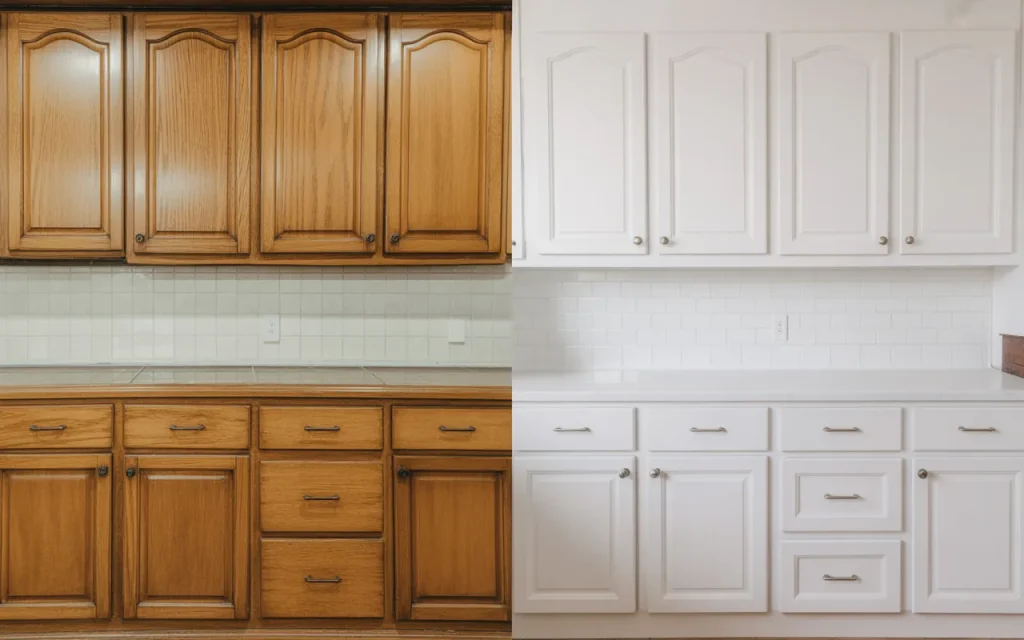
Before & After: Painting Kitchen Cabinets
Before:
The Wilsons had a 1990s kitchen with dated oak cabinets, brass hardware, and a dark, heavy feel. A full renovation was out of budget, but the kitchen felt old and tired.
The Problem:
The oak cabinets were in good structural shape but looked dated. The golden oak color made the kitchen feel dark. The brass hardware added to the dated look.
The Changes:
- Removed all doors and hardware
- Cleaned with degreaser, sanded lightly
- Applied two coats of stain-blocking primer
- Applied three thin coats of white acrylic alkyd paint
- Sanded between each coat
- Installed new matte black hardware
- Painted the island a deep navy for contrast
After:
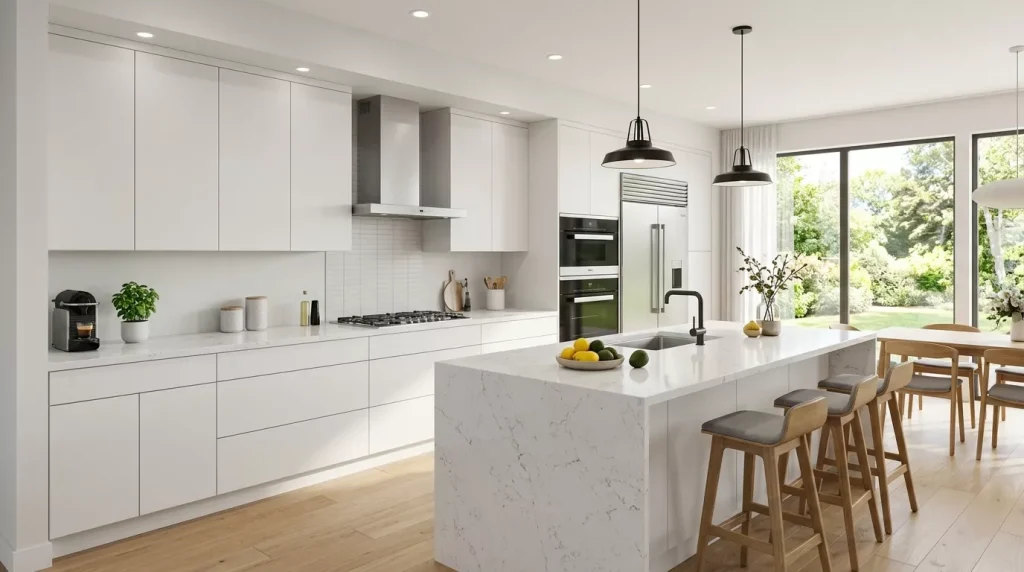
The kitchen looks brand new. The white cabinets brighten the space. The navy island adds depth and interest. The project cost under $500 — a fraction of a full renovation. The Wilsons saved over $15,000 and have a kitchen they love.
Budget vs. Luxury: Cabinet Painting on Any Budget
Budget-Friendly Options:
- DIY Project: Do it yourself to save labor costs — $200-500
- Roll and Brush: No sprayer needed — $200-400
- Paint Only: Use existing hardware — $100-300
- One Color: Paint all cabinets same color — $200-500
Splurge-Worthy Investments:
- Hire a Pro: Professional painters for flawless finish — $2000-5000
- Paint Sprayer: Buy or rent a high-quality sprayer — $200-800
- New Hardware: Upgrade all knobs and pulls — $100-500
- Two-Tone: Additional color for island or lowers — $50-100 more
Cabinet Type Guide: Painting Tips by Cabinet Material
Oak Cabinets:
- Challenge: Heavy grain shows through paint
- Solution: Use grain filler before priming. Apply stain-blocking primer to prevent tannin bleed-through. Multiple coats may be needed.
Laminate Cabinets:
- Challenge: Smooth surface resists paint adhesion
- Solution: Use a bonding primer designed for laminate. Sand lightly to create texture. Use high-quality paint.
Painted Cabinets:
- Challenge: Old paint may be peeling or chipping
- Solution: Scrape loose paint. Sand to smooth edges. Prime bare spots. Paint with fresh color.
Stained Cabinets:
- Challenge: Stain may bleed through light paint
- Solution: Use a high-quality stain-blocking primer. Two coats may be needed.
Frequently Asked Questions
Q: How much does it cost to paint kitchen cabinets?
A: DIY costs $200-500 for materials. Professional painting costs $2000-5000 depending on kitchen size and location.
Q: How long does it take to paint kitchen cabinets?
A: DIY takes 3-7 days including drying time. Professional work takes 2-4 days.
Q: Do I need to sand cabinets before painting?
A: Yes, light sanding creates adhesion. You don’t need to remove the old finish, just scuff it up.
Q: What is the best paint for kitchen cabinets?
A: Acrylic alkyd or enamel paint in semi-gloss or satin finish. These are durable, washable, and self-leveling.
Q: Can I paint laminate cabinets?
A: Yes, with the right preparation. Use a bonding primer designed for laminate. Sand lightly to create texture.
Q: How do I get a smooth finish without brush marks?
A: Use a paint sprayer for the smoothest finish. If using a brush and roller, use a foam roller and apply thin coats. Sand between coats.
Conclusion
Painting your kitchen cabinets is one of the most rewarding DIY projects you can do. It’s affordable, transformative, and can make an outdated kitchen feel brand new.
The key is preparation. Clean thoroughly, sand, prime, use quality paint, and apply thin coats. Take your time, and you’ll get professional results.
Whether you’re updating a 1990s oak kitchen or refreshing your current cabinets, this project is worth the effort. A weekend of work can save you thousands of dollars and give you a kitchen you’ll love for years.
Ready to paint your cabinets? Start by choosing your color, gathering supplies, and clearing a workspace. Your dream kitchen is waiting.