15 Corner Kitchen Pantry Ideas That Maximize Dead Space

Corner Kitchen Pantry Ideas That Maximize Dead Space
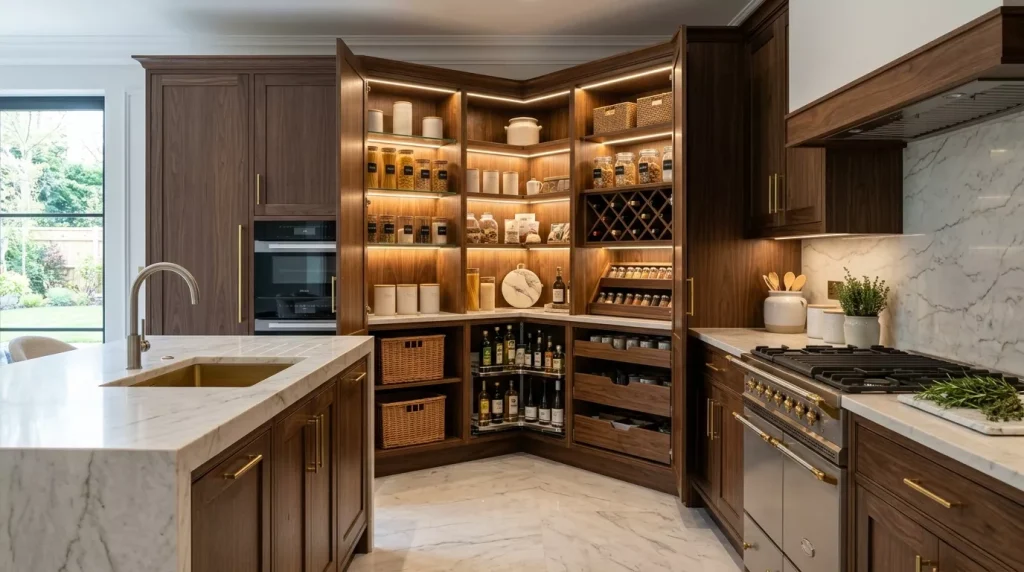
That empty corner in your kitchen. You know the one. It’s awkward, hard to reach, and probably collecting dust. What if that dead space could become your favorite storage spot?
A corner kitchen pantry transforms wasted square footage into valuable food storage. Whether you have a small reach-in corner or space for a walk-in, there’s a solution that fits your kitchen.
In this guide, I’ll share 15 corner kitchen pantry ideas to help you use every inch of your kitchen. From simple shelves to custom built-ins, you’ll find the perfect solution for your space.
1. Angled Corner Cabinet Pantry
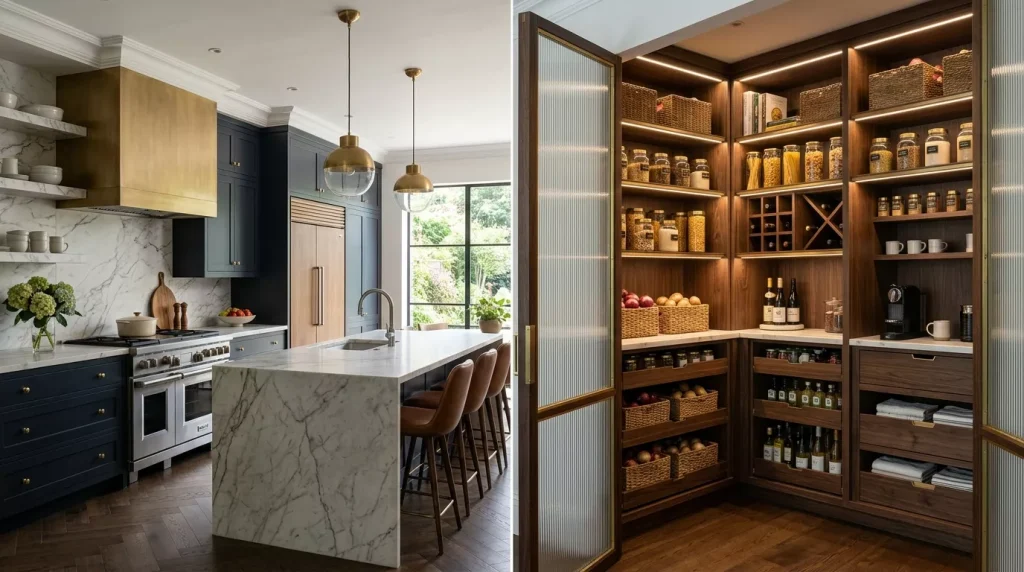
An angled corner cabinet fits into the corner at a 45-degree angle, turning dead space into valuable storage. The angled front makes contents accessible without deep reaching.
How to do it: Install a pre-fab corner cabinet or have one custom-built. Use pull-out shelves or a lazy susan inside. Match the door to your existing cabinets for a seamless look.
Why it works: The angled face brings the contents forward. You can see everything without crawling into a dark corner.
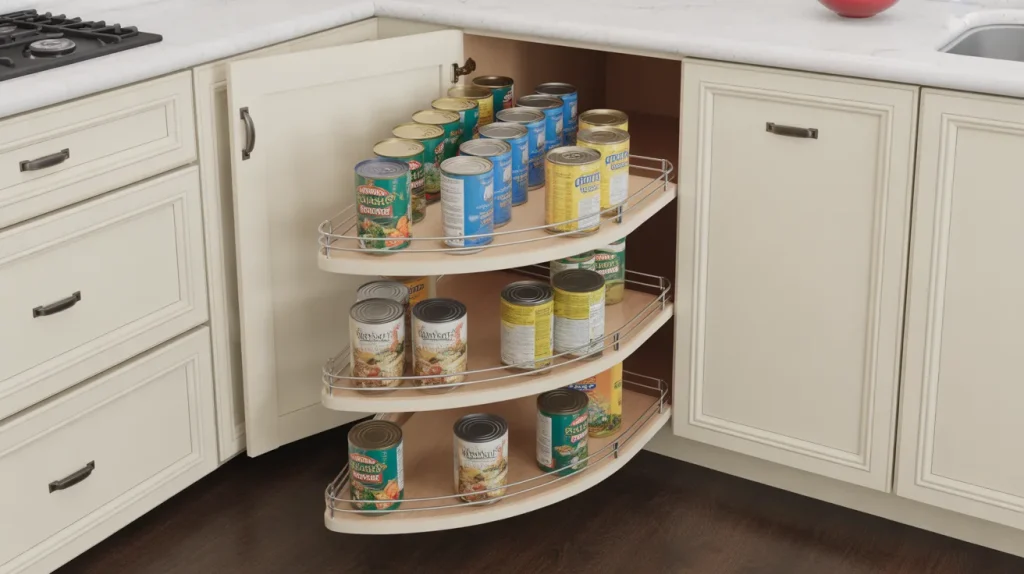
2. Pull-Out Corner Shelves
Pull-out shelves bring the contents of a deep corner to you. No more kneeling and reaching into a dark abyss.
How to do it: Install pull-out shelving units in your existing corner cabinet. Look for systems that slide out completely, giving you full access to the back.
Why it works: Pull-out shelves eliminate wasted space. You can reach everything without straining or emptying shelves.
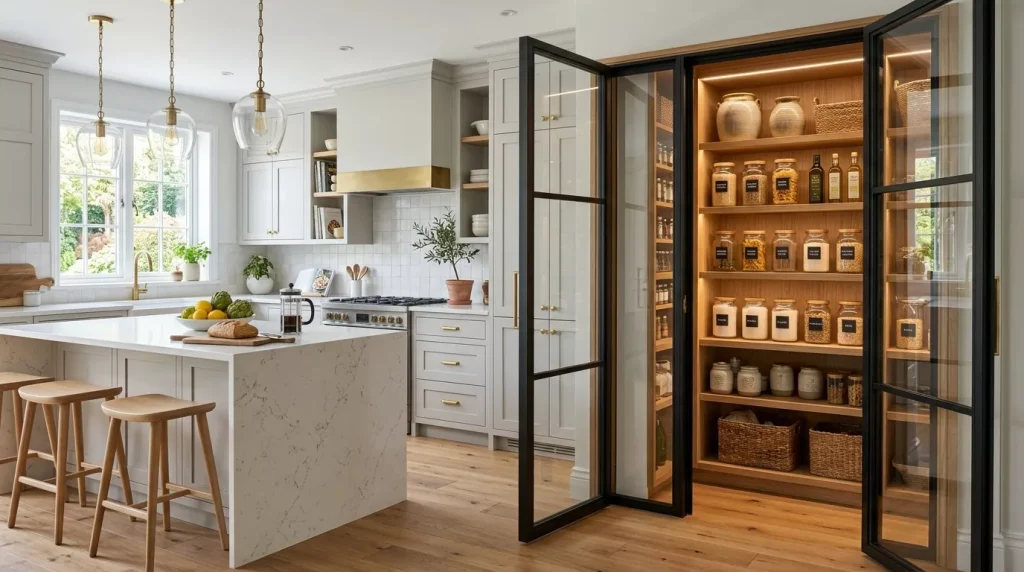
3. Lazy Susan Corner Pantry
A lazy susan is the classic corner solution. Shelves that rotate bring items to you with a simple spin.
How to do it: Install a lazy susan system in a corner cabinet. Choose a full-circle or D-shaped model depending on your cabinet. Use non-slip liners to keep items from sliding.
Why it works: Lazy susans make every item accessible. Spin to the back, grab what you need, and spin back.
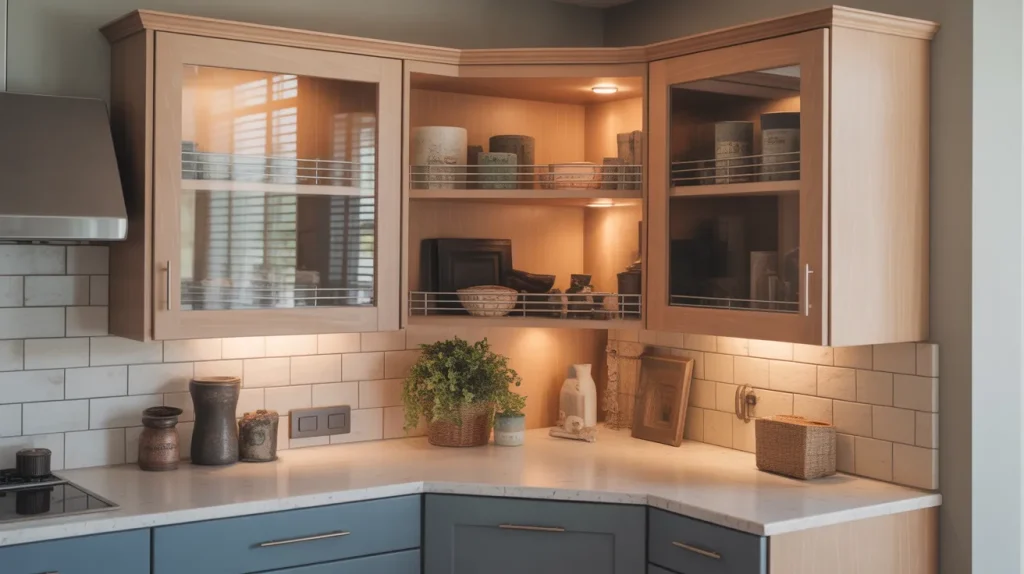
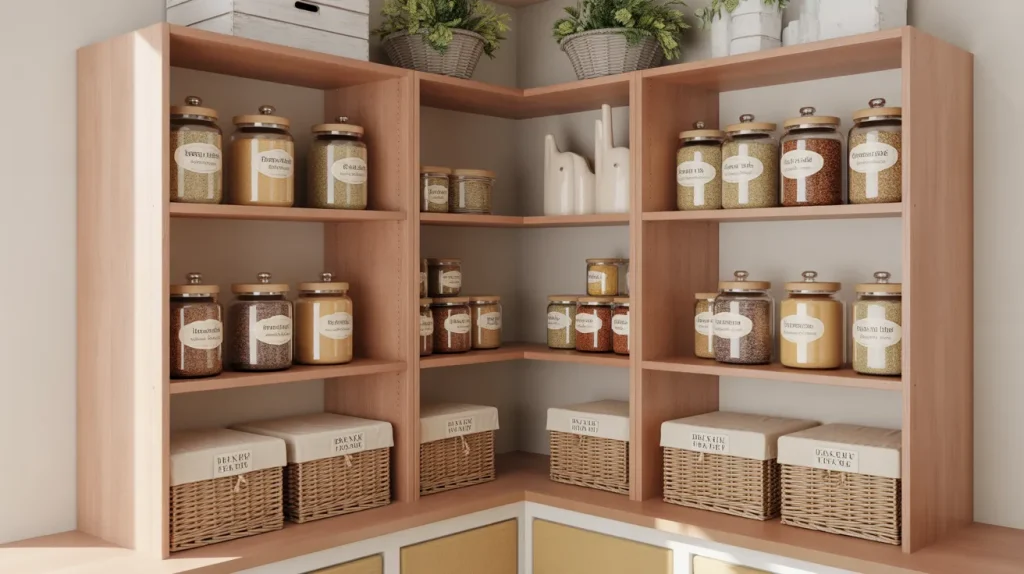
4. Open Corner Shelves
Open shelving in a corner creates an accessible pantry without doors. It’s perfect for displaying pretty jars and frequently used items.
How to do it: Install open shelves in a corner alcove. Use matching glass jars for dry goods. Keep shelves organized and visually appealing since they’re always visible.
Why it works: Open shelves are easy to use and make a design statement. They’re perfect for small kitchens where you want an open, airy feel.
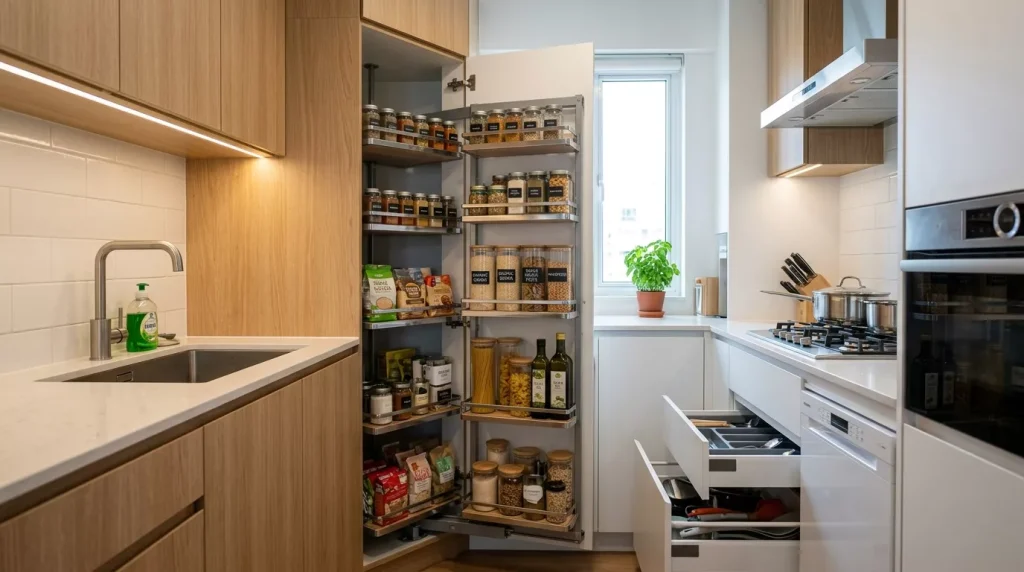
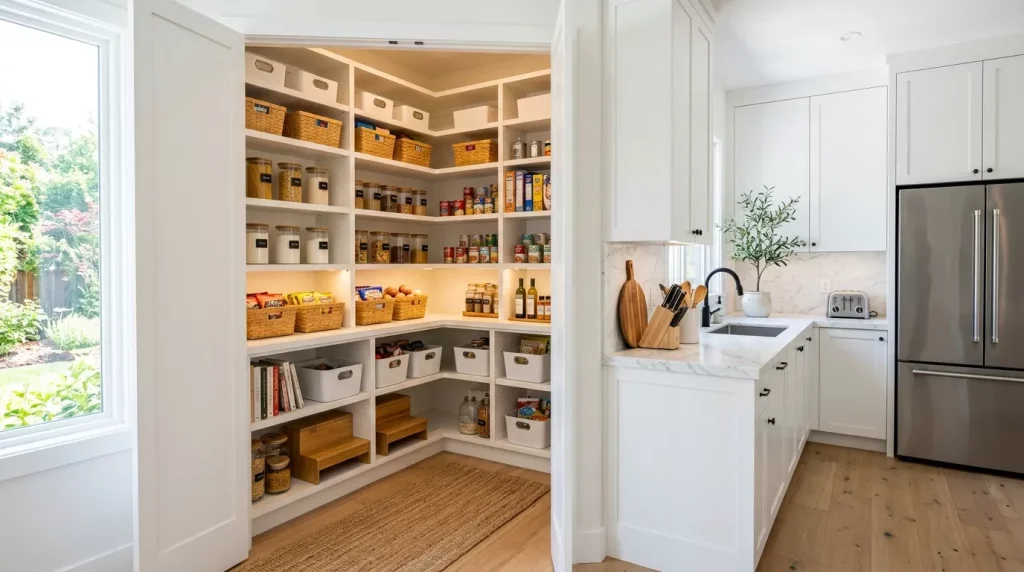
5. Walk-In Corner Pantry
If you have space, a walk-in corner pantry is the ultimate storage solution. It turns an unused corner into a dedicated pantry room.
How to do it: Frame out a corner space. Install a door that matches your kitchen. Add floor-to-ceiling shelving inside. Use pull-out drawers for lower shelves.
Why it works: A walk-in pantry gives you the storage of a small room. It’s perfect for bulk shopping, small appliances, and keeping your kitchen clutter-free.
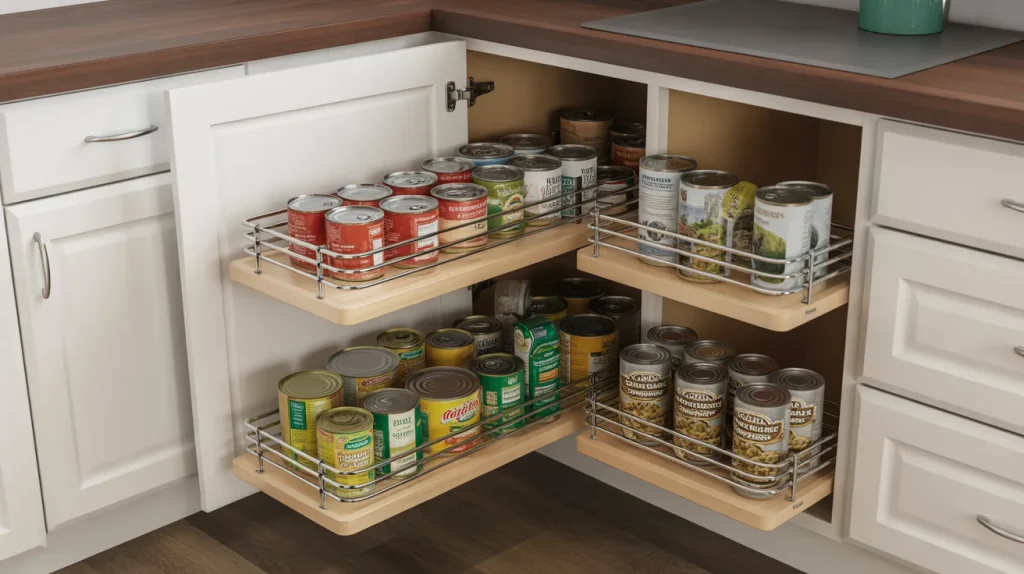
6. Glass Door Corner Pantry
A glass-front door turns your corner pantry into a display feature. It adds elegance while keeping contents visible.
How to do it: Install a corner cabinet with a glass door. Use frosted glass for a softer look. Keep contents organized and visually appealing.
Why it works: Glass doors add light and elegance. They encourage you to keep your pantry organized since it’s partially visible.
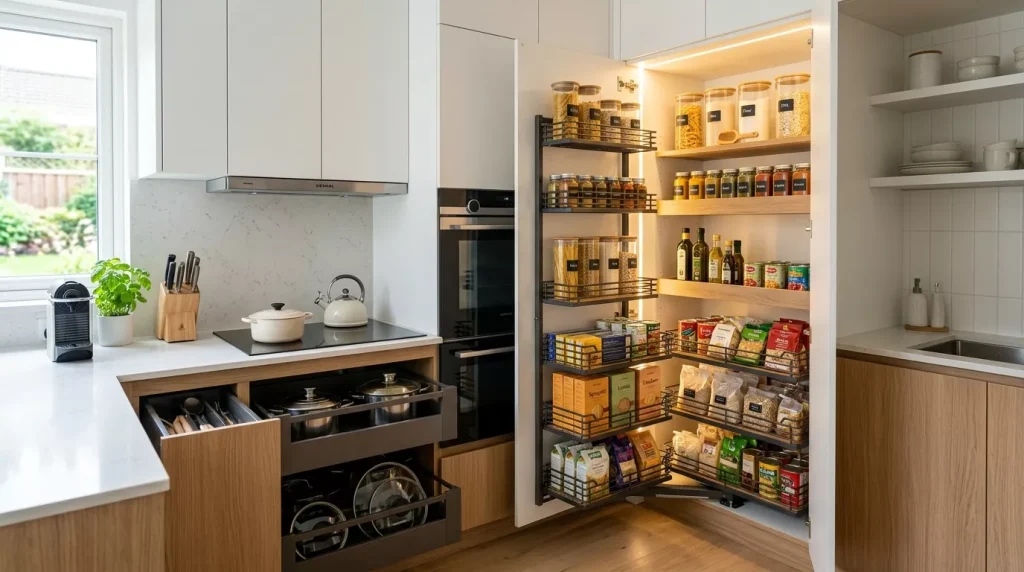
7. Recessed Corner Pantry
If you have space between wall studs, a recessed corner pantry uses that dead space without taking floor space.
How to do it: Cut into the wall between two studs. Install shallow shelves (about 6 inches deep). Add a flush door that matches the wall.
Why it works: Recessed pantries use space you didn’t know you had. They’re perfect for spices, canned goods, and small jars.
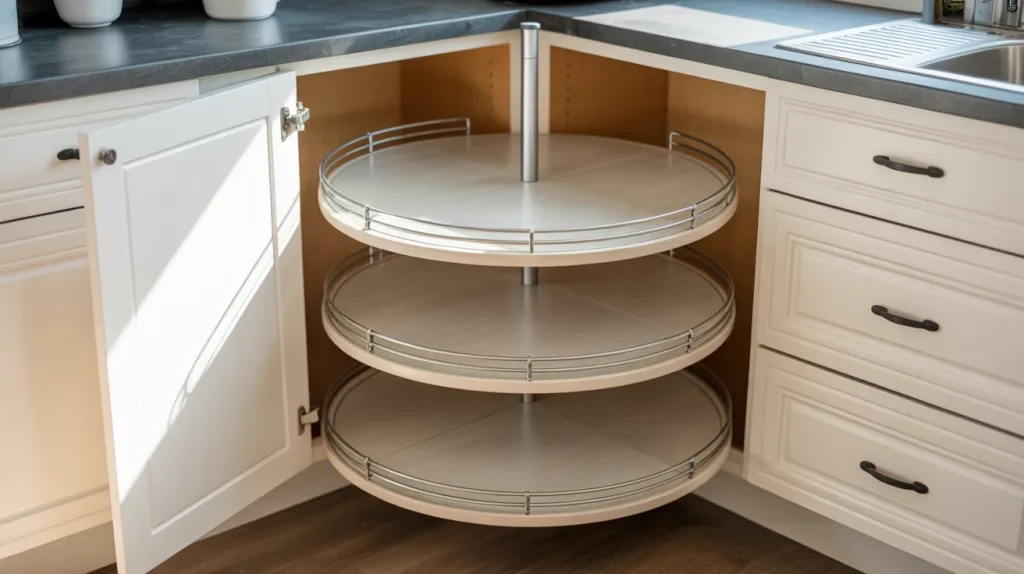
8. Corner Pantry with Barn Door
A sliding barn door saves space and adds farmhouse charm. It’s perfect for corner pantries where a swinging door would be awkward.
How to do it: Install a barn door track above your pantry opening. Choose a door that matches your style. Inside, install floor-to-ceiling shelving.
Why it works: Barn doors slide, not swing. They save floor space and add architectural interest.
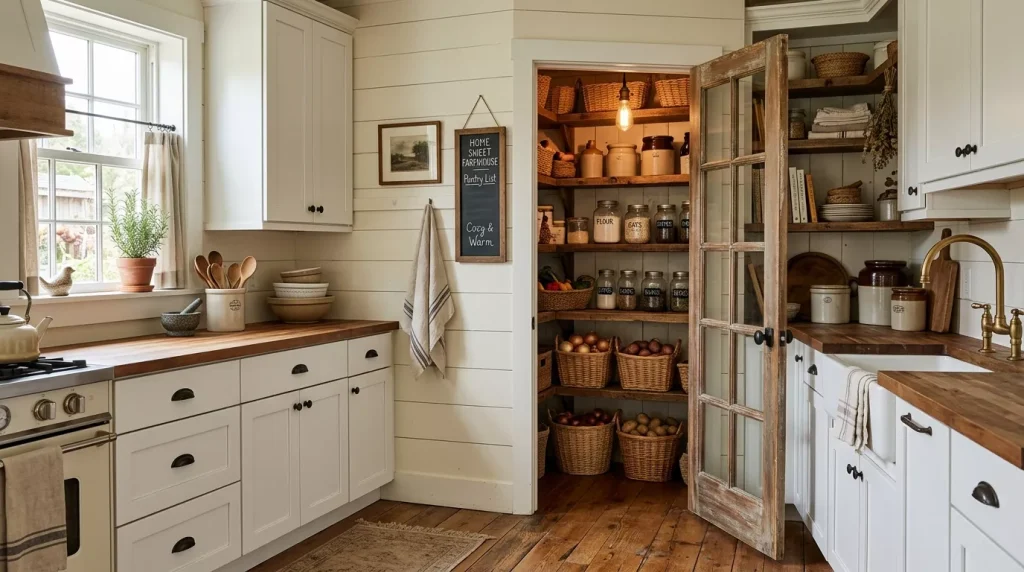
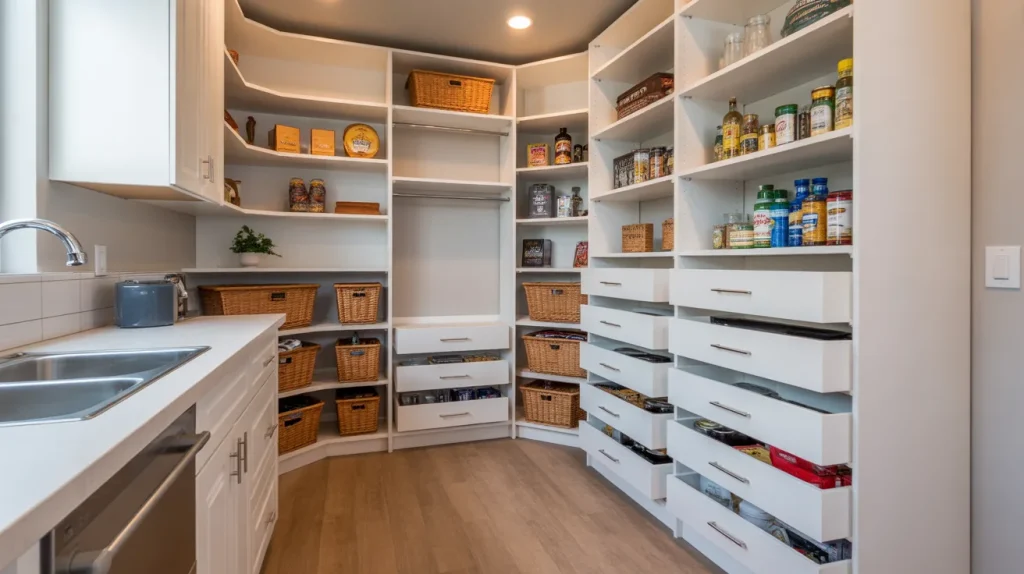
9. Pull-Out Corner Drawers
Pull-out drawers make every inch of a corner accessible. They’re perfect for canned goods, spices, and small items.
How to do it: Install full-extension pull-out drawers in your corner cabinet. Use dividers to keep items organized. Label each drawer for easy identification.
Why it works: Drawers bring items to you. No more reaching or kneeling. Everything is visible at a glance.
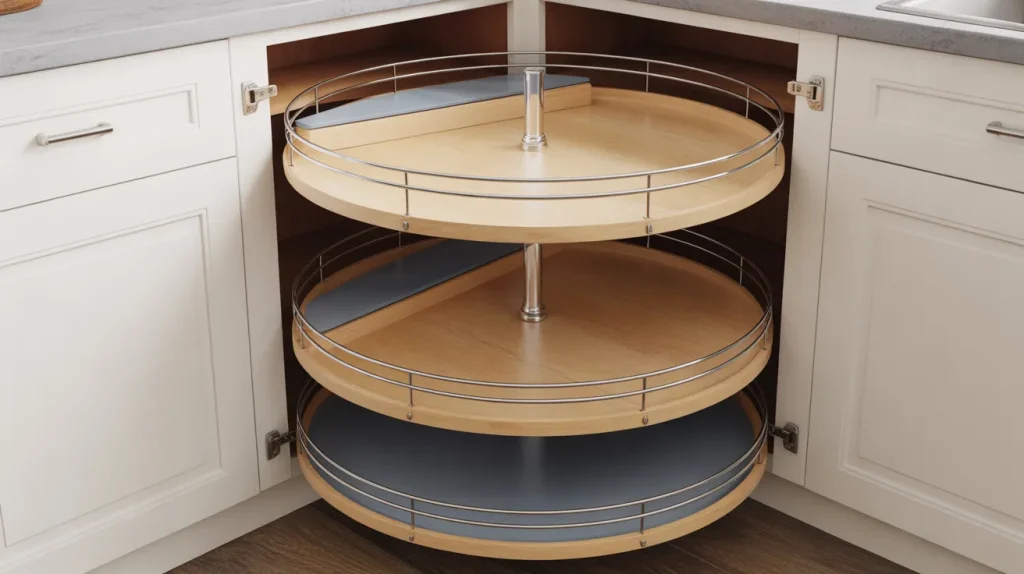
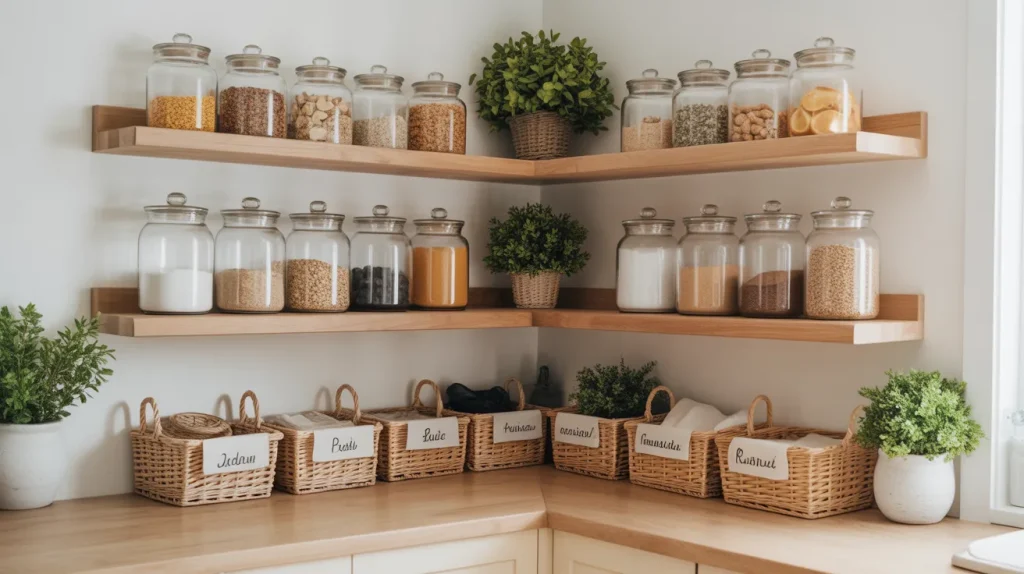
10. Corner Pantry with Baskets
Baskets add texture and organization to an open corner pantry. They’re perfect for corralling like items and adding farmhouse charm.
How to do it: Install open shelves in a corner. Use matching baskets to hold produce, snacks, or bulk items. Label each basket for easy finding.
Why it works: Baskets hide clutter while adding style. They’re easy to pull out and carry to the counter.
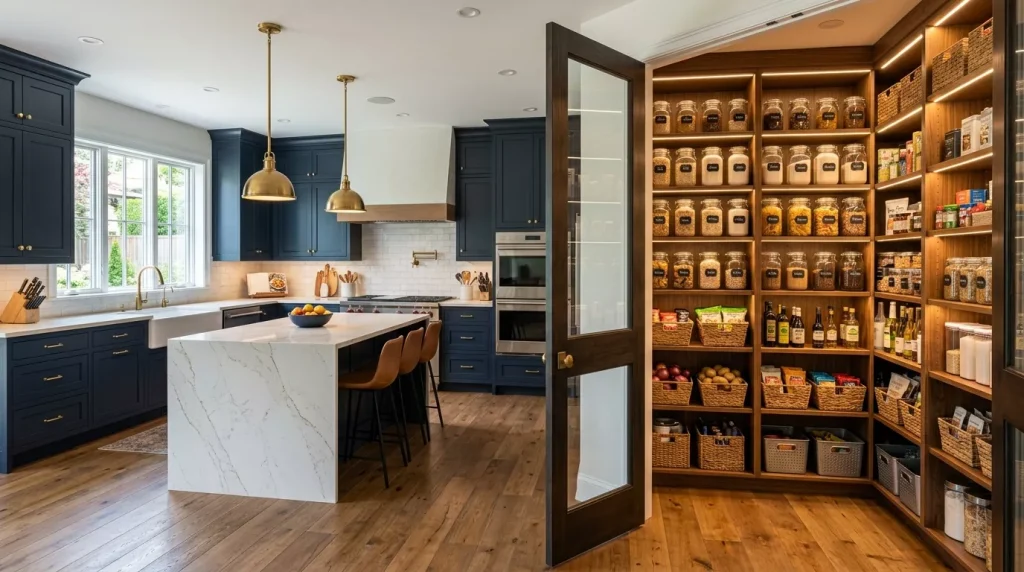
11. Floor-to-Ceiling Corner Shelves
Use every inch of vertical space with floor-to-ceiling corner shelves. They’re perfect for kitchens with high ceilings.
How to do it: Install shelves from floor to ceiling in a corner alcove. Use the top shelves for less frequently used items. Add a rolling ladder for access if needed.
Why it works: Vertical storage maximizes space. Floor-to-ceiling shelves double your storage capacity.
12. Corner Pantry with Pull-Out Spice Racks
Narrow spaces are perfect for pull-out spice racks. They fit in the smallest gaps and keep spices visible and accessible.
How to do it: Install narrow pull-out racks in the gap beside your corner pantry. Use them for spices, oils, or small jars. Label each shelf for easy identification.
Why it works: Narrow pull-outs use space you’d otherwise waste. They’re perfect for spices and small items.
13. Corner Pantry with Appliance Garage
Combine pantry storage with an appliance garage for a multi-functional corner. Hide small appliances while keeping them accessible.
How to do it: Install a corner cabinet with a lift-up door. Use the lower shelves for pantry items. Use the upper section for a stand mixer, toaster, or coffee maker.
Why it works: Appliance garages keep counters clear. Combining with pantry storage maximizes function.
14. Corner Pantry with Under-Shelf Lighting
Good lighting makes a corner pantry usable. Under-shelf lighting illuminates dark corners and helps you find what you need.
How to do it: Install battery-operated LED strip lights under each shelf. Use motion-sensor lights that turn on when you open the door.
Why it works: Lighting transforms a dark corner into a usable space. You can see everything at a glance.
15. Corner Pantry with Chalkboard Door
A chalkboard door adds function and personality. Use it for grocery lists, meal plans, or kids’ drawings.
How to do it: Paint the pantry door with chalkboard paint. Add a chalk tray for convenience. Inside, install organized shelving.
Why it works: A chalkboard door is both practical and personal. It turns a functional space into a family command center.
Color Combination Table
| Color | Works Well With | Best Used For |
|---|---|---|
| White | Any | Cabinets, shelves, walls |
| Wood Tones | White, cream, black | Shelves, baskets, accents |
| Black | White, brass, wood | Hardware, door, accents |
| Cream | White, wood, beige | Cabinets, walls |
Common Mistakes to Avoid
Mistake 1: Not Using Pull-Outs
Deep corners without pull-outs become black holes. Items get lost in the back.
How to fix: Install pull-out shelves, lazy susans, or drawers. Bring the back to the front.
Mistake 2: Forgetting Lighting
Corner pantries are often dark. Poor lighting makes them hard to use.
How to fix: Add under-shelf lighting. Use motion-sensor lights. Paint interior white to reflect light.
Mistake 3: Wasting Vertical Space
Empty space above the top shelf is wasted storage.
How to fix: Add shelves all the way to the ceiling. Use the top for less frequently used items.
Mistake 4: No Organization System
A corner pantry without organization becomes a jumbled mess.
How to fix: Use baskets, bins, and labels. Group like items together. Keep a system.
Mistake 5: Wrong Door Style
A swinging door in a tight corner can block access.
How to fix: Use sliding, pocket, or barn doors. Choose a door that works with your space.
Before & After: Transforming a Corner Pantry
Before:
The Millers had a deep corner cabinet that was impossible to use. Items got lost in the back. They kept buying duplicates because they couldn’t see what they had. The corner was wasted space.
The Problem:
No pull-outs, no organization, no lighting. The corner was a black hole where food went to be forgotten.
The Changes:
- Installed a lazy susan system
- Added under-shelf LED lighting
- Used clear glass jars for dry goods
- Added pull-out spice racks on the side
- Painted the interior white
- Labeled everything
After:
The corner pantry is now the most used storage in the kitchen. Everything is visible and accessible. No more lost items or duplicate purchases. The Millers can’t believe they lived without it.
Budget vs. Luxury: Corner Pantry on Any Budget
Budget-Friendly Options:
- Open Shelves: DIY shelves in corner alcove — $50-150
- Lazy Susan: Pre-fab rotating shelf — $50-200
- Clear Jars: Uniform jars for dry goods — $20-50
- Baskets: Matching baskets from discount stores — $30-80
- Chalkboard Paint: Paint existing door — $10-30
Splurge-Worthy Options:
- Custom Pull-Outs: Full-extension drawer system — $300-1000
- Built-In Walk-In: Framed and finished pantry — $2000-5000
- Glass Door Cabinet: Custom with interior lighting — $500-1500
- Barn Door: Sliding door with hardware — $300-800
- Professional Organization: Custom shelving and bins — $500-2000
Pantry Size Guide: Best Solution for Your Space
Small Corner (24-36 inches):
- Best solutions: Lazy susan, open shelves, pull-out spice racks
- Why: Small corners need smart solutions. Lazy susans maximize access in tight spaces.
Medium Corner (36-48 inches):
- Best solutions: Angled cabinet, pull-out shelves, glass door
- Why: Medium corners can handle more substantial storage. Pull-outs make everything accessible.
Large Corner (48+ inches):
- Best solutions: Walk-in pantry, floor-to-ceiling shelves, barn door
- Why: Large corners can become true walk-in pantries. Use the space for bulk storage and small appliances.
Frequently Asked Questions
Q: How do I make a corner pantry more accessible?
A: Use pull-out shelves, lazy susans, or drawers. Add lighting. Keep frequently used items at eye level.
Q: What’s the best way to organize a corner pantry?
A: Group like items together. Use clear containers. Label everything. Keep heavy items on lower shelves.
Q: Can I add a corner pantry to an existing kitchen?
A: Yes. Use a corner cabinet with pull-outs, add open shelves, or convert an unused corner with a custom built-in.
Q: How deep should corner pantry shelves be?
A: Standard shelves are 12-24 inches deep. For pull-outs, measure to fit your cabinet. For open corners, 12 inches is comfortable.
Q: What door style is best for a corner pantry?
A: Sliding or barn doors save space. Angled cabinet doors bring contents forward. Choose based on your space.
Q: How do I keep a corner pantry from becoming cluttered?
A: Use baskets and bins. Label everything. Keep a system. Do a quick purge seasonally.
Conclusion
That empty corner in your kitchen isn’t a problem — it’s an opportunity. With the right solution — a lazy susan, pull-out shelves, open shelving, or even a walk-in pantry — you can transform dead space into valuable storage.
Your kitchen deserves a pantry that works. No more lost items. No more duplicate purchases. No more wasted space.
Ready to tackle that corner? Start by measuring your space, choosing a solution, and creating a system. Your perfect corner pantry is waiting.