Washing Machine Clean Tips | That Remove Odors and Grime

Introduction
Does your washing machine smell musty? Are your clothes coming out less than fresh? Do you see black gunk around the door seal?
You’re not alone. A washing machine that looks clean on the outside can be hiding mold, mildew, and bacteria on the inside. And when your machine is dirty, your clothes don’t get truly clean.
Here’s the truth: washing machines need to be cleaned. Just like any appliance, they accumulate dirt, soap scum, and bacteria over time. Left uncleaned, they develop musty odors that transfer to your laundry.
The good news? Cleaning your washing machine is easy, inexpensive, and takes less than an hour. With a few simple steps, you can remove odors, eliminate buildup, and keep your machine running efficiently.
In this guide, I’ll share 15 washing machine clean tips to keep your washer fresh and your laundry truly clean.
Let’s get started.
1. Run a Hot Cycle with Vinegar
White vinegar is a natural cleaner that breaks down soap scum, eliminates odors, and kills bacteria. It’s safe for your machine and the environment.
How to do it: Set your machine to the hottest, largest cycle. Add 2 cups of white vinegar to the detergent dispenser or directly into the drum. Let the cycle run. The vinegar will clean the inside of the machine without harsh chemicals.
Why it works: Vinegar is acidic, which breaks down alkaline soap residue. It also kills mold and bacteria naturally.

2. Run a Second Cycle with Baking Soda
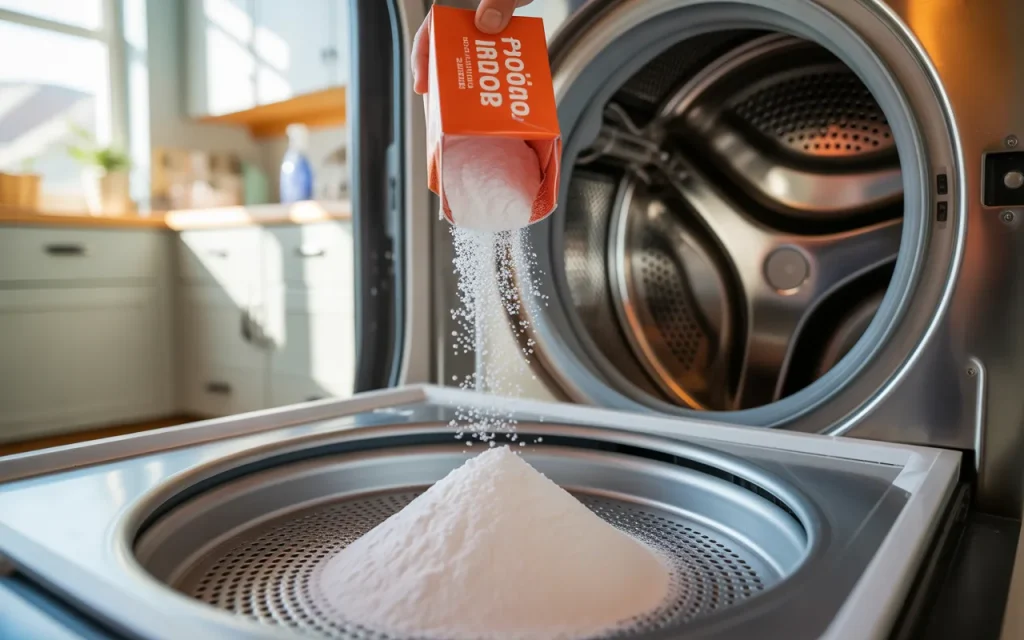
After the vinegar cycle, run another hot cycle with baking soda. Baking soda neutralizes odors and removes any remaining residue.
How to do it: After the vinegar cycle, add 1/2 cup of baking soda to the drum. Run another hot cycle. This will remove any lingering smells and leave your machine fresh.
Why it works: Baking soda neutralizes odors and acts as a gentle abrasive to remove buildup.
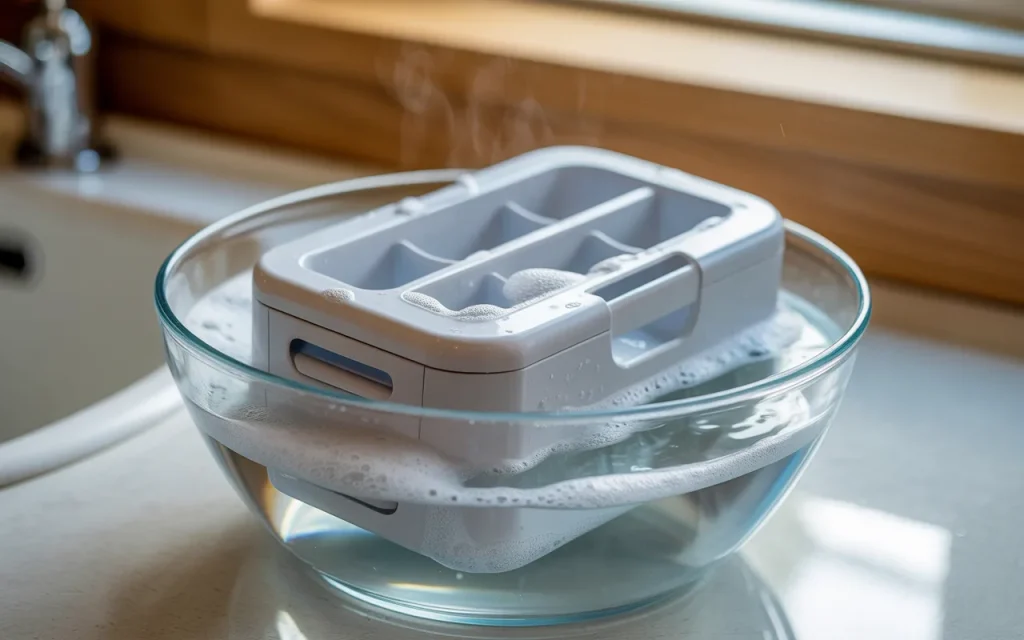
3. Clean the Detergent Dispenser
The detergent dispenser is a prime spot for mold and soap scum. It needs regular cleaning.
How to do it: Remove the dispenser drawer if possible. Soak it in hot, soapy water for 15 minutes. Scrub with an old toothbrush to remove buildup. Rinse and dry thoroughly before replacing.
Why it works: Detergent residue builds up in the dispenser, creating a breeding ground for mold. Regular cleaning prevents this.
4. Clean the Rubber Door Seal (Front-Load)
The rubber door seal on front-load washers traps moisture, leading to black mold and mildew. This is the most common source of washer odor.
How to do it: Pull back the rubber seal and check for buildup. Use a solution of 1 part bleach to 4 parts water. Apply with a cloth or old toothbrush. Scrub thoroughly, then wipe clean. Leave the door open after cleaning to air dry.
Why it works: The rubber seal holds moisture. Cleaning it removes existing mold and prevents future buildup.
5. Wipe Down the Drum and Door
After each cycle, moisture remains in the drum and on the door. Wiping them down prevents mold and keeps your machine fresh.
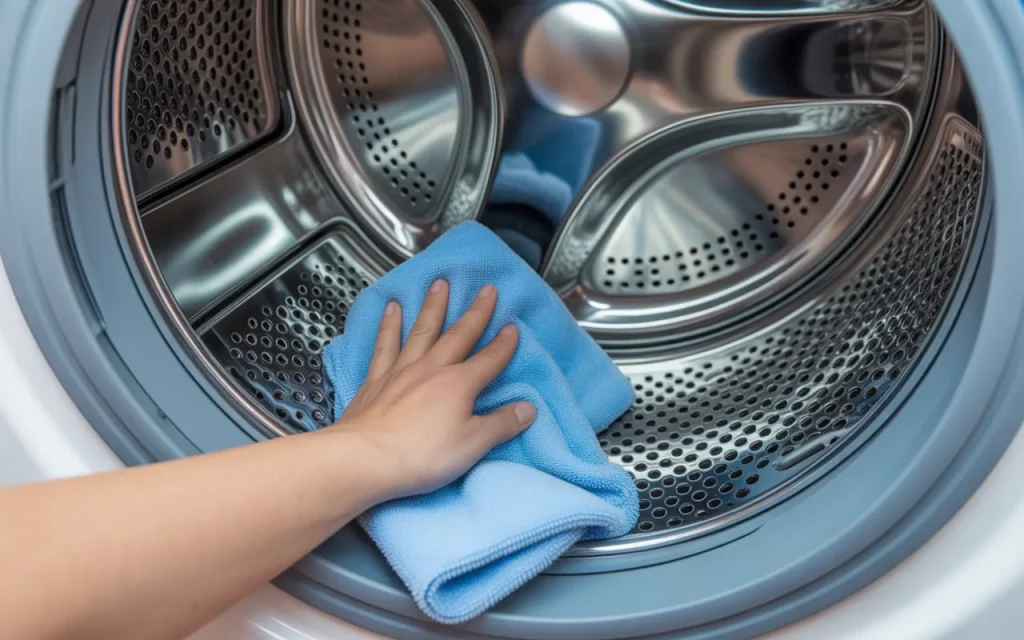
How to do it: Keep a microfiber cloth near your washer. After each load, wipe the drum and door. Leave the door open to air out.
Why it works: Mold needs moisture to grow. Removing moisture after each cycle prevents mold from forming.
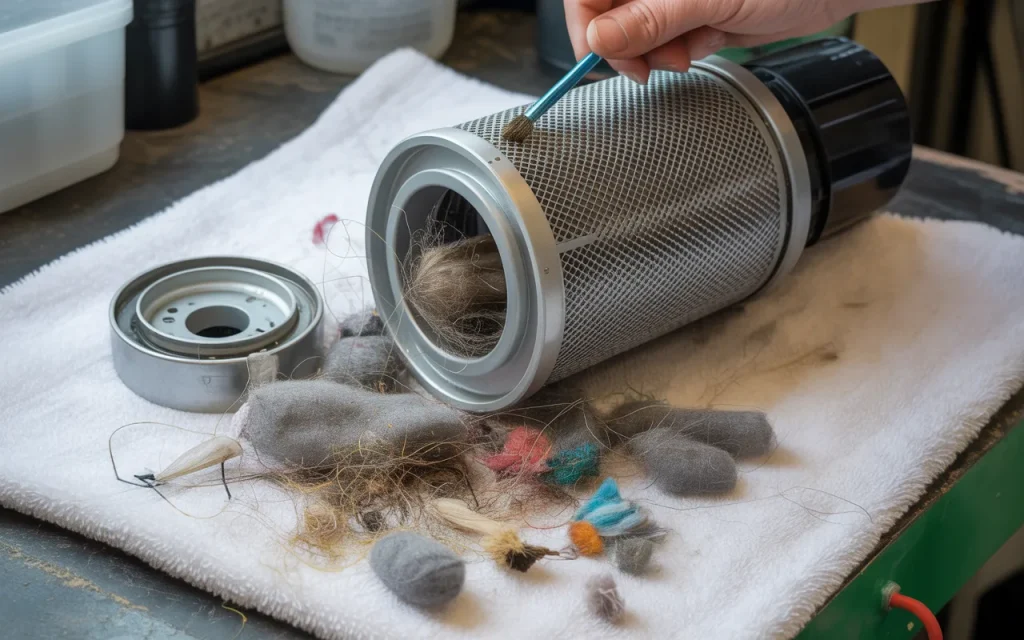
6. Clean the Drain Pump Filter (Front-Load)
Front-load washers have a drain pump filter that collects lint, coins, and debris. A clogged filter can cause drainage issues and odors.
How to do it: Locate the filter cover (usually at the bottom front). Place a towel underneath to catch water. Remove the filter and clean out debris. Rinse the filter, replace, and close.
Why it works: A clean filter ensures proper drainage and prevents stagnant water from causing odors.
7. Leave the Door Open Between Loads
Front-load washers need to air out. Closing the door traps moisture, creating the perfect environment for mold.
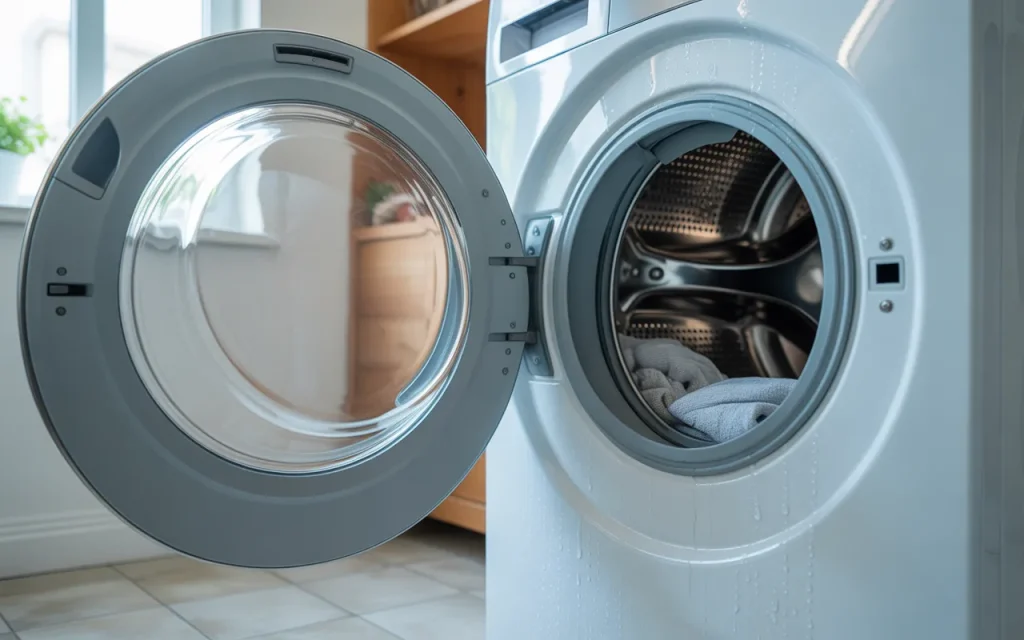
How to do it: After each load, leave the door slightly open. This allows air to circulate and dry the inside. Make it a habit.
Why it works: Mold can’t grow without moisture. Air circulation prevents moisture from building up.
8. Use Less Detergent
Too much detergent creates excess suds that don’t rinse away completely. The residue builds up in your machine and on your clothes.
How to do it: Use only the recommended amount of detergent. For high-efficiency machines, use HE detergent and follow the guidelines. More detergent doesn’t mean cleaner clothes.
Why it works: Excess detergent leaves residue that traps dirt and bacteria. Using less keeps your machine cleaner.
9. Use HE Detergent in Front-Load Machines
High-efficiency (HE) detergent is specially formulated for front-load washers. It produces fewer suds and rinses more completely.
How to do it: Always use HE detergent in front-load machines. Look for the HE symbol on the bottle. Regular detergent creates too many suds for front-loaders.
Why it works: HE detergent is designed to work with the low water levels of front-load machines. It leaves less residue.
10. Clean the Lint Filter (Top-Load)
Top-load washers have a lint filter that needs regular cleaning. A clogged filter can cause odors and poor performance.
How to do it: Locate the lint filter (often in the agitator or top rim). Remove it and clean off lint and debris. Rinse and replace.
Why it works: Lint traps odors and bacteria. Regular cleaning keeps your machine fresh.
11. Use a Washing Machine Cleaner
Commercial washing machine cleaners are formulated to remove buildup and odors. They’re a convenient option when you want a thorough clean.
How to do it: Follow the package instructions. Typically, you add the cleaner to the drum and run a hot cycle. Some cleaners also work in the dispenser.
Why it works: Commercial cleaners are specifically designed for washing machines. They can reach areas that DIY methods might miss.
12. Remove Clothes Promptly
Leaving wet clothes in the washer is a recipe for musty odors. Mold and mildew can start growing in as little as a few hours.
How to do it: Set a timer to remind yourself to move laundry promptly. If clothes do get musty, rewash them with vinegar to remove the smell.
Why it works: Wet clothes left in the washer create moisture that leads to odors. Prompt removal keeps everything fresh.
13. Use a Dehumidifier in Your Laundry Room
If your laundry room is damp, your washer may struggle to dry out. A dehumidifier can help.
How to do it: Place a small dehumidifier in your laundry room. Run it regularly to reduce moisture in the air.
Why it works: Less humidity in the room means less moisture in your washer. Your machine will dry faster between loads.
14. Clean the Water Inlet Filters
The water inlet filters on your washer can become clogged with sediment, reducing water flow and affecting cleaning performance.
How to do it: Turn off the water supply. Disconnect the hoses. Remove the small screens inside the inlet valves. Clean with a toothbrush and rinse. Reattach and turn water back on.
Why it works: Clean filters ensure proper water flow. Better water flow means better cleaning and less residue.
15. Schedule Regular Deep Cleans
One deep clean isn’t enough. Schedule regular cleaning sessions to keep your washer fresh.
How to do it: Clean your washer once a month with a vinegar cycle. Clean the door seal and dispenser monthly. Check the filter every few months. Make it part of your cleaning routine.
Why it works: Regular maintenance prevents buildup before it becomes a problem. A little effort each month keeps your washer fresh for years.

Cleaning Method Comparison Table
| Method | Best For | Frequency | Effort |
|---|---|---|---|
| Vinegar Cycle | General cleaning, odors | Monthly | Low |
| Baking Soda Cycle | Odor neutralization | Monthly | Low |
| Door Seal Cleaning | Mold removal | Monthly | Medium |
| Dispenser Cleaning | Soap scum buildup | Monthly | Low |
| Filter Cleaning | Drainage issues | Every 3-6 months | Medium |
| Commercial Cleaner | Deep clean | Quarterly | Low |
Common Mistakes to Avoid
Mistake 1: Closing the Door After Every Load
Closing the door traps moisture, creating the perfect environment for mold and mildew.
How to fix: Leave the door slightly open after each load. This allows air to circulate and the inside to dry completely.
Mistake 2: Using Too Much Detergent
Excess detergent doesn’t rinse away completely. It builds up in your machine and on your clothes.
How to fix: Use the recommended amount. For HE machines, use HE detergent and follow the guidelines. Less is often more.
Mistake 3: Ignoring the Door Seal
The rubber door seal on front-load washers is a prime spot for mold. Ignoring it leads to musty odors.
How to fix: Clean the seal monthly. Pull back the rubber and scrub away any buildup. Wipe dry after cleaning.
Mistake 4: Forgetting the Filter
A clogged filter can cause drainage issues and odors. Many people don’t even know their washer has a filter.
How to fix: Locate your washer’s filter (check the manual). Clean it every 3-6 months. Keep a towel handy — water will come out.
Mistake 5: Using Regular Detergent in Front-Loaders
Regular detergent creates too many suds for front-load machines. The suds don’t rinse away completely.
How to fix: Always use HE detergent in front-load washers. Look for the HE symbol on the bottle.
Before & After: Cleaning a Smelly Washer
Before:
Maria’s front-load washer had a musty smell that was transferring to her clothes. No matter how much detergent she used, her laundry came out smelling damp. She was embarrassed by the smell and considered buying a new machine.
The Problem:
The rubber door seal had black mold buildup. The dispenser was clogged with old detergent. The drain filter hadn’t been cleaned in years. She’d been closing the door after every load, trapping moisture inside.
The Changes:
- Ran a hot cycle with 2 cups of vinegar
- Ran a second hot cycle with baking soda
- Cleaned the rubber door seal with bleach solution
- Soaked and scrubbed the detergent dispenser
- Cleaned the drain pump filter (found coins and lint)
- Started leaving the door open after every load
After:
The musty smell is completely gone. Maria’s clothes come out fresh and clean. She no longer dreads doing laundry. The cleaning took less than an hour and saved her from buying a new machine.
Budget vs. Luxury: Washing Machine Cleaning on Any Budget
Budget-Friendly Options:
- White Vinegar: Affordable and effective — $3-5
- Baking Soda: Cheap and versatile — $2-4
- Bleach: For door seal cleaning — $3-5
- Old Toothbrush: For scrubbing — free
- Microfiber Cloth: For wiping — $5-10
Splurge-Worthy Options:
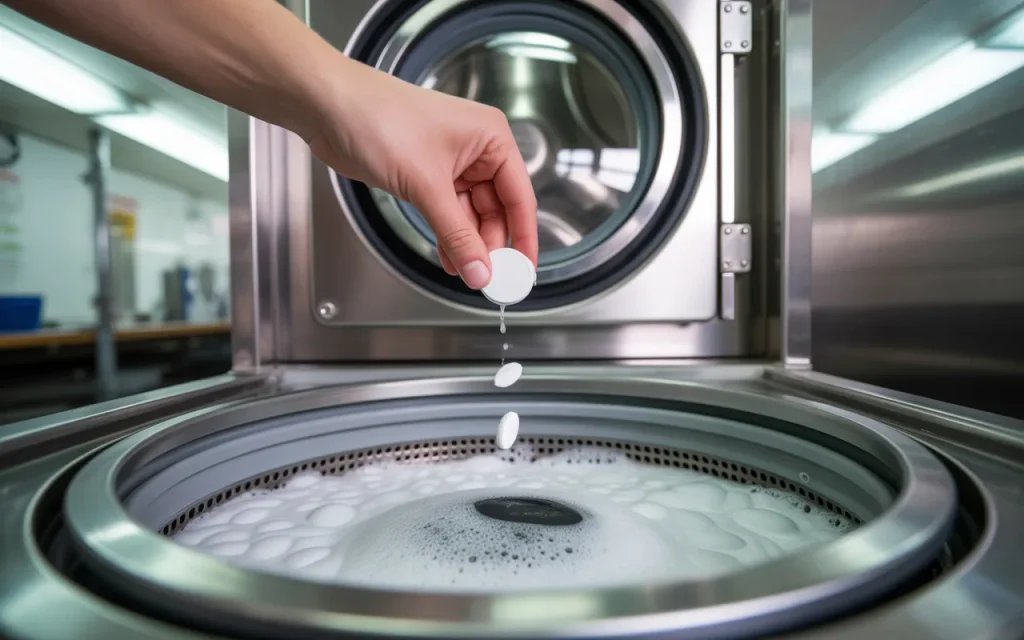
- Commercial Washer Cleaner: Pre-measured tablets — $10-20 for a pack
- HE Detergent: Quality detergent designed for your machine — $15-30
- Dehumidifier: For damp laundry rooms — $100-300
- Professional Cleaning Service: For deep cleaning — $100-200
Machine Type Guide: Cleaning by Washer Type
Front-Load Washer:
- Key areas: Door seal, detergent dispenser, drain filter
- Best practices: Leave door open between loads, clean seal monthly, use HE detergent
- Frequency: Monthly vinegar cycle, quarterly filter cleaning
Top-Load Washer (HE):
- Key areas: Drum, lint filter, detergent dispenser
- Best practices: Use HE detergent, clean lint filter regularly
- Frequency: Monthly vinegar cycle, bimonthly filter cleaning
Top-Load Washer (Traditional):
- Key areas: Drum, agitator, lint filter
- Best practices: Use appropriate detergent, clean lint filter
- Frequency: Monthly vinegar cycle, bimonthly filter cleaning
Frequently Asked Questions
Q: Why does my washing machine smell musty?
A: Musty smells usually come from mold or mildew in the rubber door seal, detergent dispenser, or drain filter. Leaving the door closed between loads traps moisture and encourages growth.
Q: How often should I clean my washing machine?
A: Run a cleaning cycle once a month. Clean the door seal and dispenser monthly. Clean the filter every 3-6 months.
Q: Can I use bleach to clean my washing machine?
A: Yes, bleach is effective for cleaning and disinfecting. Use 1/2 cup in a hot cycle. But don’t mix bleach with vinegar — it creates toxic fumes.
Q: How do I remove black mold from the door seal?
A: Mix 1 part bleach with 4 parts water. Apply to the seal with a cloth or old toothbrush. Scrub thoroughly, then wipe clean. Leave the door open to dry.
Q: Why are my clothes coming out with a smell even after washing?
A: Your washing machine is likely dirty. Run a cleaning cycle, clean the door seal, and clean the filter. Also, don’t leave wet clothes in the washer.
Q: Can I use vinegar and baking soda together?
A: Not in the same cycle. They neutralize each other. Use vinegar in one cycle, then baking soda in a second cycle for best results.
Conclusion
A clean washing machine means clean clothes. It’s that simple. Musty odors, residue on clothes, and poor performance are all signs your washer needs attention.
But keeping your machine clean doesn’t have to be complicated. A monthly vinegar cycle, regular door seal cleaning, and leaving the door open between loads are all it takes to keep your washer fresh.
Your washing machine works hard for you. Give it a little care, and it will keep your clothes clean and fresh for years to come.
Ready to clean your washing machine? Start today — run a vinegar cycle, wipe down the door seal, and leave the door open. Your fresh-smelling laundry will thank you.