Japandi Bathroom Ideas for a Serene, Stylish Space

Some bathrooms feel like an obligation. You get in, you get out, and you try not to look too closely at the grout.

A Japandi bathroom is the opposite. It’s the kind of room that makes you want to slow down — to stand under warm water for an extra minute, to actually use the nice soap, to breathe.
Japandi bathroom ideas sit at the intersection of two design philosophies that seem like they were always meant to meet: Japanese wabi-sabi and Scandinavian hygge. One finds beauty in imperfection and nature. The other chases warmth, function, and democratic simplicity. Together, they create bathrooms that feel like a ritual — not a chore.
What Is Japandi Style — and Why Does It Work So Well in Bathrooms?
Japandi is a design fusion that emerged in the last decade as designers noticed how naturally Japanese and Scandinavian aesthetics complement each other.
Both traditions share core values:

- Respect for natural materials — wood, stone, linen, clay
- Restrained color palettes — warm neutrals, muted earth tones, soft blacks
- Functional beauty — every object earns its place
- Craftsmanship over mass production — quality you can feel when you touch a surface
- Intentional emptiness — space itself becomes a design element
In a bathroom specifically, these principles solve real problems. Bathrooms are often small, prone to clutter, and visually chaotic with all their hardware, bottles, and fixtures. Japandi strips away the noise and replaces it with calm, considered design.

Essential Japandi Bathroom Ideas — Element by Element
Let’s break this down by each component. This way, you can tackle your bathroom piece by piece, or plan a full renovation with a clear vision.
1. The Vanity — Floating, Warm, and Uncomplicated
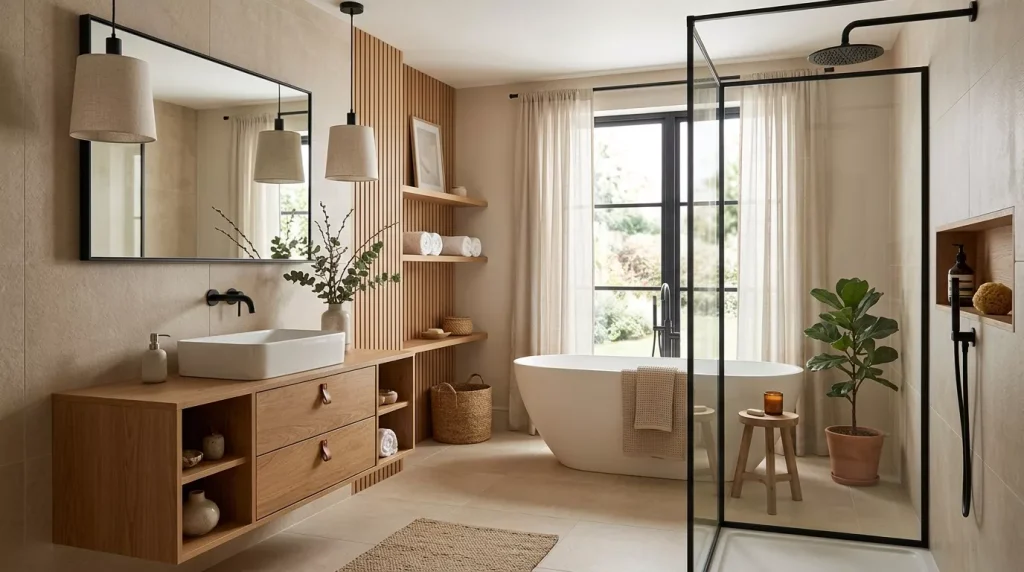
The vanity sets the tone for the entire bathroom. In a Japandi space, it should be floating (wall-mounted) to create visual lightness and expose more floor area.
Material: Light-toned natural wood is the classic choice — white oak, ash, or birch. The grain should be visible and the finish matte or lightly oiled, never glossy lacquer. For a darker, more Japanese-leaning option, walnut works beautifully.
Hardware: Either no visible handles (push-to-open drawers) or simple pulls in matte black, brushed brass, or raw iron.

Countertop: A natural stone surface — honed marble, concrete, or terrazzo — in a warm neutral. Avoid stark white Carrara. Look for stones with warm undertones — cream, sand, soft gray with amber veining.
Sink: An above-counter vessel basin in matte ceramic, natural stone, or even concrete gives the vanity that sculptural, handmade quality that defines Japandi.
2. The Bathtub — A Centerpiece of Calm
If your space allows it, a freestanding bathtub is the ultimate Japandi statement. Think of it as functional sculpture.
The ideal options:
- A Japanese-inspired soaking tub (ofuro) — deeper than Western tubs, designed for full immersion. Available in hinoki wood (traditional) or modern stone composite.
- An oval freestanding tub in matte white, natural stone, or concrete. Avoid high-gloss acrylic — the matte finish is essential.
- A simple built-in tub with a wooden bath tray across it, lined with candles and a plant. Even a standard tub becomes Japandi with the right accessories and surround.

Position the tub near a window if possible. Natural light falling across water and stone is one of those details that transforms a bathroom from nice to transcendent.
3. The Shower — Clean Lines, Warm Materials
A walk-in shower with minimal hardware is the Japandi ideal. Floor-to-ceiling glass (or no door at all in a wet-room design) keeps the space feeling open.
Key design choices:
4. Lighting — Soft, Warm, and Layered

Harsh bathroom lighting destroys any sense of calm. In a Japandi bathroom, lighting should feel like it’s barely there — present but never aggressive.
- Natural light is the priority. If you have a window, use frosted glass or a simple linen Roman shade — never heavy curtains.
- Ambient: Recessed ceiling lights on a dimmer, or a single sculptural pendant in paper, woven rattan, or frosted glass (think Akari-style lanterns).
- Task: Backlit mirrors are perfect — they provide even, shadow-free light for grooming without adding a visible fixture. Wall sconces in ceramic or matte metal flanking the mirror also work.
- Accent: A battery-operated candle on the tub tray or a warm LED strip beneath the floating vanity adds depth.
5. Storage — Hidden, Thoughtful, and Minimal

Visible clutter is the fastest way to ruin a Japandi bathroom. Every product, every towel, every tool needs a considered home.
Solutions that work:
- Medicine cabinet recessed into the wall behind the mirror — invisible when closed
- Floating vanity drawers with interior organizers (bamboo dividers are ideal)
- Woven baskets (seagrass, rattan, or jute) on open shelves for rolled towels
- Wall-mounted hooks in matte black or wood for daily-use towels and robes
- A single open shelf in natural wood — styled with two or three objects maximum
The editing principle: if you wouldn’t display it in a gallery, it goes behind a door.

6. Accessories and Finishing Touches
Japandi accessories are few, but each one counts. Here’s what belongs:
- A wooden bath tray across the tub — holding a candle, a plant, or a book
- Ceramic soap dishes and dispensers in earth tones — handmade if possible
- A natural-bristle body brush or wooden comb
- Linen or waffle-weave towels in muted tones — oatmeal, charcoal, sage, clay
- One living plant — a fern, a small bamboo, or a trailing pothos
- A round or organic-shaped mirror — avoid harsh rectangles
What doesn’t belong: plastic anything, bright-colored accessories, matching “bathroom sets” from big-box stores, or more than one decorative object per surface

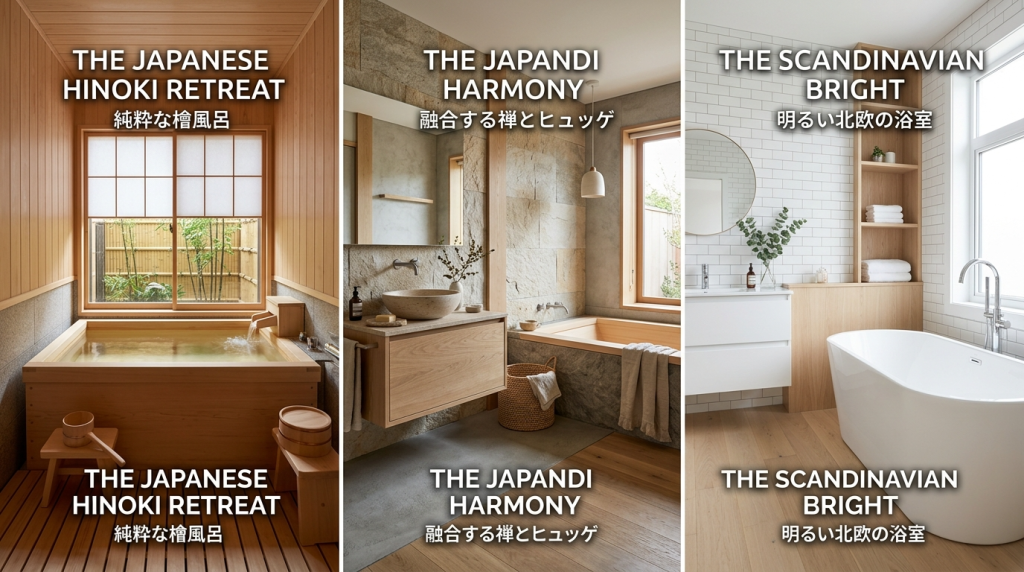
Japandi Bathroom Ideas — How It Compares to Similar Styles
| Feature | Japandi | Japanese (Pure) | Scandinavian (Pure) | Modern Minimalist |
|---|---|---|---|---|
| Color Palette | Warm neutrals, muted earth tones | Natural wood, deep greens, blacks | Whites, pale grays, light wood | Whites, grays, monochrome |
| Key Materials | Wood + stone + ceramic | Hinoki wood, stone, bamboo | Light wood, white tile, glass | Concrete, glass, metal |
| Warmth Level | High — balanced warmth | Medium-high — nature-focused | Medium — cozy but light | Low — intentionally cool |
| Texture | Rich — visible grain, handmade glaze, woven fibers | Rich — natural and organic | Moderate — clean and soft | Low — smooth and uniform |
| Clutter Tolerance | Very low | Very low | Low | Very low |
| Craftsmanship Focus | High — artisanal quality | Very high — traditional craft | Moderate — functional quality | Low — industrial precision |
| Emotional Tone | Serene, grounded, inviting | Meditative, ritualistic | Bright, approachable, simple | Sleek, detached, editorial |
| Best For | Those who want warmth with discipline | Purists and design devotees | Small spaces, light lovers | Ultra-modern homes |
Japandi strikes the balance that pure styles sometimes miss — the warmth of Scandinavian without the starkness, the depth of Japanese without the austerity.
Pros and Cons of a Japandi Bathroom
✅ Pros
- Deeply calming — the combination of warmth and restraint creates a spa-like atmosphere at home
- Timeless — neither trend-driven nor dated; it ages gracefully
- Works in any size — the clean design makes small bathrooms feel larger and large bathrooms feel purposeful
- Low-maintenance aesthetic — fewer items to clean, organize, and replace
- Elevates daily routines — even brushing your teeth feels more intentional in a well-designed space
- Sustainable by nature — the focus on quality materials and fewer possessions aligns with eco-conscious living
❌ Cons
- Higher material costs — natural stone, solid wood, and handmade ceramics cost more than laminate and acrylic
- Requires restraint — if you love color, pattern, or collecting, the editing process can feel restrictive
- Wood maintenance in wet environments — real wood needs sealing, oiling, and care to prevent water damage
- Limited color expression — the palette is intentionally narrow, which may bore maximalists
- Sourcing authentic pieces takes time — finding quality handmade ceramics and natural stone isn’t a weekend errand

Step-by-Step Guide to Designing Your Japandi Bathroom
Step 1: Assess Your Space Honestly Measure everything. Note the window position, plumbing locations, and natural light direction. Japandi relies heavily on proportions and light — understanding your room’s bones comes first.
Step 2: Choose Your Material Palette Select one wood tone, one stone or tile, and one metal finish. That’s your entire material vocabulary. Example: white oak + honed limestone + matte black fixtures. Write it down and don’t deviate.
Step 3: Plan Storage Before Anything Else Decide where every single item in your bathroom will live — from the toothbrush to the spare toilet paper. If there’s no hidden home for it, it doesn’t belong. This step prevents the slow creep of visual chaos.
Step 4: Select Fixtures With Discipline Choose your vanity, bathtub or shower configuration, faucets, and showerhead. Stick to one brand or finish family for hardware consistency. Every fixture should feel like it was chosen together — not assembled from sales.

Step 5: Lay the Groundwork — Flooring and Walls Larger tiles with minimal grout lines on the floor. Limewash plaster, microcement, or large-format stone tiles on the walls. The goal is continuous, unbroken surfaces that let the eye rest.
Step 6: Install Lighting on Dimmers Every light source in a Japandi bathroom should be dimmable. Morning brightness for grooming. Evening warmth for bathing. This single detail changes the entire experience of the room.
Step 7: Style With Radical Restraint Add your accessories last — and add far fewer than you think you need. One plant. One candle. One beautiful soap dish. Step back, look at the room, and resist the urge to fill the silence. The emptiness is the design.
Expert Tips for Perfecting Your Japandi Bathroom

- Invest in the faucet. It’s the thing you touch most. A beautifully weighted, matte-finished faucet elevates the experience of every handwash. Don’t cheap out here.
- Use the same floor tile inside and outside the shower. It eliminates visual breaks and makes the room feel dramatically larger.
- Warm up the floor. Underfloor heating paired with stone or porcelain tile is a game-changer. Cold tile under bare feet breaks the spell instantly.
- Choose towels in only two colors. One neutral (cream, oatmeal) and one deep tone (charcoal, forest green). Fold or roll them uniformly.
- Seal your wood properly. Any wood surface near water needs marine-grade sealant or tung oil, reapplied annually. This is non-negotiable.
- Leave one wall completely empty. It sounds counterintuitive, but an undecorated wall in a beautiful plaster or tile finish becomes its own statement.
- Scent the room naturally. A sprig of eucalyptus on the showerhead, a cedar wood block in a drawer, or a single unscented beeswax candle. Skip artificial air fresheners entirely.
Common Mistakes in Japandi Bathroom Design
Mistake 1: Using too many wood tones. One wood species. One finish. That’s it. Mixing honey oak with dark walnut with pale birch creates visual confusion that undermines the whole aesthetic.
Mistake 2: Going too cold. Japandi is not sterile minimalism. If your bathroom feels like a medical facility, you’ve lost the warmth. Add texture — a woven basket, a linen towel, a ceramic piece with visible glaze marks.
Mistake 3: Ignoring the ceiling. The ceiling is the fifth wall. Paint it the same warm tone as your walls, or keep it a soft warm white. Bright, cold white ceilings floating above warm walls feel disconnected.
Mistake 4: Overcrowding the vanity countertop. The counter should hold at most three items. Soap, a small plant, and maybe a tray. Everything else goes inside the drawers. This is the hardest habit to build — and the most important.
Mistake 5: Choosing trendy fixtures over timeless ones. That sculptural faucet that looks like modern art might feel dated in three years. Classic, well-proportioned fixtures in matte finishes outlast every trend.
Mistake 6: Forgetting ventilation. Natural materials and humidity are enemies. Invest in a quality exhaust fan (a quiet one) and open windows when possible. A beautiful wooden vanity destroyed by mold is a preventable tragedy.

Conclusion — A Bathroom That Honors the Everyday
Japandi bathroom ideas aren’t about following a trend or copying a showroom. They’re about asking a simple question: what if the room where I start and end every day actually made me feel something good?
A well-designed Japandi bathroom turns routine into ritual. The weight of a stone basin under running water. The scent of cedar and eucalyptus in warm steam. The quiet of a room where everything has earned its place and nothing is fighting for attention.
You don’t need to gut your entire bathroom tomorrow. Start with one change — swap your plastic soap dispenser for a ceramic one, replace your towels with linen, or simply clear the countertop down to essentials. Every small, intentional choice moves you closer.
Ready to begin? Go back to Step 1 in our guide, measure your space, and start planning your Japandi bathroom transformation. Drop your questions in the comments — we’re here to help you build something beautiful.

FAQs — Japandi Bathroom Ideas
Q1: What is a Japandi bathroom?
A Japandi bathroom combines Japanese and Scandinavian design principles — merging wabi-sabi’s appreciation for imperfection and natural beauty with Scandinavian minimalism’s focus on warmth, function, and simplicity. The result is a calm, warm, clutter-free bathroom built around natural materials like wood, stone, and handmade ceramics in a muted neutral palette.
Q2: What colors work best in a Japandi bathroom?
Warm neutrals are the foundation: soft grays with warm undertones, sand, oatmeal, clay, muted sage, charcoal, and warm white. Avoid cool blues, bright whites, and anything saturated. The palette should feel like it was pulled from nature — stone, driftwood, dried earth, and unbleached linen.
Q3: Is Japandi bathroom design expensive?
It can have higher upfront costs because it prioritizes quality natural materials — solid wood, natural stone, handmade ceramics — over cheaper synthetic alternatives. However, because the design is intentionally sparse (fewer items, fewer accessories), you’re buying less overall. A well-executed Japandi bathroom can cost less than a heavily accessorized traditional one if you plan carefully.
Q4: What type of wood is best for a Japandi bathroom?
White oak and teak are the most practical choices — both are naturally moisture-resistant and age beautifully. Japanese hinoki (cypress) is the traditional choice and smells wonderful but is harder to source outside Japan. Walnut works for darker schemes. Whatever wood you choose, seal it properly with marine-grade sealant or tung oil and maintain it annually.
Q5: Can I create a Japandi look in a small bathroom?
Absolutely — Japandi actually thrives in small spaces. The clean lines, hidden storage, and restrained palette make tight rooms feel larger and more open. Use a floating vanity to expose floor area, large-format tiles to reduce visual clutter, and a single large mirror to double the sense of depth. Small bathrooms benefit most from this aesthetic.
Q6: How do I keep a Japandi bathroom from looking too plain?
Texture is your primary tool. Mix smooth stone with rough-hewn wood, handmade ceramic with woven rattan, matte plaster with a glossy zellige tile accent. Variation in texture creates visual richness without adding color or clutter. A single living plant also brings organic energy that prevents the space from feeling sterile.
Q7: What’s the difference between Japandi and minimalist bathroom design?
Modern minimalism tends to be cool, sleek, and industrial — think concrete, glass, and sharp edges. Japandi is warmer, more tactile, and more organic. It prioritizes natural materials with visible imperfections (wood grain, glaze variations, stone veining) over the machine-perfect surfaces of minimalism. Both are clutter-free, but Japandi feels lived-in where minimalism can feel untouchable.