Warm Greige Bathroom Ideas for a Cozy Look


Warm Greige Bathroom Ideas for a Cozy, Timeless Look
If you’ve ever stood in the paint aisle trying to choose between gray and beige, warm greige bathroom ideas are basically the answer to that dilemma. Greige sits right in the middle, borrowing the calm of gray and the coziness of beige without leaning too far into either one.
It’s become one of the most requested bathroom palettes for a reason — it works in tiny powder rooms and large primary bathrooms alike, and it never feels as cold as a straight gray or as dated as a yellow-beige from a decade ago.
In this guide, I’ll break down exactly how to choose the right shade, where to use it, and how to avoid the small mistakes that make a greige bathroom look muddy instead of warm.
What Is Greige, and Why Does It Work So Well in Bathrooms?

Greige is simply a blend of gray and beige, but the ratio matters more than people realize. Lean too far one way, and the whole effect changes.
A true warm greige has just enough beige in it to read as inviting, while the gray keeps it from feeling overly yellow or dated.
Here’s why it works especially well in bathrooms specifically:
- It flatters skin tones in mirror lighting, unlike cooler grays that can look harsh under certain bulbs.
- It pairs with both warm and cool fixtures, so you’re not locked into one metal finish or tile color.
- It hides water spots and soap scum better than stark white, which shows marks almost instantly.
- It feels calming, which matters in a room people use to unwind, not just get ready.
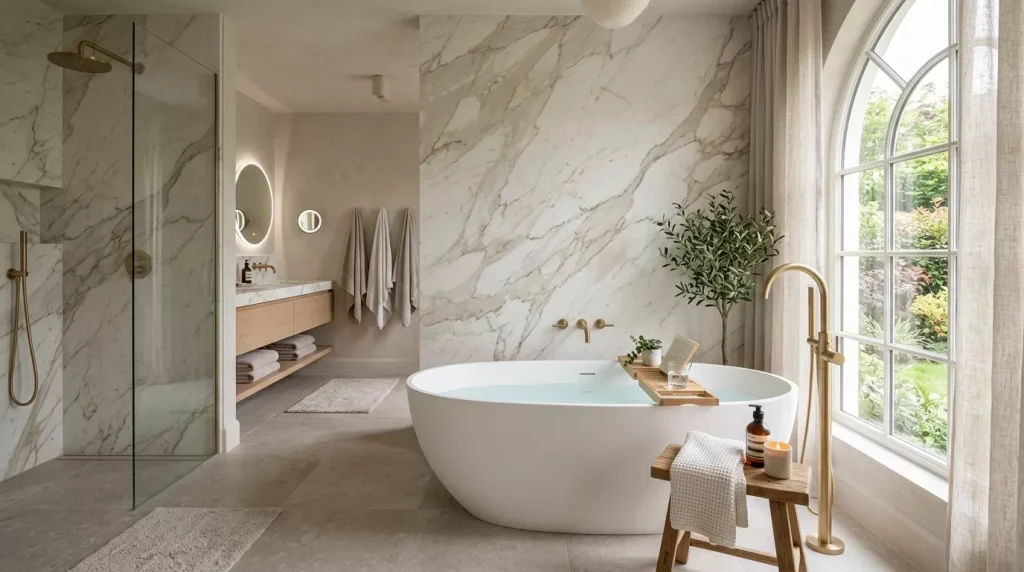
Finding the Right Warm Greige Shade
Not all greige is created equal. Some lean noticeably warmer, others lean cooler, and that undertone changes everything about how the room feels.
| Greige Type | Undertone | Best For |
|---|---|---|
| Warm Greige | Beige-forward, slight pink or tan | Bathrooms with limited natural light |
| Balanced Greige | Equal gray and beige | Most standard bathrooms |
| Cool Greige | Gray-forward, slight blue undertone | Bright, sunny bathrooms |
| Deep Greige | Darker, more saturated | Accent walls, powder rooms |
A simple trick before committing: paint a large swatch and look at it in the morning, afternoon, and evening light. Greige shifts more dramatically throughout the day than most other neutrals.

Where to Use Greige in a Bathroom
Greige doesn’t have to be limited to wall paint. In fact, it tends to look best when it shows up in two or three places, not just one.
- Walls: The most common starting point, especially above the tile line.
- Vanity cabinetry: A greige vanity feels softer than stark white and warmer than charcoal.
- Large-format floor tile: Greige porcelain tile mimics natural stone without the maintenance.
- Shower tile: A greige subway or large-format tile keeps the shower from feeling like a separate design zone.
- Textiles: Towels, bath mats, and shower curtains in greige tie the room together without repainting anything.
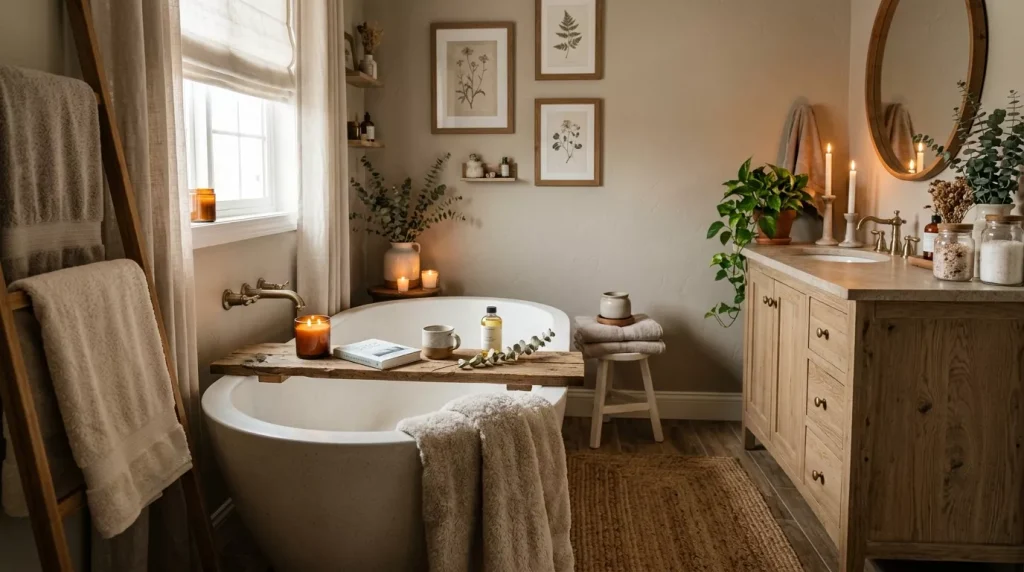
Step-by-Step Guide to Designing a Warm Greige Bathroom
If you’re planning a renovation or even just a refresh, this order keeps decisions simple and prevents costly do-overs.
Step 1: Choose your greige undertone first. Decide whether you want warm, balanced, or cool greige before picking anything else — tile, fixtures, and paint all need to match this undertone.
Step 2: Test paint in your actual bathroom lighting. Bathroom lighting is often harsher or more artificial than other rooms, so a swatch that looks great in a showroom can shift once it’s under your vanity lights.
Step 3: Decide on your tile strategy. Choose whether tile will be the same greige as your walls for a seamless look, or a contrasting white or cream for definition.
Step 4: Select your metal finish. Brushed brass and matte black both pair beautifully with warm greige, while chrome can sometimes feel slightly cold against it.

Step 5: Choose your vanity color. A vanity in a slightly darker or lighter shade than your wall greige adds dimension without introducing a new color family.
Step 6: Layer in natural materials. Wood shelving, woven baskets, or a teak bath mat add warmth that pure paint and tile can’t achieve on their own.
Step 7: Add greenery or a final accent. A simple plant or a piece of art in a complementary tone finishes the room without overwhelming the palette.
Warm Greige vs. Cool Gray Bathrooms
People often debate between greige and a straight cool gray. Here’s an honest side-by-side comparison.

| Factor | Warm Greige Bathroom | Cool Gray Bathroom |
|---|---|---|
| Mood | Cozy, inviting, soft | Crisp, modern, clean |
| Best Lighting | Works in both warm and cool light | Looks best under cool or natural light |
| Fixture Pairing | Brass, gold, matte black, chrome | Chrome, nickel, matte black |
| Risk of Feeling Cold | Low | Higher if overused |
| Resale Appeal | Broad, neutral appeal | Slightly more polarizing |
| Maintenance Appearance | Hides water spots well | Shows water spots more visibly |
If your bathroom gets limited natural light, greige is almost always the safer, warmer choice. If you’re going for a sleek, contemporary look and have plenty of light, cool gray can work just as well.

Pros and Cons of a Warm Greige Bathroom
Like any design choice, greige has trade-offs worth knowing before you commit to paint or tile.
Pros:
- Works with nearly any metal finish or wood tone
- Feels warmer and more inviting than straight gray
- Hides everyday water spots and soap residue well
- Pairs easily with both modern and traditional fixtures
- Has strong resale appeal since it’s broadly neutral
Cons:
- Can look slightly “muddy” if the undertone is wrong for the room’s lighting
- Harder to find an exact match across different brands of tile and paint
- May read as bland if no texture or contrast is added
- Some warm greiges can shift pink or lavender under certain bulbs
- Requires more swatch-testing than a standard white or gray

Materials and Finishes That Pair Well with Greige
The materials around your greige paint or tile do a lot of the work in making the room feel finished.
- Brushed brass or warm gold fixtures: Add a soft glow that enhances greige’s beige undertone.
- Matte black hardware: Creates contrast without clashing, especially in more modern bathrooms.
- Natural wood vanities or shelving: Bring warmth and texture that paint alone can’t provide.
- Honed marble or marble-look porcelain: Complements greige beautifully without competing for attention.
- Woven baskets and linen textiles: Add a soft, lived-in feel that keeps the room from looking too showroom-perfect.
Tile and Fixture Ideas for a Warm Greige Bathroom
Subway Tile

Greige subway tile in a classic running-bond pattern feels timeless and works in almost any bathroom size. It’s a safe, budget-friendly way to bring the color into the shower or backsplash.
Large-Format Tile
For a more modern, seamless look, large-format greige porcelain tile minimizes grout lines and makes small bathrooms feel less broken up.
Vanity and Countertop Pairings
A white or cream quartz countertop on a greige vanity creates gentle contrast, while a matching greige countertop creates a more monochromatic, calming effect.
Tips for a Polished Warm Greige Bathroom
A few small decisions make a real difference in how the final room reads.
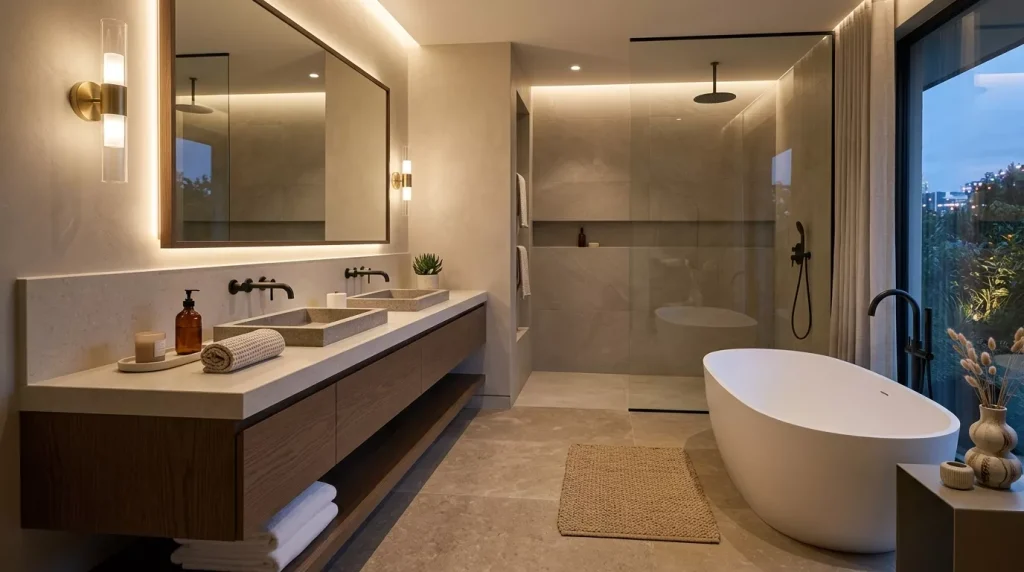
- Test paint swatches on at least two different walls, since lighting angles affect how the undertone reads.
- Stick to warm white bulbs (2700K–3000K) to avoid pulling unwanted cool tones out of the greige.
- Use at least one textured material, like woven baskets or a wood stool, to prevent the room from feeling flat.
- Keep grout color close to your tile shade for a more seamless, calming look.
- Add one black or brass accent, like a mirror frame or light fixture, to ground the soft palette.
Common Mistakes to Avoid
A few predictable missteps can throw off an otherwise great greige bathroom.
- Skipping the lighting test. A greige that looks perfect in the store can shift cool or pink under your specific bathroom lighting.
- Mixing too many undertones. Pairing a warm greige wall with cool gray tile often creates a clash that’s hard to fix later.
- Going too dark in a small, windowless bathroom. Deep greige can feel heavy without natural light to balance it.
- Forgetting texture. Flat paint and flat tile together can look one-dimensional without wood, woven, or metal accents.
- Choosing fixtures before paint. Picking metal finishes first can box you into an undertone that doesn’t match your ideal greige.

Greige Bathroom Ideas by Bathroom Type
Not every bathroom has the same needs, and the way you apply greige should shift depending on the room’s size and purpose.
Powder Rooms: Since these small spaces are often windowless, lean into a deeper or more saturated greige on the walls. Without much natural light to wash it out, a bolder shade reads as cozy rather than cramped, especially with brass sconces and a statement mirror.
Primary Bathrooms: Larger bathrooms can handle a layered approach — greige walls, a slightly lighter greige vanity, and white or cream countertops for contrast. This is also the easiest place to introduce large-format tile, since the room has enough scale to support it.
Guest Bathrooms: A balanced, mid-tone greige tends to work best here, since it needs to feel welcoming to a range of tastes without leaning too bold or too plain. Keep textiles simple and swap them out seasonally to refresh the space.
Bathrooms with Limited Natural Light: Stick to warmer, beige-forward greige shades and avoid anything that leans too gray or blue, since these can read as flat or even slightly dingy without sunlight to balance them.

How Lighting Changes the Way Greige Looks
Bathroom lighting tends to be more artificial than any other room in the house, which makes it one of the trickiest spaces to get greige right.
- Vanity lighting: Warm-toned bulbs (2700K–3000K) bring out the beige undertones in greige, while cooler bulbs can pull it toward gray or even slightly green.
- Natural light: North-facing bathrooms tend to cast cooler light, which can make greige look more gray than intended, while south-facing rooms enhance the warmth.
- Layered lighting: Combining vanity lights with a ceiling fixture or sconces reduces harsh shadows that can distort how the color reads on the walls.
- Mirror placement: A large mirror opposite a window helps bounce natural light around the room, keeping greige from looking dull on cloudy days.
If possible, view your paint or tile sample at night under your actual bathroom bulbs before finalizing your choice — this single step prevents most greige regret.

Final Thoughts
Warm greige bathroom ideas offer something rare in design: a palette that feels both calm and current without forcing you to commit to a bold trend. It’s flexible enough to suit a quick powder room refresh or a full primary bathroom renovation.
The secret isn’t just picking “a greige” — it’s choosing the right undertone for your lighting, then layering in texture and metal finishes that complement it. Get that part right, and the rest of the room comes together easily.
If you’ve been stuck deciding between gray and beige, this is your sign to stop debating and start swatching. Pick a warm greige, test it in your own bathroom light, and watch how much warmer the whole space feels.

FAQs
1. Is greige still in style for bathrooms?
Yes. Greige has stayed popular for years because it’s flexible enough to pair with both warm and cool fixtures, unlike trend-driven colors that tend to date quickly.
2. How do I know if a greige is too warm or too cool for my bathroom?
Test a large swatch directly on your bathroom wall and check it under your actual lighting throughout the day, since greige can shift noticeably between natural and artificial light.
3. What metal finishes work best with warm greige?
Brushed brass and matte black both complement warm greige especially well, though chrome can still work if your greige leans slightly cooler.
4. Can warm greige work in a small bathroom?
Yes, especially lighter warm greige shades, which keep the room feeling open while still adding more warmth than a stark white.
5. What’s the difference between greige and taupe?
Greige is a balanced mix of gray and beige, while taupe typically leans more brown with gray undertones, giving it a slightly deeper, earthier feel.
6. Should my tile match my wall paint exactly in a greige bathroom?
Not necessarily — a slight contrast between wall paint and tile, as long as the undertones match, often looks more intentional than an exact match.
7. Does warm greige work with both modern and traditional bathroom styles?
Yes, which is part of its appeal. Pairing greige with sleek matte black fixtures suits modern bathrooms, while brass and natural wood lean more traditional.