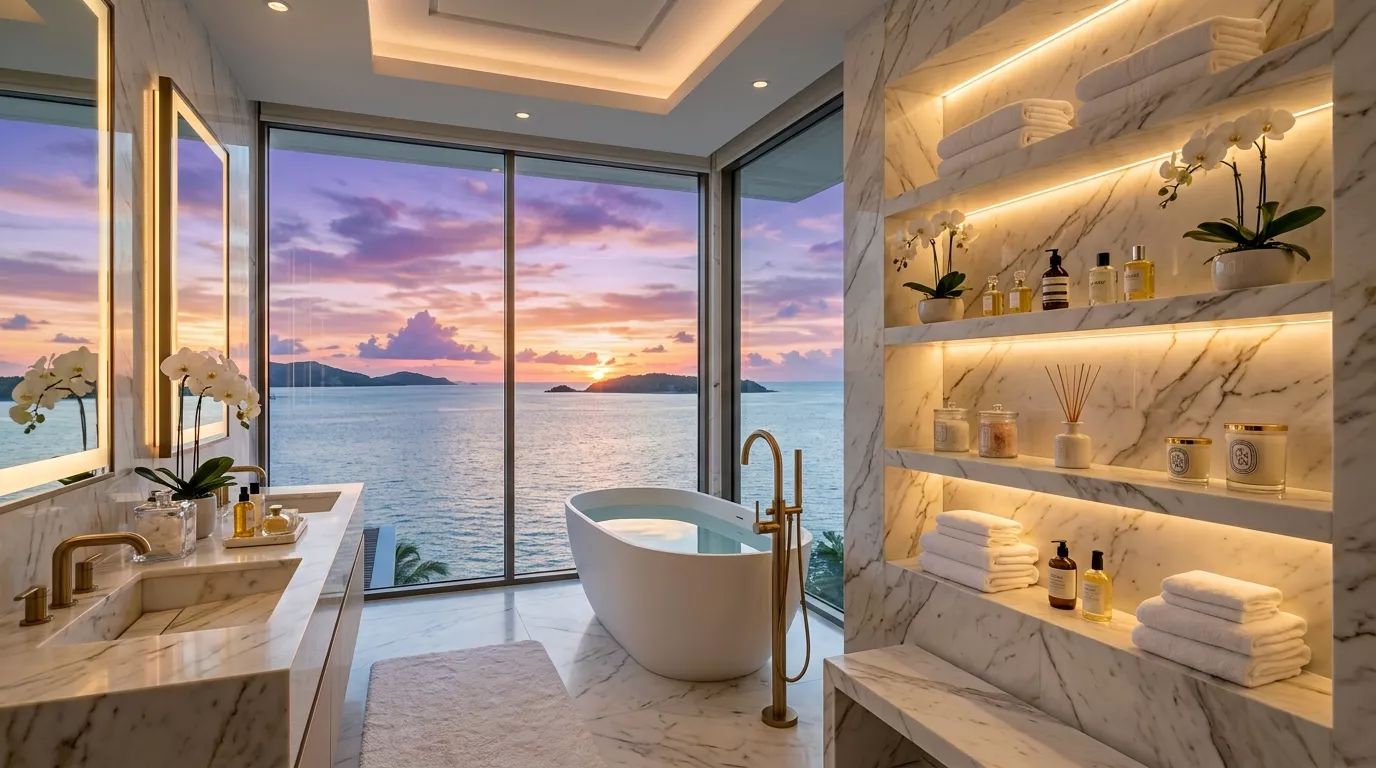
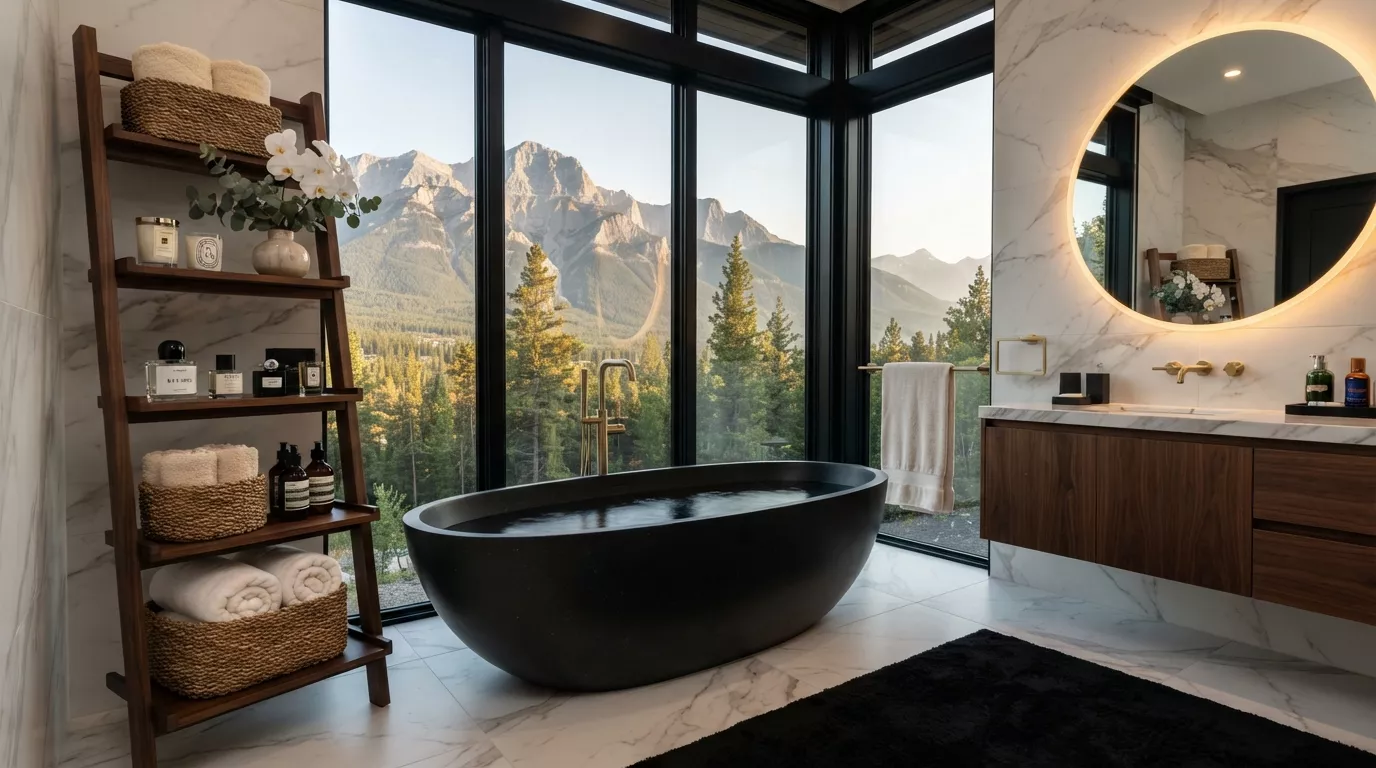
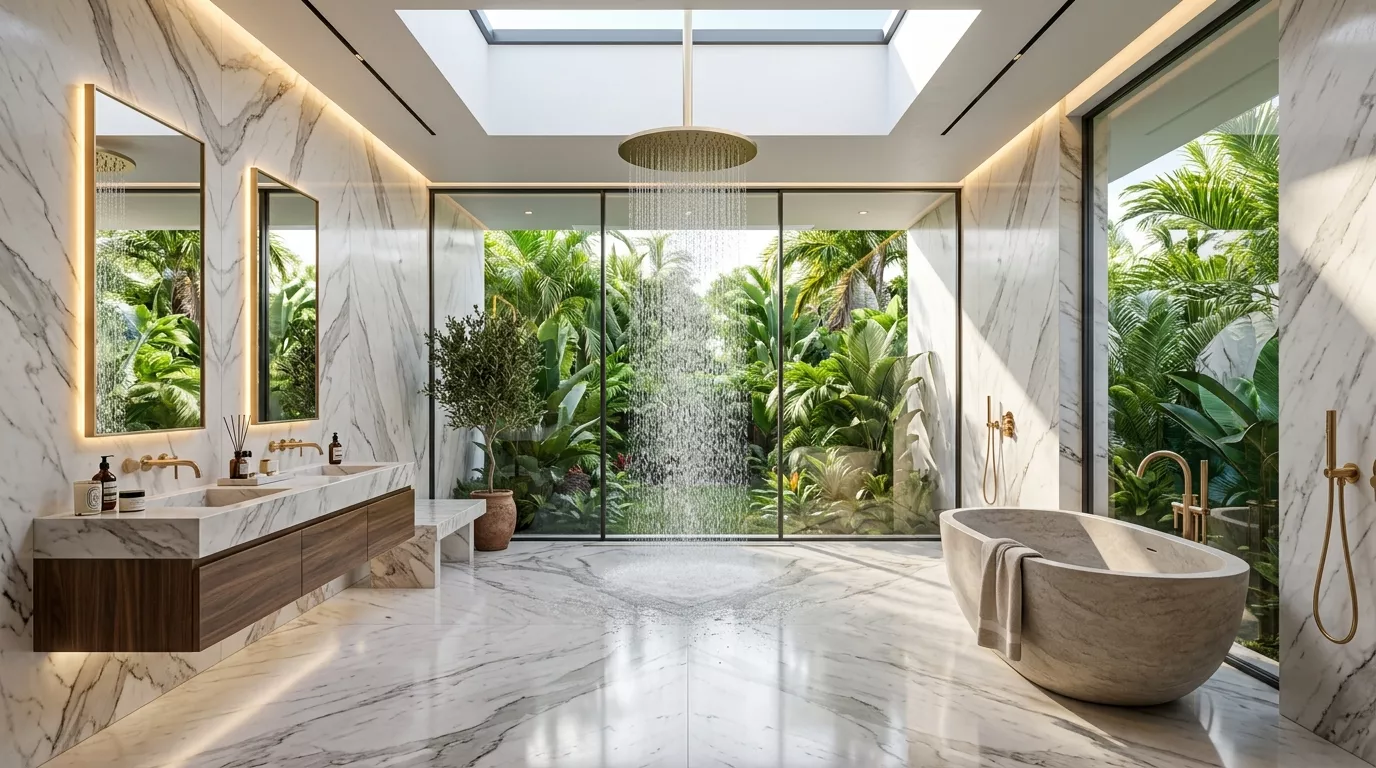
Modern Minimalist Bathroom Ideas for a Spa-Like Space

Modern Minimalist Bathroom Ideas That Turn Your Daily Routine Into a Spa Experience
Your bathroom is the first place you go in the morning and the last place you visit before bed. That makes it one of the most mood-influencing rooms in your entire home — and yet it’s often the most neglected when it comes to intentional design.

Modern minimalist bathroom ideas are changing the way people think about this space. Instead of cramming in every product, fixture, and accessory available, the minimalist approach strips things back to what’s genuinely functional and beautiful — leaving you with a room that feels more like a luxury hotel spa than a cluttered closet with a toilet.
The best part? You don’t need a $30,000 renovation to get there. Whether you have a tiny powder room or a generous master bath, this guide walks you through every principle, strategy, and practical tip you need to create a calm, elegant bathroom you’ll actually look forward to using.
Let’s transform your space.
What Makes a Bathroom Truly “Modern Minimalist”?
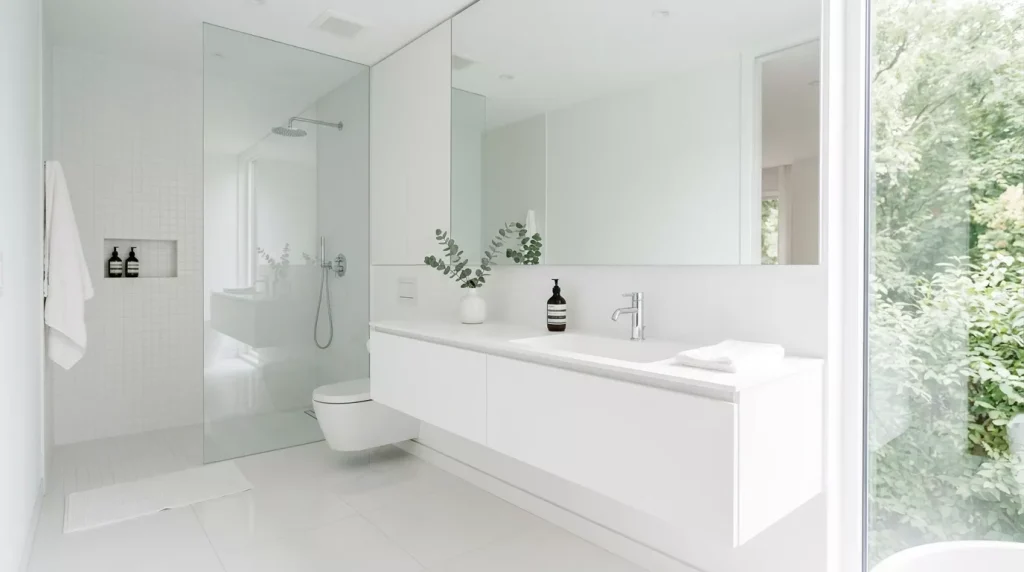
The term gets used loosely, so let’s define it properly — because understanding the philosophy makes executing the design so much easier.
A modern minimalist bathroom is not simply a white bathroom with not much in it. It’s a space where every element — tile choice, fixture style, storage solution, lighting placement — has been considered deliberately. Nothing is accidental. Nothing is there just because it came with the house or because it was convenient.
A modern minimalist bathroom is characterized by:
- Clean, uninterrupted surfaces with no visual noise
- A tight, cohesive color palette (usually 2–3 tones maximum)
- High-quality materials used honestly — no fake marble contact paper, no plastic fittings
- Built-in or concealed storage so countertops stay clear
- Warm, layered lighting rather than a single harsh overhead fixture
- One or two deliberate natural elements (a plant, a wooden accessory, a stone vessel)
It is NOT:

- Simply white paint and a pedestal sink
- Removing everything until the room feels uncomfortable and cold
- Only achievable with a luxury budget
- The same as Scandinavian or Japanese bathroom style (though those overlap)
Once you understand what you’re genuinely aiming for, every decision — from the tile grout color to the towel hook placement — becomes easier and more intentional.
The Core Elements of Modern Minimalist Bathroom Ideas
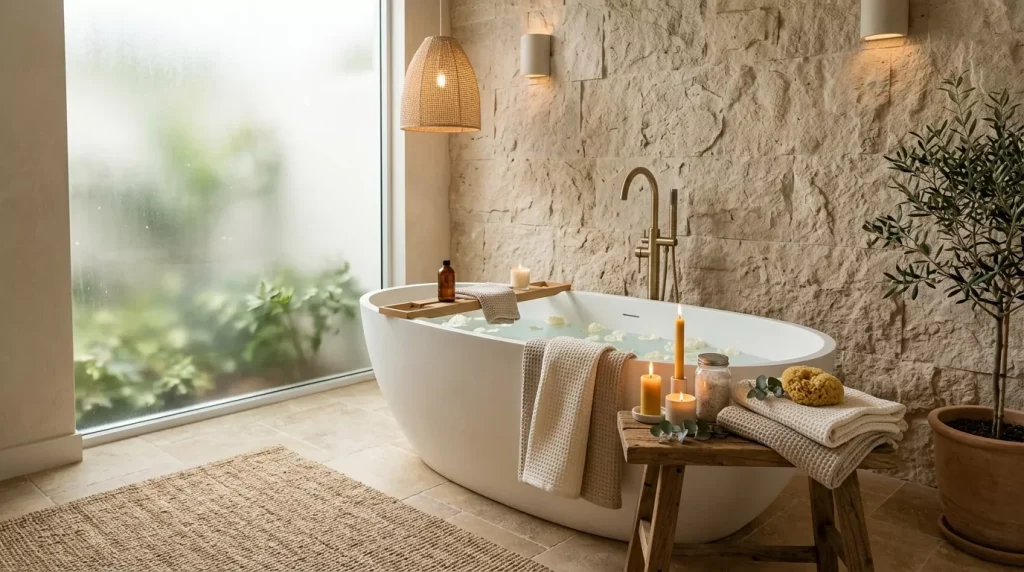
Think of these as the five building blocks. Get these right and the rest falls into place naturally.
1. A Calm, Cohesive Color Palette
Color is the foundation of every successful minimalist bathroom. The goal is a palette that feels restful, not stimulating.
Most effective minimalist bathroom palettes:
| Palette Name | Primary Tone | Secondary Tone | Accent |
|---|---|---|---|
| Classic White | Bright white | Warm gray grout | Matte black fittings |
| Warm Stone | Warm beige/greige | Travertine natural | Brushed brass |
| Slate & Oak | Cool charcoal | Warm oak wood | White ceramic |
| Soft Sage | Dusty sage green | Warm white | Brushed nickel |
| Deep Moody | Charcoal or navy | Matte white | Brass or gold |
| Sand & Cement | Raw concrete gray | Sandy beige | Matte black |
The rule: choose one and commit completely. Swapping one tile color mid-project or adding a second accent metal “just this once” breaks the visual calm you’re working toward.
2. Large-Format Tiles — The Minimalist’s Best Friend

Nothing simplifies a bathroom visually faster than large-format tiles. Fewer grout lines mean fewer interruptions for the eye, creating that seamless, expansive feel even in a compact space.
Tile sizing guide:
- Small bathroom (under 50 sq ft): 12×24″ or 24×24″ tiles make the room feel larger
- Medium bathroom (50–100 sq ft): 24×48″ or 32×32″ floor and wall tiles work beautifully
- Large bathroom (100+ sq ft): 48×48″ or slab-style porcelain for a truly seamless look
Best minimalist tile choices:
- Matte or honed finish (not polished — it shows water spots and fingerprints)
- Marble-effect porcelain (the look without the maintenance)
- Concrete-look tiles in warm gray or sandy tones
- Plain white subway tile in a stack bond (not traditional offset) for a cleaner grid
- Textured neutral stone-look tiles for warmth
Grout color matters enormously. For a seamless look, match your grout as closely as possible to your tile. For a graphic look, use contrasting dark grout — but know it reads busier.

3. Floating Vanity and Concealed Storage
The floating vanity is arguably the single most impactful upgrade you can make in a minimalist bathroom. By lifting the cabinet off the floor, you accomplish three things at once:
- The floor reads as larger and more open
- Cleaning becomes dramatically easier
- The overall silhouette feels lighter and more contemporary
What to look for in a minimalist vanity:

- Flat-front drawer faces with no visible hardware (push-to-open mechanism)
- A stone, concrete, or ceramic integrated top — no separate sink vessel
- Warm wood (walnut, oak) or a matte painted finish (white, sage, charcoal)
- Internal organization: drawer dividers, pull-out trays, soft-close hardware
Countertop rule: Three items maximum on any vanity surface. A soap dispenser, a small plant, and one other personal care item. Everything else lives inside a drawer.
4. Statement Mirror as Functional Art

In a minimalist bathroom, the mirror is one of the few places where you can make a real design statement without adding visual clutter — because a mirror is inherently functional.
Minimalist mirror options:
- Full-width vanity mirror (frameless or thin-frame, edge-lit)
- Oversized round mirror in a thin brushed metal frame
- Backlit mirror (doubles as subtle night lighting)
- Arched mirror for softness in an otherwise rectilinear space
- Two matching rectangular mirrors over a double vanity
Avoid ornate frames, distressed wood, or decorative mirrors in maximalist shapes. They immediately read as the wrong style.
5. Warm, Layered Lighting

Here’s where most bathroom renovations miss the mark. A single recessed light in the center of the ceiling gives you the lighting of a gas station restroom — functional but thoroughly unpleasant.
A properly layered minimalist bathroom has:
- Task lighting — Vertical sconces or a backlit mirror on either side of the face (not above — overhead lighting creates shadows)
- Ambient lighting — Recessed ceiling lights on a dimmer for general illumination
- Accent lighting — Under-vanity LED strip lighting for a floating effect
- Natural light — Frosted glass window, skylight, or solar tube wherever possible
All bulbs should be warm white (2700K–3000K). Bright white or cool daylight bulbs make every bathroom feel clinical and unflattering.

Step-by-Step Guide to Designing a Modern Minimalist Bathroom
Whether you’re renovating from scratch or refreshing an existing bathroom, follow these steps in order. Each one builds on the last.
Step 1: Define Your Style Direction Before touching anything, choose your specific minimalist sub-style (warm minimalist, industrial, Japandi, etc. — more on this below). Save 15–20 reference images. Identify the 3 elements they all share — that’s your design DNA.
Step 2: Audit What You Currently Have Go through every product under your sink, in your medicine cabinet, and on your countertop. Throw away expired items, donate duplicates, and be honest about what you actually use daily versus what just sits there.
Step 3: Plan Your Storage First Decide where everything will live — inside a floating vanity, in a recessed medicine cabinet, on a discreet shelf — before you choose a single tile. If storage is solved, the visible surfaces stay clean automatically.
Step 4: Choose Your Tile Select your floor and wall tile from the same family or palette. In a small bathroom, using the same tile on both walls and floors (or very similar tones) visually expands the space. Order 10–15% extra for cuts and future repairs.

Step 5: Select Your Fixtures as a Coordinated Suite Faucet, showerhead, towel bars, toilet paper holder, and robe hooks should all be in the same finish. Matte black, brushed nickel, and brushed brass are the most timeless minimalist choices. Mixed metals in a minimalist bathroom look accidental, not intentional.
Step 6: Install the Lighting Plan Hire an electrician to plan your lighting before tiling is complete — retrofitting lighting is expensive. Mark exactly where your sconces, recessed lights, and any under-vanity LED strips will go.
Step 7: Choose a Vanity and Mirror Size your vanity to leave at least 18–24 inches of clearance on either side in a small bathroom. Your mirror should be the same width as the vanity (or slightly wider) for a proportional look.
Step 8: Add Soft Elements Last Once the hard finishes are done, bring in warmth: a quality bath mat in natural cotton, white linen towels, a single live plant, a stone or ceramic soap dish, a wooden bath tray if you have a tub. These finishing touches transform a bathroom from a technical exercise into a genuinely beautiful space.
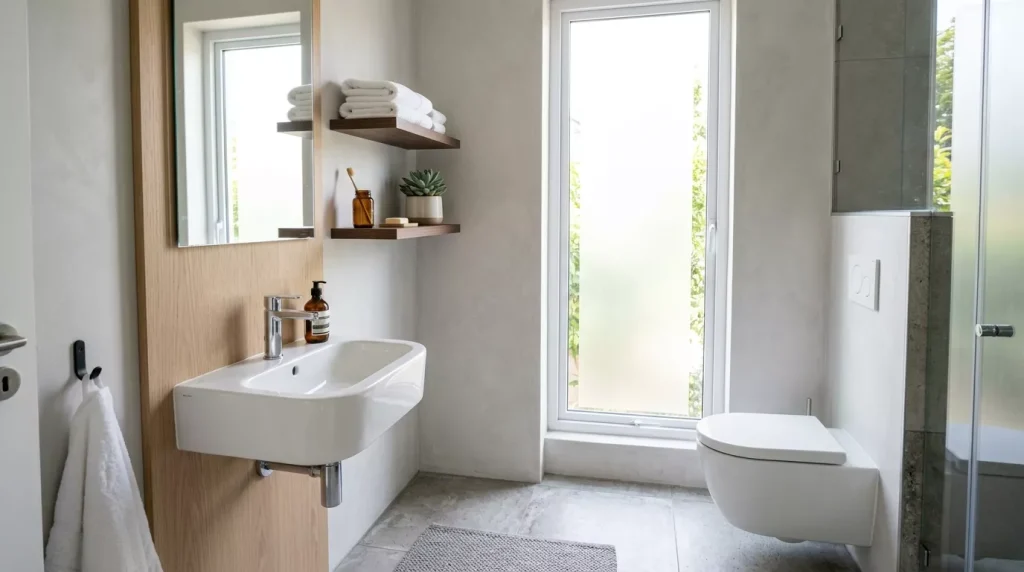
Modern Minimalist Bathroom Styles Compared
Minimalism has several beautiful sub-styles. Here’s how they differ so you can choose the one that fits your personality and existing home aesthetic.
| Style | Mood | Key Features | Best For |
|---|---|---|---|
| Warm Minimalist | Cozy, inviting | Cream tones, oak wood, linen, soft stone | Families, comfort-seekers |
| Japandi | Serene, meditative | Wabi-sabi imperfection, low forms, natural wood | Zen lovers, calm-seekers |
| Industrial | Edgy, raw | Concrete, exposed pipe, matte black, dark palette | Urban apartments, loft spaces |
| Scandinavian | Bright, functional | White + light wood, clean lines, hygge warmth | Small spaces, bright rooms |
| Luxe Minimalist | Refined, high-end | Marble slab, brass, vessel sink, statement tub | Master baths, premium renovations |
| Classic Modern | Clean, architectural | White tile, frameless glass, chrome fixtures | Those wanting a timeless look |
Most popular combination: Warm Minimalist + Japandi elements. The warmth of natural oak and stone textures with the clean simplicity of Japanese spatial thinking creates bathrooms that are both stunningly beautiful and genuinely comfortable to live in daily.

Pros and Cons of Modern Minimalist Bathroom Design
Here’s an honest look at both sides — because no design style is perfect for everyone.
✅ Pros
- Feels larger than it is — Clean lines and fewer visual interruptions make any bathroom appear more spacious
- Easier to clean — Fewer objects on surfaces, seamless tiles, and integrated storage mean dramatically less effort to maintain
- Timeless, not trendy — A well-designed minimalist bathroom won’t feel dated in 5 years the way heavily themed or trend-driven bathrooms do
- Mentally calming — Visual simplicity in a daily-use space genuinely reduces morning and evening stress
- Increases home resale value — Clean, high-quality minimalist bathrooms appeal to the widest range of buyers
- Lets quality materials shine — Without competing decor, beautiful tile work or a stunning vanity gets its full moment
❌ Cons
- Less forgiving of mess — A minimalist bathroom looks perfect when clean and noticeably imperfect when it isn’t
- Upfront cost can be high — Quality tiles, floating vanities, and custom storage aren’t always cheap
- Cold without warmth elements — Pure white, hard surfaces, and no softness can feel clinical and unwelcoming
- Limited decorative expression — If you love displaying a lot of personal items or collections, pure minimalism can feel restrictive
- Requires ongoing habit changes — Putting things away consistently is non-negotiable; the style doesn’t hide clutter well
- Mistakes are more visible — A misaligned tile or slightly off-center mirror is much harder to ignore in a minimal space

Top Tips for Getting Your Modern Minimalist Bathroom Right
These are the details that professional designers rely on — and most DIY renovators miss.
💡 Tip 1: Extend tiles to the ceiling. Taking your wall tile all the way to the ceiling — instead of stopping at a dado or chair rail height — instantly makes the room feel taller and more spa-like. It also removes the visual interruption of a paint-to-tile transition.
💡 Tip 2: Recess your shelving. Recessed niches in the shower wall (built between studs) give you shampoo storage without adding any visual bulk to the space. They’re one of the most elegant minimalist moves in a bathroom and genuinely not expensive to include during a tile job.
💡 Tip 3: Match your grout to your tile. Unless you’re deliberately going for a graphic grid look, a close-matched grout color creates the seamless, uninterrupted surface that defines minimalist bathrooms. Contrasting grout emphasizes every tile joint and adds visual noise.
💡 Tip 4: Use one plant, positioned correctly. A single live plant — a snake plant, ZZ plant, or pothos — in a white or terracotta ceramic pot brings organic life to a hard, tiled space without adding clutter. Position it at floor level near a window, or on a floating shelf at eye height.

💡 Tip 5: Invest in quality towels. In a minimalist bathroom, your towels are essentially decorative objects. Choose a set in consistent neutral tones (white, ivory, warm gray, or sage) in a quality cotton. Fold them uniformly and hang or stack them deliberately. It costs $40–$80 and makes the room look five times more intentional.
💡 Tip 6: Frameless glass shower screens. A frameless glass shower enclosure visually doubles your floor space by removing a physical and visual barrier. Even in a small bathroom, this single change makes an enormous difference. Semi-frameless (minimal black or chrome frame) is a more affordable alternative with nearly the same effect.
💡 Tip 7: Choose matte over gloss. Matte finish tiles, matte fixtures, and matte hardware show fewer water spots, fingerprints, and streaks — which means your minimalist bathroom actually stays looking clean between cleans, not just immediately after them.
Common Mistakes to Avoid in Minimalist Bathroom Design
Even with the best intentions, these are the errors that consistently derail minimalist bathroom projects.
❌ Mistake 1: Too many accent metals Mixing brushed brass taps with chrome towel rails and matte black toilet hardware reads as indecisive, not eclectic. Choose one metal finish and use it on every single fixture and fitting throughout the room. This is non-negotiable in minimalism.
❌ Mistake 2: Under-sizing the mirror A mirror that’s too small for the vanity looks like an afterthought and breaks the proportional balance of the room. Your mirror should be at minimum the same width as the vanity below it. Full-width, edge-to-edge mirrors read as the most luxurious and modern.
❌ Mistake 3: Skipping the dimmer switch A bathroom without dimmer-controlled lighting forces you to choose between harsh bright light for getting ready and no light at all for a relaxing evening bath. A $15 dimmer switch is one of the highest-value additions you can make.
❌ Mistake 4: Open shelving without discipline Open shelves in a minimalist bathroom can work beautifully — but only if you’re genuinely disciplined about what lives there. The moment a second brand of shampoo, a random razor pack, and some old nail polish migrate onto those shelves, the entire room’s calm is destroyed. If in doubt, choose closed storage.
❌ Mistake 5: Ignoring ventilation Minimalist bathrooms rely on pristine surfaces. Without adequate ventilation, tiles, grout, and wooden elements mold and deteriorate quickly, destroying the look you’ve worked to create. Invest in a quality, quiet extractor fan or operable window from day one.
❌ Mistake 6: Decorating before the storage is solved The most common mistake of all. People buy beautiful accessories and towels before figuring out where all their products will actually live — then wonder why the room still looks cluttered. Solve storage first. Decorate second.

Modern Minimalist Bathroom Ideas on Any Budget
Great minimalist bathrooms aren’t exclusively for people with renovation budgets. Here’s how to achieve the look at every price point.
Budget: Under $300 — The Refresh Approach
You’d be surprised how much difference these targeted swaps make without touching a single tile:
- Replace the mirror — Swap a dated framed mirror for a simple frameless one or a large round mirror with a thin metal frame ($40–$120)
- Upgrade your fixtures — New tap, towel bars, toilet paper holder, and robe hooks in a matching matte black or brushed brass ($60–$150 for a coordinated set)
- Decant your toiletries — Move products into matching amber glass or ceramic dispensers ($20–$40 for a set)
- Replace towels — A matching set of quality neutral towels makes an instant difference ($30–$60)
- Add one plant — A snake plant or pothos in a simple ceramic pot ($15–$25)
- Switch your bulbs — Warm 2700K bulbs and a dimmer switch ($15–$30)
Budget: $300–$1,500 — The Upgrade Approach
- Resurface or replace the vanity with a floating model
- Add recessed wall shelving (can be DIY’d with basic carpentry)
- Install a frameless shower screen to replace a curtain
- Replace floor tiles or add a large bath mat in a quality natural material
- Install new lighting (sconces flanking the mirror)
Budget: $1,500+ — The Renovation Approach
- Full tile replacement with large-format porcelain or stone
- Custom floating vanity with integrated storage
- Walk-in shower with recessed niche and frameless glass
- Freestanding soaking tub as a design statement
- Full lighting redesign with recessed, sconce, and under-vanity layers

Frequently Asked Questions About Modern Minimalist Bathroom Ideas
FAQ 1: How do I make a small bathroom look minimalist and larger?
Use large-format tiles in a light neutral tone on both the walls and the floor — the visual continuity removes boundaries and makes the space feel bigger. Install a floating vanity to expose more floor area. Use a full-width frameless or backlit mirror (mirrors effectively double the perceived depth of a space). Keep the countertop completely clear. A frameless glass shower screen instead of a curtain or framed door also opens the room dramatically.
FAQ 2: What colors work best for a modern minimalist bathroom?
The most effective minimalist bathroom palettes are built around warm whites, off-whites, greige (gray-beige), warm stone tones, or soft charcoal. The key is warmth — cool grays and stark bright whites tend to feel clinical. Introduce a second tone through natural wood (a floating vanity in oak or walnut), and a third through your metal fixtures (brushed brass, matte black, or brushed nickel). Keeping the palette to three tones maximum is the discipline that makes the room feel coherent.
FAQ 3: What is the most important change I can make to a bathroom for a minimalist look?
If there’s one change, it’s clearing the countertop completely — and solving the storage that makes that possible. A bathroom with a floating vanity and nothing on the surface reads as dramatically more minimalist and luxurious than one with beautiful tiles but covered in products and clutter. Storage solves the visual problem at its root rather than decorating around it.
FAQ 4: Can I have a minimalist bathroom if I have a family with kids?
Yes, but it requires smart, accessible storage rather than just hidden storage. Deep drawers with labeled internal organizers, lower hooks and shelves kids can actually reach, and a vanity with enough internal capacity to handle multiple people’s products all make it achievable. You might also consider a “display” zone that stays curated and a “working” zone (behind a door or in a lower cabinet) that operates more practically.
FAQ 5: Are floating vanities practical or just decorative?
They’re both — and genuinely practical for daily use. Modern floating vanities with deep drawers and soft-close hardware offer plenty of storage. The floor gap makes mopping dramatically easier and makes the room feel larger. The one practical consideration: the mounting hardware needs to be correctly anchored into wall studs or a reinforced backing board to safely hold the vanity’s weight. Installed correctly, they’re every bit as sturdy as floor-standing units.
FAQ 6: What plants work best in a minimalist bathroom?
Choose plants that thrive in low light and high humidity — snake plants (Sansevieria), ZZ plants, pothos, and peace lilies all work beautifully. For style, a single statement plant in a clean ceramic or concrete pot works better than several small plants scattered around. Trailing pothos from a floating shelf adds organic movement, while a tall snake plant at floor level adds architectural presence without visual noise.
FAQ 7: Is a freestanding bathtub worth it in a minimalist bathroom?
In a larger bathroom (60+ square feet), a freestanding tub can be the sculptural centerpiece that elevates the entire room. In a smaller bathroom, it often eats too much floor space and creates a cramped feel. If you love soaking baths and have the space, it’s worth it — choose a simple, clean silhouette (oval or rectangular, not heavily sculpted) in matte white or stone composite rather than a highly decorative clawfoot style, which reads as too ornate for modern minimalism.
Conclusion — Your Modern Minimalist Bathroom Is Closer Than You Think
The gap between the bathroom you have now and the calm, beautiful, spa-like retreat you want isn’t always as wide as it seems. Modern minimalist bathroom ideas are fundamentally about subtraction — removing what clutters the space and replacing visual noise with intention.
Start with storage. Let the surfaces breathe. Choose one metal finish and commit. Add warmth through texture, wood, and a single plant. Light the room like you care about the experience of being in it.
You don’t have to do it all at once, and you certainly don’t need a bottomless renovation budget. The most powerful minimalist transformations often start with clearing a countertop, replacing a mirror, and switching to warm-toned bulbs — changes that cost under $100 but change how the room feels completely.
Your bathroom sees you at your most human — tired mornings, quiet evenings, the transition between the day and rest. It deserves to be a space that gives something back.
Start today. Pick one change from this guide — just one — and make it this week. Then notice how you feel every time you walk into that room afterward. That shift in feeling is exactly why minimalist design matters. 🤍🛁