Cottagecore Bedroom: Design Your Dreamy Cozy Retreat

Cottagecore Bedroom: Design Your Dreamy Cozy Retreat
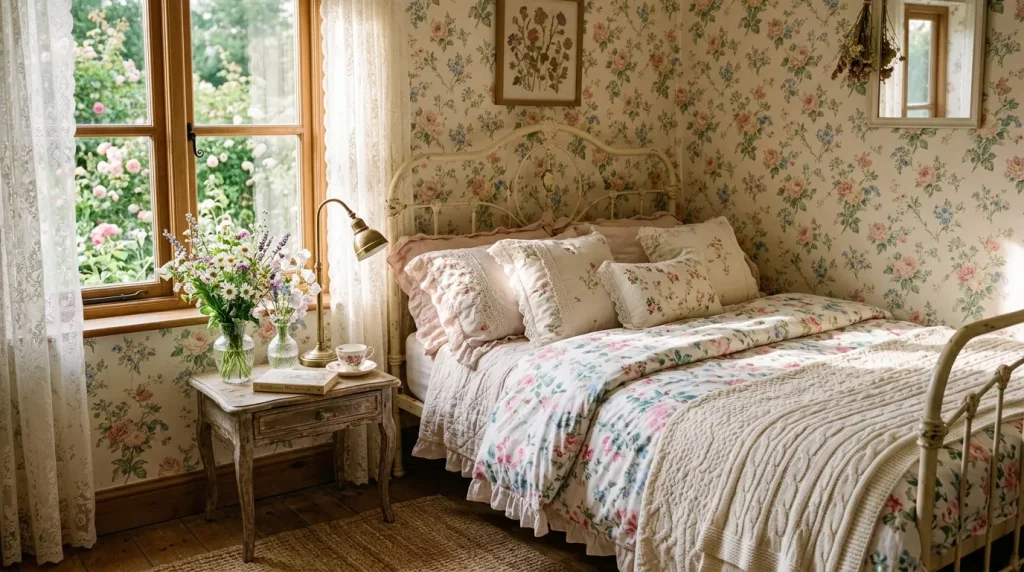
If you’ve ever scrolled past a bedroom draped in floral linen, lit by the glow of fairy lights, with dried wildflowers hanging from the ceiling and a stack of worn books on a wooden nightstand — and felt something pull at your chest — you already understand cottagecore.
A cottagecore bedroom isn’t just an aesthetic. For a lot of people, it’s a feeling. A fantasy of slow mornings, soft textures, and a world that runs at a gentler pace. Whether you’re fully converting your space or simply want to bring a little countryside magic into a rented apartment, this guide walks you through everything you need to know — from color palettes and furniture choices to budget tricks and the mistakes that catch most beginners off guard.
What Is a Cottagecore Bedroom, Exactly?
Cottagecore is a lifestyle aesthetic built around romanticizing rural life, nature, and old-world simplicity. When applied to a bedroom, it pulls from a very specific world of references:
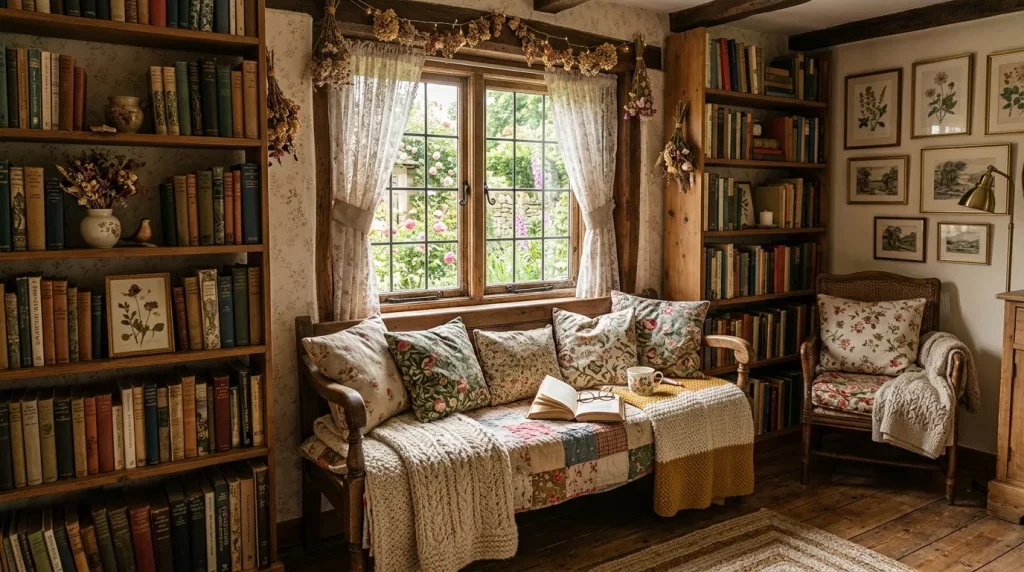
- Floral and botanical patterns — think meadow prints, climbing roses, wildflower motifs
- Soft, muted color palettes — sage, dusty rose, cream, butter yellow, warm lavender
- Vintage and antique furniture — wooden dressers, iron bed frames, mismatched nightstands
- Natural materials — linen, cotton, wicker, rattan, reclaimed wood, terracotta
- Handmade and hand-crafted touches — crochet, embroidery, pressed flower art
- Dried and living botanicals — hanging herbs, potted ferns, pampas grass, flower bunches
- Warm, atmospheric lighting — fairy lights, candlelight, vintage bedside lamps
Think of it as somewhere between a Victorian greenhouse, a storybook illustration, and a countryside cottage bedroom on a warm September morning. It’s romantic, deeply personal, and rooted in the natural world.
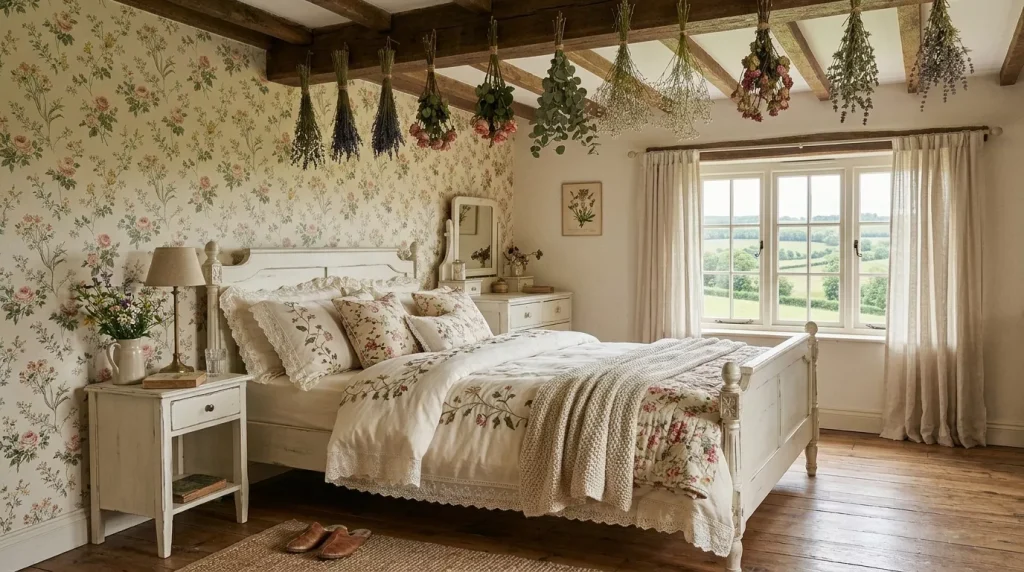
Where minimalism removes things, cottagecore layers them. Where modern design values sharp lines and polish, cottagecore embraces the curved, the imperfect, and the handmade.
Why People Are So Drawn to the Cottagecore Bedroom Aesthetic
The cottagecore bedroom trend gained serious mainstream traction around 2020 — when a lot of people were stuck indoors and craving something slower, softer, and greener. But beyond the timing, there are real reasons this aesthetic has staying power.
It feels personal, not purchased. A well-built cottagecore room doesn’t look like a showroom or a hotel. It looks assembled over time. A thrift store quilt, a bunch of lavender from a market, a framed botanical print made at home — these objects tell a story about the person who lives in the space.
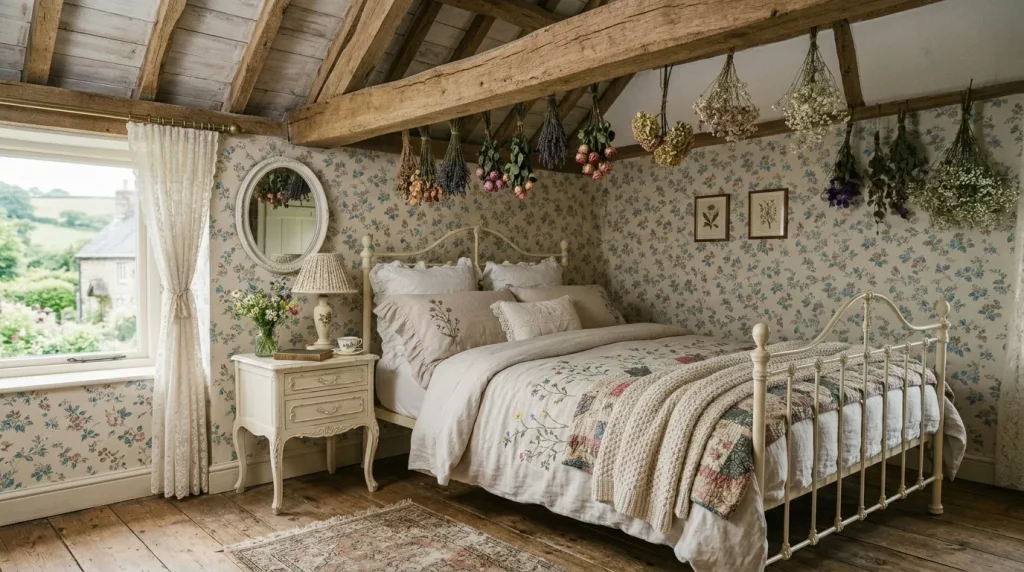
It is genuinely, deeply cozy. Layered textiles, warm lighting, and soft colors create a level of physical and emotional warmth that’s hard to achieve with most other aesthetics. This is a bedroom you actually want to spend time in — not just sleep in.
It brings the outside in. Even in a top-floor city apartment, a cottagecore bedroom connects you to the natural world. Potted plants, dried wildflowers, the rustle of linen curtains — it’s a quiet antidote to concrete, screens, and the relentless pace of modern life.
It’s one of the most budget-friendly aesthetics you can pursue. Thrift stores, charity shops, estate sales, and nature itself are the primary suppliers of cottagecore decor. You don’t need to spend much. You need to be patient, observant, and willing to look past the obvious.
Pros and Cons of a Cottagecore Bedroom
Before you start pulling furniture out of the charity shop van, here’s an honest picture of both sides.
| Pros | Cons |
|---|---|
| Extremely cozy, layered, and inviting | Can tip into cluttered if not edited carefully |
| Built on second-hand and budget finds | Mixing floral patterns requires some practice |
| Deeply personal and hard to replicate | Dried flowers and plants need ongoing maintenance |
| Nature-inspired for a genuinely calming space | Can feel dim in rooms with limited natural light |
| No rigid rules — very open to interpretation | Cream and white textiles show dirt quickly |
| Encourages creativity and DIY skills | Over-committing can make it feel theatrical |
The aesthetic rewards thoughtfulness. Lean too hard and it tips into costume; hold back too much and it loses its warmth. Finding that sweet spot is part of the creative process — and honestly, part of the enjoyment.
The Cottagecore Color Palette: Getting the Tones Right
Color is the fastest route into the cottagecore aesthetic — and the palette is wonderfully forgiving compared to many other design styles.
The defining word is muted. Cottagecore avoids bright, saturated versions of any color. Think of shades that look like they’ve been gently softened by seasons of sunlight — slightly faded, slightly warm, slightly imperfect.
Primary cottagecore colors:
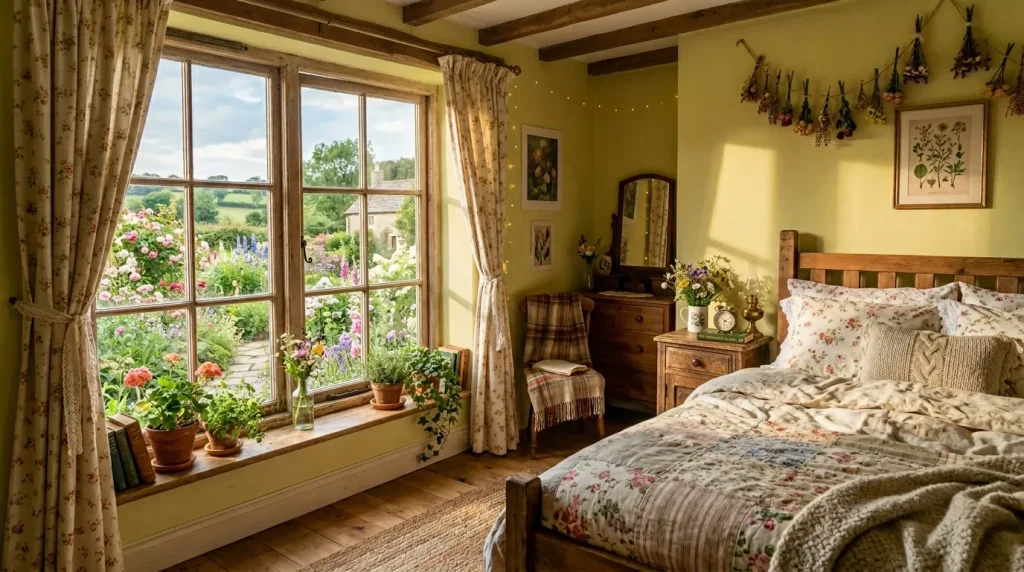
- Sage green (the single most iconic cottagecore shade)
- Dusty rose and faded blush
- Warm cream and soft off-white
- Butter yellow
- Soft lilac and muted lavender
- Earthy mushroom and warm taupe
Supporting accent shades:
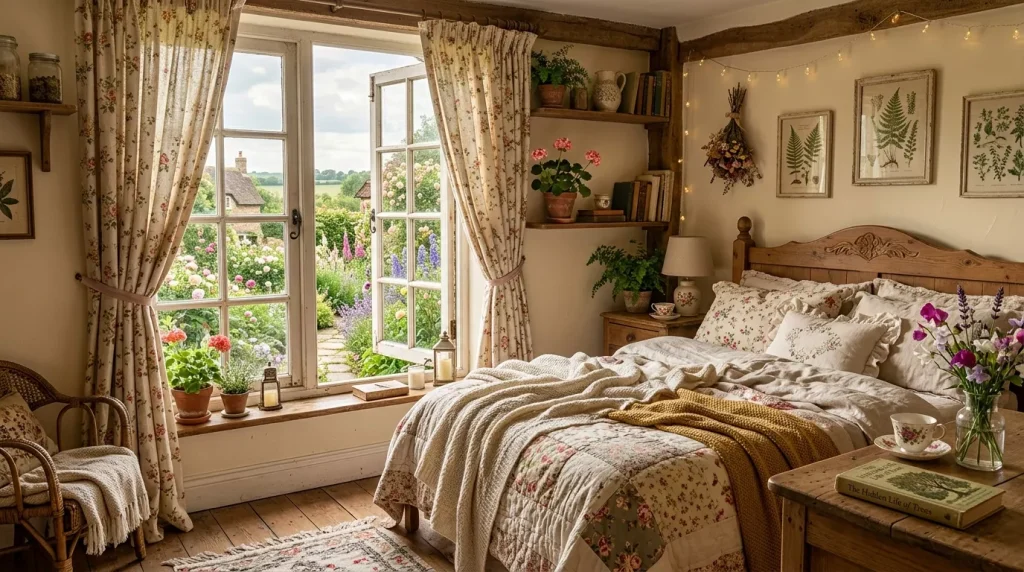
- Terracotta
- Warm rust and faded burgundy
- Forest and moss green
- Antique gold
If you’re painting walls, sage green with warm cream trim is the most beloved combination in this entire aesthetic. It feels simultaneously fresh and nostalgic. Alternatively, warm cream walls with botanical green accents give a lighter, airier version of the same spirit.
Avoid anything that looks too sharp, too bright, or too clean. Cottagecore colors should look like they belong in a watercolor painting, not a paint company’s premium modern range.
How to Create a Cottagecore Bedroom: Step-by-Step Guide
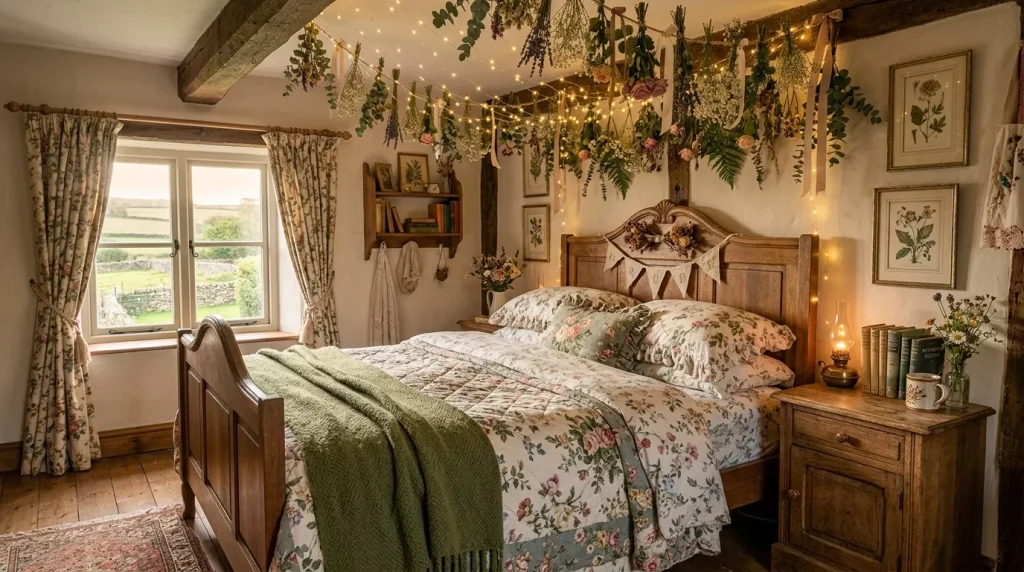
Step 1: Set the Scene with Your Walls
Your walls establish the emotional tone for everything else.
Paint — Sage green, warm cream, dusty mauve, or soft butter yellow all work beautifully. Choose a flat or eggshell finish over high gloss — it reads more cottage-like and less contemporary.
Wallpaper — This is where cottagecore truly comes alive. Vintage-style botanical prints, delicate climbing rose patterns, or meadow florals are dream choices. You don’t need to cover every wall — a single feature wall behind the headboard is enough to anchor the whole room.
No budget for paint or paper? A gallery wall of pressed flower prints, botanical illustrations, and vintage-style art in mismatched frames can completely transform a plain white surface. Cost: practically nothing if you DIY the prints.
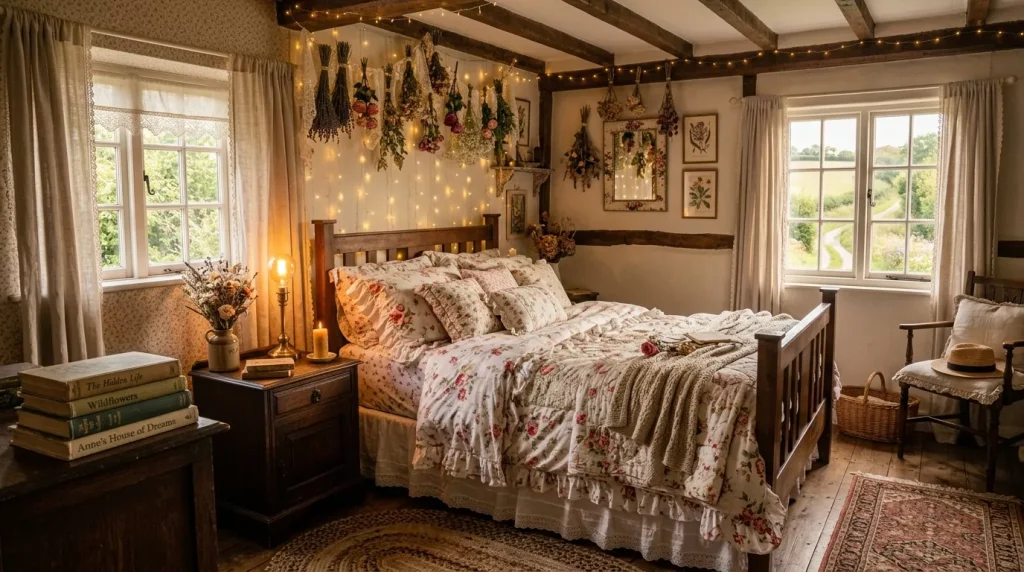
Step 2: Choose the Right Bed Frame
In a cottagecore bedroom, the bed is the most important piece. It’s the centerpiece, the largest canvas for texture, and often the item that most clearly signals the aesthetic.
Best bed frame styles for cottagecore:
- Wooden poster or sleigh beds in warm-stained or painted-white wood
- Iron or brass bed frames — the more ornate the detailing, the better
- Low wooden platform beds with turned or carved legs
- Upholstered headboards in floral or botanical fabric
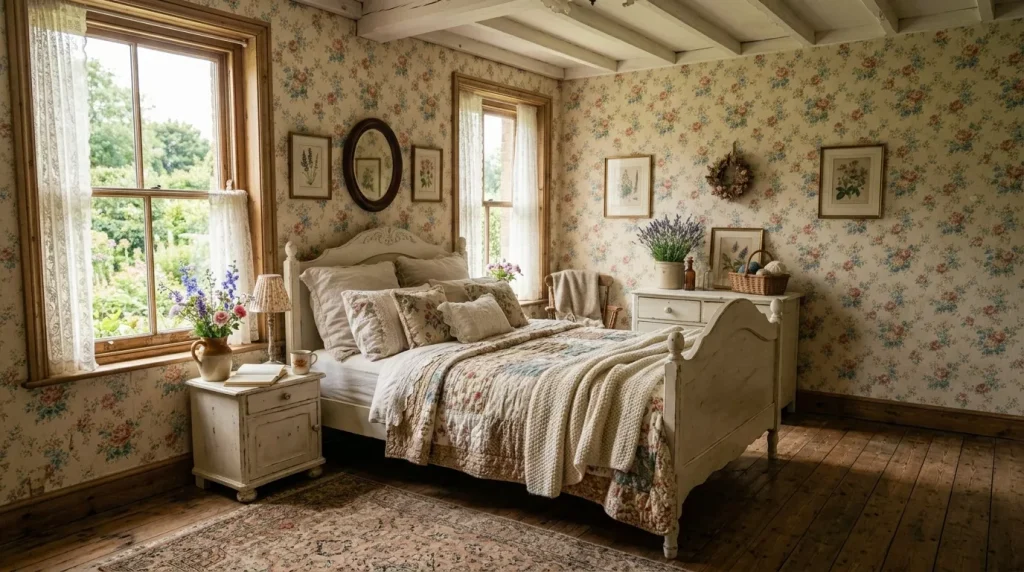
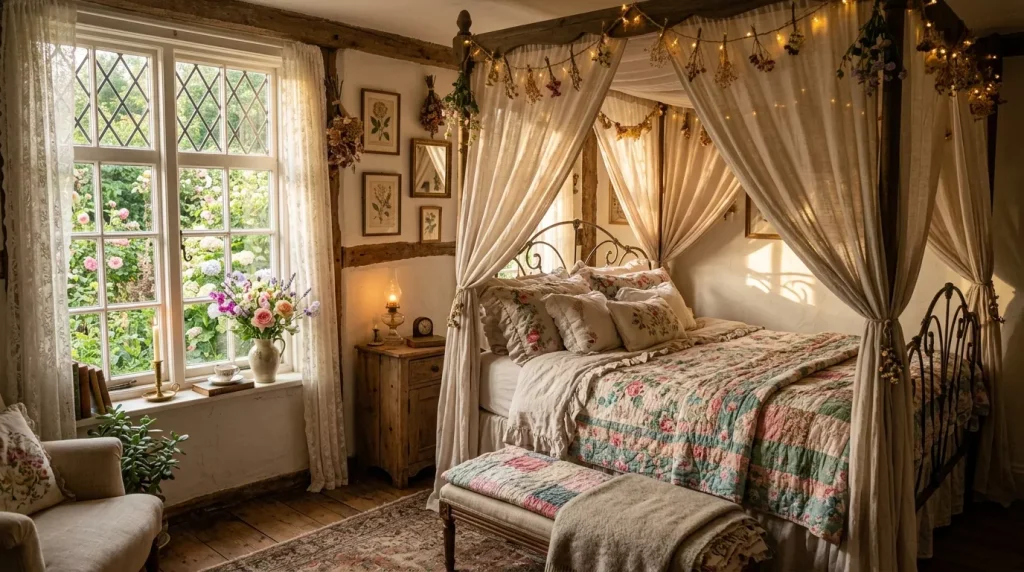
A canopy or four-poster bed draped with sheer linen, muslin, or gauze is one of the most iconic looks in cottagecore bedroom design. No canopy structure? Hang a simple fabric panel or a loop of dried flowers above the headboard for a similar effect at a fraction of the cost.
Step 3: Layer Your Bedding the Right Way
This step is where the real magic happens — and it’s entirely about layering different textures and tones rather than trying to match everything.
Build it like this:
- Base layer — soft white or warm cream linen sheets
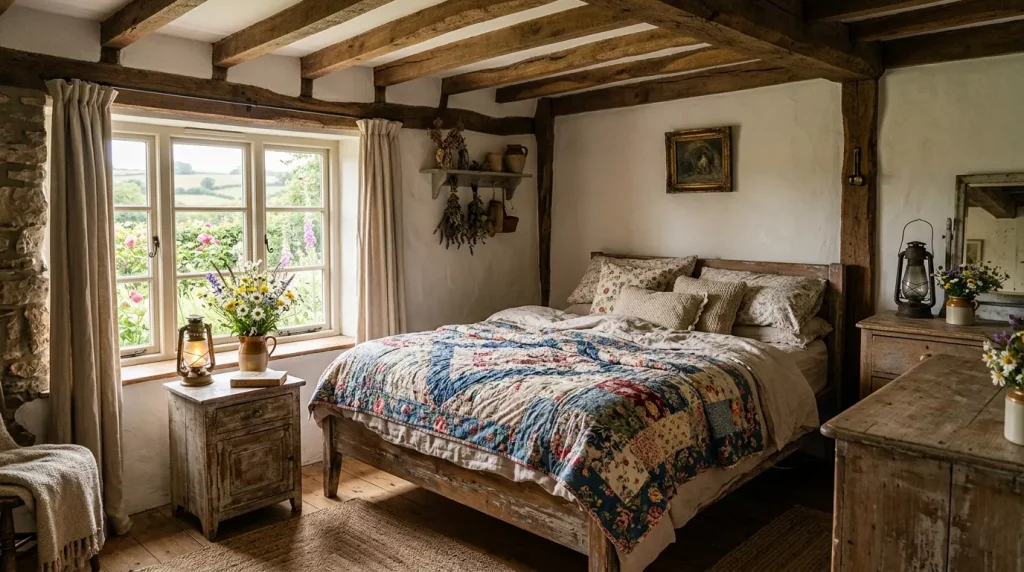
- Main layer — a floral print duvet, embroidered cotton quilt, or patchwork throw in muted tones
- Top layer — a chunky knit, crochet blanket, or a slightly worn vintage quilt in a complementary color
- Pillows — mix florals, plains, and embroidered or ruffle-edged cushions in varying sizes
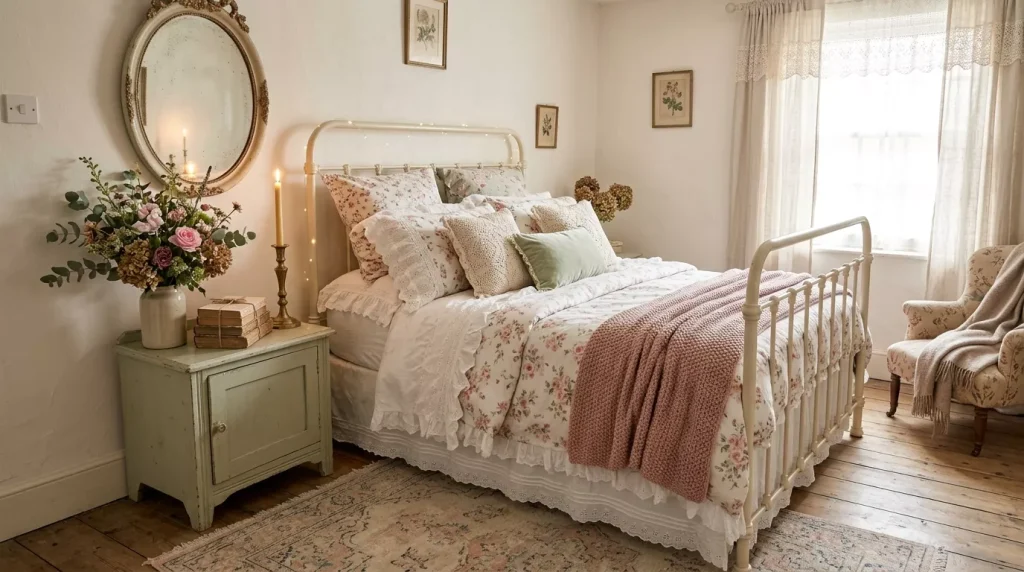
The golden rule: don’t try to match. Cottagecore bedding is intentionally eclectic. A large floral pattern beside a simple linen cushion beside an embroidered vintage pillowcase is exactly the right combination. If you’re unsure, add one more textured layer. You won’t regret it.
Step 4: Source Vintage and Antique Furniture
Brand-new, flat-pack furniture and cottagecore don’t mix well. The aesthetic calls for pieces that look like they’ve had a previous life — or at minimum, pieces that look like they could have.
Furniture to look for:
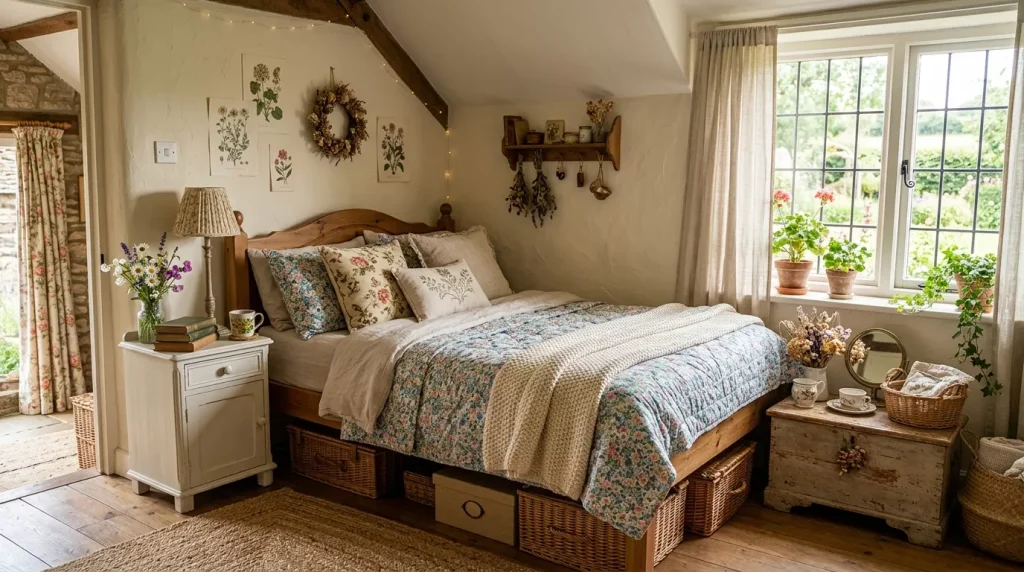
- A wooden dresser with ornate or antique-style drawer pulls
- Mismatched bedside tables (intentional mismatch is better than forced matching)
- A vintage vanity or dressing table with a framed mirror
- A wicker or rattan armchair in a corner
- Wooden open shelving with decorative bracket supports
Charity shops, estate sales, Facebook Marketplace, and car boot sales are your best hunting grounds. A £15 wooden side table sanded back and fitted with vintage brass hardware can look completely stunning in a cottagecore setting — often better than anything new.
If buying new, search for items described as “farmhouse,” “cottage,” “antique-style,” or “rustic” — they tend to hit the right visual notes.
Step 5: Fill the Room with Botanicals and Plants
This is the step that genuinely brings a cottagecore bedroom to life. Without plants and botanicals, the room lacks its most essential element — a visible connection to the living world.
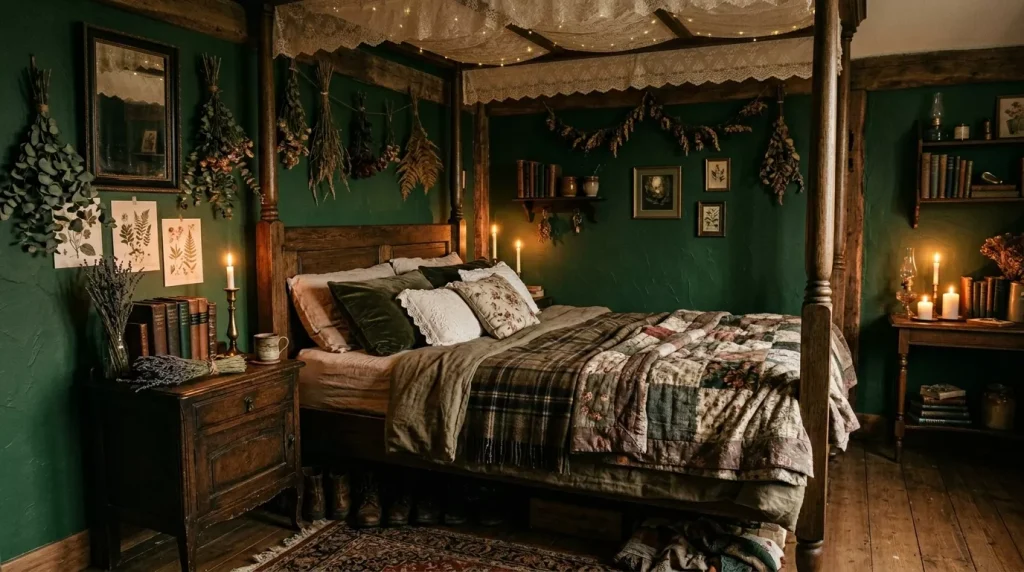
Living plants that suit the aesthetic:
- Trailing pothos or ivy on a high shelf (they drape beautifully)
- Ferns in terracotta or ceramic pots on the windowsill
- A small indoor herb pot of lavender or rosemary for scent
- A larger houseplant — rubber tree, fiddle-leaf fig, or monstera — in a wicker or rattan planter
Dried and preserved botanicals:
- Hanging bunches of lavender, dried eucalyptus, or wheat grass from ceiling hooks
- Pressed flower frames — one of the easiest and most beautiful cottagecore DIYs
- Dried wildflower bouquets in ceramic vases, vintage bottles, or clay pitchers
- Pampas, bunny tail grass, or cotton stems in a basket or enamel jug
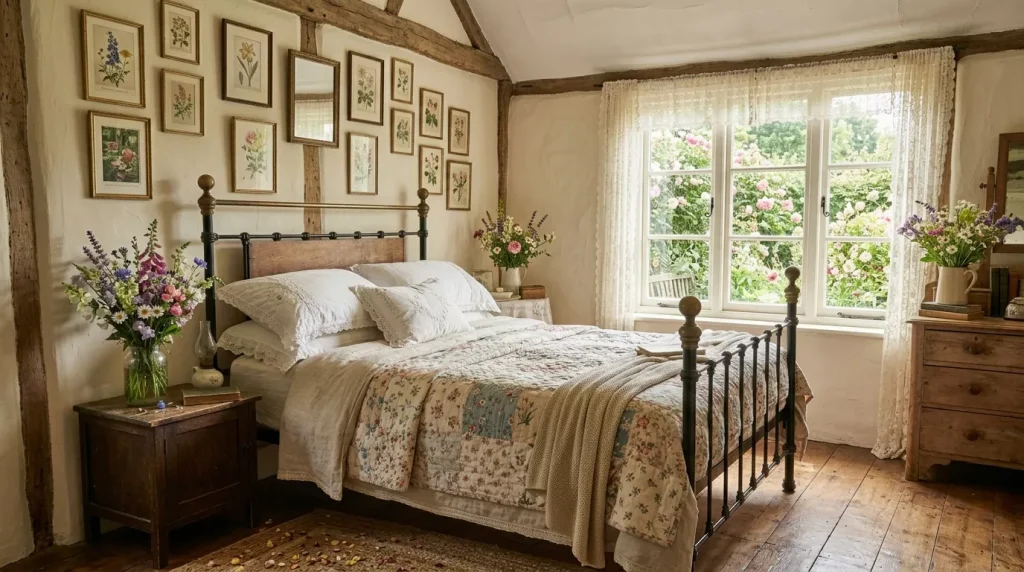
The combination of living green and warm dried botanical tones is what makes a cottagecore bedroom feel truly complete. One without the other is good. Both together is something else entirely.
Step 6: Nail the Lighting
Cottagecore lighting should feel like a golden hour that never actually ends.
What works brilliantly:
- Fairy lights strung along the bed frame, headboard, or draped across a canopy
- A vintage-style bedside lamp with a warm-toned bulb (aim for 2700K)
- Beeswax or soy candles placed thoughtfully on shelves and dressers
- A rattan or dried botanical pendant light overhead
- A wicker or woven lamp shade over an existing lamp base
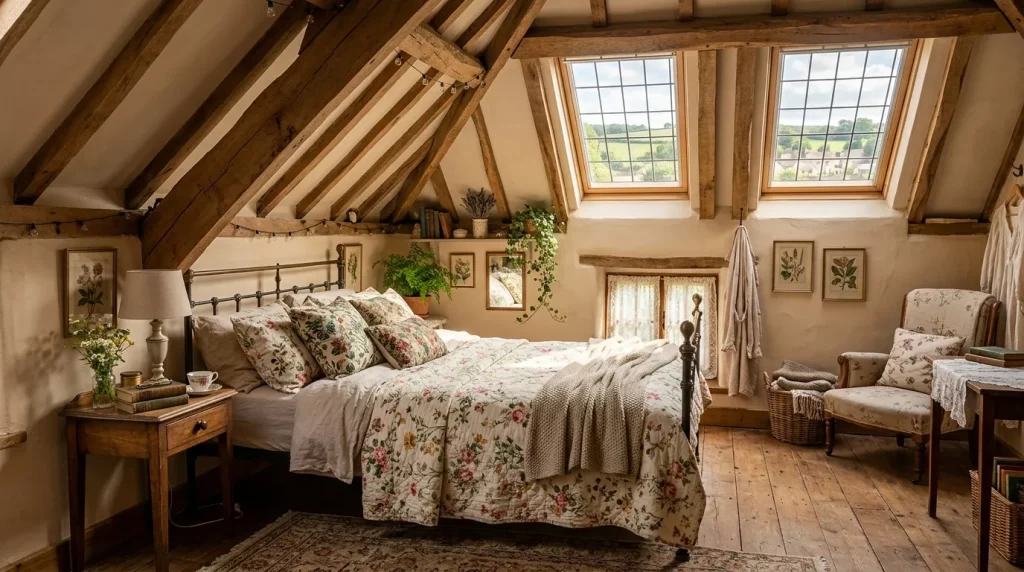
What to avoid: Bright overhead fluorescent or LED lighting kills the cottagecore atmosphere immediately. If your room only has a central ceiling light, change the bulb to a warm-toned option and add at least one lamp at a lower level. The shift in atmosphere is instant and significant.
Step 7: Accessorize with Meaning
The final layer is where a cottagecore bedroom either comes together beautifully or becomes overwhelming. The difference is intention.
Every accessory should belong to one of three categories: the natural world, the vintage world, or the handmade world.
Good accessory choices include:
- Glass jars filled with dried botanicals, small pebbles, or shells
- A curated stack of old hardcover books with their spines or covers visible
- Wicker baskets for blankets, pillows, and general storage
- A vintage ceramic bowl or antique pitcher styled with a few flowers
- A wooden tray layered with a candle, a small plant, and a river stone
Anything that feels modern, plastic, or digitally branded tends to pull you out of the story the room is telling. Edit generously.
Budget vs. Splurge: Cottagecore Bedroom Swaps
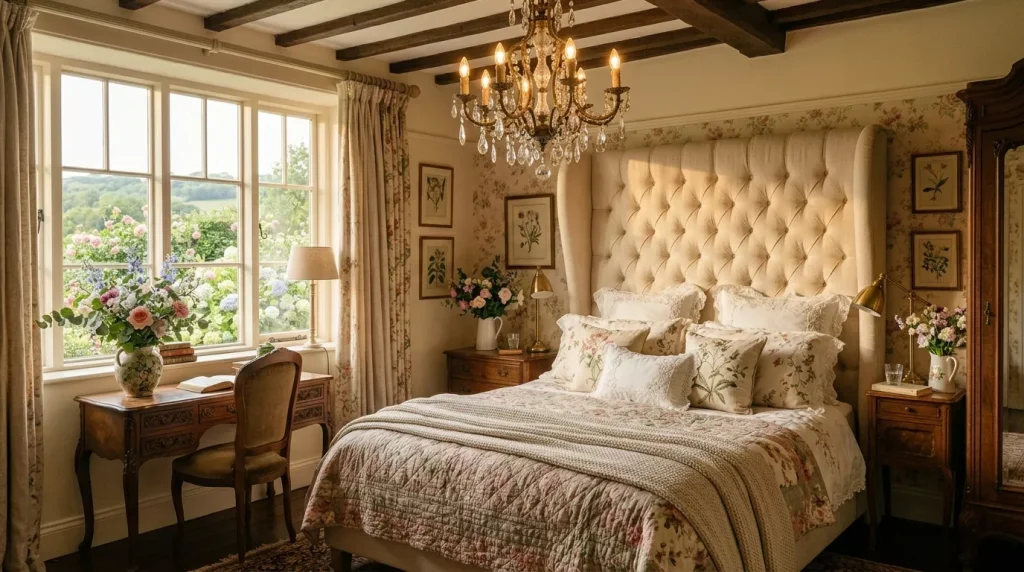
| Splurge Version | Budget-Friendly Alternative |
|---|---|
| New linen duvet and matching set | Second-hand embroidered quilt from a charity shop |
| Ornate iron or brass bed frame | Paint your existing bed frame in a warm antique white |
| Botanical or floral wallpaper | Printed botanical illustrations in thrifted frames |
| New rattan armchair | Wicker storage baskets + second-hand wooden stool |
| Fresh flower arrangements weekly | Dried wildflowers sourced from a craft store or foraged |
| Designer vintage bedside lamp | Car boot sale lamp with a new warm-toned bulb |
| Professional-grade sage green paint | One large botanical print on existing cream walls |
Cottagecore vs. Similar Aesthetics: What Actually Makes It Different?
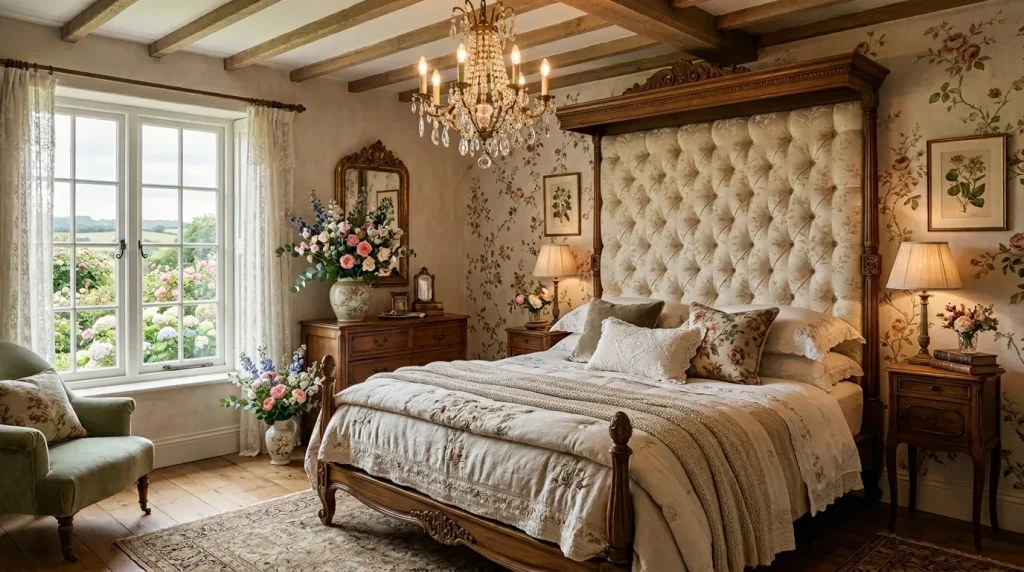
People often mix cottagecore up with neighboring aesthetics. Here’s a useful comparison:
| Aesthetic | Key Vibe | How It Differs from Cottagecore |
|---|---|---|
| Cottagecore | Rural romance, nature, soft florals | Warm, botanical, hand-crafted, pastoral nostalgia |
| Dark Academia | Moody, scholarly, gothic-adjacent | Darker palette, leather and books, less floral warmth |
| Grandmillennial | Maximalist, traditional, chintz and chinoiserie | More formal and structured, less outdoorsy and rustic |
| Farmhouse | Rustic, clean lines, neutral palette | Neutral tones, more functional and spare, less romantic |
| Boho | Eclectic, global textiles, free-spirited | More colorful and globally influenced, less rural-specific |
| Fairy / Whimsical | Magical, ethereal, fantastical | More dreamlike and surreal, less grounded in nature-realism |
Cottagecore is unique in its specific rootedness in the natural and pastoral world. It’s warmer and softer than farmhouse, less formal than grandmillennial, more grounded than fairy, and more focused on the rural English countryside than the global eclecticism of boho.
Common Mistakes to Avoid in a Cottagecore Bedroom
1. Mixing patterns without varying scale. Florals on florals can be beautiful — but you need to vary the size of the prints. A large-scale floral duvet paired with a small-scale wallpaper and a medium print curtain is a lot. Let one pattern dominate and use plain textures (linen, cotton) as visual breathing room between them.
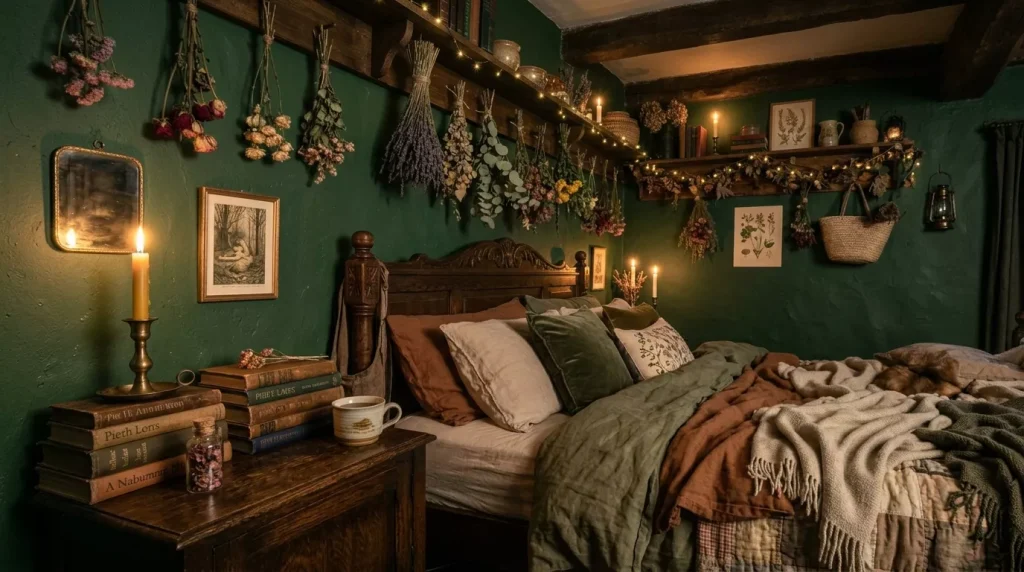
2. Making everything look brand new. A room where every piece is pristine, perfectly styled, and from the same retailer feels like a stage set rather than a lived-in space. The soul of cottagecore lives in imperfection — a chipped corner on a vintage table, a slightly pilled quilt, a handmade ceramic with uneven glaze. Embrace it.
3. Using too many dark tones. Forest green and burgundy work as accents in a cottagecore bedroom, not as dominant forces. Too many dark shades tip the room into a gothic or academic mood and lose the characteristic lightness and warmth that makes this aesthetic so appealing.
4. Forgetting the ceiling entirely. Hanging dried flower bunches, a macramé piece, or softly draped fairy lights from ceiling hooks completely transforms a cottagecore bedroom. Most people ignore it, which means most cottagecore rooms are missing one of their most impactful layers.
5. Fairy lights used carelessly. A string of cool-white fairy lights trailing a visible orange extension cable across a skirting board is not the look. Warm-toned lights (never cool white), thoughtfully placed, safely secured — that’s the difference between atmospheric and accidental.
6. Neglecting practical storage. Cottagecore rooms are full of things — and without smart storage, they quickly become chaotic. Wicker baskets, vintage trunks, wooden crates, and lidded boxes handle the everyday clutter while staying completely on-theme.
Tips for Building a Beautiful Cottagecore Bedroom
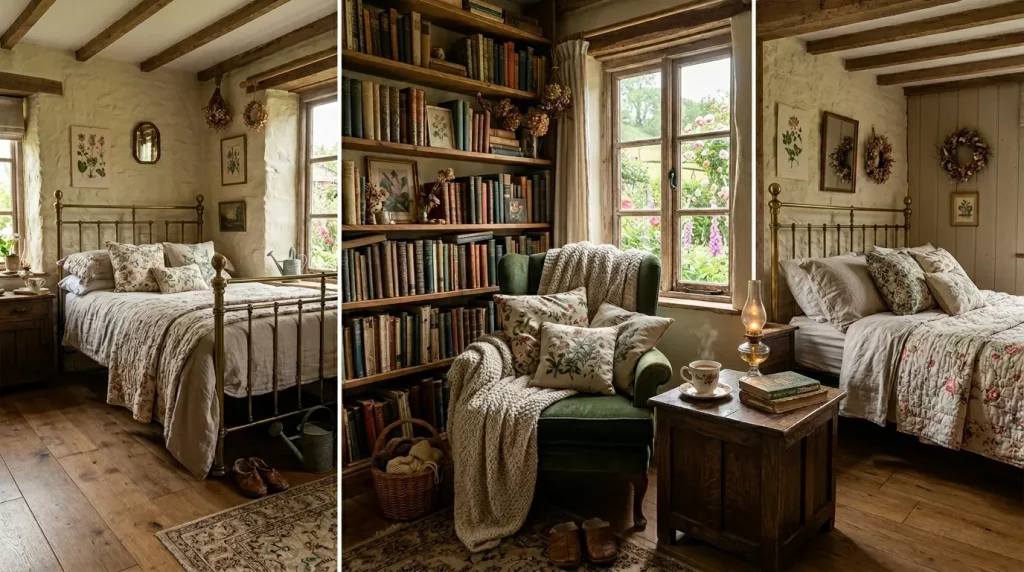
- Shop charity shops before buying anything new — the best cottagecore pieces look like they’ve had a previous life, because they have.
- Use nature as free decor — foraged branches, pinecones, dried seed heads, and river pebbles cost nothing and photograph beautifully.
- Make pressed flower frames yourself — press flowers between book pages for two weeks, then frame them. Arguably the most cottagecore DIY in existence.
- Build slowly — the most beautiful cottagecore rooms develop over months, not weekends. Let it grow naturally rather than buying everything at once.
- Layer scent alongside visual decor — dried lavender under your pillow, a beeswax candle on the shelf, a diffuser with floral or woody essential oils. The sensory effect adds a whole new dimension.
- Keep it personal — the best cottagecore rooms are the ones that genuinely reflect the person who lives in them. If you actually love wildflowers, old books, and quiet mornings, let that show. It’ll feel authentic in a way that no mood board can manufacture.
Conclusion: Your Cottagecore Bedroom Is Ready to Begin
The cottagecore bedroom aesthetic isn’t a phase or a passing moment in internet culture. For the people drawn to it, it’s a genuine expression of how they want to live — softly, slowly, connected to the textures and rhythms of the natural world.
And the most beautiful thing about building a cottagecore bedroom is that you don’t need much to start. A linen throw picked up at a charity shop. A bundle of dried lavender from a market. A botanical print framed in something old and wooden. A warm light bulb swapped into a lamp you already own.
Every piece you add tells a small story. Over time, those stories layer into something that feels entirely, unmistakably your own.
Ready to begin your cottagecore bedroom transformation? Start with one thing today — a plant, a thrifted quilt, a bunch of dried flowers — and let the rest unfold naturally. Your dreamy, cozy retreat is already closer than you think.
FAQs About Cottagecore Bedroom
Q1: What is a cottagecore bedroom?
A cottagecore bedroom is a sleeping space designed around the cottagecore aesthetic — a style rooted in romanticizing rural life, nature, and old-world simplicity. It typically features floral and botanical patterns, vintage or antique furniture, layered textiles in soft muted tones, dried and living botanicals, natural materials like linen and reclaimed wood, warm atmospheric lighting, and a cozy, deeply personal atmosphere. It’s less a strict design system and more a feeling — warm, slow, and deeply connected to the natural world.
Q2: How do I make my room cottagecore on a budget?
Start with charity shops and thrift stores for second-hand quilts, vintage frames, mismatched wooden furniture, and old ceramic pieces. Use nature for free decor — foraged dried branches, pinecones, and wildflowers look beautiful in glass jars or old pitchers. Make pressed flower art at home using flowers from your garden and a stack of heavy books. Swap your light bulbs for warm-toned ones. Add one or two well-chosen botanical prints to your walls in thrifted frames. The cottagecore look is built on patience, creativity, and low budgets — not big spending.
Q3: What colors are used in a cottagecore bedroom?
The cottagecore palette is built on soft, muted, nature-derived tones. The most commonly used shades include sage green, warm cream and off-white, dusty rose, butter yellow, soft lavender, and earthy mushroom. Accent shades include terracotta, forest green, warm rust, and faded burgundy. The defining quality of every cottagecore color is that it should look slightly softened or faded — like it belongs in a watercolor painting or has been gently weathered by time. Avoid bright, saturated versions of any of these hues.
Q4: Can I create a cottagecore bedroom in a small apartment?
Absolutely — small spaces can be wonderful for cottagecore. Focus on your bed as the central statement piece, add one or two pieces of secondhand furniture, create a windowsill herb or plant garden, hang a few botanical prints on the wall, and use fairy lights and a warm lamp for atmosphere. You don’t need square footage to create this aesthetic; you need the right textures, the right tones, and a few well-placed natural elements. Many of the most enchanting cottagecore bedrooms exist in compact studio apartments.
Q5: What kind of bedding works best for a cottagecore bedroom?
Floral and botanical prints, patchwork quilts, embroidered cotton, and crochet or knit throws are the most characteristic cottagecore bedding choices. Base layers — sheets and pillowcases — are usually soft white, warm cream, or light natural linen. The upper layers carry the pattern and texture. The look is intentionally layered and slightly mismatched, so don’t try to coordinate everything — a floral quilt with a plain linen duvet and a patchwork throw is exactly right. The more textures, the better.
Q6: What plants suit a cottagecore bedroom best?
Plants that feel wild, organic, or a little romantic are the best fit. Trailing pothos or ivy on a high shelf are beautiful and easy to maintain. Ferns in terracotta pots suit the aesthetic perfectly. A small pot of lavender or rosemary on the windowsill adds scent as well as visual appeal. For the dried botanical element — which is equally important — hanging bunches of dried lavender, eucalyptus, cotton stems, or wildflowers from small ceiling hooks is one of the most iconic cottagecore details. If you struggle to keep live plants alive, dried botanicals require zero care and look just as lovely.
Q7: How do I stop a cottagecore bedroom from looking cluttered or messy?
Intentional layering is the key distinction between a beautifully curated cottagecore room and a chaotic one. Give objects space to breathe — a small cluster of three pieces reads as a curated vignette; five pushed together reads as clutter. Use wicker baskets, wooden boxes, and vintage trunks for practical storage so everyday items stay hidden. Vary the heights of your accessories rather than lining everything up at the same level. And edit regularly — if something isn’t contributing to the story of the room, remove it. The cottagecore aesthetic celebrates abundance, but it’s a curated abundance — not a random one.