All White Bathroom Ideas: 20+ Timeless Inspirations

All White Bathroom Ideas: 20+ Timeless Inspirations for Every Home

Few things in interior design are as universally loved — or as consistently misunderstood — as the all white bathroom. Done well, it’s crisp, calming, and endlessly elegant. Done carelessly, it can feel cold, clinical, or just plain boring.
Here’s the truth: a white bathroom isn’t about the absence of design — it’s about the mastery of it. When color is removed from the equation, every other decision becomes louder. The tile texture, the grout color, the hardware finish, the light fixtures, the accessories — all of it matters more, not less.

Whether you’re planning a full renovation or just refreshing what you already have, this guide covers every angle of the all white bathroom: real ideas, honest trade-offs, and practical advice to help you get it right the first time.
Why All White Bathrooms Never Go Out of Style

Some trends fade fast. White bathrooms aren’t one of them.
White has been the dominant bathroom color for over a century, and there are real reasons for that staying power. It reflects light better than any other color — particularly valuable in bathrooms that don’t get much natural light. It reads as clean. It makes a space feel larger. And perhaps most importantly, it works as a neutral backdrop that lets fixtures, materials, and accessories take center stage.

White also gives you enormous design flexibility over time. Swap out dark towels for light ones, change the shower curtain, add a plant or a timber bath mat — and the room looks completely different without touching a wall or tile.
That adaptability is rare, and it’s exactly why the all white bathroom remains one of the most popular searches in home design year after year.
All White Bathroom Ideas: By Design Element

White Tile — The Foundation of Every Great White Bathroom
Tile is where the all white bathroom story really begins, and there’s far more variety here than people realize. “White tile” is not one thing — it’s hundreds of things, each with a completely different personality.
Classic Subway Tile The 3×6 subway tile is the workhorse of white bathrooms everywhere. It’s clean, affordable, versatile, and the grout joint pattern gives the eye something to follow. The secret weapon? Grout color. White grout creates a seamless, almost wall-like look. Dark grout — charcoal, slate, or black — defines each tile sharply and gives the whole space a graphic, more modern edge.

Marble and Marble-Look Tile Carrara marble is the gold standard of white bathroom luxury. The soft gray veining adds movement and visual interest that keeps a fully white space from feeling flat. If natural marble isn’t in the budget, porcelain marble-look tiles have gotten remarkably convincing in recent years and come with the bonus of being far more durable and stain-resistant.
Textured and Patterned White Tile This is where things get interesting. Consider:

- Zellige tile: Handmade Moroccan clay tiles with natural variations in surface and sheen — no two pieces look exactly alike
- Fluted or ridged tile: Vertical channels catch light beautifully and add tactile depth
- Hexagon or penny tile: Classic shapes that add geometry without adding color
- Herringbone pattern: The same tile, laid at a 45-degree angle — completely different effect
- 3D or sculpted tiles: Relief patterns that cast shadows and create dimension

Choosing the right tile isn’t just about color — it’s about how the surface handles light, how the pattern reads at scale, and how it interacts with everything else in the room.
All White Bathroom Vanities and Sinks
The vanity is the most-used piece of furniture in a bathroom, and in a white space, it carries enormous design weight.
White Shaker Vanities The white shaker cabinet remains the most popular vanity choice in all white bathrooms, and for good reason. The recessed panel door adds just enough detail to feel designed without being overdone. Pair it with a quartz or marble countertop and brushed nickel hardware for a classic combination that genuinely never fails.

Floating Vanities A wall-mounted floating vanity instantly modernizes an all white bathroom. The gap between the cabinet and floor makes small bathrooms feel larger and gives a clean, architectural look. Go for a flat-front door in matte white for maximum minimalism, or add a single routed line for subtle detail.
Freestanding Pedestal Sinks If you’re working with a small bathroom or a powder room, a white pedestal sink is hard to beat. It takes up minimal visual space, adds a vintage-inspired elegance, and shows off beautiful tile work that a cabinet would otherwise cover. The trade-off is storage — you’ll need to plan that elsewhere.

Vessel Sinks A white ceramic vessel sink sitting on a simple wooden or stone counter is a bold, striking look. It elevates the entire bathroom into something that feels more like a boutique hotel than a home bathroom. Use matte black or brushed brass faucets for contrast that pops.
White Bathtubs and Shower Enclosures
If your bathroom has a bathtub, it’s almost certainly the visual anchor of the space. In an all white bathroom, the tub’s shape and material matter as much as its color.
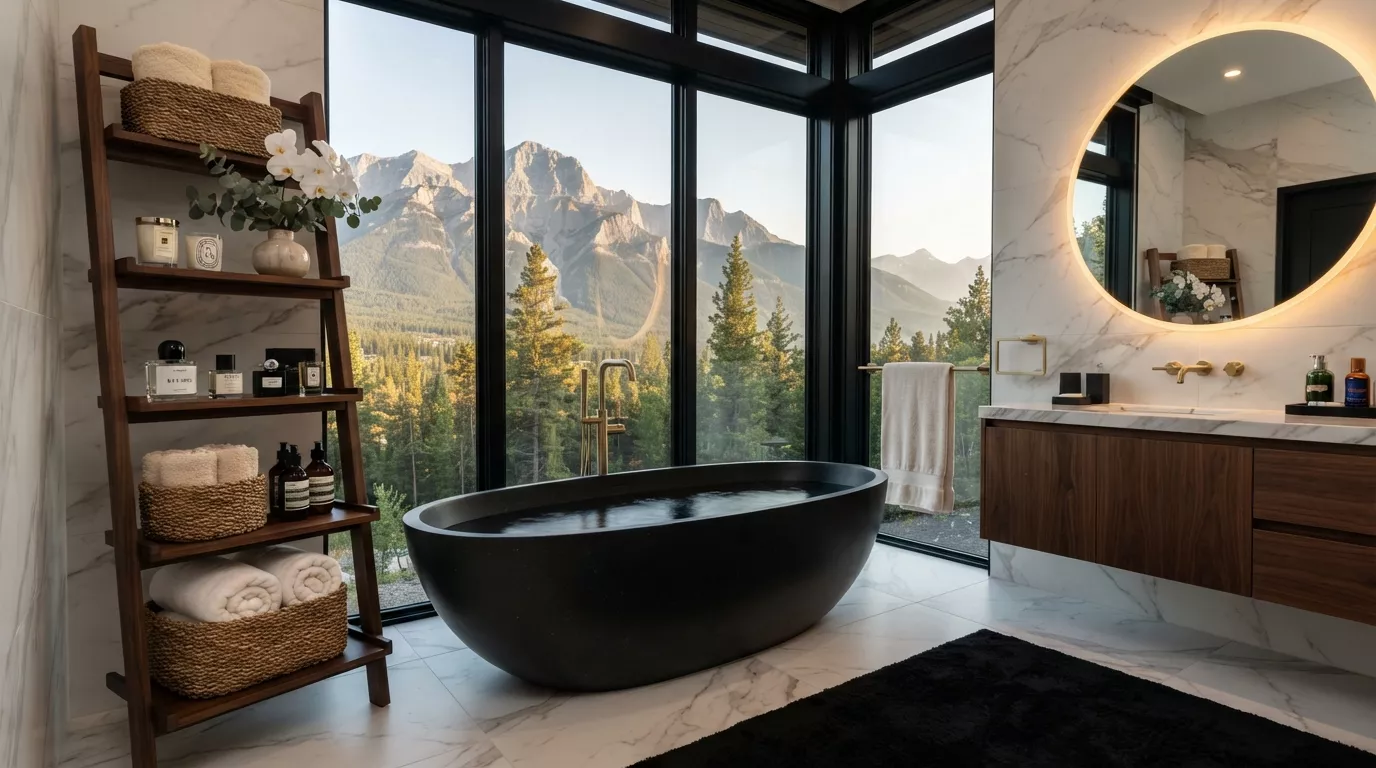
Freestanding Soaking Tubs There is no single more luxurious-looking bathroom upgrade than a white freestanding soaking tub. Whether it’s a classic clawfoot in porcelain, a modern sculpted acrylic oval, or a slipper tub with an asymmetric silhouette, a freestanding tub transforms a bathroom from functional to genuinely beautiful.

Built-In Tub and Shower Combos For practical, family-oriented bathrooms, a built-in tub with a full-height tile surround is the reliable choice. Keep the tile simple — subway, large-format marble, or a clean herringbone pattern — and let the fixtures do the styling work.
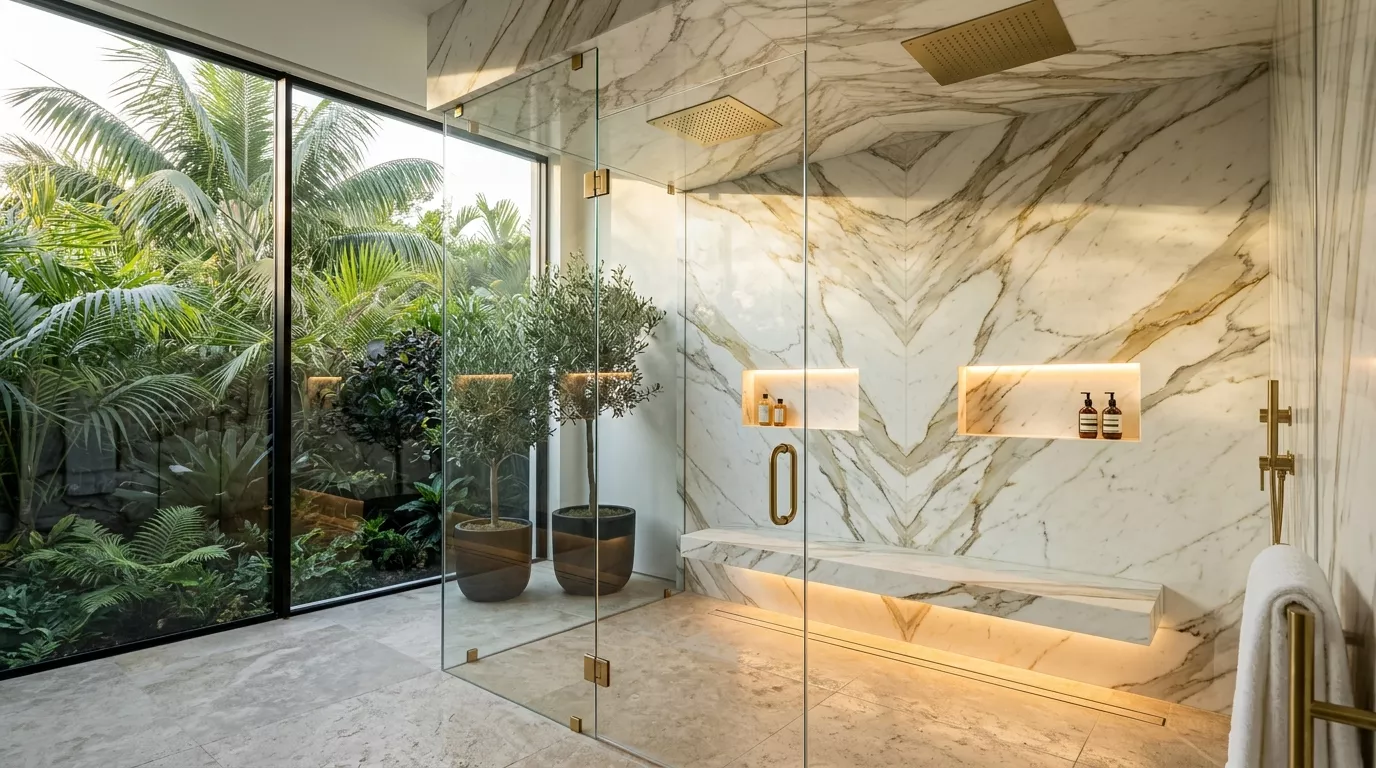
Walk-In Showers A frameless glass shower with full white tile inside is incredibly sleek. The lack of a visible frame makes the glass almost disappear, which is especially effective in compact bathrooms. For drama, extend the tile from floor to ceiling and use a linear floor drain to maintain the clean visual line.
Fixtures and Hardware: Where the Real Personality Lives
In an all white bathroom, fixtures and hardware aren’t just practical necessities — they’re the jewelry of the space. The finish you choose dramatically changes the overall feel.

| Hardware Finish | Bathroom Vibe | Best Paired With |
|---|---|---|
| Chrome | Clean, modern, bright | White subway tile, contemporary vanities |
| Brushed Nickel | Warm, understated | Marble surfaces, transitional style |
| Matte Black | Graphic, bold, modern | All-white tile, floating vanities |
| Brushed Brass / Gold | Warm, luxe, editorial | Marble, warm white tones |
| Oil-Rubbed Bronze | Vintage, earthy | Pedestal sinks, clawfoot tubs |
| Polished Brass | Art deco, statement | Classic white tile, ornate mirrors |
Matte black against an all white background is currently one of the most popular contrasts in bathroom design — and it works because the contrast is simple but graphic. Brushed brass adds warmth that prevents the space from feeling too cold or clinical.

Pick one finish and commit to it across your faucet, towel bars, toilet paper holder, mirror frame, and light fixtures. Consistency here looks intentional. Mixing too many finishes usually looks accidental.
All White Bathroom: Texture Is Everything
Here’s the thing about a monochromatic color palette — it puts all the pressure on texture and material to keep the space from falling flat.
In a room where everything is the same color, what separates a polished, well-designed bathroom from a boring one is how those materials interact with light.
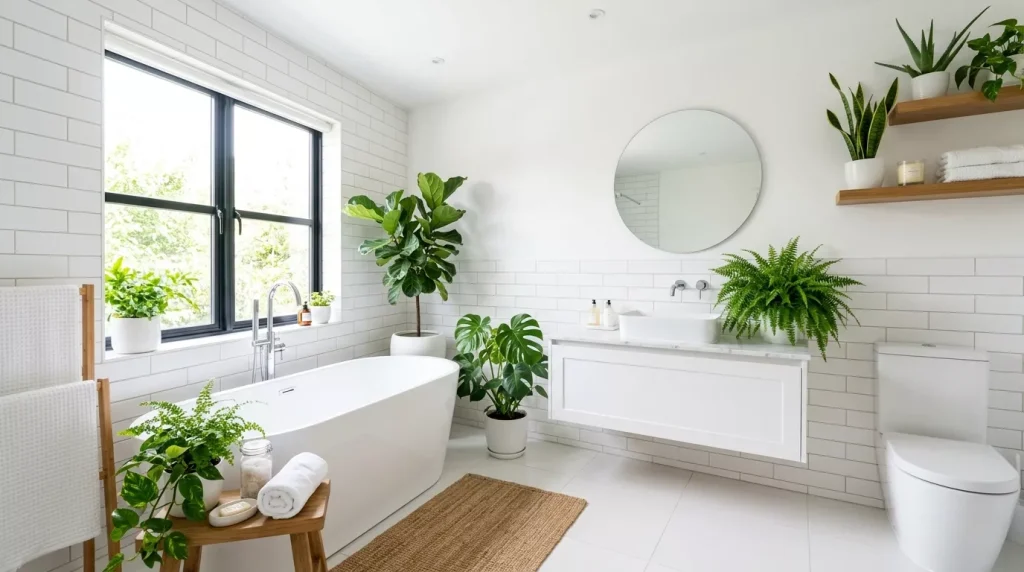
Texture-Layering Strategy:
- Glossy wall tile bounces light and makes a room feel brighter
- Matte floor tile absorbs light, reduces glare, and is safer underfoot when wet
- Woven or waffle-weave towels add softness and visual warmth
- A wooden bath mat or teak shower rack introduces natural warmth
- A jute or cotton rug grounds the space and adds tactile interest
- Plants: even one healthy trailing pothos or a small fern introduces life and color contrast in the most elegant, non-disruptive way

The goal is to create a bathroom that feels rich when you look closely — not just white from across the room.
All White Bathroom Styles: Which Approach Fits You?
White bathrooms span a genuinely wide design spectrum. Here’s a comparison of the most popular takes:

| Style | Key Characteristics | Best For |
|---|---|---|
| Classic / Traditional | Subway tile, pedestal sink, chrome fixtures, wainscoting | Heritage homes, timeless appeal |
| Modern Minimalist | Large-format tile, floating vanity, frameless glass, no clutter | Apartments, contemporary homes |
| Spa / Luxury | Carrara marble, freestanding tub, rain shower, warm lighting | Master bathrooms, relaxation focus |
| Farmhouse White | Shiplap walls, open shelving, vintage mirrors, warm wood | Rustic or country-style homes |
| Coastal White | White beadboard, natural textures, rope and linen accents | Beach houses, summer homes |
| Maximalist White | Ornate mirrors, patterned floor tile, bold fixtures | Statement-making spaces |

Pros and Cons of an All White Bathroom
Before you commit fully to a white scheme, here’s an honest weighing of both sides.

✅ Pros
- Timeless design: White doesn’t date the way trendy colors do — it’s as fresh in 30 years as it is today
- Makes spaces feel larger: White reflects light and visually expands small rooms
- Easy to resell: Neutral, universally appealing — white bathrooms are a genuine selling point for homes
- Incredibly versatile: You can shift the feel entirely just by changing accessories, towels, or fixtures
- Feels clean: Psychologically and aesthetically, white reads as hygienic and fresh
- Works with everything: Every accent color, every wood tone, every metal finish looks good against white

❌ Cons
- Shows everything: Soap scum, water spots, toothpaste — white amplifies every bit of everyday mess
- Can feel cold: Without warm accents, an all white bathroom can feel more like a hospital than a sanctuary
- Grout maintenance: White grout in particular is a commitment — it requires regular cleaning and occasional re-sealing
- Risk of blandness: Without careful attention to texture and material, it can read as simply unfinished rather than intentionally minimal
- Lighting sensitivity: White surfaces are unforgiving with harsh or cool-tone lighting, which can make the room feel sterile
Step-by-Step Guide: How to Design an All White Bathroom
Here’s a clear, beginner-friendly process for pulling together a white bathroom that actually looks designed.
Step 1: Set Your Style Direction Decide which style resonates — minimalist, spa, farmhouse, classic, or coastal. This shapes every decision that follows and prevents you from ending up with a confusing mix of mismatched elements.
Step 2: Choose Your Primary Tile Your wall tile is the biggest visual decision in the room. Choose the size, shape, and finish before anything else. Get samples, hold them against your fixtures, and observe them in your bathroom’s specific lighting at different times of day.
Step 3: Select Your Grout Color Don’t skip this step — it changes the entire effect. White grout reads seamless and modern. Dark grout reads graphic and bold. Light gray sits comfortably between the two.
Step 4: Pick Your Vanity and Sink Style Decide between built-in storage or a statement piece like a pedestal or vessel sink based on your storage needs and room size. Measure carefully — bathroom vanities that are even slightly too large can make a space feel cramped.
Step 5: Choose One Hardware Finish Pick your metal finish — chrome, brushed nickel, matte black, or brass — and apply it consistently across every fixture and fitting. This single discipline is what makes a bathroom look professionally designed.
Step 6: Plan Your Lighting Bathroom lighting is non-negotiable. Side-lit vanity mirrors (lights flanking or surrounding the mirror) are far more flattering and functional than overhead lighting alone. Warm-tone bulbs (2700K–3000K) are essential — they make white surfaces glow rather than glare.
Step 7: Introduce Warmth Through Accessories Add warmth at the end: a teak bath mat, white fluffy towels with a textured weave, a trailing plant, a wooden tray on the vanity, a warm-toned candle. These cost very little but do a huge amount of work to keep the bathroom from feeling sterile.
Tips for Making an All White Bathroom Feel Warm, Not Clinical
The most common complaint about white bathrooms is that they feel cold. These tips fix that:
- Use warm-tone lighting always: A 4000K bulb in a white bathroom looks like a hospital waiting room. Stay below 3000K
- Introduce natural wood tones: A teak shower bench, a wooden mirror frame, open shelving in oak — wood is the perfect counterpoint to white
- Layer textiles generously: Thick cotton towels, a bath mat, and a small rug add softness that hard surfaces alone can’t provide
- Go matte on the floor: Matte floor tiles absorb light more gently and feel visually softer than high-gloss options
- Add a real plant: Even a single succulent on the windowsill makes the space feel inhabited and alive
- Don’t over-minimize: Some decorative objects — a candle, a small tray, a piece of artwork — keep the room from looking like a show unit rather than a real home
Common Mistakes to Avoid
These are the missteps that most commonly derail an otherwise great all white bathroom.
❌ Using only one type of white: Mixing a cool-white tile with a warm-white paint and a cream vanity creates a color clash that’s subtle but deeply irritating. Either commit to one white throughout, or deliberately separate the zones so they don’t sit directly next to each other.
❌ Forgetting about storage: An all white bathroom looks beautiful when it’s clear of clutter. Make sure you’ve planned adequate storage — vanity drawers, recessed niches in the shower, over-toilet shelving — so the surfaces can actually stay clean.
❌ Choosing white grout without understanding the maintenance: White grout looks stunning initially but stains quickly in a shower. Either seal it religiously, choose an epoxy grout for wet areas, or use a darker grout in the shower and white grout only in lower-splash zones.
❌ Skimping on lighting: Poor lighting in a white bathroom looks worse than poor lighting anywhere else. Budget properly for good vanity lighting — it’s one of the highest-return investments in a bathroom renovation.
❌ Making it too cold with all cool tones: All cool whites, chrome fixtures, and no natural materials = sterile. If you love the clean modern look, at minimum add one warm element — a wood bath mat, a brass towel ring, a warm-tone plant pot.
❌ Ignoring scale: A massive 48×48 tile in a 5×8 bathroom overwhelms the space. Large-format tiles work in larger rooms. In smaller bathrooms, subway tile, smaller hex, or even medium-format tiles tend to give better proportions.
Conclusion: Your All White Bathroom Is Worth Getting Right
An all white bathroom is one of those design choices that rewards care and intentionality more than almost anything else in the home. When it’s done well, it’s genuinely timeless — the kind of space that feels just as beautiful ten years from now as it does on the day it’s finished.
The key isn’t to eliminate everything but white. It’s to let white be the foundation while texture, material, light, and warmth do the work of making the space feel human. A marble surface, a warm Edison bulb, a wooden mat on the floor, a single healthy plant — these are the details that separate a cold, clinical white bathroom from an elegant, peaceful one.
Take the ideas from this guide, start with the elements that feel most achievable, and build gradually. You don’t need to renovate everything at once.
Ready to create your dream white bathroom? Start with one change today — swap your bulbs to warm-tone, update your hardware finish, or add a teak bath mat. Small moves build toward something genuinely beautiful.
FAQs: All White Bathroom Ideas
Q1: Will an all white bathroom look dirty quickly?
It does show water spots, soap scum, and toothpaste more readily than darker finishes. That said, it also makes dirt easier to see — which means you notice it and clean it faster. The solution is choosing the right surfaces: honed or matte tiles are more forgiving than high-gloss ones, and epoxy grout in the shower resists staining far better than standard cement grout.
Q2: How do I add warmth to an all white bathroom without ruining the look?
Natural materials are your best friend here. A teak bath mat or shower bench, a wooden-framed mirror, open wooden shelving, or rattan storage baskets all add warmth without introducing color. Warm-tone lighting (under 3000K) is equally important — it shifts the whole feel of white from cold to glowing.
Q3: What’s the best paint for an all white bathroom?
Look for a paint specifically formulated for bathrooms — these have mildew-resistant additives that standard wall paint lacks. For finish, satin or semi-gloss is recommended for bathroom walls because they clean easily. In terms of shade, Benjamin Moore’s Chantilly Lace, Sherwin-Williams Alabaster, and Farrow & Ball All White are consistently praised for their depth and warmth compared to stark pure whites.
Q4: Can I do an all white bathroom in a small space?
Yes — and honestly, small bathrooms often benefit most from a white scheme. White maximizes light reflection and makes a tight space feel more open. Keep tiles mid-sized (not too large, not too small), use a floating vanity to show more floor, and install a large mirror to amplify the sense of space. Avoid heavy patterns or too many dark accents that would visually shrink the room.
Q5: What hardware finish looks best in an all white bathroom?
There’s no single right answer, but matte black and brushed brass are the two most popular choices right now because they provide a striking contrast against white without competing with it. Chrome is classic and clean. Brushed nickel is the most versatile, safe-middle-ground option. The most important thing is to choose one finish and use it consistently throughout the room.
Q6: Is marble a good choice for a white bathroom?
Marble is beautiful but requires some commitment. Natural marble needs to be sealed regularly because it’s porous and can stain from bathroom products. For lower maintenance, porcelain marble-look tiles deliver a very convincing aesthetic with far more durability. If you do choose natural marble, stick to honed finishes in wet areas — polished marble becomes extremely slippery when wet.
Q7: How do I make my white bathroom feel like a spa?
Focus on sensory details: a deep soaking tub or rain shower head, soft and generous towels, warm ambient lighting with dimmable fixtures, natural scents from a candle or diffuser, and minimal clutter on surfaces. Replacing a standard mirror with a large backlit mirror elevates the space dramatically. Add a eucalyptus bundle in the shower — it releases fragrance in the steam and looks effortlessly luxurious.