Vanity for Every Bathroom: Ideas & Inspiration Guide

Vanity for Every Bathroom: Ideas, Inspiration & the Ultimate Buying Guide

Walk into any well-designed bathroom and there’s one thing that sets the tone before anything else — the vanity. Whether it’s a sleek, wall-mounted unit in a modern apartment or a classic freestanding cabinet in a farmhouse-style home, the vanity for every bathroom is the centerpiece that ties the whole room together.
But here’s where most people get stuck. With so many styles, sizes, materials, and configurations available, choosing the right bathroom vanity can feel genuinely overwhelming. Single or double sink? Floating or floor-mounted? Open shelving or full cabinet doors?
This guide cuts through all of that. You’ll find practical ideas, real inspiration, honest comparisons, and a step-by-step process to help you find a vanity that works for your specific space — not just one that looks good in a showroom.
Why the Right Vanity Can Make or Break a Bathroom
The vanity isn’t just a piece of furniture. In most bathrooms, it takes up more visual space than any other single element. It influences how big or small the room feels, how functional your morning routine is, and how the entire aesthetic comes together.

A poorly chosen vanity — wrong size, wrong style, not enough storage — becomes a daily frustration. The right one, though, feels almost invisible. It just works.
Beyond aesthetics, a well-planned bathroom vanity solves real problems: insufficient storage, cluttered countertops, poor sink placement, and awkward use of floor space. That’s why it’s worth thinking carefully before you buy.
The Main Types of Bathroom Vanities Explained
Before you fall in love with a style, you need to understand what’s actually available and what each type offers in the real world.
Freestanding Vanities
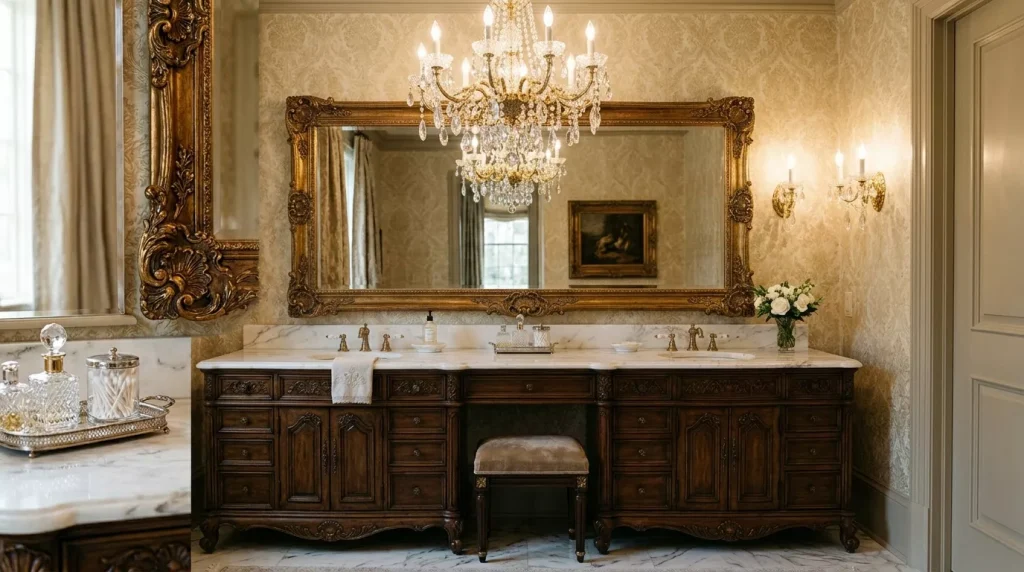
These are the classic floor-mounted cabinets that sit directly on the bathroom floor. They’re the most common style in homes and come in every shape, size, and finish imaginable.
Freestanding vanities tend to offer the most storage because the cabinet extends all the way to the floor. They’re also easier to install since they don’t require wall anchoring beyond basic plumbing hookups.
Best for: Family bathrooms, older homes, anyone who needs maximum under-sink storage.
Floating (Wall-Mounted) Vanities
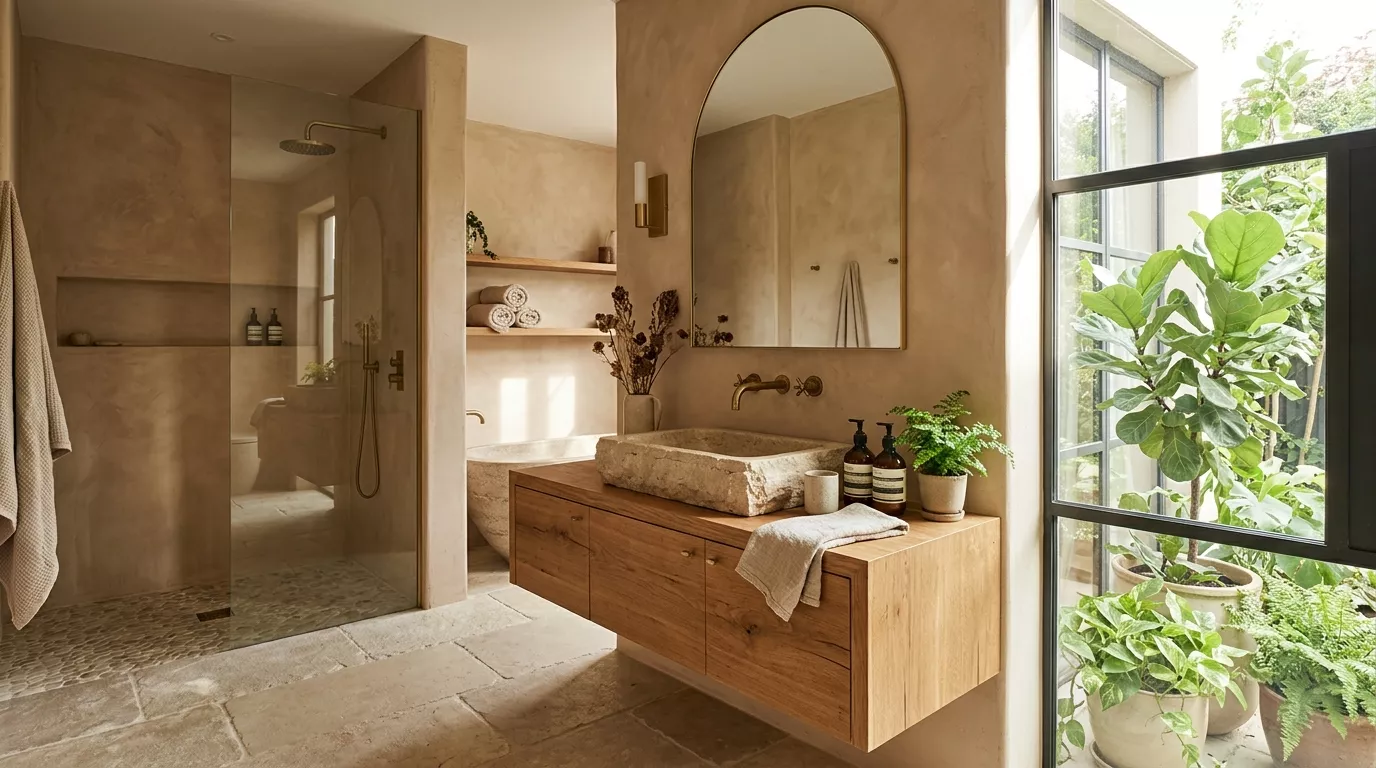
A floating vanity is mounted directly to the wall with no legs or base touching the floor. The result is a clean, contemporary look that makes the bathroom feel more spacious, especially in smaller rooms.
Because the floor is visible beneath the unit, the eye reads the room as larger. These are huge in modern and Scandinavian-inspired designs right now.
Best for: Small bathrooms, modern interiors, rooms with beautiful tile floors worth showing off.

Vessel Sink Vanities
With a vessel sink vanity, the basin sits on top of the counter rather than being recessed into it. This creates a dramatic, almost sculptural look and works beautifully in powder rooms or guest bathrooms where style takes priority over practicality.
The trade-off is counter space — you have less of it, and the elevated sink height can be awkward for children or shorter users.
Best for: Powder rooms, guest bathrooms, spaces where visual impact matters most.
Pedestal and Console Vanities
A pedestal sink is a single-column unit with no cabinet at all. Console vanities are a step up — they feature a counter with legs and sometimes open shelving below. Both options are slim, space-saving, and ideal for very small bathrooms or powder rooms.

Neither offers much storage, which is the major trade-off. But for tight spaces where a full vanity cabinet simply won’t fit, they’re the practical answer.
Best for: Powder rooms, small guest baths, minimalist designs.
Vanity for Every Bathroom Style and Size
Small Bathroom Vanity Ideas
In a small bathroom, every inch is precious. The goal is to find a vanity for a small bathroom that delivers storage without eating the room alive.
- A narrow floating vanity (18″–24″ wide) mounted at the right height makes a small bathroom feel significantly bigger
- Corner vanities are an underused solution — they tuck neatly into unused corners and free up the center of the room
- Mirror cabinets above the vanity double as storage without taking any extra floor space
- Stick to lighter color finishes — white, cream, or light wood — to keep the space feeling open

Pro tip: In a small bathroom, a single-door cabinet with pull-out interior organizers gives you the storage of a larger unit in a much smaller footprint.
Master Bathroom Vanity Ideas
The master bathroom is where you get to go big. A double sink vanity is the most popular upgrade for couples sharing a bathroom, and for good reason — separate sink zones eliminate the morning rush dramatically.
For larger master suites, a 60″–72″ double vanity with:
- Quartz or marble countertops
- Soft-close drawers and doors
- Integrated USB charging ports
- Matching mirror or backlit mirror panels

…creates a genuinely hotel-like experience in your own home.
Style-wise, the master bathroom is also the place to take risks — a navy blue vanity with gold hardware, a dark walnut wood finish, or a fluted cabinet face all read beautifully in a larger space.
Guest Bathroom and Powder Room Vanity Ideas
The guest bathroom and powder room are places where you can afford to be bold. Since these spaces see less daily traffic, you don’t need to prioritize the same level of practicality you’d want in a family bathroom.
A vessel sink on a simple console, a colorful lacquered vanity, or a vintage-style furniture piece converted into a vanity cabinet can all be showstoppers in a powder room.

Keep it cohesive: choose a vanity finish that connects to your home’s broader design language — whether that’s brass hardware throughout, a consistent wood tone, or a recurring accent color.
Vanity Types Compared at a Glance
| Vanity Type | Storage | Space Efficiency | Style Versatility | Installation Ease | Best Room Size |
|---|---|---|---|---|---|
| Freestanding | ⭐⭐⭐⭐⭐ | ⭐⭐⭐ | ⭐⭐⭐⭐⭐ | ⭐⭐⭐⭐⭐ | All sizes |
| Floating/Wall-Mounted | ⭐⭐⭐ | ⭐⭐⭐⭐⭐ | ⭐⭐⭐⭐⭐ | ⭐⭐⭐ | Small–Medium |
| Vessel Sink Vanity | ⭐⭐⭐ | ⭐⭐⭐ | ⭐⭐⭐⭐⭐ | ⭐⭐⭐⭐ | Powder/Guest |
| Pedestal/Console | ⭐ | ⭐⭐⭐⭐⭐ | ⭐⭐⭐ | ⭐⭐⭐⭐⭐ | Very Small |
| Double Sink Vanity | ⭐⭐⭐⭐⭐ | ⭐⭐ | ⭐⭐⭐⭐ | ⭐⭐⭐ | Large/Master |

How to Choose the Right Vanity: Step-by-Step
This is the practical part. Follow these steps in order and you’ll avoid the most common buying mistakes.
Step 1: Measure Your Space (Accurately) Start with your bathroom dimensions. Measure the wall where the vanity will go, the distance to side walls, the ceiling height, and the floor-to-plumbing rough-in. You need a minimum of 21″ of clear floor space in front of the vanity for comfortable use.
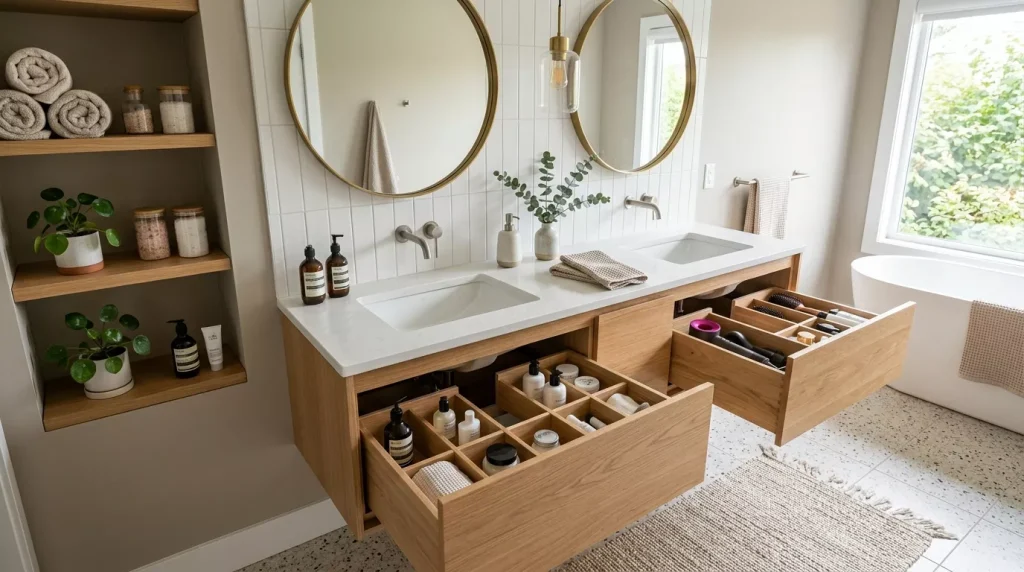
Step 2: Identify Your Storage Needs Be honest about what you actually need to store: toiletries, cleaning products, hair tools, extra towels? This determines whether you need a vanity with deep drawers, open shelving, double doors, or pull-out trays.
Step 3: Set Your Style Direction Pick two or three adjectives that describe your ideal bathroom — “modern and minimal,” “warm and rustic,” “classic and elegant.” This narrows your finish and hardware choices significantly.

Step 4: Choose Your Countertop and Sink Type Countertop and sink selection happen together:
- Quartz — durable, low-maintenance, huge range of looks
- Marble — luxurious but needs sealing and care
- Solid surface — seamless, easy to clean, slightly clinical-looking
- Laminate — budget-friendly but limited longevity in wet environments
Step 5: Select Your Hardware Hardware is the jewelry of the vanity. Brushed brass, matte black, polished chrome, and oil-rubbed bronze are all strong choices. Just be consistent — match your vanity hardware to your faucet finish and any other metal in the room.
Step 6: Plan Your Lighting The vanity light or mirror light directly affects how you’ll look and feel using the space. Side-mounted sconces at eye level give the most flattering, shadow-free light. Overhead bar lights are convenient but can cast unflattering shadows.

Step 7: Confirm Plumbing Compatibility Before ordering, confirm that your chosen vanity works with your existing plumbing rough-in location. Moving plumbing adds cost and complexity. Many bathroom remodel headaches come down to this single overlooked step.
Pros and Cons of the Most Popular Vanity Styles
Floating Vanity
✅ Pros
- Makes rooms look bigger
- Easier floor cleaning underneath
- Very contemporary, versatile look
- Adjustable mounting height

❌ Cons
- Requires solid wall framing or blocking for secure mounting
- Less under-sink storage than freestanding options
- Not ideal for hiding plumbing in older homes
Freestanding Vanity
✅ Pros
- Maximum storage capacity
- Easiest to install
- Suits every design style
- Conceals plumbing naturally

❌ Cons
- Fixed height — can’t be adjusted
- Harder to clean around the base
- Can feel heavy in smaller rooms
Double Sink Vanity
✅ Pros
- Perfect for shared bathrooms
- Adds significant resale value
- Generous counter and storage space

❌ Cons
- Requires enough floor space (typically 60″+ wide minimum)
- Higher cost for the unit, plumbing, and installation
- Two faucets, two sets of hardware — more to maintain
Best Countertop and Sink Pairings for Your Vanity
| Countertop | Best Sink Type | Style Match | Maintenance Level |
|---|---|---|---|
| Quartz | Undermount | Modern, Transitional | Low |
| Marble | Vessel or Undermount | Luxury, Classic | High |
| Solid Surface | Integrated | Minimalist, Modern | Low |
| Butcher Block/Wood | Drop-in | Rustic, Farmhouse | Medium |
| Concrete | Vessel | Industrial, Loft | Medium |
| Porcelain/Ceramic | Undermount or Drop-in | Traditional, Classic | Low |
Common Mistakes People Make When Choosing a Bathroom Vanity
1. Buying Without Measuring First This sounds obvious, but it’s the most common — and most expensive — mistake. A vanity that’s two inches too wide for your wall, or one that blocks a door swing, is money wasted. Measure twice, order once.
2. Prioritizing Looks Over Functionality A beautiful vessel sink vanity in a family bathroom used by three kids is going to cause daily frustration. Make sure the style serves the people who’ll actually be using the space.
3. Ignoring the Plumbing Layout Ordering a vanity where the drain cutout doesn’t align with your existing plumbing means unexpected costs and delays. Always check rough-in specs before purchasing.
4. Choosing the Wrong Finish for the Humidity Level Certain wood finishes and materials don’t hold up well in high-humidity bathrooms without proper sealing or ventilation. MDF and particle-board doors can warp over time. Ask about moisture-resistant construction before buying budget units.

5. Skimping on Hardware Cheap hardware pulls and hinges show their age quickly and start sticking, squeaking, or failing within a year or two. It’s worth upgrading to soft-close hinges and solid-brass pulls — the difference in daily experience is immediate.
6. Not Thinking About the Mirror The vanity and the mirror above it need to work together in proportion and style. A too-small mirror over a wide vanity looks awkward. A too-large mirror with a delicate console vanity looks overwhelming.
Practical Tips to Get the Most From Your Bathroom Vanity
These details make a bigger difference than people expect:
- Add drawer dividers — they keep the interior organized and make the vanity twice as functional
- Install a pull-out trash bin inside the cabinet if space allows — keeps the bathroom tidier without a visible bin
- Use the inside of cabinet doors with adhesive organizers for extra storage of small items
- Choose a vanity with soft-close drawers and doors — it’s a small luxury that makes a big daily impact
- Light the mirror from both sides with wall sconces rather than overhead, for the most flattering and functional vanity lighting
- Seal natural stone countertops annually — marble and granite are stunning but need maintenance to stay that way
- Consider a trough-style sink for double vanities — it can be cleaner-looking than two separate basins and allows more flexible positioning
Frequently Asked Questions
Q1: What size vanity do I need for my bathroom?
The right size depends on your available wall space and bathroom layout. For small bathrooms, 18″–36″ single vanities work well. Standard single vanities run 30″–48″ wide. Double vanities typically start at 60″ and go up to 72″ or more. Always leave at least 21″ of clearance in front of the vanity and 15″ of space on either side of the sink center if possible.
Q2: What’s the difference between a bathroom vanity and a bathroom cabinet?
A bathroom vanity includes both the cabinet and a countertop with an integrated sink. A bathroom cabinet is storage only — no sink. When most people say “vanity,” they mean the full unit: cabinet, top, and basin together.
Q3: Are floating vanities hard to install?
More so than freestanding units, yes. Floating vanities must be anchored into wall studs or a blocking structure. If the studs don’t align with your intended vanity placement, you’ll need to add blocking inside the wall first. Many homeowners hire a professional for floating vanity installation specifically because of this step.
Q4: How deep should a bathroom vanity be?
Standard bathroom vanity depth is 21″ to 24″. This provides enough counter space and storage depth for most plumbing configurations. Shallower options (16″–18″ deep) exist for space-saving situations but offer less storage and counter space.
Q5: What’s the best material for a bathroom vanity cabinet?
Solid wood and plywood construction are the most durable. MDF (medium-density fiberboard) is common in budget vanities and holds paint well but is more vulnerable to moisture over time. Look for vanities with a moisture-resistant finish or coating if you’re in a high-humidity bathroom environment.
Q6: Can I use a regular piece of furniture as a bathroom vanity?
Yes — this is called a furniture vanity or “antique dresser conversion,” and it’s a popular choice in farmhouse and eclectic interiors. The key requirements are: a sealed or painted finish to handle humidity, proper plumbing cutouts, and a waterproof countertop surface. It’s a great way to get a one-of-a-kind look.
Q7: How do I maximize storage in a small bathroom vanity?
Use the full height of the interior with stackable organizers, add pull-out drawers or trays inside deep cabinets, mount a mirrored medicine cabinet above for additional storage, and use the inside of cabinet doors for adhesive pouches or small shelves. Vertical storage is your friend in compact spaces.
Conclusion: Find the Perfect Vanity for Every Bathroom
At the end of the day, the right vanity for every bathroom isn’t about finding the most expensive option or the most trendy one — it’s about finding the one that fits your space, suits your style, and solves the specific problems your bathroom has.
Start by measuring your room accurately, define what you truly need from a storage and functionality standpoint, and then let yourself explore the styles and finishes that genuinely excite you. A bathroom vanity is one of the higher-impact upgrades you can make in a home, and when you get it right, you’ll notice it every single day.
Whether you’re renovating a compact powder room, a shared family bathroom, or a spacious master suite — there is a perfect vanity out there for your space. Use this guide to find it with confidence.
Ready to start shopping? Take your measurements today, shortlist two or three styles that match your bathroom’s vibe, and go from there. The right vanity is closer than you think.