Olive Green Bathroom Ideas: Style, Tiles & Décor Tips

Olive Green Bathroom Ideas That Feel Fresh, Grounded, and Surprisingly Versatile
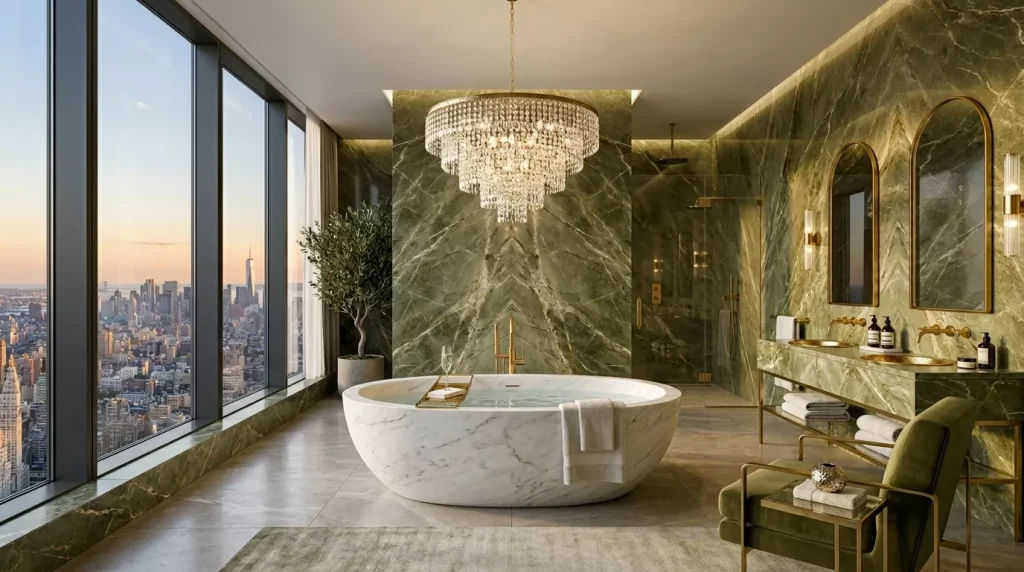
If you’ve been scrolling through bathroom inspo photos lately, you’ve probably noticed olive green bathroom ideas popping up everywhere — and for good reason. This earthy, complex color sits right at the intersection of nature and sophistication. It doesn’t scream for attention, but it absolutely holds the room.
Unlike trendy paint colors that feel fresh for a season and tired by the next, olive green has a staying power that most colors can’t match. It’s warm without being loud, organic without being dull. In a bathroom — a space that often defaults to grey, white, or beige — olive green feels like a genuine breath of fresh air.
In this guide, you’ll find practical ideas, honest advice, and everything you need to make olive green work in your bathroom, whether you’re doing a full renovation or just refreshing what’s already there.
Why Olive Green Is Having a Moment in Bathroom Design
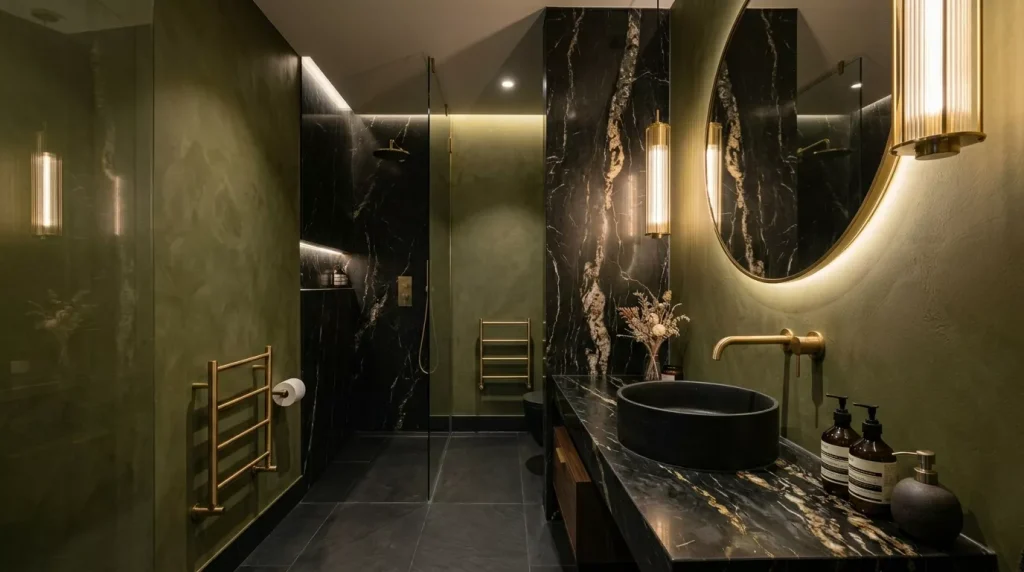
There’s a shift happening in interior design right now, and it’s moving away from the cold, sterile aesthetic that dominated the last decade. People want rooms that feel warm, lived-in, and connected to the natural world. That’s exactly the territory olive green occupies.
Olive is a muted, yellow-toned green that sits closer to nature’s palette than any bright or saturated green would. It reads differently depending on the light — sometimes leaning more golden, sometimes more brown, occasionally almost khaki. That unpredictability is actually part of its appeal.
In a bathroom specifically, olive green pairs beautifully with the natural textures — stone, wood, terracotta, linen — that are increasingly popular in bathroom design. And from a practical standpoint, its depth means it hides steam marks and minor smudges far better than white walls ever could.
Olive Green Bathroom Ideas for Every Design Style
One of the best qualities of olive green is how many directions you can take it. The same color can feel wildly different depending on what you pair it with and how you use it.
Minimalist Olive Green Bathroom
In a minimalist bathroom, olive green provides the one moment of character the space needs without adding visual noise. Use it on a single feature wall, keep fixtures in matte white or brushed nickel, and let the color breathe.
What works here:
- Wall-hung vanity in light oak or white lacquer
- Round frameless mirror or simple thin-framed brass mirror
- White subway tile or large-format stone-effect tile on remaining walls
- Recessed shelving with minimal accessories
- A single trailing plant (pothos or monstera) in a terracotta pot
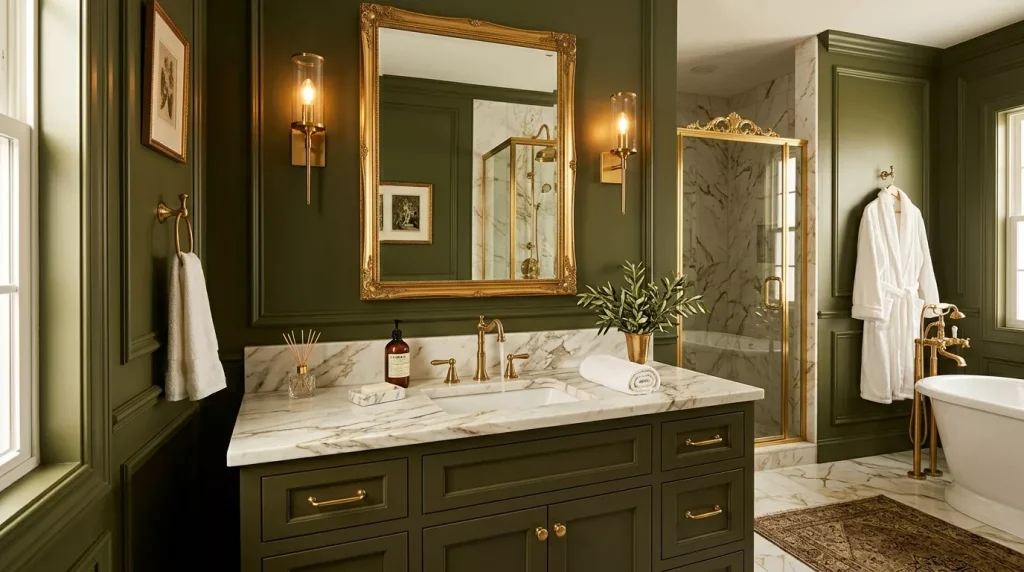
The key is restraint. One olive green wall paired with a clean, uncluttered space is far more impactful than olive green everywhere.
Earthy Bohemian Olive Green Bathroom
Boho style thrives on layering, and olive green is the perfect foundation for it. It anchors the warmth of terracotta, the richness of deep rust, and the softness of warm cream without any one element overpowering the others.
In this style, you can go heavier with the olive green — full walls, patterned tiles with green in them, or even a painted vanity. Add woven baskets for storage, a rattan or wooden mirror, an aged brass faucet, and some chunky candles, and the whole thing comes together quickly.
The texture matters as much as the color here. Rough plaster walls, zellige tiles, and linen towels all elevate an olive green boho bathroom from basic to genuinely beautiful.
Industrial Olive Green Bathroom
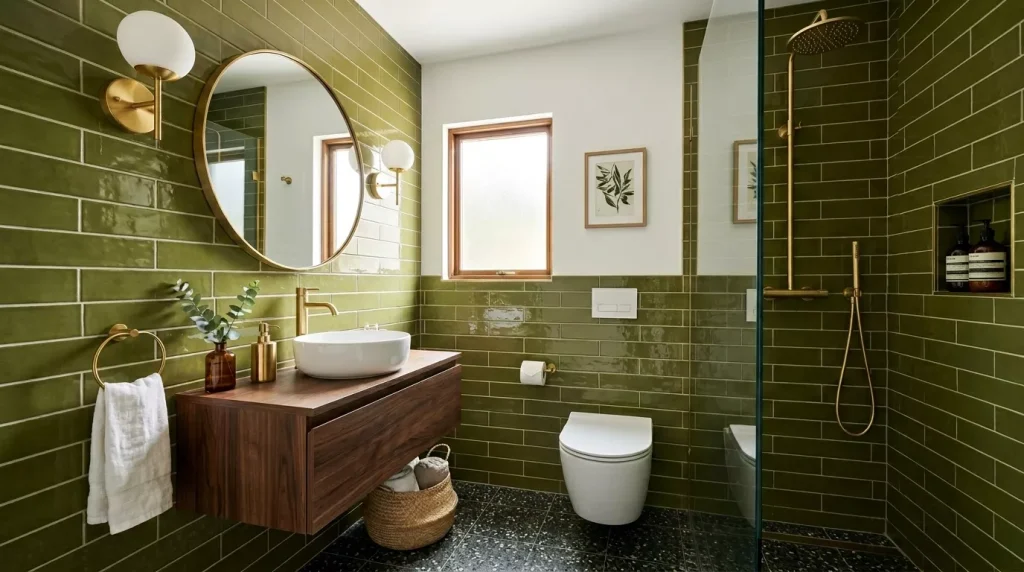
Industrial and olive green might not be the first combination you’d think of, but it’s a surprisingly strong pairing. The warmth in olive cuts through the coldness that industrial spaces can sometimes project, while the rugged, raw elements keep things from feeling too precious.
Think exposed brick or concrete walls, black steel-framed mirrors and shower screens, matte black fixtures, and olive green on the cabinetry or lower half of the wall. Penny tiles or dark hex tiles on the floor complete the look.
It’s a bold direction, but it reads as intentional and considered rather than random.
Rustic and Cottagecore Olive Green Bathroom
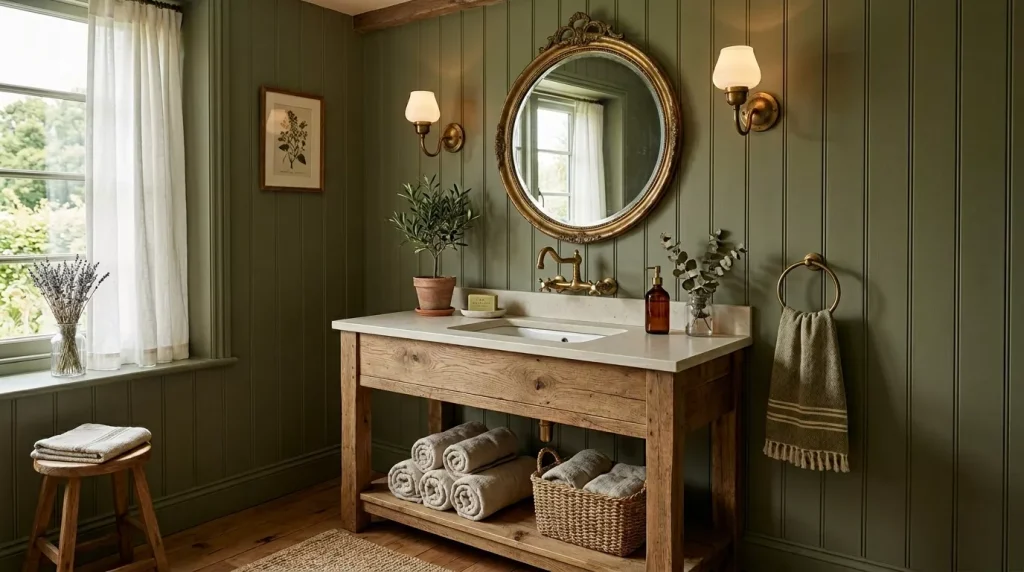
Few color combinations feel as naturally at home as olive green with aged wood and soft florals. In a rustic or cottagecore-inspired bathroom, olive green walls paired with warm timber vanity units, vintage ceramic accessories, and a freestanding clawfoot bathtub can feel genuinely enchanting.
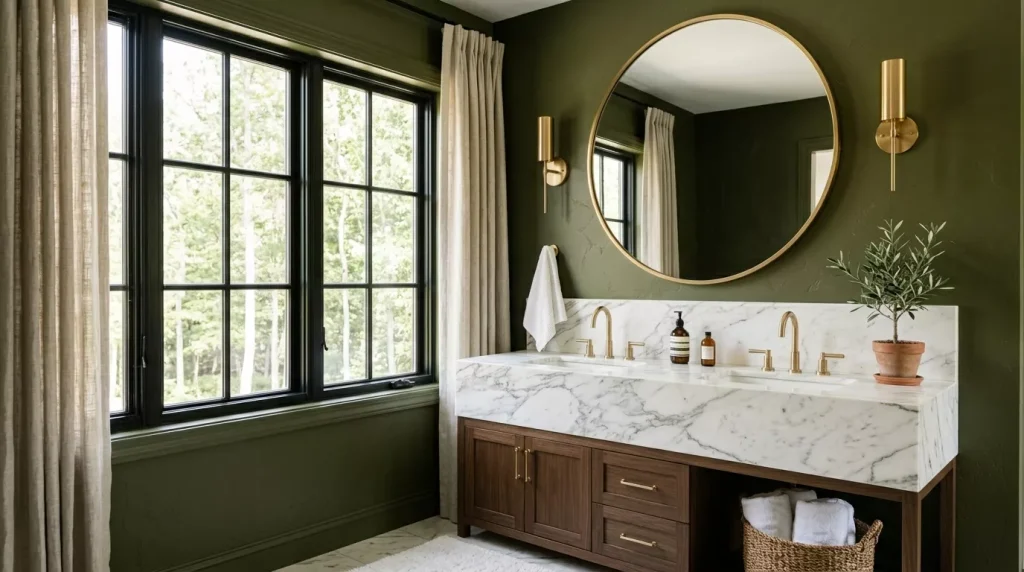
Add in some dried botanicals, a small wicker shelf, and soft warm lighting, and this becomes the kind of bathroom people linger in. Chalky, matte paint finishes work best for this style — they give the olive green a softer, older quality that complements the rustic elements perfectly.
Best Color Combinations for an Olive Green Bathroom
Getting the color palette right is where most people either nail it or lose the plot. Olive green is not a neutral, but it behaves like one if you handle it well.
| Color Pairing | Mood Created | Best Application |
|---|---|---|
| Olive green + warm white | Fresh, clean, earthy | Walls + fixtures |
| Olive green + terracotta | Warm, organic, boho | Tiles + accessories |
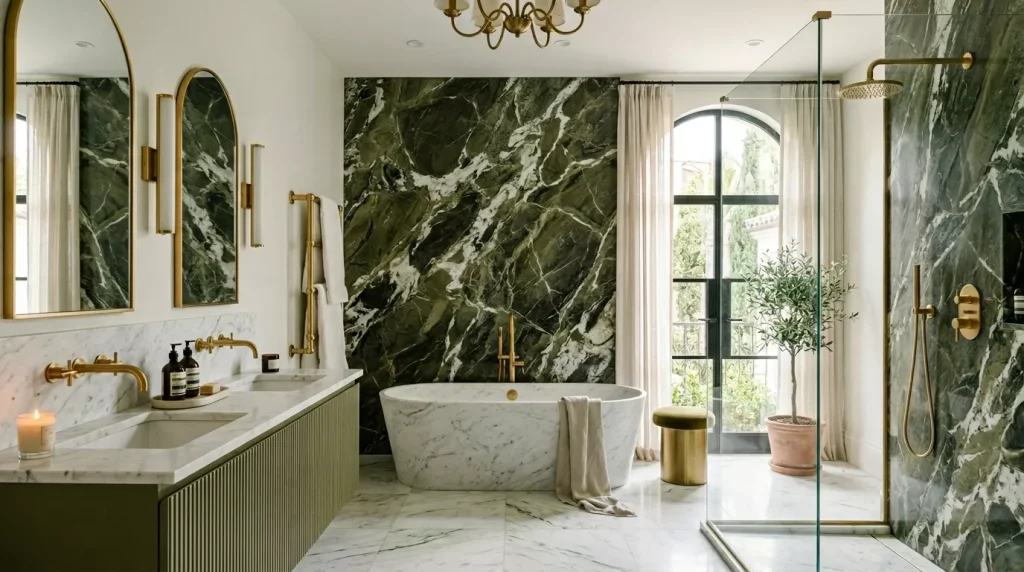
| Olive green + brushed brass | Luxurious, vintage | Hardware + lighting |
| Olive green + charcoal grey | Moody, dramatic | Flooring + accents |
| Olive green + blush pink | Soft, romantic | Textiles + décor |
| Olive green + cream/ivory | Timeless, elegant | Walls + vanity |
| Olive green + dark walnut | Rich, grounded | Cabinetry + shelving |
| Olive green + rust orange | Earthy, vibrant | Statement accents |
A few rules worth keeping in mind:
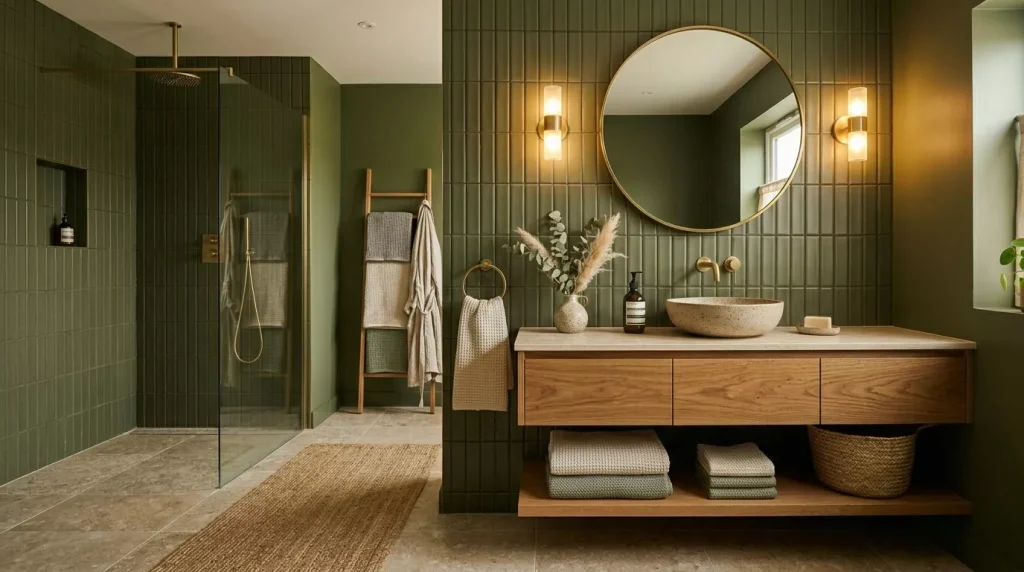
- Olive green and cool blues or purples can clash — they pull in opposite temperature directions.
- Olive green with bright white can work, but warm white almost always looks better.
- If you’re using olive green on the walls and warm wood on the vanity, you don’t need many other colors. The combination is complete on its own.
Olive Green Bathroom Tile Ideas
Tiles are where you can really have fun with olive green in a bathroom. Unlike paint, tiles add texture, dimension, and visual interest alongside color.
Popular olive green tile approaches:
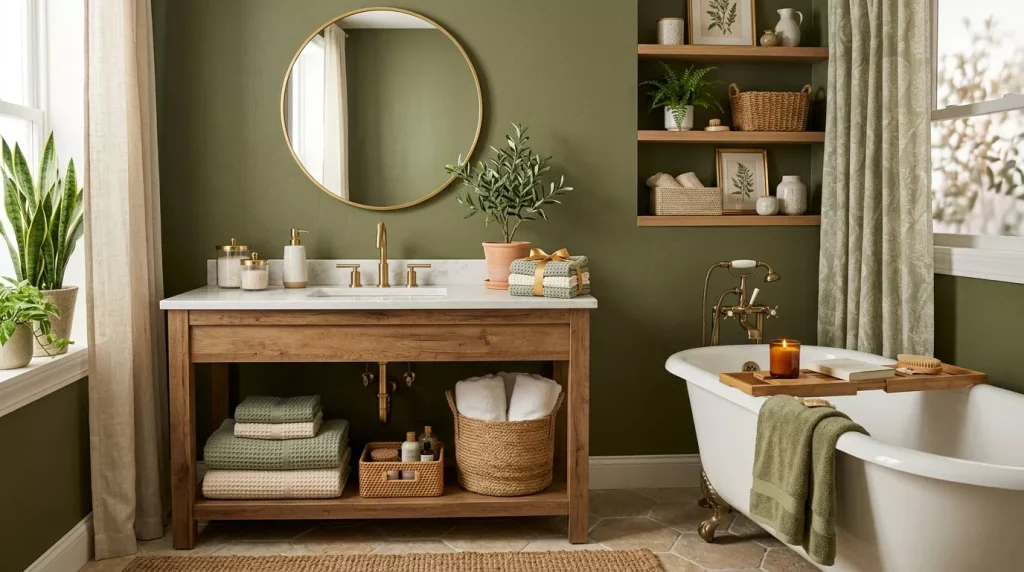
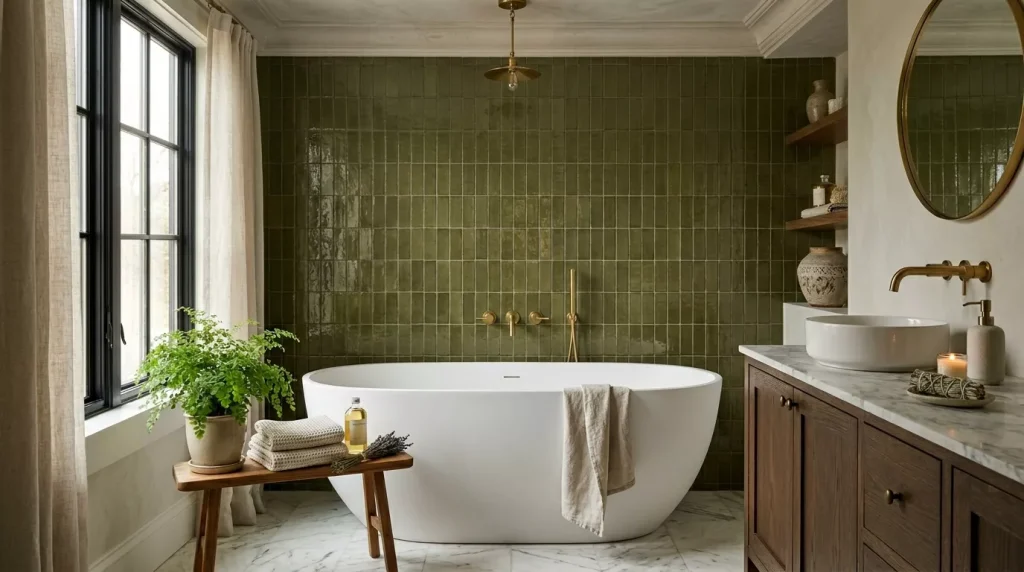
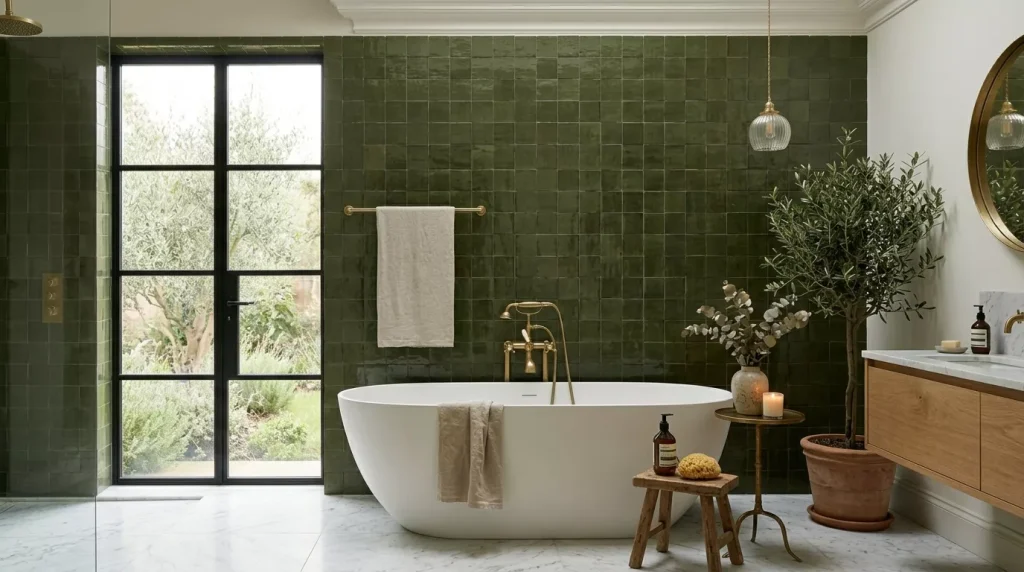
- Zellige-style glazed tiles: These handmade-looking tiles have slight variation in surface and color, which makes olive green look incredibly rich. Use them on a feature wall behind the vanity or inside a walk-in shower.
- Large-format matte porcelain in olive tones: For a more contemporary, seamless look, oversized tiles in muted olive green create a spa-like effect without pattern or fuss.
- Olive green subway tiles: A modern twist on a classic format. Used in a vertical stack-bond pattern, olive subway tiles are both practical and stylish.
- Geometric or Moroccan pattern tiles: When the base color of a patterned tile incorporates olive, it creates a connection between the floor or wall and the rest of the room — even if the tile itself has multiple colors.
- Mix and match: Olive green tiles on the lower half of the wall paired with a warm plaster-effect or white tile on top creates visual layering that feels intentional and well-designed.
One tip on grout: if you’re using olive green tiles, choose a grout in warm putty, sand, or charcoal rather than stark white. White grout can compete with the warmth of olive and make the tiling feel more clinical than organic.
How to Add Olive Green Without Painting Your Walls
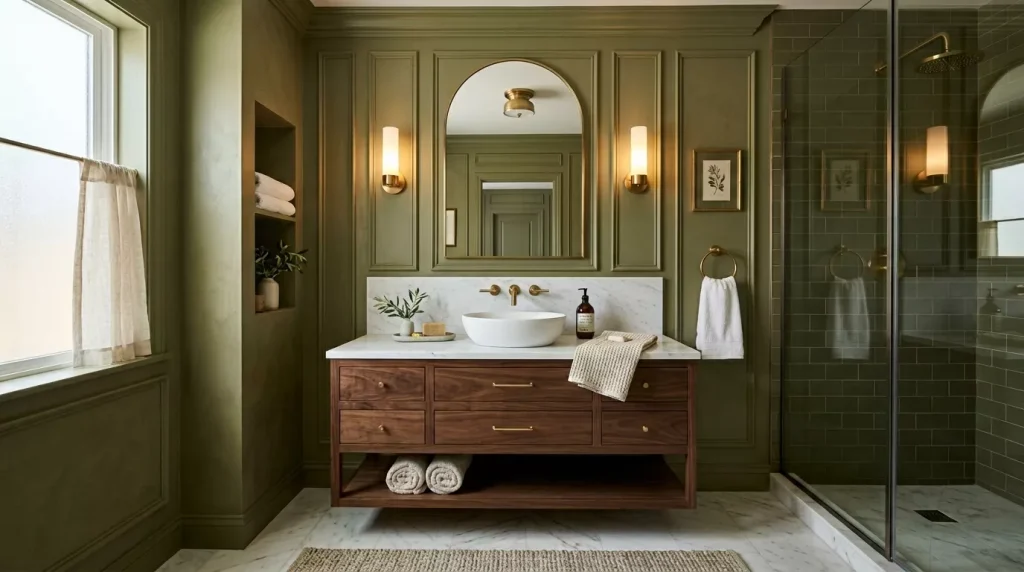
Not everyone is ready for a full paint commitment, and that’s fine. Olive green is flexible enough to have real impact through smaller, lower-stakes changes.
Olive green through accessories and soft furnishings:
- Replace your current towels with a set in deep olive or moss green
- Add an olive green bath mat or runner rug
- Swap out the shower curtain for one in an olive, khaki, or sage stripe
- Style the vanity with green ceramic soap dispensers and a matching toothbrush holder
- Bring in a terracotta pot with a lush green trailing plant
Olive green through furniture and fixtures:
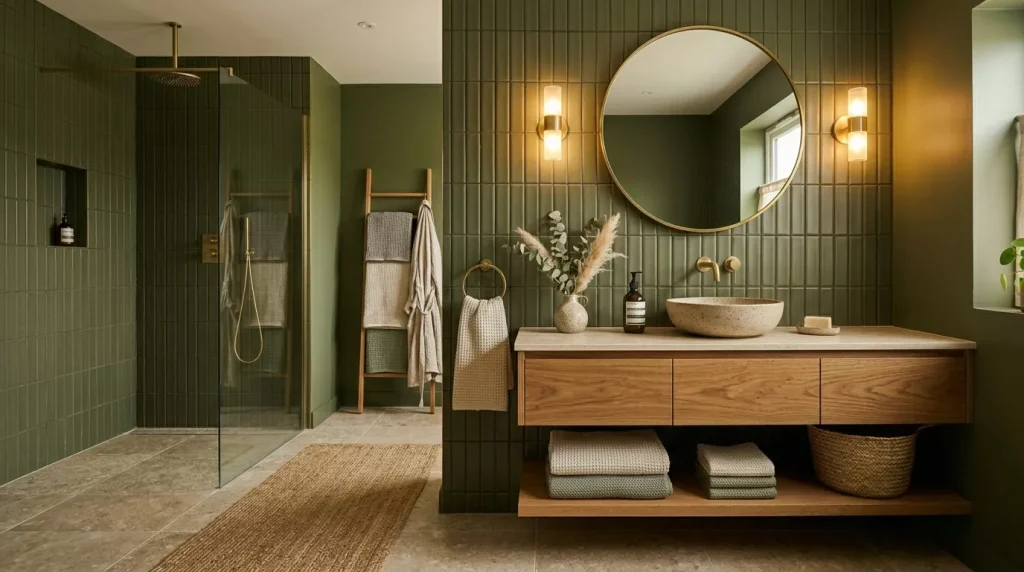
- Paint just the vanity unit in olive green — a single can of chalk paint can completely transform a tired bathroom cabinet
- Replace the mirror with one that has a warm brass or aged wooden frame to complement the olive tones you’re building
- Add a wooden stool or ladder shelf in a warm oak finish, which naturally echoes the yellow-green undertones in olive
Olive green through tile accents:
- A single row of olive or sage green tiles as a border can tie together a bathroom without requiring a full retile
- Replacing a plain splashback behind the sink with a few rows of olive zellige tiles adds richness without a major renovation
Step-by-Step Guide to Designing an Olive Green Bathroom
Whether you’re starting from scratch or refreshing an existing room, this sequence keeps the process manageable.
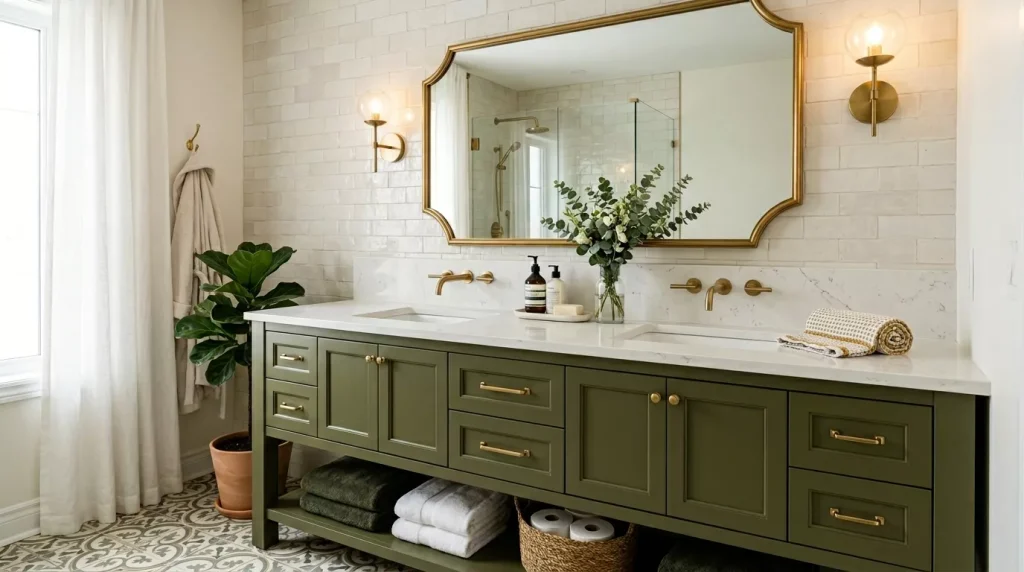
Step 1 — Decide on your scope. Are you repainting, retiling, or just updating accessories? Your time and budget set the frame for every decision that follows. Be honest about both before you start buying things.
Step 2 — Choose your olive green shade. Sample at least two or three shades before committing to a full paint job or ordering tiles. Test them in your specific bathroom under both natural and artificial light. Olive can read khaki, brown, or almost yellow-green depending on conditions.
Step 3 — Anchor your palette. Pick one or two other colors to work with your olive green. Warm white and brass is the most reliable combination. If you want to go earthier, add terracotta or rust as an accent. Keep the palette to three colors maximum.
Step 4 — Choose your surfaces. Walls, floor, and fixtures form the backbone of the room. Decide whether olive green lives on the walls, the tiles, the vanity, or all three — and make sure the surfaces work together before finalizing finishes.
Step 5 — Select hardware and fixtures. Brushed brass, matte black, and aged bronze all complement olive green well. Avoid chrome — it pulls cool and slightly grey, which works against the warmth of olive.
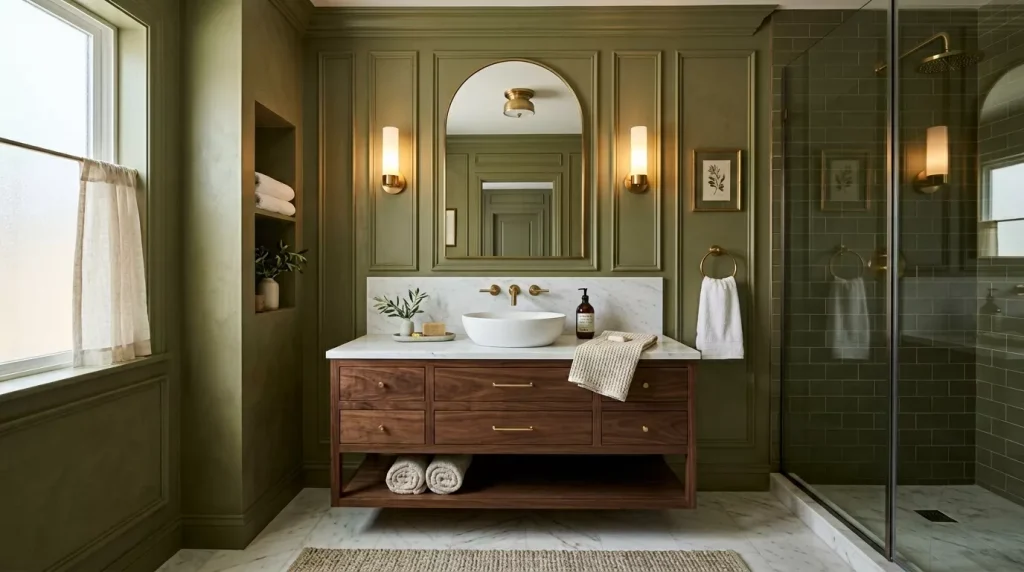
Step 6 — Layer in textiles and accessories. Towels, mats, plants, candles, and styling accessories go in last. This is where the room gets personality. Don’t over-accessorize — a few well-chosen pieces in complementary tones are far better than a crowded sill.
Step 7 — Check your lighting. Olive green responds beautifully to warm-toned lighting (2700–3000K). Under cool daylight bulbs it can look flat or slightly grey-green, which rarely feels intentional. Warm lighting enhances the golden undertones and makes the whole room feel more inviting.
Olive Green vs. Other Popular Bathroom Colors: A Comparison
| Color | Warmth | Versatility | Timelessness | Difficulty Level |
|---|---|---|---|---|
| Olive Green | High | Very high | High | Moderate |
| Sage Green | Medium | High | High | Low |
| Forest Green | Medium | Moderate | High | Moderate |
| Navy Blue | Low | Moderate | High | Moderate |
| Terracotta | High | Moderate | Medium | Low |
| Charcoal Grey | Low | Very high | Very high | Low |
| Warm White | Medium | Extremely high | Very high | Very low |
Olive green occupies a space that few colors manage — it’s warm like terracotta, natural like sage, and deep like forest green, but more versatile and interesting than any of them individually. The trade-off is that it takes slightly more thought to get right.
Pros and Cons of an Olive Green Bathroom
Pros
- Feels grounded and organic — the earthy tone brings calm into a daily routine space
- Extremely versatile across styles — works in boho, minimalist, rustic, and industrial settings
- Ages well — unlike trend-heavy colors, olive green looks as relevant in ten years as it does today
- Pairs with warm metals beautifully — brass and bronze look exceptional against olive
- Works in both large and small bathrooms when applied thoughtfully
- Hides minor marks and steam residue better than pale or white walls
Cons
- Shade selection is tricky — olive has many subtypes, and choosing the wrong one under bad lighting can result in a muddy, indistinct color
- Can make a dark bathroom feel darker if used on all surfaces without enough light
- Not beginner-friendly when it comes to full wall coverage — test before committing
- Certain fixture finishes don’t work — chrome and cool-toned metals clash with olive’s warmth
- Harder to photograph attractively — which matters if you’re staging for sale
Common Mistakes to Avoid in an Olive Green Bathroom
Using cool-toned lighting. This is probably the single most common reason olive green bathrooms feel disappointing in person. Cool-white bulbs strip out the warmth and leave the color looking dull and muddy. Always use warm light bulbs — it makes a dramatic difference.
Going too dark without enough light balance. Olive is already a mid-to-deep tone. If your bathroom has no window or limited natural light, covering every surface in olive will feel oppressive. Break it up with lighter tiles, a white ceiling, or reflective surfaces like mirrors.
Pairing with the wrong metals. Chrome fixtures look out of place in an olive green bathroom. Stick to brass, bronze, matte black, or unlacquered copper. These warm tones work with olive rather than against it.
Over-decorating. Olive green is a rich, complex color — it can hold a room without help. Piling in too many accessories, patterns, and competing colors undercuts the natural elegance of the palette.
Choosing the wrong shade of white. If you’re combining olive green with white tiles or walls, avoid bright or blue-white. Choose warm whites or cream. The warmth in those tones complements olive’s yellow undertones; cool white fights them.
Tips for Getting the Most From Your Olive Green Bathroom
- Add a live plant. It sounds obvious, but a real plant in an olive green bathroom looks astonishingly good. The green-on-green relationship is rich rather than repetitive.
- Use matte finishes wherever possible. Matte paint and tile finishes enhance olive green’s organic quality. Gloss can make it look harder and more corporate.
- Bring in natural materials. Wood, stone, rattan, linen — all of these play beautifully alongside olive green and reinforce the earthy character of the palette.
- Try a dark grout. If you’re tiling in any shade of green, warm charcoal or sand grout reads far better than white.
- Keep your ceiling light. Whether white or a very pale warm tint, a lighter ceiling creates lift in the room and stops it from feeling box-like.
- Use a large mirror. It reflects light, makes the space feel larger, and gives the olive green more room to breathe without adding more color to the room.
Conclusion
Olive green bathroom ideas have earned their place at the top of the bathroom design conversation — not because they’re fashionable right now, but because they’re genuinely excellent. The color is warm, grounded, versatile, and kind to natural materials in a way that makes a bathroom feel like a real, considered space rather than a generic utility room.
The key is choosing the right shade, pairing it with warm metals and natural textures, and keeping the palette focused. Do those three things and olive green will reward you with a bathroom that looks better every year you live with it.
Whether you go all-in with painted walls and olive zellige tiles or start small with a painted vanity and new towels, the direction is worth taking.
Ready to make the change? Pick up two or three paint swatches this week, hold them up in your bathroom at different times of day, and trust what you see — your olive green bathroom is closer than you think.
FAQs
Q1: Is olive green a good color for a small bathroom?
Yes, but it needs to be handled carefully. In a small bathroom, avoid using olive green on all four walls — this can make the space feel enclosed. Instead, use it on one feature wall or on the lower half of the walls with a lighter tone above. Pair it with a large mirror, warm lighting, and light-toned tiles on the floor to keep the space from feeling too heavy.
Q2: What hardware finishes work best with olive green in a bathroom?
Brushed brass and matte black are the two most popular and most effective hardware choices for olive green bathrooms. Both work with the warmth of olive — brass enhances its golden undertones, while matte black provides strong contrast. Aged bronze and unlacquered copper are also excellent. Avoid polished chrome, which pulls too cool and tends to look disconnected from an olive green palette.
Q3: Can I use olive green tiles instead of paint?
Absolutely — olive green tiles are one of the best ways to bring this color into a bathroom. They add texture and dimension alongside color, and they’re typically more durable than painted walls in a wet environment. Zellige-style glazed tiles in olive are particularly popular right now because of the way their slight surface variation makes the color look alive. Large-format matte porcelain in olive tones is another strong option for a more modern, seamless aesthetic.
Q4: Does olive green work with wood in a bathroom?
Olive green and warm wood are a natural pairing. The yellow-green undertones in olive complement the warm brown tones in timber, which creates a cohesive, earthy feel. Light to mid-toned woods like oak and ash work especially well. Darker woods like walnut create a richer, more dramatic effect. Avoid very cool or grey-toned wood finishes — they can work against the warmth of olive rather than with it.
Q5: How is olive green different from sage green in a bathroom?
The main difference is temperature and depth. Sage green is lighter, cooler, and more grey-toned — it reads as airy and gentle. Olive green is darker, warmer, and more yellow-toned — it reads as rich and grounded. Sage is generally easier to work with because it behaves more like a neutral. Olive takes a bit more thought but creates a more distinctive, interesting space when done well. If you want a subtle, soft look, sage is the safer bet. If you want depth and character, olive is the better choice.
Q6: What type of lighting works best in an olive green bathroom?
Warm white bulbs in the 2700–3000K range work best. They bring out the golden undertones in olive green and make the whole room feel inviting rather than flat. Avoid cool daylight bulbs (4000K and above) — they can make olive green look dull, muddy, or slightly grey-green, which rarely looks intentional. If possible, add dimmable lighting so you can control the mood of the room at different times of day.
Q7: What plants go well in an olive green bathroom?
Trailing plants like pothos, philodendrons, and string of pearls look stunning in olive green bathrooms. Their lush, varied greens don’t clash with the wall color — they enhance it. For lower-light conditions (common in smaller bathrooms), snake plants and ZZ plants are excellent low-maintenance options. For a more dramatic statement, a small fiddle-leaf fig or an architectural bird of paradise can create a real focal point in a larger bathroom. Always choose a pot in terracotta, aged ceramic, or dark stone to stay within the earthy palette.ble lighting so you can control the mood of the room at different times of day.
Q7: What plants go well in an olive green bathroom?
Trailing plants like pothos, philodendrons, and string of pearls look stunning in olive green bathrooms. Their lush, varied greens don’t clash with the wall color — they enhance it. For lower-light conditions (common in smaller bathrooms), snake plants and ZZ plants are excellent low-maintenance options. For a more dramatic statement, a small fiddle-leaf fig or an architectural bird of paradise can create a real focal point in a larger bathroom. Always choose a pot in terracotta, aged ceramic, or dark stone to stay within the earthy palette.


