Mauve & Rose Bedroom Aesthetic Ideas

Mauve & Rose Bedroom Aesthetic Ideas: Inspiration & Styling Guide

There’s something almost effortless about a bedroom dressed in mauve and rose. The tones sit somewhere between warmth and calm — not loud, not cold — just quietly beautiful. If you’ve been scrolling through interior inspiration and keep gravitating toward those dreamy, dusty-pink spaces with layered textures and soft lighting, chances are the mauve and rose bedroom aesthetic is exactly what you’ve been looking for.
This guide walks you through everything — from understanding what makes this palette work, to choosing the right furniture, lighting, and decor to bring the whole look together. Whether you’re starting from scratch or refreshing an existing room, there’s something here for every budget and every level of decorating confidence.
What Is the Mauve and Rose Bedroom Aesthetic?
Before diving into ideas and inspiration, it helps to understand what separates this palette from a generic “pink room.”
Mauve is a muted, grey-toned purple-pink — think dusty, faded, almost vintage in quality. It doesn’t shout. It whispers.

Rose in a bedroom context isn’t candy pink or hot fuchsia. It leans toward dusty rose, antique rose, or deep blush — pinks that have been softened with grey, brown, or white undertones.
Together, these two shades create a palette that feels:
- Romantic without being over-the-top
- Feminine without being girlish
- Warm without being overwhelming
- Timeless rather than trend-driven
The aesthetic borrows from several interior styles — vintage, cottagecore, modern romantic, and even a touch of moody maximalism — but it works in nearly any home because the tones are fundamentally neutral-adjacent.

Why the Mauve & Rose Color Palette Works So Well in Bedrooms
Color psychology has a lot to say about pinks and purples in sleeping spaces. Soft, muted pinks are associated with calm, emotional warmth, and gentle energy — which makes them naturally suited to rooms designed for rest.
Mauve adds a grounding quality that straight pink doesn’t always have. That grey undertone keeps the palette from feeling too sweet and gives it a sophistication that works just as well in a grown adult’s room as it does in a more playful space.
This combination also pairs beautifully with a wide range of neutrals. Cream, ivory, warm grey, charcoal, and even deep forest green all sit comfortably beside mauve and rose — which means the palette is flexible enough to grow and evolve as your taste changes.
Step-by-Step Guide to Building a Mauve & Rose Bedroom Aesthetic
Step 1 — Decide on Your Base Tone

Every great room starts with a decision about the dominant color. In a mauve and rose bedroom, you typically lead with one and let the other play a supporting role.
If you lean toward mauve as the base: Your room will feel a little more moody and grounded. Think dusty mauve walls, rose-toned textiles, and warm wood or black metal accents.
If you lean toward rose as the base: Your room will feel softer and more romantic. Think blush or dusty rose bedding, mauve as an accent through cushions, throws, and artwork, and white or cream as the backdrop.
Neither approach is wrong — it comes down to the feeling you want the room to hold.
Step 2 — Choose Your Wall Color Carefully
The wall color sets everything else in motion, so this decision deserves real thought.
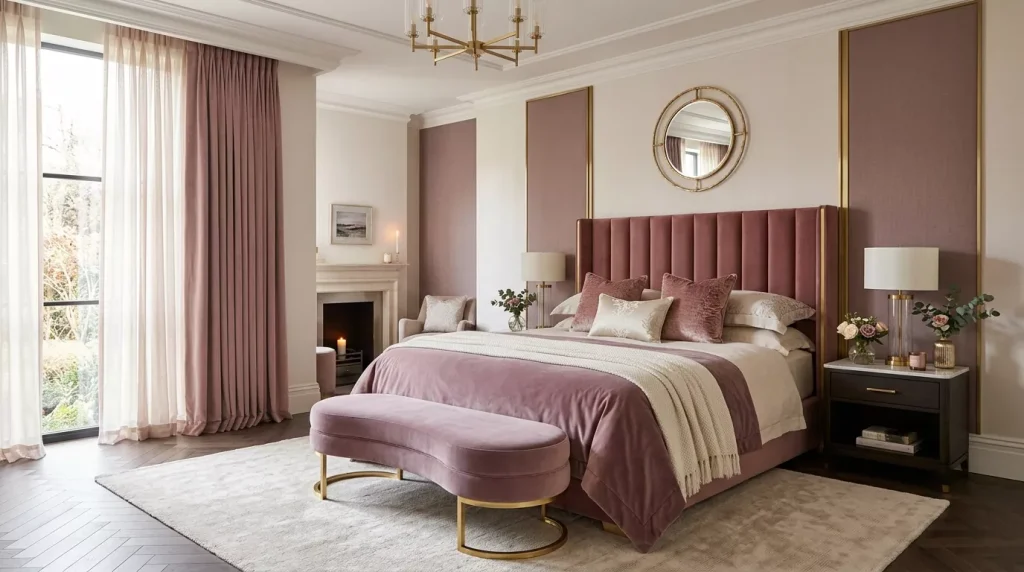
Here are some combinations that work exceptionally well:
| Wall Color | Tone | Best Paired With |
|---|---|---|
| Dusty mauve | Warm purple-pink grey | Ivory bedding, gold hardware, cream rugs |
| Antique rose | Muted warm pink | White furniture, linen textiles, soft lighting |
| Warm blush | Light peachy pink | Charcoal accents, natural wood, deep greens |
| Chalky white with pink undertone | Subtle, flexible | Works with nearly any rose/mauve accent |
| Deep dried rose | Rich, moody | Brass fixtures, velvet upholstery, dark wood |
For smaller rooms, a lighter base (blush or chalky white) keeps things airy. For larger rooms, you can afford to go deeper and more dramatic.

Step 3 — Layer Your Textiles
This is where the mauve and rose aesthetic really comes to life. Bedrooms are fundamentally tactile spaces, and layering different textures within the same color family creates depth and richness that a single flat color never could.
Think about your textiles in layers:
- Base layer: Fitted sheet and duvet cover in your primary tone (dusty rose linen or soft blush cotton)
- Mid layer: A quilted throw or woven blanket in mauve or a slightly deeper rose
- Top layer: Decorative pillows in a mix of mauve, rose, cream, and one contrast tone (terracotta, sage green, or dusty lavender work beautifully)
Mixing textures matters as much as mixing shades. Combine velvet, linen, cotton, and chunky knit in the same color family and the bed becomes the most visually interesting piece in the room.
Step 4 — Select Your Furniture

Furniture acts as the structural backbone of any bedroom aesthetic. In a mauve and rose room, you have two broad directions:
Option A — Soft and Romantic White or cream painted furniture, cane or rattan details, curved silhouettes. This approach leans into the vintage and cottagecore side of the aesthetic. A curved upholstered headboard in blush or ivory sets the tone instantly.
Option B — Grounded and Modern Romantic Natural oak or walnut wood tones, simple clean lines, with mauve and rose showing up entirely in soft furnishings. This version feels more contemporary and less “frilly” — great for someone who loves the color palette but prefers a more understated room overall.
Either direction works. Just stay consistent rather than mixing both heavily, or the room starts to feel pulled in competing directions.
Step 5 — Add Accent Pieces and Decor
The accessories in a mauve and rose bedroom are where personality comes through. This is your chance to add depth, meaning, and individual style without repainting anything or buying new furniture.
Great accent pieces for this aesthetic include:

- Dried floral arrangements — pampas grass, dried roses, eucalyptus, or lavender stems in a simple vase
- Vintage-style mirrors — ornate gold or antique brass frames complement both mauve and rose perfectly
- Ceramic vases in matte dusty pink, terracotta, or sage green
- Candles in mauve or rose tones — pillar candles on a tray or taper candles in brass holders
- Artwork — abstract prints with dusty pink and mauve washes, floral botanical prints, or vintage fashion illustration prints
- A velvet accent chair in deep rose or mauve for a reading corner if space allows
Step 6 — Get the Lighting Right
Lighting can make or break any bedroom aesthetic, and it matters especially in a color palette this subtle. Cool white light will wash out mauve and rose tones and make them look flat. Warm lighting — anything in the 2700K–3000K range — brings these colors to life and adds exactly the cozy, romantic glow the aesthetic is built around.

Layer your lighting the same way you layer your textiles:
- Overhead light on a dimmer (or skip overhead entirely)
- Bedside table lamps with warm-toned bulbs and soft shades
- Fairy lights or LED string lights tucked behind a headboard or along a shelf
- A statement floor lamp in a corner if the room is large enough
Lampshades in white, cream, or blush keep the light soft. Avoid stark white or industrial-style shades — they fight the warmth of the palette.
Mauve & Rose Bedroom Aesthetic Ideas by Style
Cottagecore Mauve Bedroom
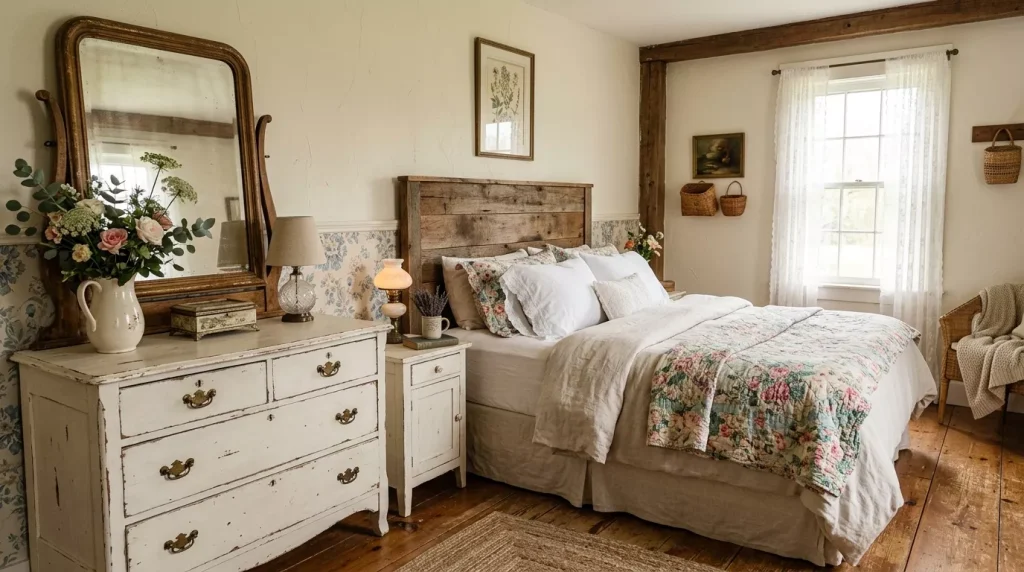
Floral wallpaper in dusty rose and cream, white-painted furniture with scalloped details, dried flowers on every surface, a quilt in patchwork pink tones, and sheer linen curtains that let morning light filter softly through the room. This version is dreamy, nostalgic, and layered.

Modern Romantic Rose Bedroom
Clean lines meet soft color. A low-profile platform bed with an upholstered blush headboard, walnut bedside tables, simple linen bedding in dusty rose, a single oversized piece of abstract artwork, and warm pendant lighting. Minimal but deeply atmospheric.
Moody Mauve Bedroom
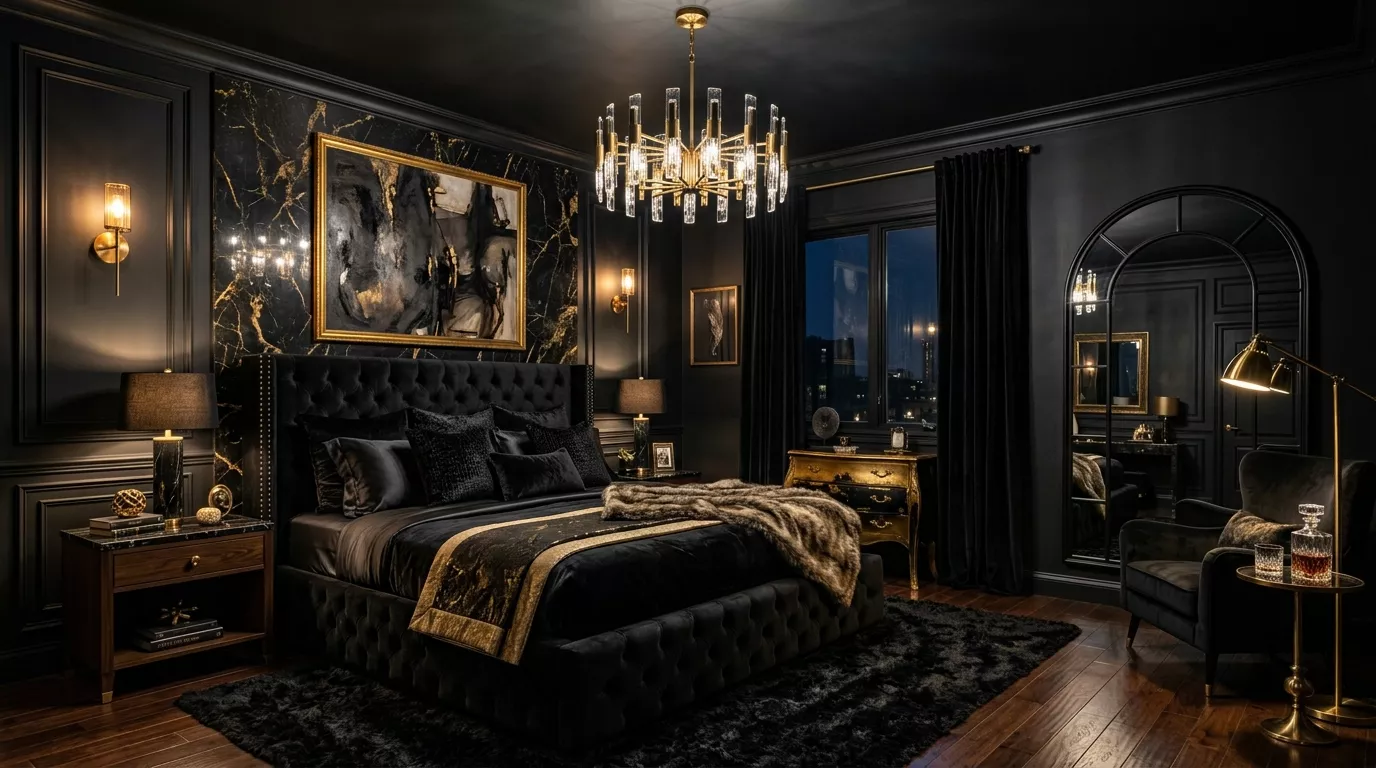
This is the bolder version. Deep dried-rose or plum-mauve walls, charcoal or dark wood furniture, velvet bedding in deep rose, brass lighting, and rich textures everywhere. It’s dramatic and intentional — a bedroom that feels like a destination.
Boho Mauve & Rose Bedroom
Woven textures, layered rugs, macramé wall hangings, mixed metals, earthy terracotta accents alongside mauve and rose, rattan furniture, and an abundance of plants. This version is relaxed, eclectic, and very livable.

Color Combinations That Elevate the Mauve & Rose Palette
The palette doesn’t have to live in isolation. Pairing mauve and rose with the right accent colors is what separates a flat, one-note room from one that feels genuinely curated.
| Accent Color | Effect | Best Used In |
|---|---|---|
| Sage green | Fresh, earthy contrast | Plants, throw pillows, artwork |
| Warm cream/ivory | Softens and brightens | Walls, bedding, curtains |
| Antique brass/gold | Adds warmth and luxury | Lighting, mirror frames, hardware |
| Charcoal grey | Grounds and modernizes | Furniture legs, frames, accent walls |
| Terracotta | Warm, bohemian depth | Ceramics, rugs, accent pillows |
| Dusty lavender | Tonal harmony | Pillows, candles, artwork |
| Deep forest green | Rich, dramatic contrast | Plants, velvet accents, bedding trim |
The rule of thumb: pick two accent colors maximum and let mauve and rose do the heavy lifting. Too many accent tones scatter the eye and dilute the cohesion of the aesthetic.

Pros and Cons of the Mauve & Rose Bedroom Aesthetic
Pros
- Timeless, not trendy. Unlike neon or ultra-trendy palettes, mauve and rose have staying power. You won’t tire of them the way you might a more fashion-forward color scheme.
- Incredibly versatile. Works in small rooms and large ones, modern apartments and older homes, rented spaces (through soft furnishings alone) and owned homes.
- Easy to layer and evolve. Because the tones are muted and neutral-adjacent, you can refresh the look simply by swapping out cushions, throws, or small accessories.
- Creates genuine mood. Few palettes are as consistently successful at creating a calming, romantic bedroom atmosphere.
- Works for any age. This isn’t a palette that “ages out.” It’s as appropriate for a 22-year-old as it is for a 55-year-old.

Cons
- Can feel flat without texture. If you’re not deliberate about layering different materials and textures, an all-mauve-and-rose room can start to feel monotonous.
- Lighting dependency. These tones require warm lighting to show their best selves. In rooms with harsh or cool overhead light, mauve can veer toward grey and rose can look washed out.
- Needs an anchor. Without a grounding element — dark wood, charcoal, or a deep accent — the room can start to feel insubstantial, like it’s floating without anything to hold it.
- Wall color commitment. Going full mauve on the walls is a bigger paint commitment than a neutral. It may require more coats and more thought about future changes.
Common Mistakes to Avoid

1. Choosing the Wrong Undertone
Not all pinks are the same. A rose with orange undertones clashes with the cool-grey quality of mauve. Always look at paint or fabric swatches in your specific room’s light before committing.
2. Going Too Light Everywhere
An all-pale room — blush walls, cream bedding, ivory furniture — can feel washed out and clinical rather than romantic. Introduce at least one deeper tone to give the room grounding and contrast.
3. Mixing Too Many Shades of Pink
Four different pinks on a bed looks accidental rather than curated. Pick two or three specific tones and stick to them consistently across the room.
4. Neglecting Natural Elements
Wood, cane, rattan, stone, and plants add organic warmth that prevents the room from feeling overly “styled.” Don’t skip them in favor of pure color.

5. Overhead Lighting Only
Relying solely on a ceiling fixture is the fastest way to kill the mood in a mauve and rose room. Add bedside lamps at a minimum — ideally a floor lamp or some fairy lights too.
6. Forgetting the Floor
Dark hardwood or warm-toned wooden floors are a perfect base for this palette. If you have cold grey tile or laminate, a large area rug in cream, blush, or a warm neutral becomes a non-negotiable.
Quick Tips for Getting It Right
Tip 1: Test paint colors at actual A4 or letter-sized swatches on your wall for at least 48 hours before committing. Mauve and rose shift dramatically between morning and evening light.
Tip 2: The 60-30-10 rule works beautifully here — 60% dominant tone (mauve or rose), 30% neutral (cream, ivory, or white), 10% accent (brass, sage, or charcoal).
Tip 3: Linen is the single best fabric for this aesthetic. It photographs beautifully, feels luxurious, and its natural texture adds exactly the right organic quality to a mauve and rose room.
Tip 4: Don’t overlook the ceiling. A very soft wash of blush or warm white on the ceiling creates a cocoon-like quality that makes the whole room feel more intentional.
Tip 5: Fresh or dried flowers in shades of rose, blush, lavender, and dried white make the most natural and affordable decor additions to this aesthetic.
Tip 6: If you’re renting and can’t paint, focus everything on the bed. A statement headboard, layered bedding, and the right lighting can create the full aesthetic without touching a single wall.
FAQs: Mauve & Rose Bedroom Aesthetic
Q1. What is the difference between mauve and dusty rose?
Mauve leans more toward a muted purple-pink with grey undertones. Dusty rose is firmly in the pink family but softened with grey or beige rather than leaning toward purple. They’re complementary rather than identical — mauve is the cooler, more complex shade, while dusty rose is warmer and more straightforwardly pink. Used together, they create a rich tonal harmony that neither achieves alone.
Q2. Is the mauve and rose bedroom aesthetic only suitable for feminine spaces?
Not at all. When anchored with warm wood tones, dark metals like matte black or antique brass, and minimal styling, a mauve and rose room reads as sophisticated and gender-neutral. The key is in the approach: layered and maximalist leans feminine; restrained and architectural reads more universal. The palette itself is flexible enough to go either direction.
Q3. What bedding colors work best in a mauve and rose bedroom?
The most harmonious bedding choices are dusty rose linen, warm blush cotton, mauve velvet (in cooler seasons), and ivory or cream as a neutral balancer. Deep antique rose for a duvet can work beautifully when walls are lighter. If walls are already in a deep rose tone, opt for lighter ivory or blush bedding so the bed doesn’t disappear into the background.
Q4. What accent colors should I avoid pairing with mauve and rose?
Bright, saturated colors generally clash with this palette’s muted quality. Avoid: bright orange, cobalt blue, hot pink, lime green, or fire-engine red. These shout while mauve and rose whisper — the contrast feels jarring rather than intentional. Cool, bright whites can also wash out the warmth of the palette; always opt for warm white or ivory as your neutral base.
Q5. Can I achieve this aesthetic in a small bedroom?
Absolutely, and in some ways small bedrooms suit it even better. A small room in soft mauve or blush feels intimate and cozy rather than cramped. Use lighter tones on walls to keep the space feeling open, concentrate your layering on the bed, use mirrors to amplify light, and choose furniture with visible legs to keep the floor visually clear. The result is a jewel-box bedroom that feels intentional rather than squeezed.
Q6. How do I incorporate mauve and rose in a bedroom I can’t paint?
Focus on the bed — it takes up the most visual space in the room and sets the tone for the entire aesthetic. A dusty rose duvet cover, mauve velvet or linen pillows, and a textured throw do most of the work. Add a large area rug in blush or cream, swap lampshades for warm-toned ones, introduce a few carefully chosen accessories like vases, candles, and artwork, and you’ll have the full aesthetic without touching a single wall.
Conclusion: Your Mauve & Rose Bedroom Starts With One Decision
The mauve and rose bedroom aesthetic isn’t about getting everything perfect at once. It starts with one decision — a bedding set, a wall color, a velvet cushion — and builds from there. That’s genuinely one of the most appealing things about this palette: it’s forgiving, flexible, and rewards a slow, intentional approach.
You don’t need a huge budget or a complete room renovation. You need clarity on the tones you love, a commitment to warm lighting, and a willingness to layer texture until the room feels like it has depth and story.
The best mauve and rose bedrooms don’t look like they came out of a catalog. They look like they were assembled slowly, with care — each piece chosen because it felt right, not because it was on trend.
Start today. Pick the one element that excites you most — the bedding, the paint, the lighting — and begin there. A bedroom that genuinely feels like yours is always worth the effort