Backyard Landscaping Ideas & Inspiration Guide

Backyard Landscaping Ideas & Inspiration: Transform Your Outdoor Space

Your backyard is some of the most valuable real estate you own — and most people completely underuse it.
Backyard landscaping isn’t just about planting a few flowers along the fence or throwing down some mulch. Done thoughtfully, it turns an unused patch of grass into an extension of your living space — somewhere you actually want to spend time, entertain guests, let the kids run, or just sit with a coffee on a Saturday morning.
The problem is most people don’t know where to start. There are too many options, too many conflicting opinions, and the fear of spending money on something that doesn’t come together is real.
This guide is here to cut through all of that. Whether you’re working with a narrow city backyard or a sprawling suburban lot, whether your budget is tight or wide open — you’ll find clear direction, practical ideas, and honest advice to help you create something you’re genuinely proud of.
H2: Why Backyard Landscaping Is Worth the Investment

Before diving into ideas, let’s talk about value — because landscaping isn’t just about aesthetics.
Well-executed backyard landscaping consistently adds to property value. Studies in the real estate industry have shown that mature, intentional landscaping can contribute anywhere from 10% to 15% to a home’s overall value. That’s a significant return compared to many interior renovation projects.
Beyond money, there’s the quality-of-life factor. A landscaped backyard extends your usable living space. You cook outside. You host gatherings without feeling cramped. Kids have space to play. You get a quiet corner to decompress that isn’t a screen.
And then there’s the environmental side. Thoughtful landscaping — native plants, permeable paving, rain gardens — can reduce stormwater runoff, lower your home’s cooling costs through strategic shade planting, and support local pollinators and wildlife.

The short version: backyard landscaping pays back in more ways than one.
H2: Popular Backyard Landscaping Styles to Consider
One of the first decisions you’ll make is style — and it matters more than people think. Your landscaping style should complement your home’s architecture, suit your climate, and honestly reflect how you actually want to use the space.
H3: Modern Minimalist
Clean lines. Defined edges. A limited plant palette with bold structural specimens. The modern minimalist backyard is all about intentionality — nothing is there by accident.
Think concrete or large-format porcelain pavers, ornamental grasses, and a single statement tree like a Japanese maple or an olive tree. Low-growing groundcovers fill in the gaps between hardscape surfaces. The lawn, if present at all, is tight and neatly edged.
This style is lower maintenance once established, which makes it appealing for busy households.

H3: Cottage Garden
Lush, layered, and a little wild at the edges — the cottage garden style is the polar opposite of minimalism, and it’s deeply charming.
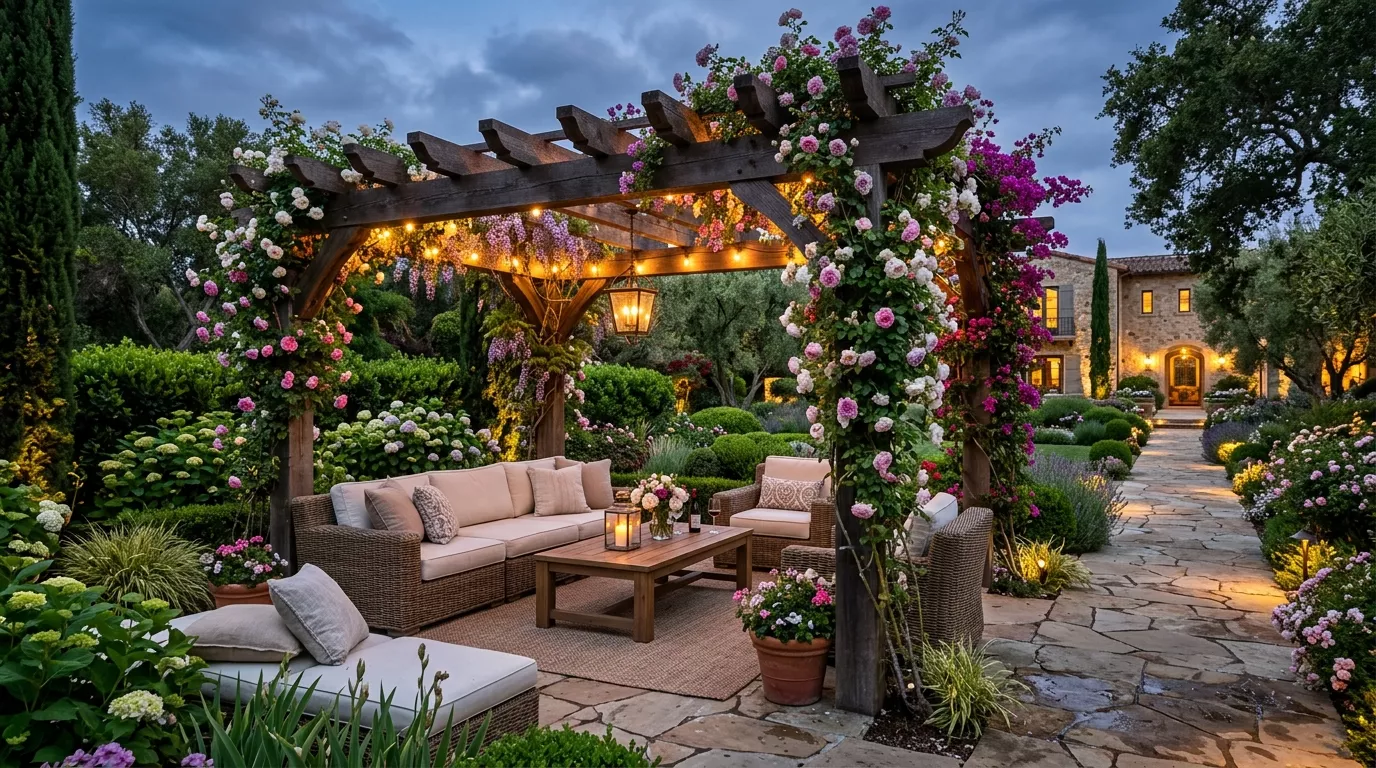
Flowering perennials in soft pinks, lavenders, and whites spill over one another in informal beds. Climbing roses cover a timber arch. A gravel or brick path winds through the space rather than cutting straight across it.
The cottage garden style works particularly well on older properties or homes with traditional architectural features like gabled roofs and brick exteriors.
H3: Desert and Xeriscape Landscaping
If you live in a dry climate, fighting nature is expensive and usually futile. Xeriscape landscaping works with your environment instead of against it.

Drought-tolerant plants like agave, lavender, ornamental sage, and native wildflowers require little to no irrigation once established. Decomposed granite, gravel mulch, and river rock replace thirsty lawn. The result can be stunning — textured, sculptural, and genuinely low maintenance.
Even in non-desert climates, elements of xeriscape design reduce water bills and eliminate a lot of lawn maintenance.
H3: Tropical Oasis
This style creates a backyard that feels like a private resort. Broad-leafed tropical plants like elephant ears, bird of paradise, and banana palms create canopy and texture. A pool or water feature is the anchor. Outdoor lighting wraps the whole thing in warm evening ambiance.
You don’t technically need to live in a tropical climate to pull this off — many tropical-looking plants are surprisingly cold-hardy, and container planting solves a lot of the climate limitations.

H3: Japanese Zen Garden
Balanced, contemplative, and carefully composed — a Japanese-inspired backyard is designed for calming the mind as much as pleasing the eye.
Key elements include a gravel or sand raked area, stepping stones, bamboo screens for privacy, a small water feature (often a tsukubai or basin), and layered planting with maples, moss, and low-growing azaleas. Bonsai trees can work as focal points.
This style suits people who want a low-stimulation space for relaxation or meditation.
H2: How to Plan Your Backyard Landscaping the Right Way

Good landscaping doesn’t start at the garden center — it starts on paper. Here’s how to approach the planning process step by step.
Step 1: Observe and document your space
Spend a few days just watching your backyard at different times of day. Where does the sun hit? Which areas stay shaded? Where does water pool after it rains? Where do the kids actually run? This information shapes everything else.
Step 2: Make a scaled sketch
You don’t need design software. Graph paper works fine. Sketch your yard to scale, mark your house, fence lines, existing trees, and any structures. Note where the sun rises and sets relative to the yard.

Step 3: Define your zones
Divide your backyard into activity zones before you think about plants. Common zones include a dining or entertaining area, a lawn or play zone, garden beds, a utility area (shed, bins, compost), and a quiet retreat corner.
Step 4: Start with hardscape, then soften with planting
Patios, paths, retaining walls, and structures are your backbone. Get these right first. Planting fills in around the structure — not the other way around.
Step 5: Choose plants suited to your conditions
Select plants that fit your soil type, sun exposure, rainfall, and maintenance appetite. A plant that struggles in your conditions will always look worse than a simpler plant that thrives.

Step 6: Layer your planting
Good planting design works in layers — tall canopy trees at the back, mid-height shrubs in the middle, low groundcovers and perennials at the front. This creates depth and year-round interest.
Step 7: Add finishing details
Outdoor lighting, furniture, water features, fire pits, and decorative accessories are the final layer. These elements transform a landscaped yard into a genuinely livable outdoor room.
H2: Hardscaping vs. Softscaping — Understanding the Difference
These two terms get used constantly in landscaping discussions, and understanding the distinction helps you make better decisions.

| Feature | Hardscaping | Softscaping |
|---|---|---|
| Definition | Non-living structural elements | Living plant-based elements |
| Examples | Patios, paths, walls, pergolas, fences | Lawn, trees, shrubs, flowers, groundcovers |
| Installation | Usually done first | Added after hardscape is in place |
| Maintenance | Low once installed | Ongoing seasonal care required |
| Cost | Higher upfront | Generally lower upfront |
| Impact on drainage | Can increase runoff if impermeable | Absorbs water, reduces runoff |
| Longevity | Decades with proper installation | Variable — depends on species and care |
| Design role | Provides structure and definition | Adds color, texture, and life |
A balanced backyard uses both. Too much hardscape feels cold and sterile. Too much planting without structure looks untamed and can become unmanageable. The ratio depends on your style and how much maintenance you’re willing to do.

H2: Backyard Landscaping Ideas at Every Budget
One of the most common misconceptions is that good landscaping requires a massive budget. It doesn’t — it requires good priorities.
Budget-Friendly (Under $1,500)
- Add defined garden beds with timber or metal edging
- Plant perennials instead of annuals — they come back each year
- Lay gravel or decomposed granite paths instead of concrete
- Build a simple DIY fire pit from concrete blocks or pavers
- Sow a wildflower meadow section in place of high-maintenance lawn
- Use container planting to create vertical interest on a deck or patio

Mid-Range ($1,500–$8,000)
- Install a basic concrete or paver patio
- Add a pergola or shade sail structure over the entertaining area
- Plant a privacy hedge or install a timber fence with climbing plants
- Put in an automated irrigation system
- Include a small water feature or garden pond
Premium ($8,000+)
- Full landscape design and installation by a professional
- In-ground pool or spa with surrounding hardscape
- Outdoor kitchen with built-in grill, sink, and countertop
- Outdoor lighting system with uplighting, path lights, and feature lighting
- Custom decking with built-in seating and planters

H2: Backyard Landscaping Ideas for Small Spaces
A small backyard doesn’t mean a compromised one. In fact, some of the most impressive outdoor spaces are compact and intimate.
Go vertical. Train climbing plants up a trellis or wire against your fence. Install wall-mounted planters. Use tall, narrow shrubs and trees (like columnar apple trees or fastigiate hornbeam) to add height without taking floor space.
Use mirrors. Outdoor-rated mirrors mounted on a fence create the illusion of depth. Combined with a strategically placed plant in front, they’re a genuine small-garden trick.
Create one strong focal point. Rather than spreading interest evenly across a small space, anchor the whole yard to one thing — a small fountain, a specimen tree, a fire bowl, or a beautiful dining set. Everything else supports it.
Choose multifunctional furniture. A bench with built-in storage, a table that folds against the wall, or a planter that doubles as a seat — these choices matter in tight spaces.
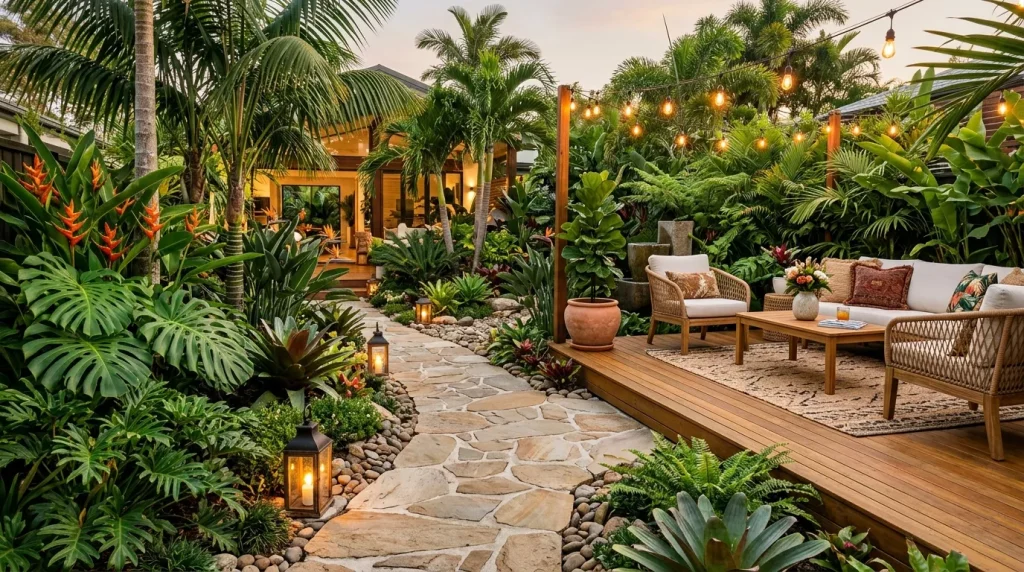
Don’t shrink everything. A common mistake is using tiny furniture and tiny plants in a small garden. Often, one or two larger pieces look more intentional than many small ones and prevent the garden from feeling cluttered.
H2: Backyard Landscaping for Privacy
If your backyard feels exposed to neighbours or the street, privacy landscaping changes everything. Here are the most effective approaches.
- Privacy hedges — Arborvitae, Leyland cypress, Portuguese laurel, and bamboo (clumping varieties only) all grow quickly and densely. Allow two to three years for establishment.
- Timber privacy screens — Slatted timber panels between posts are faster than plants and can be designed to match your home. Can be combined with climbing plants for a softer effect.
- Pergolas with climbing plants — A pergola creates overhead privacy from neighbouring upper floors. Plant wisteria, star jasmine, or a climbing rose for scented coverage.
- Raised planting beds — Elevated planters along fence lines add a metre or more of effective screen height beyond what the fence alone provides.
- Strategic tree placement — A single well-placed evergreen tree can block a specific sightline without blocking all light. Think carefully about which window or point you’re screening before you plant.
H2: Pros and Cons of DIY vs. Hiring a Landscaping Professional
This is the question everyone asks eventually.
DIY Landscaping
Pros:
- Lower cost — you pay for materials, not labour
- Full creative control at every stage
- Satisfying to build something with your own hands
- Easier to make small adjustments as you go
Cons:
- Time-consuming — what takes a pro a day can take a weekend warrior a month
- Mistakes are costly if foundational elements (drainage, paving levels) go wrong
- Access to wholesale plants, materials, and equipment is limited
- Skill ceiling is real — complex grading, retaining walls, and irrigation need expertise
Professional Landscaping
Pros:
- Faster execution with proper equipment and crew
- Design expertise prevents expensive layout mistakes
- Access to better plant stock and trade pricing on materials
- Warranties on plants and installation are common with reputable firms
Cons:
- Significantly higher cost
- Less personal creative input unless you work with a designer who listens
- Quality varies enormously — vetting landscapers is essential
The hybrid approach works well for many homeowners: hire a landscape designer for the plan and hardscaping installation, then handle the planting and finishing yourself. You get professional structure with personal touches at a manageable cost.
H2: Pro Tips for Better Backyard Landscaping Results
These details make a visible difference in the finished result, and they’re often the things people skip.
- Mulch everything — A 3-inch layer of organic mulch over garden beds retains moisture, suppresses weeds, and improves soil as it breaks down. It also immediately makes a planting look more polished.
- Edge your beds cleanly — A crisp edge between lawn and garden bed is the quickest way to make your landscaping look intentional and maintained.
- Plant in odd numbers — Groups of three, five, or seven of the same plant look more natural than pairs or even numbers.
- Think about winter interest — Many gardens look great in summer and dead in winter. Include evergreens, plants with interesting bark, and seedheads that look good under frost.
- Water deeply and infrequently — Shallow watering encourages shallow roots. Deep, infrequent watering trains plant roots to go deep, making them more drought-resilient.
- Don’t plant too close to the house — Shrubs and large perennials against the house can trap moisture against the foundation and create pest access points. Leave 18–24 inches of clearance.
- Plan for mature size — A plant that looks perfect today can block a window or overwhelm a path in five years. Always check the eventual mature spread of every plant you install.
H2: Common Backyard Landscaping Mistakes to Avoid
Even well-intentioned landscaping projects go sideways. These are the errors that come up most often.
- Ignoring drainage — Water that pools against your house foundation or sits on lawn after rainfall is a serious problem. Address drainage before any decorative work begins.
- Planting without a plan — Buying plants you love at the nursery without knowing where they’ll go leads to overcrowding, poor placement, and wasted money.
- Underestimating maintenance — A beautiful but high-maintenance garden that you can’t keep up will look worse after two years than a simple, well-kept one.
- Choosing the wrong grass variety — Not all lawn grasses suit all climates. Warm-season and cool-season grasses have different requirements. Using the wrong one means constant struggle.
- Overlooking outdoor lighting — Landscaping that looks great during the day but is invisible at night is a missed opportunity, especially for entertaining spaces.
- Putting the patio in the wrong spot — A patio positioned where it gets full afternoon sun in summer becomes unusable. Think about where the shade falls before you commit.
- Skipping soil improvement — Most suburban soils are compacted, nutrient-poor, and often damaged from construction. Improving soil before planting dramatically affects how well your plants establish.
- Confusing fast growth with good growth — Fast-growing plants like Leyland cypress or some bamboos can become aggressive, expensive problems. Research growth rates before planting.
Conclusion: Build a Backyard You’ll Actually Use
Backyard landscaping at its best is about creating a space that fits your life — not a showpiece that exists to impress visitors and then sits empty.
Whether you’re drawn to the clean lines of a modern minimalist yard, the relaxed abundance of a cottage garden, or something completely your own, the principles are the same. Start with a clear plan. Get the structure right before the planting. Choose materials and plants that suit your conditions. And give the space enough thought that every decision feels deliberate.
The backyard you’ve been imagining — the one where evenings feel longer, gatherings feel easy, and even a quiet Tuesday morning feels like a small luxury — is absolutely achievable.
Start with a sketch this weekend. Mark your zones, your sun patterns, and one or two elements you want to prioritize. That single step moves you from thinking about your backyard to actually building it.
FAQs: Backyard Landscaping Ideas & Inspiration
Q1: How much does backyard landscaping typically cost?
It varies enormously depending on scope, materials, and whether you DIY or hire professionals. A basic cleanup and planting refresh might cost $500–$1,500 in materials if you do the work yourself. A professionally designed and installed full backyard landscape can run anywhere from $10,000 to $50,000 or more for a large property with significant hardscaping. Most mid-range residential projects fall in the $5,000–$20,000 range when hiring contractors for a complete transformation.
Q2: What are the best low-maintenance backyard landscaping ideas?
Focus on native plants suited to your region — they’ve evolved to thrive in your climate with minimal intervention. Replace high-maintenance lawn with groundcovers, gravel, or native meadow plantings. Install drip irrigation on a timer to eliminate manual watering. Use weed-suppressing fabric under mulch in garden beds. Choose slow-growing shrubs that won’t require constant pruning. The upfront investment in these choices pays back in time and ongoing costs.
Q3: What plants are best for backyard privacy screening?
Arborvitae (Thuja) is one of the most popular privacy hedging plants in temperate climates — it grows quickly, stays dense year-round, and is relatively pest-resistant. Portuguese laurel is a slower but more attractive alternative. For warmer climates, clumping bamboo provides fast, lush screening. For a flowering option, oleander (in warm climates) or a formal hornbeam hedge (in cooler ones) both work well. Always research invasiveness in your specific region before planting, particularly with bamboo.
Q4: How do I landscape a backyard on a tight budget?
Start with the work you can do yourself — clearing, edging, mulching, and planting. Buy plants from end-of-season sales, local plant swaps, or from neighbours dividing their perennials. Grow from seed where possible. Use recycled or reclaimed materials for paths and edging. Focus on one zone at a time rather than trying to transform everything at once. A well-executed small space looks infinitely better than an ambitious project spread too thin.
Q5: How long does it take for a newly landscaped backyard to look established?
Most landscaping professionals say “one year to establish, three years to grow, five years to look mature.” Herbaceous perennials settle into their first full season within a year. Shrubs generally start looking intentional after two to three growing seasons. Trees take longer — five to ten years before they provide meaningful shade or visual impact. The patience required is real, but the result of a properly established landscape is worth the wait. Fast-track the timeline by choosing slightly larger specimen plants at installation.
Q6: Should I remove my lawn entirely or keep it?
It depends on how you use your backyard. If you have kids or pets that genuinely use the lawn for play, keep it — but consider reducing its size and replacing high-maintenance sections with gravel, groundcover, or planting beds. If no one really uses the lawn and you’re mostly maintaining it out of habit, replacing it with lower-maintenance alternatives frees up significant time and water costs. A smaller, well-maintained lawn almost always looks better than a large, neglected one.
Q7: What’s the best first step in a backyard landscaping project?
Spend time observing your space before spending any money. Watch where the sun falls at different times of day. Note where water drains or pools. Identify which views you want to screen and which you want to preserve. Then sketch a simple zone plan — even a rough one. Knowing which areas will be hard surface, which will be lawn, and which will be garden beds before you go near a nursery or a contractor prevents most of the common planning mistakes.