Japandi Living Room Style Ideas for a Calm and Beautiful Home

If you have ever scrolled through interior design photos and felt drawn to spaces that feel effortlessly peaceful — not stark and cold, but warm and deliberately simple — chances are you were looking at Japandi living room style ideas in action.
Japandi is one of the most talked-about interior design trends of this decade. And honestly? It deserves every bit of the attention it gets. This style is not just about how a room looks. It is about how it feels. The moment you walk into a well-designed Japandi living room, your shoulders drop. You exhale. It is the kind of space that tells your brain: slow down.
Let’s break down everything you need to know to bring this aesthetic into your own home — from the philosophy behind it to practical furniture choices and common pitfalls to avoid.
What Is Japandi Style? A Fusion Worth Understanding
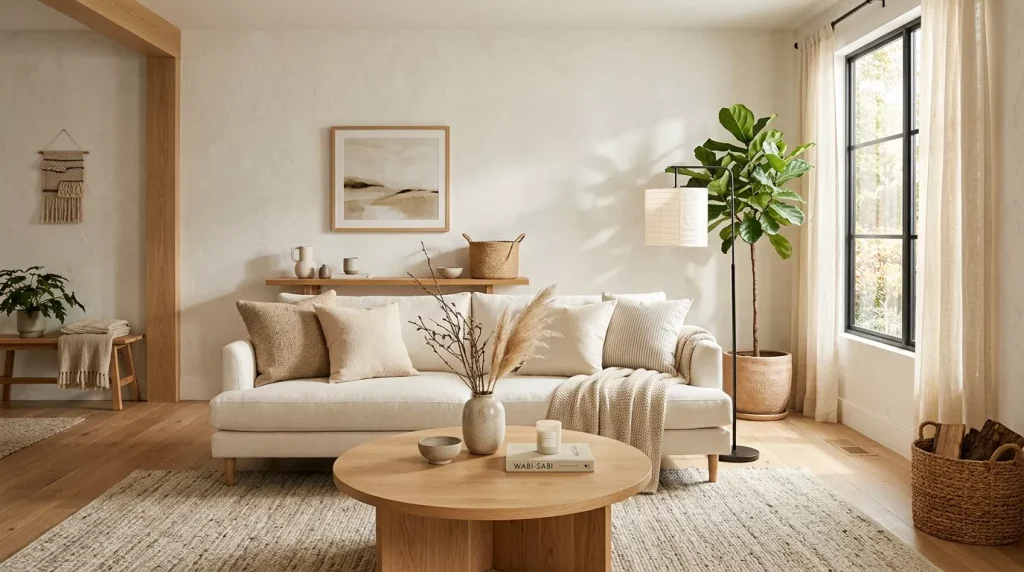
Japandi is a design philosophy born from the blend of two Nordic and East Asian traditions — Japanese minimalism and Scandinavian hygge (coziness). The word itself is a portmanteau: Japanese + Scandinavian.
At first glance, you might wonder — what do Japan and Scandinavia even have in common? Quite a lot, actually.
Both cultures share a deep respect for nature, a preference for understated beauty, an appreciation for craftsmanship, and a belief that less is genuinely more. Japanese wabi-sabi (finding beauty in imperfection) aligns beautifully with the Scandinavian philosophy of lagom (just the right amount). Together, they create something that neither tradition could achieve alone.
The result is a living room that feels minimal without being cold, warm without being cluttered, and curated without feeling fake.

Core Principles of Japandi Living Room Design
Before you start shopping for furniture or repainting walls, it helps to understand the principles that drive this style. Think of these as the “rules” — though in Japandi, they are more like gentle guidelines.
1. Functionality First Every object in a Japandi room earns its place. If it is not useful, beautiful, or both — it does not belong there. This is not the style for impulse buys or decorative clutter.
2. Natural Materials Only Wood (especially lighter tones like oak, ash, or bamboo), stone, linen, rattan, clay, and jute are the backbone of Japandi interiors. Synthetics and plastics feel out of place.

3. Embrace Imperfection Wabi-sabi teaches us to love the handmade bowl with an uneven rim, the wooden table with a grain knot, the linen cushion that wrinkles naturally. Perfection is not the goal — authenticity is.
4. Subdued, Earthy Color Palette No neon, no jewel tones, no bright accent walls (unless very carefully done in muted form). Japandi loves the colors you find in a forest at dawn.
5. Let Light Breathe Natural light is treated almost as a design material. Windows are kept clear, window treatments are sheer and simple, and artificial lighting is warm, low, and layered.
The Japandi Color Palette: What Colors Work Best?

Getting the color palette right is half the battle. Japandi living rooms gravitate toward a specific family of tones that feel simultaneously grounding and expansive.
| Color Category | Example Shades | Best Used For |
|---|---|---|
| Warm Neutrals | Cream, Ivory, Off-white | Walls, large sofas, rugs |
| Earthy Browns | Walnut, Chestnut, Caramel | Wood furniture, accents |
| Muted Greens | Sage, Moss, Olive | Plants, small textiles, cushions |
| Soft Greys | Warm Charcoal, Stone Grey | Feature walls, pottery |
| Deep Anchors | Ink Black, Dark Navy | Frames, lamp bases, thin accents |
Pro Tip: The 60-30-10 rule works beautifully here. 60% of the room in a dominant neutral (cream or warm white), 30% in a secondary tone (warm wood or stone grey), and 10% in a deeper accent (black or deep sage).

Avoid cool, stark whites — they lean too clinical and clash with the warmth this style requires.
Japandi Living Room Style Ideas: Furniture Choices That Define the Space
The furniture you choose will make or break your Japandi living room. Here is what to look for — and what to avoid.
What to Look For
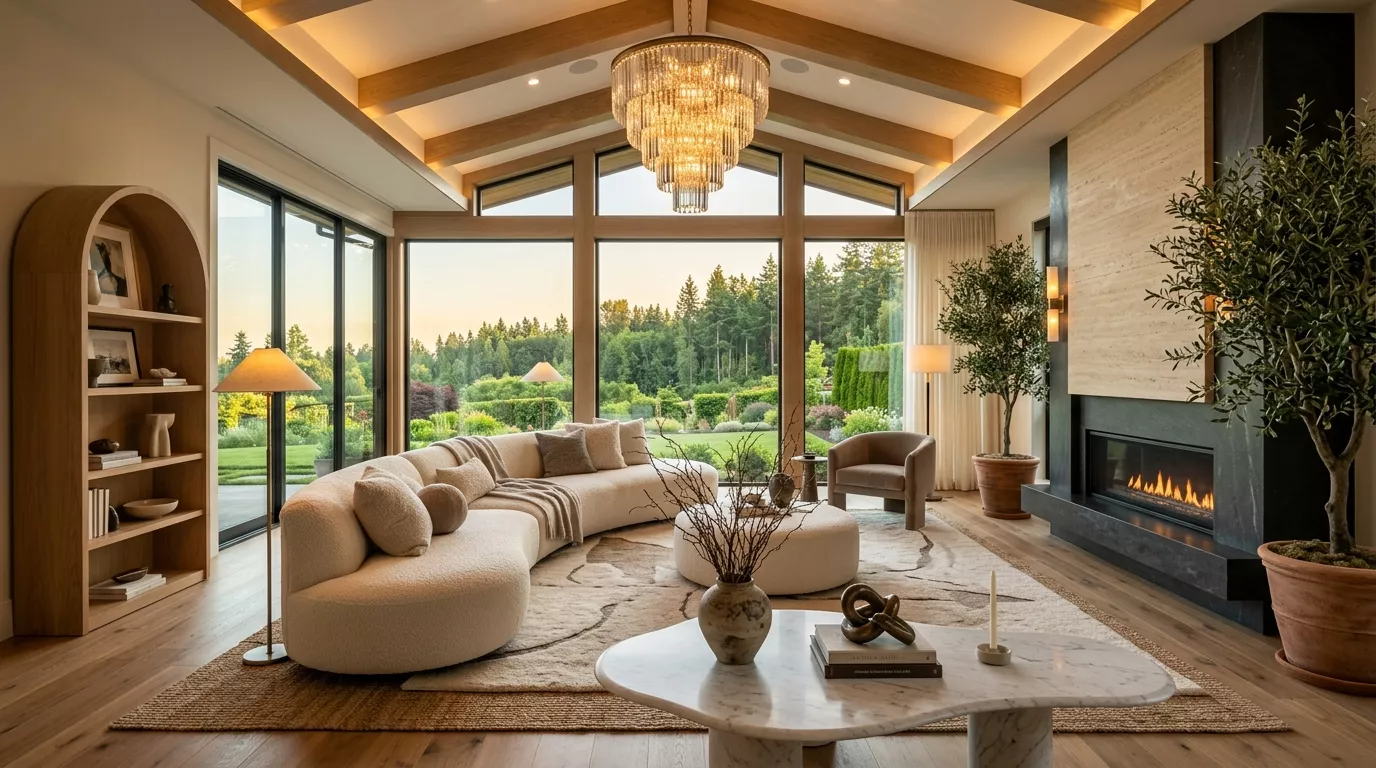
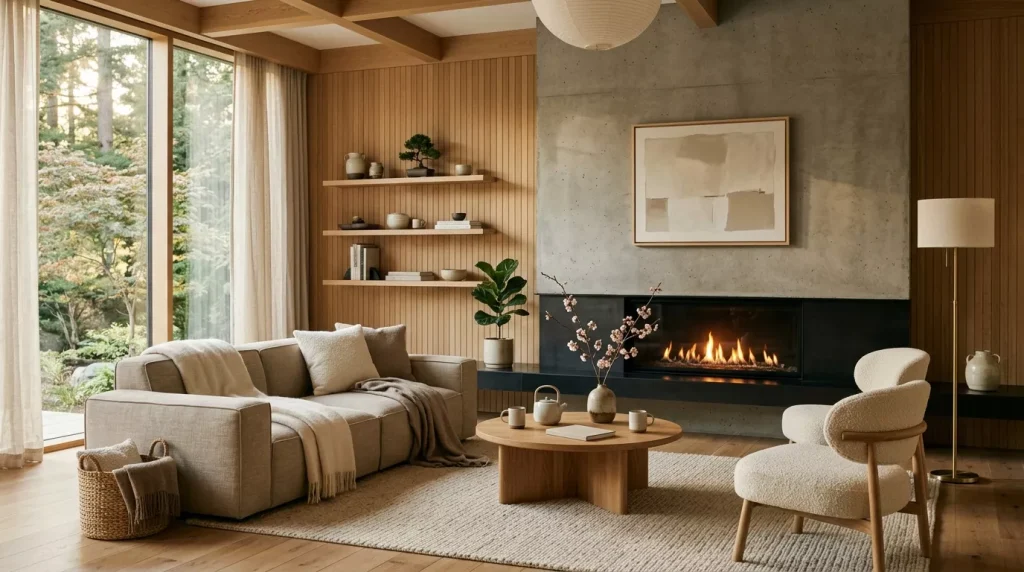
- Low-profile seating: Sofas and chairs that sit closer to the floor feel more grounded and give the room a calm, horizontal visual flow. Think platform-style sofas with clean, straight lines.

- Solid wood coffee tables: Opt for simple rectangular or organic-edged tables in oak, walnut, or bamboo. Avoid ornate carved legs or highly polished finishes.
- Open shelving done sparingly: If you include shelving, keep it curated. Three objects per shelf maximum — a book, a plant, a ceramic piece.
- Multifunctional pieces: A storage ottoman, a bench that doubles as a side table, a coffee table with a lower shelf. Every piece should work hard.
- Handcrafted details: Furniture with visible craftsmanship — a slightly irregular weave in rattan, a hand-stitched cushion seam — adds that wabi-sabi authenticity.
What to Avoid
- Glass and chrome accents
- Overstuffed, boxy Western sofas
- Ornate, traditional Asian furniture (this is a modern fusion, not a period piece)
- Mass-produced, plasticky finishes
- Matching furniture sets that look too coordinated
Textiles and Layering: The Soft Side of Japandi
One of the biggest misunderstandings about Japandi is that it feels cold or sparse. Done well, it is incredibly cozy. The secret is in the textiles.

Fabrics to reach for:
- Linen: The signature Japandi textile. It wrinkles naturally, breathes well, and has a beautiful matte texture.
- Wool and chunky knits: Perfect for throws draped over a sofa arm or a knitted cushion.
- Cotton canvas: Great for curtains and pillow covers.
- Jute and sisal rugs: These anchor the room and bring in organic texture without competing for attention.

Layer two or three textures intentionally. A linen sofa, a wool throw, and a jute rug create warmth without pattern overload. Keep patterns minimal — if you use them, opt for subtle stripes or organic-looking textures rather than busy prints.
Step-by-Step Guide: How to Design Your Japandi Living Room
Follow these steps to transform your living room, whether you are starting from scratch or working with what you have.
Step 1: Declutter Ruthlessly Before a single piece of furniture moves, clear the room. Pull everything out. Decide what genuinely belongs. If you haven’t used or loved an item in a year, it does not make the Japandi cut.

Step 2: Choose Your Base Color Pick a warm neutral for your walls. Warm white, soft cream, or a pale warm grey are your best options. Paint a test patch and observe it in different lights before committing.
Step 3: Invest in One Anchor Furniture Piece Choose one high-quality, natural material sofa or seating unit as the room’s focal point. Build everything else around it.
Step 4: Layer in Wood Tones Introduce wood through a coffee table, a side table, a floor lamp base, or floating shelves. Stick to 1-2 wood tones maximum to maintain cohesion.
Step 5: Add Life with Plants One or two plants do more for a Japandi room than any accessory you can buy. A tall fiddle-leaf fig, a sculptural snake plant, or a simple trailing pothos all work beautifully.
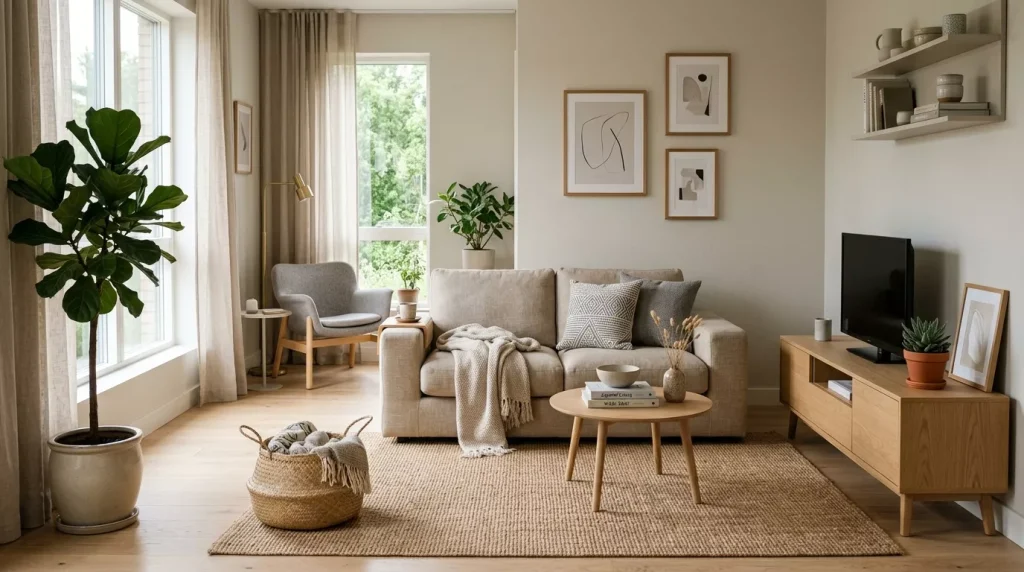
Step 6: Curate Your Accessories (Less Is More) Choose 5-7 accessories total for the room. A ceramic vase, a stack of hardcover books, a wooden bowl, a candle, a woven basket. That’s it. Resist the urge to add more.
Step 7: Address Your Lighting Replace harsh overhead lighting with warm-toned layered lighting — a floor lamp, a table lamp, perhaps some candles. Aim for a soft, amber glow rather than bright white light.
Japandi vs. Other Minimalist Styles: A Quick Comparison
| Style | Key Feature | Main Difference from Japandi |
|---|---|---|
| Japandi | Warm minimalism, natural materials | Blend of cozy + restrained |
| Scandinavian | Bright, clean, functional | Can be cooler and more colorful |
| Japanese Minimalist | Zen, very sparse | Less cozy warmth |
| Modern Minimalist | Sleek, often uses chrome/glass | Less organic, more industrial |
| Wabi-Sabi | Celebrates imperfection | Even more rustic and organic |
Japandi sits in a sweet spot that the others don’t quite hit — warm enough to feel livable, minimal enough to feel intentional.
Pros and Cons of Japandi Living Room Style
✅ Pros
- Timeless appeal — This style does not go out of fashion because it is rooted in philosophy, not trend cycles
- Promotes mental calm — Decluttered, serene spaces genuinely reduce visual stress
- Sustainable by nature — Buying less, choosing natural materials, and investing in quality aligns with eco-conscious living
- Works in small spaces — The low-profile furniture and minimal approach actually makes smaller rooms feel larger
- Easy to maintain — Fewer objects means less to clean and organize
❌ Cons
- Quality costs more upfront — Natural materials and well-made furniture are not cheap
- Hard to share with maximalists — If you live with someone who loves bold color and lots of decor, this can create tension
- Easy to get wrong — Too sparse and it looks bare; too warm and it loses the edge; the balance requires thought
- Limited statement pieces — If you love bold, expressive art and loud accessories, Japandi may feel restrictive
Tips for Getting Japandi Right the First Time
- Shop secondhand first. Thrifted wooden furniture often has the aged, wabi-sabi character that new mass-produced pieces lack.
- Smell your textiles. Linen has a distinctly natural, clean smell. Synthetic blends don’t. Your nose can be a useful quality guide.
- Use odd numbers. When grouping accessories, clusters of 3 or 5 feel more natural and visually interesting than pairs.
- Don’t rush it. Japandi rooms that look best have been built slowly and thoughtfully over time.
- Embrace negative space. The empty corner, the bare wall — these are design choices, not mistakes.
- Prioritize texture over pattern. When in doubt between a patterned cushion and a textured one, go textured every time.
Common Mistakes to Avoid in a Japandi Living Room
Mistake 1: Confusing sparse with sterile Empty walls and bare floors without any warmth create a clinical feeling, not a Japandi one. Warmth comes from materials and light, not just more objects.
Mistake 2: Mixing too many wood tones One or two wood tones (e.g., light oak and a darker walnut) is the maximum. More than that and the room starts to look eclectic rather than curated.
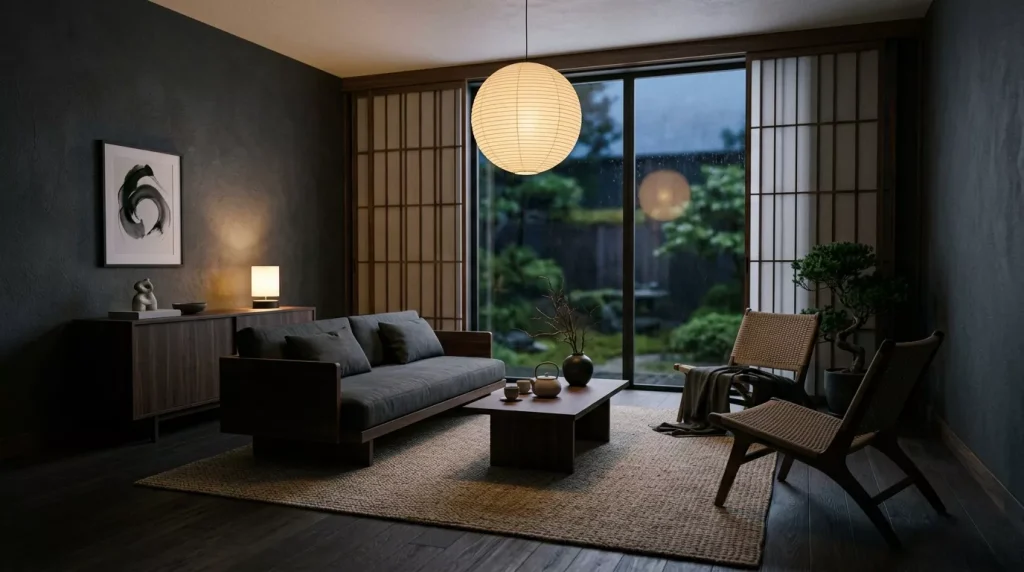
Mistake 3: Ignoring lighting Bright, cool overhead lighting is one of the fastest ways to ruin a Japandi aesthetic. Warm, layered lighting is non-negotiable.
Mistake 4: Over-accessorizing with “Japanese” or “Scandinavian” clichés Cherry blossom prints, samurai decor, or Viking-themed elements miss the point entirely. Japandi is about philosophy and materials, not cultural iconography.
Mistake 5: Buying everything at once Attempting to furnish an entire room in one shopping trip almost always leads to a space that looks purchased rather than curated. Build it slowly.
FAQs About Japandi Living Room Style Ideas
Q1. Is Japandi style expensive to achieve?
It can be if you buy everything new and high-end simultaneously. However, Japandi is actually well-suited to a patient, budget-conscious approach. Secondhand wooden furniture, simple linen from affordable fabric stores, and a few thoughtful plants can create an authentic Japandi feel without a luxury budget. The key is quality over quantity — you need fewer pieces, but they should feel considered.
Q2. Can I incorporate color into a Japandi living room?
Absolutely — but subtly. Muted sage green, dusty rose, warm terracotta in very small doses, or a deep ink-black accent are all welcome. What Japandi avoids is saturated, bright, or clashing colors. Think of color as a whisper in the room, not a shout.
Q3. What kind of art works in a Japandi living room?
Simple, unframed canvas works, minimalist black ink illustrations, abstract nature-inspired prints, or delicate botanical art all fit beautifully. Avoid overly busy compositions or highly saturated artwork. One large, thoughtful piece on the main wall is more powerful than a gallery-wall arrangement of many small pieces.
Q4. How do I make a Japandi living room feel cozy, not cold?
The secret is layering natural textiles and warm lighting. A linen sofa, a wool throw, a jute rug, a few candles, and a warm-toned floor lamp will make the space feel genuinely inviting. Plants also add a living, breathing warmth that no amount of accessories can replicate.
Q5. Can Japandi work in a small apartment living room?
It is actually one of the best styles for small spaces. Low-profile furniture makes ceilings feel higher. A restrained color palette makes rooms feel larger. And the emphasis on decluttering ensures you are not fighting your square footage. A small Japandi living room, done well, can feel more spacious than a large maximalist one.
Q6. What is the difference between Japandi and Wabi-Sabi?
Wabi-Sabi is a Japanese philosophy focused entirely on the beauty of imperfection, impermanence, and incompleteness. Japandi borrows from Wabi-Sabi but blends it with Scandinavian functionality and coziness, making it a more accessible, livable design style for everyday Western homes.
Q7. How many plants should a Japandi living room have?
Generally, 1-3 plants is the sweet spot. One large statement plant (fiddle-leaf fig, bird of paradise, or a tall snake plant) and one or two smaller ones (a trailing pothos on a shelf or a small cactus on the coffee table) is enough. Too many plants starts to feel more like a jungle style than Japandi.
Conclusion: Your Turn to Create a Calmer Space
Japandi living room style ideas are not just about following a design trend — they are about making a deliberate choice to live with less noise, more intention, and greater appreciation for the beauty in simple, natural things.
The beauty of this style is that it is forgiving. You do not need a complete renovation or a massive budget. Start with one change — declutter a shelf, swap your lighting, bring in a piece of natural wood, or finally invest in that linen sofa you have been eyeing.
Each small step moves you closer to a space that actually reflects the kind of life you want to live: calm, considered, and quietly beautiful.
Ready to start your Japandi transformation? Begin with the one room where you spend the most time relaxing, and let the philosophy do the rest. You might be surprised how much a little intentional simplicity changes not just your room — but your entire state of mind.