Cozy Scandinavian Living Room Ideas That Feel Like a Warm Hug

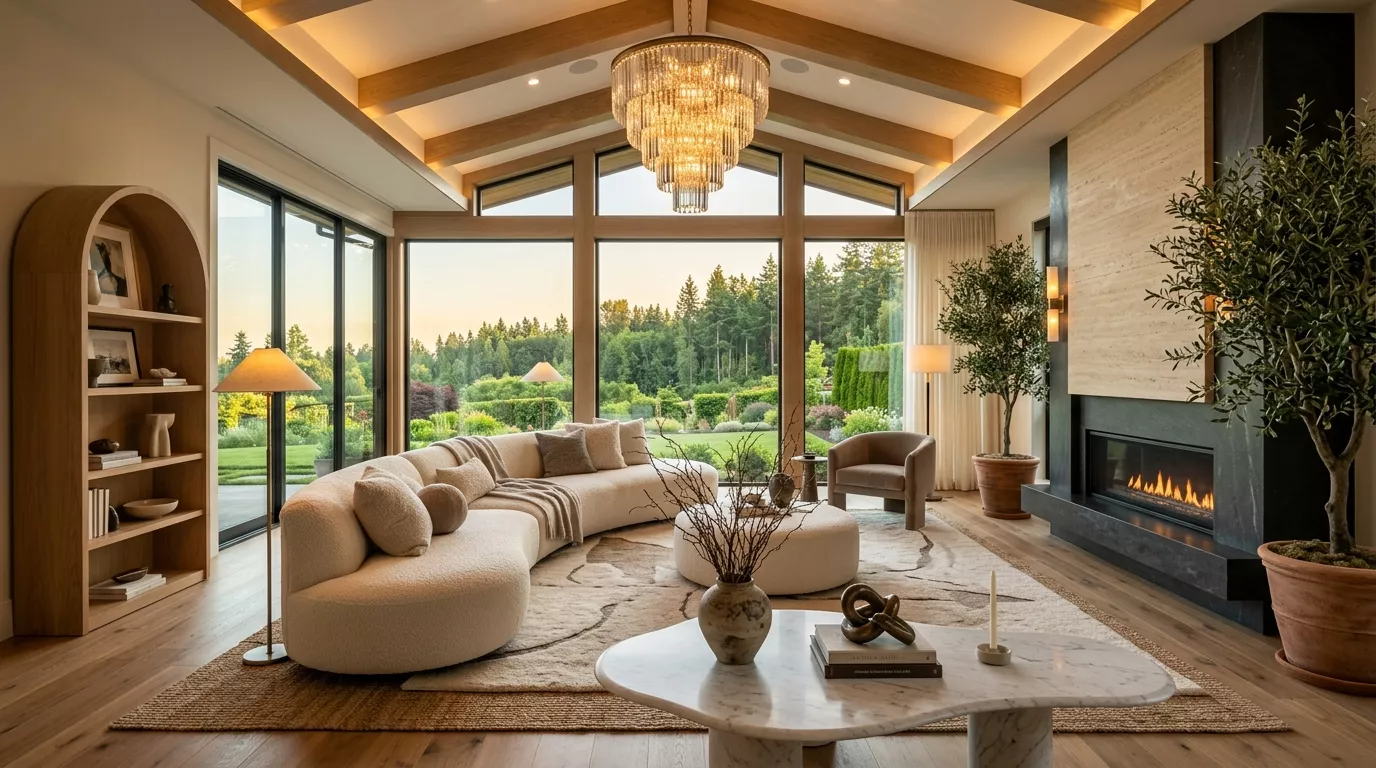
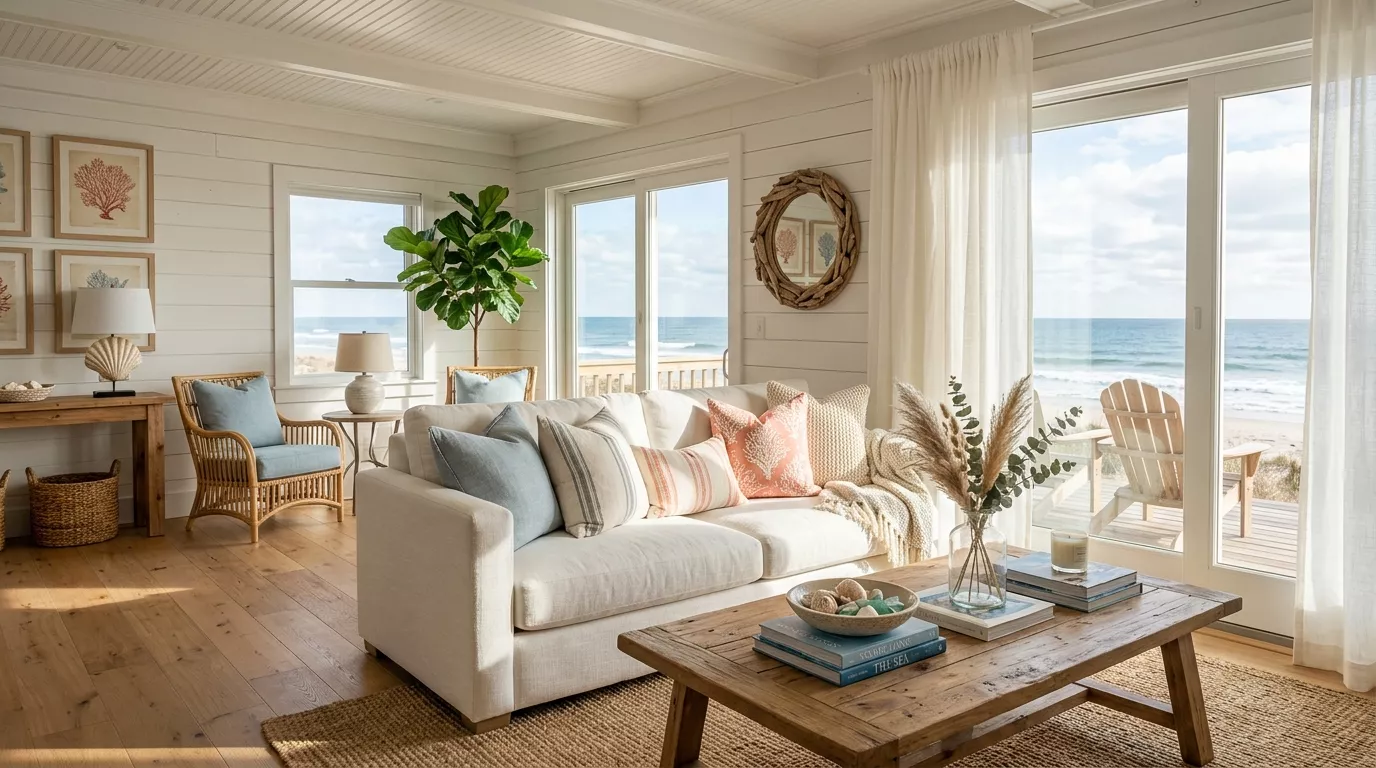
There’s something almost magical about walking into a Scandinavian living room. It’s calm. It’s warm. It breathes. If you’ve ever scrolled through interior design boards and thought, “Why does this feel so effortlessly perfect?” — that’s the power of cozy Scandinavian living room ideas at work. And the best part? You don’t need to live in Stockholm or Copenhagen to pull this off. With the right elements, any living room can become a hygge-inspired retreat.
This guide walks you through everything you need to know — from core design principles to budget-friendly tips, common mistakes to avoid, and real, actionable steps to transform your space.
What Makes a Living Room Truly Scandinavian?

Before you start shopping for furniture, it helps to understand what actually defines this style. Scandinavian design — born from the Nordic countries of Sweden, Denmark, Norway, and Finland — isn’t just an aesthetic. It’s a lifestyle philosophy. The idea is to create spaces that are functional, beautiful, and deeply comfortable.
The three pillars are simple:
- Functionality — every piece earns its place
- Simplicity — clean lines, no clutter
- Natural elements — wood, wool, linen, stone

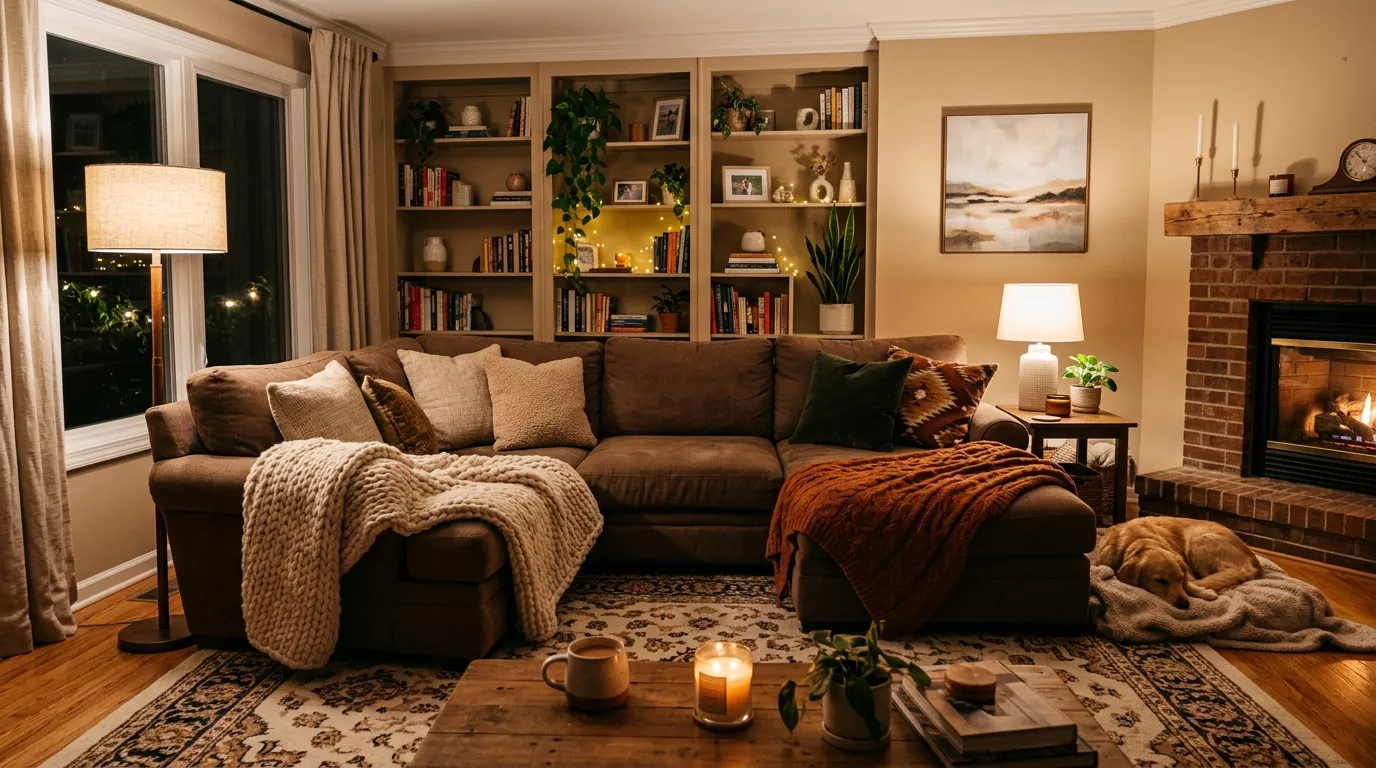
This is where the Danish concept of hygge (pronounced “hoo-gah”) comes in. Hygge is about coziness, togetherness, and a sense of contentment. It’s candles flickering on a dark evening, a soft wool blanket, and a warm cup of tea — in a room that feels just right.
Cozy Scandinavian Living Room Ideas: The Core Elements
Now let’s get into the heart of it. These are the foundational building blocks of any cozy Scandinavian living room design.
1. A Neutral, Nature-Inspired Color Palette
The Scandinavian color palette leans toward whites, warm grays, soft beiges, and muted earthy tones. You’re not painting walls cobalt blue here. Think:

| Color | Hex / Tone | Best Used For |
|---|---|---|
| Warm White | Off-white, cream | Walls, ceilings, large furniture |
| Warm Gray | Greige, dove gray | Accent walls, rugs, cushions |
| Oat / Beige | Sandy, warm neutral | Sofas, curtains, throw blankets |
| Dusty Sage | Muted green-gray | Plants, accent decor, pillows |
| Charcoal | Deep slate | Statement furniture, frames |
Avoid stark, cool whites — they feel clinical, not cozy. Go for warm undertones instead.

2. Natural Wood Is Non-Negotiable
Light-toned wood is the backbone of Nordic interior design. Think birch, pine, ash, or light oak. You’ll see it in:
- Coffee tables and side tables
- Floating shelves
- Flooring (especially wide-plank oak)
- Furniture legs
- Decorative bowls and frames


Don’t go for dark mahogany or heavy cherry wood — that belongs to a different style altogether. The lighter the wood, the more authentic the Scandinavian feel.
3. Soft Textures That Invite You In
This is where the real coziness lives. Layer different textures to give the room warmth and depth:
- Chunky knit throw blankets draped over the sofa
- Faux fur or wool rugs on the floor
- Linen curtains that let in diffused natural light
- Velvet or bouclé cushion covers in muted tones

The goal is tactile richness — the room should feel cozy even before you sit down.
4. Minimalist Furniture With Purpose
In Scandinavian design, furniture isn’t just about looks — it has to work hard. Choose pieces that are:
- Low-profile (no overpowering silhouettes)
- Multi-functional (storage ottomans, sofa beds)
- Well-crafted with clean lines
- Comfortable above all else

A classic Scandinavian sofa is often mid-century modern in style — tapered legs, structured but comfortable cushions, neutral upholstery. Brands like IKEA (yes, genuinely Scandinavian) nail this at an accessible price point.
5. Plants and Natural Greenery
No Scandinavian living room is complete without greenery. Plants bring life, purify the air, and add a fresh contrast to neutral palettes. Great choices include:
Step-by-Step Guide: How to Create a Cozy Scandinavian Living Room
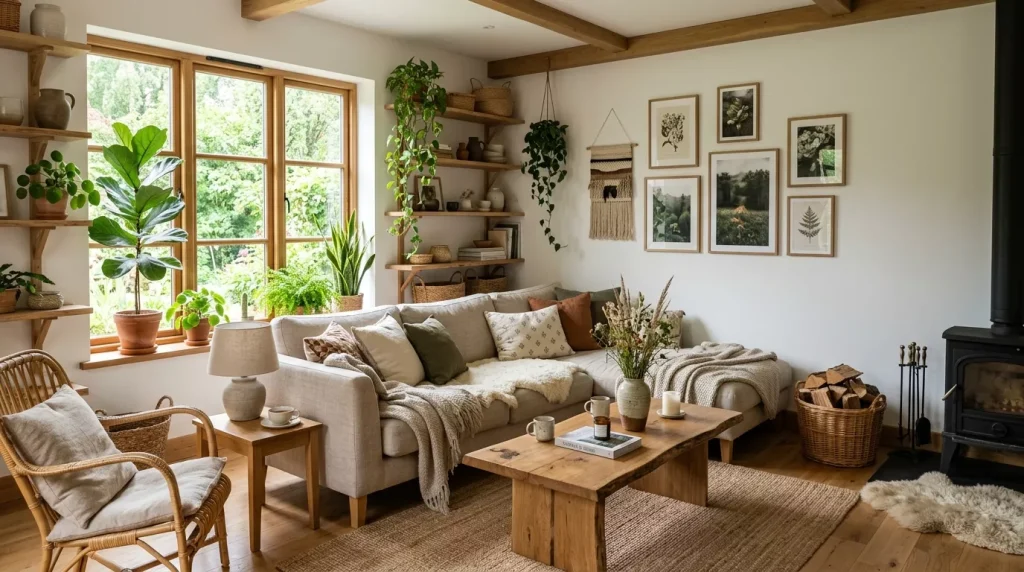
You don’t need to renovate your entire home. Follow these steps to bring the Nordic vibe into your existing space.
Step 1: Declutter First Clear everything out. Scandinavian style is inherently minimal — clutter is the enemy. Remove anything you don’t use or love.
Step 2: Repaint in a Warm Neutral Choose an off-white or warm greige for the walls. This instantly opens up the space and creates the perfect canvas.
Step 3: Invest in One Quality Anchor Piece This could be a light oak coffee table, a linen sofa, or a statement rug. Build the rest of the room around it.
Step 4: Layer Textures Add a wool rug, scatter some cushions, and drape a throw blanket. This is what transforms a room from sterile-minimal to genuinely cozy.

Step 5: Add Warm Lighting Swap harsh overhead lights for warm-toned floor lamps, table lamps, and candles. Lighting is everything in Scandinavian interiors.
Step 6: Introduce Natural Elements Add a plant, a wooden tray, a linen cushion. Nature-based materials instantly ground a room.
Step 7: Edit Ruthlessly Less is always more. Once you’ve styled the room, take something away. If it looks better without it — it was clutter.
Scandinavian vs. Other Minimalist Styles: A Quick Comparison

| Style | Key Traits | Warmth Level | Budget Friendly? |
|---|---|---|---|
| Scandinavian | Warm neutrals, natural wood, hygge | ⭐⭐⭐⭐⭐ | ✅ Yes |
| Japanese (Japandi) | Ultra-minimal, dark wood, wabi-sabi | ⭐⭐⭐⭐ | ✅ Moderate |
| Industrial | Raw materials, metal, exposed brick | ⭐⭐ | ✅ Yes |
| Mid-Century Modern | Bold colors, retro furniture, pattern | ⭐⭐⭐ | ❌ Can be pricey |
| Bohemian | Eclectic, layered, colorful | ⭐⭐⭐⭐ | ✅ Yes |
Scandinavian wins on the warmth-to-simplicity ratio — no other style balances those two qualities quite as well.
Pros and Cons of Scandinavian Living Room Design

✅ Pros
- Timeless and never goes out of style
- Easy to maintain and keep clean
- Creates a calm, stress-reducing atmosphere
- Works well in small and large spaces alike
- Budget-friendly — IKEA and similar brands carry the look beautifully
- Highly photogenic for social media and home styling
❌ Cons
- Can feel too neutral or “cold” without proper layering
- Requires discipline — clutter breaks the aesthetic instantly
- White walls and light furniture show dirt more easily
- May feel too “safe” for those who love bold color and pattern
- Finding authentic quality pieces can be expensive
Tips for Nailing Cozy Scandinavian Living Room Decor
These aren’t rules — they’re hard-won insights from designers who live and breathe Nordic style.
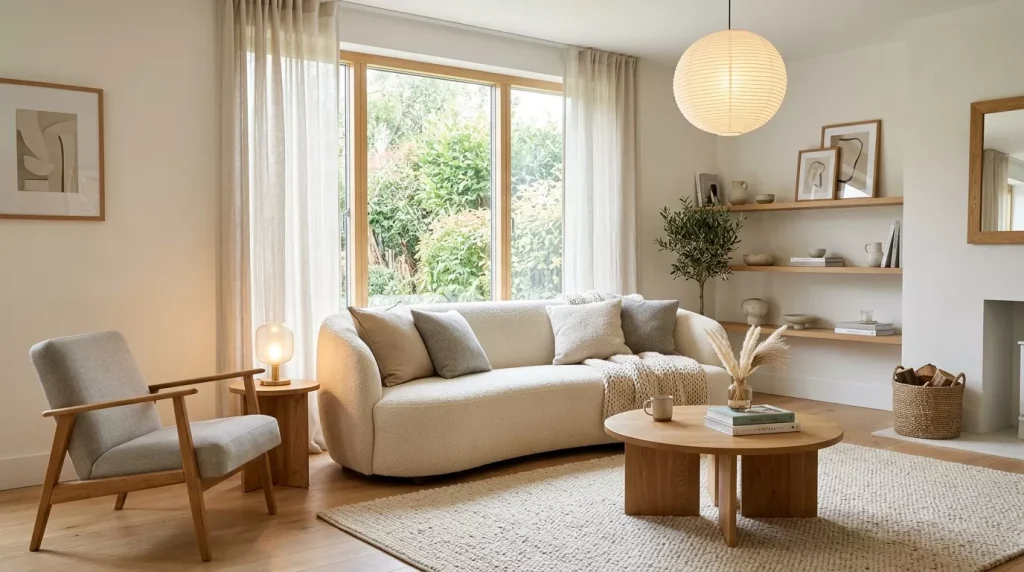
- Use odd numbers when grouping decor items — three candles, five books, one plant. It feels more natural.
- Invest in good lighting before anything else. A warm-toned lamp will do more for coziness than any throw blanket.
- Layer rugs if you have hard floors. A jute rug under a sheepskin rug is very Nordic and very cozy.
- Keep your coffee table simple. A wooden tray with a candle, a small plant, and one book is all you need.
- Choose curtains that pool slightly on the floor. Linen curtains in white or oat lend an effortless, lived-in luxury.
- Don’t skip the candles. Danes burn more candles per capita than any other nation — and there’s a reason for that.
Common Mistakes to Avoid

Even with the best intentions, these errors can undermine your Scandinavian vision:
- Going too minimalist — Removing all personality makes a room feel cold, not cozy. Warmth needs some layers.
- Using cool white paint — Bright, blue-toned whites are jarring. Always test paint chips in natural light first.
- Ignoring lighting — Relying only on overhead lighting kills the hygge atmosphere immediately.
- Buying cheap faux wood — Plastic wood-look furniture reads as fake and cheapens the whole look. Save up for real wood accents.
- Overdoing greenery — One or two well-placed plants look intentional. Ten plants look chaotic.
- Forgetting the floor — A quality rug is one of the most important elements. Don’t leave floors bare.

Cozy Scandinavian Living Room Ideas on a Budget
Great news — this is one of the most budget-accessible design styles out there. Here’s where to shop smart:
- IKEA — Genuinely Scandinavian and incredibly well-designed for the price
- Thrift stores / second-hand shops — Mid-century modern pieces are everywhere and fit the aesthetic perfectly
- DIY wooden shelves — Floating pine shelves cost almost nothing and look beautiful
- Candles from any supermarket — Unscented white pillar candles are your best friend
- Linen from fabric stores — Sew your own cushion covers in oat or white linen for a fraction of the cost
You absolutely don’t need to spend thousands to get this right.
Conclusion: Your Cozy Scandinavian Living Room Starts Today
There’s a reason cozy Scandinavian living room ideas continue to dominate interior design boards year after year — the style simply works. It’s warm without being busy. It’s minimal without being cold. And it’s the kind of space that makes you genuinely happy to come home.
The beauty of Nordic design is that you can start small. A new lamp here, a chunky throw blanket there, a plant in the corner. Each element builds on the last until your living room becomes exactly the kind of hygge haven you’ve been dreaming of.
Ready to transform your living room? Start with just one change this weekend — repaint a wall, buy a quality rug, or add a warm lamp. Small steps lead to stunning results. Your cozy, Scandinavian-inspired sanctuary is closer than you think.
Frequently Asked Questions (FAQs)
Q1: What is the key principle behind Scandinavian living room design?
The core principle is form follows function — every piece of furniture and decor must serve a purpose. Beyond that, the focus is on natural materials, neutral tones, and creating a warm, welcoming atmosphere rooted in the hygge philosophy.
Q2: What colors are used in a Scandinavian living room?
The palette stays neutral and nature-inspired: warm whites, greiges, soft beiges, dusty sage, and occasional charcoal or black as accent colors. Avoid cold, bright whites — they feel clinical rather than cozy.
Q3: Is Scandinavian design expensive to achieve?
Not necessarily. IKEA — a genuinely Scandinavian brand — makes achieving this style very accessible. Thrift stores, DIY projects, and simple swaps like candles and throws can transform a room without a large budget.
Q4: What’s the difference between Scandinavian and Japandi style?
Both are minimalist, but Scandinavian leans warmer and cozier with lighter wood tones and hygge-focused decor. Japandi blends Scandinavian and Japanese aesthetics, often using darker wood, more negative space, and wabi-sabi principles for a slightly more austere look.
Q5: How do I make a Scandinavian living room feel warmer and less stark?
Layer textures — add a wool rug, chunky throw blankets, and linen cushions. Swap overhead lighting for floor lamps and candles. Add one or two plants. These three changes alone dramatically increase warmth without sacrificing the minimalist aesthetic.
Q6: What type of lighting works best in a Scandinavian living room?
Warm-toned, ambient lighting is essential. Think floor lamps with Edison bulbs (2700K–3000K color temperature), table lamps, and plenty of candles. Avoid harsh fluorescent or cool white LEDs — they destroy the hygge atmosphere instantly.
Q7: Can I achieve Scandinavian style in a small living room?
Absolutely — in fact, the minimalist approach works better in small spaces. Light colors make rooms feel larger, multi-functional furniture maximizes space, and careful editing prevents overcrowding. A small Scandinavian living room can feel incredibly spacious and cozy at the same time.