15 Living Room Flooring Ideas That Transform Your Space 2026

Introduction
Your living room floor is the foundation of your entire space. It’s what you walk on, build your furniture on, and look at every single day.
But choosing the right flooring can feel overwhelming. Hardwood? Tile? Vinyl? Carpet? Light or dark? Wide planks or narrow?

Here’s the truth: there’s no single “best” flooring. The right choice depends on your lifestyle, your budget, your style, and how you use your living room.
Do you have kids or pets? You need something durable. Do you love a cozy, warm feel? Carpet or wood might be your answer. Are you on a tight budget? Luxury vinyl plank looks amazing without breaking the bank.
In this guide, I’ll share 15 living room flooring ideas to help you choose the perfect foundation for your home. Whether you’re renovating, building, or just dreaming, you’ll find inspiration here.
Let’s get started.
1. Wide Plank Hardwood Floors
Wide plank hardwood floors are timeless, elegant, and add instant warmth to any living room. The wider planks (5-8 inches) create a modern, spacious feel that narrower planks can’t match.
How to do it: Choose oak, walnut, or maple in a finish that complements your style — light and natural for Scandinavian, medium brown for traditional, dark espresso for modern.
Why it works: Hardwood never goes out of style. It adds value to your home, lasts for generations, and pairs beautifully with any decor style.

2. Light Oak Hardwood
Light oak hardwood is bright, airy, and perfect for small or dark living rooms. It reflects light, making your space feel larger and more open.
How to do it: Choose white oak or natural oak with a matte or satin finish. Pair with white walls and light furniture for a Scandinavian look, or with dark furniture for contrast.
Why it works: Light floors make a room feel bigger and brighter. They’re versatile, modern, and hide dust better than dark floors.
3. Dark Walnut Hardwood
Dark walnut hardwood is rich, dramatic, and adds instant sophistication to any living room. It creates a stunning contrast against light walls and furniture.
How to do it: Choose walnut in a medium to dark stain. Use light rugs, white walls, and plenty of natural light to balance the darkness.
Why it works: Dark floors add warmth and depth. They make a statement and create a cozy, grounded feel that’s perfect for traditional or modern spaces.

4. Luxury Vinyl Plank (LVP)
Luxury vinyl plank is the perfect choice for busy families. It looks like wood, feels like wood, but is waterproof, scratch-resistant, and budget-friendly.
How to do it: Choose planks in a wood-look finish — oak, hickory, or walnut. Look for products with a thick wear layer for durability.
Why it works: LVP is affordable, durable, and easy to install. It’s perfect for homes with kids, pets, or anyone who wants the look of wood without the maintenance.
5. Engineered Hardwood
Engineered hardwood offers the look of solid wood with added stability. It’s less susceptible to moisture and temperature changes, making it ideal for basements or homes with humidity.
How to do it: Choose engineered wood with a thick top veneer that can be refinished if needed. Install as a floating floor for easy DIY.
Why it works: Engineered hardwood gives you the beauty of real wood with better performance in challenging conditions.

6. Large Format Porcelain Tile
Large format porcelain tile (24×24 inches or larger) creates a sleek, seamless look that’s incredibly durable. It’s perfect for modern, contemporary, or industrial living rooms.
How to do it: Choose tile in a neutral color — light grey, beige, or cream. Use minimal grout lines for a continuous look. Add area rugs for warmth.
Why it works: Porcelain tile is waterproof, scratch-proof, and easy to clean. It’s ideal for high-traffic areas and homes with pets.
7. Herringbone Wood Flooring
Herringbone wood flooring adds instant elegance and visual interest. The V-shaped pattern creates movement and makes your living room feel more dynamic.
How to do it: Choose narrow planks in oak or walnut. Install in a traditional herringbone pattern. Use with simple furniture to let the floor shine.
Why it works: Herringbone is timeless and sophisticated. It turns your floor into a design feature rather than just a surface.

8. Light Grey Luxury Vinyl
Light grey luxury vinyl is modern, versatile, and perfect for contemporary living rooms. It pairs beautifully with white walls, black accents, and natural wood tones.
How to do it: Choose planks in a light grey oak or ash look. Install throughout for a seamless, cohesive look.
Why it works: Grey is a neutral that works with almost any color scheme. Light grey floors keep the room bright and open.
9. Bamboo Flooring
Bamboo is an eco-friendly alternative to hardwood. It’s sustainable, durable, and has a unique, modern look that works well in contemporary spaces.
How to do it: Choose strand-woven bamboo for maximum durability. Look for a natural or carbonized finish.
Why it works: Bamboo is renewable, affordable, and harder than many hardwoods. It’s perfect for eco-conscious homeowners.
10. Patterned Cement Tile
Patterned cement tile adds personality, color, and pattern to your living room. It’s bold, beautiful, and perfect for eclectic, boho, or Mediterranean styles.
How to do it: Use patterned tile in a defined area — a conversation nook, around the fireplace, or as a border. Keep the rest of the room simple to let the tile shine.
Why it works: Patterned tile is a statement piece. It adds color and interest without needing artwork or accessories.
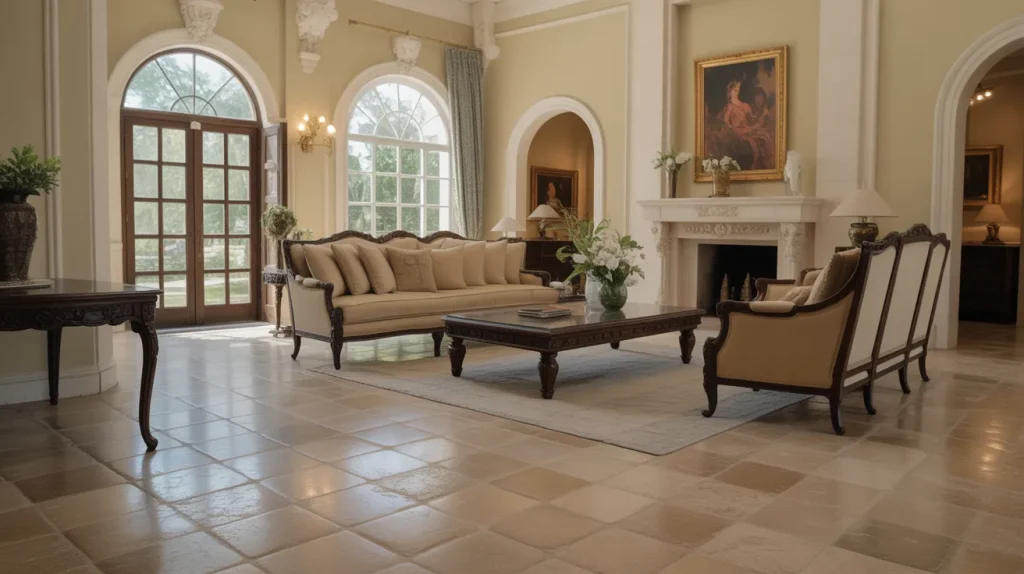
11. Natural Stone Tile
Natural stone tile — marble, travertine, limestone — adds luxury and timeless elegance. Each piece is unique, with natural variations that create visual interest.
How to do it: Choose honed or matte finishes for a softer look. Use large tiles for a seamless feel. Add area rugs for warmth and comfort.
Why it works: Natural stone is durable, timeless, and adds value to your home. It’s perfect for formal or traditional living rooms.

12. Cork Flooring
Cork flooring is soft, warm, and eco-friendly. It’s naturally antimicrobial, hypoallergenic, and provides cushioning underfoot — perfect for families with young children.
How to do it: Choose cork tiles or planks in a natural finish. Seal properly to protect against moisture.
Why it works: Cork is comfortable to stand on, quiet, and sustainable. It’s a great choice for playrooms, family rooms, and cozy living spaces.
13. Reclaimed Wood Flooring
Reclaimed wood flooring adds history, character, and sustainability. Each plank tells a story with its unique marks, nail holes, and patina.
How to do it: Choose reclaimed oak, pine, or barn wood. Use in rustic, farmhouse, or industrial spaces for maximum impact.
Why it works: Reclaimed wood is sustainable, unique, and adds instant character. It’s perfect for those who want a floor with soul.

14. Light Beige Carpet
Carpet is the ultimate in cozy comfort. Light beige carpet adds warmth, softness, and a quiet, serene feel to a living room.
How to do it: Choose a dense, stain-resistant carpet in a light beige or cream. Use in low-traffic areas or rooms where comfort is priority.
Why it works: Carpet is soft, warm, and sound-absorbing. It creates a cozy, inviting atmosphere that’s perfect for relaxing.
15. Mix of Wood and Tile
Why choose one? Mixing wood and tile creates defined zones and adds visual interest. Use wood in the seating area and tile near the fireplace or entry.
How to do it: Use a transition strip to create a clean line between materials. Choose materials that complement each other — light oak with cream tile, walnut with grey slate.
Why it works: Mixing materials adds depth and defines different functional zones in an open concept living room.

Color Combination Table
| Color | Works Well With | Best Used For |
|---|---|---|
| Light Wood | White walls, black accents, green plants | Scandinavian, modern, coastal |
| Dark Wood | Cream walls, brass accents, navy furniture | Traditional, formal, rustic |
| Grey Flooring | White walls, blue accents, wood furniture | Contemporary, modern, industrial |
| Beige/Cream Carpet | Warm wood tones, earthy colors, white trim | Cozy, traditional, family rooms |
Common Mistakes to Avoid

Mistake 1: Choosing Style Over Function
A beautiful floor that can’t handle your lifestyle will leave you frustrated. If you have kids or pets, durability matters more than looks.
How to fix: Consider your lifestyle before falling in love with a material. Luxury vinyl, tile, and engineered hardwood are great for busy families.
Mistake 2: Ignoring Your Subfloor
Not all floors work on all subfloors. Concrete, plywood, and existing floors have different requirements.
How to fix: Check your subfloor type and condition before choosing flooring. Some materials need specific preparation or underlayment.
Mistake 3: Forgetting About Transitions
Your living room floor needs to transition to other rooms. Mismatched flooring can look disjointed and unfinished.
How to fix: Plan how your flooring will transition to adjoining rooms. Use transition strips or carry the same flooring throughout for a seamless look.
Mistake 4: Choosing Too Dark
Dark floors show every speck of dust, pet hair, and footprint. They can also make a small room feel smaller.
How to fix: If you love dark floors, be prepared for frequent cleaning. Consider medium tones for a balance of drama and practicality.
Mistake 5: Choosing Too Light
Very light floors show dirt and scratches more than you’d expect. They can also feel cold and sterile without enough warmth in the room.
How to fix: Balance light floors with warm wood furniture, area rugs, and plenty of textiles. Choose light floors with subtle variation to hide imperfections.
Mistake 6: Skipping Samples
A floor that looks perfect in the showroom can look completely different in your home. Lighting changes everything.
How to fix: Always order samples and look at them in your home at different times of day. See them in morning light, afternoon light, and evening light.

Before & After: Transforming a Living Room Floor
Before:
Mike and Lisa’s living room had old, beige carpet that was stained, worn, and held onto every smell from their two dogs. The room felt dark, dated, and impossible to keep clean.
The Problem:
The carpet was the wrong choice for their lifestyle. It showed every stain, trapped odors, and made the room feel heavy and dated. They wanted something modern, easy to clean, and pet-friendly.
The Changes:
- Removed old carpet and padding
- Installed light grey luxury vinyl plank throughout
- Added a large jute rug to define the seating area
- Painted walls crisp white for contrast
- Added new furniture and plants
After:
The room feels twice as large. The light grey floors reflect light and make the space feel bright and airy. The vinyl is waterproof, scratch-resistant, and easy to clean — perfect for their dogs. Mike and Lisa finally love their living room and don’t stress about muddy paws.
Budget vs. Luxury: Living Room Flooring Options
Budget-Friendly Options:
- Luxury Vinyl Plank: $2-5 per square foot, looks like wood, waterproof, DIY-friendly
- Laminate: $1-4 per square foot, durable, easy to install, wide variety of styles
- Carpet: $2-5 per square foot, cozy, warm, sound-absorbing
- Bamboo: $3-6 per square foot, sustainable, durable, unique look
Splurge-Worthy Investments:
- Solid Hardwood: $8-15 per square foot, timeless, adds home value, lasts generations
- Natural Stone: $10-20 per square foot, unique, luxurious, durable
- Engineered Hardwood: $6-12 per square foot, stable, beautiful, refinishable
- Reclaimed Wood: $10-20 per square foot, sustainable, unique character, story
Room Size Guide: Best Flooring for Your Space
Small Rooms:
- Best flooring: Light hardwood, light luxury vinyl, light tile
- Why: Light colors reflect light and make a small room feel larger. Wide planks also help create a sense of space.
Medium Rooms:
- Best flooring: Almost anything works — hardwood, luxury vinyl, tile, carpet
- Why: Medium rooms can handle more variety. Choose based on your style and lifestyle rather than size constraints.
Large Rooms:
- Best flooring: Wide plank hardwood, large format tile, consistent flooring throughout
- Why: Large rooms can handle bold choices. Use the same flooring throughout to create a cohesive, seamless look.
Frequently Asked Questions
Q: What is the most durable living room flooring?
A: Porcelain tile and luxury vinyl plank are the most durable. Both are waterproof, scratch-resistant, and perfect for high-traffic areas.
Q: What is the most affordable living room flooring?
A: Laminate and luxury vinyl plank are the most budget-friendly. Both offer great looks at a fraction of the cost of hardwood or tile.
Q: What flooring adds the most home value?
A: Solid hardwood adds the most value. It’s timeless, desirable, and lasts for generations.
Q: Is carpet out of style?
A: No. Carpet is still popular, especially in bedrooms and cozy living rooms. Choose neutral colors and high-quality materials for a timeless look.
Q: What’s the best flooring for pets?
A: Luxury vinyl plank and porcelain tile are the best for pets. Both are waterproof, scratch-resistant, and easy to clean.
Q: Can I install flooring myself?
A: Yes. Luxury vinyl plank, laminate, and some engineered hardwood are DIY-friendly. Tile and solid hardwood are best left to professionals.
Conclusion
Your living room floor is the foundation of your home. It’s what you build your style on, what your furniture rests on, and what you walk on every single day.
Whether you choose timeless hardwood, durable luxury vinyl, cozy carpet, or elegant tile, the right floor will transform your living room from ordinary to extraordinary.
Take your time. Order samples. Consider your lifestyle. And choose a floor that you’ll love for years to come.
Ready to transform your living room floor? Start with samples — order a few options and see how they look in your home at different times of day. The perfect floor is waiting for you.