Coffee Table Styling Ideas for Your Living Room

Coffee Table Styling Living Room Ideas: A Complete Decorating Guide
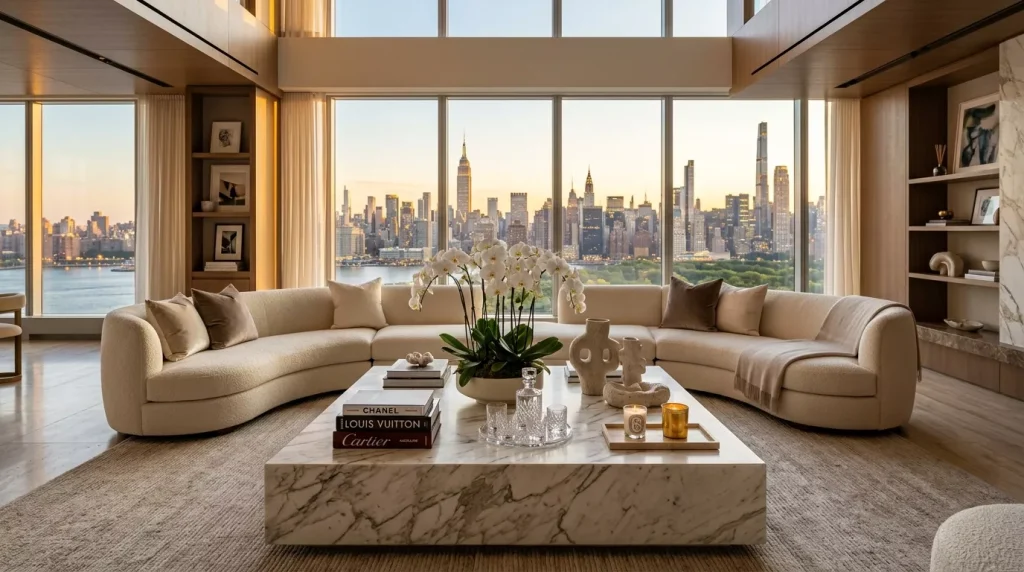
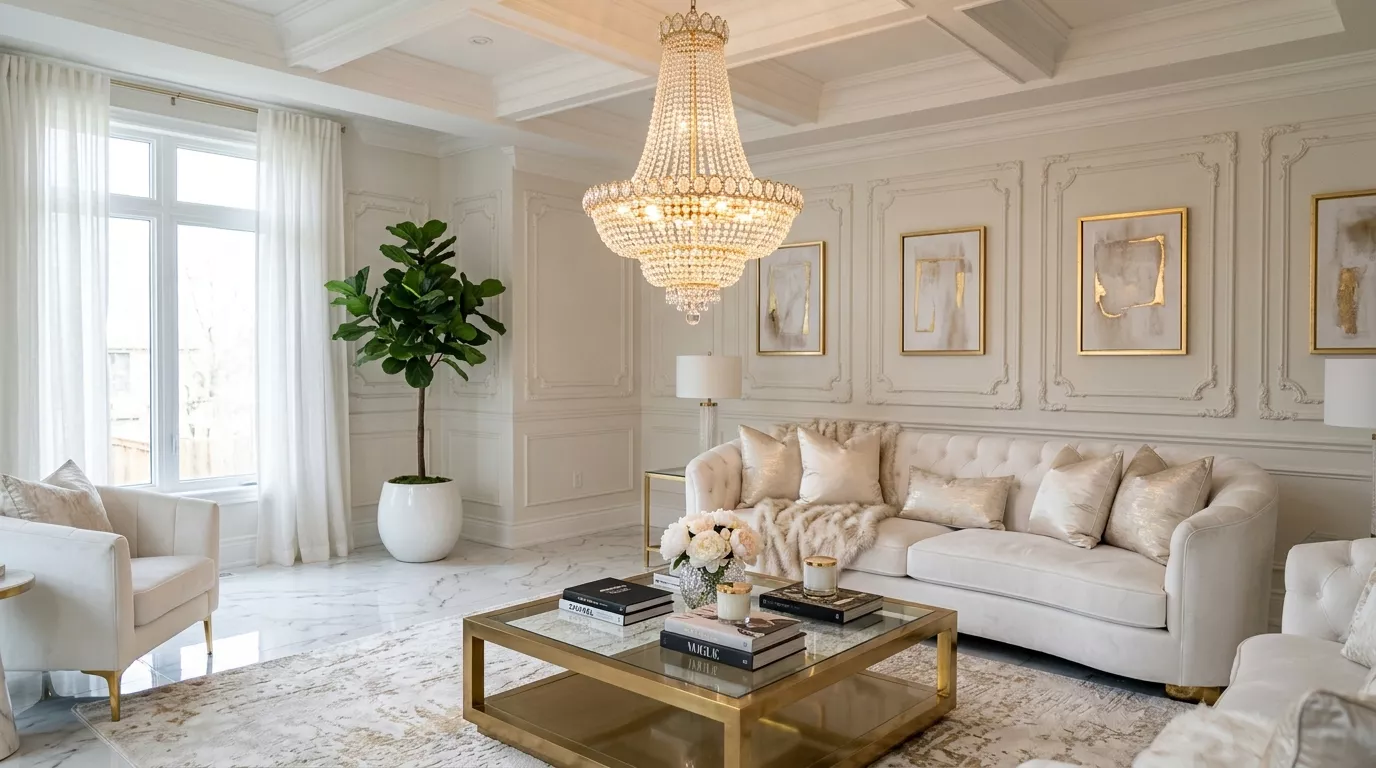
The coffee table sits right at the heart of your living room — literally and visually. It’s the piece everyone sees the moment they walk in, the surface guests rest their drinks on, and often the first thing you notice when something about the room feels unfinished. Getting your coffee table styling right can pull an entire living room together in a way that feels curated without looking overdone.
The good news? You don’t need a decorator’s budget or a design degree. Coffee table styling follows a handful of reliable principles that, once you understand them, make the whole process feel intuitive. This guide walks you through all of it — from the foundational rules to specific ideas for every style of living room.
Why Coffee Table Styling Actually Matters in a Living Room
It’s easy to underestimate a coffee table. After all, it’s just a surface. But in most living room layouts, it occupies the most central visual real estate in the entire space — directly in front of the sofa, in the line of sight from multiple seating angles, and often the first surface your eye lands on before the walls or art.
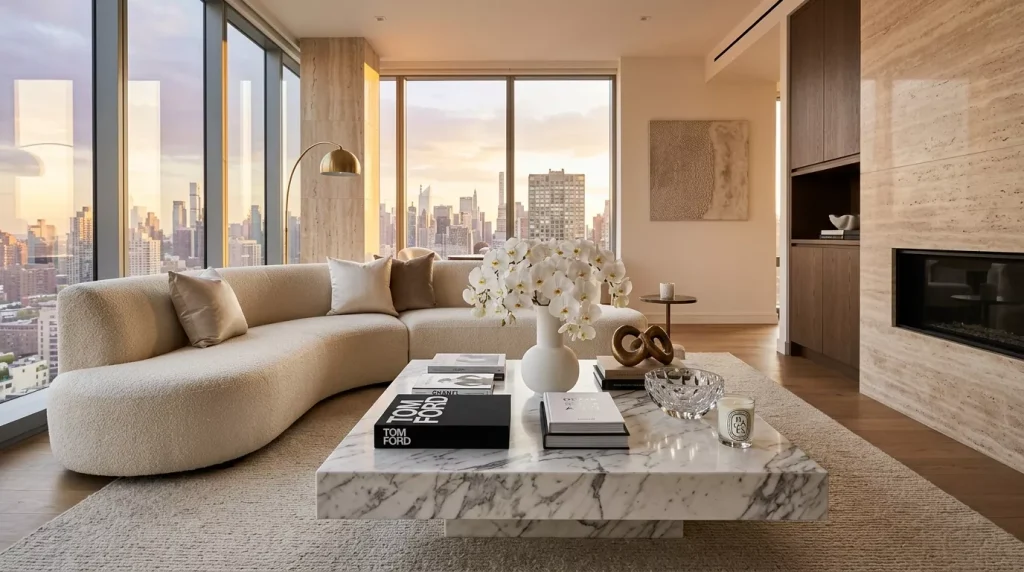
A bare coffee table reads as unfinished. An overloaded one reads as chaotic. A well-styled one reads as considered — and that quality, that sense of intentionality, is what separates a room that feels designed from one that just has furniture in it.
The other practical reality: the coffee table is a working surface. People set down drinks, books, phones, and remotes. The best styling makes room for all of that without looking abandoned the moment someone puts a glass down. That balance — beautiful but livable — is exactly what this guide will help you achieve.
The Core Principles of Coffee Table Styling
Before jumping into specific ideas, it helps to understand the rules that make a styled coffee table look good regardless of what’s on it.
The Rule of Three (and Odd Numbers Generally)
Groupings of odd numbers — three, five, or seven objects — feel more natural and visually dynamic than even-numbered pairs. When in doubt, arrange your objects in groups of three: one tall item, one medium, one low. This creates visual rhythm without symmetry that reads as stiff or forced.
Vary Your Heights
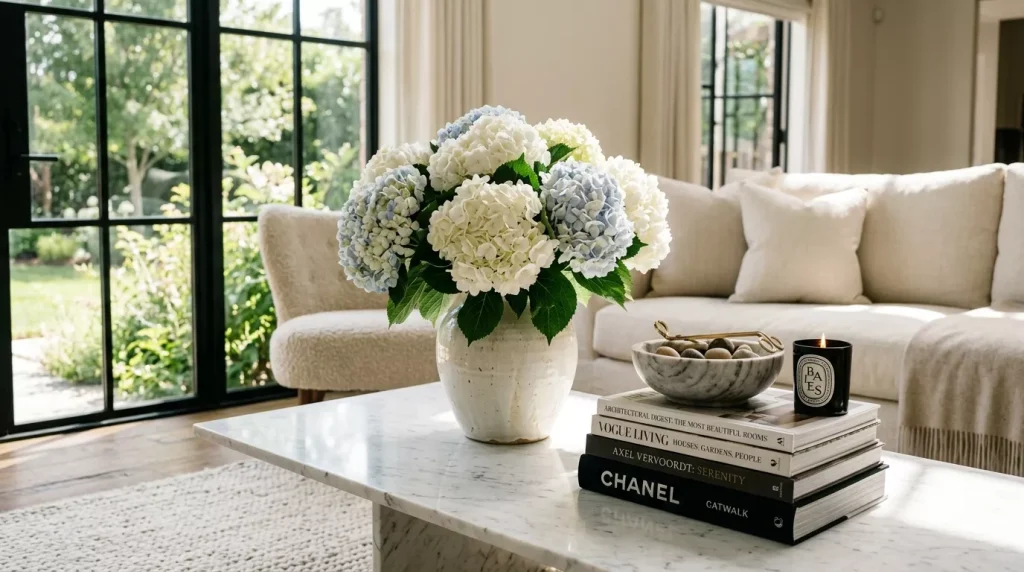
A flat surface covered with objects of the same height is one of the most common styling mistakes. Layer your arrangement so there’s clear variation: something tall (a vase, a tall candle), something medium (a stack of books, a small bowl), and something low (a tray, a small plant, a decorative object). The eye travels up and down naturally, which makes the arrangement feel alive.
Use a Tray as Your Anchor
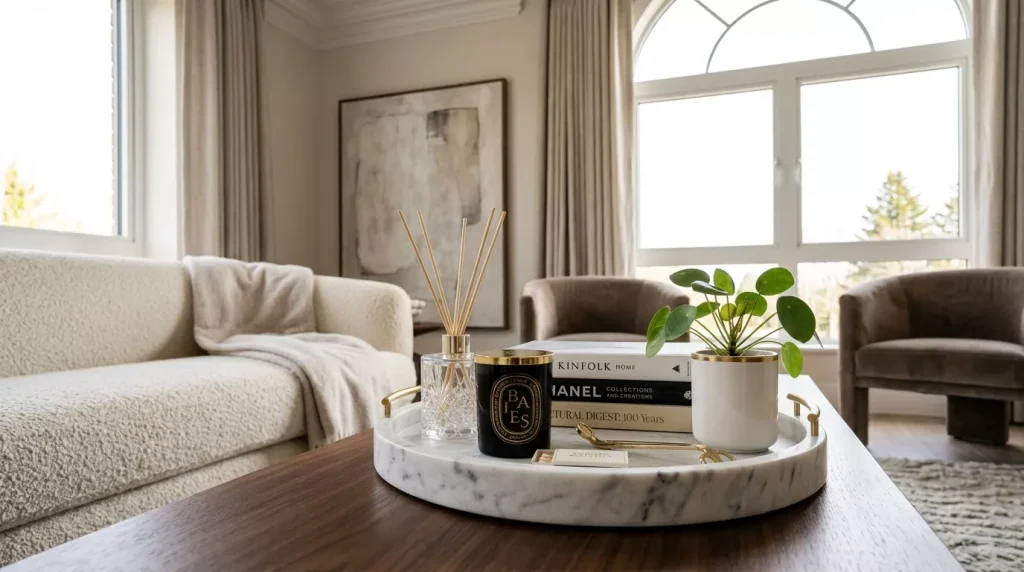
A tray on a coffee table serves the same function as a rug in a room — it defines a zone and gives a group of objects a reason to be together. Without a tray, a collection of items on a coffee table can look like things you forgot to put away. With a tray, the same items look intentional.
Think in Layers and Textures
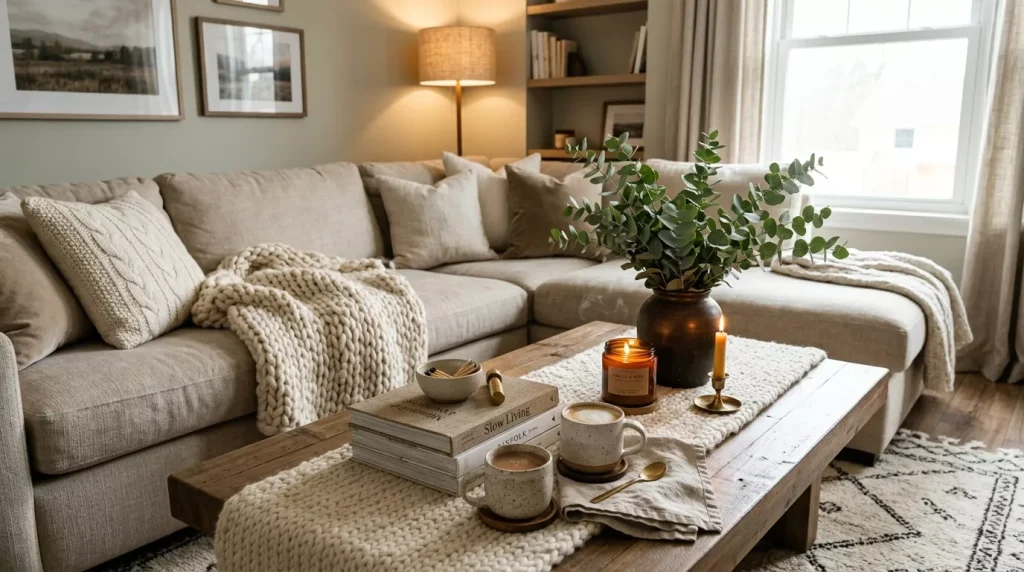
A great coffee table arrangement mixes textures the way a great outfit does. Combine smooth and matte, natural and polished, organic and geometric. A marble tray, a rough linen hardcover book, a matte ceramic vase, and a glossy candle holder together create a richness that all-matching items never achieve.
Leave Breathing Room
Styling every inch of the coffee table makes it look cluttered and leaves no room for actual use. As a general rule, aim to cover no more than 60–70% of the surface. The negative space — the empty area of the table — is part of the design.
Step-by-Step Guide to Styling a Coffee Table
Step 1 — Clear Everything Off and Start Fresh
Whatever was on your coffee table before, remove it entirely. Styling from scratch is far easier than editing a cluttered surface. Clean the table while it’s empty so you’re working with a genuinely blank canvas.
Step 2 — Place Your Tray (If Using One)
If you’re using a tray — and for most coffee table styles, a tray is recommended — position it slightly off-center or centered depending on your table shape. On a rectangular table, a centered tray of proportionate size looks balanced. On a round table, a round or smaller rectangular tray works well positioned slightly toward one side.

Don’t use a tray that’s too small — it’ll look like an afterthought. Aim for a tray that takes up roughly one-third to one-half of the table’s surface area.
Step 3 — Add Your Tallest Element First
Inside or just outside the tray, place the tallest item in your arrangement first. This is typically a vase (with fresh or dried flowers or stems), a tall candle, a sculptural object, or a small plant. This sets the visual ceiling of your arrangement and everything else scales from it.
Step 4 — Add a Stack of Books
A small stack of two to four hardcover books — ideally in colors that complement the room — is one of the most versatile and reliable coffee table styling elements available. Stack them horizontally with spines facing outward. Remove dust jackets for a cleaner look. Rest a small decorative object on top of the stack to add another layer of height variation.
Step 5 — Add a Decorative Object or Bowl
A ceramic bowl, a sculptural piece, a geode, a small figurine, or a candle cluster adds personality and prevents the arrangement from looking generic. This is usually the most personal element — the one that says something about the person who styled the table rather than what was on trend.
Step 6 — Introduce a Natural Element
Something organic — a plant, a branch, dried pampas grass, a bowl of pinecones, stones, or even a small succulent — grounds the arrangement and connects it to the natural world in a way that polished, manufactured objects alone can’t. Natural elements also introduce texture and irregular shape, both of which add visual interest.
Step 7 — Edit Ruthlessly
Stand back and look at what you’ve assembled. If something doesn’t add to the arrangement, remove it. If two items look too similar in height, swap one out. The most common finishing step is taking one thing away — not adding another.
Coffee Table Styling Ideas by Living Room Style
Modern Minimalist Styling
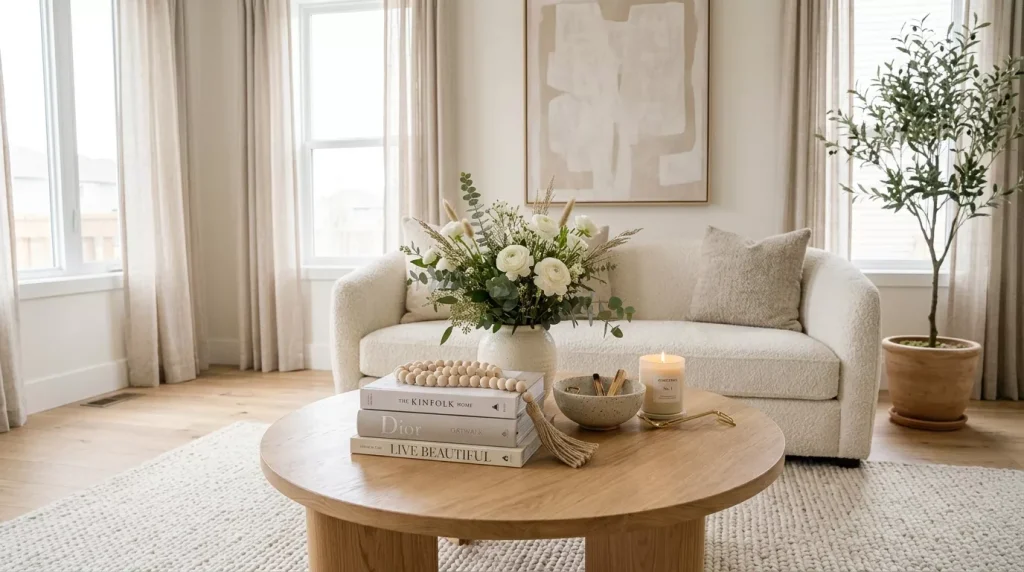
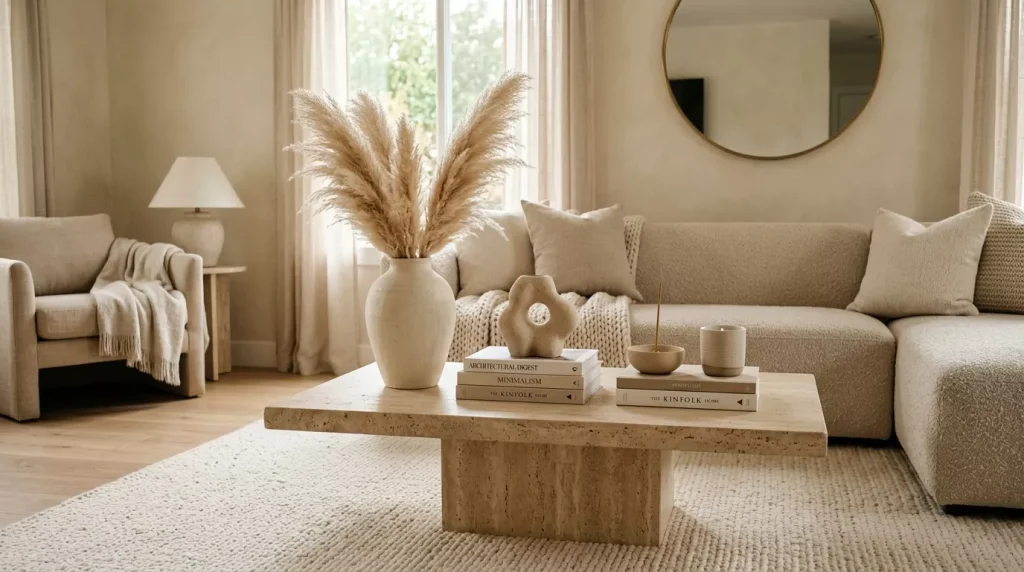
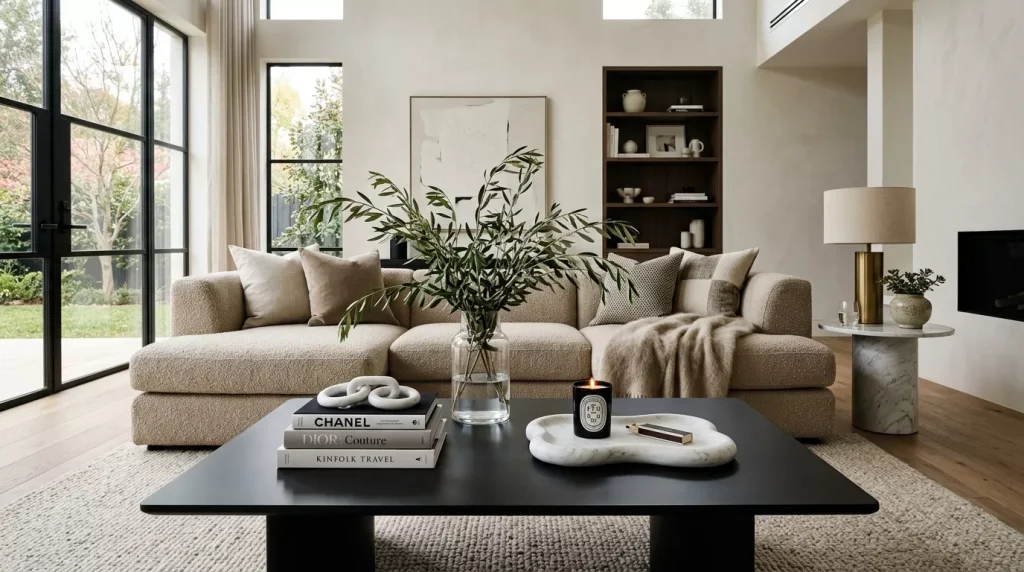
In a minimalist living room, the coffee table should feel intentional rather than empty. Choose one or two carefully selected objects: a single sculptural vase, a matte geometric object, or one stack of art books with clean spines. Stick to a monochromatic or two-tone palette — white, black, stone, or warm grey. A simple concrete or lacquered tray keeps everything composed without adding visual noise.
Key items: Single vase or sculptural piece, one book stack, minimal tray, one low plant
Warm Bohemian Styling
Boho coffee table styling leans into layering, organic texture, and collected-over-time character. Mix rattan, ceramic, and woven elements. Add a cluster of mismatched candles in earthen tones, a trailing plant, shells or stones, and books with richly colored covers. The tray, if used, works best in natural materials — woven rattan, reclaimed wood, or raw leather.
Key items: Cluster of varied candles, trailing plant, natural-material tray, mixed ceramic objects, stacked books with warm spines
Traditional and Classic Styling
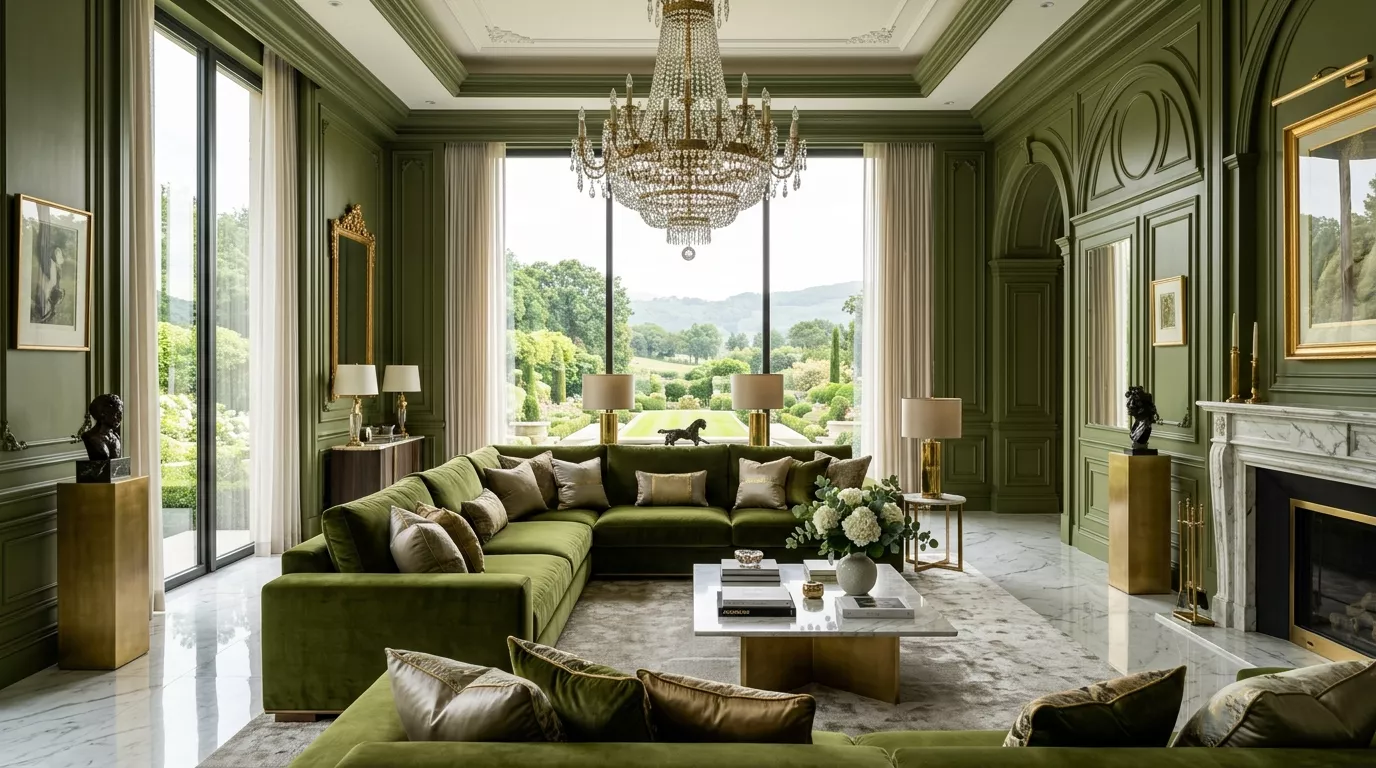
Traditional living rooms suit symmetrical coffee table arrangements. Two matching candlesticks flanking a central floral arrangement or a decorative bowl is a time-tested approach. Incorporate silver, brass, or crystal elements alongside fresh flowers and classic coffee table books. Keep the palette coherent — navy and brass, cream and gold, or deep greens with warm wood tones.
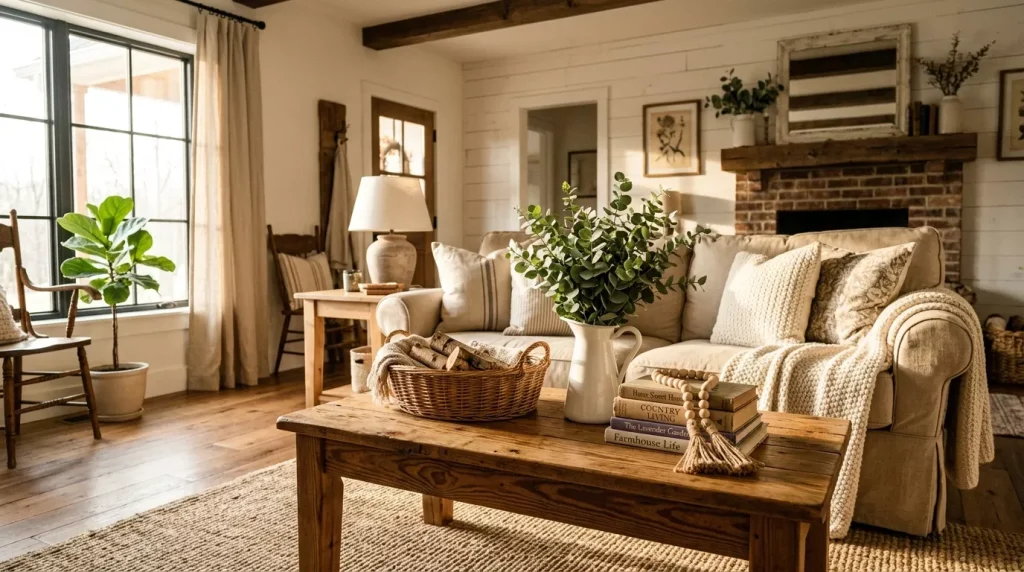
Key items: Matched pair of candlesticks, fresh flowers or greenery, decorative bowl or tray, classic hardcover books
Coastal and Natural Styling
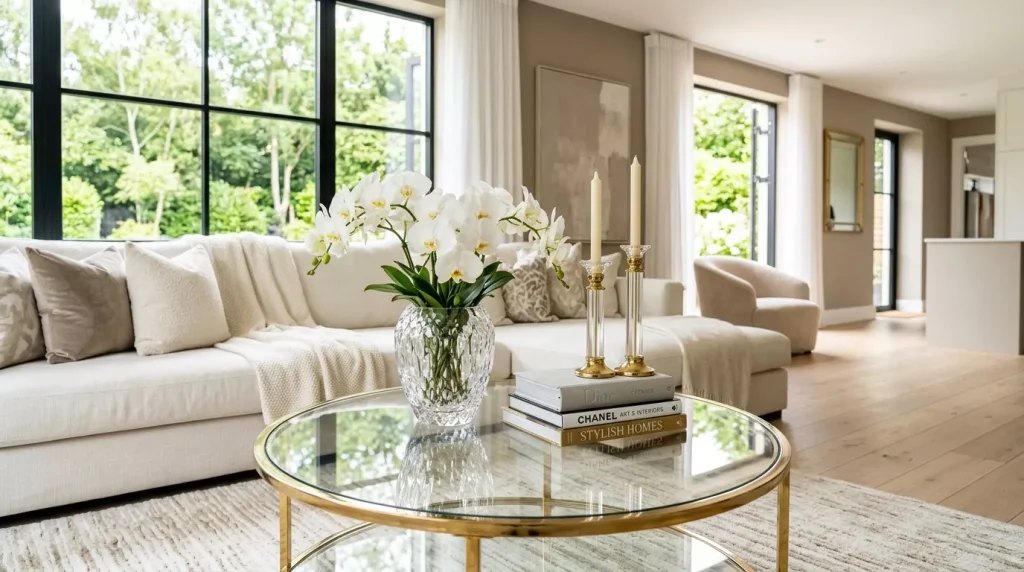
This style brings the outdoors in through texture and palette. A shallow bowl filled with shells or river stones, a driftwood or whitewashed tray, dried sea grass or pampas grass in a simple vase, and a linen-covered book or two. Keep the color palette to sand, white, soft blue, and warm wood tones.
Key items: Shell or stone bowl, driftwood-style tray, dried coastal greenery, soft-toned book stack
Modern Farmhouse Styling
Farmhouse coffee table styling balances rustic and refined. A black metal tray lined with white ceramic candle holders, a small potted herb or succulent, a stack of linen-spined books, and a neutral-toned woven coaster set. Lanterns work beautifully here too — a small black metal lantern with a battery candle reads as cozy without being fussy.
Key items: Black metal or wood tray, white or cream candles, small potted plant, woven coaster set, lantern
What to Put on a Coffee Table: A Styling Reference
| Item Category | Best Options | Avoid |
|---|---|---|
| Books | Hardcover, art or design books, neutral spines | Paperbacks, too many different colors |
| Greenery | Succulents, potted herbs, dried flowers, trailing plants | Artificial plastic plants (read as cheap) |
| Candles | Pillar candles, jar candles, tapers in holders | Too many mismatched scents in one group |
| Trays | Wood, marble, rattan, lacquered metal | Plastic trays, trays that are too small |
| Decorative objects | Ceramic bowls, sculptures, geodes, figurines | Random objects with no visual connection |
| Natural elements | Shells, stones, pinecones, driftwood, dried botanicals | Food, wrappers, functional items |
| Flowers | Fresh blooms, dried stems, eucalyptus | Plastic or fabric flowers unless very high quality |
Tray vs. No Tray: Which Styling Approach Works Better?
| Visual cohesion | Stronger — defines a contained zone | Requires more deliberate object placement |
| Flexibility | Easy to lift and move as a unit | Each object must be moved individually |
| Works on round tables | Yes (use a round or small rectangular tray) | Yes — objects can spread more organically |
| Works on rectangular tables | Excellent | Requires anchoring with a large central object |
| Livability | High — tray corrals practical items too | Depends on arrangement discipline |
| Best for | Most living room styles | Minimalist or very curated styling |
Pros and Cons of Different Coffee Table Styling Approaches
Maximalist, Layered Styling
Pros:
- Visually rich and personality-forward
- Great for covering an older or plainer table
- Creates a strong sense of warmth and lived-in character
Cons:
- Harder to maintain in a tidy state
- Can overwhelm smaller coffee tables
- Requires more discipline to prevent looking cluttered
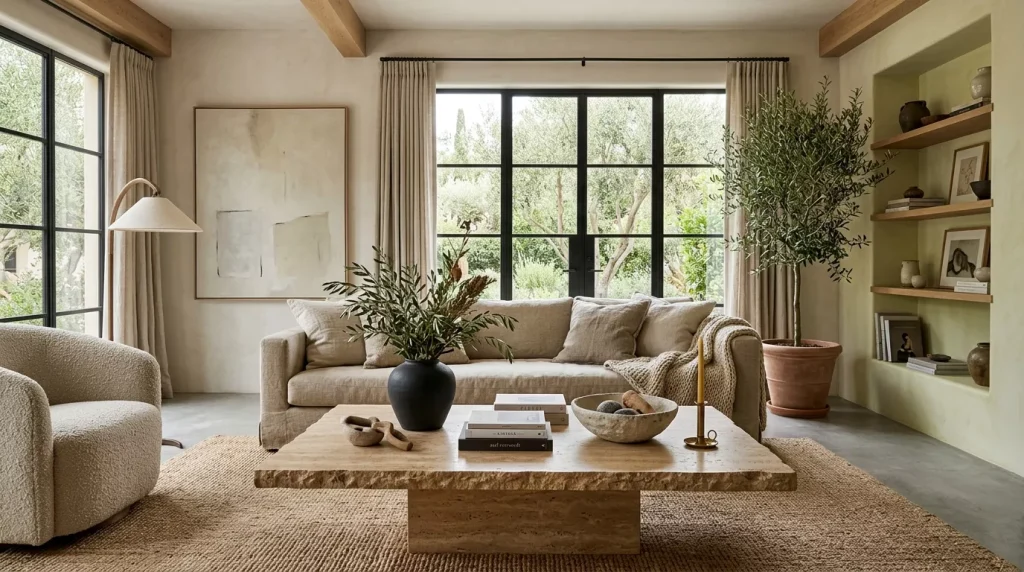
Minimal, One-Hero-Object Styling
Pros:
- Timeless and calming
- Works in almost any interior style
- Easy to maintain and practical for daily use
Cons:
- Can feel sparse or unfinished in larger or busier rooms
- Less forgiving — one wrong object reads immediately
- May feel plain in rooms with a lot of visual competition
Seasonal Rotating Styling
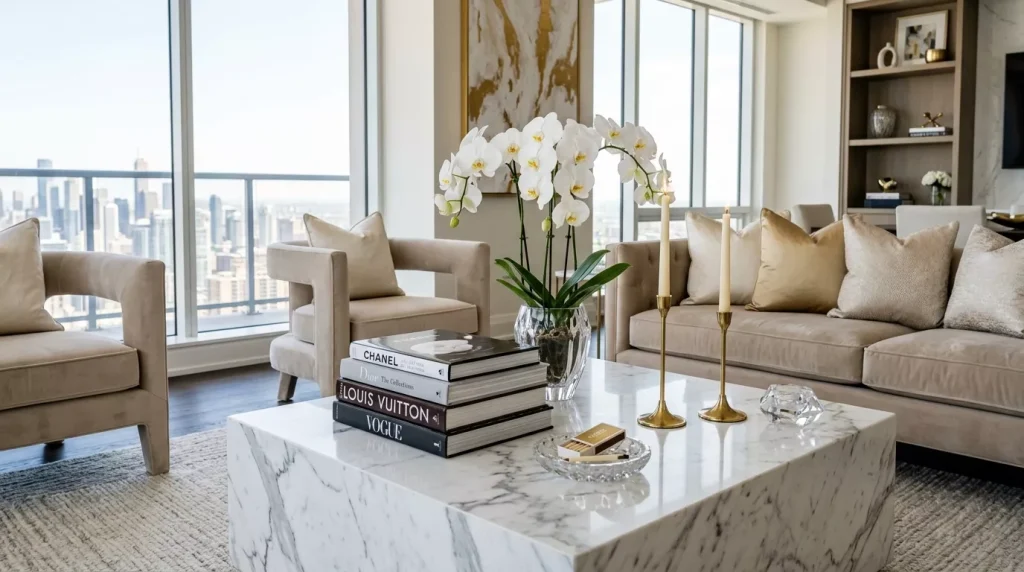
Pros:
- Keeps the living room feeling fresh through the year
- Allows for creativity and experimentation
- Great use of holiday or seasonal decor without overdoing it
Cons:
- Requires storing off-season items
- Can feel inconsistent if not planned thoughtfully
- More time investment than a fixed arrangement
Common Coffee Table Styling Mistakes
1. Styling With No Clear Focal Point
An arrangement without a dominant element — one piece that naturally draws the eye — looks scattered. Every successful coffee table vignette has a visual leader. Find yours and build around it.
2. Using Items That Are All the Same Height
Flat arrangements have no visual energy. Vary heights deliberately: something tall, something medium, something low. This is the single most effective and immediate change you can make.
3. Ignoring the Table’s Shape
A round tray on a round table looks harmonious. A large rectangular tray on a small round table looks awkward. Match the shape and proportion of your styling accessories to the table itself.
4. Over-Filling the Surface
A coffee table crammed with objects makes the living room feel smaller and makes it impossible to actually use the table for anything. Style 60–70% of the surface and leave the rest empty.
5. Forgetting Practicality Entirely
A purely styled coffee table — nothing functional, nowhere to put a remote or a glass — gets un-styled within twenty minutes of real use. Build in practicality from the start: a coaster set, a small basket for remotes, or a tray that can hold a drink comfortably.
6. Styling in Isolation From the Room
Your coffee table arrangement doesn’t exist in a vacuum. Its colors, textures, and height should connect to the rest of the living room — echoing tones from the rug, picking up metals from the light fixture, or reinforcing the room’s overall style. A mismatched arrangement makes the room feel pulled apart rather than together.
Quick Tips for Better Coffee Table Styling
Tip 1: Use the “squint test.” Style your arrangement, then squint at it from across the room. If one area looks too heavy or too bare, that’s where to adjust. Squinting removes detail and lets you see overall balance.
Tip 2: Remove dust jackets from hardcover books to reveal linen or cloth spines. They immediately look more elevated and intentional than the printed cover underneath.
Tip 3: Odd-numbered candle groupings always look better than matched pairs. Three pillar candles of varying heights on a tray beats two matching jar candles every time.
Tip 4: Rotate your coffee table styling seasonally to keep the living room feeling fresh — dried botanical stems and pinecones in autumn, fresh greenery and white candles in winter, fresh flowers and light ceramic in spring and summer.
Tip 5: Use books as risers. Placing a small object on top of a book stack instantly elevates it (literally and visually) and adds a layer of depth to flat arrangements.
Tip 6: If your coffee table has a lower shelf, use it deliberately — store a neatly folded throw, a stack of magazines, or a basket of remotes there. It adds to the styling without crowding the top surface.
FAQs: Coffee Table Styling for Living Rooms
Q1. How many items should be on a coffee table?
There’s no fixed number, but three to seven items is a practical range for most coffee tables. The more important consideration is grouping — objects should feel connected, either by placement in a tray, by matching color or material, or by deliberate height variation. A single well-chosen group of five items always looks better than eight random objects spread across the surface. If you’re unsure, start with three and add only if the arrangement still has room to breathe.
Q2. What are the best books for coffee table styling?
Large-format hardcover books work best — specifically those covering art, photography, interior design, travel, fashion, or architecture. What matters most aesthetically is the spine color and the overall visual weight. Books with neutral, linen, or muted-tone spines integrate easily into almost any living room palette. Avoid paperbacks (too informal), books with very busy or clashing spine designs, and anything so meaningful you’d be upset if someone set a glass on it.
Q3. Should a coffee table tray be centered or off to one side?
On a rectangular table, a centered tray looks balanced and intentional — especially when the tray holds the primary styling group and you leave space at either end for practical use. On a round or oval table, centering a round tray works well but can feel static; positioning it very slightly off-center adds life to the arrangement. The key is that the tray’s placement should feel deliberate — neither crammed to one edge nor awkwardly off-balance.
Q4. How do I style a small coffee table without it looking cluttered?
Scale down every element. Choose one small tray, one compact plant or vase, and one or two thin books maximum. Prioritize negative space — in a small table, what you leave off is as important as what you put on. A single beautiful object on an otherwise clear surface reads as intentional on a small table. A maximalist approach, however visually interesting on a large table, reads as cluttered on a small one. Stick to a maximum of three items and use the tray to keep them contained.
Q5. Can I style a coffee table on a budget?
Absolutely. Some of the most visually effective coffee table styling comes from inexpensive or found items. A few smooth river stones in a simple bowl, a stack of library books with interesting covers, a candle from a home goods store, and a small cutting of greenery from your garden can create a genuinely beautiful arrangement for almost nothing. The principles — height variation, texture mixing, odd numbers, breathing room — work regardless of the price of the objects. Thrift stores, markets, and nature are all excellent sources.
Q6. How often should I change my coffee table styling?
There’s no rule, but seasonally is a natural rhythm that works well — approximately four times a year, aligned with the changing seasons. This keeps the living room feeling fresh without requiring constant effort. Within each season, small swaps — fresh flowers, a new candle color, a different book on top of the stack — can keep the arrangement feeling alive without a full reset. The permanent structural elements (tray, books, plant) stay; the accent pieces rotate.
Conclusion: Great Coffee Table Styling Is Closer Than You Think
The most important thing to take away from this guide is that coffee table styling isn’t about perfection — it’s about intention. When every item on the table is there for a reason, and those items work together in terms of height, texture, and visual balance, the result always looks good. It doesn’t matter whether the objects cost ten dollars or a hundred.
Start with what you already own. Clear the table, choose three items you love, vary their heights, add a tray if you have one, and step back. Nine times out of ten, that’s genuinely enough.
The living room you’ve been trying to pull together might be one well-styled coffee table away from finally clicking. Start today — clear the surface, pick your anchor piece, and build from there. The difference it makes to the whole room will surprise you.