Living Room Wall Art & Decor Ideas to Transform Your Space

Empty walls leave even well-furnished rooms feeling unfinished. The right piece pulls color, scale, and mood together instantly. Canvas prints and framed pieces solve this differently. This guide ranks the strongest styles by taste. Each section names the spaces that option suits. You’ll leave with a direction, not just inspiration.
Placement and scale carry real weight beyond the art itself. A piece hung too high disrupts an otherwise cohesive room. This guide addresses sizing, height, and color pairing directly.
What Makes Wall Art Feel Genuinely Modern
Modern wall art rejects ornate, gilded framing entirely. Clean edges and minimal matting define the current look. Abstract shapes and muted palettes dominate most 2026 collections. Bold color blocks replace busy, detailed compositions.
Scale drives modern art selection more than subject matter. A single oversized piece often outperforms several small ones. Buyers increasingly favor one confident statement over scattered decor.
Material choice shapes a room’s finished texture too. Canvas reads soft and textural against a wall. Framed glass reads crisp and reflective under lamplight.
Why Wall Art & Decor Define a Living Room
Wall Art & Decor shape a room’s identity more than furniture. Sofas and tables establish function, but walls establish personality. A blank wall reads as unfinished, regardless of furniture quality. One well-chosen piece reverses that impression instantly.
Color and mood radiate outward from wall art directly. A muted landscape calms a busy, high-traffic room. A saturated abstract energizes a quiet, understated space. Wall Art & Decor choices set that emotional tone first.
Long-term satisfaction outweighs short-term trend chasing here. A trendy print loses appeal without genuine personal connection. Choose pieces that reflect your taste first, trends second.
Canvas Wall Art for Living Room Spaces
Understanding Canvas Texture and Depth
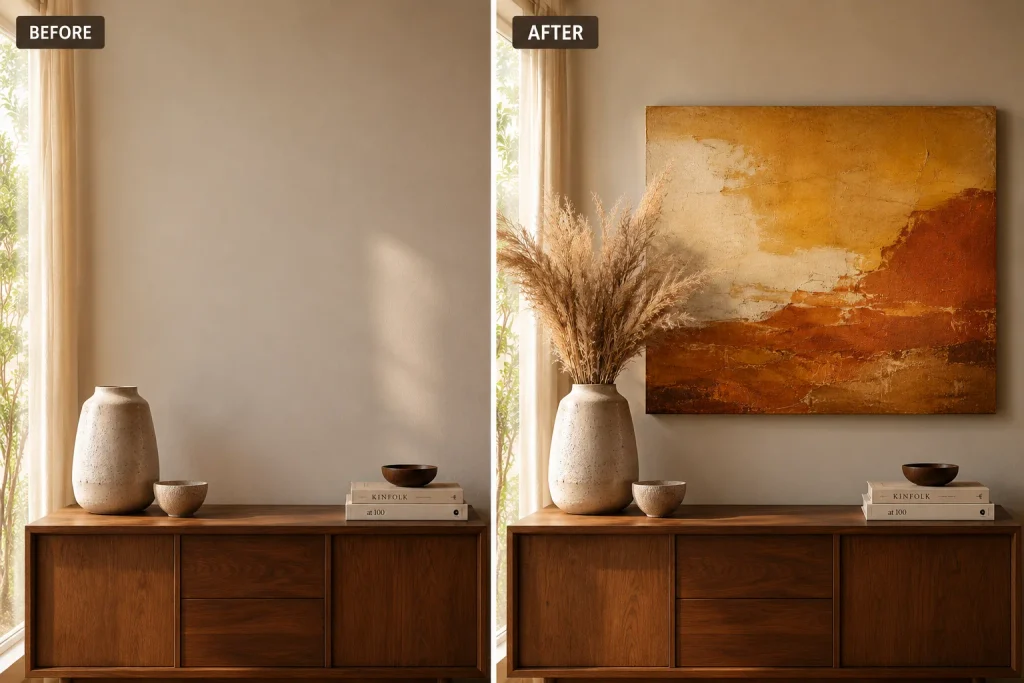
Canvas wall art adds visible texture immediately to any wall. The woven surface catches light differently than flat paper prints. This texture reads as more artisanal and less mass-produced.
Gallery-wrapped canvas eliminates the need for additional framing. Edges wrap around a wooden stretcher bar cleanly. This creates a frameless, contemporary silhouette many buyers prefer.
Canvas suits large-scale pieces particularly well. It stays lightweight even at generous dimensions. A six-foot canvas remains easy to hang safely.
Choosing the Right Canvas Color Palette
Canvas art palettes should echo, not clash with, existing decor. Warm terracotta canvases suit rooms with wood-toned furniture. Cool blue-gray canvases suit rooms with charcoal or navy seating.
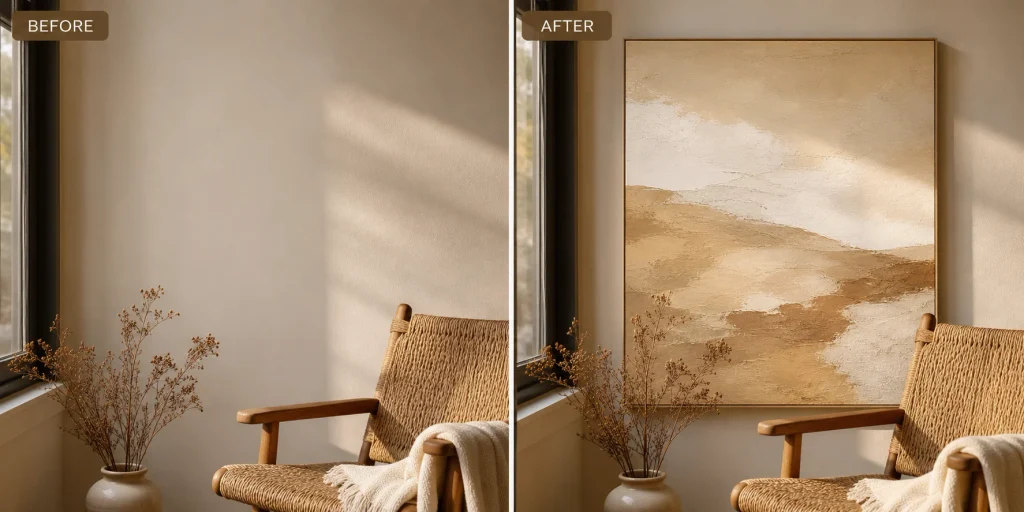
Neutral canvas palettes offer the safest long-term choice. Cream, tan, and soft gray rarely fight surrounding decor. This flexibility suits frequent redecorators particularly well.
Test a printed swatch before committing to large canvas art. Screen colors rarely match true printed pigment accurately. A physical sample prevents a costly color mismatch.
Modern Wall Art for Living Room Interiors
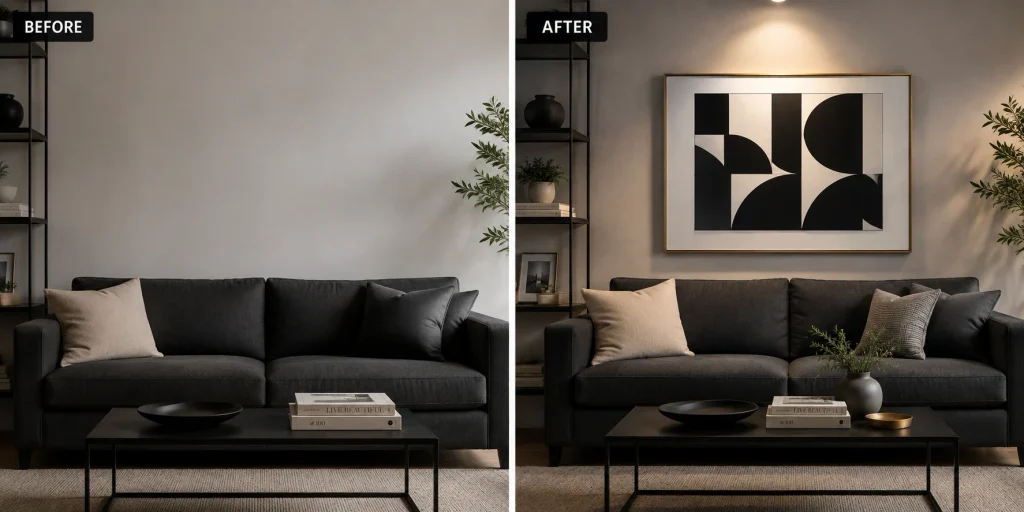
Modern wall art favors abstraction over realism in most cases. Geometric shapes, gradients, and line work dominate this category. Representational landscapes feel comparatively traditional by contrast.
Black-and-white photography also fits the modern category well. High-contrast architectural or nature shots suit minimalist interiors. This palette pairs easily with nearly any existing color scheme.
Metallic accents within modern art add subtle dimension. Gold or silver leaf detailing catches shifting daylight beautifully. Avoid overusing metallics; one accent piece per room suffices.
Framed Wall Art for Living Room Elegance
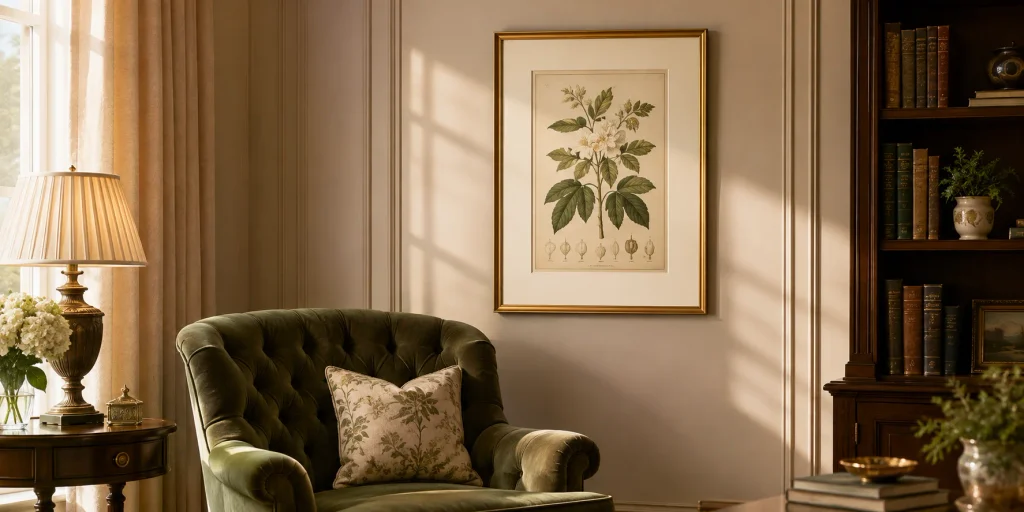
Framed wall art suits formal, traditional living rooms particularly well. A frame adds visual weight and architectural finish. Wood, brass, and matte black remain common frame choices.
Frame width should scale with the artwork’s overall size. Thin frames suit smaller, delicate prints best. Wider frames suit larger, bolder statement pieces.
Matting between art and frame adds important visual breathing room. A two-to-four-inch mat prevents a crowded, cramped appearance. This detail separates polished framing from amateur presentation.
Christian Wall Art for Living Room Faith
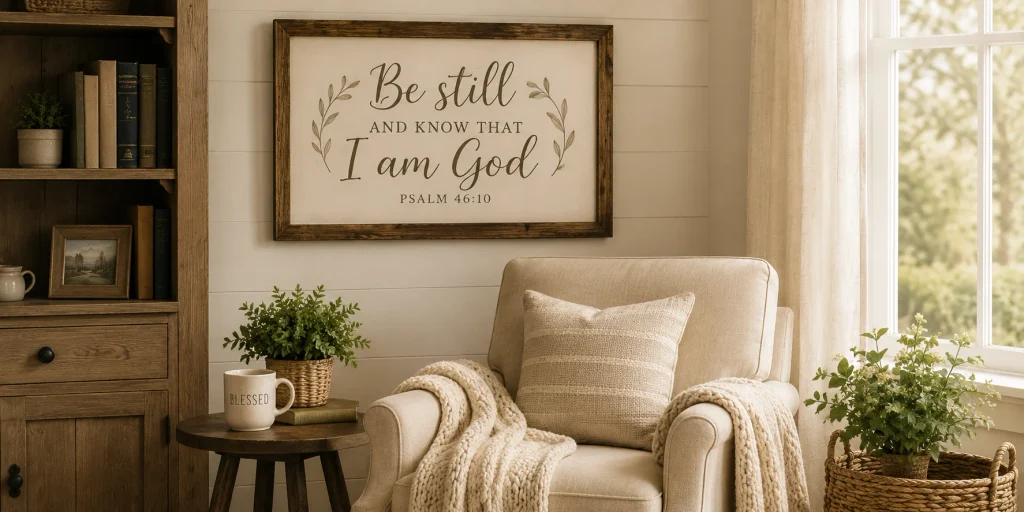
Christian wall art often centers on scripture typography and script. Hand-lettered verses paired with muted watercolor backgrounds remain popular. This style suits both formal and casual interior settings.
Placement matters for pieces carrying personal or spiritual meaning. Many households favor a hallway or reading-nook location. Others prefer a central, visible living room placement instead.
Framing style should match the room’s existing decor language. A rustic wood frame suits farmhouse-style interiors well. A slim metal frame suits more contemporary, minimalist rooms.
Abstract Wall Art for Expressive Interiors
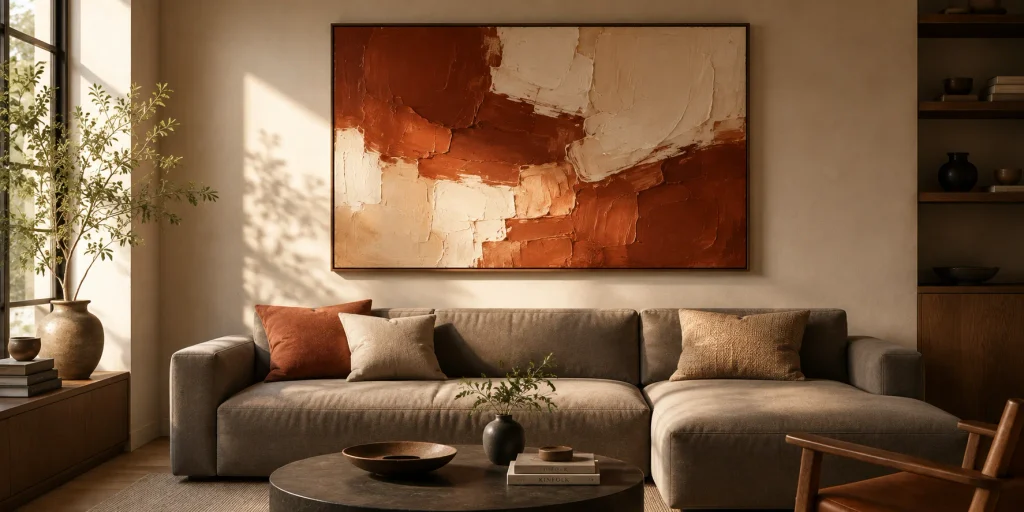
Abstract compositions communicate mood without depicting recognizable subjects. Color, shape, and texture carry the entire visual message. This openness lets viewers interpret meaning personally each time.
Large abstract canvases work especially well above long sofas. Their scale fills wall space without needing multiple pieces. A single piece often simplifies an entire room’s decor plan.
Choosing abstract art for a living room rewards trusting instinct. Formal color theory matters less than personal emotional response. Select pieces that genuinely resonate, not ones that merely match.
Nature and Botanical Prints for Calm Spaces
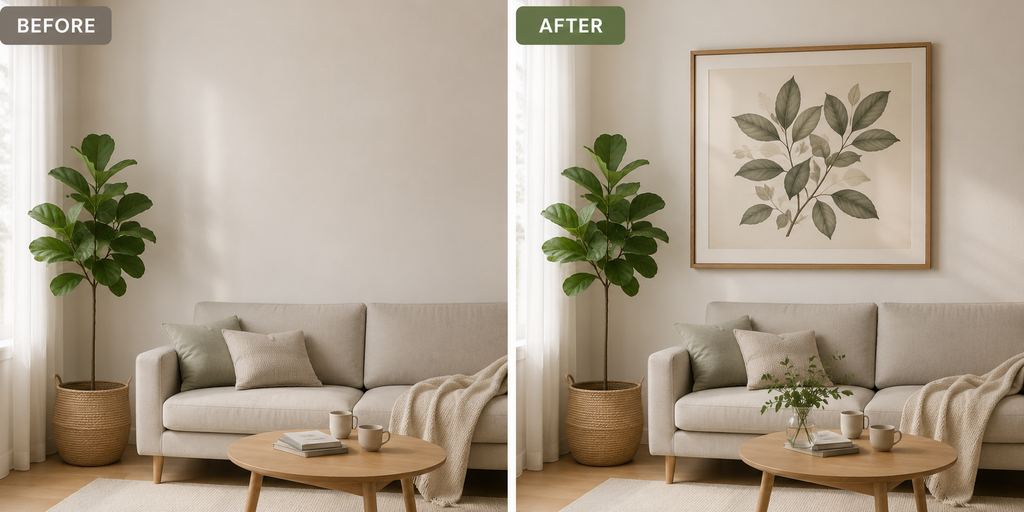
Botanical prints bring organic softness into structured interiors. Leaf studies, pressed florals, and landscape scenes all qualify here. This category suits Scandinavian, coastal, and cottage-style living rooms.
Muted, desaturated tones distinguish sophisticated botanical prints from dated ones. Overly bright, saturated florals can feel more decorative than artistic. Choose prints with restrained, earthy color palettes instead.
Pairing botanical prints with real plants amplifies the effect. Live greenery echoes the print’s subject matter directly. This layering creates a genuinely cohesive natural theme.
Typography and Quote Art for Personal Meaning
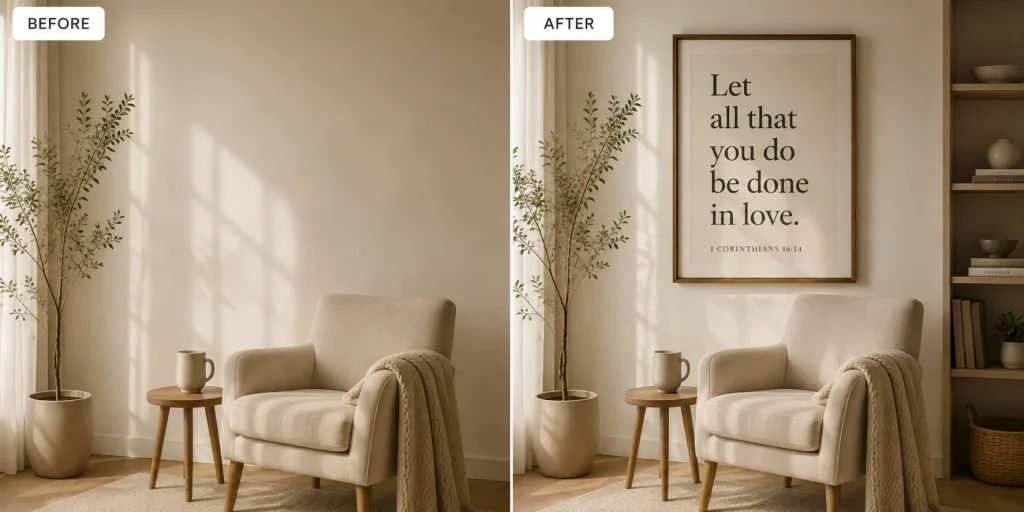
Typography art pairs meaningful words with minimalist design. Quotes, mantras, and family names all appear frequently here. This category bridges decor and genuine personal storytelling.
Font choice shapes the piece’s overall tone significantly. Serif fonts feel formal and traditional in most rooms. Sans-serif fonts feel modern and casual by comparison.
Typography art works well in smaller formats too. A single framed quote suits a side table easily. Larger typography pieces suit main focal walls instead.
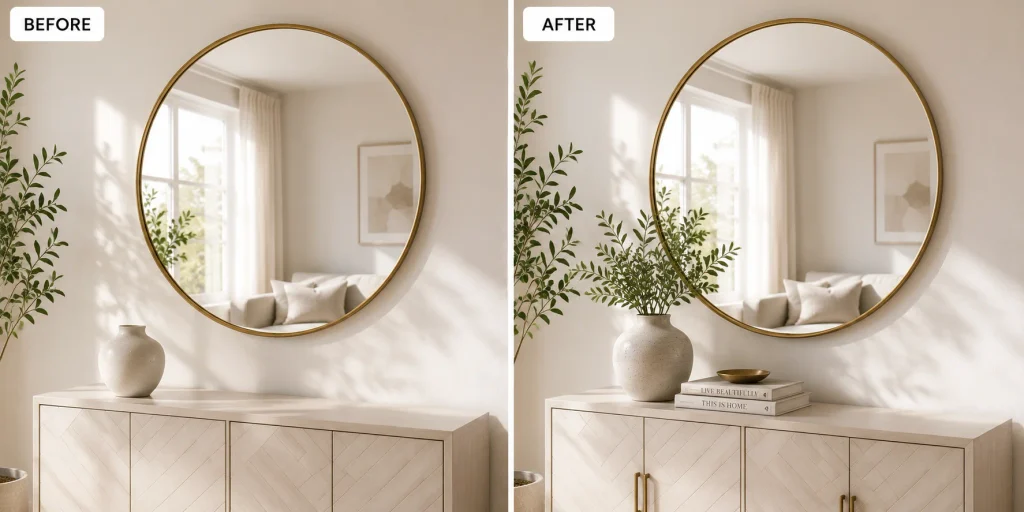
Mirrors as Functional Living Room Decor
Mirrors serve double duty as both function and decor. They reflect light, expanding a room’s perceived size. This makes them especially valuable in smaller living rooms.
Round mirrors soften a room’s overall geometry noticeably. Rectangular mirrors suit more structured, formal interior styles. Choose shape based on your room’s existing furniture lines.
A large mirror can substitute for traditional wall art entirely. It suits minimalist rooms wanting function over pure decoration. Pair it with a single small print for balance.
Building a Cohesive Wall Art Collection
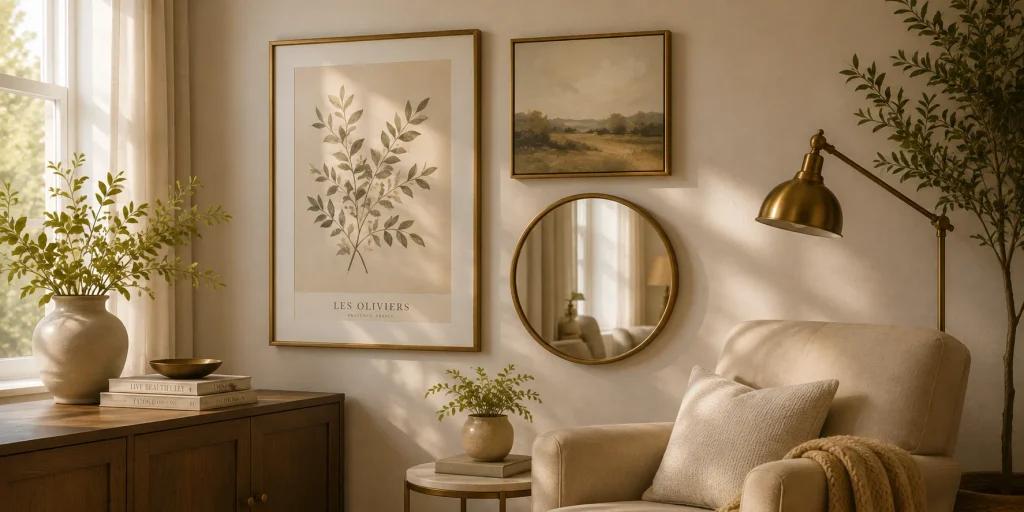
A cohesive collection feels planned rather than randomly assembled. Repeat one element consistently across every piece you hang. Frame color or matting width works well as that thread.
Buyers often combine several categories within one room successfully. Canvas wall art suits a living room accent wall well. Modern wall art suits a living room’s main focal point.
Framed wall art suits a living room’s formal seating zone. Christian wall art suits a living room’s quieter reading corner. Distributing categories by zone keeps a home feeling intentional throughout.
Choosing Scale for Your Living Room Wall
Scale mistakes rank among the most common decor errors. A small print above a large sofa looks lost. Measure your wall space before selecting any artwork.
A general rule suggests art spanning two-thirds of furniture width. A seven-foot sofa suits roughly a five-foot art piece. This proportion creates visual balance between furniture and wall.
Multiple smaller pieces can substitute for one large piece. Arrange them within that same two-thirds width guideline. Consistent spacing between pieces maintains overall visual cohesion.
Gallery Walls Versus Single Statement Pieces
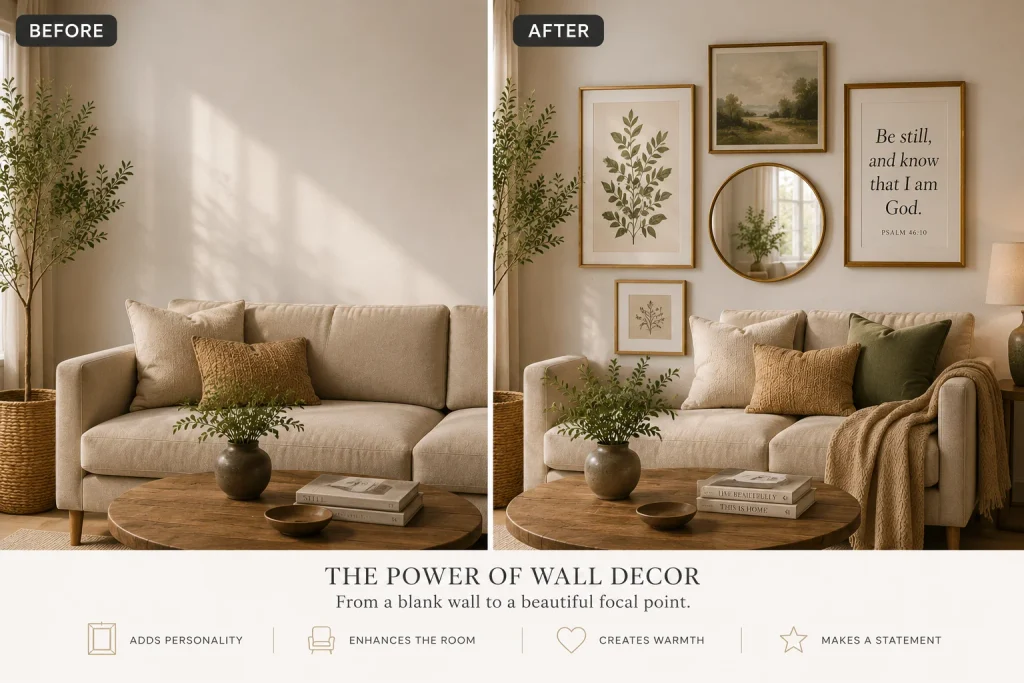
A gallery wall combines several smaller pieces into one arrangement. It suits collectors wanting to display varied artwork together. Planning requires more upfront measurement and layout testing.
A single statement piece simplifies decisions considerably. One large canvas or framed print anchors the wall instantly. This approach suits minimalist or fast-moving decorating timelines.
Mixing frame styles within a gallery wall can work intentionally. Vary frame color while keeping consistent matting width throughout. This creates cohesion despite visual variety among pieces.
Matching Wall Art Color to Your Palette
Wall art color should complement existing furniture and textiles. Pull one dominant art color into a nearby throw pillow. This creates visual connection between wall and seating.
Neutral rooms support bolder, more saturated art choices safely. Bold rooms call for calmer, more muted artwork instead. This balance prevents visual competition across the space.
Undertone testing prevents common pairing mistakes here too. Warm-toned art can clash against cool gray walls. Test printed samples under your room’s actual lighting first.
Wall Art Placement and Hanging Height Tips
Standard hanging height centers artwork at fifty-seven inches. This matches average eye level for most adult viewers. Adjust slightly when hanging above furniture instead of empty wall.
Above a sofa, leave six to eight inches of clearance. This prevents the piece from feeling cramped or crowded. Measure from the top of the sofa back upward.
Lighting affects how hung art reads throughout the day. Natural light shifts color perception across morning and evening. Consider supplemental gallery lighting for evening viewing enjoyment.
Comparing Popular Wall Art and Decor Styles
| Art Style | Best Room Type | Frame Style | Ideal For |
|---|---|---|---|
| Canvas Wall Art | Modern, minimalist rooms | Frameless gallery-wrap | Large-scale statement pieces |
| Modern Wall Art | Contemporary interiors | Slim metal or none | Geometric, abstract displays |
| Framed Wall Art | Traditional, formal rooms | Wood or brass frame | Elegant, structured display |
| Christian Wall Art | Farmhouse, casual rooms | Rustic wood frame | Personal, spiritual meaning |
| Gallery Wall Arrangement | Eclectic, collected rooms | Mixed frame styles | Displaying varied artwork |
This table helps narrow down your options quickly. Match art style to your room’s existing character. Formal rooms suit framed pieces; casual rooms suit canvas.
Pros and Cons of Bold Statement Wall Art
Pros:
- Creates an immediate, unmistakable focal point
- Requires minimal additional decor to complete a room
- Elevates plain or newly built architectural walls
- Generates conversation among visiting guests
- Photographs distinctly well for portfolios or listings
Cons:
- Costs more than several smaller coordinated pieces
- Limits future rearrangement without leaving wall marks
- Risks feeling dated as art trends shift
- Demands careful color coordination with furniture
- Suits confident, not tentative, decorating decisions
Common Mistakes When Choosing Wall Art
Shoppers frequently rush this decision without proper measurement. These recurring mistakes cost time, money, and satisfaction.
- Skipping wall measurements entirely. Always measure available space before ordering artwork.
- Hanging art too high. Fifty-seven inches to center remains the standard guideline.
- Choosing trend over personal connection. Daily enjoyment outlasts any single seasonal trend.
- Ignoring existing color palette. Mismatched art tones create visual disharmony instantly.
- Buying without a printed sample. Screen colors rarely match true printed pigment.
Budget Tips for Stylish Wall Art and Decor
Original artwork isn’t required for a polished living room. Quality art prints deliver similar visual impact affordably. Watch for seasonal print sales throughout the year.
Consider framing a favorite photograph instead of buying new art. This personal touch costs less than commissioned pieces. It also adds genuine, meaningful character to a room.
Secondhand and vintage markets offer real hidden value. A well-chosen thrifted frame often outperforms cheap new alternatives. Reframing an existing print refreshes it affordably.
Frequently Asked Questions About Wall Art
How does canvas differ from framed prints?
Canvas offers a frameless, textured surface typically. Framed prints add structure through glass and matting.
Does modern wall art suit older homes too?
Yes, modern art creates intentional contrast in traditional spaces. This pairing often feels curated rather than mismatched.
Where should Christian wall art be placed?
Placement depends on personal preference entirely. Living rooms, hallways, and reading nooks all work well.
How high should living room art be hung?
Center artwork around fifty-seven inches from the floor. Adjust slightly when hanging above furniture pieces.
Can I mix framed and canvas art together?
Yes, many designers combine both intentionally today. Keep a consistent color palette across mixed pieces.
Should wall art match my sofa color exactly?
Not exactly, but they should complement one another. Pull one art color into a nearby pillow instead.
Do gallery walls require more planning time?
Yes, gallery walls need more upfront measurement work. Single statement pieces simplify the decision considerably.
Final Thoughts on Your Wall Art & Decor
Choosing the right Wall Art & Decor doesn’t need to overwhelm. Start with your wall’s actual available space. Then decide which style feels most authentic to you.
A single canvas and a gallery wall solve different problems. Neither choice is objectively correct for every room. Match your decision to your space, budget, and personal taste.
Measure your wall this week if possible. Browse a few styles and palettes that excite you. Small, intentional choices lead somewhere genuinely personal.