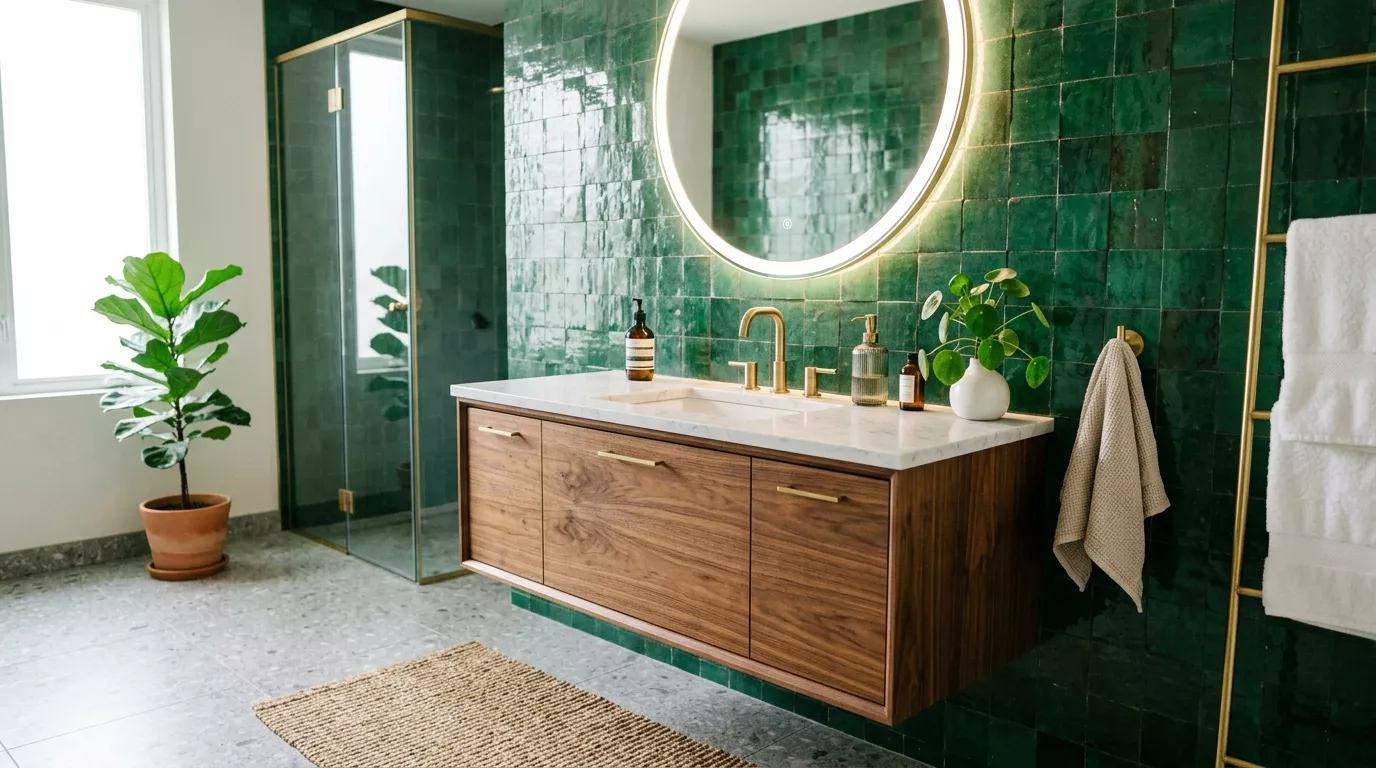
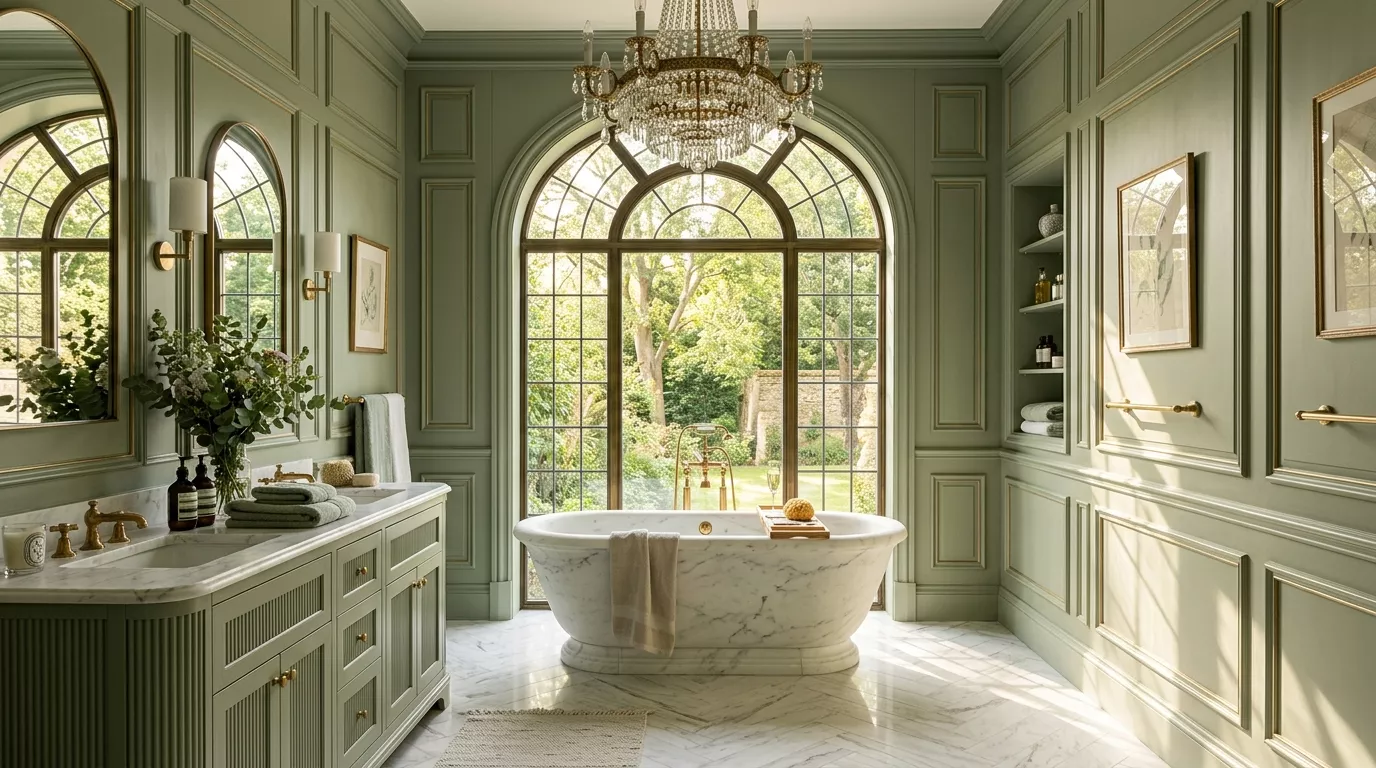
Rustic Bathroom Ideas: Warm, Natural & Timeless Looks

Rustic Bathroom Ideas: Warm, Natural & Timeless Design

Some rooms just make you exhale. A rustic bathroom is one of them. The moment you step into a space layered with warm wood tones, natural stone, soft candlelight, and vintage fixtures, something shifts — it feels less like a functional room and more like a genuine retreat.
Rustic bathroom ideas have held their ground in interior design for years because the style isn’t chasing trends. It borrows directly from nature and craftsmanship, two things that genuinely don’t go out of fashion. Whether you’re drawn to the rugged charm of a mountain cabin, the gentle warmth of a farmhouse, or the grounded simplicity of a country cottage, rustic style has a version of itself that fits.
This guide gives you everything — the ideas, the palette, the step-by-step plan, and the honest advice on what to avoid.
What Defines Rustic Bathroom Style?

Before you start shopping for reclaimed wood vanities and clawfoot tubs, it helps to understand what actually makes a bathroom feel rustic rather than just old-fashioned.
Rustic design is defined by natural materials, organic textures, and a sense of history. The look celebrates imperfection — grain variation in wood, the rough edge of a stone tile, a tap that looks like it came from a working farmhouse. Nothing is overly polished or artificially perfect.
The hallmarks of a truly rustic bathroom include:

- Natural wood in warm tones — pine, oak, walnut, or reclaimed timber
- Stone surfaces — river rock, slate, travertine, or natural pebble tiles
- Vintage or antique-inspired fixtures — clawfoot tubs, freestanding basins, bronze or copper taps
- Shiplap, beadboard, or reclaimed wood paneling on walls
- Earthy, nature-inspired colors — warm whites, taupes, greens, terracotta, and deep browns
- Woven and linen textures in towels, baskets, and window treatments
- Warm, soft lighting that mimics candlelight or late afternoon sun
The underlying principle: if it could have come from a forest, a quarry, or a craftsman’s workshop, it probably belongs in a rustic bathroom.

Rustic Bathroom Ideas That Make a Real Impact
You don’t need to renovate top to bottom to capture this aesthetic. Here are the specific ideas that deliver the most visual weight.
1. Natural Wood Vanities and Accents

Wood is the single most important material in a rustic bathroom. A wooden vanity — especially one made from reclaimed barn wood, live-edge slabs, or distressed pine — becomes the anchor of the entire room.
Go for finishes that show the natural grain. Heavily lacquered or high-gloss wood reads as contemporary; it’s the matte, oiled, or lightly sealed finishes that carry the rustic character.
If a full vanity replacement isn’t on the table right now, even a reclaimed wood shelf, a wooden framed mirror, or a timber bath caddy across a freestanding tub can introduce that warmth meaningfully.

Best wood choices for bathrooms:
- Teak — naturally water-resistant, ages beautifully
- Reclaimed pine or oak — full of character, works with almost any rustic palette
- Bamboo — sustainable, tight-grained, moisture-tolerant
- Cedar — aromatic, resists humidity, gorgeous color variation
Always seal wood properly in a bathroom environment. Even moisture-resistant species benefit from regular sealing to prevent warping and cracking over time.

2. Stone and River Rock Elements
Natural stone brings an organic, grounded quality to a bathroom that no manufactured material can replicate. The variation, texture, and weight of real stone make it feel like a piece of the outdoors brought inside.
Popular stone applications in rustic bathrooms:
- River rock flooring in the shower — visually striking and naturally non-slip
- Slate or travertine floor tiles — earthy, textural, and beautifully imperfect
- Stacked stone accent walls behind the bath or vanity
- Rough-hewn stone countertop on a wooden vanity base
- Natural pebble mosaics as a shower niche insert or border detail

Stone is durable and long-lasting, but grout maintenance matters — especially in shower areas. Use epoxy grout or a quality penetrating sealer to prevent staining and mildew in high-moisture zones.
3. Shiplap and Reclaimed Wood Wall Paneling

Nothing transforms a bathroom wall faster or more affordably than shiplap. This horizontal wood paneling — originally used as exterior cladding on rural buildings — became a defining element of farmhouse and rustic interiors, and it still delivers exceptional results.
Painted white or left in its natural tone, shiplap brings texture, depth, and warmth to walls that would otherwise be flat and forgettable. It works on a full wall, as wainscoting (lower half only), or wrapping just the area around a bathtub.
Beadboard paneling is a softer, more cottage-like alternative that works beautifully in smaller rustic bathrooms. Reclaimed wood planks with visible knots and grain variation are the most authentically rustic option of all.
Moisture note: In high-humidity areas, use moisture-resistant MDF shiplap or properly sealed real wood. Always ensure adequate ventilation — without it, even the best-sealed wood can warp over time.

4. Clawfoot Tubs and Vintage-Style Fixtures
If there’s one piece that defines rustic bathroom ideas in the popular imagination, it’s the clawfoot bathtub. Freestanding, generous in proportion, and impossible to ignore — it turns a bathroom into something more like a destination.
Traditional cast iron clawfoot tubs are heavy but practically indestructible. Acrylic versions are lighter and more budget-friendly while maintaining the same silhouette. Both pair beautifully with a freestanding floor-mounted tap in aged bronze, brushed nickel, or oil-rubbed bronze.

Not ready for a full tub replacement? Vintage-inspired fixtures do a lot of work on their own. A cross-handle faucet in aged brass, a rainfall showerhead in matte black, or a pedestal sink with a traditional profile can shift a bathroom’s personality significantly without structural changes.
5. Earthy Tile and Natural Stone Flooring

The floor sets the tone before anything else in the room. In a rustic bathroom, it should feel substantial and natural — never shiny, never cold.
Best flooring choices for rustic bathrooms:
- Terracotta tiles — warm, uneven, and full of Old World character
- Slate floor tiles — dark, layered, and rugged in the best way
- Travertine — creamy, veined, and timeless
- Hexagonal stone mosaic tiles — classic farmhouse feel, especially in small bathrooms
- Wide-plank wood-look porcelain — the practical alternative to real wood on bathroom floors

Whatever you choose, keep the grout tone in harmony with the tile. A warm, sandy grout color integrates better than bright white, which tends to fight against the natural, earthy palette.
Rustic Bathroom Color Palette Guide

Getting the colors right is what ties everything together. Rustic bathrooms draw from nature’s palette — never stark or synthetic.
| Color Role | Best Rustic Choices |
|---|---|
| Wall Color | Warm white, aged cream, soft sage, pale linen, warm grey |
| Accent Color | Terracotta, forest green, deep rust, dusty blue, earthy brown |
| Wood Tones | Honey oak, dark walnut, weathered grey, warm pine |
| Metal Finishes | Aged bronze, oil-rubbed bronze, unlacquered brass, matte black |
| Textile Colors | Off-white, oatmeal, sage, dusky pink, warm charcoal |

The golden rule: Keep the palette warm. Cool-toned greys, icy whites, and crisp blues belong to contemporary style. Rustic bathrooms live in the warm end of the spectrum — creams, taupes, warm greens, tans, and terracottas.
Lighting Choices for a Rustic Bathroom

Lighting in a rustic bathroom should evoke warmth — the kind of glow you’d get from a lantern on a porch or candlelight on a wooden table. Harsh, cool overhead lighting kills the atmosphere immediately.
Rustic lighting that works:
Natural light matters too. If you have a window, frame it simply — bare wood trim, a linen Roman shade, or frosted glass that lets diffused light flood the space.
- Wall-mounted lantern sconces on either side of the mirror — the most functional and flattering option
- Exposed Edison bulb vanity strips in a black iron or aged brass fitting
- Pendant lights with cage or woven shades — works over a freestanding tub or in a double vanity setting
- Backlit mirrors with warm-toned LED strips — modern function, rustic aesthetic when framed in wood or bronze
Bulb temperature: Always use warm white bulbs at 2700K. This is non-negotiable in a rustic bathroom. Anything cooler strips away the warmth the rest of the room is working hard to create.

Rustic Bathroom Ideas: Accessories That Complete the Look
The right accessories are what separate a bathroom that feels genuinely rustic from one that just has a wooden shelf and a beige wall.
Go-to rustic accessories:
- Wicker and seagrass baskets for towel and toiletry storage
- Mason jar or apothecary-style dispensers for soap and lotion
- Galvanized metal or wooden trays for organizing countertop items
- Vintage mirrors with distressed wood or aged metal frames
- Candles in earthy tones — both decorative and functional for ambiance
- Linen hand towels with a loose, textural weave
- Dried botanicals or fresh eucalyptus in a ceramic or stone vessel
- Cast iron or terracotta planters with trailing greenery or ferns
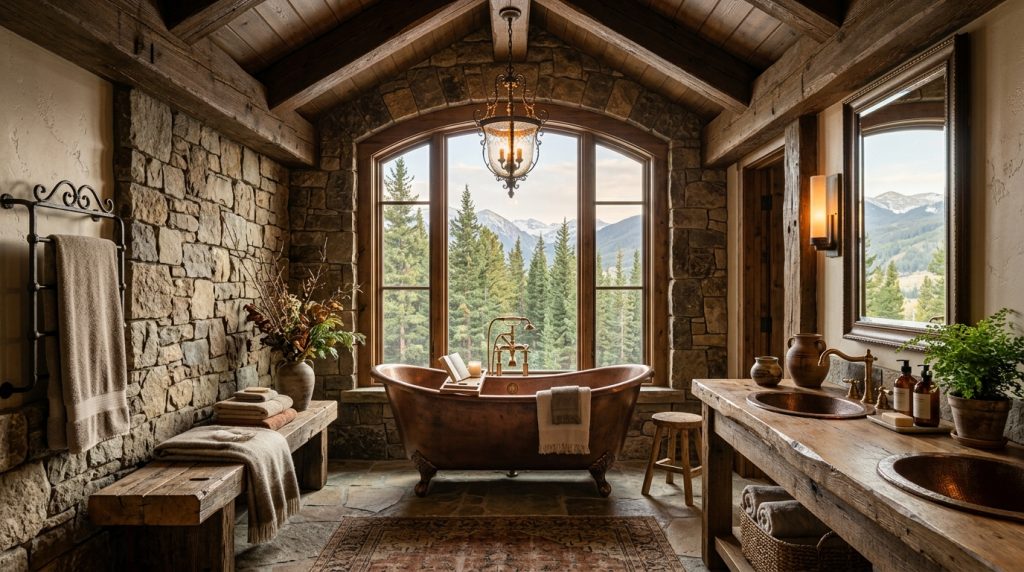
Less is more here. The rustic look is curated, not cluttered. A few well-chosen, genuinely textural pieces always outperform a shelf full of themed knickknacks.
Rustic Versus Farmhouse Versus Boho Bathroom — Quick Comparison
These three styles share a love of natural materials and warmth but express it very differently.
| Feature | Rustic | Farmhouse | Bohemian |
|---|---|---|---|
| Primary Materials | Raw wood, stone, aged metal | Painted wood, white tile, shiplap | Rattan, linen, mixed textiles |
| Color Palette | Warm earthy tones, deep browns | White, cream, navy accents | Rich jewel tones, earthy terracotta |
| Fixtures | Antique bronze, vintage copper | Matte black, brushed nickel | Unlacquered brass, eclectic vintage |
| Walls | Reclaimed wood, stone, shiplap | Shiplap, white subway tile | Plaster, painted patterns, tapestry |
| Vibe | Rugged, cabin-like, grounded | Clean, cozy, orderly | Layered, global, expressive |
| Best For | Mountain homes, countryside properties | Suburban homes, family bathrooms | Creative individuals, rental styling |
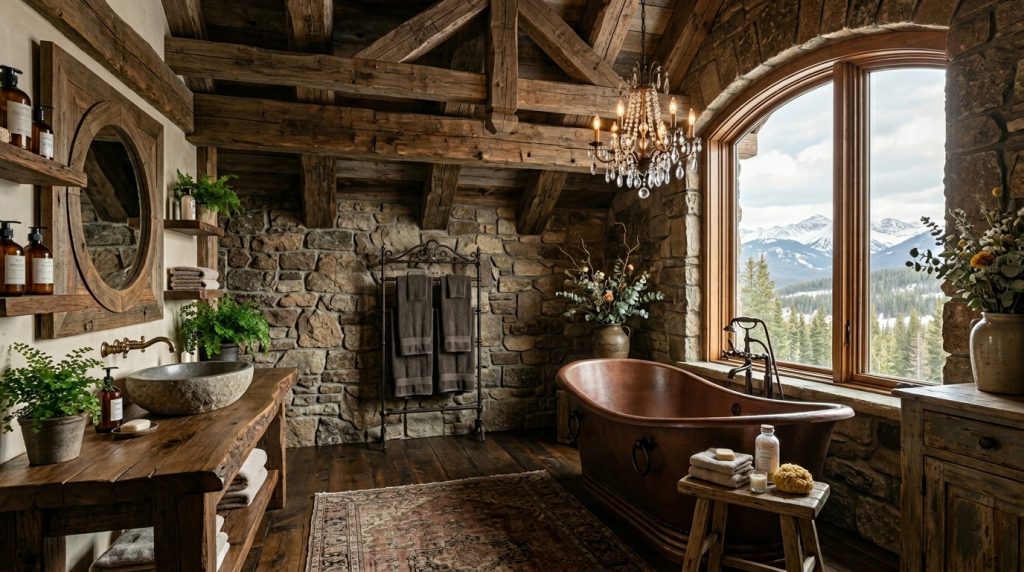
All three can blend. A rustic-farmhouse hybrid is one of the most popular bathroom styles right now, and it works because both aesthetics share core materials and a preference for warmth over gloss.
Step-by-Step Guide to Creating Your Rustic Bathroom
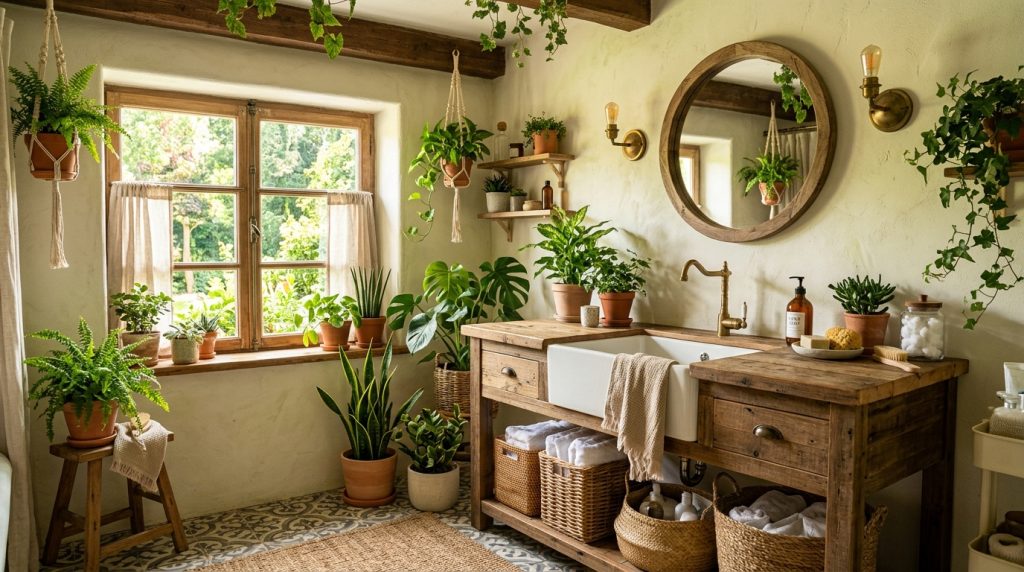
Whether you’re starting from scratch or refreshing an existing space, this sequence keeps the project manageable.
Step 1: Define your rustic style Are you going full mountain cabin? Soft farmhouse? Vintage country? Decide before buying anything so your purchases stay coherent.
Step 2: Set your color foundation Choose a warm wall color and a primary wood tone. These two decisions influence every other choice you make.
Step 3: Address the biggest surfaces first Walls and floors carry the most visual weight. A coat of warm white paint, shiplap paneling, or a stone-effect tile can shift the room’s character before you touch a single accessory.
Step 4: Tackle the vanity Paint existing cabinets in a matte earthy tone, replace hardware with aged bronze or oil-rubbed bronze pulls, and add a wooden or stone countertop if budget allows. Or source a reclaimed wood vanity unit.

Step 5: Replace fixtures Swap modern chrome taps and hardware for vintage-inspired alternatives in aged bronze, matte black, or unlacquered brass. This alone makes a dramatic difference.
Step 6: Update the lighting Replace any harsh overhead fixtures with warm sconces or pendant lights. Change all bulbs to 2700K warm white.
Step 7: Layer in textiles and storage Add linen towels, wicker baskets, and a natural-fiber bath mat. These textures are inexpensive and transformative.
Step 8: Add the finishing accessories A framed mirror, a couple of candles, a plant, a wooden tray on the counter. Restrained, purposeful, real.
Step 9: Edit and assess Stand back. Remove anything that feels forced, synthetic, or overly decorative. Rustic spaces breathe through restraint.

Pros and Cons of Rustic Bathroom Decor
Pros
- Genuinely timeless — the style doesn’t rise and fall with seasonal trends
- Natural materials age beautifully — wood and stone develop character over time rather than looking worn-out
- Warm and welcoming atmosphere — the color palette and textures create real comfort
- Works across property types — suits new builds as effectively as older homes
- Flexible budget range — achievable affordably with paint, hardware swaps, and wicker accessories
- Highly personal — no two rustic bathrooms look identical thanks to the nature of organic materials
Cons

- Wood requires ongoing maintenance — sealing, oiling, and monitoring for moisture damage
- Natural stone can be expensive — particularly for full floor or wall applications
- Clawfoot tubs are heavy and costly — installation isn’t always simple
- Earthy tones can feel dark in bathrooms with little natural light
- Vintage fixtures may require professional plumbing adjustments for fitting
- Organic materials and high humidity don’t always coexist easily without proper ventilation
Common Mistakes to Avoid

Using too many themed accessories Wooden signs, bear figurines, leaf-shaped soap dishes — each one individually seems harmless, but together they tip the room from rustic to cliché. Let the materials do the talking, not the props.
Ignoring ventilation Natural wood and stone are beautiful. They’re also vulnerable to sustained moisture. An inadequately ventilated bathroom accelerates warping, mold, and grout deterioration regardless of how well you’ve sealed things. A quality extractor fan isn’t optional.
Choosing the wrong wood finish High-gloss lacquered wood finishes are a mismatch in a rustic setting. Matte, oiled, or lightly waxed finishes preserve the authentic character of the grain and keep the overall look honest.
Mixing too many metal tones randomly Bronze, brass, black, and chrome all in the same bathroom creates visual noise. Choose one or two metal finishes and apply them consistently across taps, towel rails, light fixtures, and cabinet hardware.

Over-filling with texture Rustic style invites texture — stone walls, woven baskets, wooden surfaces — but layering too many competing textures at the same scale makes a room feel overwhelming. Balance rough with smooth, heavy with light.
Neglecting the ceiling Most rustic bathrooms focus on walls and floors and completely forget the ceiling. A warm white paint, exposed wooden beams, or even a simple tongue-and-groove ceiling treatment extends the rustic character into the full room.
Tips for a Better Rustic Bathroom

- Start with hardware — swapping every chrome fixture for aged bronze or oil-rubbed bronze costs relatively little and shifts the mood immediately.
- Buy vintage when you can — antique markets, salvage yards, and estate sales yield one-of-a-kind mirrors, faucets, medicine cabinets, and lighting that new items simply can’t replicate.
- Layer your lighting — combine task lighting at the vanity with ambient sconces or a pendant. A single overhead fixture creates flat, unflattering light.
- Add a plant — even a small potted fern, a trailing pothos, or a vase of dried botanicals introduces life and humidity-loving greenery that fits perfectly.
- Use linen over cotton — linen towels and bath mats have a more organic, relaxed texture than crisp cotton. They also soften beautifully with washing over time.
- Frame your mirror in wood or aged metal — a basic builder’s mirror with a reclaimed wood frame is a cheap but high-impact upgrade.
- Don’t match everything perfectly — intentional mismatching (slightly different wood tones, a mixed-metal moment) looks curated and real rather than catalog-assembled.
Frequently Asked Questions (FAQs)
Q1: Can rustic bathroom ideas work in a modern home?
Absolutely. Rustic elements integrate naturally into contemporary homes when balanced with clean lines and a restrained palette. The approach is to use rustic materials — reclaimed wood, natural stone, aged metal — within a more pared-back framework. A floating wooden vanity with clean lines, a simple stone countertop, and matte black fixtures brings rustic warmth into a modern context without the room feeling thematically confused.
Q2: What’s the best flooring for a rustic bathroom?
Terracotta, slate, and travertine tiles are the most authentically rustic choices and all perform well in wet environments. For a more budget-friendly option, wide-plank wood-effect porcelain tiles in warm tones give a similar visual result with none of the moisture sensitivity of real wood. Whatever you choose, use a matt or textured finish — high-gloss flooring clashes with the natural, earthy energy that rustic style depends on.
Q3: Is reclaimed wood safe to use in a bathroom?
Yes, with the right preparation. Reclaimed wood needs to be properly dried, treated, and sealed before installation in a bathroom environment. Use a penetrating oil or a waterproof sealant rated for wet areas. In shower or direct-water-contact zones, teak, cedar, or bamboo are better choices than pine or softwood, which absorb moisture more readily. Ensure the bathroom has adequate ventilation — this matters more than the wood species in preventing long-term moisture damage.
Q4: How do I make a small bathroom feel rustic without overwhelming it?
Keep the palette light and warm — creamy whites and pale wood tones expand a small space more effectively than dark, heavy materials. Choose one or two key rustic elements: a wooden framed mirror, shiplap on a single wall, a wicker basket, or a vintage-style faucet. Avoid stacking too many textures in a tight space. A few well-chosen pieces in a small room look deliberate and elegant; a lot of rustic elements crammed in look chaotic.
Q5: What color should I paint a rustic bathroom?
Warm, natural tones work best. Soft whites with a yellow or red undertone (rather than blue-white) feel more authentic to the style. Warm greys, sage greens, dusty linen, pale terracotta, and earthy taupes all read beautifully in a rustic bathroom. If the space gets good natural light, you can go slightly deeper — a warm stone grey or a muted forest green. In a darker room, stick to the lighter, creamier end of the palette and rely on warm-toned artificial lighting to compensate.
Q6: Can I add rustic style to a rental bathroom without making permanent changes?
Yes — this is one of the easiest styles to adapt for rentals because so much of it lives in accessories and textiles. Swap out the shower curtain for a natural linen or cotton canvas version. Add wicker baskets for storage, replace the standard mirror with a leaner wooden mirror, layer in linen towels and a natural-fiber bath mat, and add candles, dried botanicals, and earthy ceramics. None of these require drilling or permanent installation, and together they dramatically shift the room’s personality.
Q7: How do I prevent rust on aged bronze or brass fixtures in a bathroom?
Aged bronze and oil-rubbed bronze finishes are typically protected by a baked-on lacquer or a patina coating. Clean them with a mild, non-abrasive soap and warm water — avoid acidic cleaners or abrasive scrubbers that strip the finish. For unlacquered brass, which is intentionally meant to age and patina, a light application of paste wax every few months slows the tarnishing process. Dry fixtures after each use where possible to minimize water spotting.
Conclusion: Bring Rustic Bathroom Ideas to Life, One Layer at a Time
Rustic bathroom ideas aren’t about recreating a log cabin or filling your space with vintage props. At their best, they’re about bringing genuine materials, honest craftsmanship, and natural warmth into a room that too often prioritizes function over feeling.
The style rewards patience and layering. Start with the surfaces, get the palette right, and then build from there — a wooden vanity, some stone tile, a warm pendant light, a wicker basket, a linen towel. Each element adds to something larger than itself.
You don’t need a huge budget or a full renovation. A few meaningful changes, made with intention, can give even a basic builder’s bathroom a soul it never had before.
Your rustic bathroom retreat is closer than you think — pick one idea from this guide and start there today.