All-White Living Room Ideas: Design Tips & Inspiration

All-White Living Room Ideas That Feel Warm, Chic, and Timeless
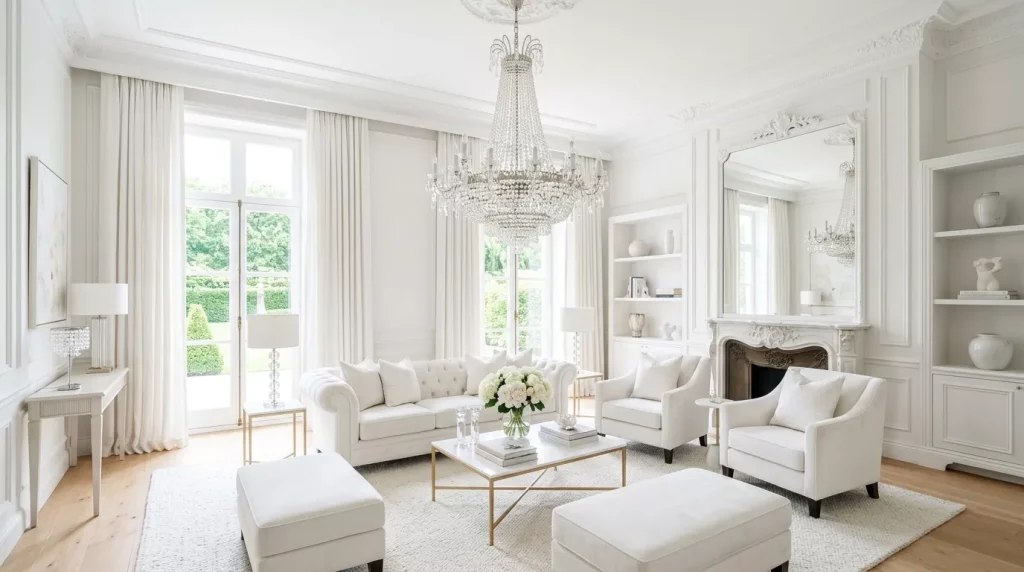
There’s something quietly powerful about an all-white living room. It looks polished on a Tuesday morning and breathtaking on a Friday evening with candles lit. But if you’ve ever tried to pull one off, you know it’s trickier than it looks on Pinterest.
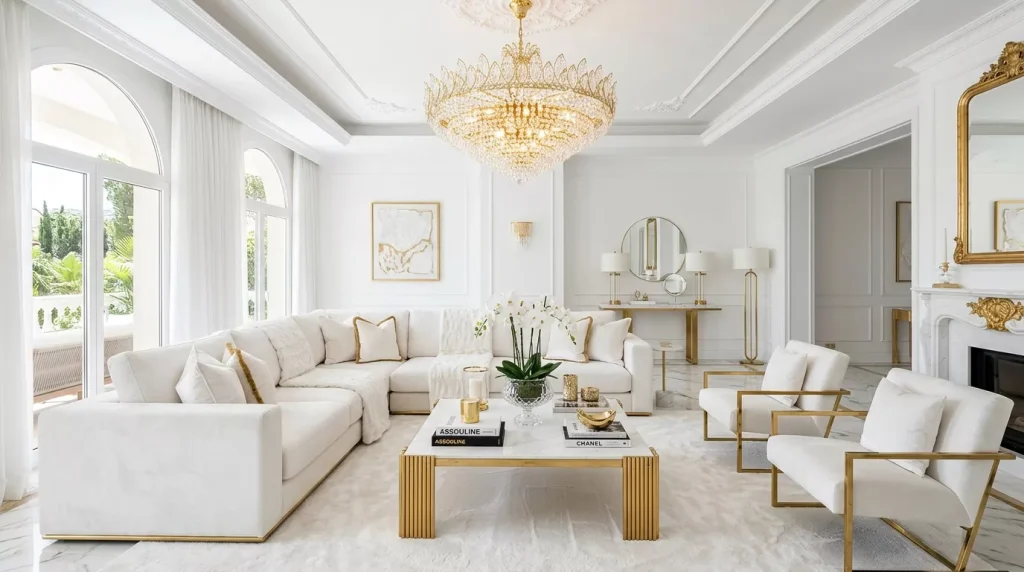
Done wrong, a white living room feels cold, clinical, or just plain boring — like an empty hospital waiting room. Done right? It becomes the most serene, sophisticated space in your home.
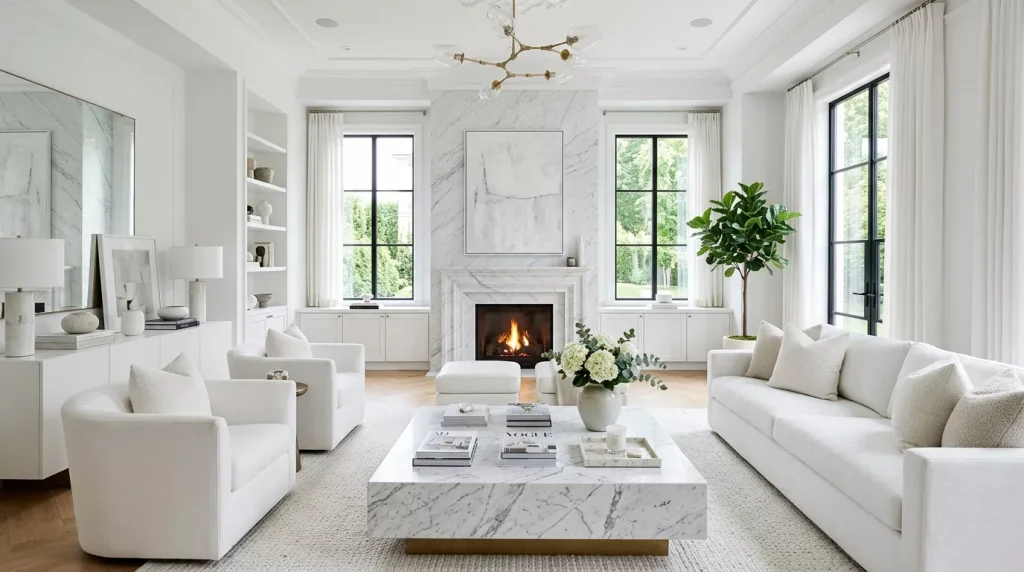
In this guide, we’re breaking down the best all-white living room ideas to help you design a space that’s layered, livable, and genuinely inspiring. Whether you’re starting from scratch or refreshing what you already have, there’s something here for every style and budget.
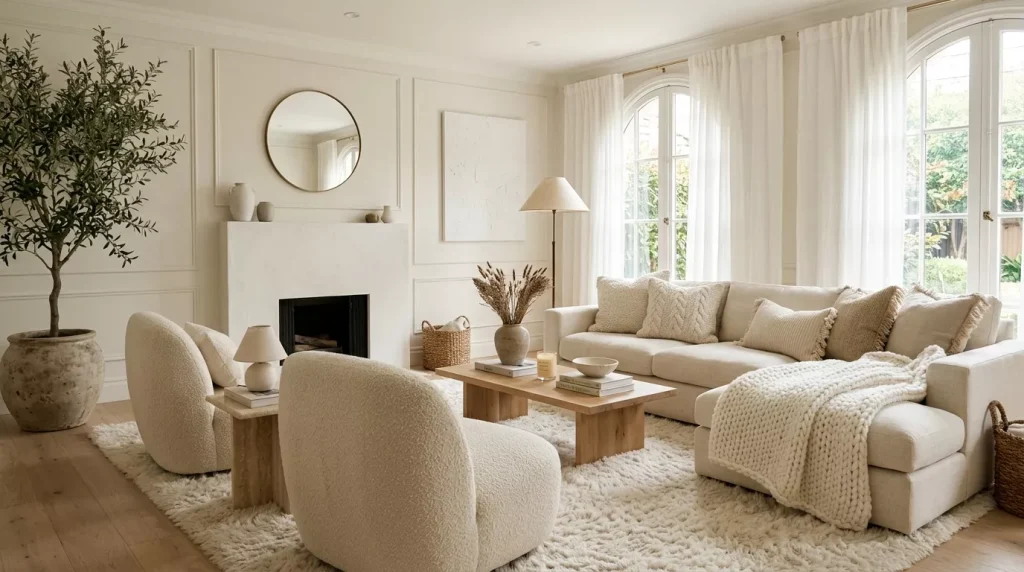
Why an All-White Living Room Still Works in 2025
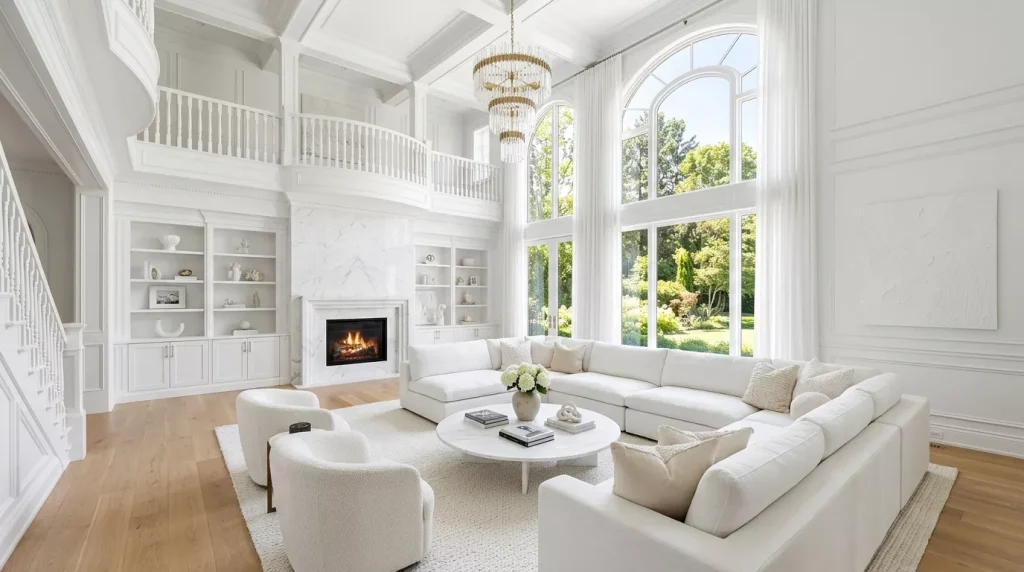
White never really goes out of style — it just gets reinterpreted. And right now, the design world is leaning into calmer, quieter interiors after years of maximalist experimentation.
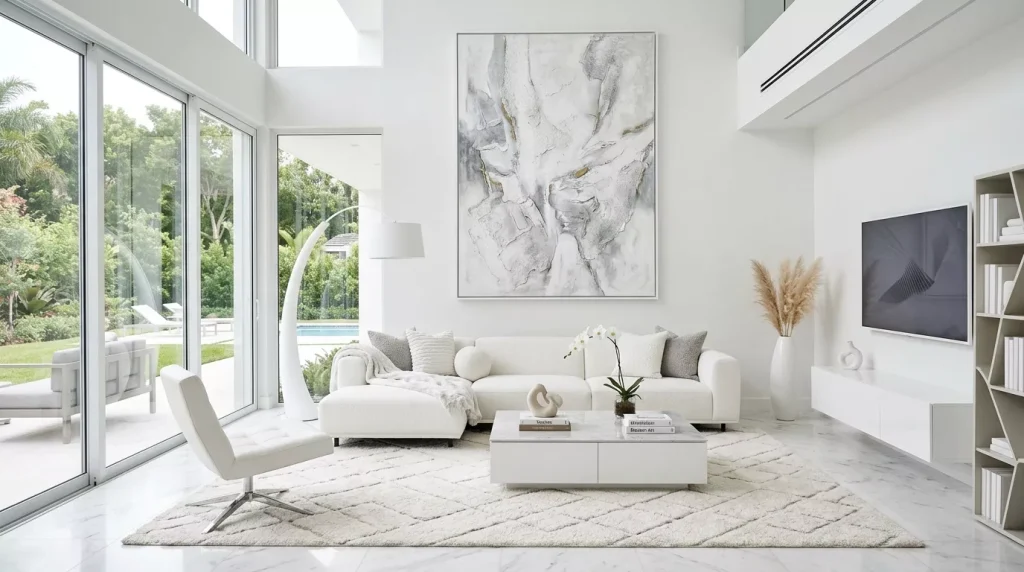
White living rooms align perfectly with that shift. They create visual breathing room, make spaces feel larger, and give you an endlessly flexible backdrop for furniture, art, and accessories.
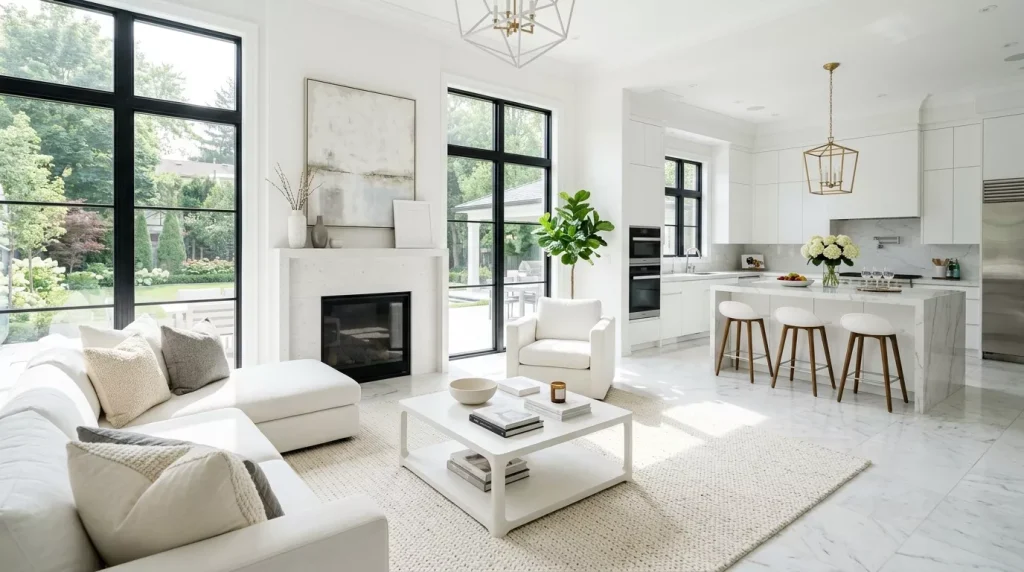
Here’s what makes white such a smart foundation:
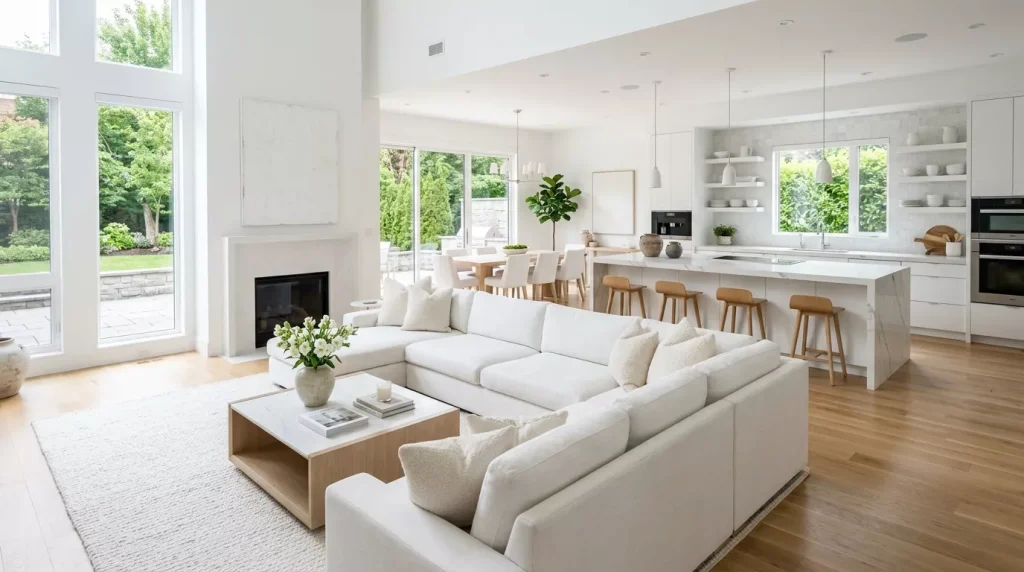
- It reflects natural light better than almost any other color
- It pairs with every wood tone, metal finish, and fabric type
- It makes smaller rooms feel open and airy
- It adapts as your taste evolves — swap out cushions, and the whole room shifts
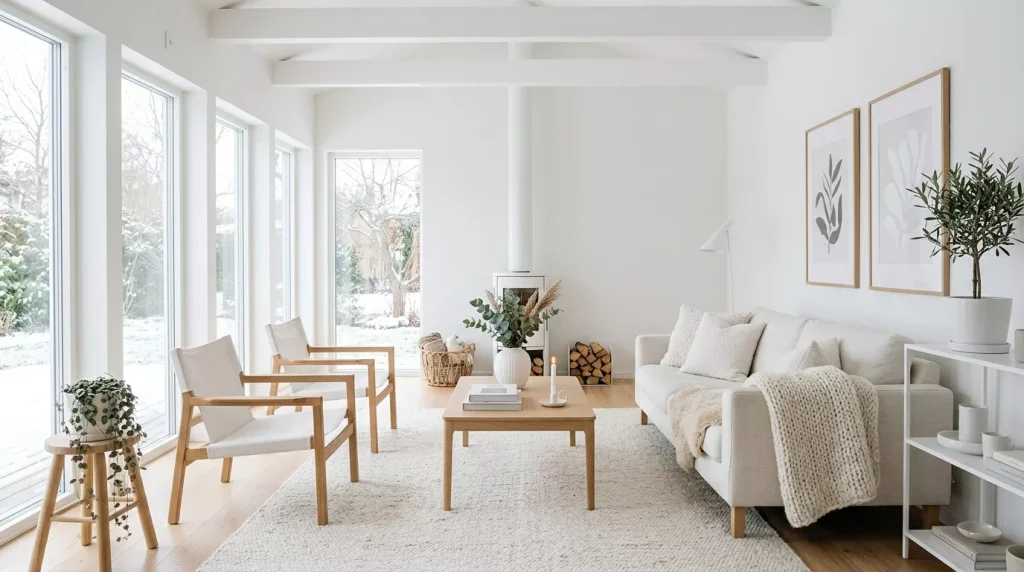
The trick isn’t choosing white. It’s choosing how to use it.
All-White Living Room Ideas to Transform Your Space
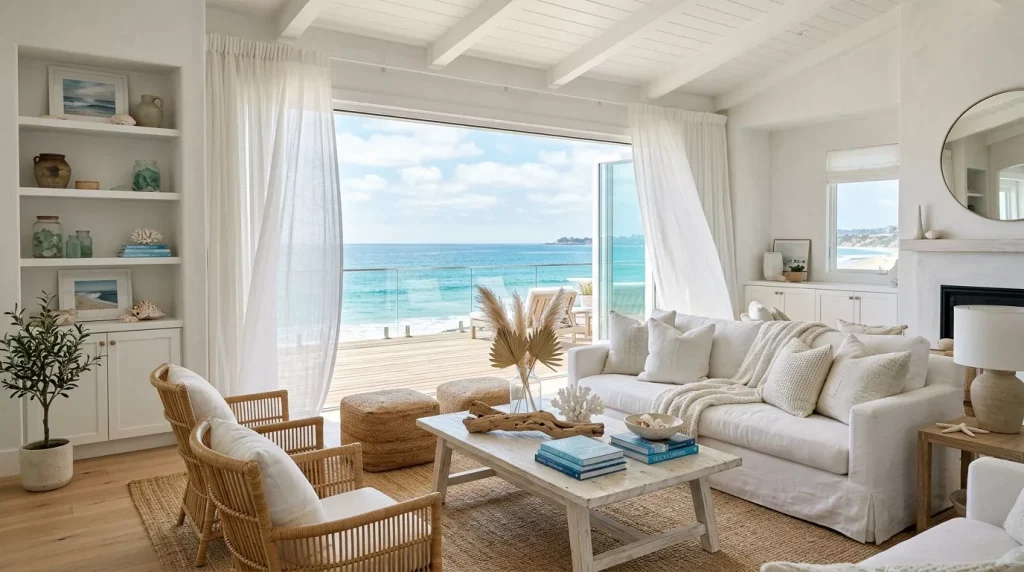
1. Layer Different Shades of White for a Tonal Look
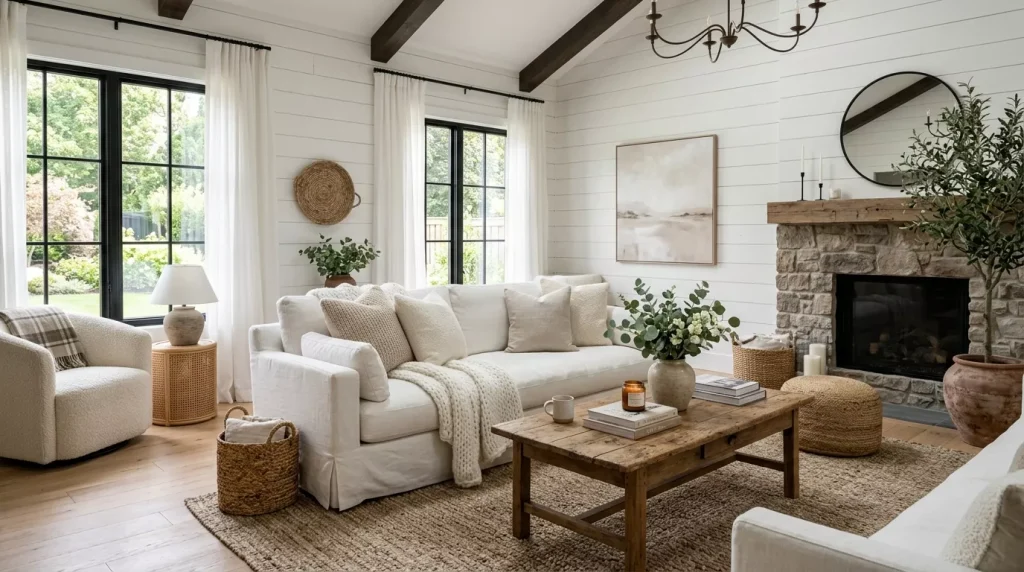
Here’s something most beginners get wrong: they assume white is just… white. But step into a paint store and you’ll quickly realize there are hundreds of variations — warm whites, cool whites, off-whites, cream whites, greige-whites.
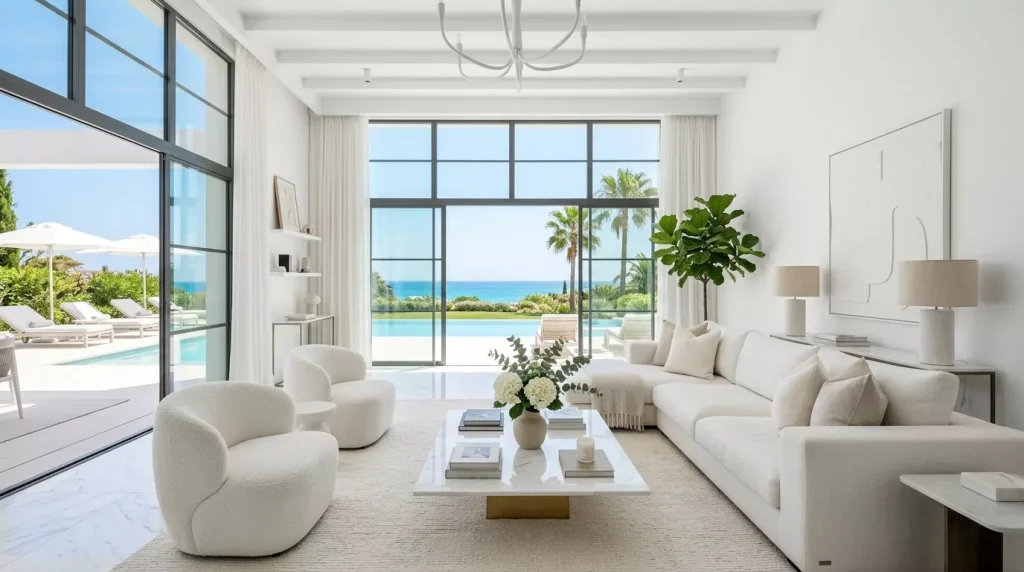
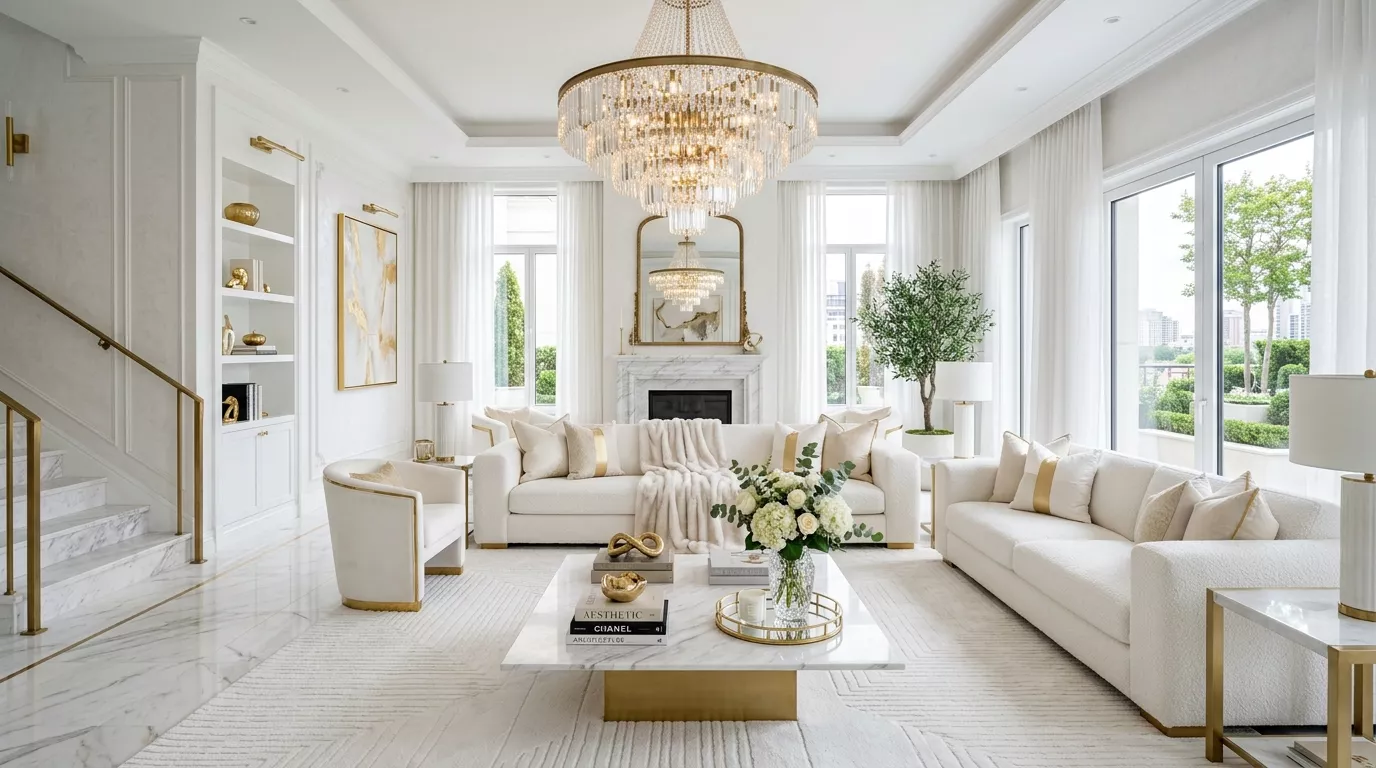
A tonal approach means combining different shades of white within the same room. Think ivory linen curtains against a bright cotton sofa, layered over a cream wool rug. The result isn’t flat or boring — it’s rich and tactile.
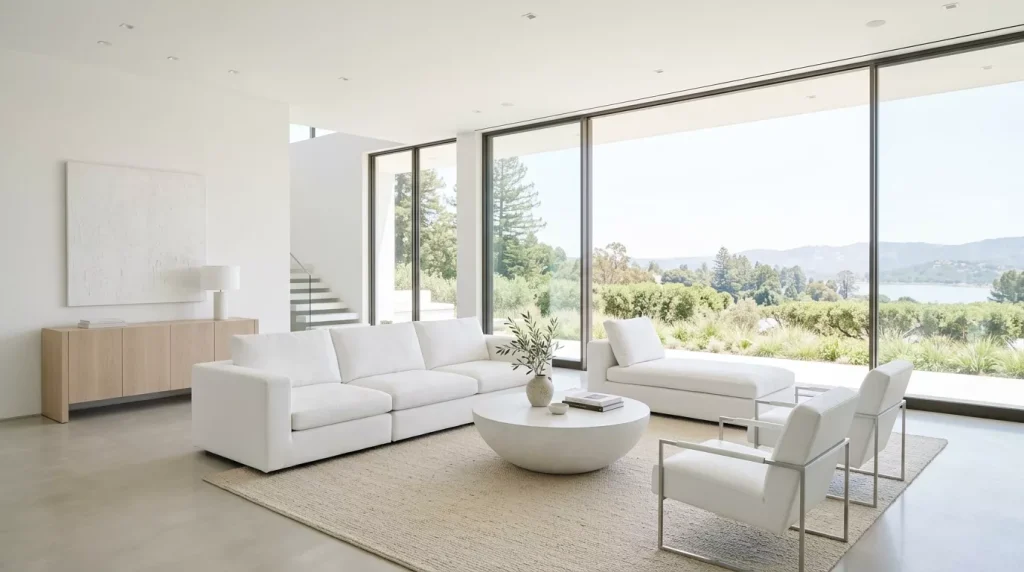
Try pairing:
- Warm white walls (like Benjamin Moore’s White Dove) with cool white furniture
- Off-white ceiling with crisp white trim for a subtle architectural effect
- Cream throw pillows on a pure white sofa to create softness without adding color
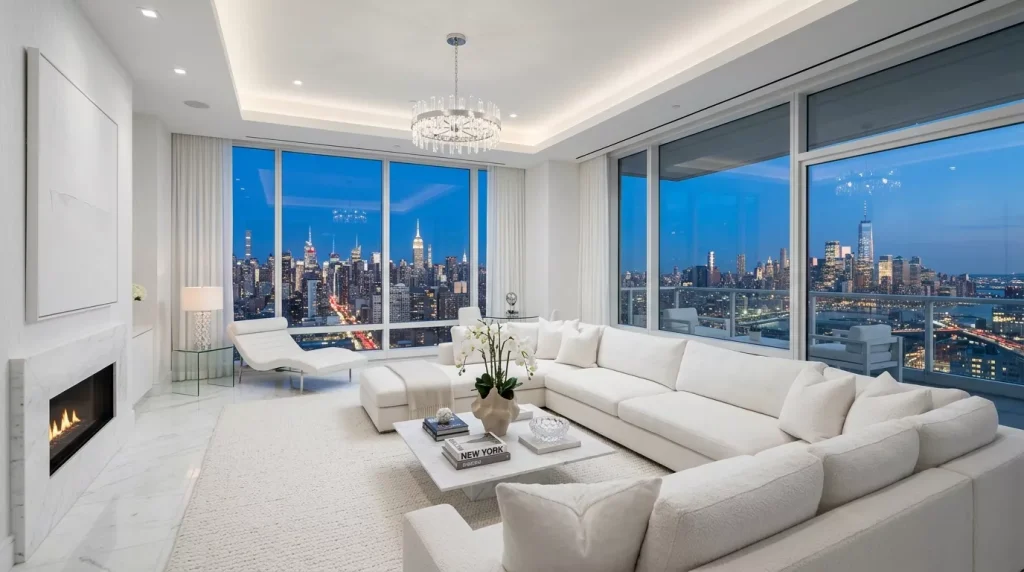
This technique adds depth without introducing another hue. It keeps the all-white vision intact while preventing that sterile, one-note look.
2. Make Texture Your Best Friend
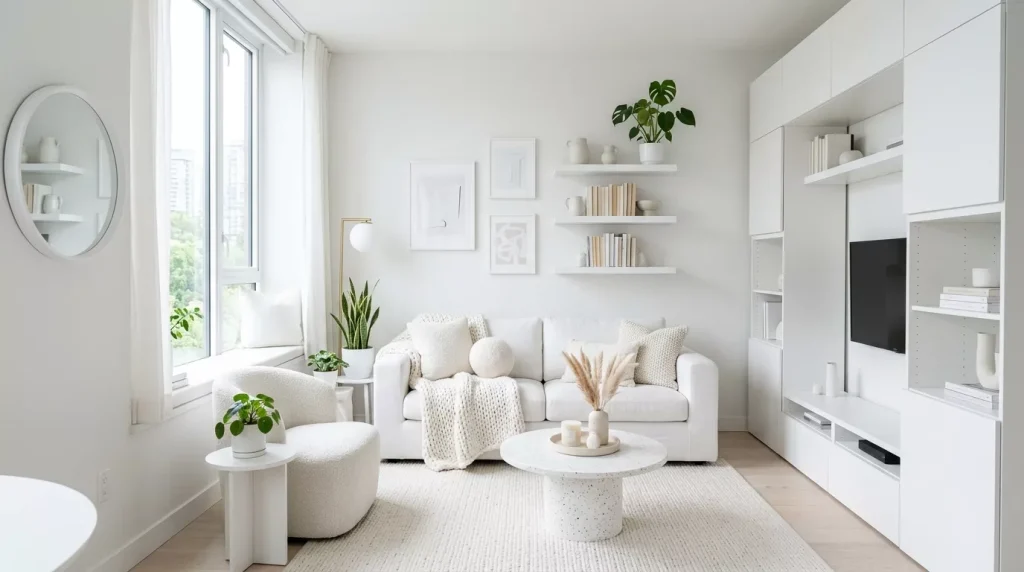
In a room with no color contrast, texture becomes the hero. This is where most white living rooms either sing or fall completely flat.
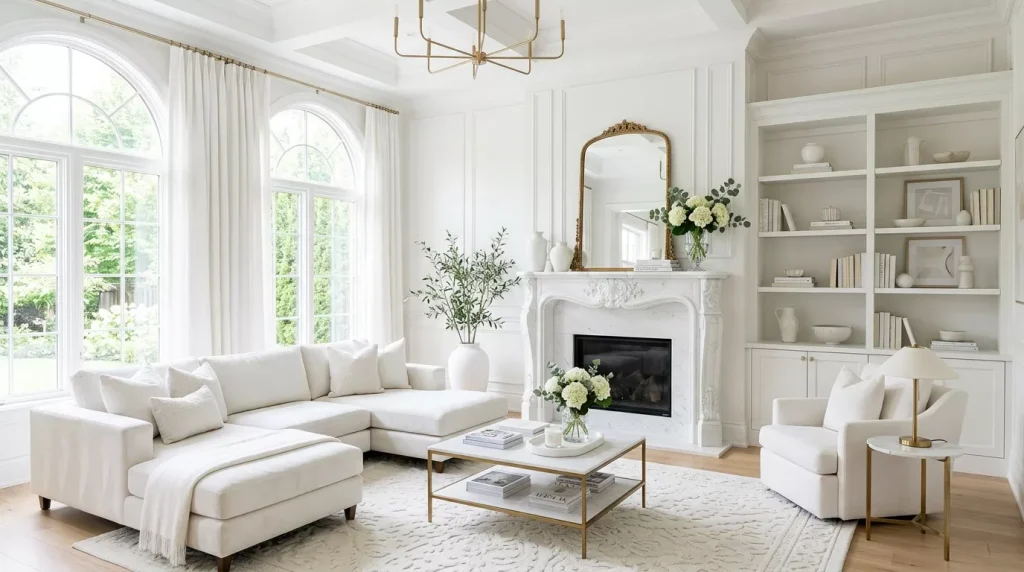
Think about it — a room full of flat, smooth white surfaces looks like a showroom no one lives in. But bring in a chunky knit throw, a linen slipcover sofa, a shaggy jute rug, and some raw wood furniture? Suddenly there’s visual movement and warmth everywhere you look.
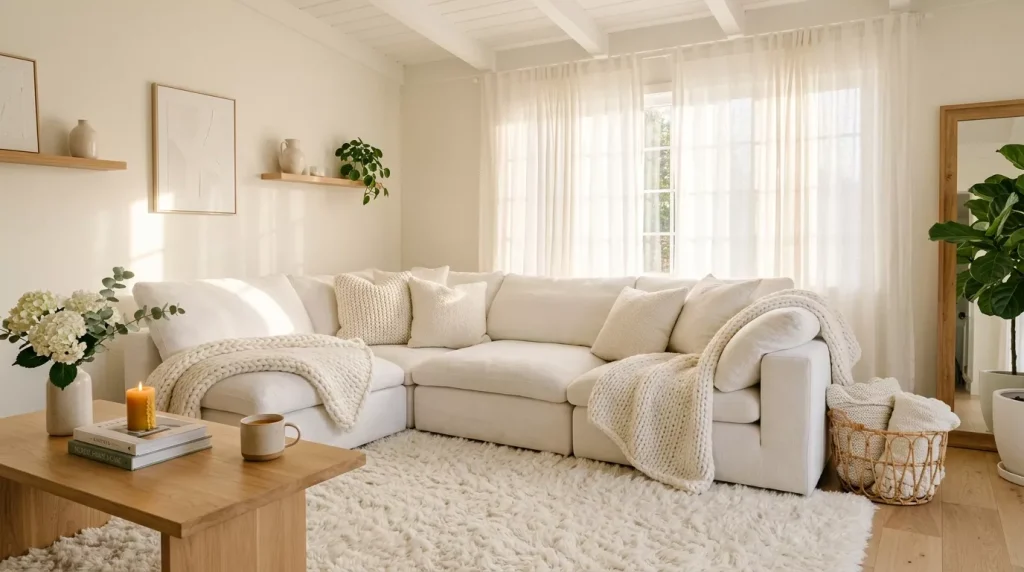
Textures to layer in an all-white living room:
| Surface | Texture Idea |
|---|---|
| Sofa | Bouclé, linen, velvet, or slipcover cotton |
| Rug | Jute, shaggy wool, flatweave, or braided |
| Curtains | Linen, muslin, or sheer voile |
| Walls | Plaster finish, limewash paint, or paneling |
| Cushions | Macramé, cable-knit, or embroidered fabric |
| Side table | Rattan, raw oak, or marble |
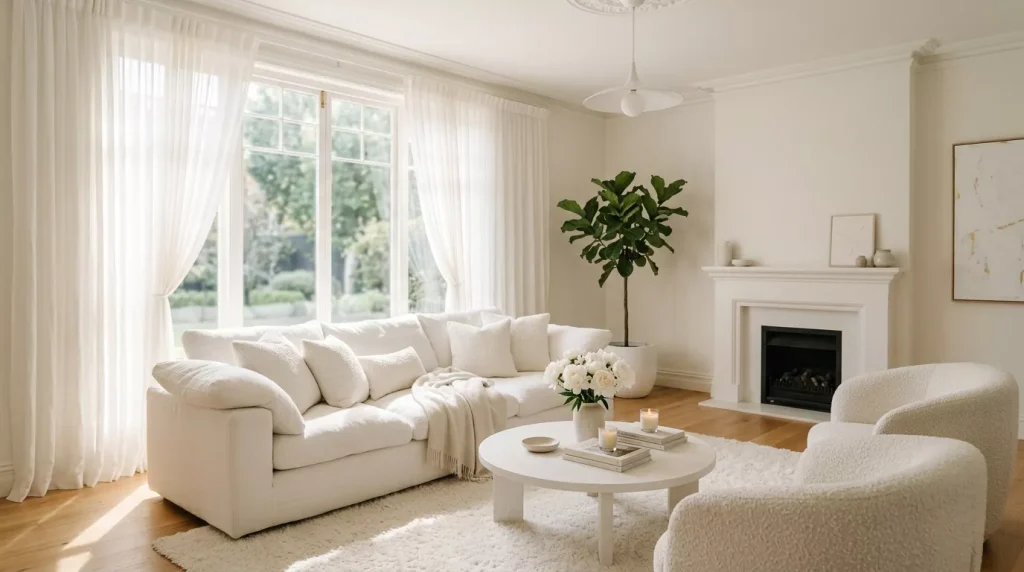
The rule is simple: vary the texture in every element. If the sofa is smooth, the rug should be plush. If the walls are flat, add a textured throw or woven wall art.
3. Let Natural Light Do the Heavy Lifting
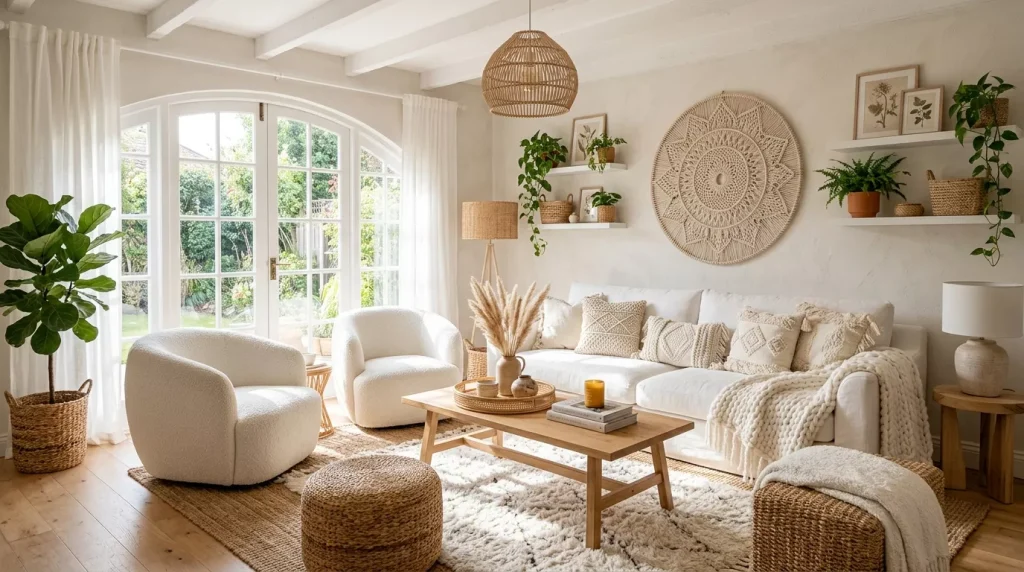
White and natural light are a dream team. The more sunlight pours into a white room, the more it comes alive throughout the day — shifting from soft and golden in the morning to bright and crisp at noon.
To maximize this effect:
- Use sheer white curtains instead of blackout panels in your main living space
- Position large mirrors strategically to bounce light across the room
- Keep window ledges clear of clutter
- Choose glossy or satin paint finish for walls that catch the light differently than matte
If your room doesn’t get much natural light, don’t panic. Layered artificial lighting — floor lamps, table lamps, and recessed ceiling lights — can mimic that same warm-glow effect beautifully.
4. Use Statement Furniture to Anchor the Space
In an all-white living room, your furniture can’t just be functional — it needs to be architectural. Since there’s no bold wall color competing for attention, the shapes, proportions, and silhouettes of your pieces become front and center.
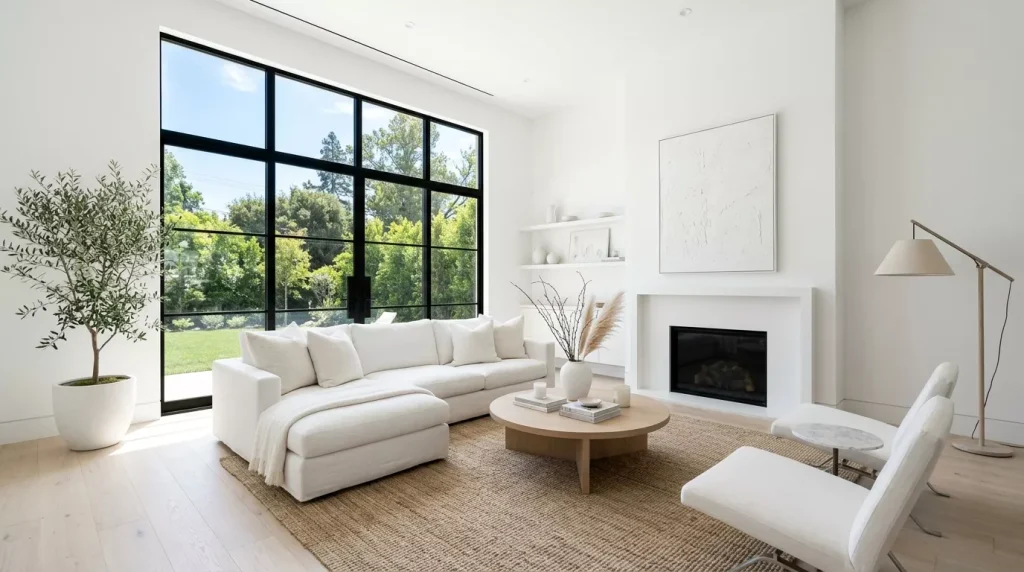
Choose sofas with clean lines and sculptural forms. Look for coffee tables with interesting bases — curved marble tops, crossed iron legs, or solid travertine slabs. Lean into pieces that look good from every angle.
Some winning combinations:
- A curved white bouclé sofa with a slim black metal coffee table (classic contrast without color)
- A linen sectional with a live-edge wooden coffee table (warmth through natural material)
- A slipcovered white armchair beside a tall arched floor lamp (elegant and timeless)
When everything else is white, the furniture becomes the art.
All-White Living Room Design Styles
Not all white rooms look the same. The style you choose determines the entire personality of the space.
Scandinavian White Living Room
Scandi design loves white above all else. Think clean lines, functional furniture, soft natural materials, and almost zero clutter. The palette leans cool-white with warm wood accents — pine floors, oak side tables, birch shelving.
Key elements: White walls, light wood floors, minimal furniture, sheepskin throws, simple greenery.
Modern Minimalist White Living Room
This version strips everything back. White walls, white sofa, white rug — but every single piece is chosen deliberately for its shape and quality. There’s no excess here.
Key elements: Architectural furniture, hidden storage, no visible clutter, monochromatic art, clean geometry.
Coastal White Living Room
The coastal approach softens white with sandy textures, rattan accents, driftwood-toned furniture, and sea-inspired accessories. It feels relaxed and breezy rather than formal.
Key elements: Wicker baskets, linen curtains, jute rug, bleached wood, indoor plants, sea-glass accents.
French Country White Living Room
This style mixes white with romantic details — vintage furniture, ornate moldings, linen slipcovers, and rustic wood beams. It’s warm, lived-in, and deeply charming.
Key elements: Distressed wood, floral accents, white slipcover sofa, antique mirrors, stone fireplace.
Step-by-Step Guide: How to Design an All-White Living Room
Even if you’re not a designer, this process works. Follow these steps in order and you’ll build a cohesive, beautiful white room without wasting money.
Step 1: Choose Your White — Pick one dominant wall white. Get samples and test them in your actual light conditions. Notice how they shift from morning to evening.
Step 2: Decide on a Style Direction — Scandinavian? Coastal? Minimalist? Knowing this first prevents you from buying pieces that clash.
Step 3: Lay the Foundation — Choose your rug first. In a white room, the rug is the anchor. Everything else builds on it.
Step 4: Select Your Sofa — This is your biggest investment. Match the texture and silhouette to your style direction.
Step 5: Layer in Textures — Add curtains, throw pillows, and a blanket. Vary textures in every item you add.
Step 6: Add Warmth with Wood or Metal — Introduce a coffee table, shelving, or accent pieces in a natural material.
Step 7: Bring in Greenery — A few plants — in white pots, naturally — instantly breathe life into an all-white space.
Step 8: Curate Your Lighting — Layer at least three light sources. Avoid relying solely on overhead lighting.
Step 9: Edit Ruthlessly — Remove anything that doesn’t belong. White rooms show clutter immediately, so keep surfaces intentional.
Pros and Cons of an All-White Living Room
Before you commit, it’s worth being honest with yourself about what a white room actually demands.
✅ Pros
- Creates a calm, serene atmosphere
- Makes rooms feel larger and airier
- Extremely versatile — works with any decor style
- Reflects natural light beautifully
- Easy to update seasonally with accessories
- Feels fresh, clean, and timeless
❌ Cons
- Shows dirt, scuffs, and stains more visibly
- Requires consistent upkeep and cleaning
- Can feel cold or sterile if not executed carefully
- Mistakes are harder to hide than in colored rooms
- Pet owners and young families face more maintenance challenges
- Premium white fabrics can be expensive to replace
White Living Room vs. Neutral Living Room: What’s the Difference?
Many people confuse these two, but they’re genuinely different approaches.
| Factor | All-White Living Room | Neutral Living Room |
|---|---|---|
| Palette | White-only or white-dominant | Mix of whites, greys, beiges, taupes |
| Feel | Clean, airy, crisp | Warm, grounded, earthy |
| Maintenance | Higher — shows marks easily | Slightly more forgiving |
| Flexibility | Very high — any accent works | High, but warm tones suit it best |
| Risk level | Higher (easy to get wrong) | Lower (more forgiving) |
| Best for | Bright, well-lit rooms | Rooms with limited natural light |
If your room doesn’t get much sunlight, a neutral palette may actually feel warmer and more comfortable than a strict all-white scheme.
Common Mistakes to Avoid in an All-White Living Room
1. Using Only One Shade of White
This is the fastest way to make a white room look flat. Mix warm and cool whites deliberately.
2. Ignoring Texture
Smooth walls, smooth sofa, smooth rug — the room feels like a blank wall. Vary every surface.
3. Overdoing the “Clean Look”
Minimalism is great, but removing everything personal makes a room feel like a showroom. Add a book stack, a candle, a plant — something human.
4. Skipping Warm Accents
White rooms need warmth to feel inviting. Wood, natural fiber, brass, leather — even one warm material changes the whole feeling.
5. Choosing the Wrong White for Your Lighting
Cool white paint in a north-facing room will look grey and depressing. Always test swatches in your actual light conditions before committing.
6. Neglecting Artificial Lighting
Overhead lights alone make white rooms feel harsh and clinical. Add lamps at different heights for warmth and ambiance.
Pro Tips for Living in (and Loving) Your White Living Room
Tip 1: Slipcover your sofa. White fabric sofas don’t have to be a nightmare — removable, washable slipcovers mean you can refresh them easily.
Tip 2: Use performance fabrics. Brands now make beautiful white fabrics engineered to resist stains, fading, and pet hair without sacrificing softness.
Tip 3: Invest in a good white paint. Don’t cheap out here. A quality flat or eggshell white applies evenly, looks beautiful in photos, and holds up longer.
Tip 4: Keep a magic eraser handy. For scuffs on white walls, these are life-changing. A quick swipe and the mark is gone.
Tip 5: Rotate your soft furnishings seasonally. In winter, lean into heavier textures — chunky knits, wool, velvet. In summer, swap to linen and cotton for a lighter feel.
Tip 6: Use white curtain rods, not chrome or brass. In an all-white room, white hardware disappears into the walls and keeps the look seamless.
Tip 7: Don’t forget the ceiling. Painting the ceiling white (or even slightly lighter than the walls) draws the eye upward and makes the room feel taller.
Conclusion: Your All-White Living Room Awaits
An all-white living room isn’t just a design trend — it’s a long-term investment in a space that ages beautifully, adapts endlessly, and feels genuinely calming to be in.
The key is this: don’t think of white as one thing. Think of it as a canvas you build on with texture, light, shape, and warmth. The rooms that truly inspire aren’t white instead of interesting — they’re interesting because of how thoughtfully that white has been layered.
Start with one element. Pick your white. Choose your rug. Build the room slowly, intentionally, and without rushing.
And if the idea feels overwhelming? Go back to basics: light, texture, warmth. Get those three things right, and the rest will fall into place.
Ready to start? Pick one idea from this guide, implement it this weekend, and watch how quickly the vision begins to take shape.
Frequently Asked Questions (FAQs)
Q1. How do I make an all-white living room feel warm and not cold?
The key is layering. Warm textures like wool, jute, and linen immediately soften a white room. Adding wood furniture, brass accents, and warm-toned lighting (2700K bulbs) transforms a clinical-looking white space into something cozy and inviting. Avoid cool-toned whites (with blue or grey undertones) in rooms with limited natural light.
Q2. What is the best white paint color for a living room?
Some consistently loved options among designers include Benjamin Moore’s White Dove (warm, creamy), Farrow & Ball’s All White (crisp and bright), and Sherwin-Williams’ Alabaster (soft warm white). The “best” shade depends entirely on your room’s light and the feeling you want — always test at least three samples before choosing.
Q3. Are all-white living rooms practical for families with children or pets?
They can be, with the right planning. Choose performance or stain-resistant fabrics, use washable slipcovers, and opt for durable flooring. Flat or matte wall paints show marks more easily — a satin or eggshell finish is much easier to clean. With the right materials, a white room is very livable.
Q4. How do I add personality to an all-white living room without adding color?
Through shape, texture, and pattern. Sculptural furniture, textured rugs, woven baskets, books, plants, and interesting art all add character without introducing a second hue. Playing with different material finishes — matte vs. glossy, rough vs. smooth — creates visual interest that’s just as compelling as color.
Q5. What type of flooring works best in an all-white living room?
Light wood floors (bleached oak, whitewashed pine, pale ash) are the most popular pairing — they add warmth without competing with the white palette. Polished concrete works beautifully in modern or minimalist spaces. White marble flooring is luxurious but high-maintenance. Light grey stone tiles offer a clean, contemporary look that complements white walls perfectly.
Q6. Can a small room work as an all-white living room?
Absolutely — in fact, white is one of the best tools for making small spaces feel larger. It reflects light, blurs the perception of walls, and creates a sense of openness. Keep furniture low-profile, use mirrors, and avoid heavy window coverings to maximize the airy effect.
Q7. How do I prevent my white living room from looking like a showroom?
Add personal touches deliberately. A stack of coffee table books, a few plants in varying heights, family photos in simple white or natural frames, a throw casually draped over the sofa arm — small human details make all the difference between a room that’s lived-in and one that feels staged.