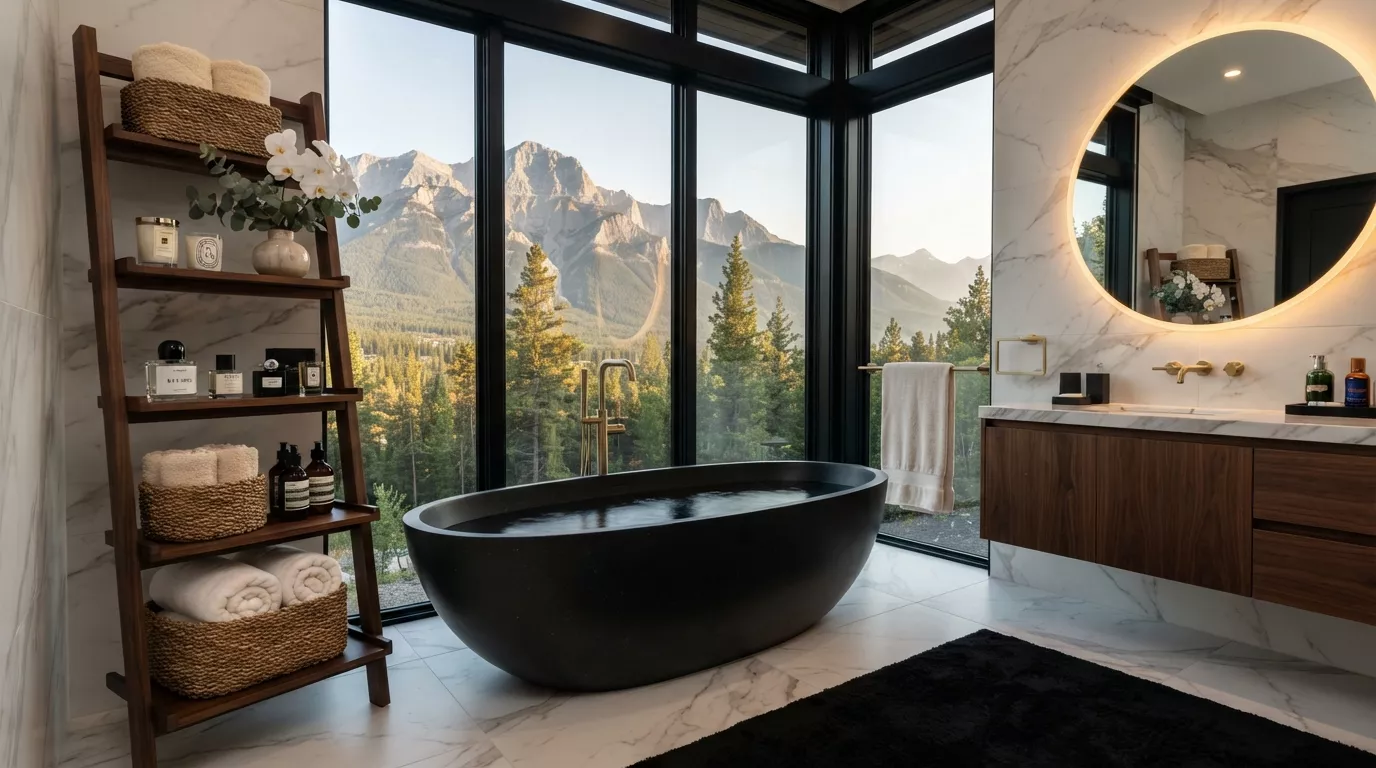
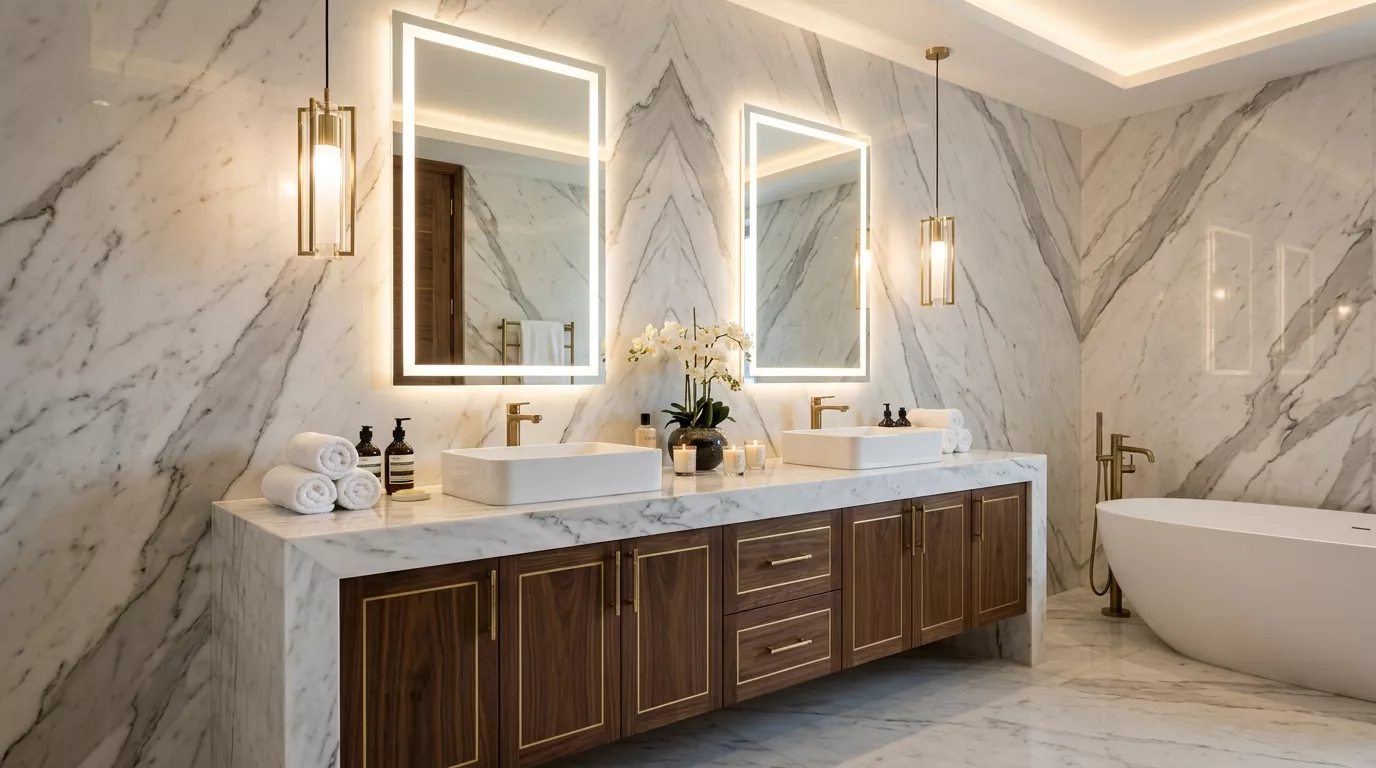
Dusty Blue Bathroom Ideas for a Timeless, Elegant Look

Dusty Blue Bathroom Ideas That Turn an Ordinary Space Into Something Special
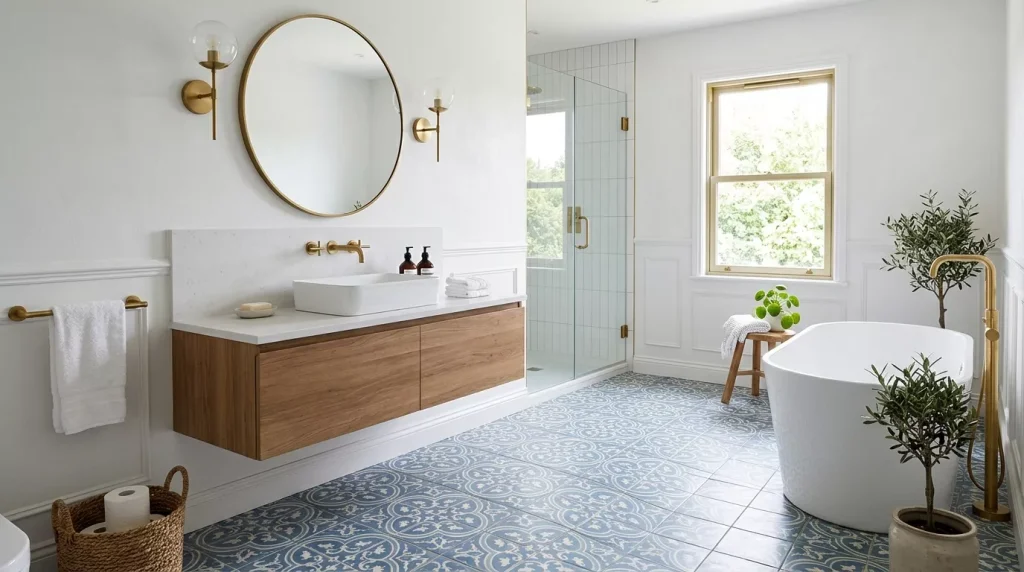
There’s a particular kind of calm that washes over you when you walk into a beautifully done dusty blue bathroom. It’s not aggressive. It’s not trendy in that way that looks dated in three years. It’s the kind of color that feels like it belongs — like it was always there and the room simply couldn’t exist without it.
Dusty blue sits somewhere between grey, soft blue, and a hint of slate. It’s muted enough to feel sophisticated but saturated enough to make a real design statement. And in a bathroom — a space that’s equal parts functional and restorative — it might just be the most fitting color you could choose.
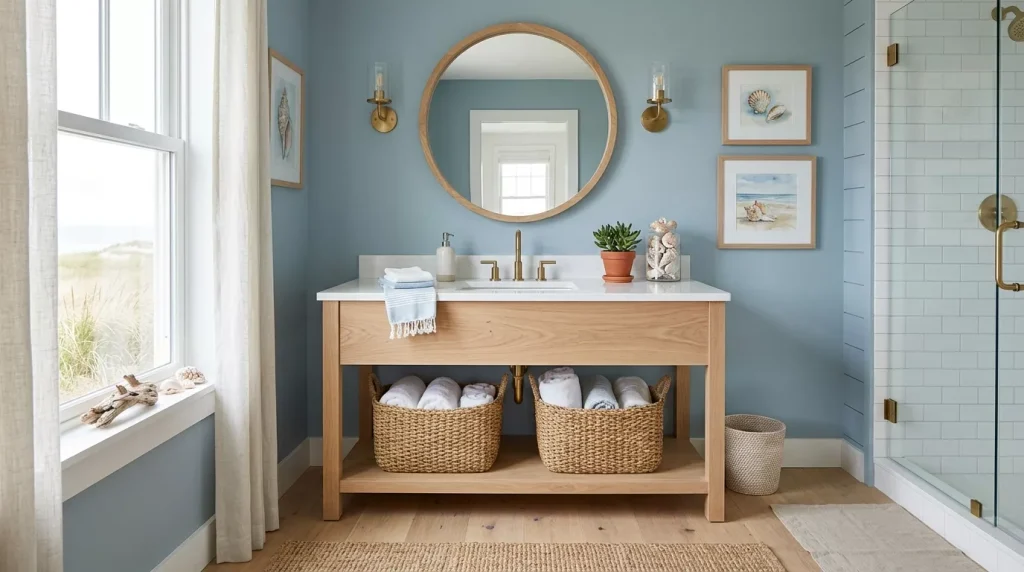
Whether you’re gutting your bathroom entirely or just refreshing it with new paint and accessories, this guide gives you every idea, every pairing, and every practical tip you need to do it right.
Why Dusty Blue Is One of the Best Choices for a Bathroom
Before diving into ideas, it’s worth understanding why this particular shade works so well in bathrooms specifically.
Color psychology tells us that blue tones lower heart rate and reduce anxiety. Muted blues, in particular, create an environment that feels like a retreat — which is exactly what a good bathroom should be. Think about why spas almost universally gravitate toward cool, muted tones. There’s a reason.
Dusty blue also has an unusually long design lifespan. Brighter, more saturated colors come in and out of fashion. But muted, grey-toned blues read as classic rather than trend-driven. It’s the same quality that makes dusty blue dress codes at weddings so popular — the color photographs beautifully, ages gracefully, and offends no one.
On a practical level:
- Dusty blue hides water spots and humidity marks better than pure white
- It reflects light softly without being stark or glaring
- It pairs naturally with chrome, brass, matte black, and every metal finish in between
- It suits both vintage fixtures and contemporary minimalist fittings equally well
Dusty Blue Bathroom Ideas Worth Stealing
1. Dusty Blue Walls with Crisp White Fixtures and Trim
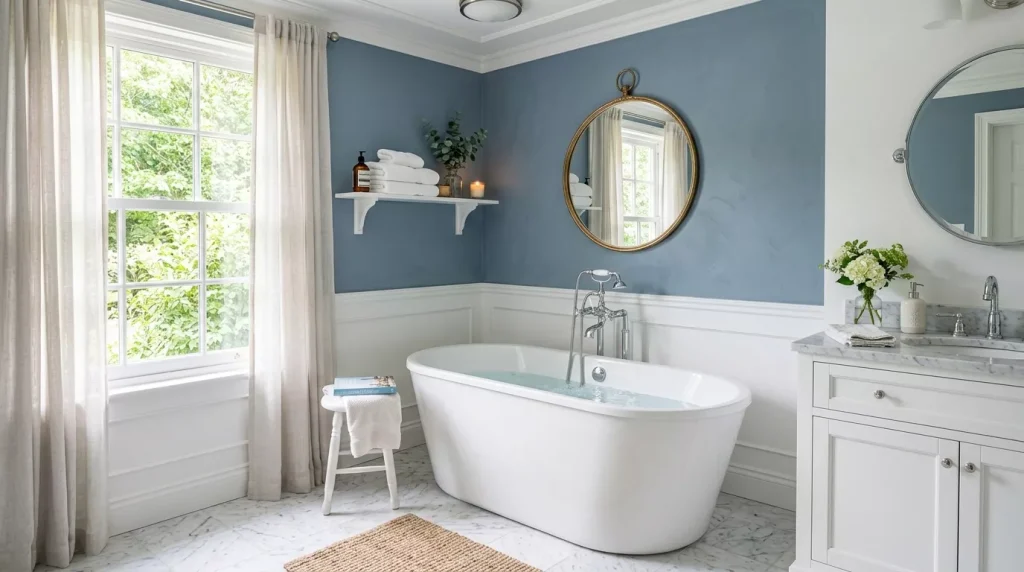
The most classic application of dusty blue in a bathroom — and still one of the most effective. Blue-grey walls alongside bright white fixtures, white subway tiles, and white trim create a contrast that feels fresh, nautical in the best possible way, and genuinely timeless.
The key is getting the balance right:
- Paint walls in a matte or eggshell dusty blue finish
- Keep the ceiling white to open the space upward
- Choose a white freestanding or wall-mounted vanity
- Use white grout with white or off-white tiles to maintain the clean contrast
- Introduce chrome or brushed nickel fixtures — both read as cool tones and complement the blue-grey palette
This combination works in every bathroom size. In a small powder room, it feels boutique and intentional. In a large master bathroom, it feels like a proper spa.
2. Dusty Blue Tile Ideas That Go Beyond the Basics
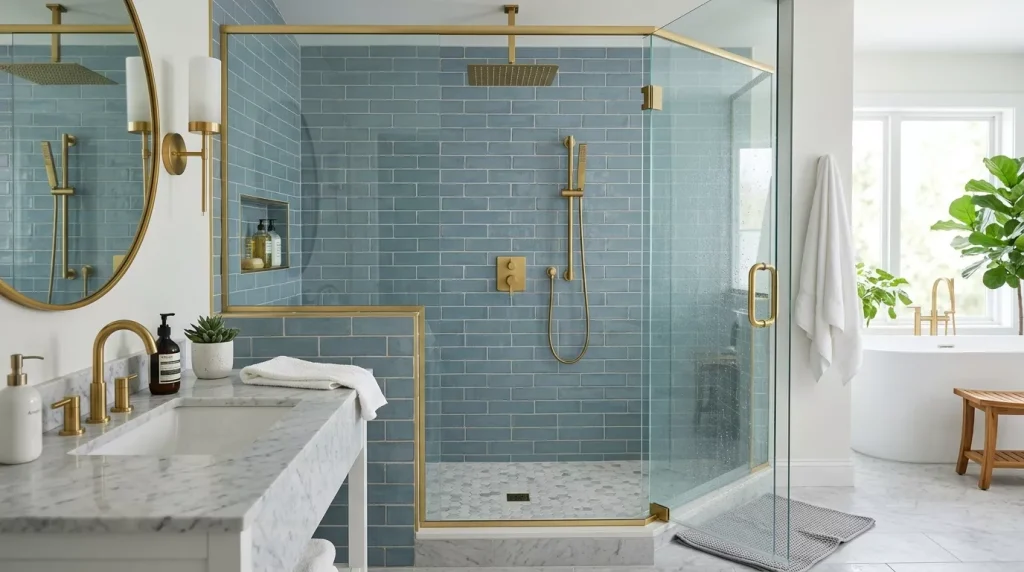
Tile is where bathrooms earn their design credentials — and dusty blue tile opens up a world of possibilities.
The most popular dusty blue tile applications:
| Tile Type | Best Used For | Effect Created |
|---|---|---|
| Dusty blue subway tile | Feature wall or full shower surround | Classic, versatile, timeless |
| Matte dusty blue square tile | Floor or lower wall half | Modern, graphic, grounded |
| Dusty blue zellige tile | Accent wall or niche | Artisanal, textured, luxurious |
| Dusty blue hex tile | Bathroom floor | Vintage, charming, spa-like |
| Large-format dusty blue slab | Full wall in modern bathroom | Bold, seamless, sophisticated |
| Dusty blue fish-scale tile | Feature wall behind vanity | Coastal, playful, distinctive |
One approach that’s gaining serious traction: mixing dusty blue zellige tiles on the lower half of the wall with limewashed or white plaster on the upper half. The texture difference between the two creates a layered, hand-crafted look that photographs brilliantly.
3. A Dusty Blue Vanity as the Star of the Room
If painting the entire bathroom feels like too much of a commitment, a dusty blue vanity cabinet is the single most impactful furniture-first change you can make. The vanity is the room’s focal point — it catches the eye the moment you walk in.
A few approaches that work beautifully:
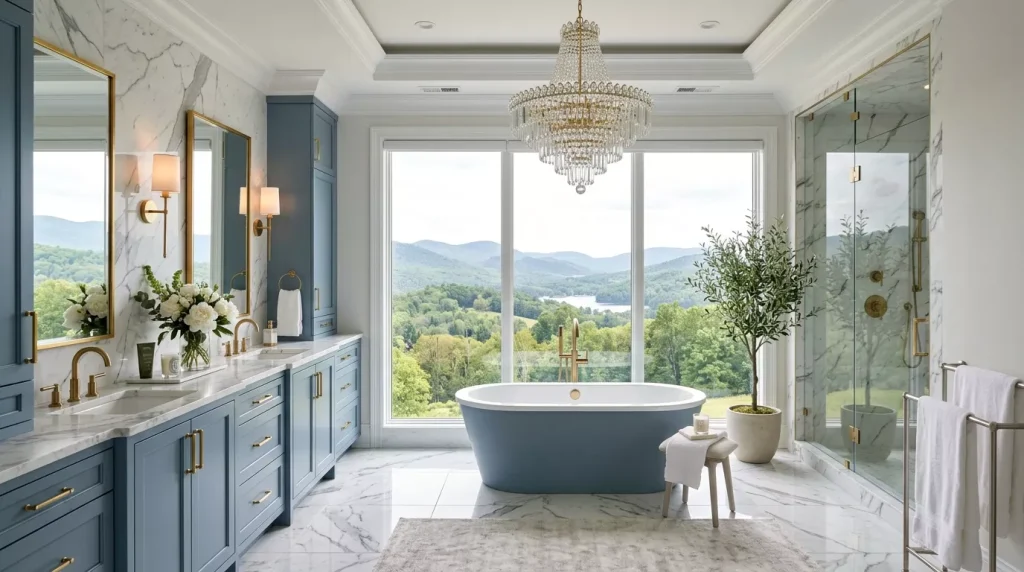
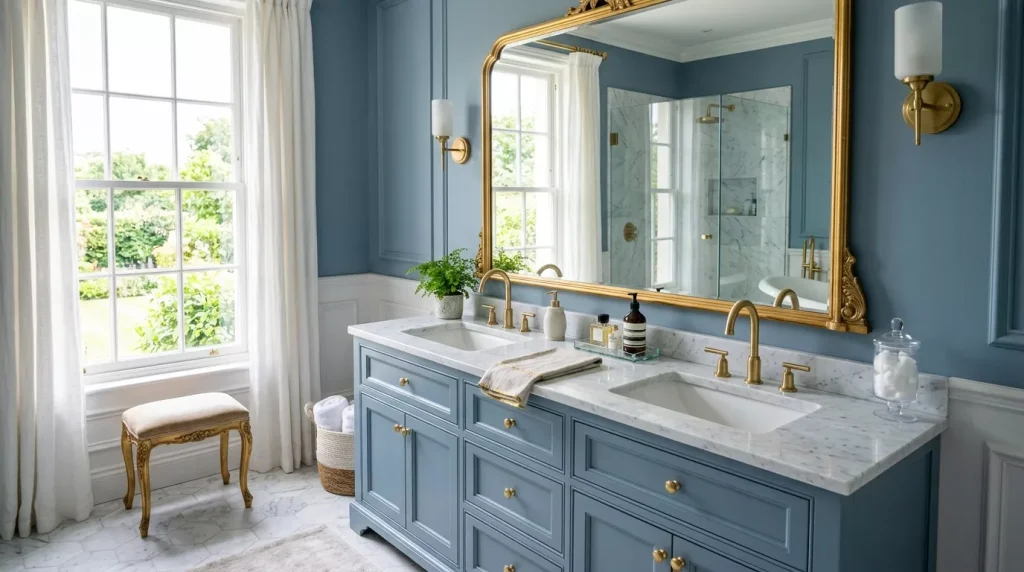
- Freestanding dusty blue vanity with white marble top and brass fittings — timeless, refined, slightly vintage in feel
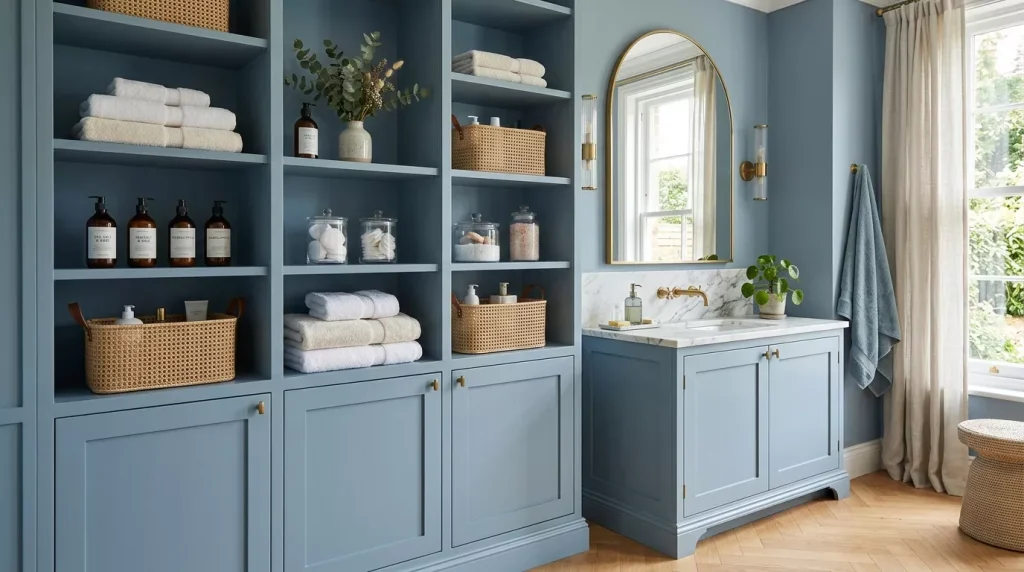
- Built-in dusty blue cabinetry with shaker-style doors and matte black hardware — contemporary farmhouse feel
- Wall-hung floating vanity in dusty blue lacquer — sleek, modern, great for small bathrooms since the floor visibility makes the room feel bigger
- Repainted vintage dresser converted to a vanity in dusty blue — adds personality and character that mass-produced vanities rarely achieve

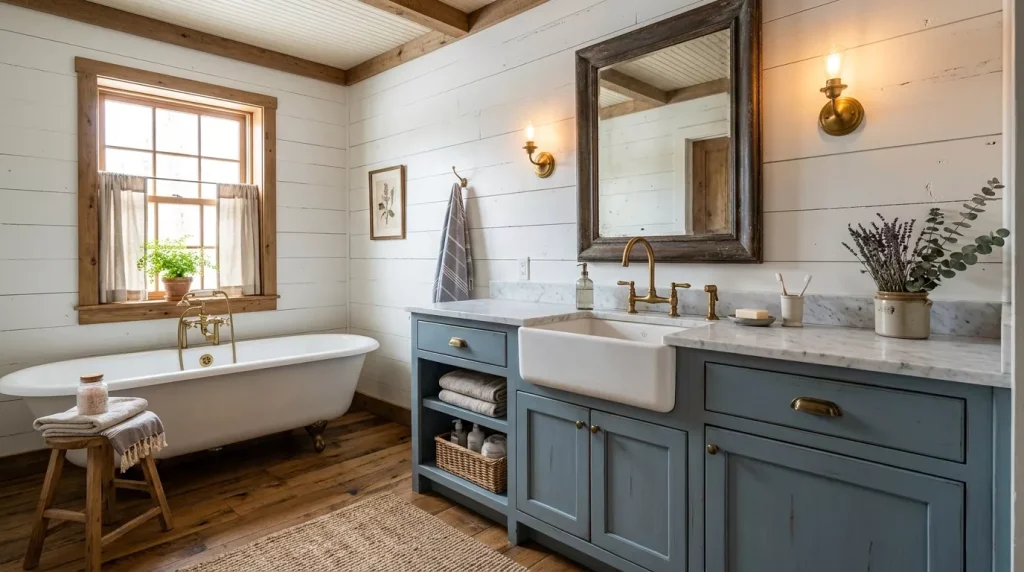
Whatever style you choose, the vanity top material matters enormously. White Carrara marble, honed limestone, and white quartz all complement dusty blue cabinetry in different ways. Marble reads as luxurious and romantic. Quartz reads as clean and contemporary. Choose based on your overall bathroom style.
4. Dusty Blue Accents for a No-Commitment Refresh
Not every bathroom transformation requires tile, paint, or new furniture. Sometimes the right accessories in the right color shift a room’s entire atmosphere.
Dusty blue accessories to introduce immediately:
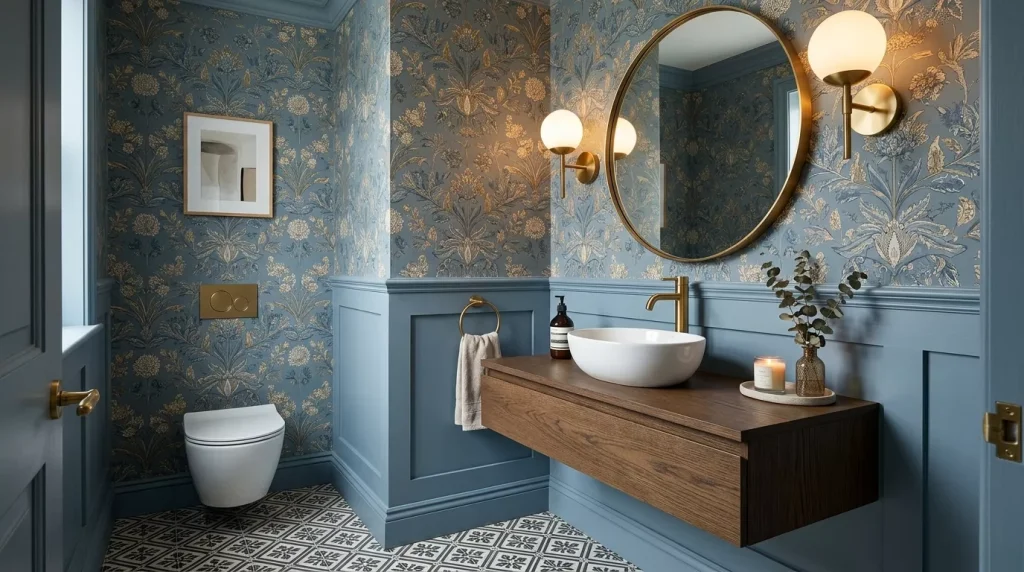
- Dusty blue bath towels layered on a chrome or wooden ladder rack
- A dusty blue ceramic soap dispenser and toothbrush holder set
- Dusty blue linen shower curtain with white eyelet rings
- A freestanding dusty blue storage unit or wooden crate with a blue-painted exterior
- Dusty blue candles or wax warmers on a tray beside the bathtub
- Blue-grey painted wooden mirror frame above the vanity
This approach is ideal for renters, for those on a strict budget, or for anyone who wants to test the color’s effect in their specific bathroom before making a larger investment.
5. Dusty Blue Bathroom with Raw Natural Materials
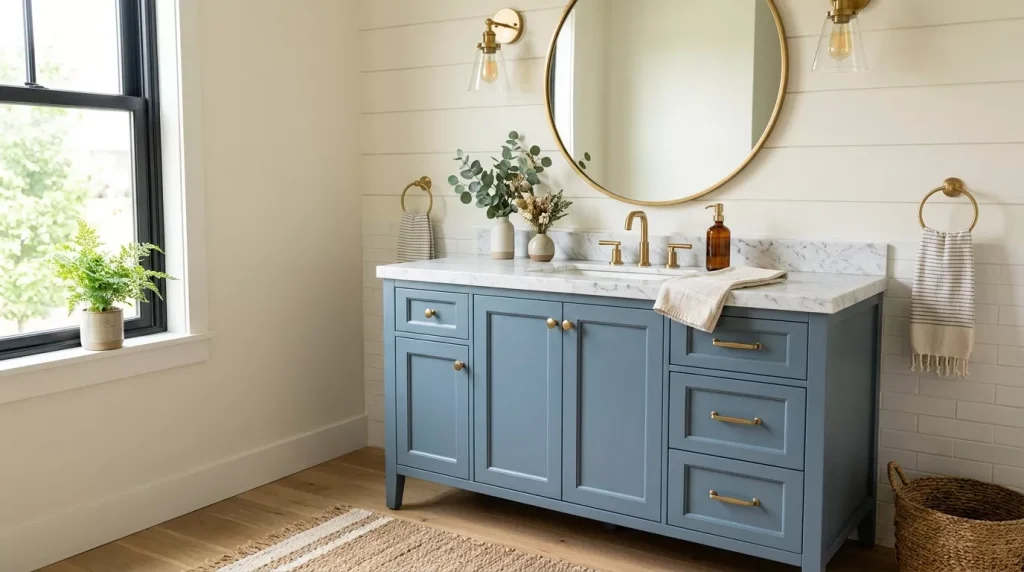
Dusty blue and natural materials share an organic quality that makes them almost instinctively suited to each other. The muted, weathered character of dusty blue resonates with raw wood, natural stone, linen, and terracotta in a way that feels cohesive and rooted.
Winning natural pairings:
- Raw oak vanity shelves beside dusty blue tiles — the warmth of the wood balances the cool of the blue perfectly
- Marble surfaces — white marble with soft grey veining and dusty blue walls is a genuinely luxurious combination
- River stone shower floor tiles paired with dusty blue walls evoke a natural spa setting
- Rattan or wicker baskets for storage against dusty blue walls feel coastal and organic
- Teak shower bench or bath tray — the warm brown of teak against a cool dusty blue background is a contrast that always works
Color Pairings That Make Dusty Blue Bathrooms Shine
Dusty blue is a relatively forgiving color to work with, but these pairings produce reliably excellent results:
Dusty Blue + Warm White — The most popular combination. Warm white prevents the bathroom from feeling cold while keeping the blue as the star.
Dusty Blue + Soft Gold or Brushed Brass — Brass fixtures, mirror frames, and towel bars against dusty blue walls create a quietly glamorous, hotel-like feel.
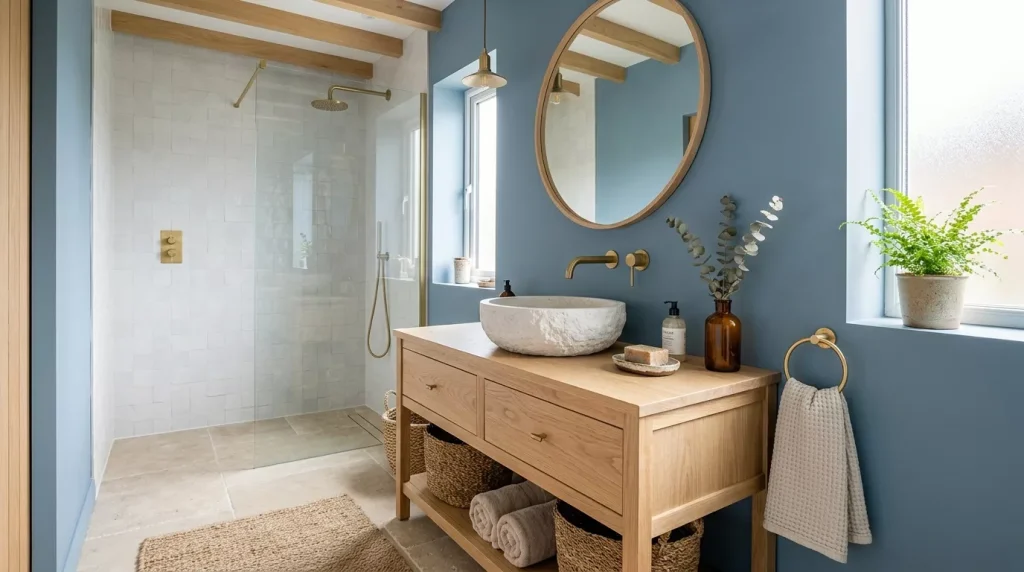
Dusty Blue + Natural Oak Wood — Warm wood tones are dusty blue’s best counterbalance. Together they feel Scandinavian, organic, and endlessly livable.
Dusty Blue + Crisp Black — Matte black fixtures on dusty blue walls have a graphic, high-end quality. Works especially well in modern bathrooms.
Dusty Blue + Blush or Dusty Pink — A softer, more romantic pairing. The two muted tones sit side-by-side harmoniously and create a gentle, vintage-inflected feel.
Dusty Blue + Terracotta — An unexpected combination that feels simultaneously earthy and cool. Use terracotta in small doses — a plant pot, a few accessories — against dominant dusty blue walls.
Dusty Blue Bathroom Design Styles
Coastal Dusty Blue Bathroom
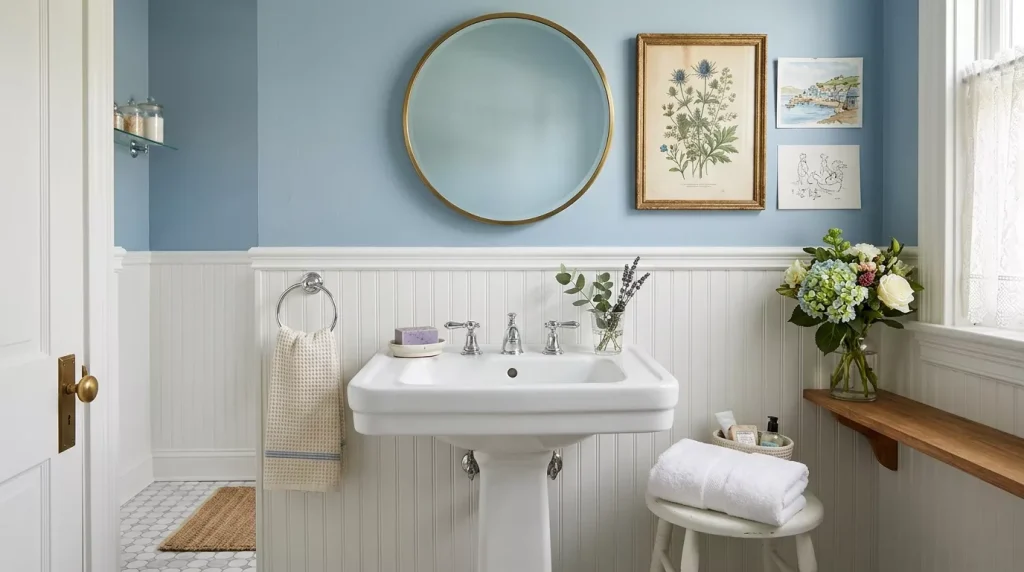
The coastal application is the most obvious and still the most satisfying. Dusty blue walls, white subway or hex floor tiles, chrome fixtures, rope accessories, driftwood-look shelving, and a sea glass soap dish. It doesn’t take much to make this work — the color does most of the storytelling.
Signature elements: Shiplap paneling, vintage nautical prints, whitewashed wood, wicker baskets, glass jars for storage.
Vintage and Retro Dusty Blue Bathroom
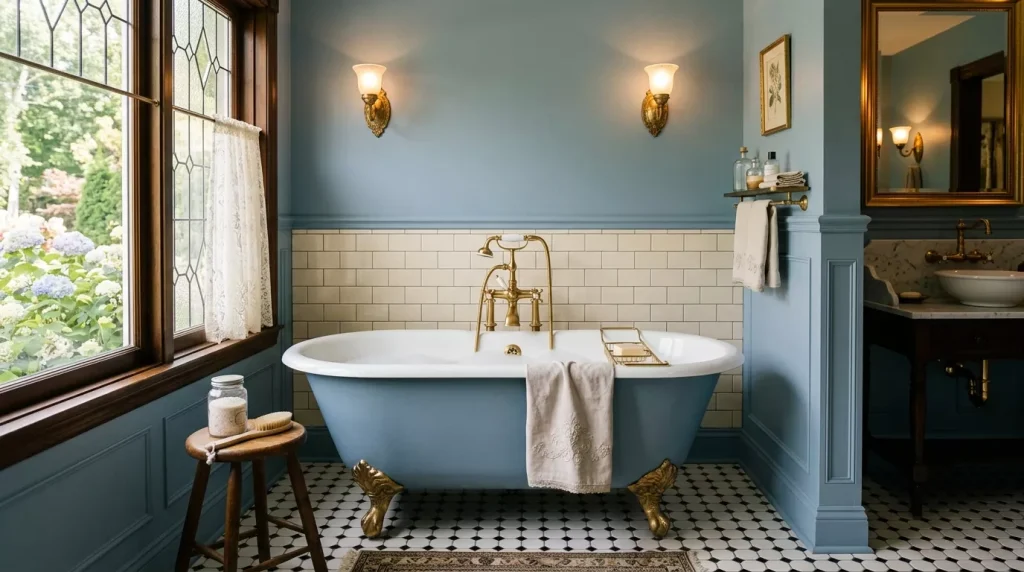
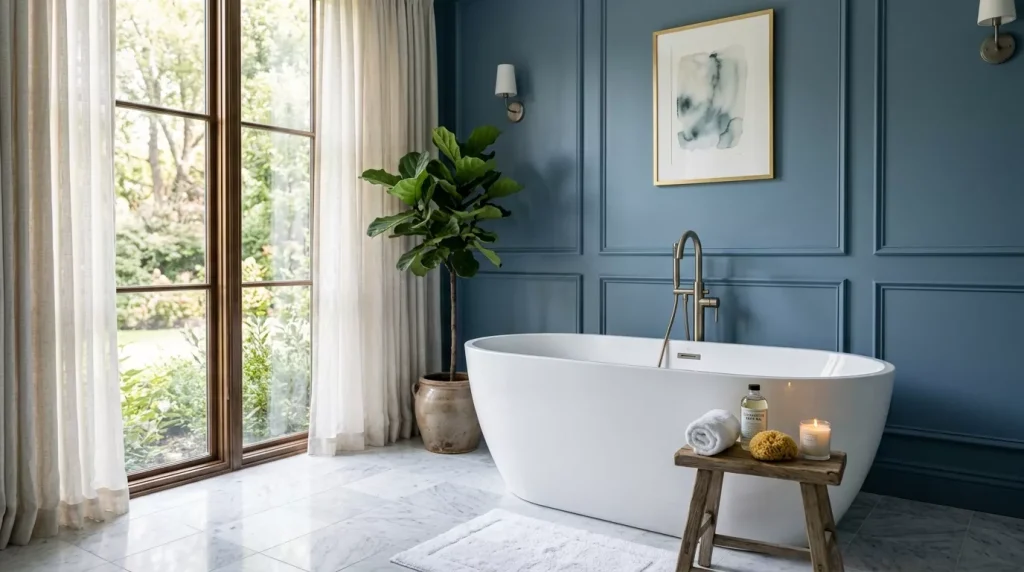
Here, dusty blue feels right at home alongside classic Victorian, Edwardian, or mid-century details. A claw-foot tub in dusty blue or white, black-and-white hex floor tiles, an ornate mirror in an antique gold frame, and pedestal sink with cross-handle faucets.
Signature elements: Period-appropriate hardware, freestanding bathtub, decorative wall tiles, antique brass fixtures, framed botanical prints.
Modern Minimalist Dusty Blue Bathroom
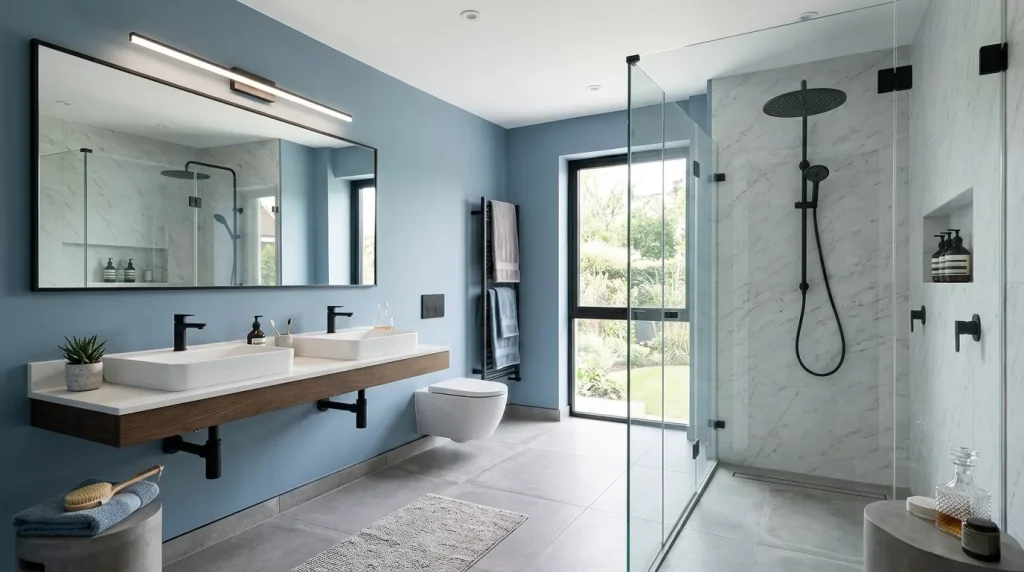
Restraint defines this approach. One dusty blue feature wall behind a simple floating vanity. Concrete-effect floor tiles. Matte black hardware. Nothing decorative except one architecturally interesting mirror. The color carries all the personality.
Signature elements: Wall-hung toilet and vanity, concealed storage, frameless shower screen, minimal accessories, large-format tiles.
French Country Dusty Blue Bathroom
This style blends dusty blue with warm stone, ornate details, and a softly aged aesthetic. Think dusty blue paneling up to chair-rail height, limestone floor tiles, a marble-top washstand, and a silver-framed oval mirror above it.
Signature elements: Paneled walls, natural stone floors, crystal or glass accessories, vintage perfume bottles, dried lavender bunches.
Step-by-Step Guide: How to Design a Dusty Blue Bathroom
This process works whether you’re fully renovating or just refreshing what you have.
Step 1: Assess your room’s light. North-facing bathrooms with little natural light need a warmer dusty blue (slight grey-green undertone) to avoid looking cold. South-facing rooms can handle a cooler, more blue-grey dusty shade.
Step 2: Choose your application method. Are you painting walls, retiling, replacing the vanity, or refreshing with accessories? Your budget and level of commitment determine this. Know it before shopping for anything.
Step 3: Pull your paint or tile samples. Get at least four samples and test them in the actual room with the actual lighting — including artificial evening light. Bathrooms are often poorly lit, and small samples can look completely different at wall scale.
Step 4: Choose your primary metal finish. Decide between brass, chrome, brushed nickel, or matte black before purchasing any fixtures, mirrors, or towel rails. Mixing too many metal finishes fragments the visual cohesion of a bathroom.
Step 5: Select your vanity. Freestanding, floating, or built-in? Dusty blue painted or naturally finished wood? Choose a vanity that suits both the style and the practical size of your room.
Step 6: Choose flooring. White hex tile, natural stone, or large-format porcelain in a light neutral all work well with dusty blue walls. Avoid dark flooring in small bathrooms — it reduces the sense of space significantly.
Step 7: Select your mirror. The mirror is both functional and decorative. A large, simply framed mirror makes the room feel bigger. An ornate frame adds character and suits vintage or French country styles. An illuminated mirror adds practicality.
Step 8: Add soft furnishings and accessories. Towels, bathmats, shower curtains, soap dispensers, and storage containers in complementary tones finish the room. Keep them coordinated — three or four tones maximum.
Step 9: Introduce one organic element. A plant, a wooden tray, a natural-fiber basket — something that breaks the hard surfaces of a bathroom and brings warmth.
Step 10: Review and edit. Bathrooms are small. Clutter on a dusty blue backdrop looks worse than clutter on a white one because the color draws attention to every object. Keep surfaces intentional.
Pros and Cons of a Dusty Blue Bathroom
✅ Real Advantages
- Creates a genuinely spa-like, calming atmosphere
- Works in both small powder rooms and large master bathrooms
- Extremely flexible — suits vintage, modern, coastal, and farmhouse styles
- A long design lifespan — muted colors date far less than trendy saturated ones
- Pairs with almost every metal finish and natural material
- Photographs beautifully in every light condition
❌ Honest Drawbacks
- Cool undertones can make the bathroom feel cold if lighting isn’t carefully considered
- Choosing the wrong shade — one that skews too purple, too grey, or too bright — is a common issue
- Dusty blue tiles are harder to find at budget price points than white or neutral options
- In bathrooms without windows, this color needs significant artificial warm lighting to avoid looking gloomy
- Deep, moody versions of dusty blue can make small bathrooms feel confined without strategic mirror placement
Dusty Blue vs. Other Blue Bathroom Shades: Which Is Right for You?
| Blue Shade | Feel | Best For | Works With |
|---|---|---|---|
| Dusty blue | Soft, muted, sophisticated | Calm, spa-like bathrooms | Brass, white, wood, stone |
| Navy blue | Bold, dramatic, classic | Statement bathrooms | Gold, marble, white |
| Powder blue | Light, fresh, airy | Small or dark bathrooms | Chrome, white, light wood |
| Slate blue | Deep, cool, architectural | Modern or masculine bathrooms | Concrete, black, grey |
| Teal blue | Vibrant, energizing, coastal | Bathrooms where you want personality | White, wood, copper |
| French blue | Rich, warm, historical | Traditional or vintage bathrooms | Brass, cream, stone |
Dusty blue is the most universally livable option in this group. It’s soft enough not to overwhelm, interesting enough not to bore, and muted enough to make everything placed against it look intentional.
Common Mistakes to Avoid in a Dusty Blue Bathroom
Mistake 1: Choosing a Shade That Skews Too Purple
Some dusty blues lean periwinkle or lavender in certain light conditions. Always test samples under your bathroom’s specific light, especially artificial light, before finalizing.
Mistake 2: Installing Cool-White LED Lighting
Cool-spectrum LEDs strip the warmth from dusty blue and make it look flat and lifeless. Always use warm white bulbs (2700K–3000K) in bathrooms with blue color schemes.
Mistake 3: Combining Too Many Metal Finishes
Brass faucets, chrome towel rail, and matte black mirror frame in the same small bathroom creates visual chaos. Pick one or two complementary finishes and stick with them throughout.
Mistake 4: Using Dark Grout with Light Blue Tiles
Dark grout dominates the tile pattern and can make a beautiful dusty blue tile installation look dirty within months. White or light grey grout keeps the tiles clean-looking and lets the color speak.
Mistake 5: Forgetting Ventilation When Using Paint
Dusty blue paint in a poorly ventilated bathroom will bubble, peel, and grow mildew within a year. Always use bathroom-specific paint with moisture and mold resistance, and ensure your ventilation is adequate before painting.
Mistake 6: Going Matchy-Matchy with Accessories
When the walls are dusty blue, buying every accessory in the same shade produces a flat, themed look that feels more like a hotel chain than a home. Mix in cream, natural wood, and brass to add dimension.
Expert Tips for Perfecting Your Dusty Blue Bathroom
Tip 1: Use a tinted ceiling. Instead of stark white, try painting the ceiling a very diluted version of your dusty blue wall shade (about 25% of the wall color strength). This creates a cocoon effect that feels immersive and intentional without being dark.
Tip 2: Layer your lighting. Bathroom lighting is usually an afterthought. In a dusty blue bathroom, it’s essential. Use a warm ceiling light for overall ambiance, wall sconces or LED strips around the mirror for task lighting, and a candle or small lamp near the tub for atmosphere.
Tip 3: Introduce plants. Blue tones and greenery are complementary in a way that feels almost botanical. A trailing pothos or a fern on a wooden shelf against dusty blue tiles looks effortlessly stylish.
Tip 4: Choose a large mirror. A generous mirror does three things in a dusty blue bathroom: it reflects light back into the room, makes the space feel larger, and creates a window-like focal point. The bigger the better, within the space available.
Tip 5: Use white or light-toned bath linens. White towels on a dusty blue wall look crisp, fresh, and high-end. Avoid dark towels — they absorb the light that the blue is reflecting.
Tip 6: Keep the floor lighter than the walls. This maintains the sense of visual space, particularly in smaller bathrooms. Light floor tiles with dusty blue walls keep the room grounded without feeling heavy.
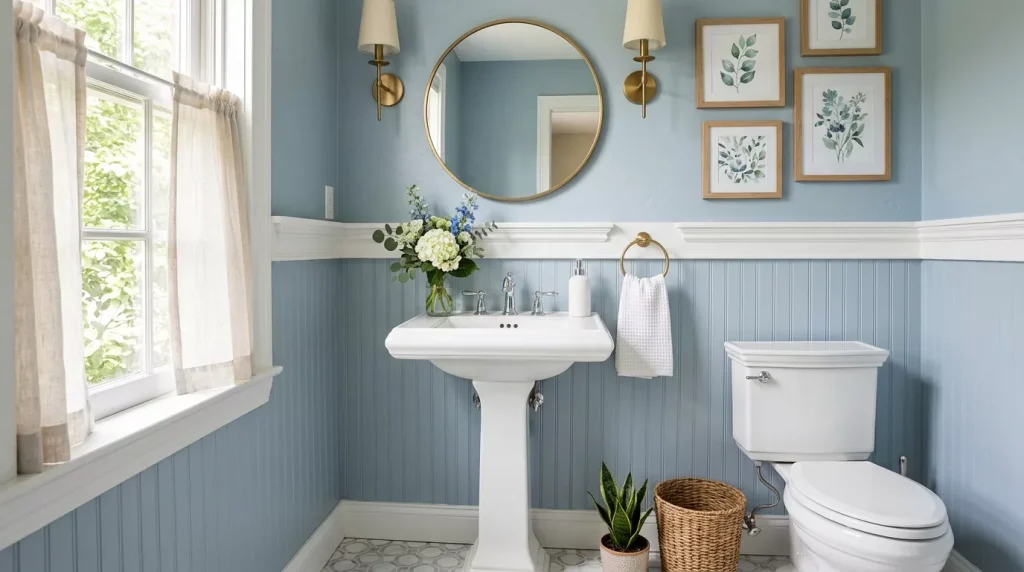
Tip 7: Consider half-wall paneling. Dusty blue paneling on the lower half of the wall, painted white above the chair rail, is one of the most refined and classic bathroom treatments available — and it works brilliantly with most fixture styles.
Conclusion: Make Your Dusty Blue Bathroom the Room Everyone Talks About
A well-designed dusty blue bathroom doesn’t just look good — it feels good every single time you use it. The muted, blue-grey palette brings the kind of calm that a bathroom is supposed to deliver but rarely does when it’s just another white-walled room with standard fixtures.
The ideas in this guide span every budget, every bathroom size, and every design style. Whether you repaint four walls, swap a vanity, retile a shower, or simply invest in dusty blue towels and accessories, the color will do its job — transforming an ordinary bathroom into a space that genuinely restores you.
The most important step? Just begin. Pick one change, execute it well, and let the room evolve from there.
Your dusty blue bathroom is waiting. Which idea are you trying first?
5. FAQs
Q1. What exactly is dusty blue and how is it different from regular blue?
Dusty blue is a muted, slightly greyed version of medium blue. Unlike a standard blue, it has a softened, almost weathered quality — as though it’s been diluted with grey or pale slate. It’s neither as light as powder blue nor as deep as navy or royal blue. The “dusty” quality comes from its grey undertone, which makes it feel vintage, calm, and sophisticated rather than vibrant or bold.
Q2. Does dusty blue work in a small bathroom?
Absolutely, and it can be genuinely flattering in small spaces when handled correctly. The key is to pair dusty blue walls with white fixtures, a large mirror, and light-toned flooring. Avoid very dark or deep versions of dusty blue in windowless rooms — lean toward lighter, warmer shades instead. The reflective quality of matte blue paint actually keeps small bathrooms from feeling as confined as a dark colour would.
Q3. What hardware and fixtures pair best with dusty blue bathroom tiles or walls?
Brushed brass is the most popular choice for its warm, slightly vintage quality that complements the muted character of dusty blue beautifully. Matte black works well in modern or minimalist bathrooms for a graphic, high-contrast effect. Chrome is the most classic and versatile option, giving a clean, spa-like feel. Brushed nickel sits between chrome and brass — subtle warmth without the full vintage feel. Choose one finish and use it consistently across all hardware for the most cohesive result.
Q4. What’s the best dusty blue paint shade for a bathroom?
A few factors guide this. For warm, cozy bathrooms, choose a dusty blue with slight grey-green or warm grey undertones rather than a blue that leans purple or icy. In bathrooms with warm artificial lighting, a cooler dusty blue can be used without feeling cold. Some popular descriptors to look for when sampling paints: blue-grey, slate blue, faded blue, muted blue, and French blue. Always test three or more samples in the actual bathroom space before committing — the same paint looks dramatically different depending on tile, flooring, and light conditions.
Q5. Can I use dusty blue in a bathroom without natural light?
Yes, but the approach needs adjustment. In windowless or north-facing bathrooms, opt for a slightly warmer shade of dusty blue with beige or warm grey undertones. Install warm-spectrum lighting (2700K bulbs) in multiple points around the room — not just overhead. Use a large mirror, keep walls no lower than chair-rail height, and choose light flooring. These combined adjustments prevent the bathroom from feeling cave-like and ensure the dusty blue reads as calm rather than gloomy.
Q6. Is dusty blue in a bathroom a safe long-term design choice?
More so than most colors. The muted, greyed quality of dusty blue places it in the same category as classic slate, French grey, and off-white — colors that designers return to decade after decade because they feel timeless rather than trend-dependent. Unlike more saturated or unusual colors that become associated with a specific era, dusty blue’s quiet restraint keeps it looking fresh. If you’re making a significant investment in tiling or a permanent vanity, dusty blue is a safer color commitment than most.
Q7. How do I refresh a dusty blue bathroom on a budget?
The highest-impact, lowest-cost changes are: replacing towels with coordinated white or cream sets, changing the mirror frame (paint an existing frame or replace it with a new one), updating cabinet hardware (knobs and pulls in brushed brass cost very little but change a vanity’s entire personality), adding a plant on a wooden shelf, and replacing a dated shower curtain with a linen or cotton one in white or dusty blue. These five changes together can transform the feel of a bathroom for a fraction of what tiling or painting costs.