Black Kitchen Aesthetic Ideas for a Bold, Timeless Look

Black Kitchen Aesthetic Ideas: Bold, Moody & Timeless Design Inspiration
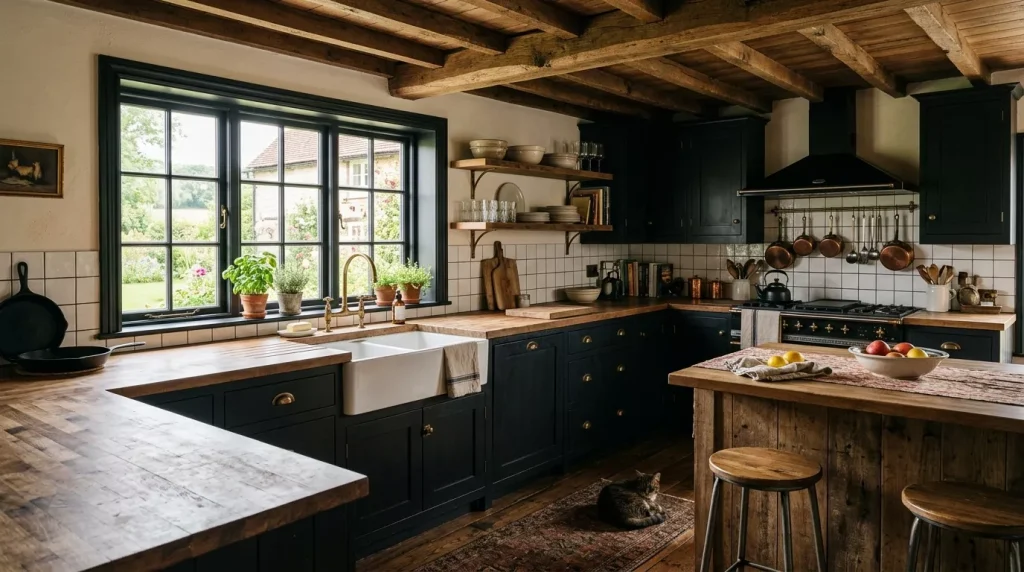
If you’ve been drawn to the drama of a dark, sophisticated kitchen, you’re not alone. Black kitchen aesthetic ideas have taken over interior design feeds, renovation blogs, and home makeover shows — and for good reason. There’s something undeniably powerful about a kitchen dressed in deep, inky tones. It feels luxurious, intentional, and surprisingly versatile.
Whether you’re redesigning from scratch or just considering a few updates, this guide walks you through everything you need to know — from cabinet finishes to lighting choices, common mistakes to avoid, and real design inspiration you can actually use.
Why the Black Kitchen Aesthetic Is Trending Right Now
Design trends come and go, but black kitchens have quietly moved from a niche bold choice to a mainstream design statement. A few years ago, all-white kitchens were the undisputed king. Now, homeowners are craving something with more depth and personality.
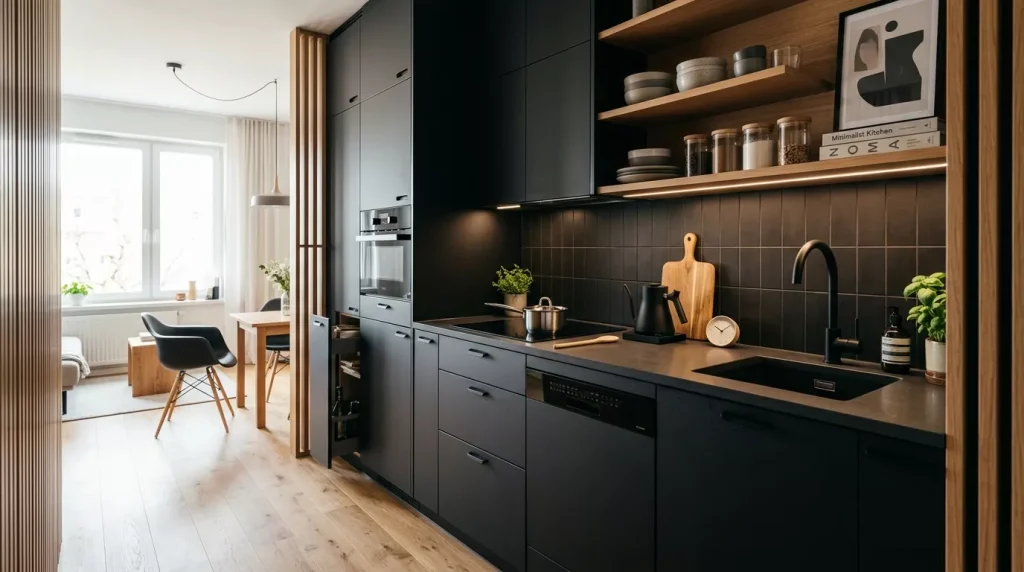
The shift makes sense. After years of clean, minimal, all-white interiors, people want spaces that feel warm and dramatic — rooms with character. Black kitchens deliver that. They photograph beautifully, pair effortlessly with almost every accent color, and give off a moody, editorial vibe that’s hard to achieve with lighter palettes.
Interior designers often call black “the new neutral,” and in the kitchen, it’s proving that point every day.
Black Kitchen Aesthetic Ideas: Design Styles to Consider
Before you start picking out cabinet hardware, it helps to identify which design direction speaks to you. The black kitchen aesthetic isn’t one-size-fits-all — it stretches across multiple styles.
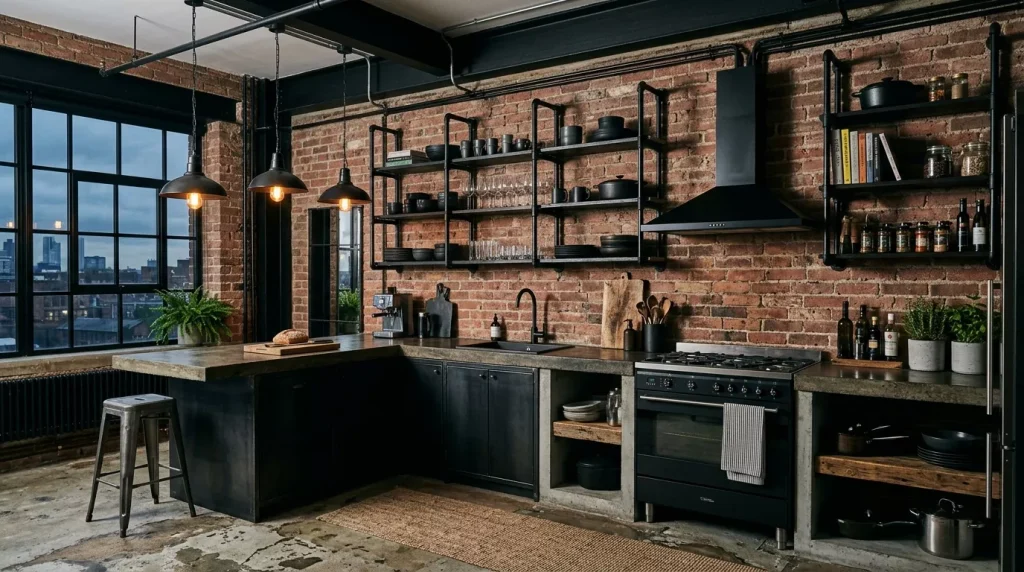
1. Modern Minimalist Black Kitchen
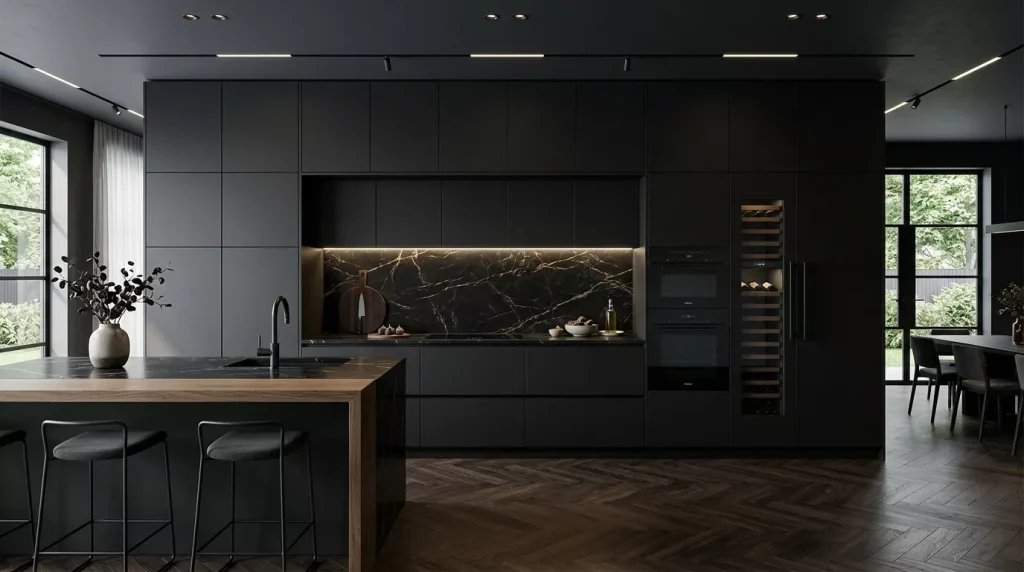
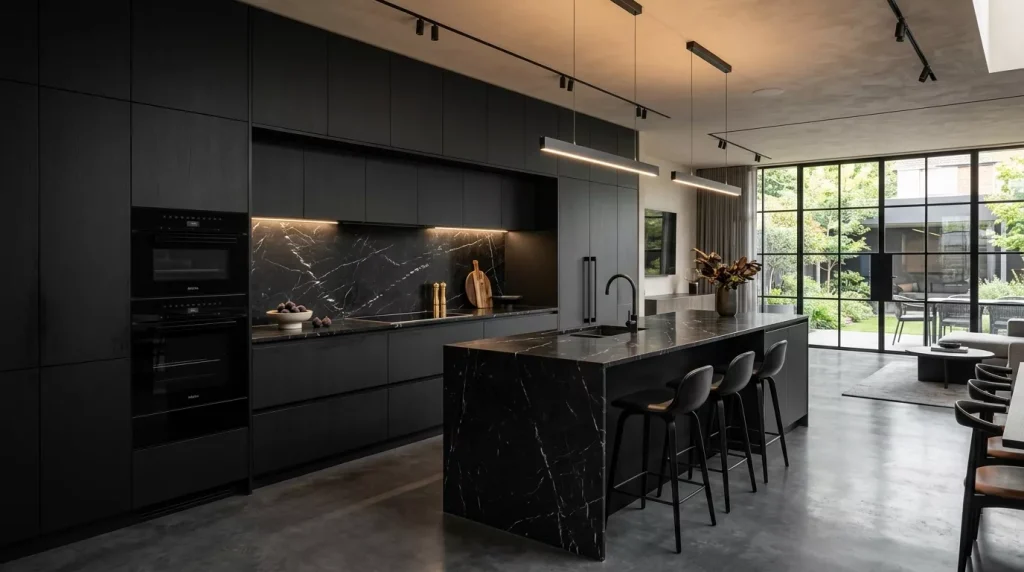
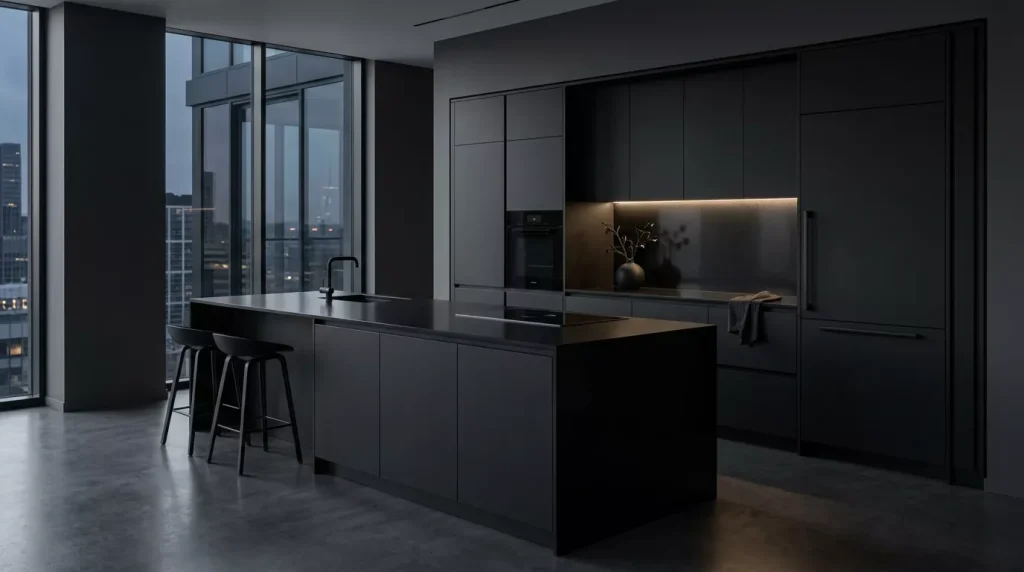
This is probably the most popular interpretation. Think flat-front matte black cabinets, handle-less drawers, seamless countertops in dark quartz or concrete, and minimal clutter on surfaces. The overall effect is sleek, almost architectural.
Key elements:
- Matte or semi-matte finishes on cabinetry
- Integrated appliances (hidden refrigerator, built-in oven)
- Monochromatic color palette with black, charcoal, and dark grey
- Minimal open shelving or none at all
- Recessed or strip lighting
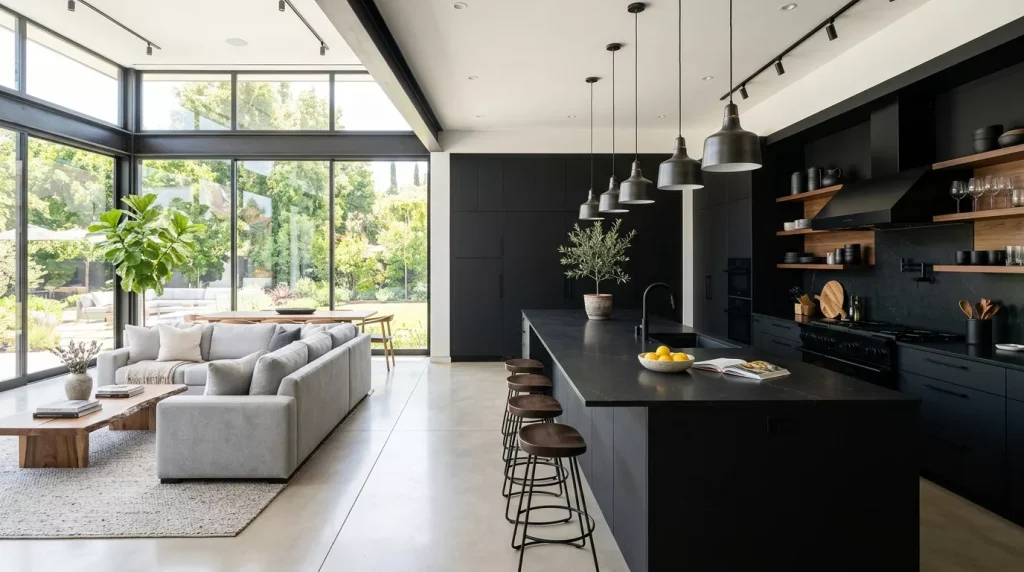
2. Industrial Black Kitchen
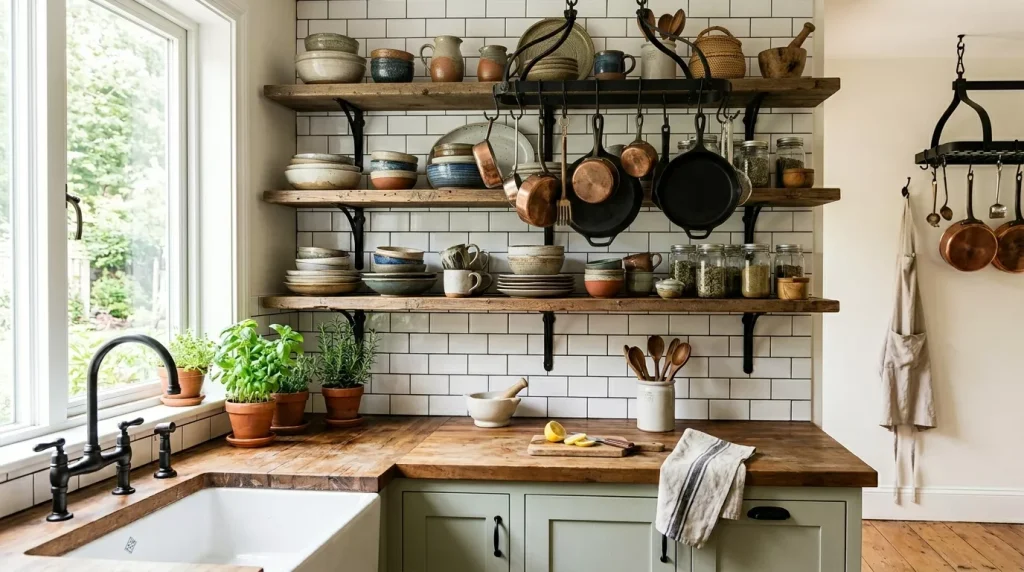
Industrial style pairs beautifully with black. Exposed brick, raw concrete countertops, open metal shelving, and Edison bulb pendant lights all complement dark cabinetry naturally.
The texture contrast is what makes this style work. Rough surfaces against smooth black finishes create visual interest without needing much color. This look tends to work especially well in loft apartments and open-plan spaces.
3. Black Kitchen with Warm Wood Accents
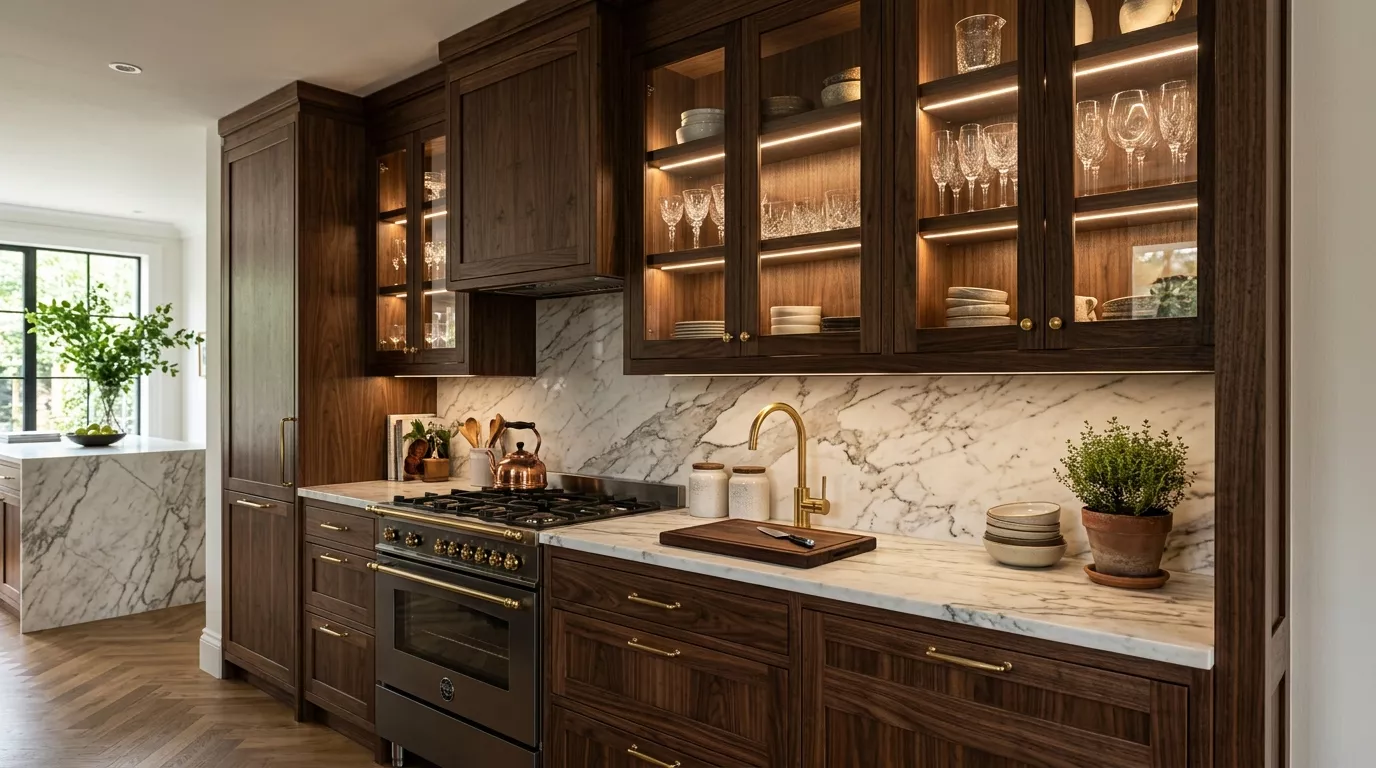
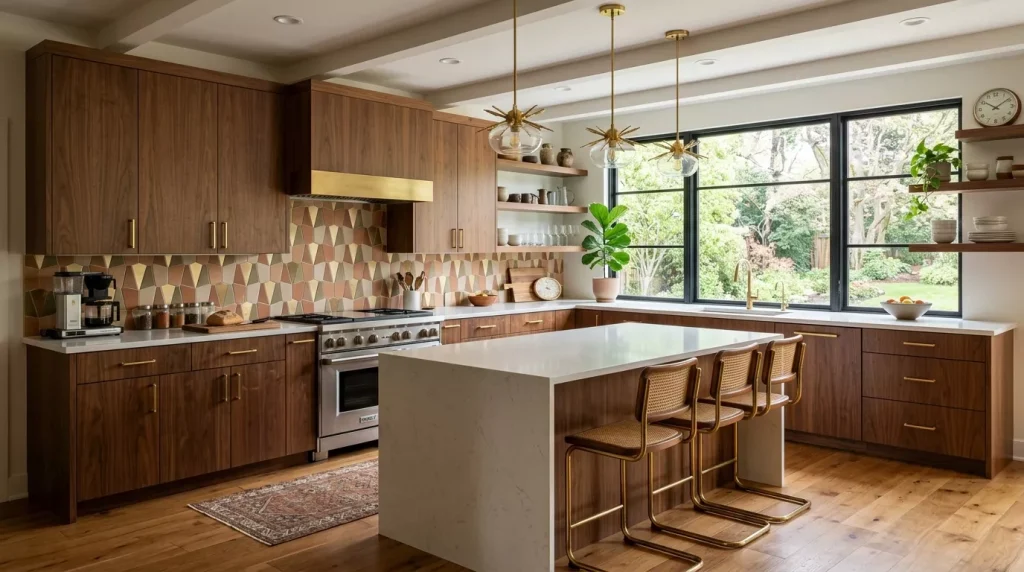
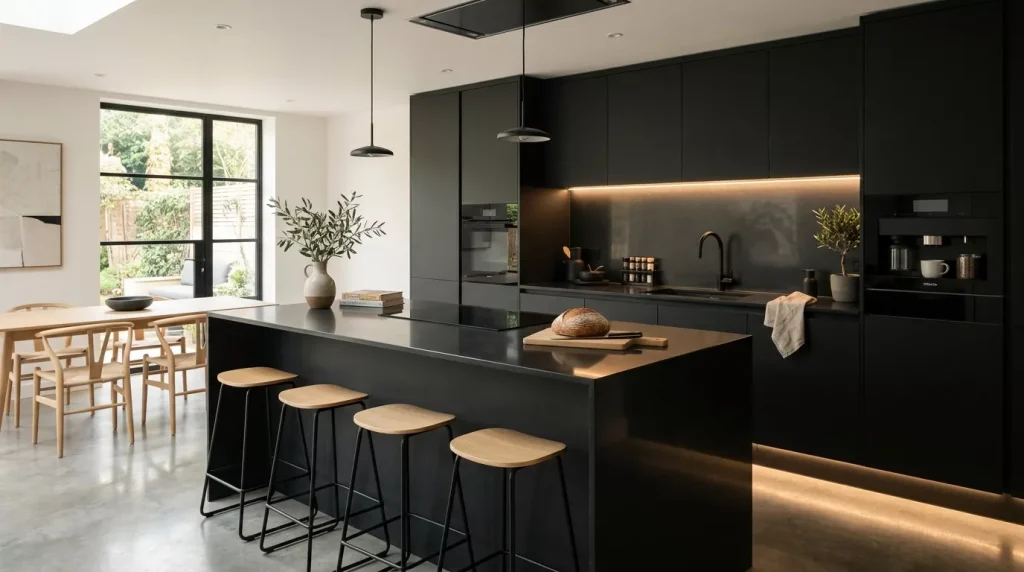
This is one of the most livable versions of the black kitchen aesthetic. Pure black can feel cold or cave-like if done poorly, but pairing it with warm walnut, oak, or timber tones immediately softens the space.
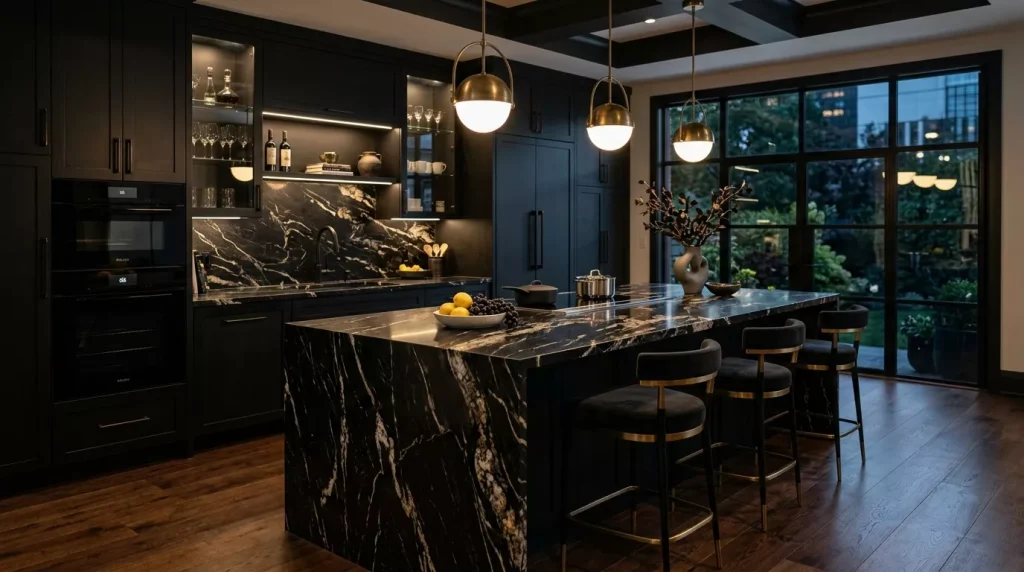
You might keep the lower cabinets black while the upper cabinets or an island feature a natural wood finish. Or go for black cabinets with open wooden shelves above. Either way, the warmth of natural grain against deep black is striking and welcoming.
4. Moody Maximalist Black Kitchen
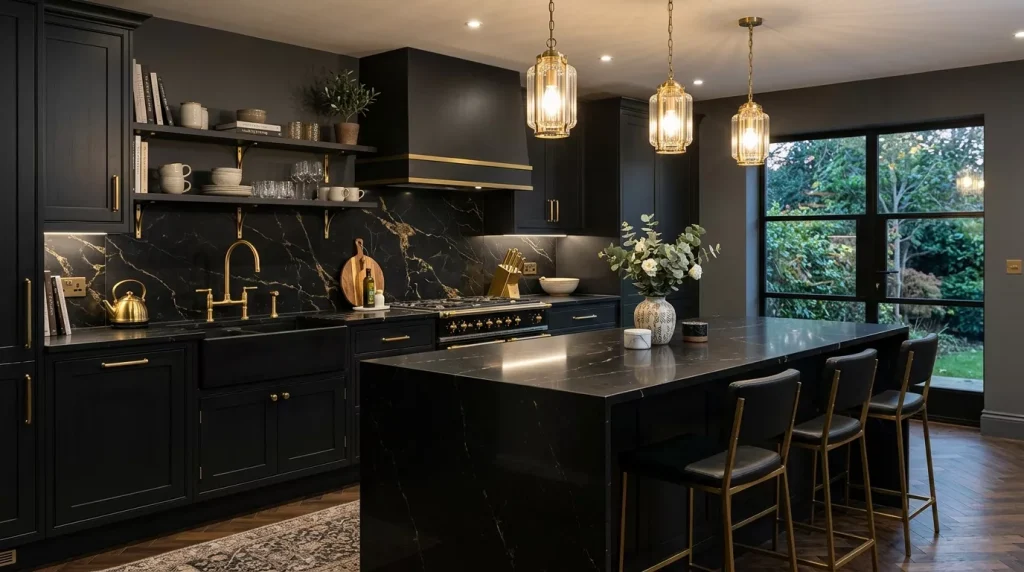
For those who don’t shy away from more-is-more, this approach layers dark tones with bold patterns, rich textures, and statement pieces. Think black walls plus black cabinets plus dark tile backsplash — but broken up with brass hardware, velvet bar stools, and art on the walls.
It’s maximalist, but intentional. Done right, it feels like a high-end restaurant kitchen in your home.
5. Black and White Classic Kitchen
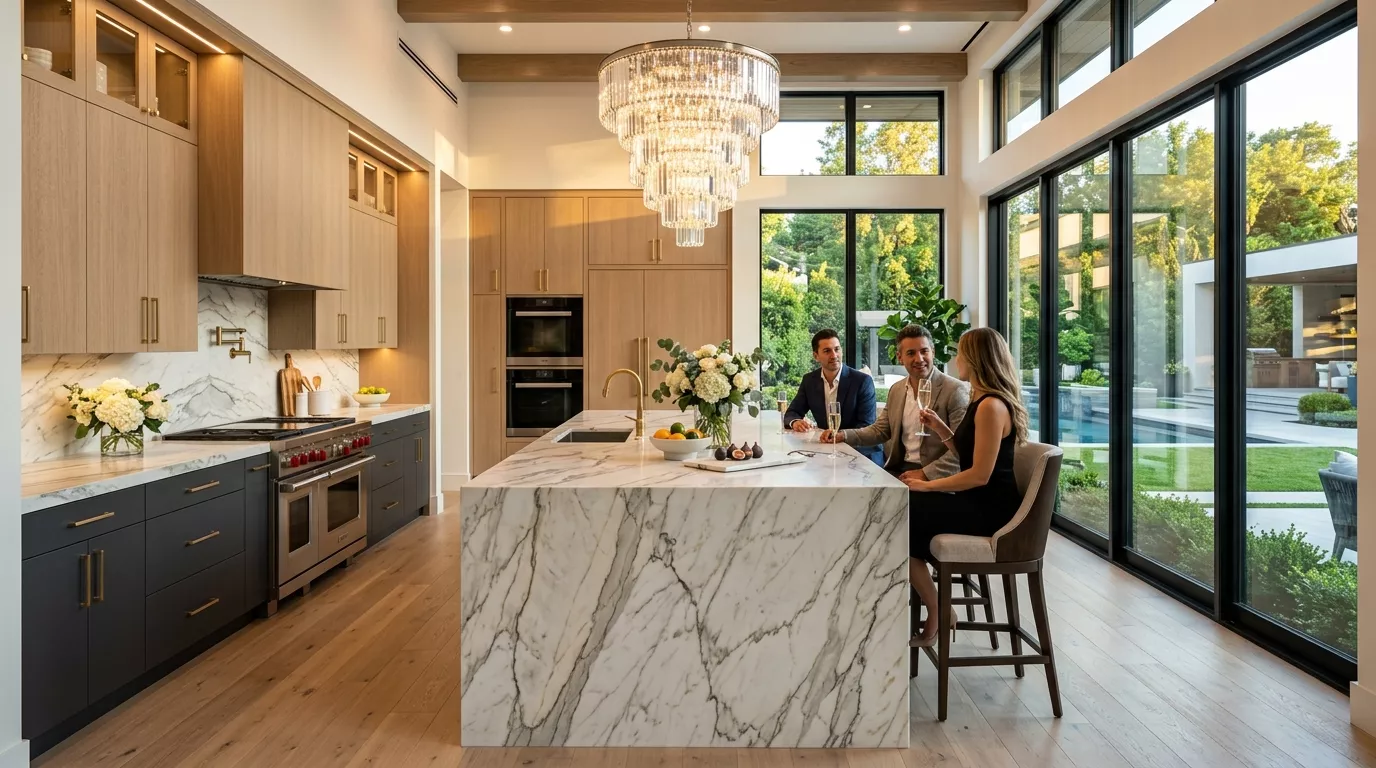
If you want drama without full commitment, the black-and-white kitchen never fails. White walls and ceiling with black lower cabinets is a classic. Or flip it: black upper cabinets against crisp white lower ones. Add a black-and-white patterned tile floor and you’ve got something timeless.
Choosing the Right Black: Finishes and Shades Explained
Not all black is created equal. When you start shopping cabinets, paints, and countertops, you’ll quickly realize there are dozens of variations. Here’s a quick breakdown:
| Finish Type | Look & Feel | Best For |
|---|---|---|
| Matte Black | Flat, no shine, absorbs light | Modern, minimalist, industrial |
| Satin Black | Slight sheen, easier to clean | High-traffic kitchens, families |
| Gloss Black | High shine, reflective | Contemporary, high-end look |
| Textured Black | Grain or pattern embedded in surface | Rustic, industrial, maximalist |
| Near-Black Tones | Deep navy, charcoal, forest green-black | Softer take on the aesthetic |
Matte finishes are visually beautiful but do show fingerprints more easily. If you have kids or cook frequently, satin or semi-gloss may be more practical while still looking stunning.
Also worth noting: “black” in paint or cabinet stain can lean warm (brownish undertones) or cool (blue-grey undertones). Hold samples up in your specific lighting before committing — it makes a big difference.
Black Kitchen Cabinets: The Centerpiece of the Aesthetic
Cabinets define the look of any kitchen, and in a black aesthetic kitchen, they’re everything. There are a few routes you can take:
Replace Existing Cabinets: The most expensive option but gives you full control over style, material, and layout.
Paint Your Current Cabinets: A surprisingly effective and budget-friendly approach. A professional paint job with the right primer and topcoat can transform a kitchen dramatically.
Reface Cabinet Doors: Swap just the doors and drawer fronts. You keep the existing box structure but get a completely new appearance.
When painting or buying black cabinets, look for:
- Quality paint specifically rated for cabinetry (durable, scrubbable)
- Smooth application (brush marks show on dark colors)
- UV-resistant finishes if near windows
Black Countertops and Backsplash Ideas
Your countertops and backsplash work alongside the cabinets to define the overall character of the space.
Countertop Options for Black Kitchens:
- Black granite — Natural, with subtle mineral veining; no two slabs are identical
- Dark quartz — Engineered, consistent, very durable and low maintenance
- Soapstone — Matte, slate-grey to black, develops a beautiful patina over time
- Black concrete — Industrial, raw, can be custom poured and shaped
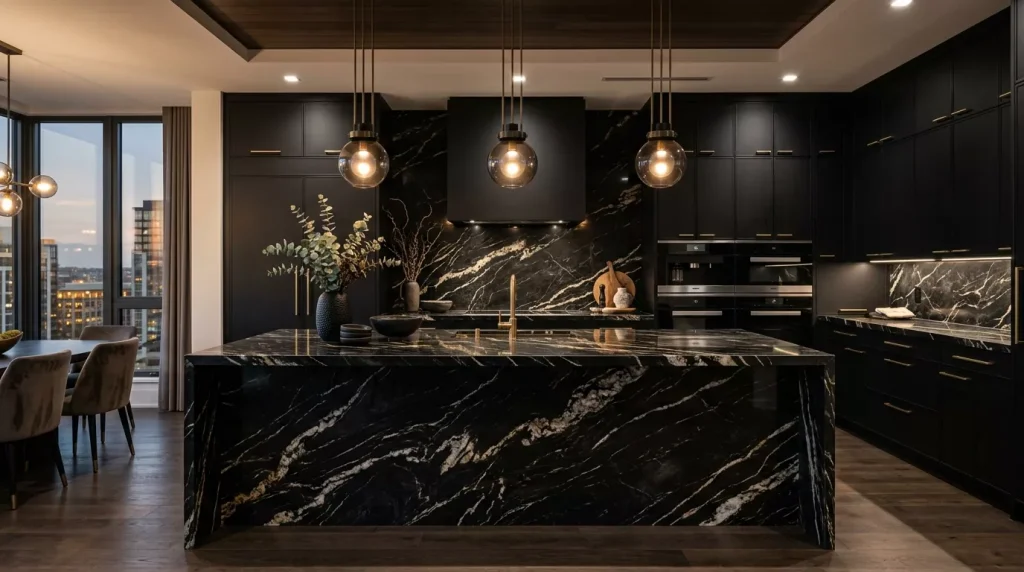
- Jet black marble — Dramatic veining (often white or gold); high-end statement piece

Backsplash Pairings:
- Matte black subway tiles — clean, modern, zero distraction
- Zellige tiles in black or dark charcoal — artisan, textured, catches light differently throughout the day
- Honed marble with dark grey veining — softens the cabinet color while staying in palette
- Mirrored or metallic tiles — reflects light beautifully in dark kitchens
Lighting a Black Kitchen: Don’t Underestimate This Step
Here’s where most people go wrong. Dark kitchens absorb light — that’s part of their appeal, but it can also make cooking and prep work genuinely difficult if not addressed properly.
Layered Lighting is Non-Negotiable
You need at least three types of lighting working together:
- Ambient lighting — The main overhead light. Recessed LED downlights work brilliantly here. Warm white bulbs (2700K–3000K) prevent the kitchen from feeling cold or clinical.
- Task lighting — Under-cabinet LED strips illuminate your countertops where you actually work. This is both practical and visually beautiful — it creates a glowing outline around your cabinets.
- Accent lighting — Pendant lights over an island, lights inside glass cabinets, or a statement chandelier. This adds layers of warmth and visual interest.
Fixtures That Complement Black Kitchens:
- Brushed brass or gold pendants — classic contrast
- Matte black pendants — monochromatic, minimal
- Copper fixtures — warm, rich, slightly vintage feel
- Chrome or polished nickel — clean, contemporary
Hardware and Fixtures: The Small Details That Make a Big Difference
In a black kitchen, hardware is where you can express personality. Because the palette is limited, every handle, faucet, and knob becomes part of the visual story.
Popular hardware choices:
- Brass or gold — The most popular pairing; adds warmth and a luxury feel
- Matte black — For a fully monochromatic, streamlined look
- Brushed nickel — Cooler, understated, contemporary
- Copper — Warm, artisan, stunning with wooden accents
- Oil-rubbed bronze — Moody, dark, works well in maximalist or industrial spaces
If you’re unsure, brass or gold hardware on black cabinets is an almost universally flattering combination. It’s a designer favorite for good reason.
Pros and Cons of a Black Kitchen Aesthetic
✅ Pros
- Timeless appeal — Unlike trend-driven colors, deep black reads as classic and enduring
- Hides certain wear — Dark finishes can camouflage scratches, minor dings, and uneven aging better than light ones
- Versatile pairing — Black works with virtually every accent color — gold, white, wood, green, terracotta
- Photogenic and dramatic — Creates a strong visual impression that photographs beautifully
- Feels premium — Even budget cabinets can look high-end when painted in a quality matte black
- Easy to accessorize — Cookware, plants, and food all pop visually against a dark backdrop
❌ Cons
- Shows fingerprints — Especially on matte finishes; requires regular wiping down
- Absorbs light — Needs a well-thought-out lighting plan or it will feel oppressive
- Can feel smaller — In already compact kitchens, an all-black approach can reduce the sense of space
- Harder to repaint — Going back to light colors after a full black kitchen requires significant prep work
- Dust visibility — Ironically, dust shows clearly on dark surfaces
- Not great for low-light spaces — Windowless or basement kitchens may struggle without significant artificial light
Step-by-Step Guide: How to Transform Your Kitchen into a Black Aesthetic Space
You don’t have to do a full renovation to embrace this look. Here’s a practical, phased approach:
Step 1: Assess Your Space Walk your kitchen during different times of day. Note how much natural light you get and from which direction. This determines how bold you can go without losing functionality.
Step 2: Choose Your Shade and Finish Grab samples of 3–4 dark tones — including true black, charcoal, and a near-black navy or green. Live with them taped to your walls for 48 hours in your actual lighting.
Step 3: Start with Cabinets Cabinets are the biggest visual element. If painting, use a dedicated cabinet primer and a durable topcoat. Apply at least two coats for even coverage on dark finishes.
Step 4: Update or Replace Hardware New hardware is the quickest, cheapest way to shift a kitchen’s personality. Swap out old chrome for matte black or brushed brass for an immediate transformation.
Step 5: Address Lighting Add under-cabinet strips if you don’t already have them. Consider swapping overhead bulbs to warm-toned LEDs. Look for a statement pendant if you have an island.
Step 6: Choose a Countertop and Backsplash If budget allows, dark countertops complete the look. If not, a textured or patterned backsplash adds personality without the full cost.
Step 7: Style and Accessorize Add plants (green pops against black), wooden cutting boards and utensils, and a few brass or copper accessories. Keep counters fairly clear — clutter reads very differently in a dark kitchen.
Tips for Nailing the Black Kitchen Look
- Use open shelving sparingly and style it intentionally — every item is visible and reads as part of the design
- Don’t skip the ceiling — a dark ceiling can dramatically enhance the moody feel; white ceilings work fine too but decide consciously
- Incorporate a mix of textures to avoid flatness: matte cabinets + glossy backsplash tiles + rough natural stone countertops
- Bring in live plants — they soften the look and add freshness against dark tones
- Consider black appliances (or stainless steel for contrast) rather than white ones for visual coherence
- Use a light-colored floor to anchor the space and prevent it from feeling too enclosed — light oak, pale stone, or white concrete all work brilliantly
Common Mistakes to Avoid
Going all-black without a plan — Applying black everywhere without contrast leaves a flat, uninviting result. Plan your accent tones and textures first.
Ignoring lighting — The single most common failure. No matter how beautiful your cabinets, poor lighting will ruin the entire effect.
Skimping on paint quality — Budget paint chips, scratches, and looks patchy on dark finishes. Invest in quality cabinet-specific paint.
Choosing the wrong shade — A warm-toned black in a cool-toned space (or vice versa) will look “off” without the homeowner being able to identify why. Always sample.
Overcrowding surfaces — Dark kitchens need breathing room. Clutter looks particularly chaotic against a black backdrop.
Forgetting about resale — Not everyone loves a black kitchen. If you’re planning to sell within a few years, make sure your black elements can be updated relatively easily.
Black Kitchen Aesthetic vs. Dark Kitchen Aesthetic: What’s the Difference?
| Feature | Black Kitchen | Dark Kitchen |
|---|---|---|
| Color palette | True black as dominant tone | Deep charcoal, navy, forest green, burgundy |
| Mood | Dramatic, bold, graphic | Moody, cozy, enveloping |
| Flexibility | More specific, harder to soften | More versatile in tone |
| Best for | Strong design statements | Those who want drama with more flexibility |
| Trending combination | Black + brass + white marble | Dark green + gold + warm wood |
If you love the idea of a dark, moody kitchen but find full black intimidating, a near-black tone like deep navy or forest green gives you a similar atmosphere with a bit more visual warmth.
Conclusion: Is a Black Kitchen Right for You?
The black kitchen aesthetic isn’t just a trend — it’s a design philosophy rooted in confidence, sophistication, and intentionality. When done well, it’s one of the most striking and enduring looks in residential interior design.
The key is thoughtfulness. Plan your lighting carefully, choose the right shade and finish for your space, build in contrast through materials and accents, and avoid the urge to go all-black without a clear vision.
If you’ve been sitting on the fence, consider starting small — a new coat of matte black paint on your cabinets, some brass hardware, and a set of under-cabinet lights. That alone may be enough to convince you that this is the kitchen you’ve always wanted.
Ready to transform your kitchen? Start by gathering samples and assessing your lighting — those two steps alone will tell you everything you need to know about whether a full black kitchen aesthetic is right for your space.
Frequently Asked Questions (FAQs)
Q1: Are black kitchens hard to keep clean?
They require consistent upkeep, but not more than other kitchens. Matte black shows fingerprints and dust more obviously, so a quick daily wipe-down with a microfiber cloth helps. Satin or gloss finishes are slightly more forgiving. High-traffic areas near the stove may need more attention than other zones.
Q2: Will a black kitchen make my space feel smaller?
It can in very small or low-light kitchens, but it doesn’t have to. Strategic lighting, light-colored flooring, open shelving, and reflective surfaces like a glossy backsplash can prevent the space from feeling closed in. Many small black kitchens feel intimate and cozy rather than cramped.
Q3: What colors go well with a black kitchen?
Almost everything works, but some standout combinations include black and brass/gold (the most popular), black and warm wood, black and white, black and sage green, and black and terracotta. Warm tones in general tend to prevent black kitchens from feeling cold or sterile.
Q4: How much does it cost to redo a kitchen in a black aesthetic?
The range is enormous. Painting existing cabinets yourself could cost a few hundred dollars in materials. A professional cabinet repaint typically runs $1,500–$5,000 depending on kitchen size. Full cabinet replacement plus new countertops and backsplash could range from $15,000 to well over $50,000. You can also start with just hardware and lighting changes for under $500.
Q5: Can I mix black cabinets with colored walls?
Absolutely. Black cabinets with white walls is classic. But black cabinets also look stunning against warm plaster tones, terracotta, olive green, or even a soft blush. The key is to ensure your wall color has enough contrast with the cabinet finish so both elements read clearly rather than blending into each other.
Q6: Are black kitchens still trending in 2025 and 2026?
Yes — and designers expect them to remain relevant well beyond trend cycles. While ultra-trendy versions of the look come and go, the core black kitchen aesthetic has proven staying power. It’s increasingly being described by designers as a “forever choice” rather than a trend, particularly in modern and contemporary homes.
Q7: What type of flooring works best with black kitchen cabinets?
Light wood floors (like white oak or blonde maple) are the most popular pairing — they ground the space and add warmth. Large-format pale stone or concrete tiles work beautifully too. Even a classic black-and-white checkered tile floor can look stunning. Generally, lighter floors prevent an all-over-dark effect and help the space feel balanced.