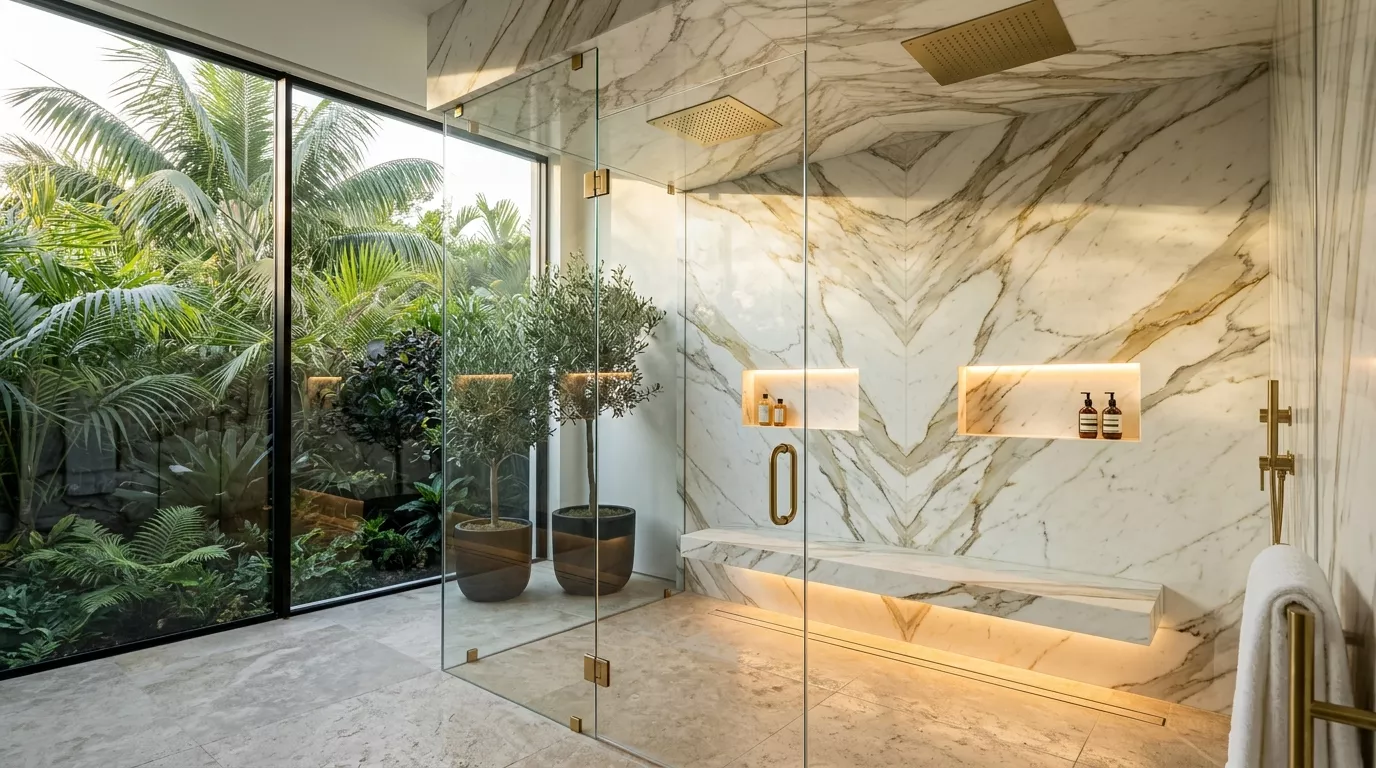
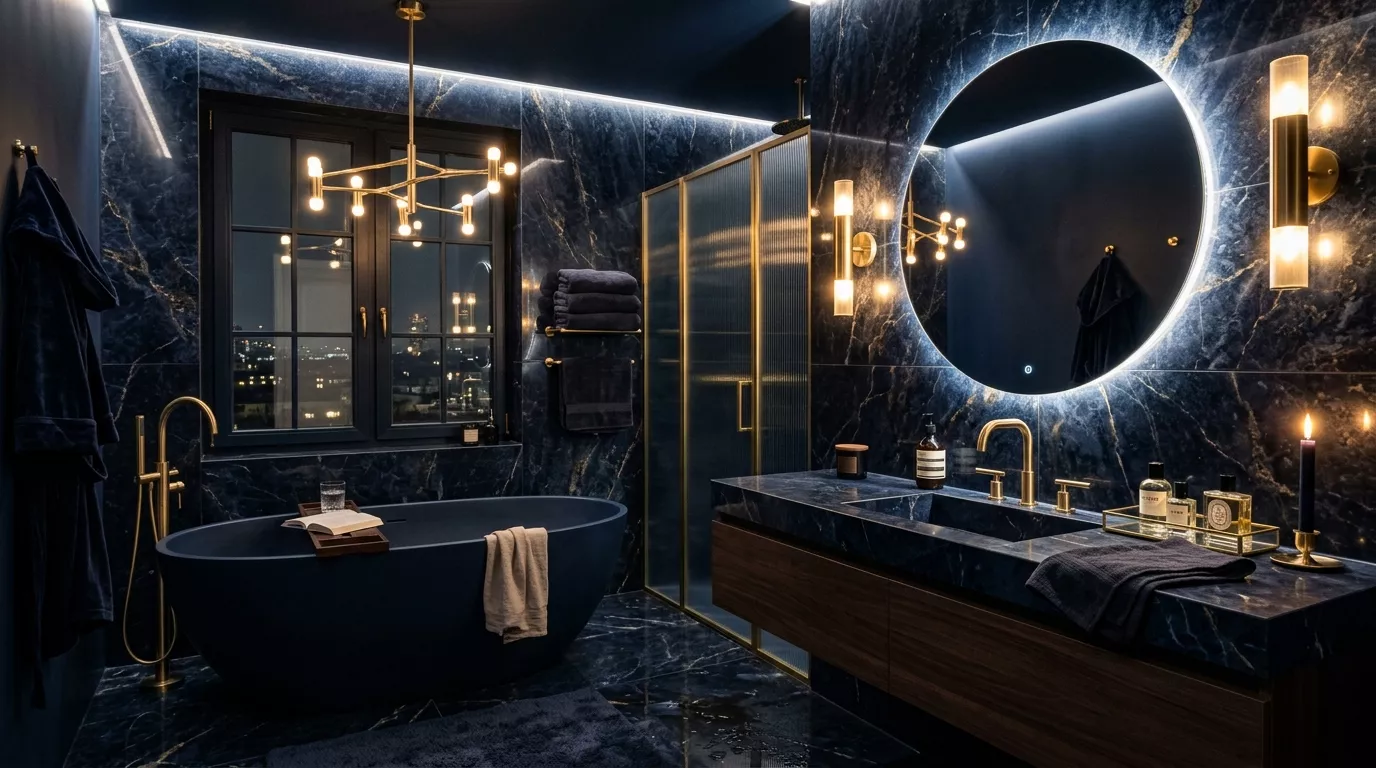
Black & White Bathroom Ideas: Timeless Style

Black & White Bathroom Ideas for a Timeless, Stylish Look
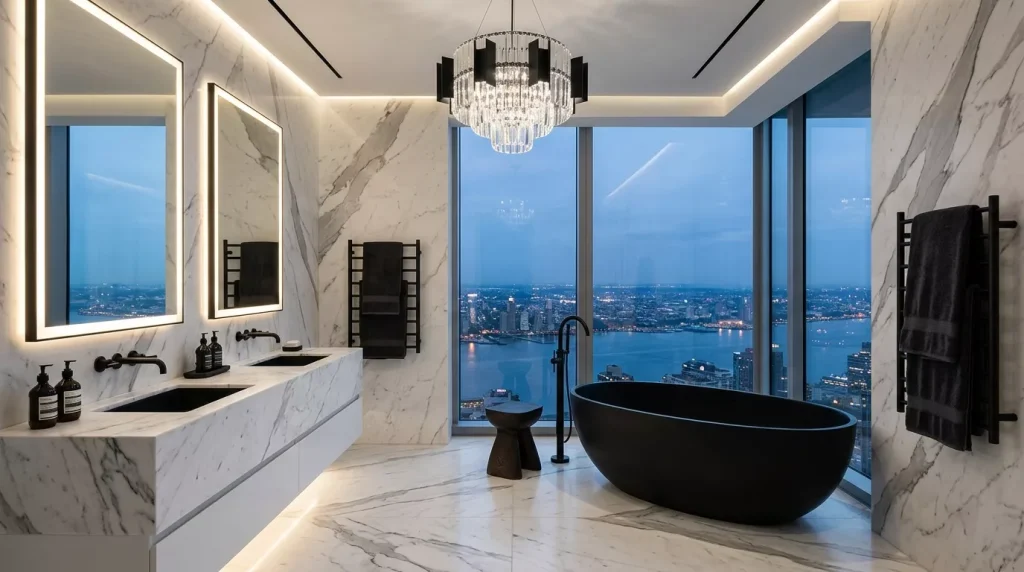
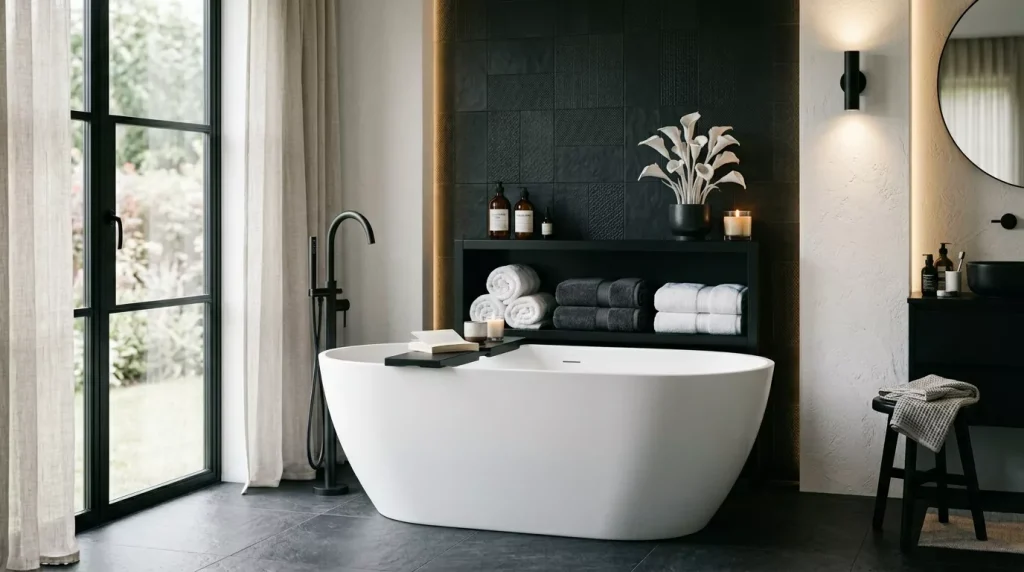
Some design combinations come and go, but black & white bathroom ideas seem to outlast every trend cycle. There’s a reason this pairing keeps showing up in everything from century-old townhouses to brand-new builds — it just works, no matter how design styles shift around it.
Part of the appeal is how flexible it is. A black and white bathroom can feel crisp and modern, moody and dramatic, or warm and vintage, all depending on how you mix the proportions and add in materials like brass, wood, or marble.
This guide walks through where to use black and white in a bathroom, how different styles approach the combination, a simple planning process, and the small details that make the difference between “classic” and “cold.”
Why Black & White Bathrooms Never Go Out of Style
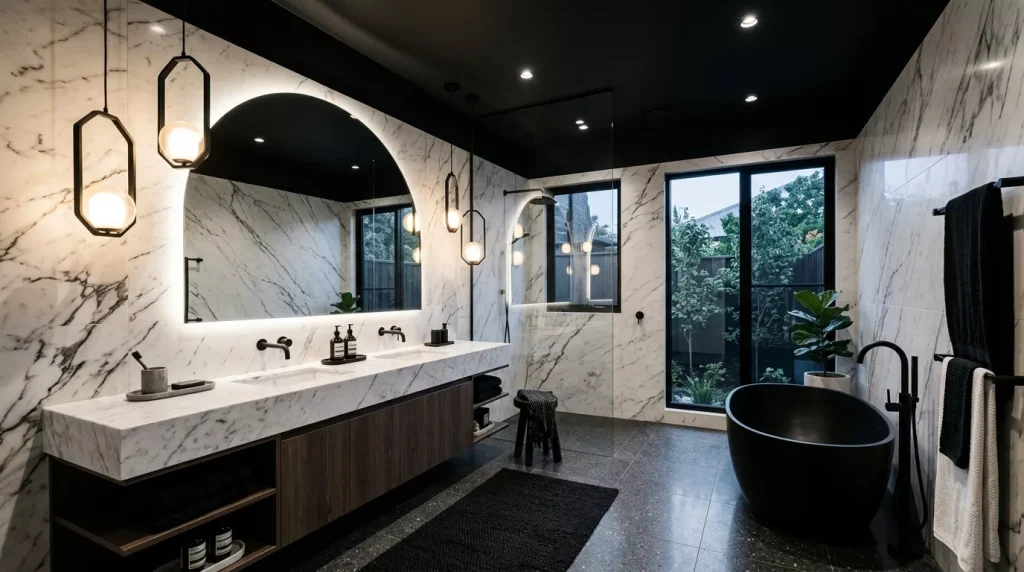
Bathrooms tend to get renovated less often than other rooms, so choosing a scheme that won’t feel dated in five years actually matters here.
Black and white holds up well for a few reasons:
- It’s essentially a “blank canvas” — you can change towels, accessories, and even lighting without ever touching the core color scheme.
- It works with almost any material — marble, tile, brass, wood, and matte black fixtures all sit comfortably within it.
- It scales from tiny powder rooms to large family bathrooms without losing its impact.
- It photographs beautifully, which matters if you ever plan to sell your home and want listing photos to look sharp.
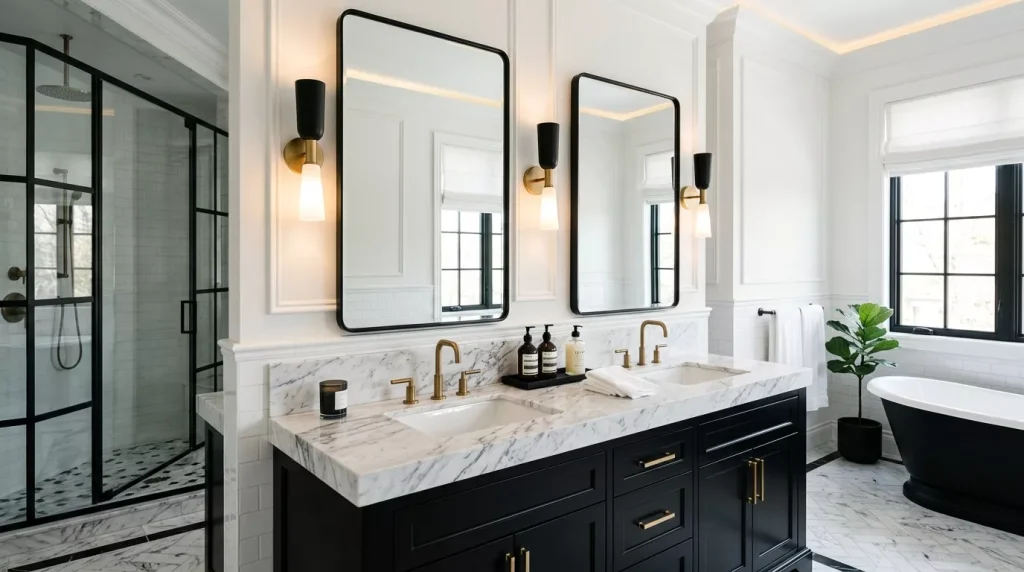
Unlike color-led bathrooms, which can start to feel tired as trends shift, black and white tends to just feel “classic” — sometimes even more so as the years go by.
Classic Black & White Bathroom Combinations
Before diving into styles, it helps to think about ratio — how much black versus white you want in the space, and where each one goes.
Black & White Bathroom Ideas by Style
This color combination adapts well across several design styles. Here’s how it tends to look in four popular approaches.
| Combination | Mood It Creates | Best For |
|---|---|---|
| Mostly white, black accents | Bright, airy, easy to live with | Small or windowless bathrooms |
| 50/50 black and white | Bold, graphic, statement-making | Larger bathrooms, feature walls |
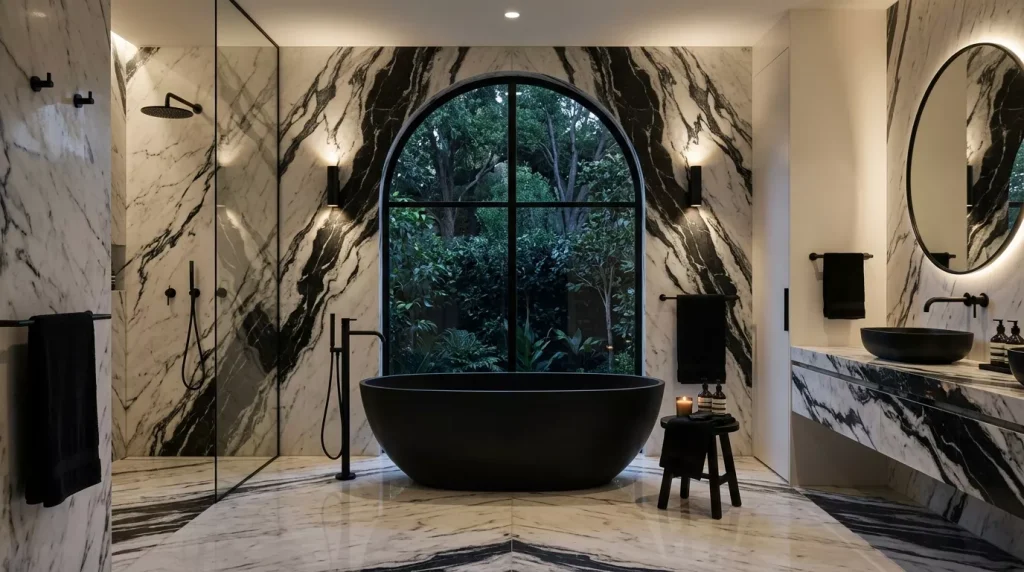
| Mostly black, white accents | Moody, dramatic, spa-like | Bathrooms with good natural light |
| Black and white with brass | Warm contrast, slightly glam | Powder rooms, guest bathrooms |
| Black and white with wood | Softer, more natural | Family bathrooms, farmhouse style |
| Black and white with marble veining | Luxurious, timeless | Master bathrooms |
Modern Minimalist
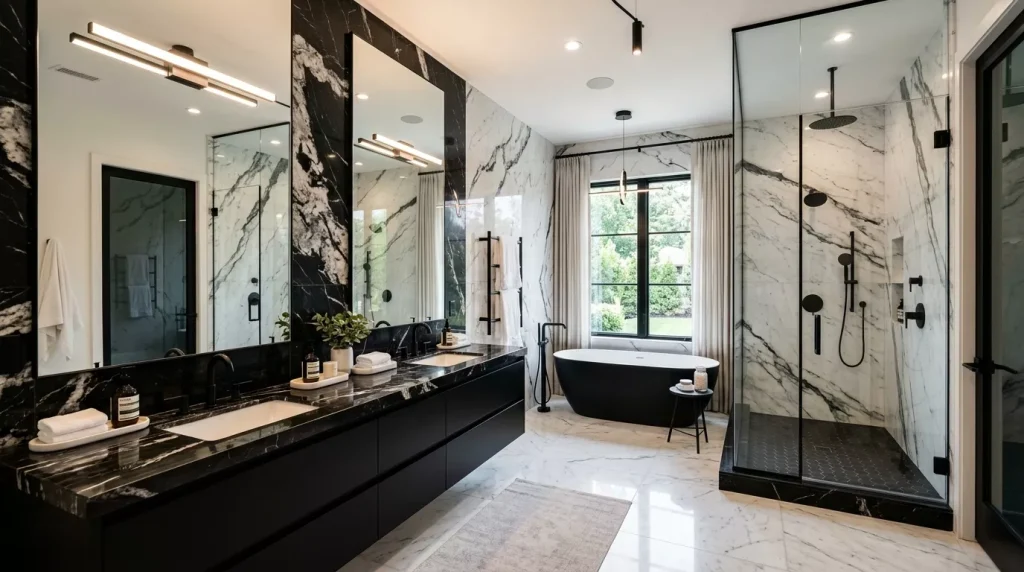
In a minimalist bathroom, black and white usually means clean lines, large-format tiles, and very little pattern. White walls, a black framed mirror, and matte black fixtures create contrast without visual clutter.
Keep grout lines thin and consistent, and avoid mixing too many tile sizes — simplicity is the whole point of this style.
Vintage or Retro
This is where black and white really gets to have fun. Checkerboard floor tiles, scalloped-edge tiles, and round mirrors all lean into a nostalgic, slightly playful feel.
Pair with brass or chrome fixtures and a pedestal sink for an authentic retro look that still feels fresh today.
Art Deco
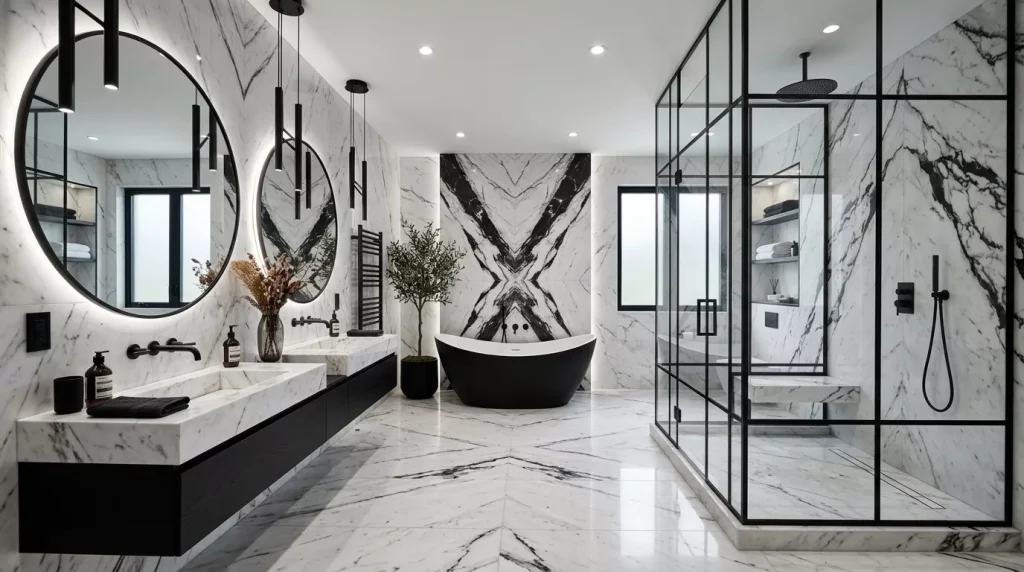
Art deco bathrooms often use black and white in geometric patterns — think hexagons, fan shapes, or bold stripes — paired with gold or brass accents.
Adding a statement light fixture or mirror with strong geometric lines helps tie the look together.
Farmhouse
Farmhouse-style bathrooms tend to soften black and white with natural wood, woven baskets, and simple white shiplap walls paired with black hardware or a black-framed mirror.
This combination feels cozy and lived-in rather than stark, which suits the relaxed farmhouse aesthetic.
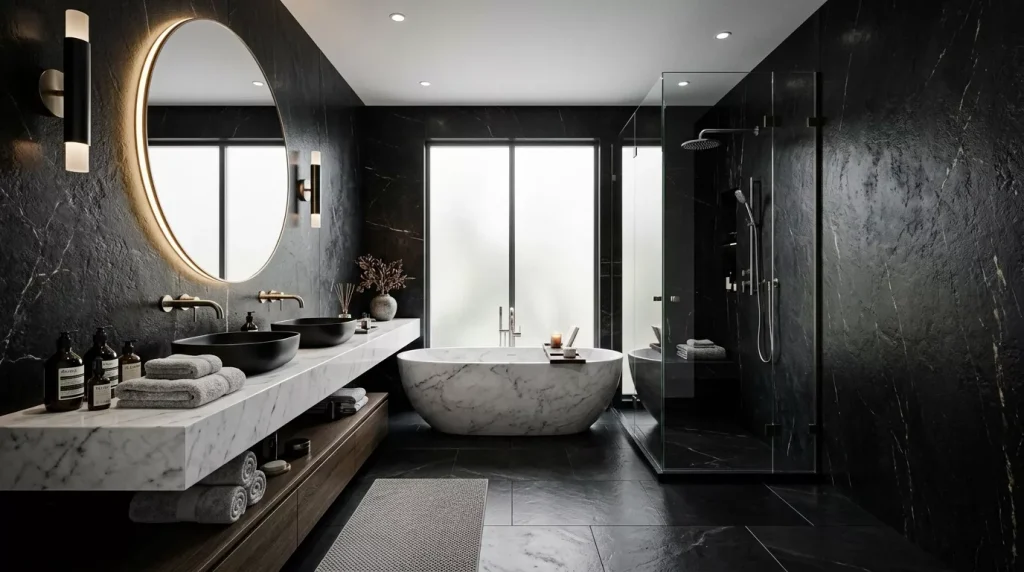
Where to Use Black and White in a Bathroom
You don’t need to commit to both colors everywhere at once. Here’s where each tends to make the biggest impact:
- Floor tiles – Checkerboard, hexagon, or herringbone patterns in black and white are a classic starting point for the whole room.
- Wall tiles – Subway tiles in white with black grout (or vice versa) add subtle contrast without overwhelming the space.
- Vanity and cabinetry – A black vanity against white walls (or the reverse) becomes a natural focal point.
- Fixtures and hardware – Matte black taps, towel rails, and mirror frames are an easy way to add black without tiling or painting.
- Accessories – Towels, bath mats, soap dispensers, and artwork are the simplest way to test this combination before committing to anything permanent.

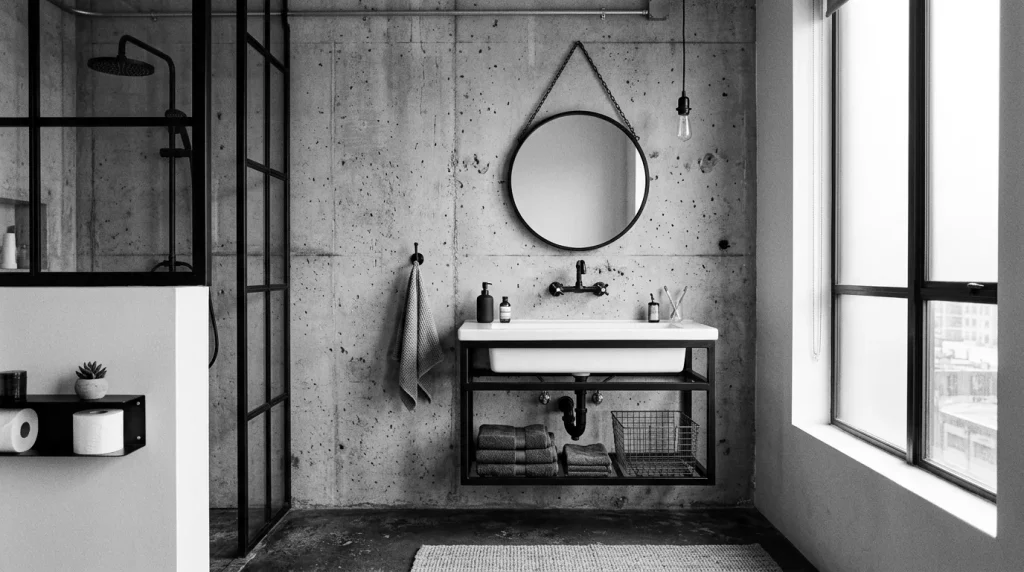
If you’re renovating on a budget, fixtures and accessories are the lowest-cost way to bring this look into an existing bathroom.
Step-by-Step Guide: Designing a Black & White Bathroom
Here’s a simple process to follow whether you’re doing a full renovation or just refreshing what you already have.
- Decide your dominant color. Choose whether the bathroom will feel mostly white with black accents, or mostly black with white accents — this affects everything else.
- Choose your floor treatment first. Floors are expensive to change later, so settle on tile pattern and color combination before anything else.
- Pick your wall tiles or paint. If your floor has a pattern, keep walls simpler. If your floor is plain, walls are a good place to add interest.
- Select your fixtures. Matte black, chrome, or brass all work well — just try to stay consistent across taps, showerheads, and towel rails.
- Choose your vanity. This is often the largest piece of “furniture” in the room, so it has a big impact on the overall balance of black versus white.
- Add a statement mirror or lighting. A bold mirror shape or interesting light fixture adds personality without taking up floor space.
- Layer in accessories. Towels, bath mats, and small decor items are your easiest tools for fine-tuning the final balance.
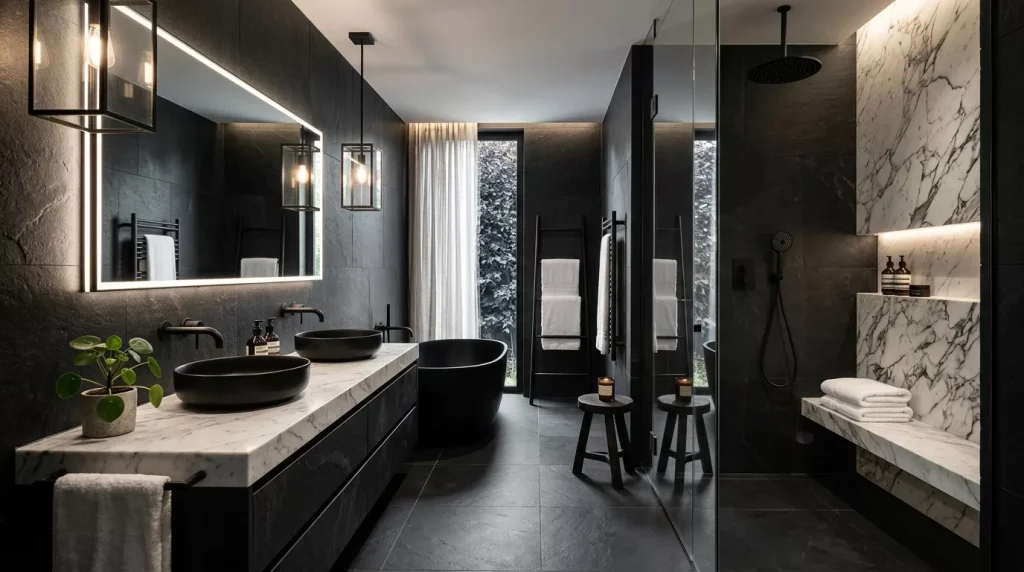
Black & White Bathroom: Tile Patterns Compared
Tile pattern has a huge impact on how “busy” or calm a black and white bathroom feels. Here’s how some popular options compare.
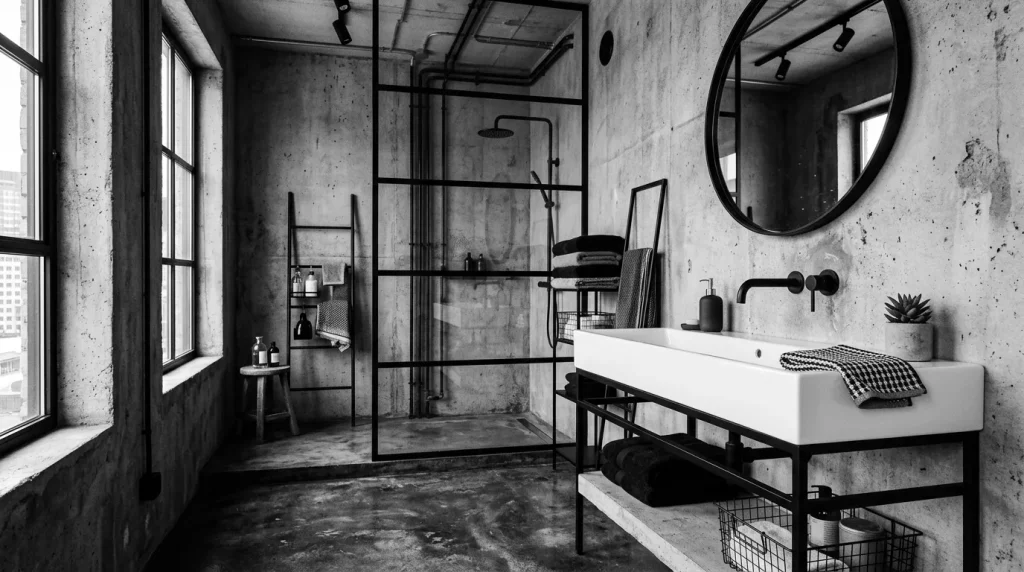
| Tile Pattern | Visual Impact | Best For | Things to Know |
|---|---|---|---|
| Checkerboard | Bold, graphic, retro-leaning | Statement floors | Works best in medium to large rooms |
| Hexagon | Playful but balanced | Floors, accent walls | Pattern can hide minor grout imperfections |
| Subway (with contrast grout) | Subtle, classic | Walls, shower surrounds | Easy to keep looking fresh long-term |
| Herringbone | Elegant, slightly busy | Feature floors or walls | Takes more skill to install neatly |
| Large-format plain tiles | Calm, minimalist | Small bathrooms | Fewer grout lines make rooms feel bigger |
If you’re unsure, large-format tiles with a contrasting accent (like a single feature wall in a pattern) tend to be the safest choice for smaller or less experienced renovators.
Pros and Cons of a Black & White Bathroom
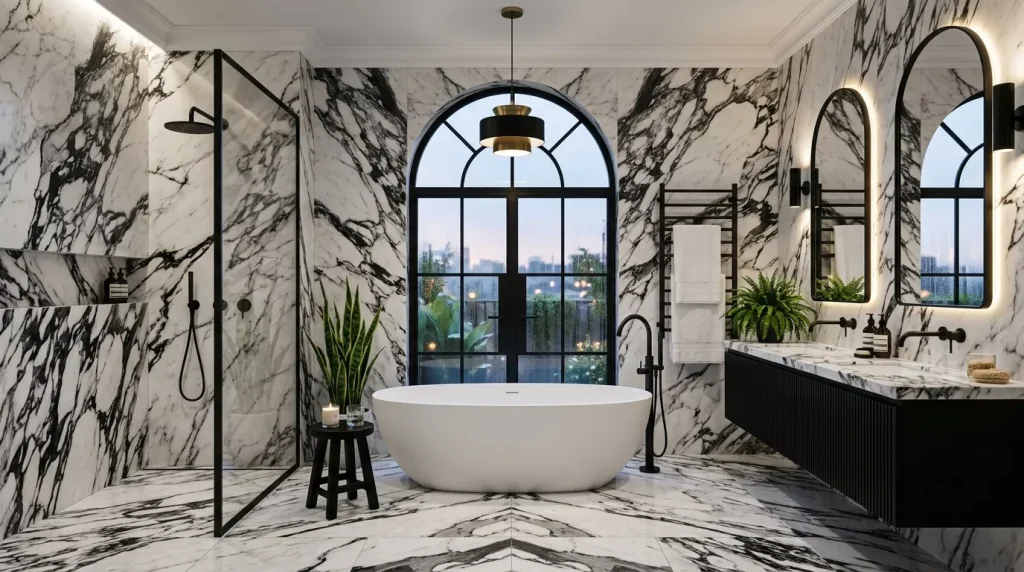
As with any design choice, there are upsides to plan around and a few potential downsides worth knowing in advance.
Pros:
- Timeless look that’s unlikely to feel dated in a few years.
- Extremely flexible — accessories and accents can be changed endlessly without redoing the core scheme.
- Works in bathrooms of almost any size, from powder rooms to large master baths.
- Pairs well with nearly any metal finish (brass, chrome, black, nickel).
- Tends to photograph well, which is useful for resale value.
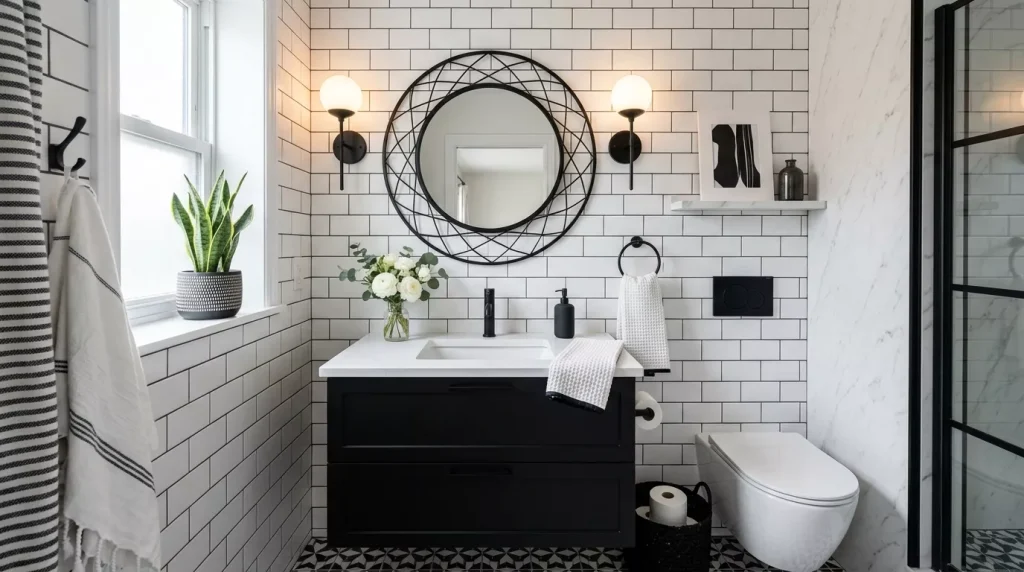
Cons:
- Can feel cold or clinical if white dominates without any warm materials like wood or brass.
- Black surfaces (especially matte) can show water spots and fingerprints more visibly.
- Bold patterns like checkerboard can feel overwhelming in very small spaces.
- Grout maintenance becomes more noticeable with high-contrast tile combinations.
Tips for Styling a Black & White Bathroom
A few small choices can make a big difference in how this combination feels day to day.
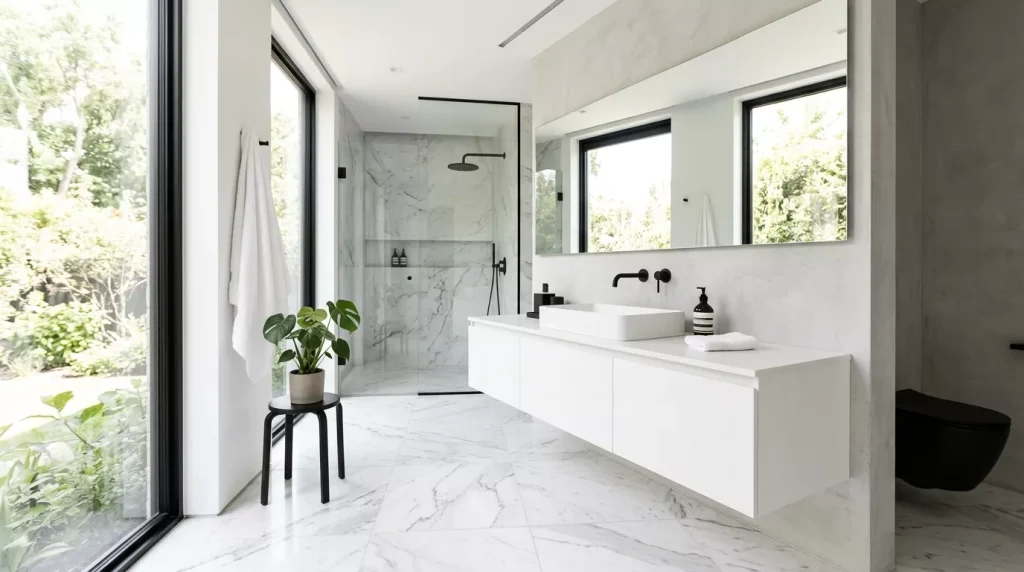
- Add at least one warm material — wood, rattan, or brass — to prevent the space from feeling too stark.
- Use plants (real or faux) to soften hard lines and add a touch of life to the room.
- Choose textured towels and bath mats rather than flat ones; texture adds depth to a high-contrast scheme.
- If using patterned tile on the floor, keep walls simple to avoid visual overload.
- Consider lighting temperature — warm white bulbs (around 2700K-3000K) soften black and white spaces, while cooler bulbs can feel more clinical.
Common Mistakes to Avoid
Even with a combination this classic, a few missteps can throw off the final result.
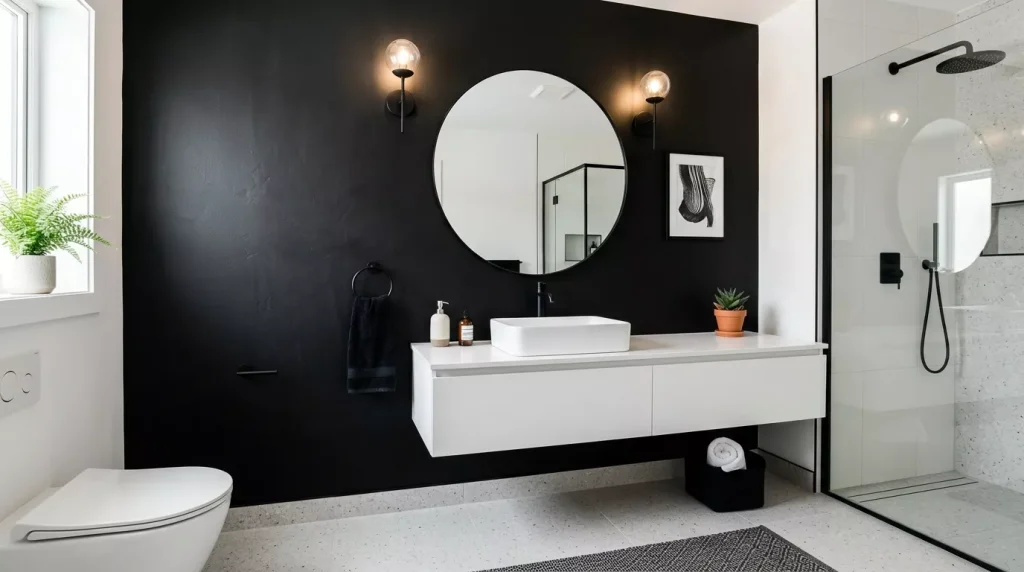
- Going too high-contrast everywhere. Pattern on the floor, walls, and shower at once can feel chaotic rather than elegant.
- Choosing the wrong grout color. Stark white grout against black tile (or vice versa) can look harsh — softer grey grout often reads more refined.
- Forgetting about maintenance. Matte black fixtures can show water spots; if low-maintenance matters to you, consider finishes like brushed nickel for high-touch areas.
- Skipping warm tones entirely. An all-black-and-white bathroom with no wood, brass, or warm lighting can feel sterile rather than stylish.
- Underestimating small bathroom impact. Bold patterns that look great in showrooms can feel overwhelming in a 5×7 foot bathroom — scale matters.
Conclusion
Black & white bathroom ideas remain popular for a simple reason: this combination is genuinely hard to get “wrong” once you understand a few basics about balance, pattern, and warmth. Whether you’re drawn to a bold checkerboard floor or a simple white bathroom with black hardware, there’s a version of this look for almost any space and budget.
If you’re planning a refresh, start with the element that’s hardest to change later — usually flooring or tile — and build the rest of the room around that choice. With the right balance of black, white, and a little warmth, this is one design decision you’re unlikely to regret.
Frequently Asked Questions
1. Is a black and white bathroom too bold for a small space?
Not necessarily. In small bathrooms, it often works best to keep walls mostly white and use black for fixtures, frames, or a small accent area like a niche or shelf.
2. What grout color works best with black and white tiles?
Light grey grout is often a safer choice than pure white or pure black, as it softens the contrast and tends to show dirt less obviously over time.
3. Does a black and white bathroom feel cold?
It can, if everything is glossy and stark. Adding wood, brass, woven baskets, or warm lighting helps balance the coolness of black and white.
4. What’s the best flooring for a black and white bathroom?
Tile is the most popular choice, especially classic patterns like checkerboard, hexagon, or herringbone in black and white. Large-format plain tiles also work well for a more minimalist look.
5. Can black and white work with colorful accessories?
Yes, black and white acts as a neutral backdrop, so colorful towels, plants, or artwork can be added or swapped easily without clashing with the core scheme.
6. How do I keep a black and white bathroom from looking too retro?
Avoid pairing checkerboard patterns with chrome and round mirrors exclusively, as this combination leans heavily retro. Mixing in matte black fixtures, large-format tiles, or brass details helps create a more contemporary feel.