Walk In Shower Ideas to Upgrade Your Bathroom

Walk In Shower Ideas to Completely Transform Your Bathroom

A bathroom renovation can go in a lot of directions, but if there’s one upgrade that consistently delivers the biggest visual and functional payoff, it’s a walk in shower. Walk in shower ideas have taken over bathroom design in the last decade, and once you understand why, it’s hard to imagine going back to a bulky tub-shower combo.
The appeal is part practical and part aesthetic. Walk in showers are easier to clean, more accessible for people of all ages and mobility levels, and they tend to make even a modest bathroom feel more open and modern. There’s also no shortage of design directions — from spa-like minimalist builds to bold tiled statements.
This guide breaks down the layout options, tile and glass choices, the step-by-step planning process, and the small details that separate a walk in shower that looks like a hotel suite from one that feels like an afterthought.
Why Walk In Showers Have Become the Default Choice
It wasn’t that long ago that a tub-shower combo was the standard in most homes. That’s shifted significantly, and it’s worth understanding the reasoning before you commit to your own renovation.

Walk in showers eliminate the step-over barrier of a traditional tub, which matters enormously for accessibility — whether that’s for aging in place, accommodating a family member with mobility needs, or just making everyday use easier and safer.
They also tend to make bathrooms feel larger. A glass enclosure (or no enclosure at all, in the case of an open concept shower) lets light travel through the space instead of being blocked by an opaque tub surround or shower curtain.
And from a resale perspective, updated bathrooms with walk in showers consistently rank among the most desirable features for buyers, especially in primary bathrooms.
Popular Walk In Shower Layouts
The layout you choose depends heavily on your existing bathroom footprint, but here are the main configurations worth knowing.
Curbless Walk In Shower
No raised threshold at all — the shower floor is level with the rest of the bathroom floor, with the slope built subtly into the tile to direct water toward the drain. This is the most accessible and visually seamless option available.

Best for: Accessibility-focused bathrooms, modern minimalist designs, anyone wanting the most open, barrier-free look possible.
Curbed Walk In Shower
A small raised lip (typically 2–4 inches) separates the shower floor from the rest of the bathroom. This is more budget-friendly and easier to retrofit into an existing bathroom layout than a fully curbless design.
Best for: Standard renovations, bathrooms where a full curbless conversion isn’t structurally practical.
Walk In Shower With Half Wall
A partial glass or tiled wall (usually 3–4 feet tall) replaces a full glass enclosure, offering some splash protection without fully closing off the space. This creates a more open feel while still containing most of the water.
Best for: Open-concept bathrooms, smaller spaces where a full glass enclosure feels visually heavy.
Fully Enclosed Glass Walk In Shower

Floor-to-ceiling glass panels on all open sides, often frameless for the cleanest look. This contains water most effectively while still keeping the space visually open thanks to the transparency of the glass.
Best for: Bathrooms where water containment is a priority, and for households where the shower gets heavy daily use.
Wet Room Style
The entire bathroom floor is waterproofed and gently sloped, and the shower has no enclosure barrier at all — it’s simply part of the overall room. This is the most architecturally ambitious option but creates a strikingly open, spa-like effect.
Best for: Larger bathrooms, primary suites, anyone wanting a true luxury spa aesthetic.
Walk In Shower Ideas by Bathroom Size
Not every layout works in every space. Here’s how to think through your options based on square footage.
Small Bathroom Walk In Shower Ideas (Under 35 sq ft)

In tight spaces, every inch matters. A neo-angle or corner shower configuration uses the room’s corner efficiently, while a single fixed glass panel (rather than a full enclosure) saves visual and physical space.
Light-colored, large-format tile makes a small shower feel bigger by reducing the number of grout lines. Skip the half wall in very small spaces — a simple fixed glass panel is usually a better fit.
Medium Bathroom Walk In Shower Ideas (35–60 sq ft)
This is where you have enough room for a proper rectangular walk in shower, typically 36×60 inches or larger, with either a curbed or curbless entry.
A built-in niche for shampoo and soap, a single shower head with a handheld attachment, and a frameless glass door create a clean, functional setup without unnecessary complexity.
Large Bathroom Walk In Shower Ideas (60+ sq ft)
Larger spaces allow for genuinely luxurious features — a rainfall shower head combined with a separate handheld wand, a built-in bench, multiple body jets, and even a steam shower setup if your budget allows.

Wet room configurations work particularly well here, since there’s enough square footage to slope the whole floor without sacrificing usable space elsewhere in the bathroom.
Tile and Material Ideas for Walk In Showers
Material choice affects both the look and the long-term maintenance of your shower. Here’s a breakdown of the most popular options.
| Material | Look | Maintenance | Price Range |
|---|---|---|---|
| Large-format porcelain tile | Sleek, minimal grout lines | Low | $$ |
| Subway tile | Classic, timeless | Medium (more grout) | $ |
| Natural stone (marble, travertine) | Luxurious, organic veining | High (needs sealing) | $$$ |
| Pebble tile flooring | Spa-like, textured | Medium | $$ |
| Hexagon mosaic | Detailed, decorative | Medium-high | $$ |
| Solid surface panels | Ultra-clean, seamless | Very low | $$$ |

A practical note on grout: Smaller tiles mean more grout lines, which means more cleaning. If low maintenance is a priority, lean toward large-format tile or solid surface wall panels rather than intricate mosaic patterns, even though the mosaic option often looks stunning in photos.
Glass Enclosure Options Compared
Your glass choice significantly affects both the cost and the visual openness of the shower.
| Glass Type | Visual Effect | Cost | Cleaning Effort |
|---|---|---|---|
| Frameless glass | Sleek, modern, minimal | Higher | Higher (more visible water spots) |
| Semi-frameless | Clean with some structure | Medium | Medium |
| Framed glass | Traditional, budget-friendly | Lower | Lower |
| No enclosure (wet room) | Most open, architecturally bold | Variable (depends on waterproofing) | Lowest (no glass to clean) |
Frameless glass is the most popular choice in modern walk in shower designs because of how seamless it looks, but it’s worth budgeting for more frequent squeegeeing or cleaning, since water spots show more visibly on completely unobstructed glass.

Step-by-Step Guide: Planning Your Walk In Shower
Here’s a practical sequence to follow if you’re planning a renovation or new build.
Step 1: Assess your existing plumbing and drain location. Moving a drain is possible but adds cost. If you can design your layout around the existing drain placement, you’ll save significantly on the renovation budget.
Step 2: Decide on curbless vs. curbed. Curbless requires more structural work (lowering the subfloor or building up the surrounding floor) but offers the most accessible and seamless look. Curbed is simpler and more budget-friendly for most standard renovations.
Step 3: Choose your shower dimensions. A minimum functional walk in shower is around 36×36 inches, but 36×48 or larger is more comfortable for daily use. If you want a bench or multiple shower heads, plan for at least 48×60 inches.
Step 4: Select your tile and wall material. Reference the table above. Order physical samples rather than relying on photos — tile color and texture can look noticeably different under your bathroom’s actual lighting.
Step 5: Choose your glass enclosure style (if any). Frameless glass offers the cleanest look but costs more. Framed glass is more budget-conscious. A wet room skips glass entirely.

Step 6: Plan your fixtures. Decide between a fixed shower head, a rainfall head, a handheld wand, or a combination. Body jets and steam features add luxury but also add plumbing complexity and cost.
Step 7: Add built-in storage. A recessed niche for toiletries is far more functional and visually clean than hanging caddies or freestanding shelves. Plan this during the tiling phase, since it needs to be built into the wall.
Step 8: Finalize lighting and ventilation. A waterproof-rated recessed light inside the shower itself makes a noticeable difference, especially in showers without much natural light. Proper ventilation (an exhaust fan rated for your bathroom’s square footage) prevents mold and mildew issues long-term.
Pros and Cons of Walk In Showers
Pros

- More accessible — no step-over barrier, ideal for aging in place or mobility considerations
- Easier to clean — fewer hard-to-reach corners than a tub-shower combo
- Makes bathrooms feel larger — especially with glass or open wet room designs
- Highly customizable — endless tile, fixture, and layout combinations
- Strong resale value — a frequently requested feature among home buyers
Cons
- No bathing option — if you remove your only tub for a shower-only setup, this can affect resale appeal in family-oriented markets
- Curbless designs require structural work — more expensive than a standard curbed install
- Frameless glass needs more cleaning — water spots are more visible without a frame
- Higher upfront cost than a standard tub-shower combo — particularly for custom tile and wet room configurations
- Smaller bathrooms have layout constraints — not every footprint comfortably fits a full walk in design
Tips for Designing a Walk In Shower That Actually Works
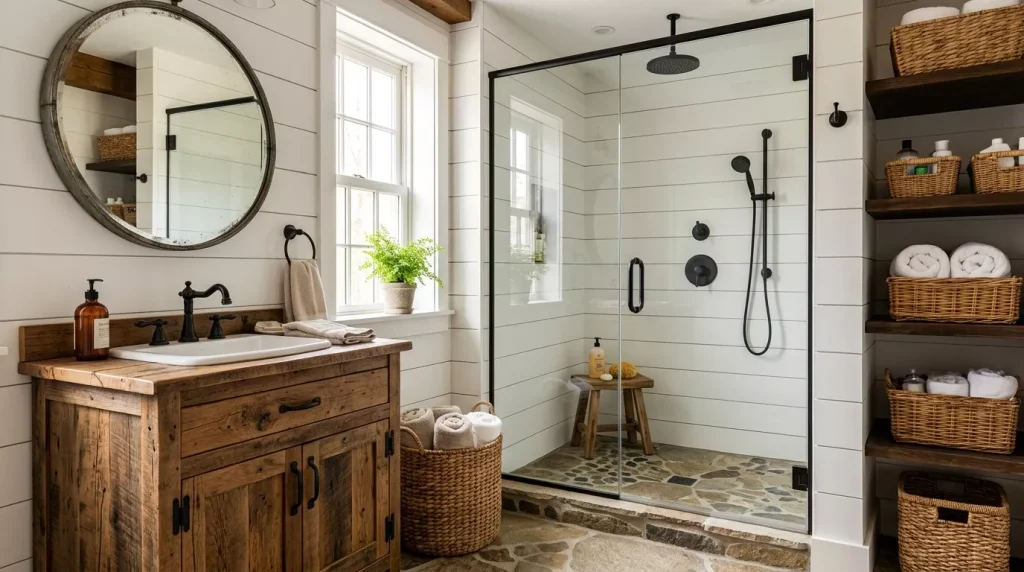
- Slope the floor correctly. Water needs somewhere to go. A proper 1/4 inch per foot slope toward the drain prevents pooling, especially important in curbless designs.
- Choose a textured tile for the shower floor. Smooth tile gets dangerously slippery when wet. Look specifically for tile rated for wet-area floor use, which has more texture and slip resistance.
- Install a niche at a useful height. A recessed shelf placed too high or too low becomes annoying fast. Position it at a comfortable reaching height, generally around chest level for the average user in your household.
- Use a handheld shower head in addition to a fixed one. This makes cleaning the shower itself easier and is far more practical for washing pets, rinsing kids, or anyone with mobility considerations.
- Don’t skip the exhaust fan. Poor ventilation leads to mold growth, especially in fully glass-enclosed or curbless wet room designs where moisture has fewer ways to escape.
- Consider a linear drain for curbless designs. A linear drain along one edge of the shower allows for a more subtle, even floor slope compared to a traditional center drain, which often requires a more noticeable cone-shaped slope.
Common Mistakes to Avoid
Choosing tile that’s too slippery for wet conditions. Glossy, polished tile looks beautiful in photos but can be genuinely dangerous underfoot when wet. Always check the slip-resistance rating for shower floor applications specifically.

Underestimating the cost of moving plumbing. Relocating a drain or supply lines adds real cost to a renovation. If budget is tight, designing around your existing plumbing layout is the smarter move.
Skipping waterproofing details. A walk in shower, especially a curbless or wet room design, depends entirely on proper waterproofing membrane installation behind the tile. Cutting corners here leads to costly water damage down the line.
Making the shower too small for comfortable use. A walk in shower under 36×36 inches can feel cramped, especially for taller household members. If your bathroom can accommodate it, aim larger.
Ignoring ventilation needs. Glass enclosures and curbless designs trap moisture more than a traditional tub-shower combo with a curtain. A properly sized exhaust fan is not optional — it’s essential for long-term mold prevention.
Choosing all-glass enclosures without considering cleaning effort. Frameless glass looks stunning, but it shows water spots and soap scum more visibly than framed alternatives. If you’re not willing to squeegee after every use, consider a partial wall or framed glass instead.
Walk In Shower vs. Tub-Shower Combo vs. Wet Room: Comparison
| Feature | Walk In Shower | Tub-Shower Combo | Full Wet Room |
|---|---|---|---|
| Accessibility | High | Low | Highest |
| Bathing option | No (unless tub added separately) | Yes | No |
| Visual openness | High | Medium | Highest |
| Cleaning ease | High | Medium | High |
| Installation cost | Medium-high | Lower | Highest |
| Resale appeal | High | Medium | High (in luxury markets) |
| Best for | Most modern renovations | Family bathrooms needing a tub | Spa-style primary suites |
Conclusion: Bring Your Walk In Shower Ideas to Life
Walk in shower ideas offer one of the highest-impact upgrades available in a bathroom renovation, combining real functional benefits with serious design potential. Whether you’re working with a compact guest bathroom or a spacious primary suite, there’s a configuration — curbed, curbless, glass-enclosed, or fully open wet room — that fits both your space and your budget.
The key to getting it right comes down to planning the fundamentals properly: drain placement, floor slope, tile slip-resistance, and ventilation. Get those right, and the design choices — tile pattern, fixture finish, glass style — become the genuinely enjoyable part of the process.
Start by assessing your current bathroom layout and plumbing, decide on your priority (accessibility, luxury, or budget-friendly simplicity), and use the size and material guides above to narrow down your direction.
Ready to start planning? Sketch your bathroom’s current dimensions, note your existing drain location, and start collecting tile samples that match the style you’re after. A walk in shower upgrade is one of the most rewarding renovations you can make — and it’s well within reach with the right plan.
FAQs About Walk In Shower Ideas
Q1: How much does it cost to install a walk in shower?
A standard walk in shower renovation typically ranges from $3,000 to $8,000, depending on tile choice, glass enclosure type, and whether plumbing needs to be relocated. Curbless designs and wet room conversions tend to run higher, often $8,000 to $15,000 or more, due to the additional structural and waterproofing work involved. Basic curbed showers with standard tile and a framed glass door fall at the lower end of the range.
Q2: Do I need a door, or can a walk in shower be open?
Both options work well, depending on your bathroom layout and water containment needs. An open or doorless walk in shower (sometimes with a half wall or single glass panel) creates a more spacious, modern feel but requires careful floor sloping to keep water contained. A fully enclosed glass door offers more reliable water containment, which matters more in smaller bathrooms or those without a dedicated drainage slope across the whole floor.
Q3: What is the minimum size for a comfortable walk in shower?
While 36×36 inches is technically functional, most designers recommend at least 36×48 inches for comfortable daily use, especially if you want a handheld shower wand or a small bench. Larger households or anyone wanting additional features like body jets or a built-in seat should aim for 48×60 inches or more if the bathroom footprint allows it.
Q4: Is a curbless walk in shower worth the extra cost?
It depends on your priorities. Curbless showers offer the best accessibility and the most seamless, open visual effect, making them ideal for aging in place or households with mobility considerations. However, they require more structural work — typically lowering the subfloor — which adds cost. If accessibility isn’t a primary concern and budget is tight, a low curb (2 inches or less) offers much of the visual benefit at a lower cost.
Q5: How do I prevent my walk in shower from getting moldy?
Proper ventilation is the single most important factor — install an exhaust fan rated appropriately for your bathroom’s square footage and run it during and after every shower. Beyond that, use mold-resistant grout, ensure proper waterproofing membrane installation behind the tile, and squeegee glass and tile surfaces after use to reduce standing moisture. Good sloping toward the drain also prevents water from sitting and encouraging mold growth.
Q6: Can I convert my existing tub-shower combo into a walk in shower?
Yes, this is one of the most common bathroom renovation projects. The existing plumbing and drain can typically be reused if the new shower footprint stays roughly in the same location, which keeps costs more reasonable. You’ll need to remove the tub, reframe the space if necessary, install new waterproofing, and add your chosen tile and glass enclosure. A licensed contractor can assess whether your specific bathroom layout supports a straightforward conversion or requires more extensive plumbing work.
Q7: What’s the best shower head setup for a walk in shower?
Many homeowners now choose a combination setup — a fixed rainfall shower head mounted overhead for a relaxing daily experience, paired with a handheld wand on a sliding bar for practical tasks like rinsing or cleaning. This combination offers the most flexibility. If budget allows, adding a few body jets along the wall provides a more spa-like, multi-directional water experience, though this does add plumbing complexity and cost.