Accent Chair Ideas to Elevate Your Living Room

Accent Chair Ideas to Elevate Your Living Room Instantly

A sofa sets the tone for a living room, but an accent chair is what gives it personality. Accent chair ideas are one of the easiest and most affordable ways to elevate your living room without committing to a full furniture overhaul. One well-chosen chair can pull a whole color scheme together, fill an awkward empty corner, or simply give the room a focal point it was missing.
The tricky part is that accent chairs come in so many shapes, fabrics, and styles that choosing one can feel surprisingly overwhelming. Get it right, and the chair looks like it was always meant to be there. Get it wrong, and it sticks out for all the wrong reasons.
This guide breaks down everything — styles, placement, color theory, and the small details that separate a chair that looks intentional from one that looks like an afterthought.
Why an Accent Chair Makes Such a Big Difference
It’s easy to underestimate how much one piece of furniture can shift the feel of an entire room. But accent chairs do a few things that other furniture simply can’t.
They introduce contrast. A sofa is usually the largest, most neutral anchor piece in a living room. An accent chair gets to be the opposite — bolder color, different texture, a more interesting silhouette.

They solve layout problems. Awkward corners, empty space near a window, or a conversation area that feels unbalanced can almost always be fixed with the right chair in the right spot.
And they’re flexible. Unlike a sectional or a large dining table, an accent chair is light enough to move, swap out seasonally, or relocate to another room entirely if your needs change.
Popular Accent Chair Styles and Where They Work Best
Not every chair style fits every room. Here’s a breakdown of the most popular categories and the kind of living room each one suits.
Wingback Chairs
Tall-backed with angled “wings” on either side, wingback chairs have a classic, slightly formal presence. They were originally designed to block drafts near fireplaces, and that traditional pedigree still shows.
Best for: Traditional living rooms, reading nooks, spaces near a fireplace. Pairs well with: Tufted detailing, rolled arms, deep jewel-toned fabrics.
Slipper Chairs
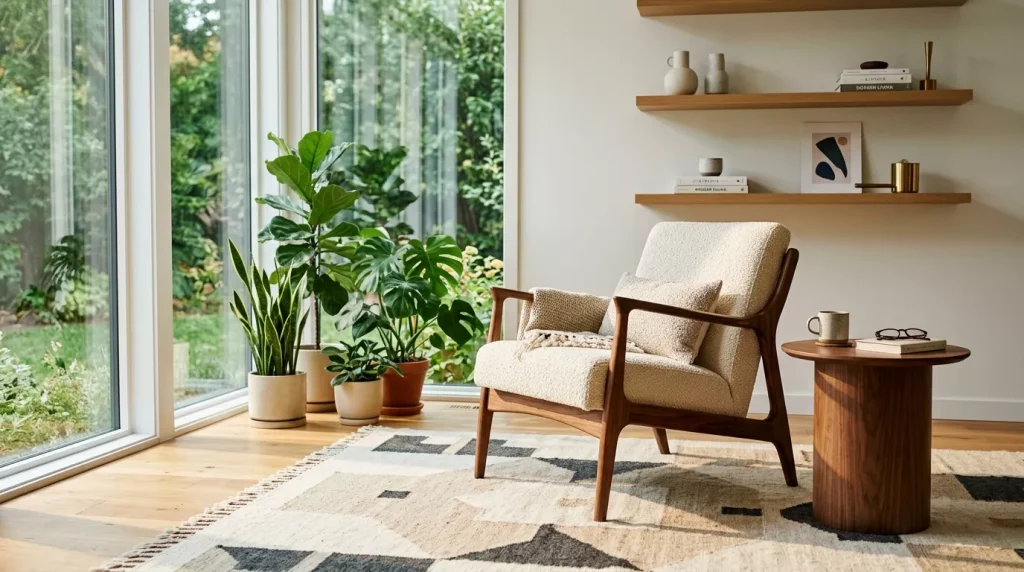
Low-profile, armless, and compact, slipper chairs are quietly one of the most versatile accent chair styles available. Because they have no arms, they take up less visual and physical space.
Best for: Small living rooms, bedrooms doubling as a sitting area, rooms where you want seating without bulk. Pairs well with: Bold patterned fabric, since the simple frame lets the print be the star.
Swivel Chairs
Exactly what it sounds like — a chair that rotates on its base. Swivel chairs are particularly useful in open-concept layouts where you want the flexibility to face different parts of the room.
Best for: Open-plan living rooms, conversation areas, spaces near a TV and a window. Pairs well with: Performance fabric or leather, given the higher use these chairs tend to get.
Barrel Chairs
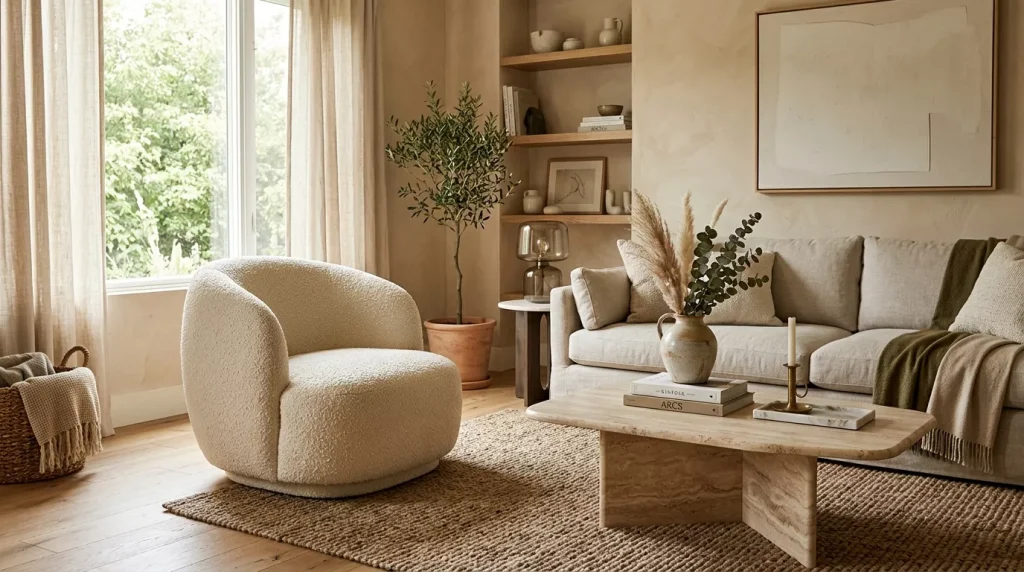
Rounded backs that wrap slightly around the sitter, barrel chairs feel cozy and a little retro. They’ve become a favorite in modern and transitional spaces over the last several years.
Best for: Modern, mid-century, and transitional living rooms. Pairs well with: Bouclé, velvet, or textured woven fabrics.
Accent Armchairs (Club Chairs)
Lower, wider, and deeper than a wingback, club chairs lean casual and lounge-friendly. They’re built for sinking into rather than perching on.
Best for: Family rooms, dens, casual living spaces. Pairs well with: Leather or heavy-weave fabric in earthy tones.
Egg and Sculptural Chairs
Statement pieces with unusual silhouettes — think rounded egg shapes, asymmetrical frames, or sculptural metal bases. These chairs prioritize visual impact over subtlety.
Best for: Modern and eclectic living rooms, spaces that already have a strong design point of view. Pairs well with: Solid colors, since the shape itself is already the statement.
Choosing the Right Accent Chair Color
Color is where a lot of people get stuck. The good news is that there’s a simple framework that makes this decision much easier.
Matching vs. Contrasting Approach
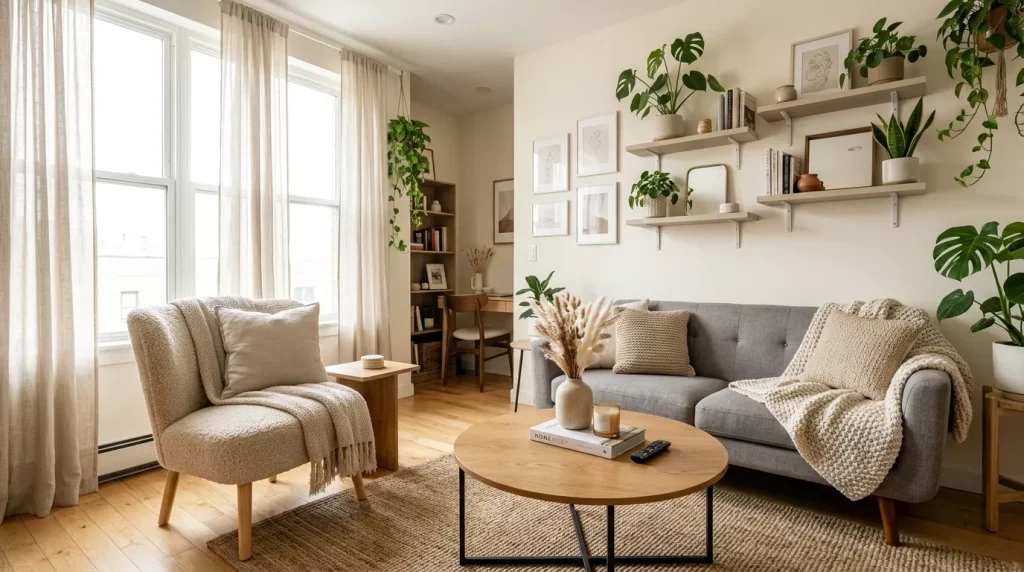
You essentially have two paths: match your chair to your existing color palette, or use it to introduce a contrasting accent color.
Matching approach: Choose a chair in a tone already present in your room — a throw pillow color, a rug accent, or a piece of art. This creates cohesion and feels safe, which is great if you’re not confident experimenting with bold choices.
Contrasting approach: Pick a color that doesn’t appear elsewhere in the room. This makes the chair the obvious focal point and works well in rooms that otherwise feel a little flat or overly neutral.
Popular Accent Chair Colors by Room Style
| Room Style | Recommended Chair Colors |
|---|---|
| Neutral/minimalist | Mustard, terracotta, deep green |
| Coastal | Navy, soft blue, natural rattan |
| Traditional | Burgundy, forest green, navy |
| Modern | Black, white, bold solid colors |
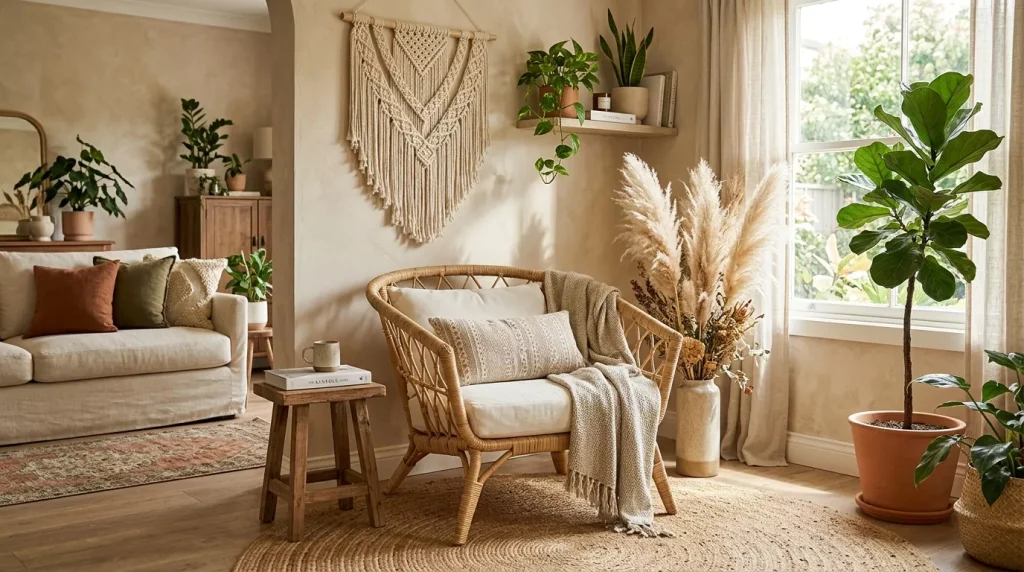
| Bohemian | Rust, ochre, patterned textiles |
| Scandinavian | Soft grey, dusty pink, sage |
Texture Matters as Much as Color
A chair in bouclé, velvet, linen, or leather will read completely differently even in the exact same color. Bouclé and velvet feel cozy and tactile. Linen feels relaxed and casual. Leather feels structured and a little more formal. Choose the texture based on the mood you’re going for, not just the color.
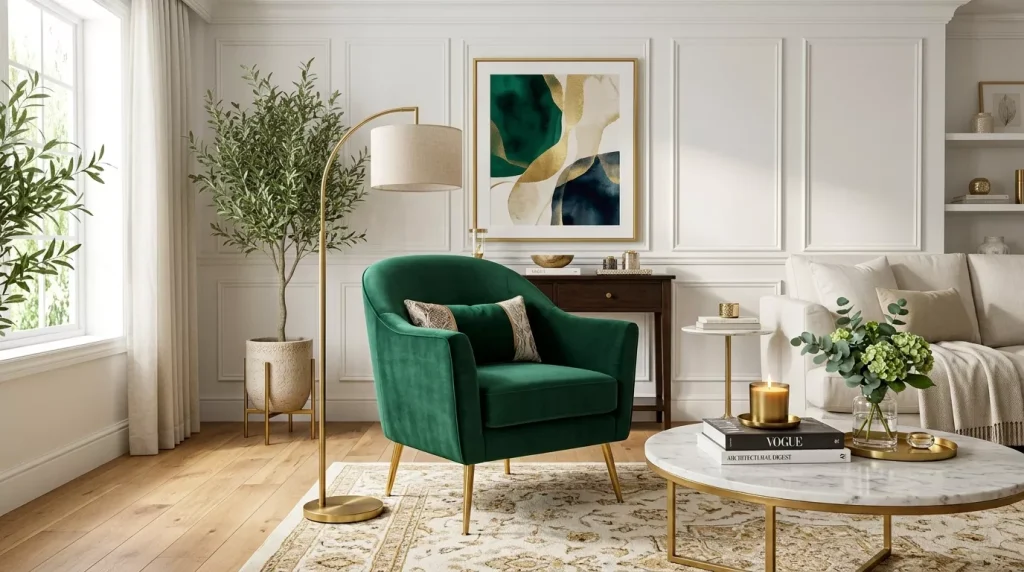
Accent Chair Placement Ideas for Every Living Room Layout
Where you put the chair matters just as much as which chair you choose. Here are the most common placement strategies.
The Conversation Corner
Position two accent chairs facing each other or angled toward the sofa, creating a natural gathering spot. This works particularly well in larger living rooms where the sofa alone leaves the seating arrangement feeling unbalanced.
The Reading Nook
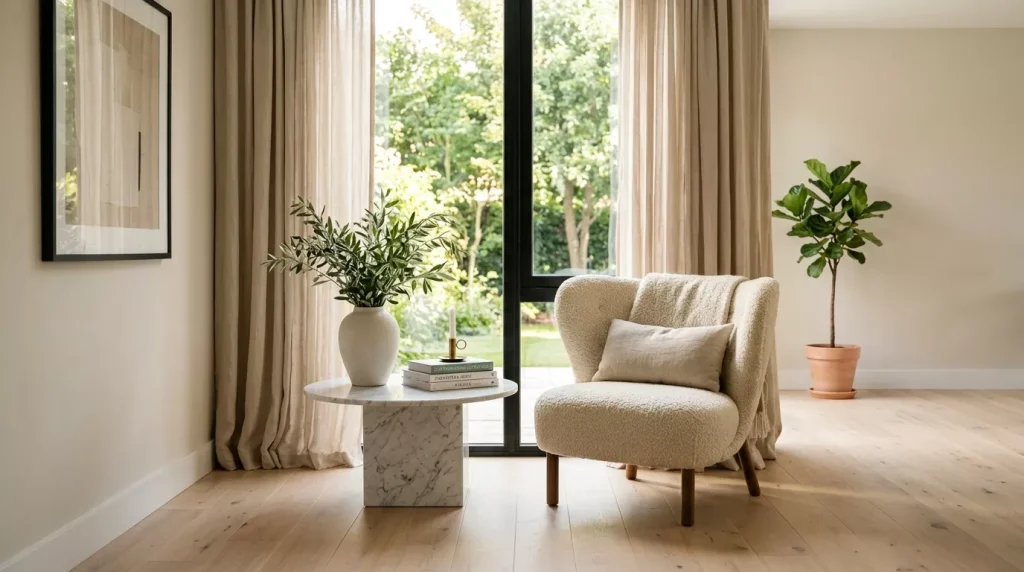
Tuck a single accent chair near a window, paired with a small side table and a floor lamp. This is one of the simplest and most satisfying ways to use an accent chair — it turns an unused corner into a genuinely functional space.
The Empty Corner Fix
Almost every living room has one slightly awkward, underused corner. A single well-styled accent chair, angled at 45 degrees with a small plant or side table nearby, solves this instantly.
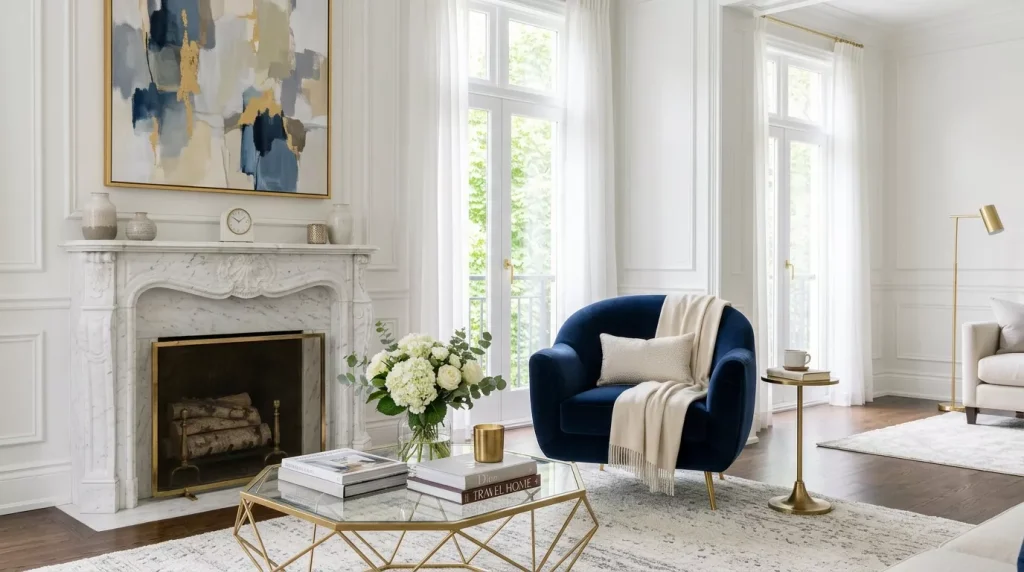
The Symmetrical Pair
Two identical accent chairs flanking a fireplace, window, or piece of art creates a formal, balanced look. This works especially well in traditional and transitional living rooms.
The Floating Anchor
In open-concept spaces, an accent chair can help define the living room zone without a wall. Placed at the edge of a rug, it signals “this is where the living room ends” without needing any physical barrier.
Step-by-Step Guide: How to Choose the Right Accent Chair
If you’re staring at dozens of options online and feeling stuck, here’s a process that simplifies the decision.
Step 1: Measure your space first. Note the dimensions of the area where the chair will go, including clearance for walking paths (aim for at least 30 inches of clear walkway). Bring a tape measure mentality to this — guessing leads to chairs that are too big or awkwardly small.
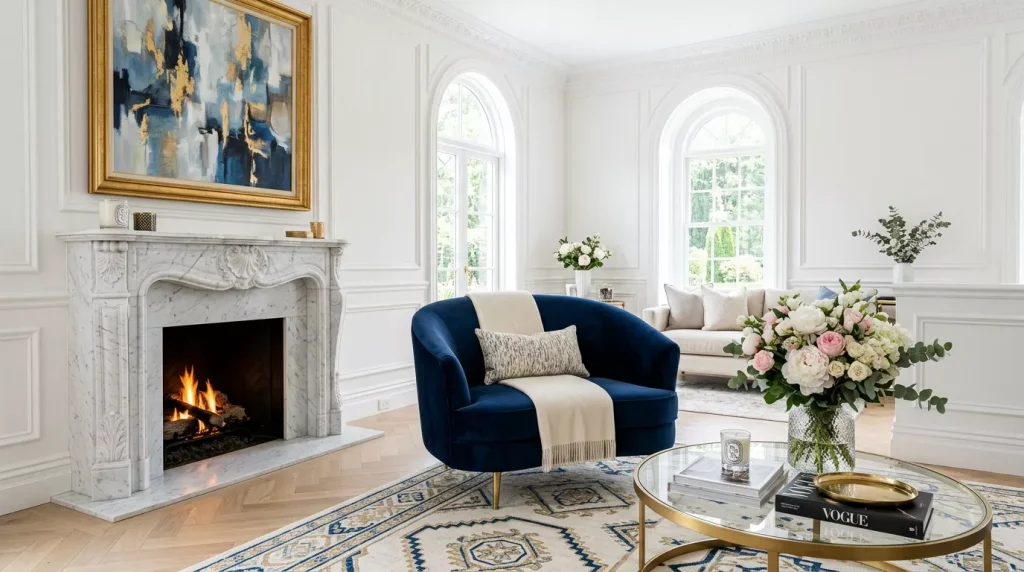
Step 2: Identify the chair’s primary purpose. Is it purely decorative? Will it actually be sat in regularly? A chair that’s mostly for show can prioritize style over deep cushioning. A daily-use chair needs to prioritize comfort and durability.
Step 3: Decide on your color strategy. Use the matching vs. contrasting framework above. Pick one and commit — indecision here is what leads to chairs that get returned.
Step 4: Choose your silhouette based on the room style. Reference the style guide above. A wingback in a sleek modern space or a sculptural chair in a traditional room can work, but it takes more design confidence to pull off. When in doubt, match the chair style to your room’s existing aesthetic.
Step 5: Consider the fabric’s practicality. If you have kids, pets, or simply use the chair often, performance fabric or leather will hold up far better than delicate linen or silk-blend upholstery.
Step 6: Order swatches before committing. Almost every furniture retailer offers fabric swatches. Order at least two to three options and view them in your actual room lighting before finalizing.
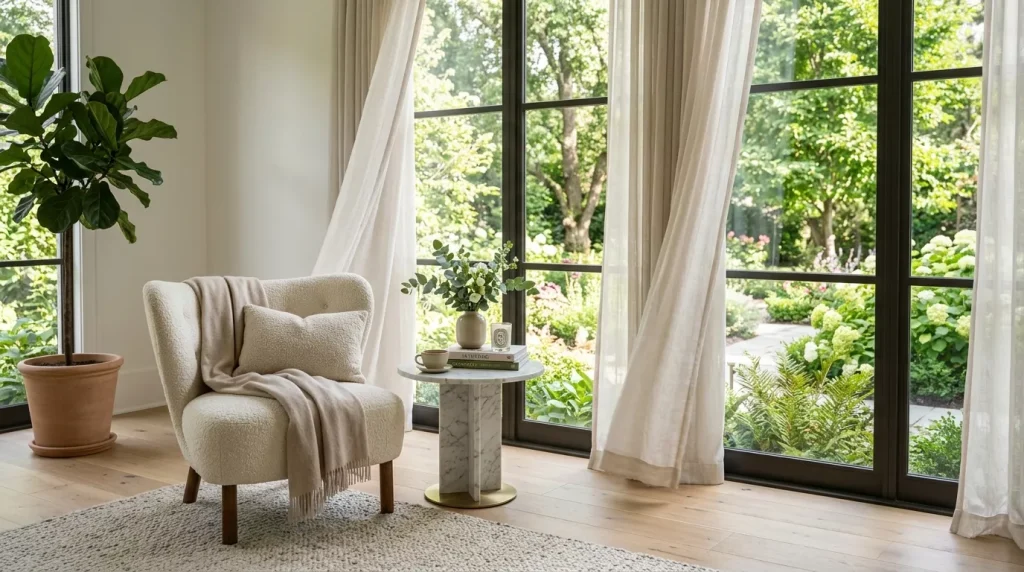
Step 7: Style it once it arrives. A throw blanket draped over one arm, a single textured pillow, and a small side table instantly make a new chair feel intentional rather than randomly placed.
Pros and Cons of Adding an Accent Chair
Pros
- Affordable way to refresh a room — far cheaper than replacing major furniture
- Adds personality and visual interest — breaks up an overly matched furniture set
- Solves awkward layout problems — fills corners and balances asymmetry
- Flexible and movable — easy to relocate, reupholster, or replace later
- Provides extra seating — useful for guests without a permanent commitment to a larger sofa
Cons
- Easy to choose the wrong scale — too large or too small disrupts the room’s proportions
- Can clash if color isn’t planned carefully — a poorly matched chair stands out for the wrong reasons
- Statement chairs can feel dated — very trend-driven shapes may not age as gracefully as classic silhouettes
- Comfort can be sacrificed for style — some striking designs aren’t built for long sitting sessions
- Quality varies wildly by price point — cheaper accent chairs may wobble or wear out quickly
Tips for Styling Your Accent Chair Like a Pro
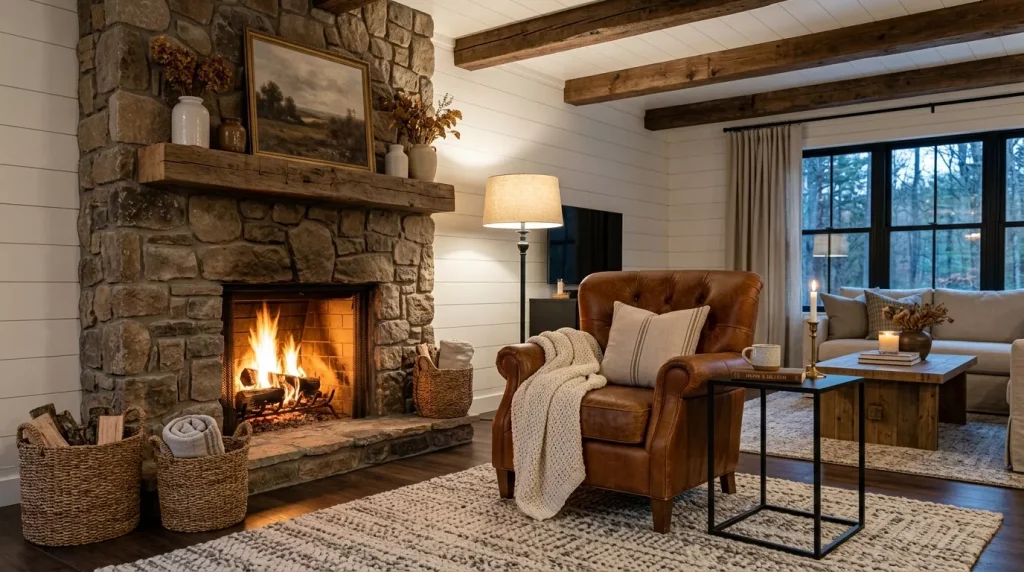
- Anchor the chair with a rug or rug edge. A chair floating awkwardly off a rug can look unintentional. Either place it fully on the rug or fully off it — avoid having just the front legs on the edge.
- Add one textured throw pillow, not three. Over-styling an accent chair with too many pillows makes it look more like a display piece than functional furniture.
- Pair with a small side table. Even a tiny round table beside the chair makes it feel like a complete, usable seating spot rather than a leftover piece.
- Use a floor lamp for reading chairs. Overhead lighting alone rarely provides enough focused light for an accent chair meant for reading or relaxing.
- Repeat the chair’s color elsewhere. A single throw pillow or small accessory in the same shade as the chair ties the whole room together.
- Don’t be afraid of pattern if your room is neutral. A patterned chair in an otherwise neutral room reads as confident, not chaotic — as long as the rest of the room stays calm.
Common Mistakes to Avoid When Choosing an Accent Chair
Buying the chair before measuring the space. This is the single most common and most expensive mistake. A chair that looks reasonably sized online can dominate a small room or get visually lost in a large one.
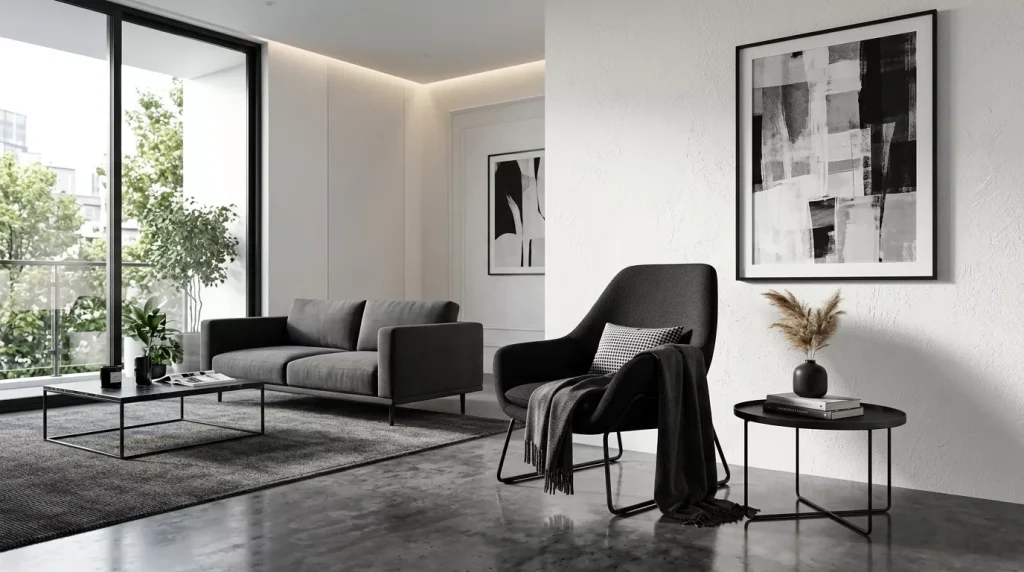
Choosing a chair that doesn’t match the room’s formality level. A delicate Victorian-style chair in an otherwise ultra-modern minimalist space can feel like it wandered in from another house. Style cohesion matters more than people expect.
Prioritizing looks over comfort for a daily-use chair. If this chair is going to be sat in every evening, test it (or read reviews carefully) before buying. A beautiful chair nobody wants to sit in becomes expensive storage for throw blankets.
Ignoring fabric durability. Light-colored linen or silk-blend fabric on a chair near a high-traffic area or used by kids and pets will show wear and stains quickly. Match the fabric to your actual lifestyle.
Matching the chair too closely to the sofa. An accent chair that’s the exact same fabric and color as the sofa loses its purpose entirely. The whole point is contrast and visual interest — let it look different on purpose.
Forgetting about scale relative to other furniture. A massive oversized accent chair next to a low-profile modern sofa creates an awkward visual mismatch. Keep proportions in mind across the whole room, not just the chair in isolation.
Accent Chair vs. Other Living Room Seating: Quick Comparison
| Feature | Accent Chair | Loveseat | Recliner |
|---|---|---|---|
| Visual impact | High | Medium | Low-medium |
| Footprint | Small | Medium | Medium-large |
| Style versatility | Very high | Medium | Low |
| Comfort for long sitting | Varies by design | Good | Excellent |
| Cost range | $150–$2,000+ | $400–$2,500+ | $300–$2,500+ |
| Best use | Statement, extra seating | Secondary seating | Primary relaxation seating |
Conclusion: Bring Your Accent Chair Ideas to Life
Accent chair ideas are one of the most rewarding ways to refresh a living room without a full renovation budget. A single well-chosen chair can solve a layout problem, introduce color and texture, and give the room a focal point that ties everything together.
The key is to approach the decision with a little structure — measure first, decide on your color strategy, choose a silhouette that fits your room’s existing style, and don’t skip the fabric swatch step. These small decisions are what separate a chair that looks like it belongs from one that feels randomly placed.
Whether you’re filling an empty corner, creating a cozy reading nook, or just looking for a way to inject some personality into a neutral living room, there’s an accent chair idea here that fits.
Ready to find yours? Take a few minutes to measure your space, snap a photo of the room, and start narrowing down styles and colors using the guide above. The right chair is closer than you think — and your living room is about to feel a whole lot more finished.
FAQs About Accent Chair Ideas
Q1: How do I choose the right size accent chair for a small living room?
Look for slipper chairs or armless designs, which have a smaller visual and physical footprint than wingback or club chairs. Measure your available space and leave at least 30 inches of clear walking path around the chair. Lighter-colored upholstery and exposed wooden legs (rather than a fully upholstered base) also help a chair feel less bulky in a tight space.
Q2: Should my accent chair match my sofa?
Not exactly — and that’s the point. An accent chair is meant to contrast with your sofa, either through color, texture, or silhouette. A completely matching chair and sofa loses the visual interest that makes accent chairs valuable. That said, they should still feel like they belong in the same room, so aim for a shared color family or complementary style rather than an exact match.
Q3: What’s the best accent chair fabric for households with kids or pets?
Performance fabric (a stain-resistant, tightly woven synthetic blend) and leather are the most practical choices. Both clean easily and hold up to daily wear far better than delicate linen, silk blends, or velvet. If you love the look of velvet, look specifically for performance velvet, which offers similar texture with better durability.
Q4: Can I use two different accent chairs in the same room?
Yes, and it can look intentional and stylish when done thoughtfully. The key is to keep a common thread between the two chairs — matching colors with different silhouettes, or matching silhouettes with contrasting fabrics. Completely unrelated chairs with nothing tying them together tend to look mismatched rather than curated.
Q5: How much should I expect to spend on a quality accent chair?
Accent chairs range widely, from around $150 for basic options to $2,000+ for designer or solid hardwood-frame pieces. A solid mid-range option with good construction, a hardwood or engineered wood frame, and quality foam typically falls between $300 and $700. Spending a bit more on construction quality usually pays off in comfort and longevity.
Q6: Where is the best place to put an accent chair in a living room?
Common spots include an empty corner, beside a window for natural light, flanking a fireplace as a symmetrical pair, or angled toward the sofa to create a conversation area. The right placement depends on your room’s layout and what function you want the chair to serve — purely decorative, additional seating, or a dedicated reading spot.
Q7: Are statement or trendy accent chairs a bad investment?
Not necessarily, but it’s worth being intentional. Bold, highly trend-driven shapes can feel dated faster than classic silhouettes like wingback, slipper, or barrel chairs. If you love a statement piece, consider keeping the color relatively neutral so the shape itself is the standout feature — this gives you more flexibility to update the room around it later without needing to replace the chair.