Canopy Bed Ideas to Create a Dreamy Bedroom

Canopy Bed Ideas to Create a Dreamy, Show-Stopping Bedroom

Few pieces of furniture change a bedroom’s entire mood the way a canopy bed does. Canopy bed ideas have surged in popularity lately, and once you see one styled well, it’s easy to understand why — there’s something about a frame rising overhead, fabric softening the edges, that makes an ordinary bedroom feel like an actual retreat.
The best part is that canopy beds aren’t reserved for grand, palatial bedrooms anymore. Modern designs come in everything from sleek minimalist metal frames to soft fabric-draped four-post structures, which means there’s a version of this look for nearly any room size and personal style.
This guide walks through the different canopy bed styles, how to choose fabric and lighting, how to make the look work even in smaller spaces, and the mistakes worth avoiding before you commit.
What Makes a Canopy Bed Different From a Four Poster Bed
People often use these terms interchangeably, but there’s a meaningful distinction worth understanding before you shop.
A four poster bed simply has four vertical posts at each corner — with or without anything connecting them at the top. A true canopy bed has a horizontal frame connecting those posts (or is suspended from the ceiling), creating a structure that can support drapes, sheer curtains, fairy lights, or fabric panels.

In other words, every canopy bed technically has four posts (or a ceiling-mounted structure), but not every four poster bed has the canopy frame on top. If your priority is the soft, enclosed, fabric-draped look, you’re specifically shopping for a canopy structure — not just tall corner posts.
Types of Canopy Bed Frames to Consider
Canopy beds aren’t one-size-fits-all. Here’s a breakdown of the main structural types and which bedrooms they suit best.
Traditional Four-Post Canopy Frame
The classic version — a full rectangular frame supported by four solid posts at each corner of the bed. This is the most stable and visually substantial option, and it works beautifully as a true architectural feature in the room.
Best for: Larger bedrooms, traditional or vintage-inspired interiors, anyone who wants the canopy to feel like a built-in part of the room.
Ceiling-Mounted Canopy

Instead of posts rising from the bed frame itself, the canopy structure (often a simple round or square hoop) is mounted directly to the ceiling above the bed. This creates the soft, draped look without needing tall posts at all.
Best for: Smaller bedrooms, renters who can’t install a full bed frame but can mount a lightweight ceiling hook, anyone wanting a more ethereal, floating effect.
Half-Canopy or Headboard Canopy
The canopy structure sits only above the head of the bed rather than spanning the entire frame. This gives you the dramatic overhead element without the visual weight of a full enclosure.
Best for: Medium-sized bedrooms, people who want drama focused around the headboard rather than the whole bed.
Metal Minimalist Canopy Frame
Thin metal posts and a simple top frame, often in matte black, brushed brass, or white. No carving, no ornamentation — just clean structural lines.

Best for: Modern, industrial, or Scandinavian-style bedrooms; smaller spaces where a heavy wood frame would feel too bulky.
Wood Canopy Frame
Sturdier and warmer in feel than metal, wood canopy frames range from simple Scandinavian-style pine to ornately carved traditional designs.
Best for: Farmhouse, rustic, traditional, and boho-inspired bedrooms.
Canopy Bed Ideas by Bedroom Style
The structure is only half the equation — the styling around it is what really sets the mood. Here’s how to approach a canopy bed depending on your aesthetic.
Romantic and Dreamy Bedrooms

Sheer white or ivory curtains hung from all four sides of the frame, layered linen bedding in soft neutral tones, and a string of warm fairy lights woven through the top rail. Add a small chandelier or pendant light inside the canopy for an extra touch of romance.
Modern Minimalist Bedrooms
Skip the fabric entirely, or use just one simple panel behind the headboard. A matte black or white metal frame with crisp white or charcoal bedding lets the structure itself be the statement, without competing visual elements.
Boho and Eclectic Bedrooms
Layer macramé panels instead of traditional curtains, mix in woven textures, hang dried florals or pampas grass from one corner, and let the canopy feel a little undone and organic rather than perfectly symmetrical.
Moody and Dramatic Bedrooms
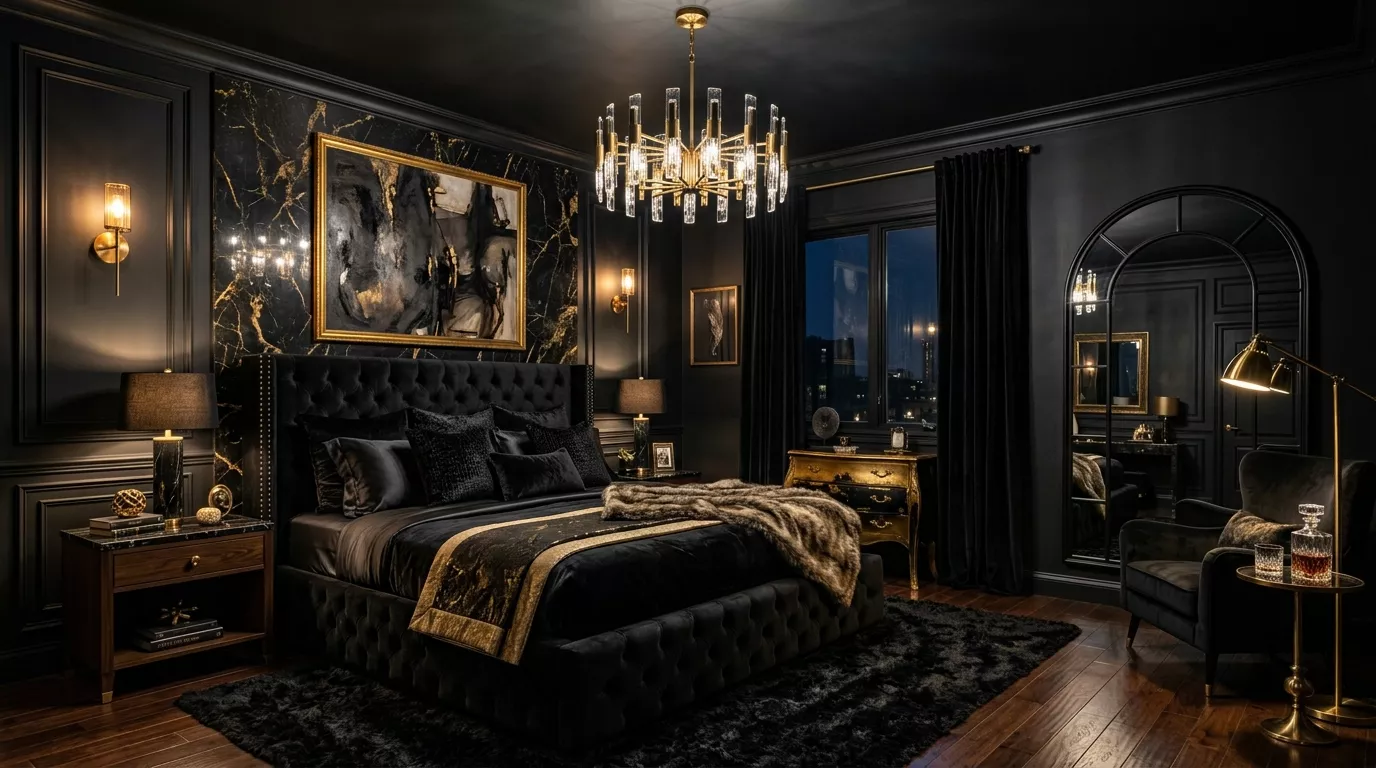
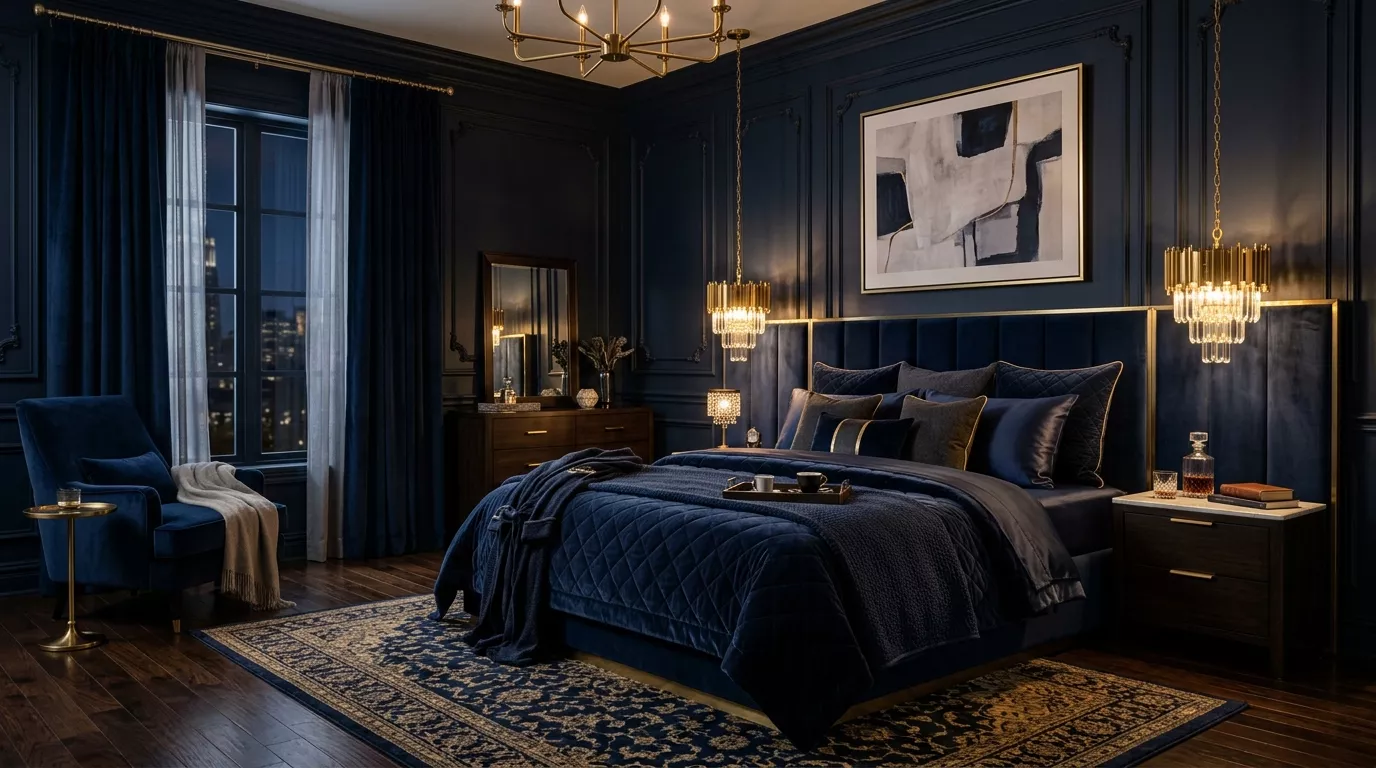
Black or dark wood frame, deep jewel-toned velvet curtains (emerald, burgundy, or navy), and warm low lighting. This is the most theatrical version of the canopy bed look, and it pairs beautifully with dark walls or a deep accent color.

Coastal and Airy Bedrooms
White-painted wood frame, lightweight linen or cotton voile curtains, natural fiber rugs, and lots of breathing room. Keep the fabric loosely draped rather than tightly structured for a relaxed, beachy feel.
Choosing the Right Canopy Fabric
The fabric you choose changes the entire personality of the bed. Here’s a quick reference to help you decide.

| Fabric Type | Look and Feel | Best Style Match | Maintenance |
|---|---|---|---|
| Sheer voile | Airy, romantic, light-filtering | Romantic, coastal | Easy to wash |
| Linen | Relaxed, textured, casual | Boho, farmhouse, coastal | Wrinkles naturally, easy care |
| Velvet | Rich, heavy, dramatic | Moody, traditional, glam | Needs occasional steaming |
| Cotton muslin | Soft, breathable, simple | Minimalist, Scandinavian | Very low maintenance |
| Macramé/woven | Textural, bohemian | Boho, eclectic | Dust occasionally |
| Blackout fabric | Dense, light-blocking | Practical bedrooms, shift workers | Vacuum or spot clean |
Quick tip: Sheer and lightweight fabrics let more natural light filter through the room, while heavier fabrics like velvet create a more enclosed, cocoon-like feel — ideal if you want extra privacy or a darker sleeping environment.
Step-by-Step Guide: Setting Up a Canopy Bed in Your Bedroom

Here’s how to plan and execute the look properly, from measuring to final styling.
Step 1: Check your ceiling height. Standard canopy bed posts typically range from 6 to 8 feet tall. If your ceiling is 8 feet or under, look for frames with posts no taller than 6.5 feet, or consider a ceiling-mounted canopy hoop instead of a full four-post frame.
Step 2: Measure your floor space. Beyond the bed’s footprint, leave at least 24 inches of clearance on each accessible side and 30–36 inches at the foot of the bed for comfortable movement.
Step 3: Choose your frame type and material. Use the breakdown above to match the frame to your room size and style. If you’re renting and can’t install a full bed frame, a ceiling-mounted hoop canopy is a low-commitment alternative.
Step 4: Select your fabric. Reference the fabric table above. Order a small swatch if possible before committing to a full set of curtains, especially for colored or patterned fabric.
Step 5: Decide on lighting. Fairy lights woven along the top frame, a small pendant light hung inside the canopy, or simple bedside lamps all work. Avoid harsh overhead lighting directly above the bed — it competes with the soft mood the canopy is meant to create.

Step 6: Hang the curtains correctly. Use curtain rings or clips along the top frame rather than tying directly to the wood or metal, which can damage the fabric over time. For a more relaxed look, simply drape the fabric over the frame without rings at all.
Step 7: Style the bed itself. Layer your bedding with at least two to three textures — a duvet, a textured throw, and a few pillows in varying sizes. This grounds the canopy structure and keeps the whole setup from feeling too sparse.
Step 8: Step back and adjust. Live with the setup for a few days. Fabric often needs minor adjustments — a curtain that hangs slightly uneven, lighting that needs repositioning. Small tweaks make a big difference in the final look.
Pros and Cons of Canopy Beds
Pros

- Transforms the entire room’s mood — instantly adds drama, romance, or softness depending on styling
- Customizable and adaptable — fabric and lighting can be changed seasonally without replacing the frame
- Adds a sense of privacy and enclosure — especially valuable in open-plan or studio layouts
- Works in multiple design styles — from minimalist to maximalist, depending on execution
- Can improve sleep environment — heavier fabrics block light and create a cozier, more enclosed feel
Cons
- Requires adequate ceiling height — tall frames can feel cramped in rooms under 8 feet
- Fabric needs regular cleaning — curtains and drapes collect dust over time
- Can be visually heavy in small rooms — especially with dense fabric on all four sides
- Assembly can be involved — full four-post frames often require two people and several hours
- Cost adds up with fabric and lighting — the frame is only part of the total investment

Common Mistakes to Avoid With Canopy Beds
Choosing posts too tall for the ceiling. This is the most common and most frustrating mistake. Always measure your ceiling height before falling in love with a particular frame — a few inches of miscalculation can make the bed feel cramped instead of grand.
Using fabric that’s too heavy for the room. Thick velvet drapes in a small bedroom can make the space feel closed-in rather than cozy. If your room is on the smaller side, stick with lighter fabrics like linen or sheer voile.
Skipping the lighting plan entirely. A canopy bed without any thoughtful lighting can look unfinished, especially at night. Even a simple string of warm fairy lights makes a noticeable difference.
Overcrowding the bed with too many textiles. There’s a balance between layered and cluttered. Stick to two or three coordinated textures rather than piling on every pillow and throw you own.
Ignoring fabric maintenance. Curtains hung above a bed collect dust faster than people expect, since they’re directly above where you breathe all night. Wash or vacuum them every few weeks, especially if anyone in the household has allergies.

Forgetting about furniture scale around the bed. A massive canopy frame paired with tiny nightstands looks disproportionate. Balance the visual weight of the bed with appropriately scaled surrounding furniture.
Canopy Bed vs. Four Poster Bed vs. Platform Bed: Quick Comparison
| Feature | Canopy Bed | Four Poster Bed (no top frame) | Platform Bed |
|---|---|---|---|
| Visual drama | Very high | Medium-high | Low |
| Fabric/drape option | Yes | Sometimes | No |
| Ceiling height needed | Higher | Medium | Low |
| Style versatility | High | High | Medium |
| Light filtering ability | Yes (with fabric) | No | No |
| Price range | $300–$3,500+ | $300–$3,000+ | $150–$1,500+ |
| Assembly complexity | Higher | Medium-high | Lower |

Tips for Styling a Canopy Bed Like a Pro
- Layer your lighting. Combine fairy lights along the frame, a small pendant inside the canopy, and bedside lamps for a layered, cozy glow rather than one harsh light source.
- Tie back curtains during the day. Letting the fabric hang loose all the time can feel heavy. Tying curtains back with a ribbon or fabric tie during waking hours keeps the room feeling open while still showing off the canopy structure.
- Match your curtain rings to your frame finish. Small details like matte black rings on a black frame, or brass rings on a brass frame, make the whole setup look more cohesive and intentional.
- Use weighted curtain hems for clean drape. If your fabric tends to billow or look messy, a small sewn-in weight at the bottom hem helps curtains hang straight and elegant.
- Add a canopy even to an existing four poster bed. If you already have posts without a top frame, you can often add a simple curtain rod system mounted to the ceiling directly above the bed to create the canopy effect without replacing the whole frame.
- Keep one side open if privacy isn’t a priority. You don’t need fabric on all four sides. Leaving the side facing the room open while draping the other three creates a softer, more open version of the look.

Conclusion: Bring Your Canopy Bed Ideas to Life
Canopy bed ideas offer one of the most effective ways to transform a bedroom’s entire atmosphere without a full renovation. Whether you go full traditional four-post drama, a minimalist metal frame, or a simple ceiling-mounted hoop with sheer curtains, the canopy structure adds a sense of intention and softness that’s hard to replicate with any other single piece of furniture.
The key is matching the frame and fabric to your actual room — ceiling height, square footage, and existing style all matter more than which canopy bed photo you saved to your inspiration board. Get those fundamentals right, and the styling details (lighting, textiles, curtain treatment) become the fun part rather than a source of stress.
Start with your ceiling measurements, choose a frame type that fits your space, and pick a fabric that matches the mood you’re after. From there, your dream canopy bedroom is just a few thoughtful decisions away.
Ready to get started? Measure your room tonight, sketch out which canopy style speaks to you, and start collecting fabric swatches. The bedroom you’ve been imagining is more achievable than you think.

FAQs About Canopy Bed Ideas
Q1: Do canopy beds work in small bedrooms?
Yes, with the right approach. Choose a ceiling-mounted canopy hoop or a minimalist metal frame with thin posts rather than a heavy traditional wood structure. Light, sheer fabric also helps the room feel more open than dense curtains would. Keeping the rest of the furniture low-profile and minimal further prevents the space from feeling crowded.
Q2: What’s the difference between a canopy bed and a four poster bed?
A four poster bed simply has four vertical posts at each corner, with or without a connecting top frame. A canopy bed has that horizontal top structure (or a ceiling-mounted version) specifically designed to support drapes, curtains, or fabric panels. All canopy beds are technically a type of four poster bed, but not all four poster beds have the canopy frame on top.
Q3: How do I add a canopy without buying a whole new bed frame?
A ceiling-mounted canopy hoop or rectangular frame is the easiest solution. These mount directly to the ceiling above the bed using hooks or brackets, and curtains hang from the structure without needing tall bed posts at all. This is a popular option for renters or anyone wanting the look without replacing existing furniture.
Q4: What fabric is best for canopy bed curtains?
It depends on the mood you want. Sheer voile or muslin creates a light, airy, romantic feel and lets natural light through. Linen offers a relaxed, textured look that suits boho and farmhouse styles. Velvet creates a richer, more dramatic, enclosed feeling but requires more maintenance and works best in larger rooms where it won’t feel overwhelming.
Q5: How much clearance do I need for a canopy bed?
Beyond the ceiling height consideration (most frames need at least 8 feet, ideally more), leave roughly 24 inches of clearance on each accessible side of the bed and 30 to 36 inches at the foot for comfortable movement. Always measure the actual frame dimensions, including posts, rather than just the mattress size.
Q6: Are canopy beds difficult to clean and maintain?
The frame itself requires no more maintenance than any standard bed frame — occasional dusting for wood or metal surfaces. The fabric is where most of the maintenance happens. Curtains should be washed or vacuumed every few weeks since they collect dust directly above where you sleep. Removable, machine-washable fabric panels make this significantly easier than fixed or delicate drapery.
Q7: Can I use a canopy bed in a modern or minimalist bedroom?
Absolutely. Choose a thin metal frame in matte black, white, or brushed brass, skip heavy fabric drapes entirely or use just one simple panel behind the headboard, and keep bedding in solid, neutral tones. The structural silhouette alone provides plenty of visual interest without needing elaborate fabric or ornamentation, which fits naturally into a modern aesthetic.