Curved Furniture Living Room Ideas That Feel Fresh

Curved Furniture Living Room Ideas: Softening Your Space With Style

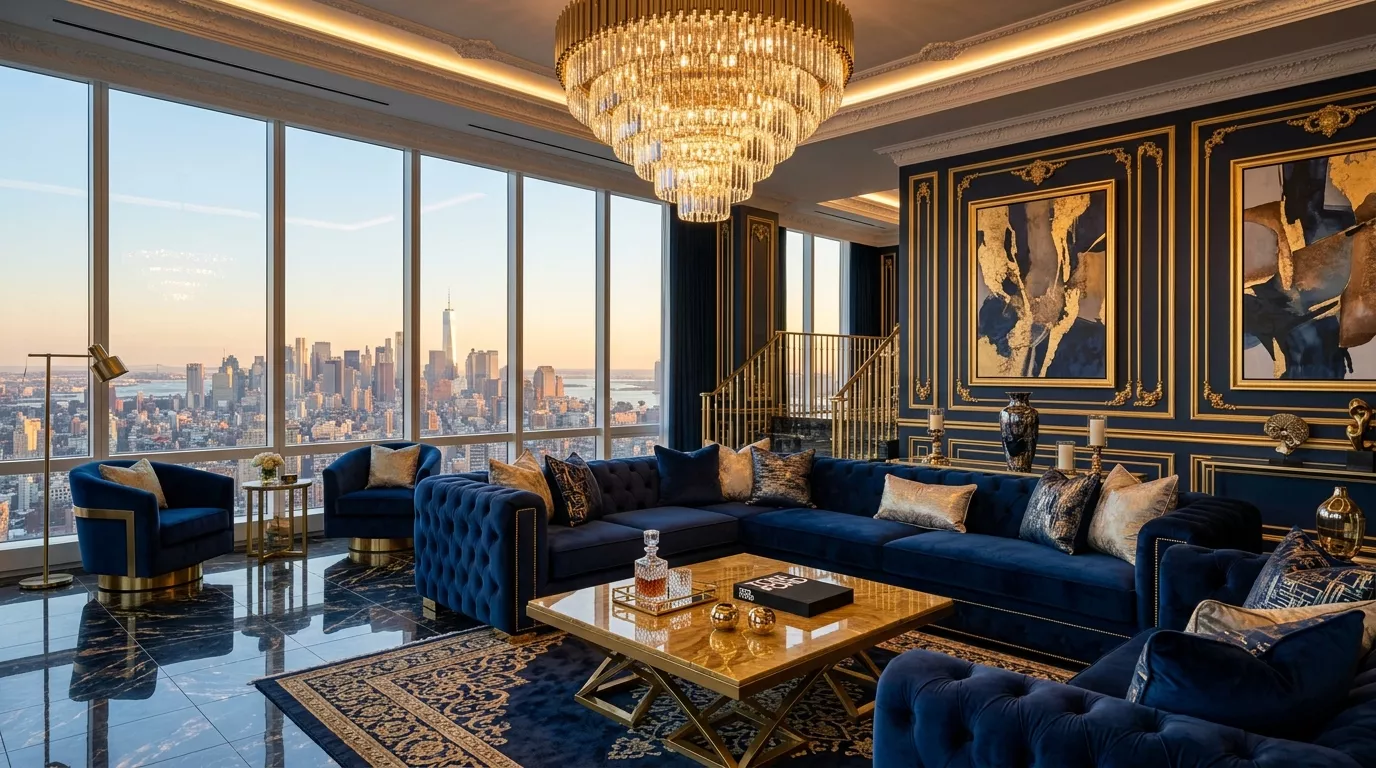
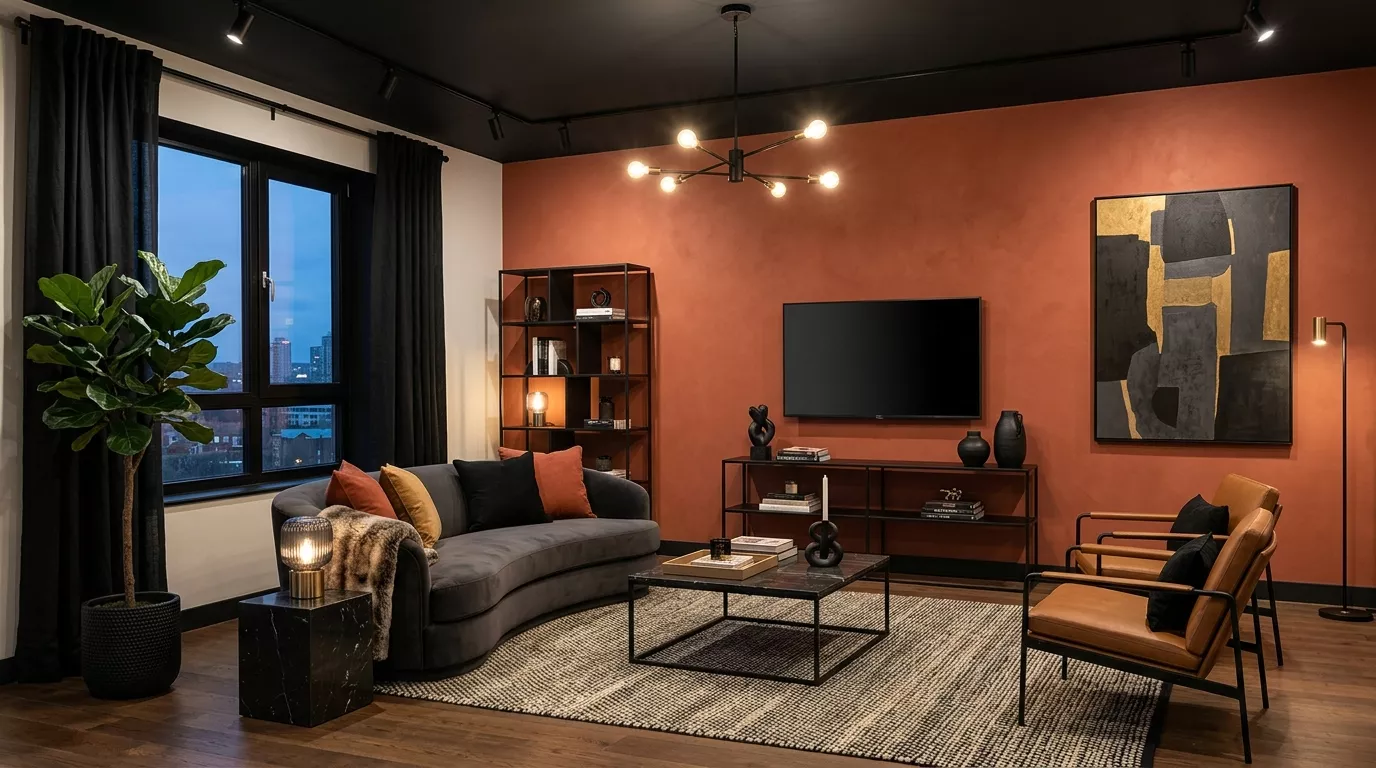
Curved furniture living room ideas have quietly taken over interior design, and once you notice the trend, it’s hard to unsee it.
Rounded sofas, oval coffee tables, and arched shelving units are replacing the boxy, sharp-edged pieces that dominated living rooms for years.
In this guide, we’ll break down why curves work so well, how to use them without overdoing it, and the mistakes that can make a curved layout feel off-balance instead of intentional.
Why Curved Furniture Is Having a Moment
Sharp angles have their place, but too many straight lines in one room can start to feel rigid and cold.
Curved furniture introduces movement and softness, which naturally draws the eye and makes a space feel more inviting.
There’s also a practical side — rounded edges are safer around kids and pets, and curved pieces often fit awkward corners better than boxy alternatives.
Popular Types of Curved Furniture for Living Rooms
Curves show up in almost every furniture category now, but a few pieces tend to make the biggest visual impact.
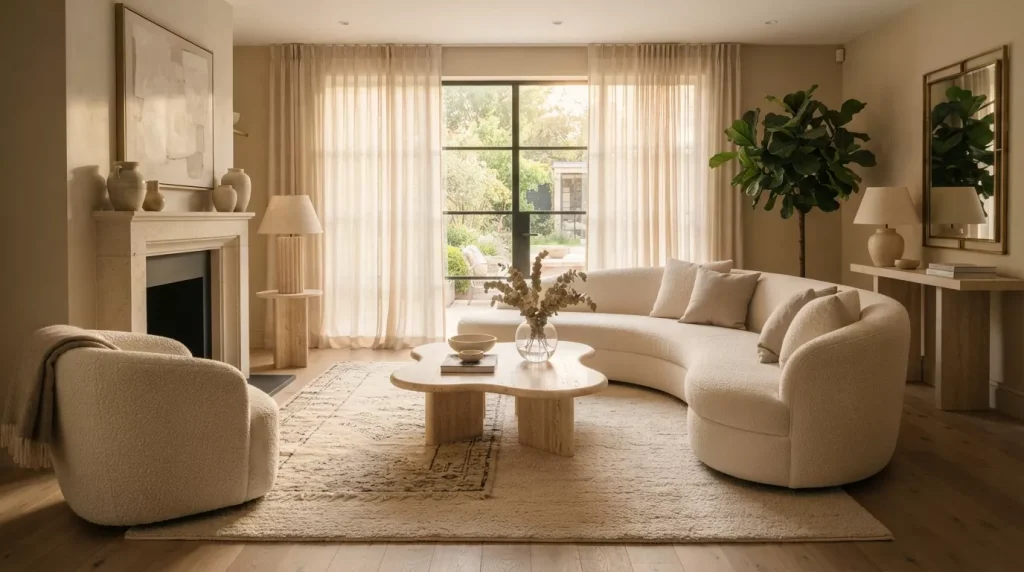
1. Curved Sofas
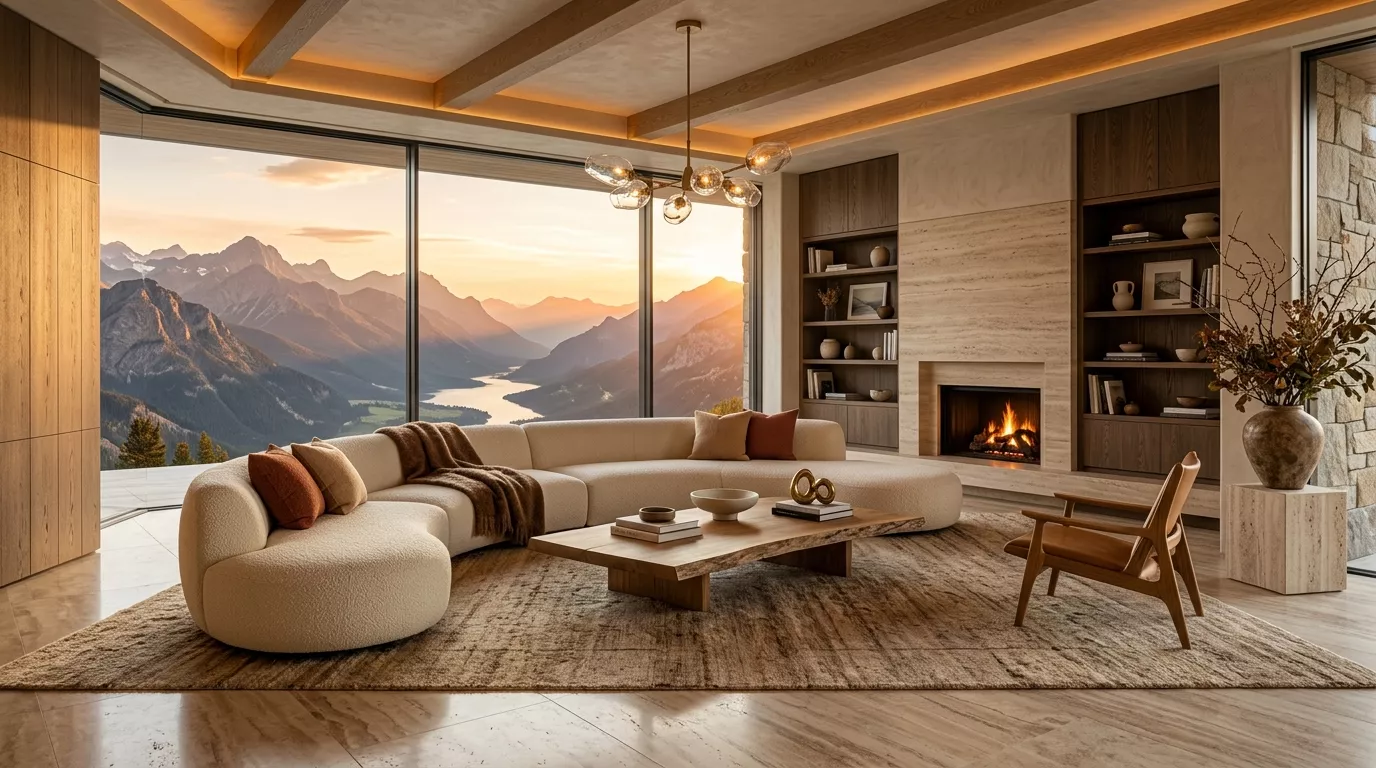
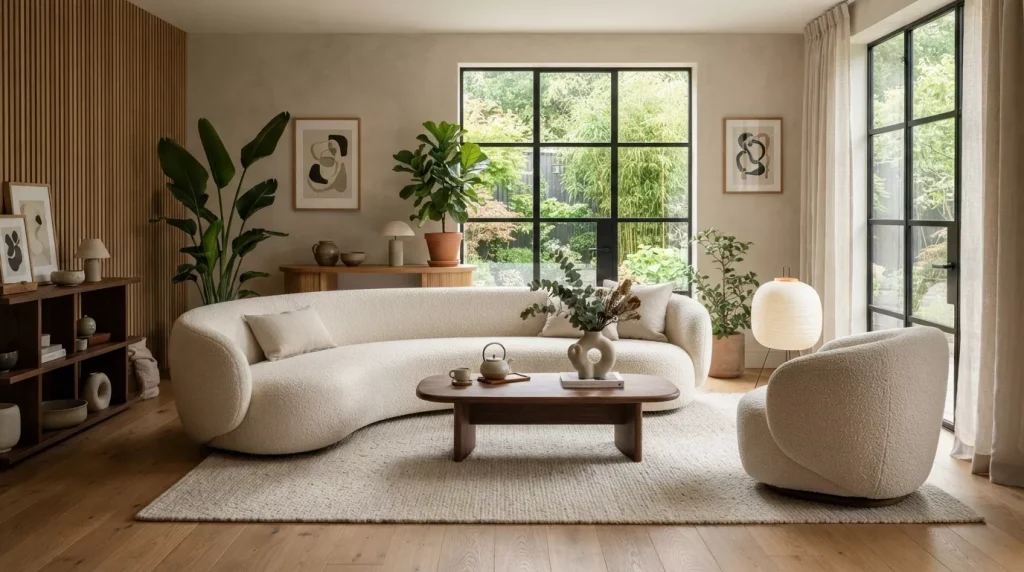
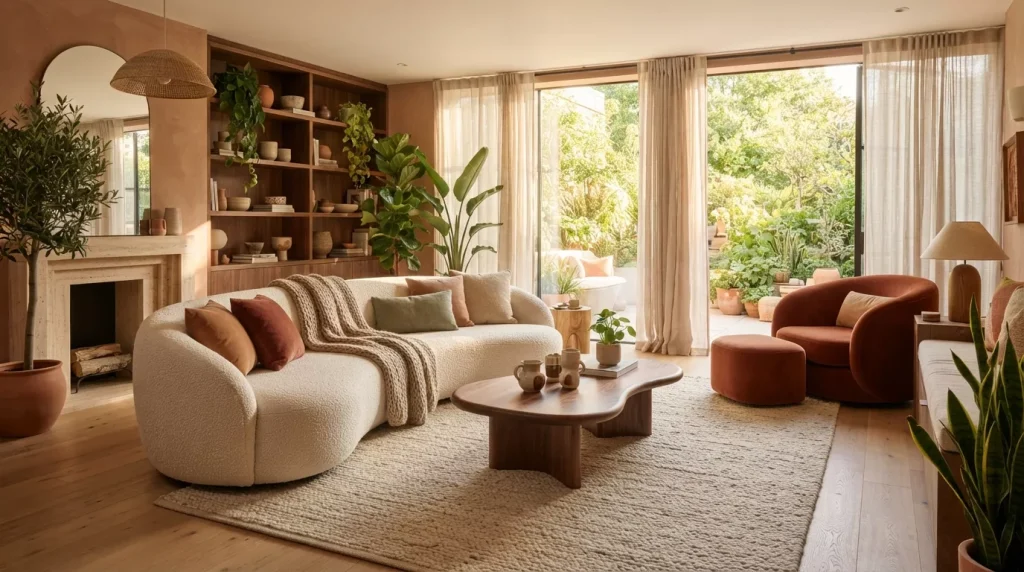
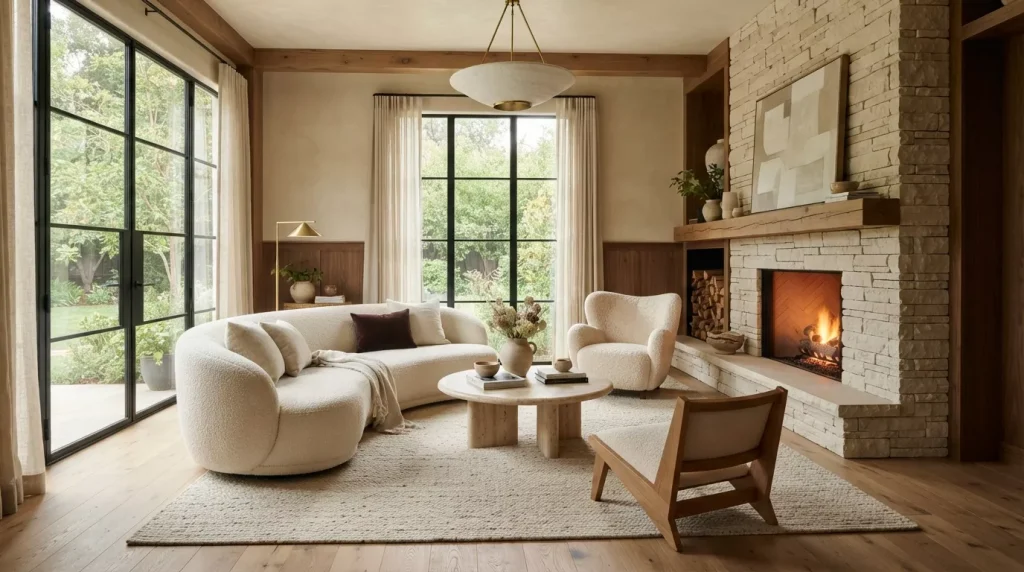
The centerpiece of most curved living rooms, these sofas range from subtly rounded arms to full crescent shapes.
- Creates a natural conversational layout when paired with a coffee table
- Works especially well in open-concept or larger rooms
- Available in modular versions for flexible arrangements
2. Round or Oval Coffee Tables
Swapping a rectangular coffee table for a round or oval one softens the whole seating area instantly.
- Reduces sharp corners in high-traffic walking paths
- Pairs well with both curved and straight-edged sofas
- Comes in a wide range of materials, from wood to stone
3. Arched Mirrors and Wall Art
Vertical curves on the walls balance out horizontal curves in furniture, creating visual rhythm throughout the room.
- Adds height and softness without taking up floor space
- Works well above consoles, mantels, or curved sofas
- Available in budget-friendly framed options
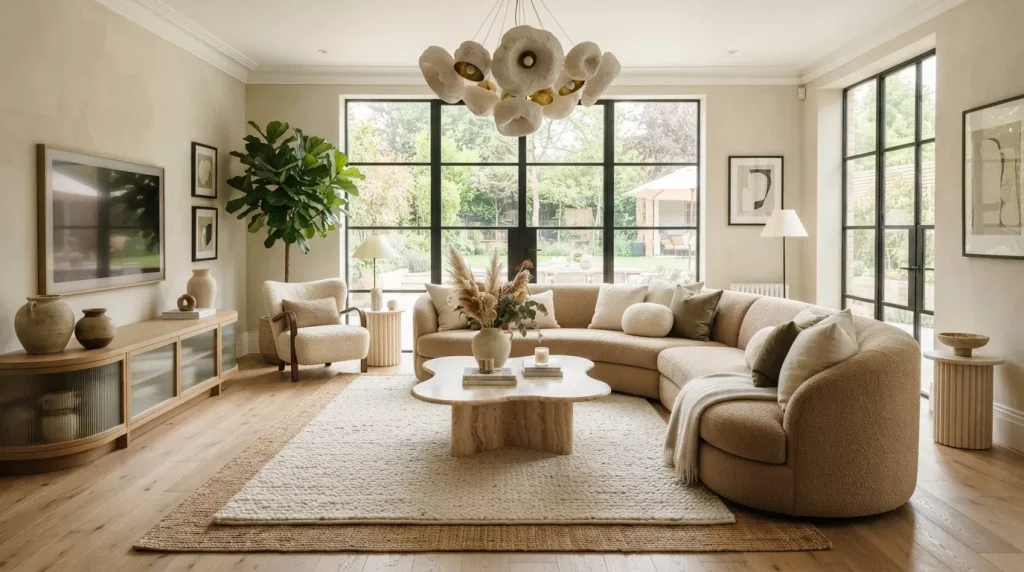
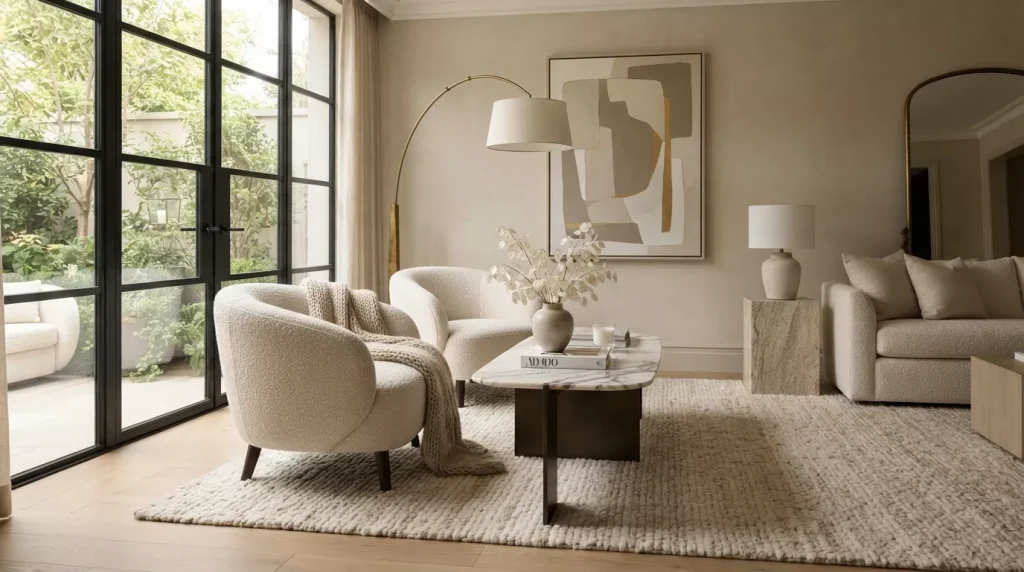
4. Barrel or Swivel Chairs
These rounded accent chairs have become a staple in curved living room designs, often used in pairs.
- Softens seating areas that would otherwise feel boxy
- Swivel bases add function alongside the aesthetic appeal
- Works well in both traditional and modern spaces
5. Curved Shelving and Consoles
Rounded storage pieces are becoming more common, especially in media consoles and bookshelves.
- Reduces visual bulk compared to sharp rectangular units
- Adds a sculptural, furniture-as-art feel to storage
- Works particularly well in rooms with curved architectural details
Curved vs. Straight-Edged Furniture: Which Fits Your Room?
This is one of the first questions to answer before committing to a curved furniture layout.
| Feature | Curved Furniture | Straight-Edged Furniture |
|---|---|---|
| Visual feel | Soft, flowing, organic | Structured, crisp, formal |
| Space efficiency | Can be less efficient in small rooms | Fits corners and walls more precisely |
| Safety | Fewer sharp edges | More corners, higher bump risk |
| Style pairing | Modern, transitional, glam | Modern, minimalist, traditional |
| Price range | Often higher for custom curves | Wide range, more budget options |
If your room has a lot of tight corners or is on the smaller side, a mix of both styles often works better than going fully curved.
How to Mix Curved and Straight Furniture Without It Looking Random
A common concern is that curved furniture will clash with existing straight-edged pieces. The good news is that mixing the two is actually a well-established design approach.
- Anchor the room with one dominant curved piece, like a sofa or coffee table
- Keep supporting pieces, like shelving or media units, straight-edged for balance
- Repeat the curve in at least one other spot — a mirror, rug shape, or light fixture — to avoid it feeling like an isolated accident
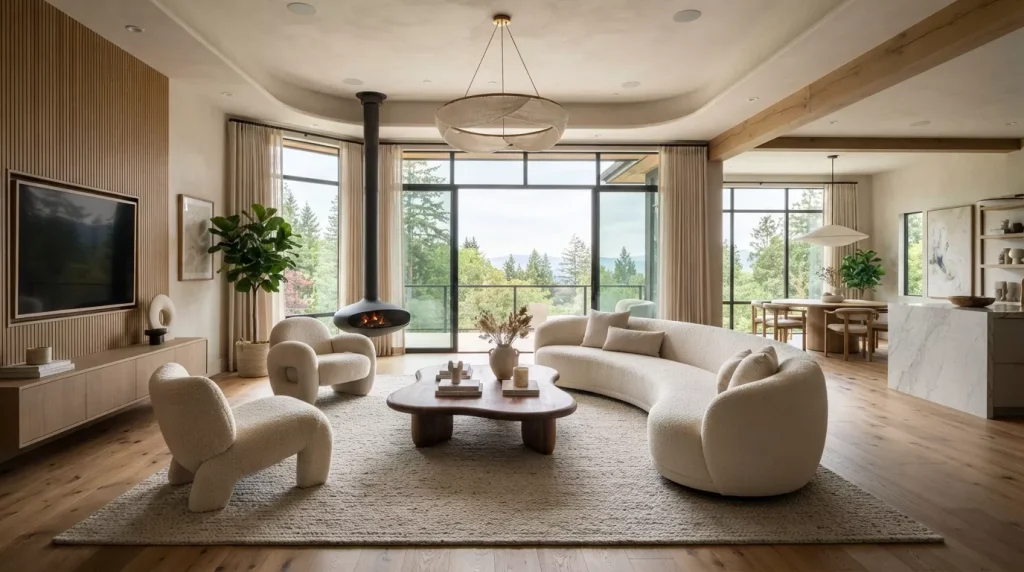
The goal isn’t to eliminate straight lines entirely, but to let curves soften the overall composition.
Step-by-Step: Designing a Curved Furniture Living Room
If you’re starting from scratch or planning a refresh, here’s a simple approach to layering in curves without overwhelming the space.
- Choose your anchor piece. Decide whether the sofa, coffee table, or a statement chair will be your main curved element.
- Map your traffic flow. Curved furniture often works best in rooms where people move around the edges rather than straight through the middle.
- Balance with straight lines elsewhere. Keep shelving, rugs, or drapery more structured to avoid visual overload.
- Layer in secondary curves. Add a round mirror, arched lamp, or curved vase to echo the main piece.
- Consider scale carefully. Oversized curved sofas can overwhelm small rooms, so measure clearances before buying.
- Test with a rug first. A round or curved-pattern rug is a low-commitment way to try the look before investing in furniture.
- Finish with lighting. Soft, warm lighting enhances the organic feel that curved furniture is known for.
Pros and Cons of Curved Furniture in a Living Room
Like any design trend, curved furniture comes with real benefits and a few practical downsides.
Pros:
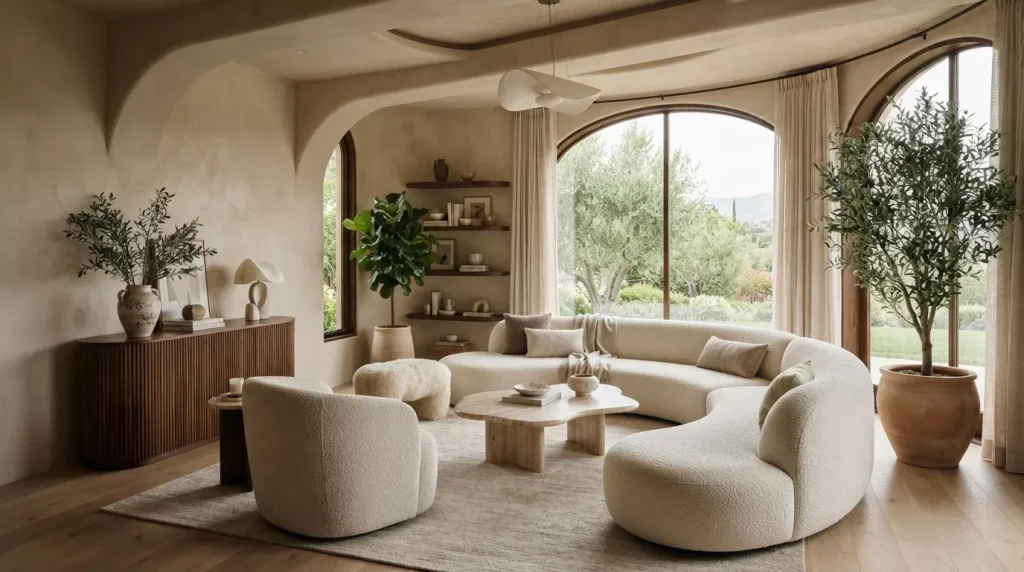
- Softens sharp, boxy layouts and adds visual interest
- Safer for households with young children or pets
- Creates natural, conversation-friendly seating arrangements
- Pairs well with both modern and traditional decor styles
- Often becomes a striking focal point in the room
Cons:
- Can be less space-efficient in smaller or oddly shaped rooms
- Custom or high-end curved pieces tend to cost more
- Harder to fit flush against walls or into tight corners
- Limited availability compared to standard straight-edged furniture
- Overusing curves throughout a room can feel overly trendy rather than timeless
Tips for Styling Curved Furniture
A few small adjustments make curved furniture feel intentional rather than trend-driven.
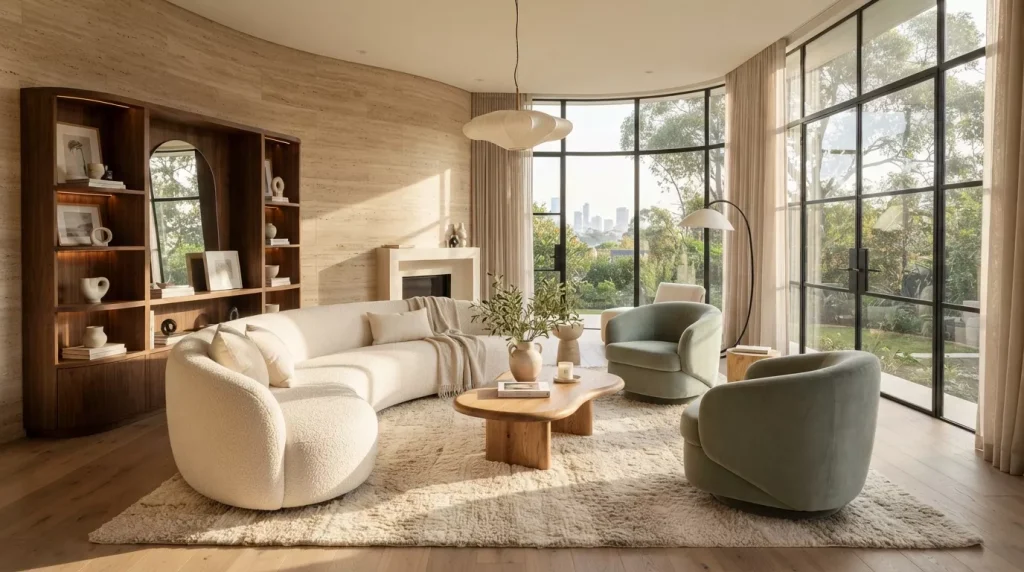
- Stick to one dominant curve per zone rather than layering too many rounded shapes together.
- Choose warm, natural materials like wood or boucle to enhance the soft, organic feel.
- Use curved furniture to break up long, narrow rooms and create a sense of flow.
- Pair curved pieces with textured rugs to reinforce the softness throughout the space.
- Keep color palettes simple so the shape of the furniture becomes the visual focus.
Common Mistakes When Designing With Curved Furniture
A few missteps can make a curved living room feel unbalanced instead of polished.
- Going all-in on curves. Too many rounded shapes without any straight lines can feel chaotic rather than calming.
- Ignoring scale. Oversized curved sofas can dominate smaller rooms and block natural walkways.
- Skipping measurements. Curved furniture often needs more clearance than straight pieces due to its shape.
- Forgetting rug shape. A rectangular rug under a curved sofa can visually clash rather than complement.
- Choosing style over comfort. Some curved sofas prioritize looks over seat depth, so testing in person matters.
Final Thoughts
Curved furniture living room ideas offer a simple way to soften a space without sacrificing style or function.
Whether it’s a single curved sofa or a full room built around rounded shapes, the key is balancing softness with structure so the design feels intentional rather than accidental.
Start small — a round coffee table or an arched mirror — and build from there as you get comfortable with how curves change the feel of your room.
If your living room has been feeling flat or overly rigid, curved furniture might be exactly the update it needs.
Frequently Asked Questions
1. Is curved furniture a passing trend or here to stay?
While it’s currently popular, curved furniture has roots in mid-century and art deco design, suggesting it has staying power rather than being a short-lived trend.
2. Does curved furniture work in small living rooms?
Yes, but scale matters. Smaller curved pieces, like a round coffee table or barrel chair, tend to work better than an oversized curved sofa in tight spaces.
3. What rug shape pairs best with curved furniture?
Round or organically shaped rugs typically complement curved furniture better than sharp rectangular ones, reinforcing the overall soft aesthetic.
4. Can I mix curved and straight furniture in the same room?
Absolutely. Most well-designed rooms use a mix, with one curved anchor piece balanced by straighter supporting furniture like shelving or media units.
5. Are curved sofas comfortable, or just stylish?
It depends on the design. Some prioritize aesthetics over seat depth, so it’s worth sitting on one in person before buying rather than relying on photos alone.
6. What colors work best with curved furniture?
Neutral and warm tones tend to highlight the shape of curved furniture best, letting the silhouette stand out rather than competing with bold patterns.
7. Is curved furniture more expensive than traditional pieces?
Often, yes, particularly for custom or designer pieces, since curved manufacturing tends to be more complex than standard straight-edged furniture.