L-Shaped Sofa Living Room Ideas That Transform Any Space

L-Shaped Sofa Living Room: The Ultimate Guide to Style, Layout & Design
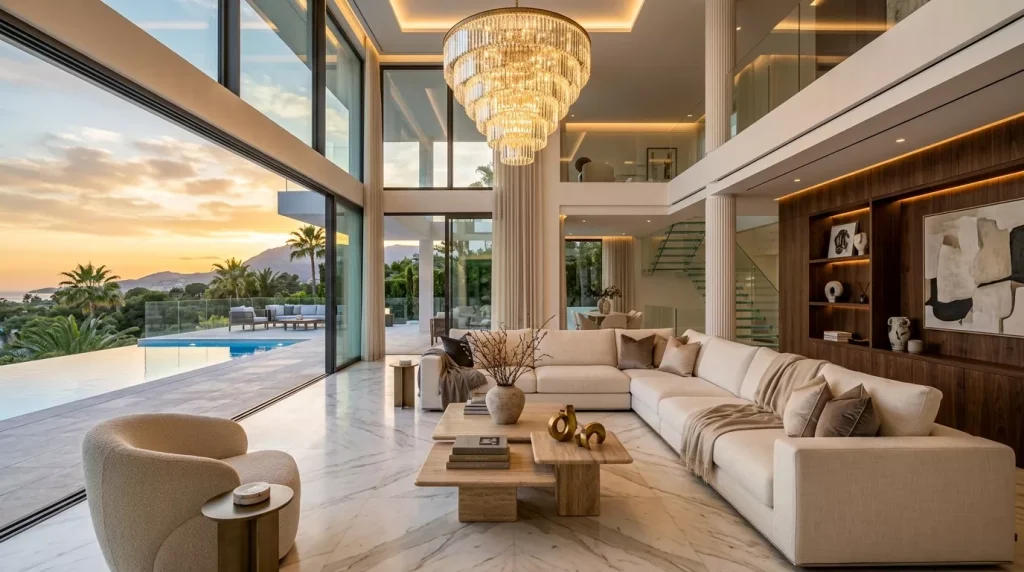
If you’ve been scrolling through interior design feeds lately, chances are you’ve spotted plenty of l-shaped sofa living room setups that stopped you mid-scroll. And honestly? There’s a good reason these sectional beauties keep showing up everywhere. An L-shaped sofa completely changes how a room feels — it defines zones, creates conversation-friendly seating, and makes even a modest space look intentional and put-together.
Whether you’re working with a cozy apartment or a spacious open-plan layout, the right L-shaped sectional sofa can be the anchor your living room has been missing. But it’s not just about throwing a big sofa in the corner and calling it a day. Placement, scale, fabric, and color all matter more than you’d think.
This guide covers everything: layouts, styles, common pitfalls, expert tips, and honest pros and cons — so you can design a living room you’ll actually love spending time in.
Why an L-Shaped Sofa Living Room Makes Total Sense
Let’s be real — standard three-seater sofas feel like a compromise sometimes. You get limited seating, awkward gaps when guests visit, and a living room that never quite feels “complete.” An L-shaped sofa fixes most of that.

The defining feature of this furniture style is its sectional design — two connected pieces that form a natural “L” shape. One side acts as the main sofa, while the chaise lounge or shorter arm creates a corner extension. This shape instantly organizes your living room without you having to overthink it.
It naturally creates a focal point, especially when paired with a center coffee table and a rug that ties the whole area together. Families love it because everyone actually fits. Remote workers love it because the chaise doubles as a reading perch. And design lovers appreciate the visual weight it brings to a room that needs an anchor.
How to Choose the Right L-Shaped Sofa for Your Living Room
Before you click “add to cart,” there are a few things worth thinking through carefully:
1. Room Size and Proportions
Measure your space before you fall in love with a sofa online. An oversized sectional in a small room doesn’t look cozy — it looks like the sofa ate your living room whole. A quick trick: use painter’s tape on the floor to mark out the sofa’s full footprint. This five-minute exercise has saved countless people from expensive regrets.

2. Left-Facing vs. Right-Facing Chaise
This is the detail people forget until the delivery truck shows up. Decide which direction your chaise should face based on your room’s focal point — TV, fireplace, or feature wall. “Right-facing” means the chaise is on your right when you’re seated. “Left-facing” is the opposite. Simple, but absolutely critical to get right.
3. Fabric and Material
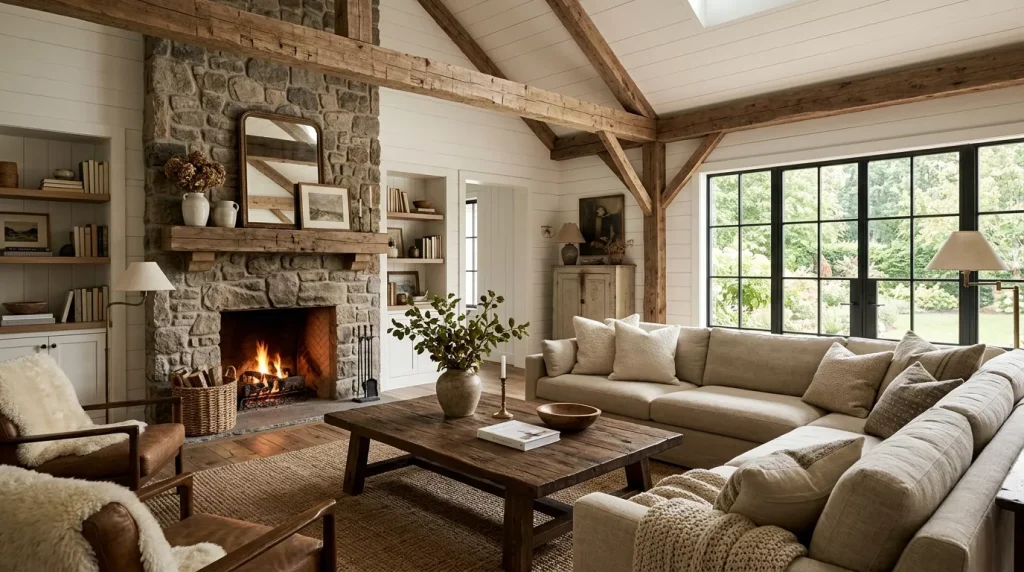
| Fabric Type | Best For | Maintenance Level |
|---|---|---|
| Velvet | Low-traffic spaces, luxe look | High |
| Linen/Cotton blend | Casual, relaxed homes | Medium |
| Leather or Faux Leather | Families, pets | Low |
| Performance Fabric | High-traffic households | Very Low |
| Microfibre | Everyday comfort | Low–Medium |
4. Frame and Cushion Quality
Don’t just sit on it in the showroom — really sit on it. Push on the cushions. Check if the frame wobbles or creaks. A quality sofa should have a hardwood or engineered wood frame with high-density foam cushions. Cheaper frames sag within months, and that’s not a fix — it’s a replacement.
5. Color Considerations
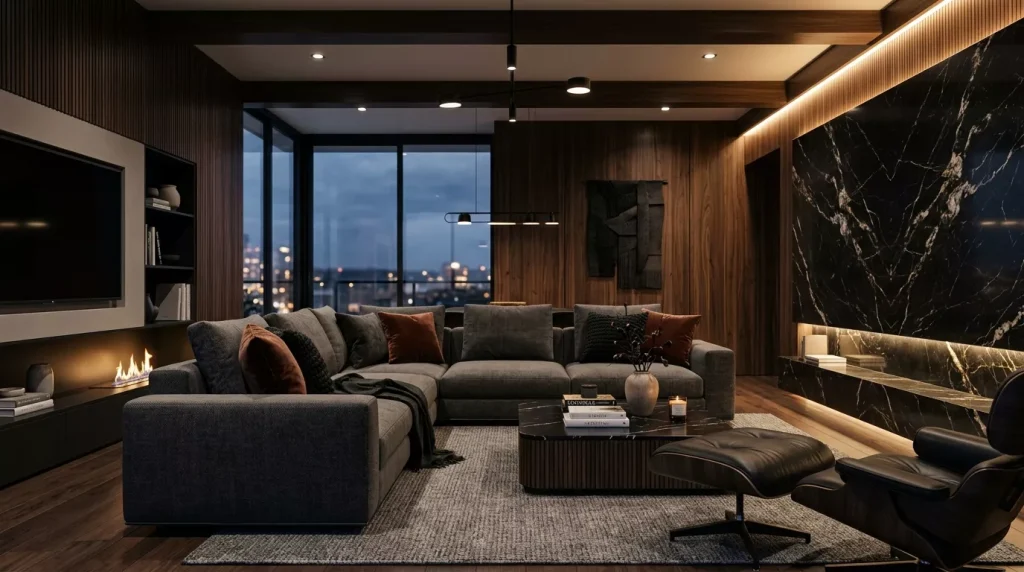
Neutral tones like grey, beige, cream, and navy are the safest bets because they’re easier to style around. But don’t shy away from a bold color if your overall palette can carry it. A deep forest green or terracotta sectional can completely transform a neutral room into something memorable.
L-Shaped Sofa Living Room Layout Ideas That Actually Work
Small Living Rooms
Working with limited square footage doesn’t mean you have to settle for a tiny loveseat and a sad side table. An L-shaped sofa can work beautifully in compact rooms — but only when you choose the right scale and position it smartly.
Go for a corner placement — nestle the sofa into the room’s corner so it doesn’t encroach on your floor space. This keeps pathways clear and prevents the room from feeling cramped. Avoid blocking windows or doorways with the longer section.
Pair it with a slim, transparent coffee table — glass or acrylic work well — to maintain visual breathing room. A light-colored sofa reflects natural light and makes the space feel bigger than it actually is.

Open-Plan Living Spaces
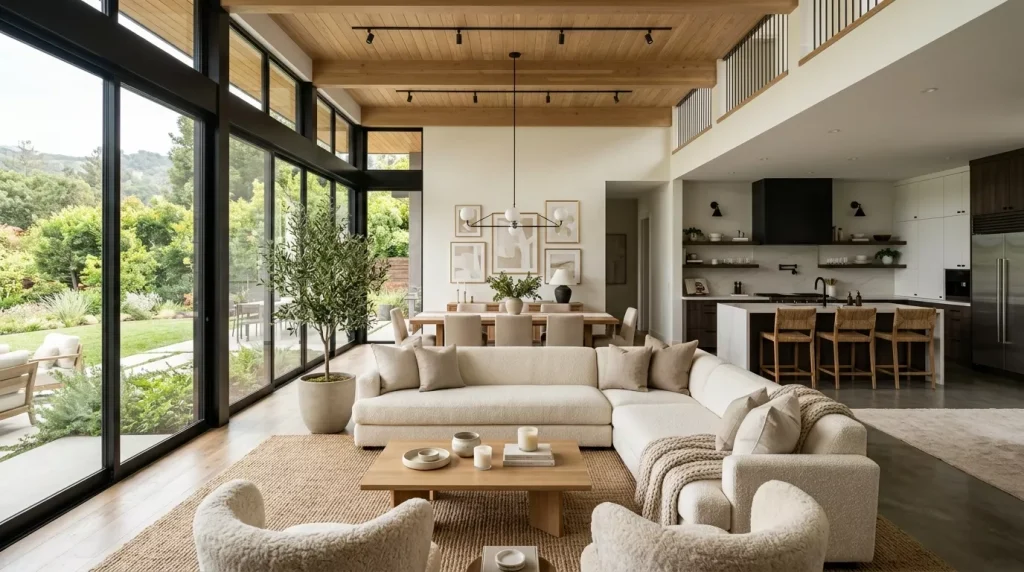
This is where an L-shaped sectional sofa really earns its place. In open-plan layouts, furniture is what creates room definition. Without physical walls, your sofa does the heavy lifting.
Position the sofa so it faces away from the kitchen or dining area, creating a clear visual boundary between zones. The back of the sofa acts as a natural, subtle room divider. Reinforce this further with a large area rug underneath to anchor the living room zone.
Consider a sectional with a built-in shelf along the back panel if you want that division to feel more structured and functional.
Large Formal Living Rooms
Got generous square footage? Lucky you — but large rooms come with their own design challenge: making the space feel inhabited rather than echoing. One regular sofa rarely fills a big room well, and L-shaped sofas are the natural solution.
Place the sofa in the center of the room rather than against the wall. This floating arrangement creates a conversational island and feels far more intentional. Add one or two accent chairs facing the longer section. Use a substantial coffee table — ideally about two-thirds the length of the sofa — to ground the entire arrangement.
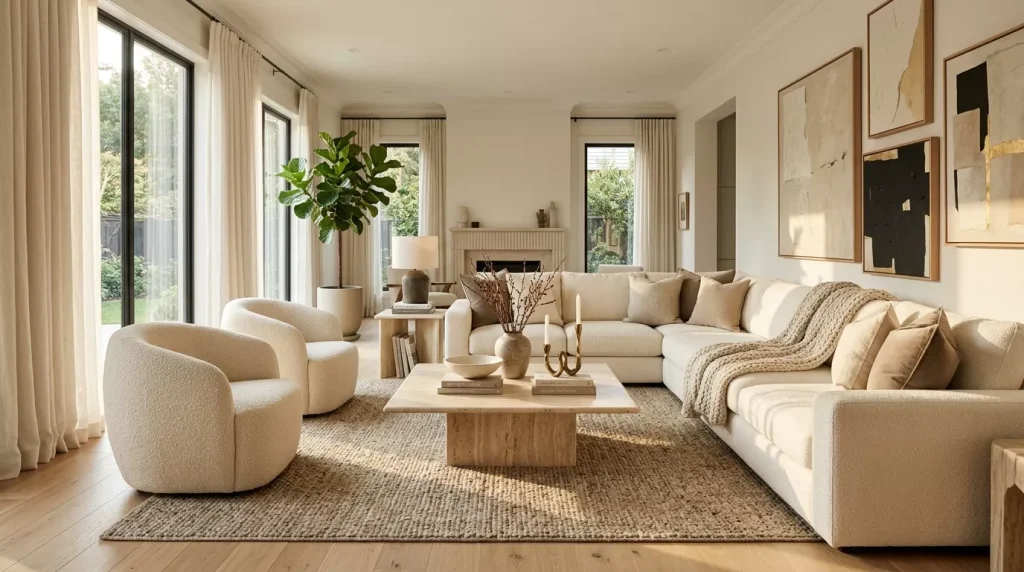
Style Inspiration: L-Shaped Sofa Living Room Themes
One of the best things about L-shaped sofas is just how versatile they are across different design aesthetics. Here are four popular themes and how to pull them off convincingly:
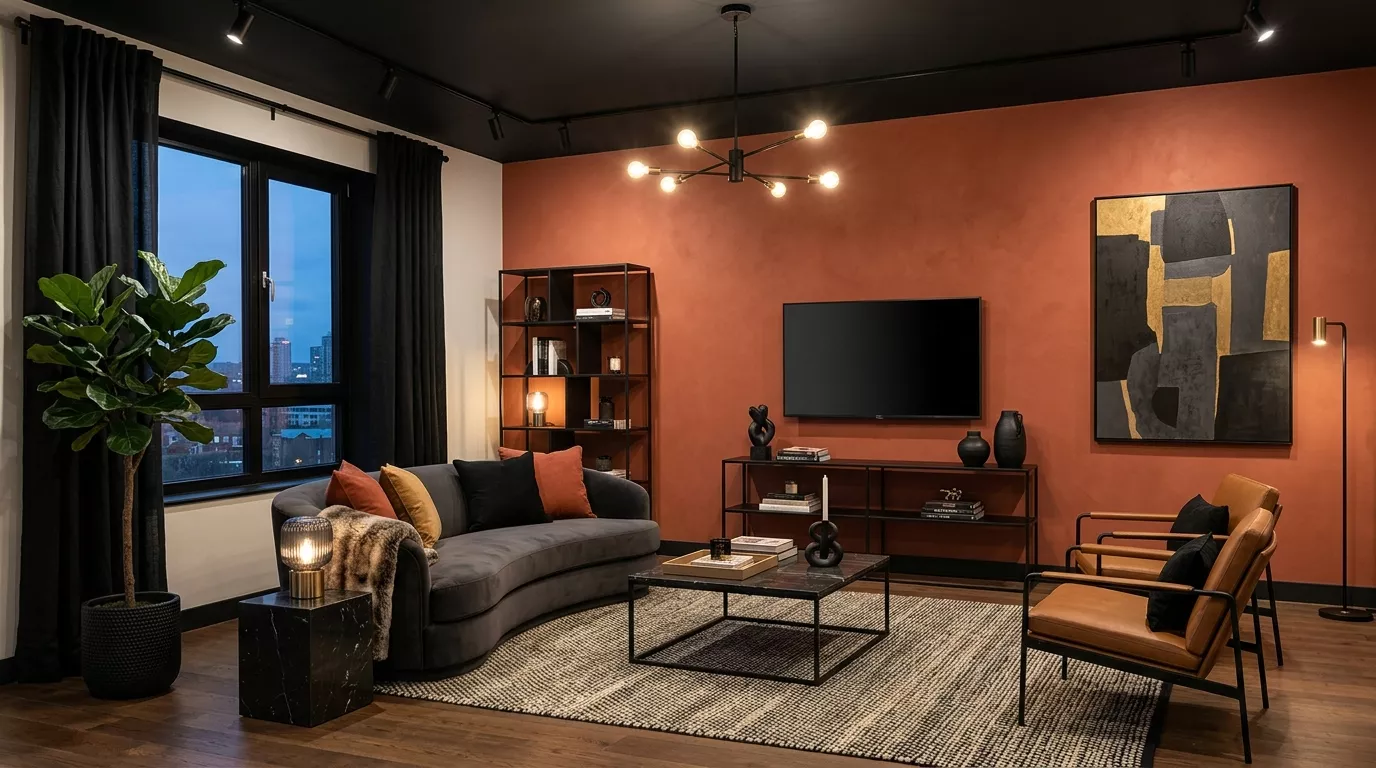
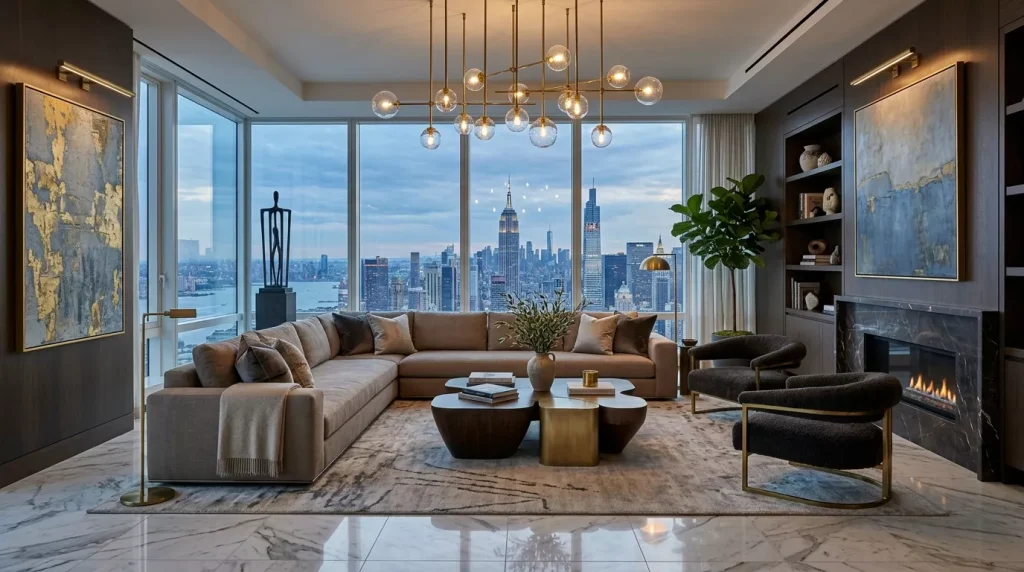
Modern/Contemporary Think clean lines, minimal clutter, monochrome palettes. Choose a sleek, low-profile sectional in dark charcoal or crisp white. Add metallic accents, an abstract statement piece on the wall, and a geometric rug to complete the look.
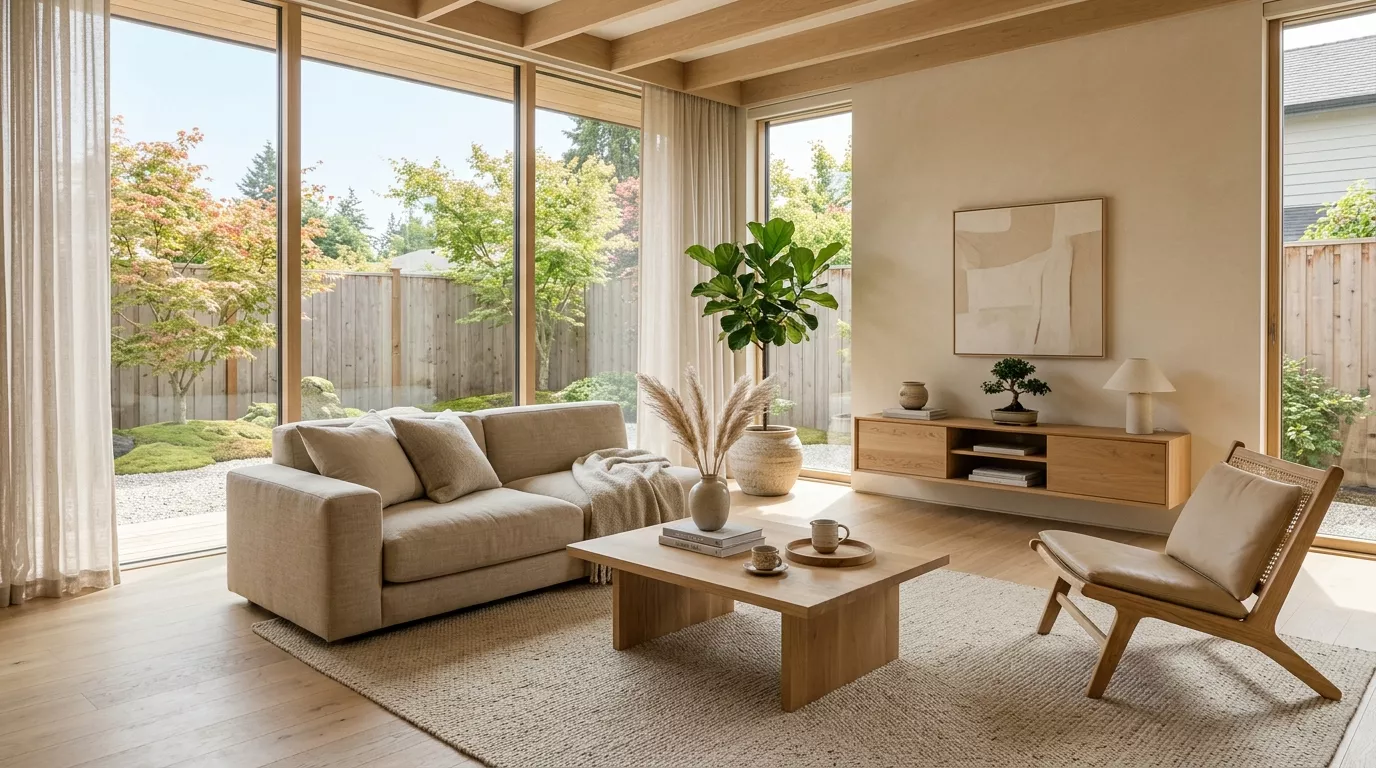
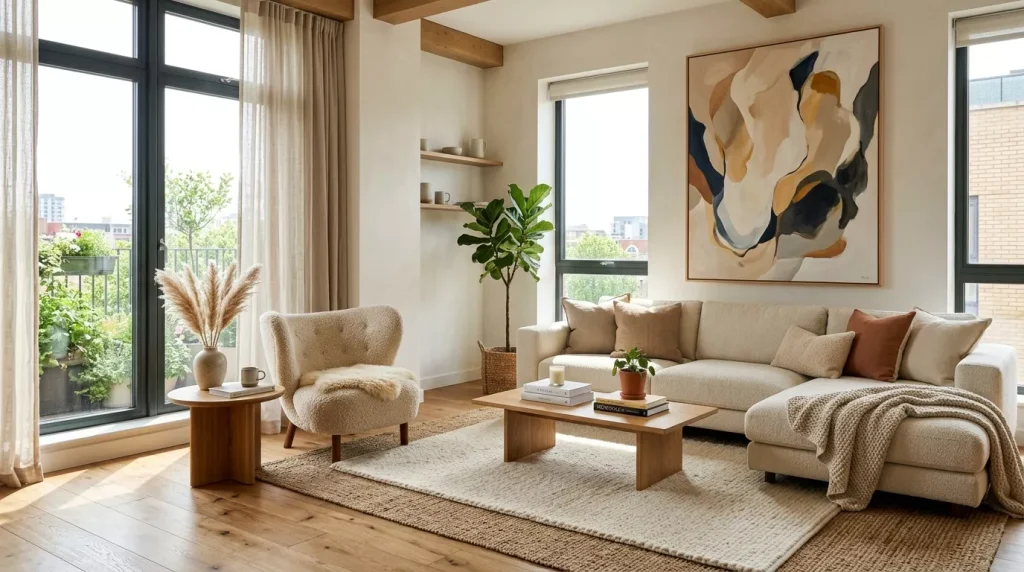
Scandinavian Light wood floors, white walls, and an oatmeal or pale grey sectional. Layer in textured cushions, a chunky knit throw, and simple pendant lighting overhead. The goal is calm, functional warmth.
Bohemian Boho actually loves an L-shaped sofa because the generous surface area is perfect for layering cushions and throws in mixed patterns. Go for terracotta, mustard, or olive tones. Don’t worry about making things match too precisely — that’s exactly the point.
Industrial Dark leather or charcoal grey sectional, exposed brick or concrete walls, Edison bulb lighting, and raw wood accent pieces. The sofa brings warmth against all that hard texture and material contrast.
Comparison: L-Shaped Sofa vs. Other Sofa Types
| Feature | L-Shaped Sofa | Standard 3-Seater | Loveseat | Chaise Lounge |
|---|---|---|---|---|
| Seating Capacity | 4–7 people | 2–3 people | 2 people | 1 person |
| Space Required | Medium–Large | Small–Medium | Small | Small |
| Room Zone Definition | Excellent | Moderate | Low | Very Low |
| Versatility | Very High | High | Low | Low |
| Price Range | Mid–High | Low–High | Low–Mid | Low–Mid |
| Best Use Case | Families, open plans | Smaller rooms | Studios, bedrooms | Reading nooks, accents |
The comparison is clear: L-shaped sofas offer the strongest combination of seating capacity, room-defining power, and design impact. The trade-off is that they require more floor space and carry a higher upfront cost.
Pros and Cons of L-Shaped Sofas in Living Rooms
✅ Pros
- Maximum seating — Comfortably fits a family or group without adding extra chairs
- Zone definition — Divides open-plan spaces into functional areas naturally
- Lounging comfort — The chaise section gives you that full stretch-out comfort a regular sofa can’t match
- Strong visual impact — Makes an immediate design statement and anchors the room
- Storage options — Many models include built-in storage inside the chaise section
- Flexible configuration — Some sectionals are modular and can be rearranged over time
❌ Cons
- Requires more floor space — Not ideal for very small or narrow rooms
- Tricky to move — Heavy sectional pieces are awkward during home rearrangements or relocations
- Higher price point — Quality sectionals cost more than standard sofas upfront
- Limited in long, narrow rooms — The L-shape can feel unbalanced in oddly-proportioned spaces
- Delivery challenges — Wide sections sometimes don’t fit through narrow hallways or doorways
Step-by-Step Guide: How to Arrange an L-Shaped Sofa in Your Living Room
Follow these steps and the process becomes much less overwhelming:
Step 1: Measure the Room Note the total dimensions of your space, including doorways, windows, and any fixed architectural features like fireplaces or built-in shelves.
Step 2: Identify Your Focal Point Every room needs a focal point — a fireplace, a TV unit, or a feature wall. Your sofa should orient toward this.
Step 3: Decide on Sofa Orientation Based on your focal point, determine whether a left-facing or right-facing chaise suits your layout better.
Step 4: Mark the Footprint on the Floor Use painter’s tape to outline where the sofa will sit. This takes five minutes and prevents expensive regret later.
Step 5: Think About the Rug Size First A rug should sit under the front legs of the sofa at minimum. Make sure your planned rug size works with the sofa footprint before buying either piece.
Step 6: Check Traffic Flow Leave at least 18 inches of clear walkway around the sofa on all sides. Never block natural pathways from the entrance to the rest of the room.

Step 7: Layer in Accent Furniture Once the sofa is placed, bring in your coffee table, side tables, and accent chairs. Work outward from the sofa as your anchor.
Color and Fabric Choices for Your L-Shaped Sofa
Color psychology plays a genuine role in how a room feels day to day:
- Grey — Safe, modern, and pairs effortlessly with almost everything
- Beige or Cream — Warm and welcoming, especially in rooms with natural light
- Navy Blue — Bold but sophisticated; creates a strong focal point
- Olive Green — Earthy, contemporary, and trending in nature-inspired interiors
- Charcoal — Dramatic and sleek; hides daily wear impressively well
- White — Fresh and light, but needs consistent upkeep to maintain its look
Think about your actual lifestyle before choosing a fabric. Pets, young children, and heavy daily use call for performance fabrics or leather. For a calmer household, velvet or quality linen adds a layer of elegance that synthetic fabrics simply can’t replicate.

Tips for Getting the Most Out of Your L-Shaped Sofa Living Room
- Size up on your area rug — When in doubt, go bigger. A rug that’s too small makes the whole arrangement look ungrounded.
- Layer cushions in odd numbers — Three or five looks more natural and considered than even pairs lined up in a row.
- Float the sofa in large rooms — Don’t push it against the wall. Centering it creates a purposeful, designed-looking layout.
- Use the chaise end intentionally — A folded throw and a reading floor lamp turn it into a proper, cozy nook.
- Add a console table behind the sofa in open-plan spaces — it creates a natural room boundary and adds extra surface area.
- Consider sofa leg height — Higher legs make a room look airier and bigger; low or legless designs feel more grounded and contemporary.
- Balance the visual weight — Add a tall plant, floor lamp, or artwork near the shorter end of the L to avoid the layout feeling lopsided.
Common Mistakes to Avoid
Buying before measuring The most common and most costly mistake. Always measure your room, your doorways (for delivery day), and mark out the sofa footprint on the floor before committing.
Choosing the wrong chaise direction A left-facing chaise in a room that clearly needs a right-facing one will feel perpetually “off” — and you’ll notice it every single day.

Going too small with the rug A small rug floating under a large sectional looks like an afterthought. Larger rugs visually tie everything together and make the arrangement feel complete.
Blocking windows or doorways Natural light is worth protecting. Never position any part of the sofa where it blocks window light or makes a doorway feel awkward to pass through.
Ignoring traffic flow A beautiful arrangement that forces people to squeeze between the sofa and the wall gets frustrating fast. Design for how people actually move through the space.
Over-matching everything Coordinated is great. Matchy-matchy looks stiff. Mix textures and tones in your cushions and accessories — it reads as more natural and layered.
Forgetting about long-term maintenance A gorgeous cream linen sectional sounds dreamy until the third coffee spill. Be genuinely honest about your lifestyle before committing to any specific fabric.
Conclusion

An L-shaped sofa living room isn’t just a passing design trend — it’s a genuinely smart way to make your space work harder for the way you actually live. When chosen thoughtfully and placed with intention, a sectional sofa becomes the true heart of the home: the place where family settles in, guests pile onto cushions, and you finally get to stretch out properly after a long day.
The key is planning before purchasing, being realistic about your lifestyle, and making intentional choices about layout, scale, and style. Resist the urge to rush any part of the process.
Start today by measuring your space — seriously, just grab that tape measure right now. That one simple step makes every decision that follows clearer and easier. Your perfect L-shaped sofa living room is genuinely closer than you think. Go make it happen.
Frequently Asked Questions (FAQs)
Q1: What size L-shaped sofa is best for a small living room?
For smaller rooms, look for a compact sectional with a total length no greater than 230–250 cm on the longest side. A two-seater main section with a shorter chaise attachment usually works well without dominating the space. The golden rule: always mark the footprint on the floor with painter’s tape before buying.

Q2: Can an L-shaped sofa work in a rectangular room?
Absolutely. In a rectangular room, position the longer section of the sofa along the longest wall, with the chaise extending toward the center of the room. This balances the proportions naturally and keeps the layout feeling symmetrical and deliberate.
Q3: Should the sofa face the TV or the fireplace?
Face your sofa toward whichever is the primary focal point — usually the TV in most modern homes. If you have both, angle the sofa so you have a comfortable sightline to each. Also consider window placement: avoid positions where daylight creates glare on the screen.
Q4: How do I know if I need a left-facing or right-facing chaise?
Stand at the sofa position and face your room’s focal point. If you want the chaise extending to your right side, choose a right-facing configuration. If you want it on the left, go left-facing. It’s entirely determined by your room’s layout and how you want foot traffic to flow around the seating area.
Q5: Are L-shaped sofas a good choice for families with young children?
Yes — they’re among the most practical choices for busy family homes. The generous seating means everyone fits without squeezing, and the chaise gives kids their own dedicated lounging spot. Always opt for a performance fabric or a removable, washable cover if you want the sofa to survive daily family life looking reasonably intact.
Q6: How should I style cushions on an L-shaped sofa?
Start with two to four larger cushions (around 50–60 cm) as your foundation layer, then bring in smaller accent cushions in front. Mix textures — a velvet cushion sitting next to a woven or linen one always looks more interesting than a matched set from the same range. Keep colors in the same tonal family as your room’s palette, and leave enough actual seat space to sit comfortably.
Q7: What coffee table shape works best with an L-shaped sofa?
Round or oval tables complement L-shaped sofas particularly well because they soften all the angular lines the sofa brings. In larger rooms, a rectangular table also works fine. For small spaces, a cluster of two or three small round poufs or ottomans works beautifully — they double as a coffee surface and as extra seating whenever you need it.