Bedroom Bench Ideas to Elevate Your Space

Bedroom Bench Ideas: The Small Addition That Changes a Room

Bedroom bench ideas rarely get the spotlight in room design, yet they’re one of the easiest ways to make a bedroom feel finished.
Placed at the foot of a bed, a bench adds a practical landing spot for clothes, shoes, or blankets, while also grounding the whole layout visually.
In this guide, we’ll cover the styles, materials, and placement strategies that make a bedroom bench actually work — not just look good in photos.
Why a Bedroom Bench Is More Useful Than You’d Expect
At first glance, a bench might seem like a purely decorative extra. In practice, it solves several everyday problems at once.
It gives you a place to sit while putting on shoes, a spot to toss the day’s clothes instead of the floor, and a visual anchor that keeps a tall bed from feeling like it’s floating in the room.
For bedrooms with high ceilings or oversized beds, a bench also helps balance proportions that would otherwise feel top-heavy.
Types of Bedroom Benches to Consider
Not every bench serves the same purpose, so it helps to know your options before choosing one.
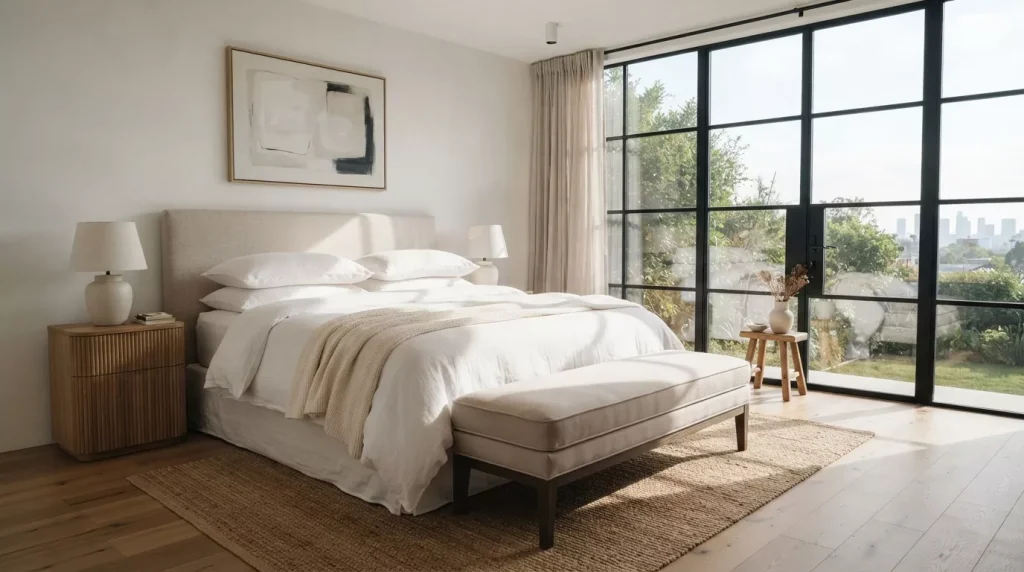
1. Upholstered Benches
These are the most common choice for bedrooms, offering a soft, comfortable surface that complements headboards and bedding.
- Available in fabrics like velvet, linen, or boucle
- Adds texture and softness to an otherwise hard-surfaced room
- Best paired with stain-resistant fabric if used daily
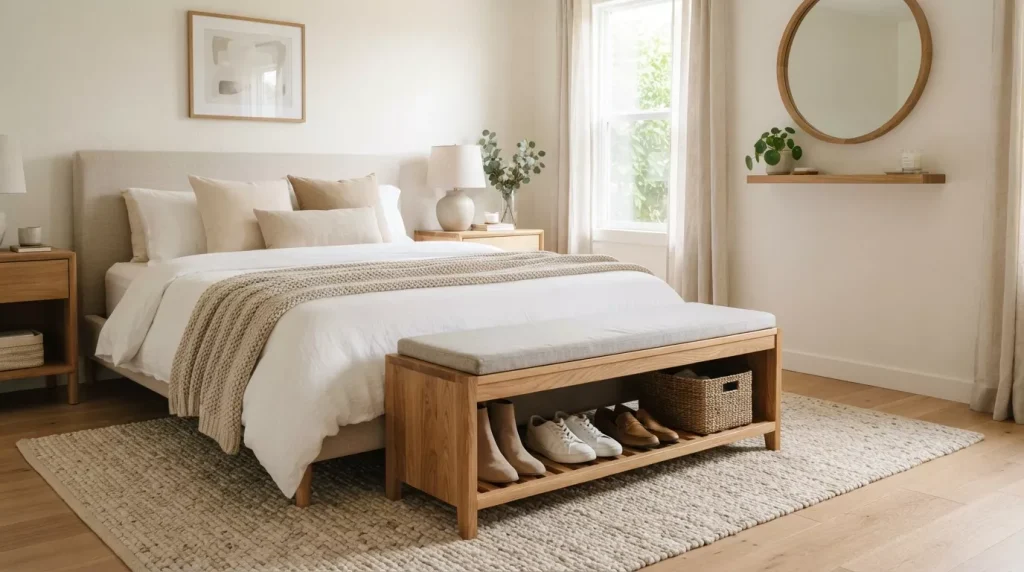
2. Storage Benches
Ideal for smaller bedrooms, these combine seating with hidden storage for extra blankets, shoes, or seasonal items.
- Reduces clutter without sacrificing floor space
- Often features a lift-top lid or front-facing drawers
- Doubles as a practical solution in shared or guest bedrooms
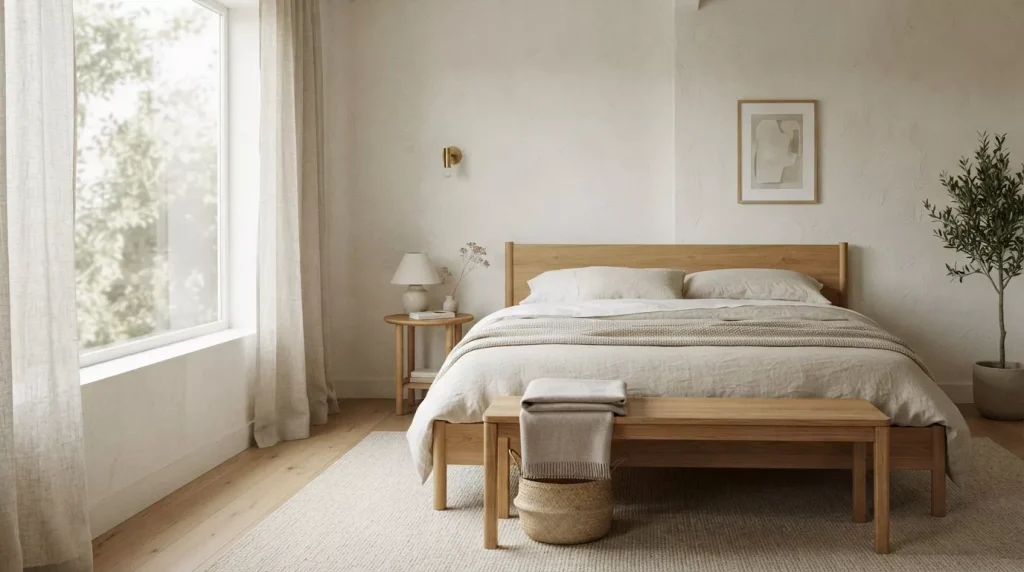
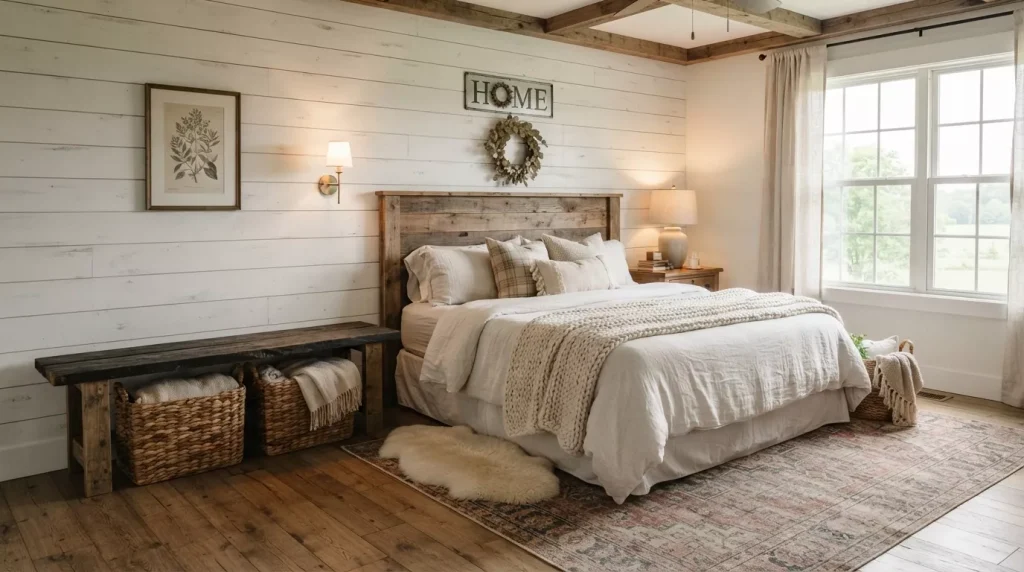
3. Wooden Benches
A wooden bench brings warmth and a more traditional or rustic feel, especially in farmhouse or transitional bedrooms.
- Extremely durable and long-lasting
- Works well as a layering surface for folded throws
- Pairs nicely with natural wood furniture already in the room

4. Backless Benches
Simple and space-saving, backless benches are versatile enough to work at the foot of a bed or along a wall.
- Easier to tuck under a window or shelf when not in use
- Lower visual weight, good for small or minimalist bedrooms
- Usually more affordable than benches with a back or arms
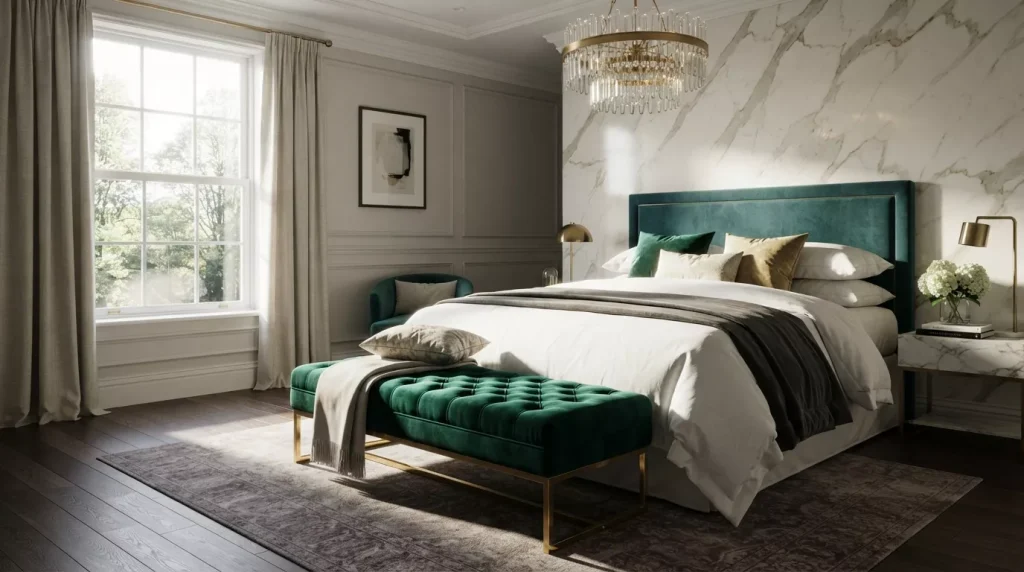
5. Tufted or Channel-Back Benches
For a more elevated, boutique-hotel feel, tufted or channel-back benches add a touch of glamour.
- Works especially well in formal or luxury-style bedrooms
- Adds a sculptural, statement-piece quality
- Typically priced higher due to detailed upholstery work
Bedroom Bench Placement Ideas
Where you put a bench matters just as much as which style you choose. Here are the most common placement options.
- Foot of the bed – The classic choice, ideal for larger bedrooms with extra floor space
- Under a window – Works well in smaller rooms where bed-foot space is tight
- Beside a walk-in closet – Useful as a spot to sit while getting dressed
- At the end of a hallway or nook – A creative option for benches with storage or decorative appeal
- Against a blank wall – Adds function and visual interest to an otherwise empty stretch of wall
Bench vs. Ottoman vs. Chair: Which Works Best at the Foot of the Bed
This is a common point of confusion when furnishing the end of a bed, so here’s a simple side-by-side breakdown.
| Feature | Bench | Ottoman | Chair |
|---|---|---|---|
| Seating capacity | 2 or more | Usually 1 | 1 |
| Storage option | Common | Sometimes | Rarely |
| Visual weight | Moderate | Light | Heavier |
| Best for | Larger beds, longer walls | Small spaces, extra footrest | Reading nooks, accent seating |
| Style versatility | High | High | Moderate |
If you need multi-person seating or storage, a bench is usually the better choice. For smaller rooms or softer footrest use, an ottoman works well instead.
Step-by-Step: Choosing the Right Bedroom Bench
Picking the right bench doesn’t have to be complicated if you follow a simple process.
- Measure your bed’s width. A bench should generally be the same width as your bed or slightly narrower.
- Check clearance space. Make sure there’s enough room to walk around the bench comfortably.
- Decide on function. Determine if you need storage, extra seating, or purely a decorative surface.
- Choose a material that fits your lifestyle. Upholstered benches look elegant but may need more care than wood.
- Match your existing furniture tones. Coordinate with your headboard, nightstands, or flooring for a cohesive look.
- Consider height. A bench that’s too tall or short compared to your bed frame can look mismatched.
- Test comfort if seating is a priority. Sit on it in-store or check reviews if buying online.
Pros and Cons of Adding a Bedroom Bench
Before committing to one, it’s worth weighing the practical trade-offs.
Pros:
- Adds functional seating and a practical clothing landing spot
- Balances proportions in rooms with tall beds or high ceilings
- Can double as hidden storage in smaller bedrooms
- Enhances the overall styling and finished look of the room
- Works across nearly every design style, from modern to traditional
Cons:
- Takes up floor space that some smaller bedrooms can’t spare
- Upholstered options may require more cleaning and upkeep
- Poorly sized benches can look awkward next to the bed
- Higher-end tufted or designer benches can be a significant investment
- Storage benches with lift-tops may not suit heavier bedding items well
Tips for Styling a Bedroom Bench
A few small touches make a bedroom bench feel intentional rather than an afterthought.
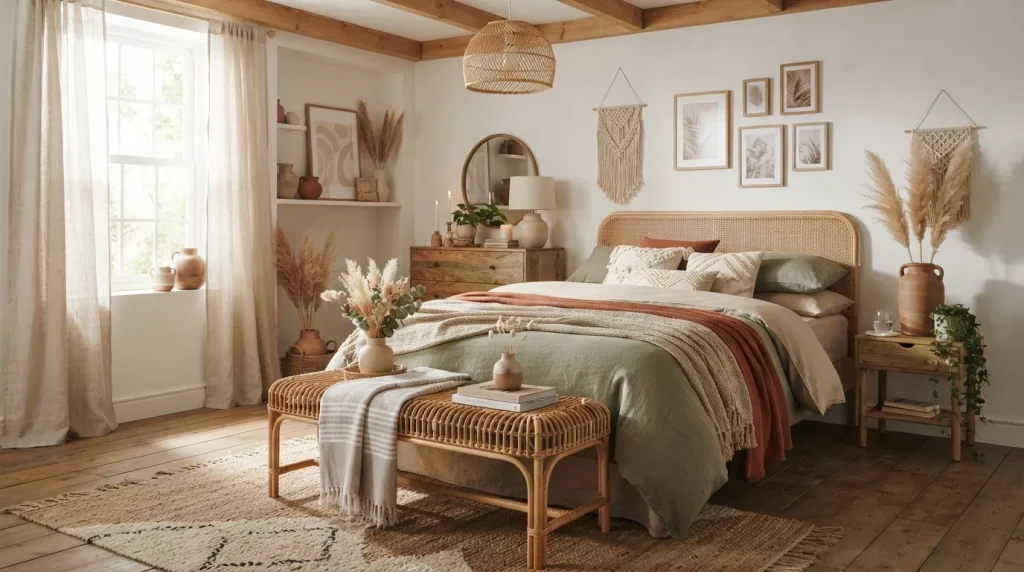
- Layer a folded throw blanket across the bench for texture and warmth.
- Add two small decorative pillows if the bench has enough depth to support them.
- Choose a fabric slightly different from your bedding to avoid a too-matchy look.
- Keep the bench length close to the width of your mattress for visual balance.
- If space is tight, opt for a backless design that can double as extra seating elsewhere when needed.
Common Mistakes People Make With Bedroom Benches
A few avoidable errors can make a bench feel out of place rather than purposeful.
- Choosing a bench too small for the bed. A narrow bench in front of a king-size bed can look disproportionate.
- Ignoring walking space. Not leaving enough clearance makes the room feel cramped rather than functional.
- Overloading it with decor. Piling on too many pillows or blankets defeats its practical purpose.
- Picking the wrong fabric. Delicate materials can wear quickly if the bench is used daily for sitting or dressing.
- Forgetting scale with bed height. A bench that’s noticeably taller or shorter than the mattress can look mismatched.
Final Thoughts
Bedroom bench ideas prove that sometimes the smallest additions make the biggest difference in how a room feels finished.
Whether you choose a soft upholstered piece, a practical storage bench, or a simple wooden design, the right bench brings both function and visual balance to your bedroom.
Start by measuring your bed and clearance space, then choose a style and material that matches how you’ll actually use it day to day.
If your bedroom has been missing that last finishing touch, a well-chosen bench might be exactly what ties the whole room together.
Frequently Asked Questions

1. How wide should a bedroom bench be compared to the bed?
A bench should generally match your bed’s width or be slightly narrower, so it doesn’t overhang awkwardly on either side.
2. Are storage benches worth it in small bedrooms?
Yes, storage benches are especially useful in smaller rooms since they provide seating and hidden storage without needing extra furniture.
3. What’s the best fabric for a bedroom bench that gets used daily?
Durable, tightly woven fabrics like performance velvet or linen blends tend to hold up better than delicate materials with frequent use.
4. Can I use an ottoman instead of a bench at the foot of my bed?
Yes, an ottoman works well in smaller spaces or when you want a softer footrest option rather than a bench built for multiple people.
5. Does a bedroom bench need to match my headboard?
It doesn’t need to match exactly, but coordinating tones or materials creates a more cohesive, put-together look in the room.
6. What height should a bedroom bench be?
Most bedroom benches range from 17 to 20 inches tall, ideally sitting close to or slightly below the height of the mattress.
7. Is a wooden or upholstered bench better for a bedroom?
It depends on your style and maintenance preference — wood is more durable and low-maintenance, while upholstered benches add softness but may need more care.