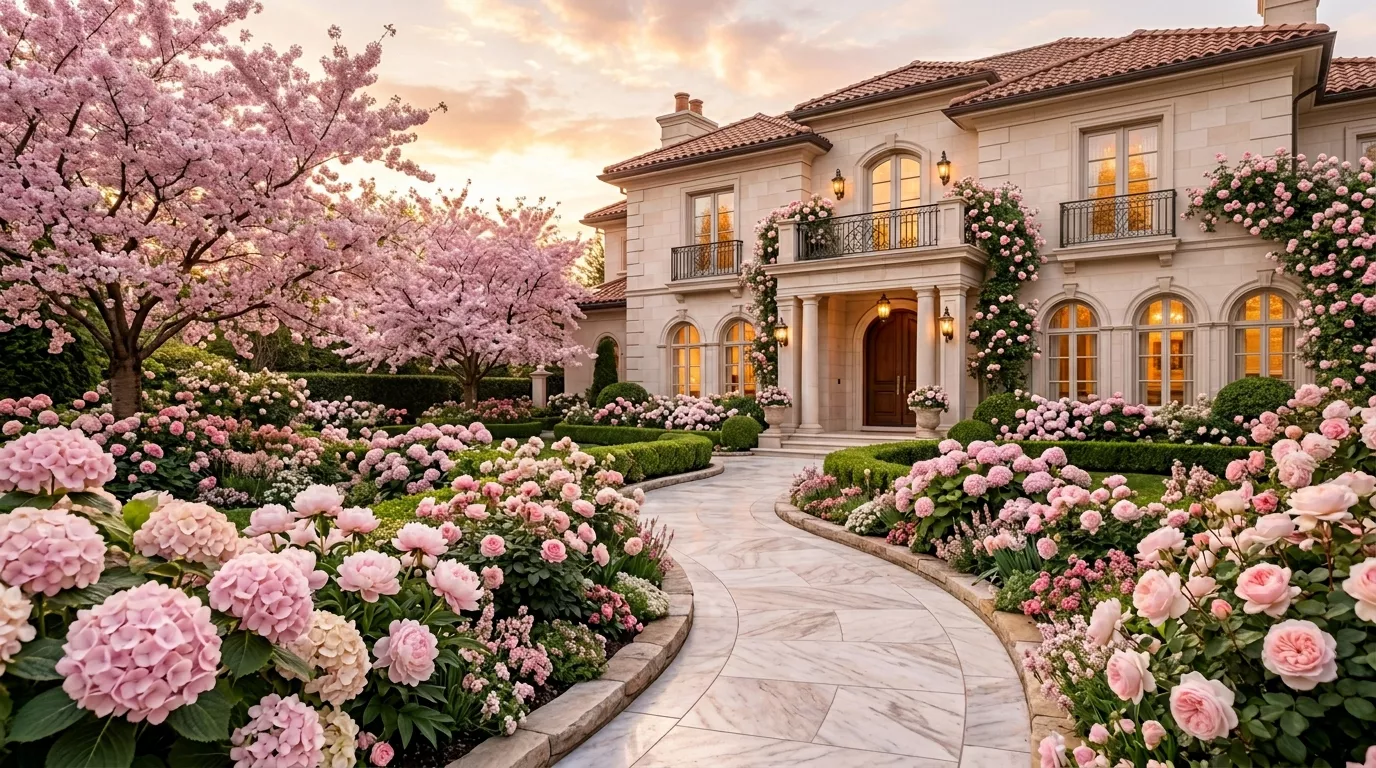
Outdoor Garden Decor Ideas for Every Backyard

Outdoor Garden Decor Ideas to Transform Your Backyard
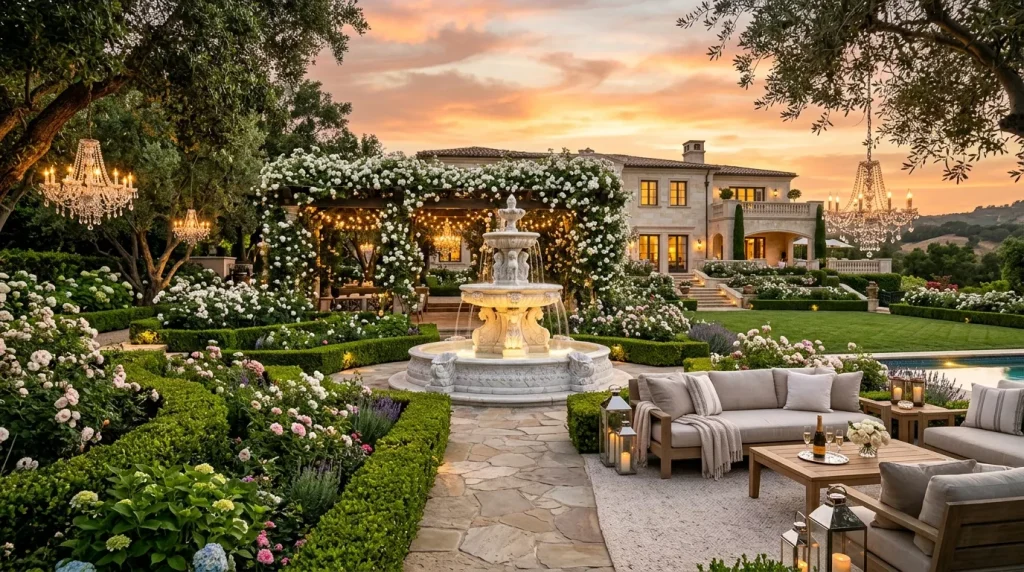
A garden doesn’t need to be huge or expensive to feel special — sometimes it just needs a few thoughtful touches. These outdoor garden decor ideas are all about turning an ordinary backyard, patio, or balcony into a space you actually want to spend time in.
The truth is, most gardens already have the “bones” — plants, a bit of grass or paving, maybe a fence. What’s often missing is the layer of decor that makes a space feel finished: seating that invites you to stay, lighting that extends the evening, and small details that give the area personality.
In this guide, we’ll go through where decor makes the biggest difference, how to choose pieces based on your garden type, a simple step-by-step planning process, and a few mistakes that are easy to avoid once you know what to look for.
Why Garden Decor Makes Such a Big Difference
It’s easy to assume that plants alone make a garden feel complete, but decor is what turns a green space into a destination.
Here’s what good garden decor actually does:
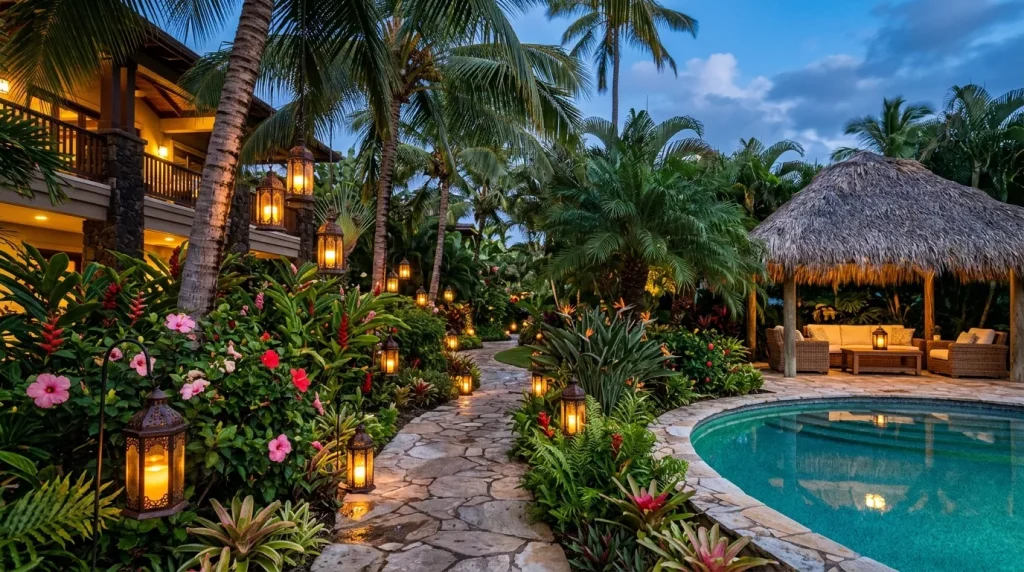
- It creates “zones,” giving you a reason to sit, eat, or relax in different parts of the space rather than just walking through it.
- It adds personality, the same way furniture and art do indoors — without it, even a beautifully planted garden can feel a bit anonymous.
- It extends usable hours, especially through lighting, which makes evenings outside far more enjoyable.
- It softens hard landscaping, like fences, paving, or walls, with texture and color.
Even a small garden or balcony can feel dramatically different with the right combination of seating, lighting, and a few well-placed accessories.
Popular Outdoor Garden Decor Elements and What They Add
Before buying anything, it helps to think about what role each piece will play. Here’s a quick overview of common garden decor elements and what they bring to a space.
| Decor Element | What It Adds | Best For |
|---|---|---|
| String lights / lanterns | Warmth, ambiance, extended evening use | Patios, balconies, dining areas |
| Outdoor rugs | Defines a “room,” adds color and softness | Seating areas, decks |
| Planters and pots | Flexibility, height variation, easy seasonal changes | Entryways, balconies, borders |
| Garden furniture | Comfort, gathering space | Patios, lawns, larger gardens |
| Water features | Sound, movement, focal point | Quiet corners, courtyards |
| Outdoor art/sculptures | Personality, visual interest | Borders, focal points |
| Pathway lighting | Safety, structure, evening atmosphere | Walkways, larger gardens |
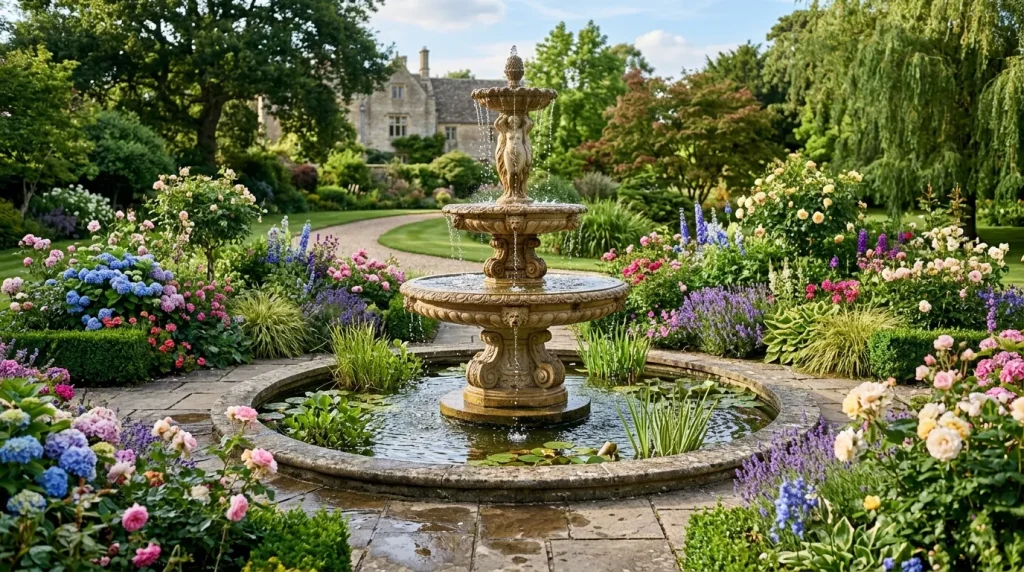
A simple approach: pick one “anchor” element (often furniture or a water feature), then layer in lighting, textiles, and planters around it.
Outdoor Garden Decor Ideas by Garden Type
Not every outdoor space is the same, so decor choices often look quite different depending on what you’re working with.
Small Patios and Balconies
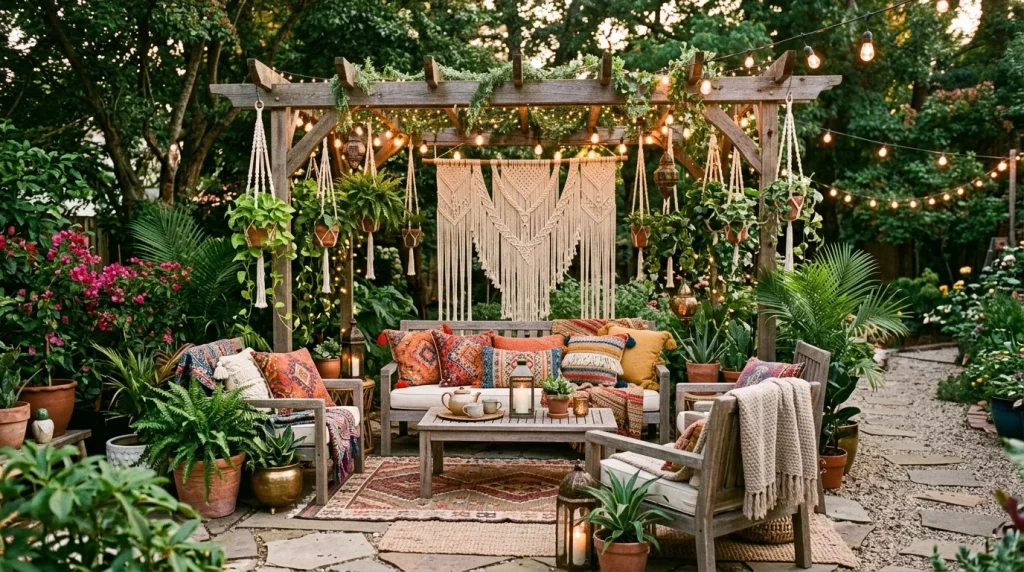
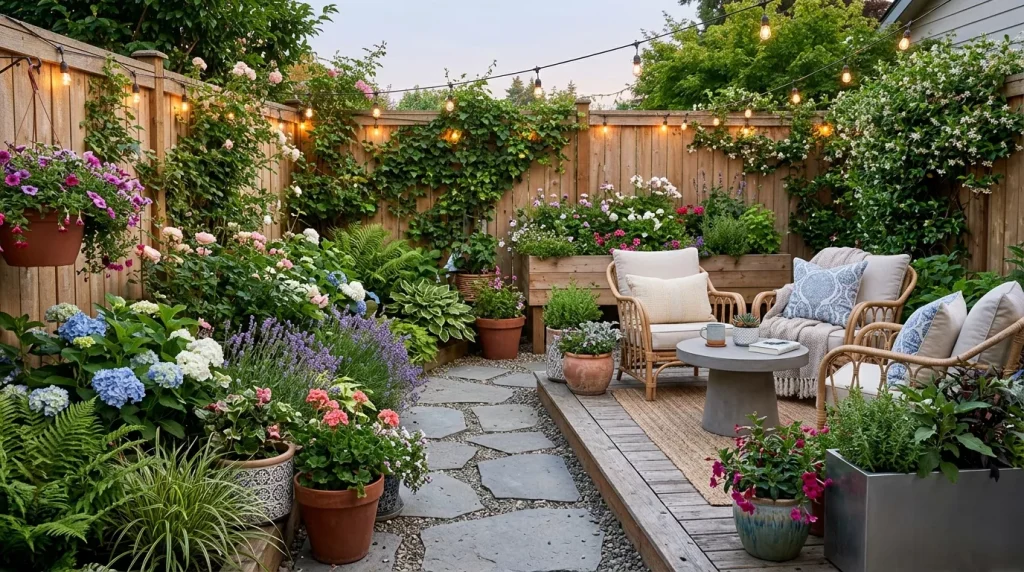
In tight spaces, every piece needs to earn its place. Foldable or stackable furniture, vertical planters, and string lights make a small area feel cozy rather than cramped.
A small outdoor rug can also help define the space, even if it’s just a few square feet, by visually separating it from the rest of the balcony or yard.
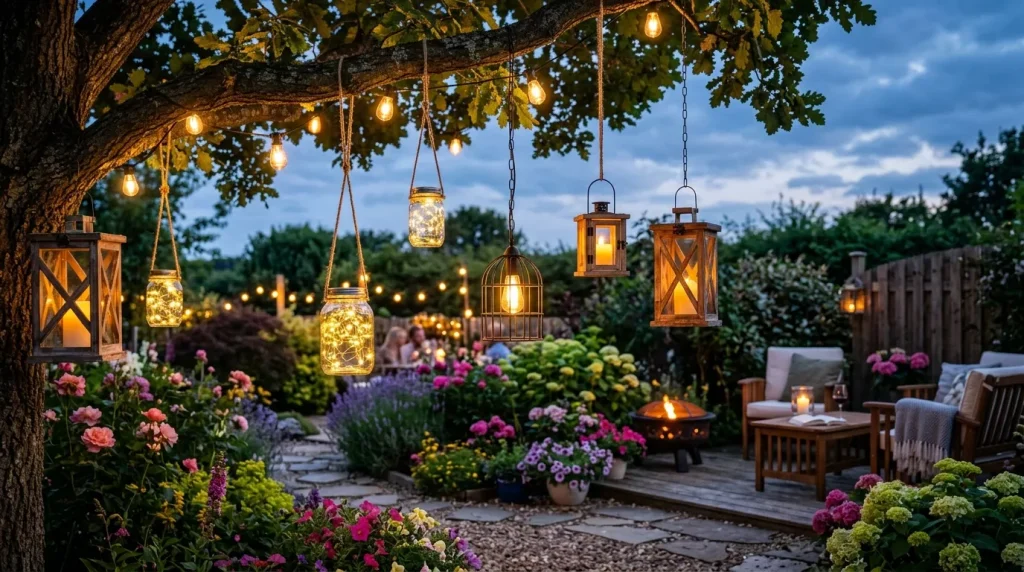
Cottage Gardens
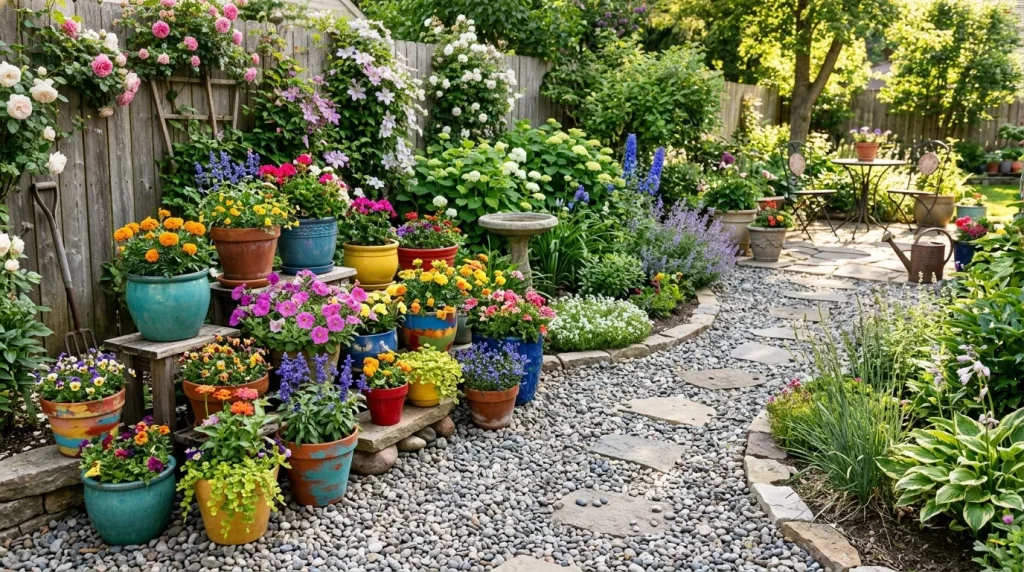
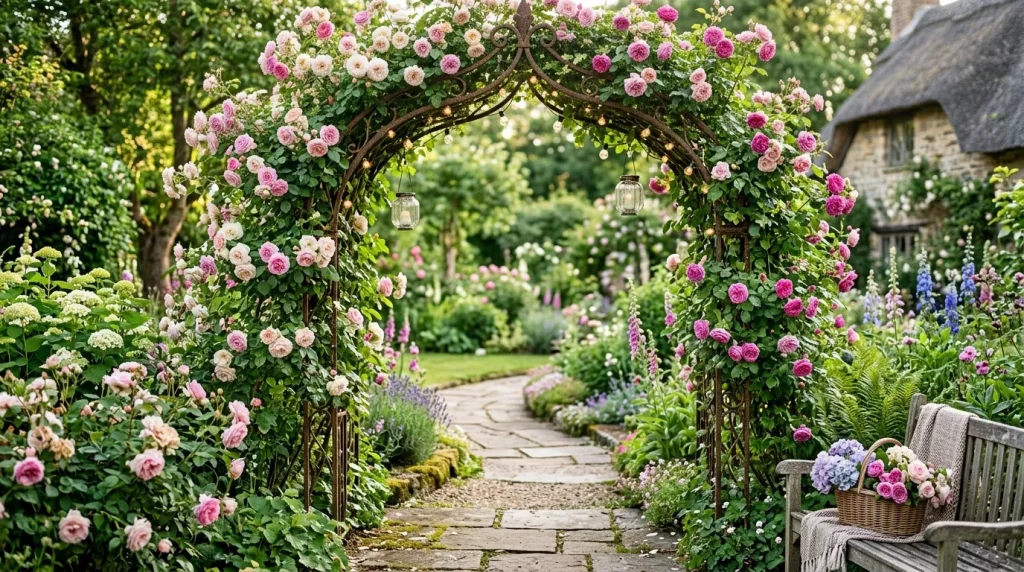
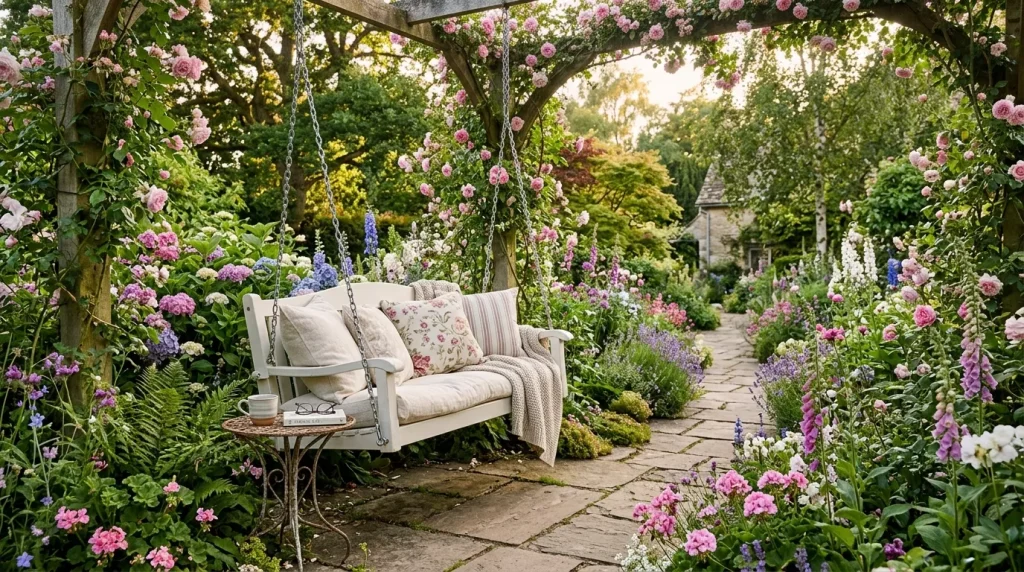
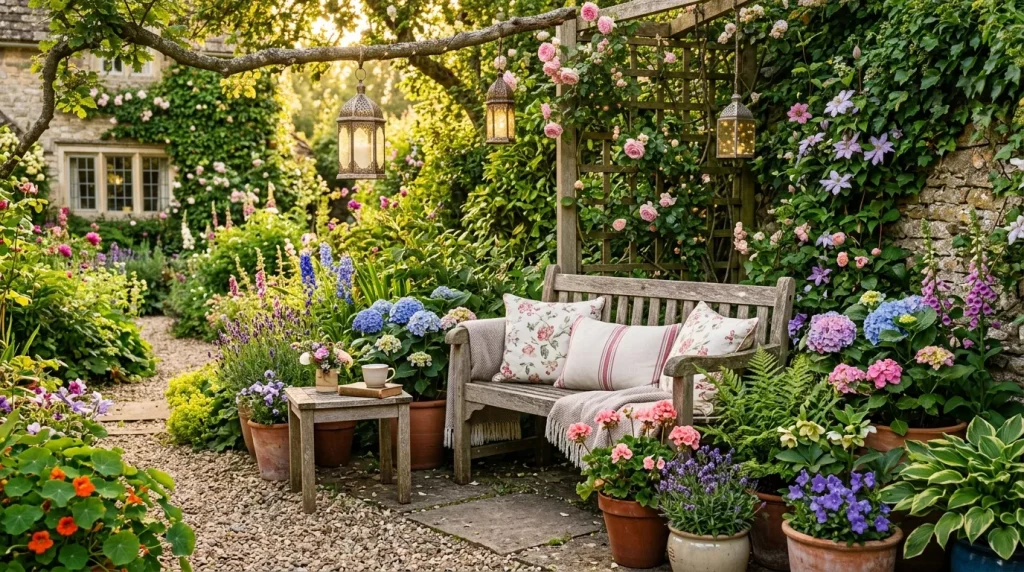
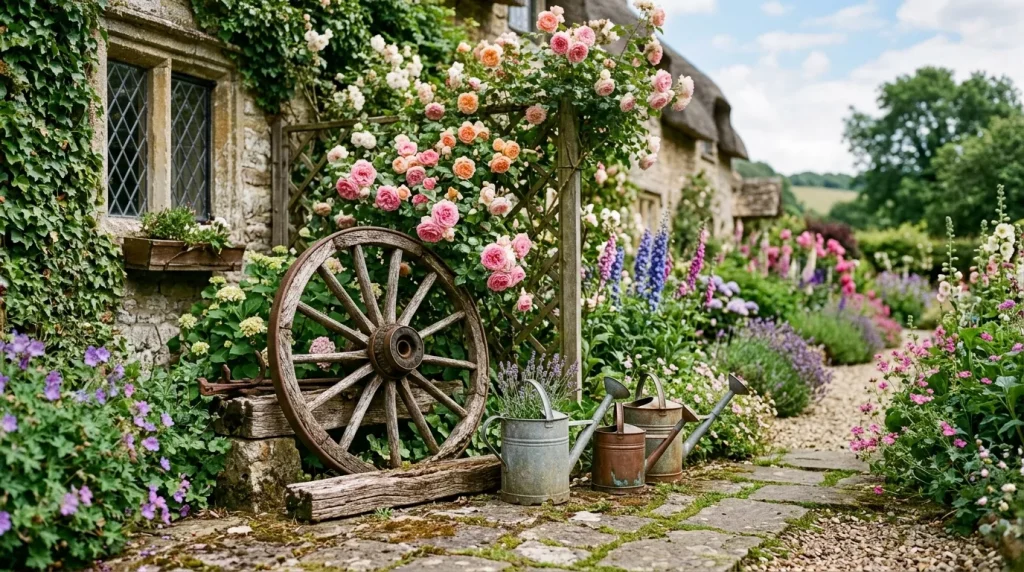
Cottage-style gardens lean into a slightly wild, layered look. Mismatched planters, vintage-style furniture, and climbing plants on trellises or arches all add to this charm.
Decor here often feels collected over time rather than bought all at once — a mix of materials and eras tends to suit this style well.
Modern Backyards
Modern outdoor spaces usually favor clean lines, neutral colors, and fewer but more impactful pieces. Think simple wooden or metal furniture, large planters with structured plants, and minimal, well-placed lighting.
A single striking element — like a fire pit, a sculptural planter, or a feature wall — often works better here than lots of smaller accessories.
Desert or Drought-Tolerant Gardens
These gardens often use gravel, stone, and succulents instead of lawns, which means decor needs to complement texture rather than greenery alone.
Terracotta pots, weathered wood, and warm-toned lighting all pair well with the earthy palette typical of drought-tolerant landscaping.
Where to Add Decor in Your Garden
If you’re not sure where to start, here are the areas that tend to make the biggest visual impact:
- Seating areas – Comfortable chairs, benches, or a small sofa instantly make a space feel like a destination rather than just a yard.
- Lighting – String lights, lanterns, and pathway lights extend how long you can enjoy the space and add atmosphere after dark.
- Planters – Grouping pots of different heights and sizes adds depth, even on a small patio or balcony.
- Pathways – Stepping stones, gravel paths, or edging plants give structure to larger gardens and guide movement through the space.
- Water features – Even a small fountain or bowl of water adds sound and a sense of calm to a garden.
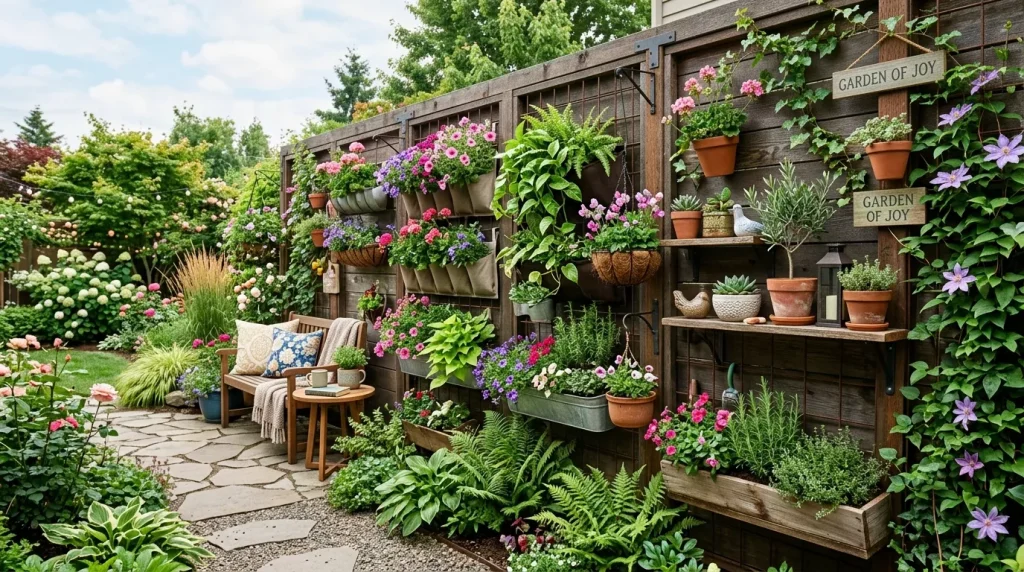
- Walls and fences – Vertical space is often underused; hanging planters, mirrors, or art can soften plain fencing.
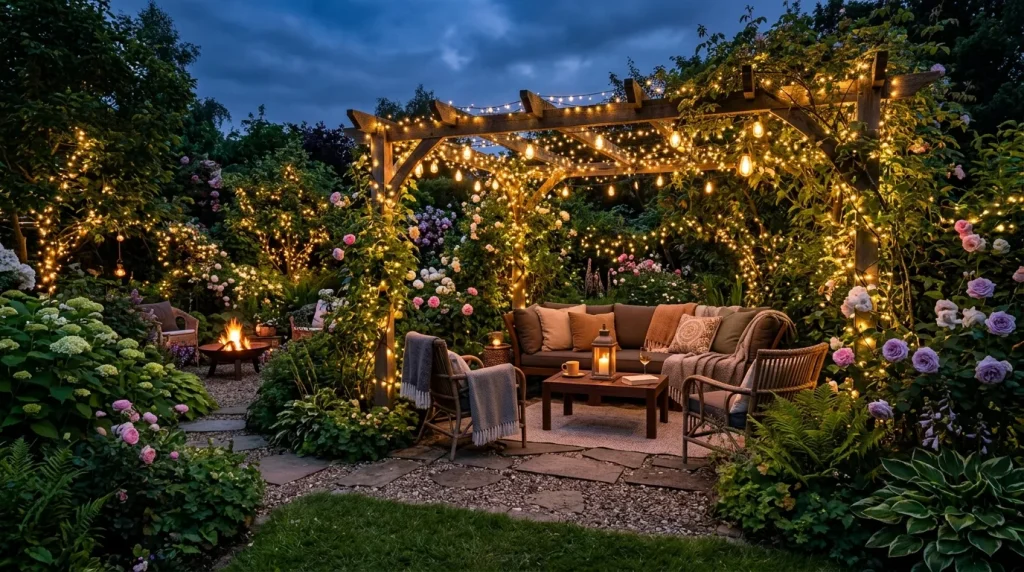
If you’re working with a limited budget, lighting and a couple of well-chosen planters often deliver the biggest visual change for the lowest cost.
Step-by-Step Guide: Planning Your Garden Decor
Here’s a simple process to follow if you’re starting from scratch or refreshing an existing space.
- Walk your space and note what’s missing. Is there nowhere to sit? No lighting for evenings? No focal point? This tells you where to focus first.
- Choose one “anchor” piece. This could be a seating set, a water feature, or a large planter — something that gives the space a clear purpose.
- Decide on a color palette. Pick two or three colors (often inspired by your plants or existing furniture) to guide cushions, pots, and accessories.
- Add layers of lighting. Combine at least two types — for example, string lights for ambiance and lanterns or solar lights for pathways.
- Group your planters. Odd numbers (three or five) of pots in varying heights tend to look more natural than single pots scattered randomly.
- Add texture through textiles. Outdoor cushions, rugs, and throws (in weather-resistant fabrics) make hard surfaces feel softer and more inviting.
- Step back and edit. Once everything is in place, remove anything that feels cluttered. Garden decor often looks better with a little breathing room between elements.

Garden Decor Materials Compared
The materials you choose affect not just the look of your garden, but also how much maintenance it needs over time.
| Material | Durability | Maintenance | Best For |
|---|---|---|---|
| Wood (treated/teak) | High if treated regularly | Occasional oiling or sealing | Furniture, planters, pathways |
| Metal (powder-coated) | Very high | Low; occasional rust check | Furniture frames, decorative accents |
| Rattan/Wicker (synthetic) | Medium-high | Low; wipe clean | Seating, side tables |
| Stone/Concrete | Very high | Very low | Pathways, large planters, water features |
| Ceramic | Medium | Moderate; can crack in extreme cold | Pots, decorative pieces |
| Terracotta | Medium | Moderate; may need winter protection | Planters, Mediterranean-style gardens |
If you’re in a climate with harsh winters, metal, stone, and synthetic rattan tend to hold up better than untreated wood or ceramic over the long term.
Pros and Cons of Investing in Garden Decor
Like any home improvement, putting thought (and a bit of budget) into garden decor comes with clear benefits and a few trade-offs.
Pros:
- Makes outdoor spaces feel like genuine extensions of your home, not just leftover space.
- Increases how often you actually use your garden, patio, or balcony.
- Can be done gradually, piece by piece, without needing a full landscaping overhaul.
- Adds personality and curb appeal, which can be a nice bonus if you ever sell your home.
- Works at almost any budget, from a few planters to a full outdoor furniture set.
Cons:
- Outdoor materials require some maintenance to stay looking good over time.
- Items left outdoors are more exposed to weather damage than indoor decor.
- It’s easy to overspend on items that don’t suit your climate or space.
- Some decor (like large furniture) may need storage during off-seasons in colder climates.
Tips for Styling Your Outdoor Space
A few small adjustments can make a noticeable difference in how your garden feels.
- Choose decor that complements your climate — lightweight, breathable fabrics for hot areas, and weather-resistant materials for rainy or snowy regions.
- Use lighting at different heights (string lights overhead, lanterns at table height, path lights low to the ground) for a layered effect.
- Repeat one or two colors across cushions, planters, and accessories to tie the space together.
- Leave some open space — not every corner needs decor, and a little negative space helps plants and key pieces stand out.
- Bring in a few “soft” elements like cushions or rugs, even in modern gardens, to keep the space feeling welcoming rather than purely decorative.
Common Mistakes to Avoid
A handful of common missteps can make garden decor feel less effective than it could be.

- Buying decor before planning seating. Without a place to sit and enjoy the space, even beautiful accessories can go unused.
- Ignoring scale. Tiny accessories can get lost in a large garden, while oversized furniture can overwhelm a small patio.
- Choosing indoor-only materials. Some fabrics, woods, and finishes aren’t designed for outdoor exposure and will deteriorate quickly.
- Overcrowding small spaces. On balconies or small patios, too many decor pieces can make the space feel cluttered rather than cozy.
- Forgetting nighttime use. A garden that looks great during the day but has no lighting often goes unused once the sun goes down.
Conclusion
Outdoor garden decor ideas don’t have to mean a complete landscaping project — often, it’s the smaller, thoughtful additions that make the biggest difference. Lighting, seating, planters, and a few personal touches can turn an underused backyard or balcony into one of the most-used spaces in your home.
If you’re not sure where to begin, start with one anchor piece — a seating area, a planter grouping, or some lighting — and build outward from there. Once you start spending more time outside, it becomes much easier to see what your space actually needs next.
Frequently Asked Questions
1. What’s the easiest way to start decorating a small balcony or patio?
Lighting and a few well-chosen planters are usually the easiest starting points. They require minimal space, are budget-friendly, and make an immediate visual difference.
2. How do I choose garden furniture that will last?
Look for materials suited to your climate, such as powder-coated metal, treated wood, or synthetic rattan. Checking maintenance requirements before buying can save time and money later.
3. Can garden decor work without a big budget?
Yes, many impactful changes — like string lights, cushions, or grouped planters — are relatively low-cost. Decor can also be added gradually over time rather than all at once.
4. What plants pair well with outdoor decor?
Plants with varied heights and textures, like trailing vines, tall grasses, and structured shrubs, complement decor pieces nicely. Pairing planters of different sizes with these plants adds depth to the space.
5. How important is lighting in garden decor?
Lighting is one of the most impactful elements, as it extends how long a space can be used and adds atmosphere in the evening. A mix of string lights, lanterns, and pathway lighting tends to work best.
6. Should garden decor match the style of my house?
It can help create a cohesive look, but it’s not essential. Many gardens successfully use a different style outdoors (like cottage or coastal) than the interior of the home, as long as the overall palette feels intentional.