Charcoal Grey Kitchen Decor: Ideas & Inspiration

Charcoal Grey Kitchen Decor: Ideas & Inspiration to Transform Your Space

If there’s one color that keeps showing up in kitchen renovations right now, it’s charcoal grey. Bold without being aggressive, sophisticated without trying too hard — charcoal grey kitchen decor manages to walk a design tightrope that most colors simply can’t pull off.
And it’s not just for luxury homes or designer showrooms. With the right approach, charcoal grey can work in a compact city apartment, a suburban family kitchen, or a farmhouse with exposed brick walls.
But here’s what people often get wrong: they pick the color, slap it on the cabinets, and expect magic. The real results come from understanding how charcoal grey interacts with light, texture, countertop materials, and the overall layout of your kitchen.
This guide covers everything — from style directions and color pairings to practical installation advice and mistakes that quietly ruin an otherwise solid design.

H2: Why Charcoal Grey Kitchen Decor Is Having a Major Moment
Not every trend earns its popularity. Charcoal grey in the kitchen is genuinely useful — not just fashionable.
For years, white kitchens dominated every home renovation magazine and real estate listing. Clean, bright, easy to photograph. But white shows every coffee drip, every fingerprint, and every splash of pasta sauce. Homeowners got tired of it faster than designers expected.
Charcoal grey became the answer. It’s dark enough to hide everyday wear but not so dramatic that it feels like a cave. It reads as neutral in photographs — which matters if you’re thinking about resale — while still making a statement in person.
Beyond practicality, charcoal grey has a visual depth that white and light grey simply don’t have. It creates contrast, gives your countertop something to push against, and makes metallic hardware pop in a way that feels intentional.

H2: Different Styles of Charcoal Grey Kitchen Decor
One of the best things about charcoal grey is how adaptable it is. It doesn’t lock you into a single design direction. Here are the main approaches homeowners take.
H3: Modern Minimalist
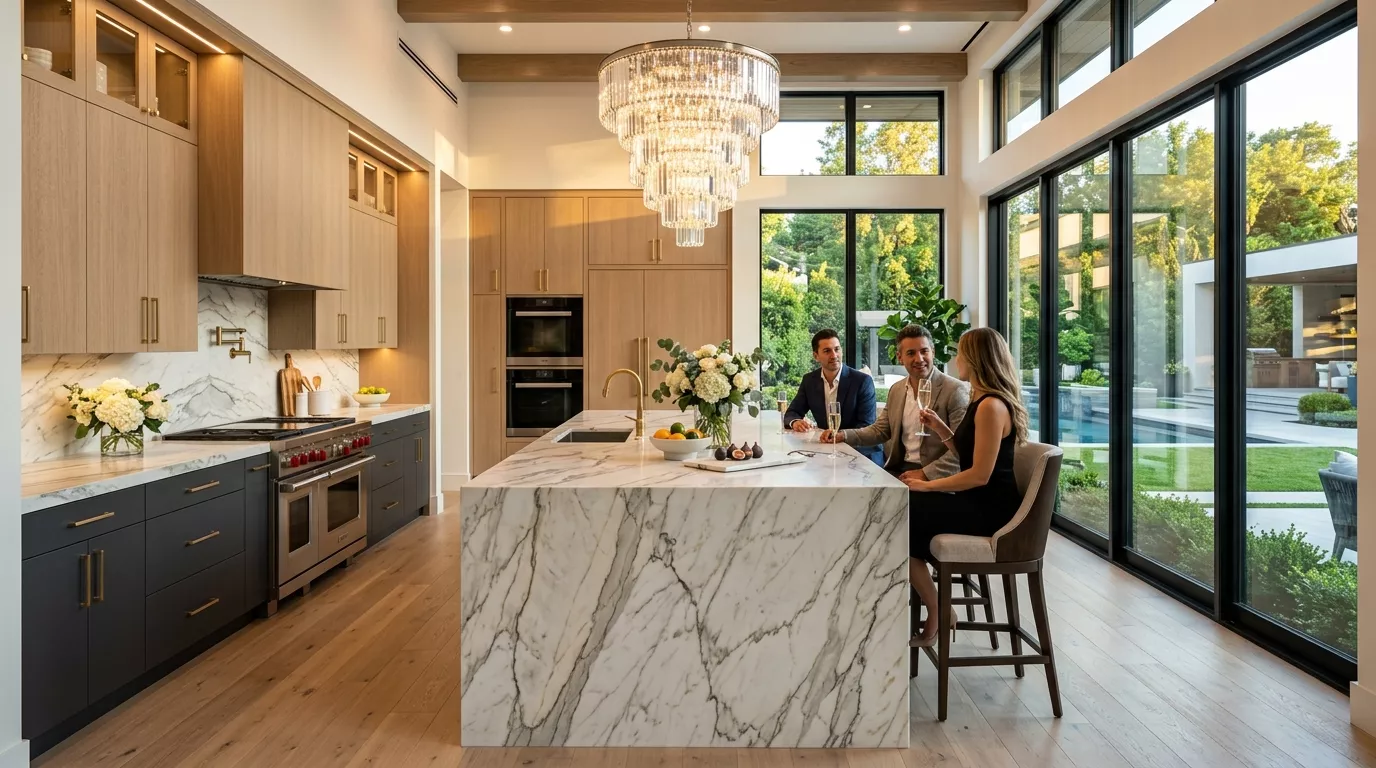
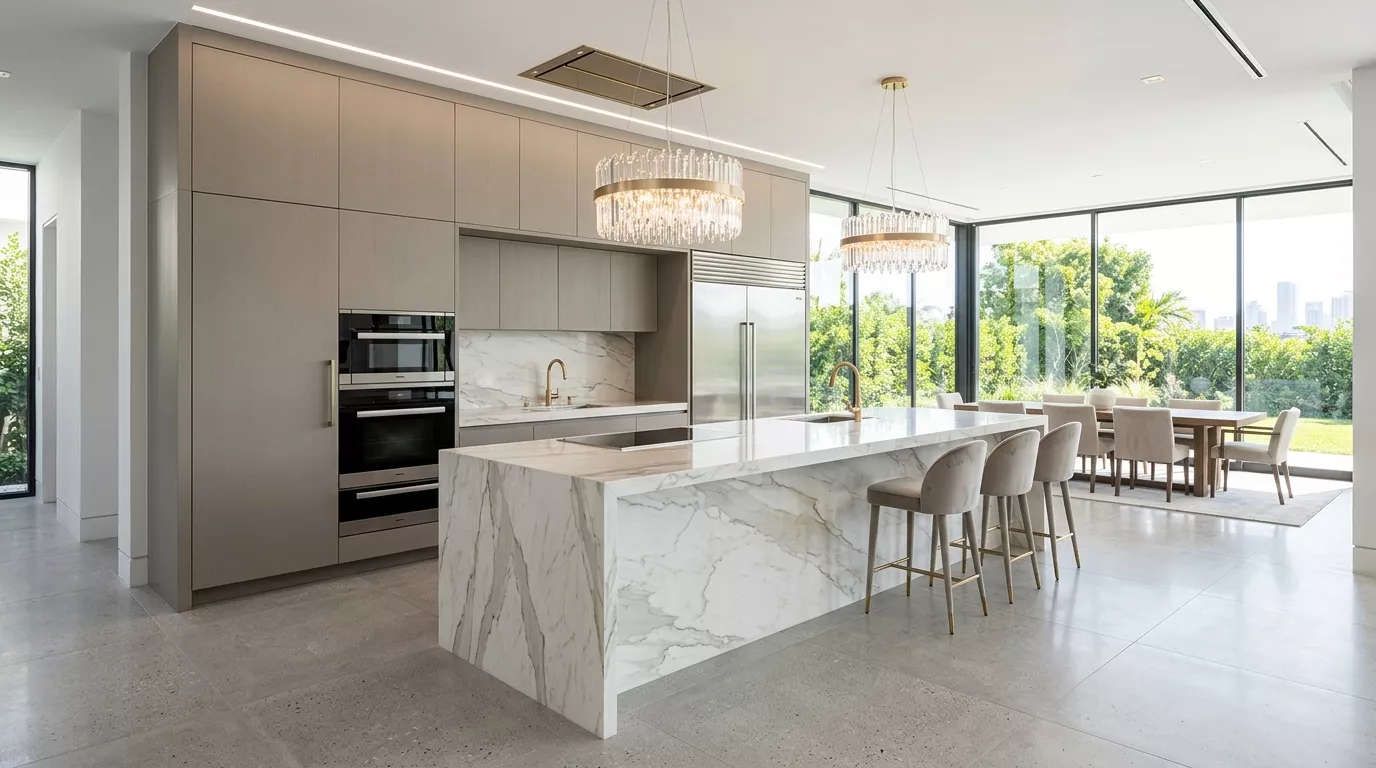
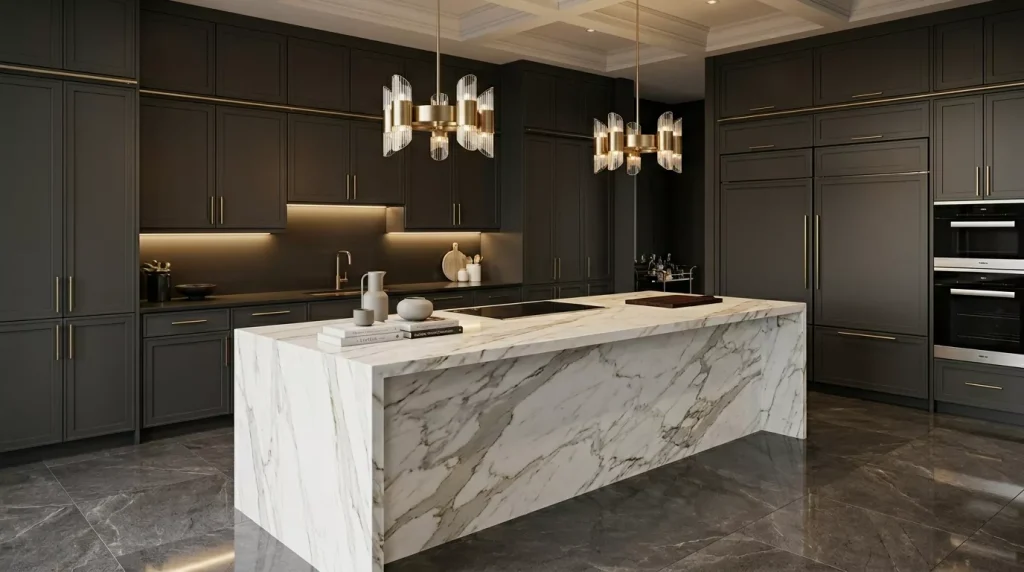
This is the most popular direction right now. Flat-front charcoal cabinets, minimal hardware (or no hardware at all), and a waterfall quartz countertop in white or light grey. The result is a kitchen that looks almost architectural.
Pair it with handle-free push-to-open drawers and integrated appliances to keep the surface completely uninterrupted. The key is simplicity — every element earns its place.
H3: Industrial Chic

Charcoal grey has a natural affinity with raw, unfinished materials. Pair charcoal cabinets with exposed concrete countertops, open pipe shelving, and pendant lights with Edison bulbs. Throw in matte black faucets and cabinet pulls, and you’ve got a kitchen that feels lived-in and creative without being messy.
This style is particularly effective in loft-style spaces or homes with high ceilings and large windows.
H3: Warm Transitional
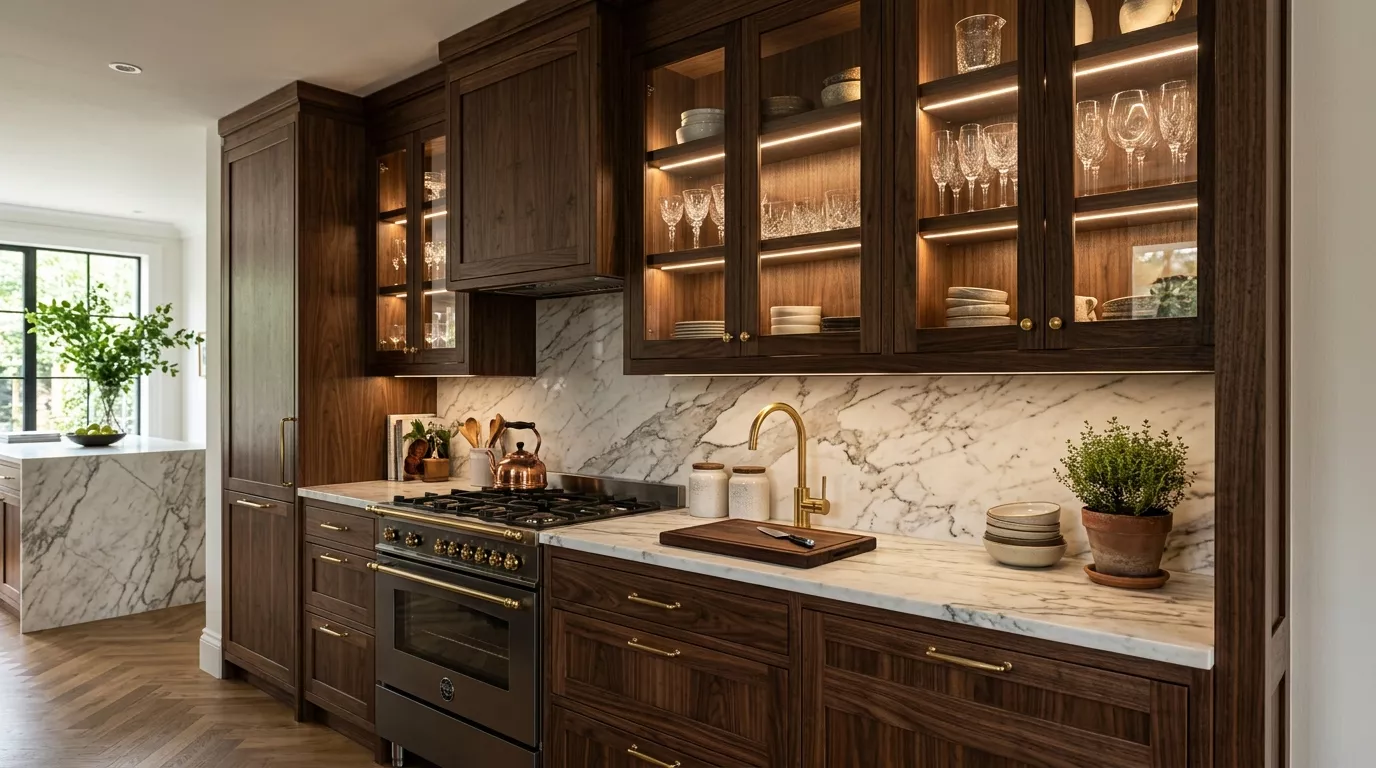
Not everyone wants a cold, edgy kitchen. In the transitional style, charcoal grey softens considerably. Shaker-style cabinet doors, natural wood open shelving, brass or copper hardware, and a marble-look countertop give the kitchen warmth and character.
This approach works well in family homes where the kitchen sees a lot of activity. It’s modern but approachable.

H3: Classic Contrast
Here charcoal takes a supporting role. Use it on the lower cabinets while keeping the upper cabinets white or cream. This two-tone approach grounds the kitchen visually while preventing it from feeling too heavy. Add a light subway tile backsplash and the balance becomes even more striking.
H2: Best Color Combinations for Charcoal Grey Kitchen Decor
Getting the color pairings right is what separates a kitchen that photographs well from one that actually feels great to cook in every day.

| Pairing Color | Effect | Best Used On |
|---|---|---|
| Crisp White | Clean, sharp contrast | Upper cabinets, walls, ceiling |
| Warm Cream / Off-White | Softer, more inviting | Walls, subway tile backsplash |
| Natural Wood (Oak/Walnut) | Warmth and organic texture | Open shelves, kitchen island |
| Brass / Gold | Glamorous, high-end feel | Faucets, handles, light fixtures |
| Matte Black | Bold, cohesive dark palette | Fixtures, hardware, range hood |
| Sage Green | Earthy, fresh balance | Accent wall, bar stools, textiles |
| Terracotta | Warm, eclectic contrast | Tile accents, ceramics, textiles |
| Pale Blue/Duck Egg | Calm, coastal feel | Splashback tiles, backsplash |
The most foolproof combinations are charcoal with white (timeless) and charcoal with natural wood accents (warm and current). If you want to add a pop of personality, a sage green or dusty blue accent won’t compete with the charcoal — it complements it.

H2: Choosing Materials That Work with Charcoal Grey
The material you choose for countertops, flooring, and backsplash will either elevate or undercut your charcoal grey cabinetry. Here’s what actually works.
Countertops
- White Quartz — The most popular pairing. High contrast, low maintenance, durable. Works in every charcoal grey kitchen style.
- Marble (real or porcelain look) — Elegant and classic. Adds luxury. Real marble requires sealing; porcelain marble-look slabs are easier.
- Concrete — Pairs perfectly with industrial charcoal kitchens. Needs sealing but delivers a unique, raw texture.
- Butcher Block — Adds warmth and an organic feel. Best used on a kitchen island rather than the full run of counters.
- Black Granite — Creates a dramatic, all-dark palette. Best suited to kitchens with plenty of natural light.
Backsplash
- White subway tile — A go-to. Works in virtually every configuration and never looks dated.
- Zellige tile (handmade terracotta or white) — Textured, artisan feel. Adds depth without competing with the cabinets.
- Large-format porcelain slabs — Seamless and sleek. Great for minimalist kitchens.
- Patterned cement tile — Adds personality. Use sparingly — a small section behind the range is usually enough.
- Brushed stainless steel — Very industrial but highly practical behind a cooking range.

Flooring
- Light oak or ash hardwood — Warms up the kitchen floor and balances the dark cabinetry above.
- Large white porcelain tiles — Keeps the floor light and bounces natural light around the space.
- Patterned encaustic tiles — Great in smaller kitchens where you want the floor to add character.
- Polished concrete — Works beautifully in modern, open-plan spaces.
H2: Step-by-Step Guide to Decorating Your Kitchen with Charcoal Grey
You don’t have to do a full renovation to introduce charcoal grey into your kitchen. Here’s how to approach it at different levels of commitment.
Step 1: Decide Your Coverage Level

Are you going all-in with charcoal cabinets everywhere? Or starting with just the lower cabinets or the island? More coverage = more commitment. Start with the island if you’re unsure — it’s a lower-stakes way to test the look.
Step 2: Choose Your Specific Shade of Charcoal
Charcoal grey isn’t one color. Some shades lean cool and blue-toned. Others pull toward green. Some read almost black in dim light. Test paint swatches or cabinet door samples in your actual kitchen at different times of day before ordering.
Step 3: Lock in Your Hardware Finish
Hardware is the jewelry of your kitchen. Matte black reads modern and cool. Brushed brass adds warmth. Brushed nickel stays neutral. Pick one finish and use it consistently across all handles, faucets, and light fixtures.
Step 4: Choose Your Countertop
Decide on this before you finalize the charcoal shade. A warm butcher block island will call for a slightly warmer charcoal tone. A cool white quartz pairs better with a cooler, blue-grey charcoal.
Step 5: Plan Your Lighting
Charcoal kitchens need deliberate lighting. Plan for three layers: overhead (recessed), task (under-cabinet LED strips), and ambient (pendant lights over the island). Don’t rely on a single overhead fixture alone.
Step 6: Add Your Textiles and Accessories
This is where your personality comes in. A linen runner in natural tones, ceramic canisters in cream or terracotta, copper mixing bowls on open shelves — these details make a charcoal grey kitchen feel like home rather than a showroom.
Step 7: Live in It and Adjust
Wait a few weeks before making any final accessory decisions. You’ll get a feel for which corners feel too dark, which surfaces need warmth, and what you actually use daily. Then style accordingly.
H2: Pros and Cons of Charcoal Grey Kitchen Decor
It’s worth being honest about both sides before you commit.
Pros
- Timeless appeal — Unlike trendy colors, charcoal grey ages gracefully
- Hides daily wear — Smudges, fingerprints, and minor marks are far less visible than on white
- Versatile style range — Works with modern, industrial, and classic design directions
- Strong resale value — Buyers see it as a premium, considered choice
- Pairs with almost anything — Gold, white, wood, black, sage — few colors cause conflict
- Photography-friendly — Looks clean and sharp in real estate and social media photos
Cons
- Can feel dark in small kitchens — Without enough light, a small charcoal kitchen can feel closed-in
- Shows dust and light-colored residue — Flour, crumbs, and water spots on dark surfaces are visible
- Lighting investment required — You’ll need to be more intentional about your lighting plan
- Harder to touch up paint — Matching charcoal grey paint after a scuff or chip is trickier than white
- Can feel cold without warm accents — Without wood tones or warm metallics, it can feel clinical
H2: Charcoal Grey vs. Other Popular Dark Kitchen Colors
Wondering how charcoal grey stacks up against the other dark shades people are choosing for their kitchens right now?
| Color | Warmth Level | Versatility | Resale Appeal | Maintenance Difficulty |
|---|---|---|---|---|
| Charcoal Grey | Medium | Very High | High | Medium |
| Navy Blue | Medium | High | High | Medium |
| Matte Black | Low (cool) | Medium | Medium-High | High |
| Forest Green | High | Medium | Medium | Low-Medium |
| Slate Blue-Grey | Medium | High | Medium-High | Medium |
| Deep Burgundy | High | Low | Low-Medium | Medium |
| Anthracite | Low | Medium-High | High | Medium |
Charcoal grey consistently scores high on versatility and resale appeal. Navy blue is its closest competitor, but charcoal is more neutral and therefore easier to accessorize over time.
H2: Lighting Tips Specific to a Charcoal Grey Kitchen
Lighting isn’t just an afterthought — in a dark kitchen, it’s the design itself.
Natural light is your best asset. If you have a window above the sink or large sliding doors nearby, make the most of them. Keep window treatments minimal or sheer to let light pour in unobstructed.
For artificial lighting, think in layers:
- Recessed downlights — Install these on a dimmer so you can dial up the brightness when cooking and lower it for evening ambiance
- Under-cabinet LED strips — Absolutely essential in charcoal kitchens. They illuminate the countertop and prevent the lower half of the kitchen from going completely dark
- Pendant lights over the island — These add personality as well as task lighting. Oversized pendants in smoked glass or matte black are especially effective
- Interior cabinet lighting — If you have glass-fronted upper cabinets, interior LED puck lights make them glow and add depth
Warm white bulbs (2700K–3000K) work better in charcoal kitchens than cool white (4000K+). They prevent the grey from reading as cold and bring out the warm undertones in wood accents.
H2: Pro Tips for a More Polished Charcoal Grey Kitchen
These small details make a surprisingly big difference in the finished look.
- Don’t match your charcoal exactly — Use two slightly different shades (e.g., a cooler grey on lower cabinets, a slightly warmer one on the island) for a layered, custom look
- Use odd numbers when styling open shelves — Groups of three or five items look more natural than even-numbered arrangements
- Add texture through materials — A smooth quartz countertop, matte cabinet finish, and textured tile backsplash give the eye something to travel across
- Paint the ceiling a shade lighter — Even if your walls are charcoal, keeping the ceiling two shades lighter prevents the space from feeling top-heavy
- Introduce plants — A trailing pothos or a cluster of fresh herbs on the windowsill adds life to a cool-toned palette in a way that no decorative object quite matches
- Don’t over-accessorize — In a charcoal kitchen, less genuinely is more. One or two quality decorative pieces beat a dozen mismatched items
- Try charcoal on the range hood — If you’re not ready to commit to full charcoal cabinets, a charcoal or matte black range hood is a focal point that makes a big statement with minimal investment
H2: Common Mistakes People Make with Charcoal Grey Kitchen Decor
Even experienced renovators make these errors. Knowing them in advance saves you both money and frustration.
- Choosing the wrong undertone — Some charcoal greys have blue undertones, others green, others purple. These undertones become much more visible on a large surface like cabinet doors. Always test samples.
- Going charcoal in a north-facing kitchen — North-facing rooms get little direct sunlight. Charcoal in these spaces can feel genuinely dark and gloomy without a serious lighting upgrade.
- Using too much black hardware — Matte black is gorgeous, but overdoing it — black handles, black faucet, black range hood, black light fixtures — can make the kitchen feel heavy. Mix in brushed brass or nickel to break it up.
- Skipping the test swatch stage — A paint chip and a full cabinet door look completely different. Order a sample door from your cabinet supplier and live with it for a week before committing.
- Ignoring the floor — A very dark floor with dark charcoal cabinets creates a tunnel effect that’s hard to escape. Balance dark cabinetry with lighter, warmer flooring.
- Forgetting about the ceiling — A dark kitchen with a pure white ceiling can feel disconnected. Consider painting the ceiling a very pale warm grey to tie the room together more cohesively.
- Treating charcoal as a neutral that needs no thought — It is versatile, but it still needs intention. Random accessories in mismatched colors and materials will look worse against charcoal than they would against white.
Conclusion: Make Your Charcoal Grey Kitchen Decor Work for You
There’s a reason charcoal grey kitchen decor keeps appearing on renovation wishlists and home design boards year after year. It’s a genuinely flexible, beautiful choice that rewards thoughtful execution.
The secret isn’t picking the color — it’s understanding how to layer it. Get your shade right, back it up with deliberate lighting, choose materials that add texture and contrast, and edit your accessories with intention. Do those things, and charcoal grey delivers a kitchen that feels sophisticated every single morning.
Whether you’re ready for a full cabinet repaint, a brand-new kitchen build, or just thinking about introducing charcoal grey through smaller updates like a statement island or a painted range hood — start somewhere. The look builds over time.
Take your first step today. Pull a few charcoal paint samples, hold them against your existing countertops in natural light, and see which one speaks to your space. The kitchen you’ve been envisioning is closer than you think.
FAQs: Charcoal Grey Kitchen Decor
Q1: Does charcoal grey make a small kitchen feel even smaller?
It can, but it doesn’t have to. The key is light management. In a smaller kitchen, keep the upper cabinets white or light and reserve charcoal for the lower cabinets or island. Add under-cabinet lighting and maximize natural light with minimal window coverings. Done right, a small charcoal kitchen can feel intimate and intentional rather than cramped.
Q2: What countertop color goes best with charcoal grey cabinets?
White quartz is the most popular pairing and for good reason — the contrast is sharp, the look is timeless, and quartz is one of the most durable countertop materials available. If you want something warmer, light grey or cream quartz works beautifully. For a more dramatic look, a veined marble-effect slab in white and gold adds luxury without competing with the cabinetry.
Q3: Is charcoal grey a good choice for kitchen cabinets if I’m planning to sell my home?
Yes, it consistently performs well with buyers. Charcoal grey reads as a considered, modern choice rather than a personal taste preference — which is exactly what appeals to people walking through a home for the first time. Avoid very unusual shades (like charcoal with a strong green or purple undertone) and you’ll be fine from a resale perspective.
Q4: What hardware finish works best with charcoal grey kitchen cabinets?
Matte black is the most cohesive choice — it creates a seamless look without breaking up the surface. Brushed brass or gold is the best option if you want warmth and a touch of elegance. Brushed nickel stays neutral and works in transitional kitchens. Avoid polished chrome — it tends to look too cold and clinical against dark charcoal.
Q5: Can charcoal grey cabinets be repainted later if I change my mind?
Yes, but it requires preparation. Dark paints bond differently than light ones, and going from charcoal to white will require a high-quality primer — sometimes two coats — before the finish coat. It’s entirely doable, but more work than repainting white to another color. Some homeowners opt for professional refinishing services to get a factory-smooth result.
Q6: How do I prevent my charcoal grey kitchen from feeling too dark and heavy?
Balance is everything. Use a light countertop, keep the ceiling pale, introduce warm wood tones through open shelving or a butcher block section, and layer your lighting thoughtfully. Reflective surfaces like a glossy backsplash tile or polished metallic fixtures also bounce light around the room and prevent the palette from feeling oppressive.
Q7: What’s the difference between charcoal grey and anthracite in kitchen design?
Charcoal grey tends to have a slightly lighter value and often has visible warm or cool undertones. Anthracite is darker — closer to near-black — and reads as more neutral and cool. Both are used in kitchen design, but charcoal grey is more forgiving in kitchens that don’t have abundant natural light. Anthracite is better suited to spaces with large windows or open-plan layouts where there’s plenty of light to offset the depth of the color.