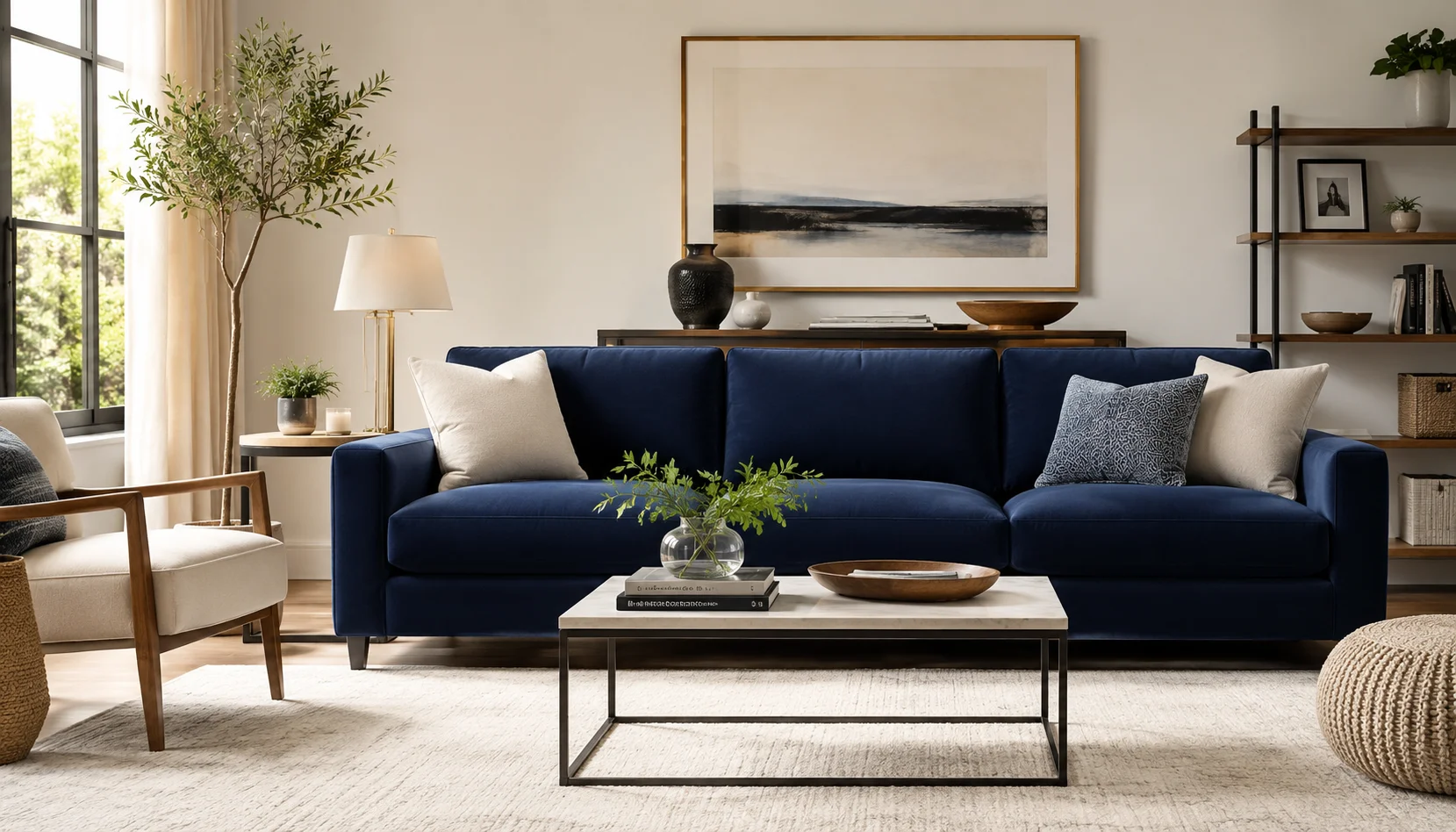
Best Sofas for a Cozy Living Room

Best Sofas for a Cozy Living Room: Styles, Tips & Buying Guide

Walk into any truly cozy living room and the sofa is almost always the reason it feels that way. Not the paint color, not the rug, not the throw pillows — the sofa. It’s the piece that sets the emotional temperature of the entire space. If it’s stiff, shallow, or just wrong for the room, nothing else can fully compensate. That’s why finding the best sofas for a cozy living room is worth taking seriously, even if it takes a little longer than you’d like.
This guide covers everything — sofa styles, fabrics, cushion fills, size guidance, honest pros and cons, and the mistakes most people make that lead to buyer’s remorse. By the end, you’ll know exactly what to look for and feel genuinely confident choosing the right one.
What Actually Makes a Sofa “Cozy”?
Before jumping into styles and materials, it’s worth understanding what cozy actually means in sofa terms. It’s not just about softness — though that matters. It’s about a specific combination of factors that work together to make you want to stay seated longer than planned.

The key elements of a cozy sofa:
- Seat depth: Deeper seats (22–26 inches) let you sit back fully and tuck your legs up. Shallower seats (under 20 inches) keep you perched upright — fine for a formal space, but not cozy.
- Back height: A higher back (33 inches or more) cradles your upper back and head. Lower backs look modern but offer less support for lounging.
- Cushion fill: Down-blend or pocket spring cushions conform to your body. Dense foam alone can feel supportive initially but harder over time.
- Arm style: Rolled arms and wide, padded arms invite you to rest against them. Tight track arms look sleek but aren’t made for leaning.
- Fabric texture: Soft, textured fabrics — velvet, bouclé, brushed cotton — naturally feel cozier than smooth, cool surfaces like leather or tight weaves.
Getting even two or three of these right makes an enormous difference in how a sofa actually lives in your home versus how it looked in the showroom.
The Best Sofa Styles for a Cozy Living Room
1. The Deep-Seated Sectional
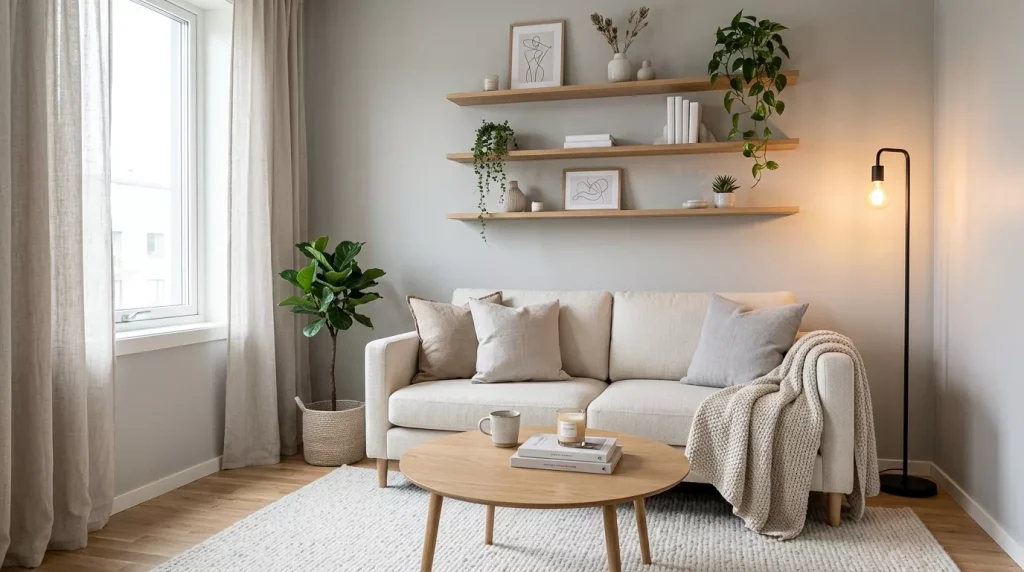
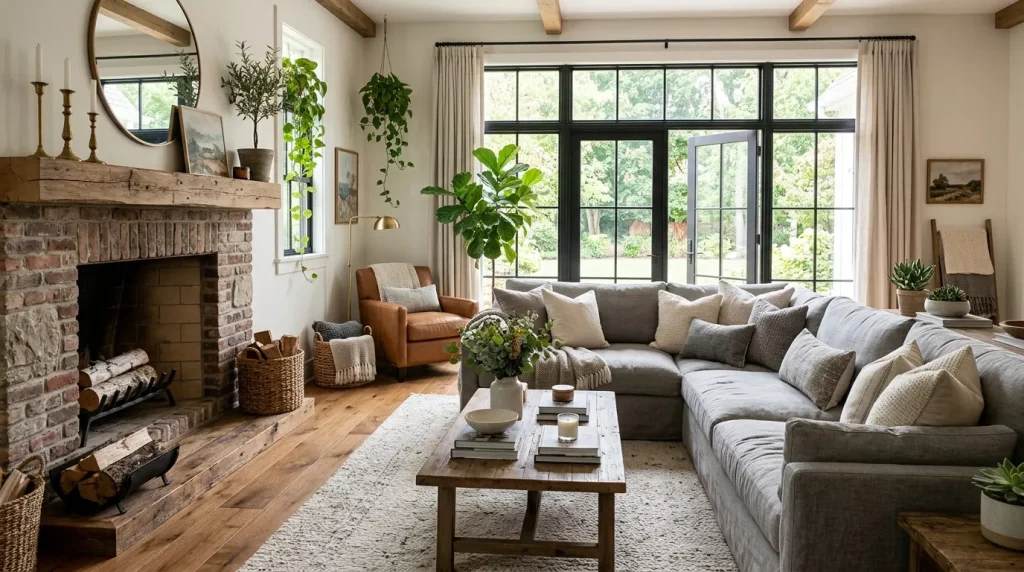
If “cozy” to you means room for the whole family, a dog, and a pile of blankets, a sectional is probably your answer. Deep-seated sectionals — particularly those with chaise extensions — are purpose-built for settling in. They transform a corner of the living room into a nest.
The key is going deep enough: look for a seat depth of at least 24 inches. Anything less and the chaise becomes decorative rather than actually comfortable for lying down.
Best for: Families, large living rooms, TV-centered rooms, anyone who loves lying down while watching something.
2. The Oversized Roll Arm Sofa
The roll arm sofa — characterized by its rounded, generously padded arms — is one of the most reliably cozy sofa silhouettes ever designed. It’s a classic for a reason. Those arms are wide enough to lean against, soft enough to rest your head on, and they give the whole piece a relaxed, lived-in quality that tighter designs can’t replicate.
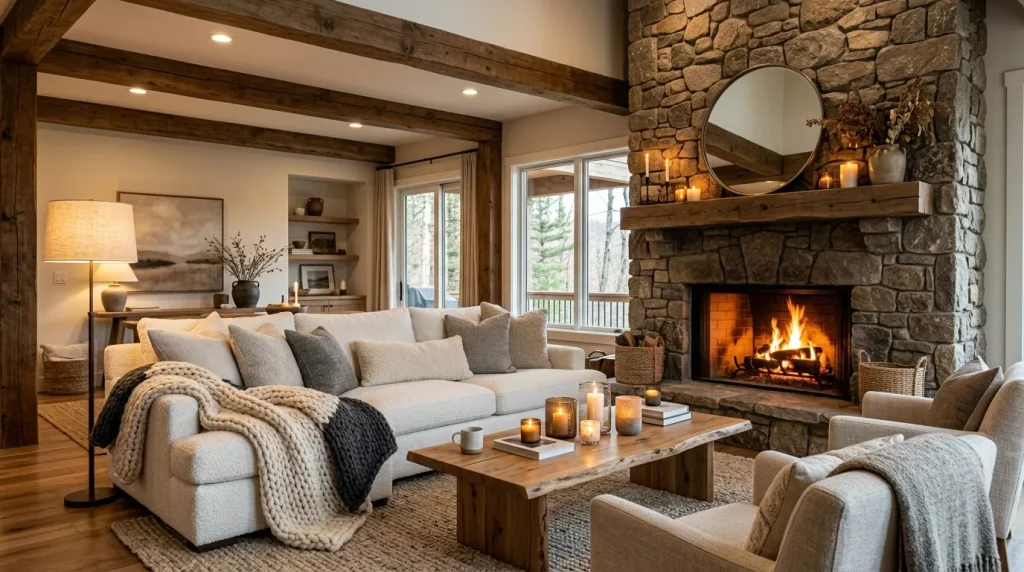
Pair a roll arm sofa with loose back cushions rather than tight upholstery and you have something that looks as comfortable as it actually is.
Best for: Traditional, transitional, and relaxed-modern living rooms. Excellent for smaller families and couples.
3. The Lawson-Style Sofa
The Lawson sofa — with its separate back cushions that sit behind the seat cushions — is one of the most underappreciated cozy sofa styles. It’s informal by design. The cushions shift, stack, and rearrange themselves into whatever configuration you need, which is exactly what makes it feel homey rather than pristine.
It’s not the most tailored-looking option, but it’s forgiving, adaptable, and deeply comfortable after a long day.
Best for: Casual and family-friendly living rooms, people who prioritize comfort over a perfectly styled sofa.

4. The Chesterfield Sofa
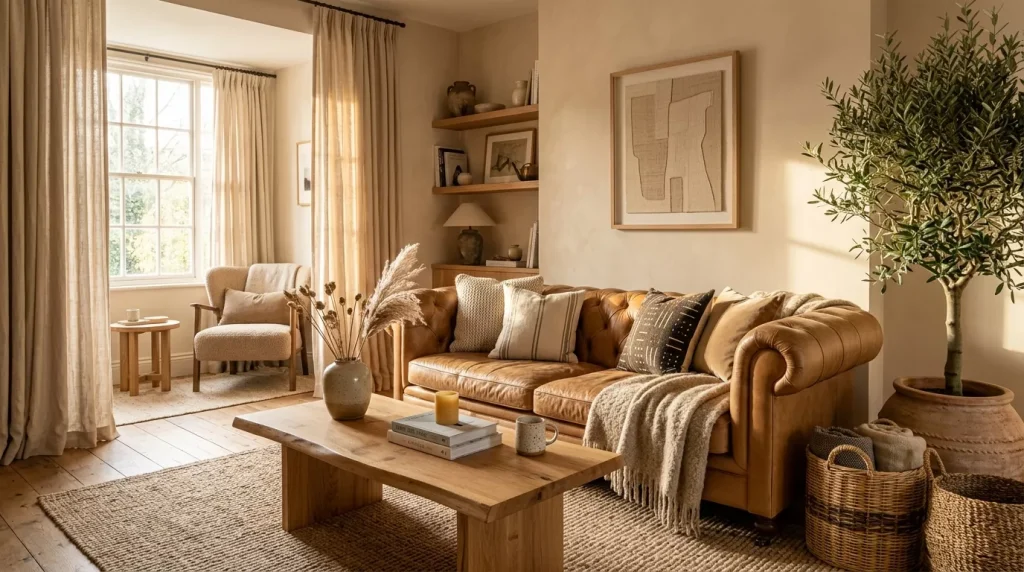
The Chesterfield is a bolder, more character-driven choice — deep button tufting, high rolled arms that match the back height, and a silhouette that reads as both sophisticated and distinctly warm. A Chesterfield in velvet or a warm leather is one of the most atmospheric pieces you can put in a living room.
It doesn’t offer the same sink-in softness as a Lawson or sectional, but for creating a sense of richness and coziness through pure visual weight, it’s hard to beat.
Best for: Traditional, Victorian-inspired, maximalist, and eclectic living rooms.
5. The Modular Sofa
Modular sofas have matured significantly in recent years. The best ones now offer genuine coziness through their flexibility — you can configure them around the room, add or remove pieces as your space changes, and create deeply loungy arrangements that fixed sofas simply can’t achieve.

Look for modular sofas with deep seat depths and cushioned backs, not the shallow, boxy versions that prioritize style over comfort.
Best for: Modern and contemporary spaces, renters who move frequently, anyone who wants long-term configuration flexibility.
6. The Pillow-Back Sofa
A pillow-back sofa has large, loose cushions at the back rather than a fixed upholstered back panel. This creates a plush, enveloping quality — you’re surrounded by cushioning on three sides when seated. It’s one of the most genuinely comfortable sofa formats for everyday relaxed sitting.
The trade-off is maintenance: loose back cushions need regular fluffing to maintain their shape and prevent a deflated look.
Best for: Relaxed and informal living rooms, people who prioritize comfort and don’t mind regular maintenance.
Step-by-Step Guide: How to Choose the Best Sofa for Your Cozy Living Room

Step 1 — Measure First, Browse Second
Write your room dimensions down before you look at a single sofa. Measure the wall where the sofa will go, note the clearance to the coffee table (leave 16–18 inches minimum), and mark any doors or windows that might affect placement.
A sofa that’s too large for the room immediately kills the cozy feeling it was supposed to create.
Step 2 — Decide on Your Priority: Deep Comfort or Stylish Balance?
Be honest with yourself. Is this a room where you’ll spend hours reading, watching TV, and napping on weekends? Then prioritize depth, cushion fill, and fabric softness above all else.
Is it a room where you also entertain and want it to look pulled together? Then balance comfort features with a silhouette that photographs well and suits the room’s aesthetic.
Step 3 — Choose Your Fabric Based on Your Real Life

Don’t choose a fabric based on how it looks on a website. Choose based on who and what will be using the sofa.
- Pets and kids: Performance fabrics (Crypton, Sunbrella, microfiber) are the only sensible answer. Stain-resistant, durable, and now available in styles that don’t look utilitarian.
- Adults-only household: Velvet, bouclé, linen, and cotton blends are all beautiful and practical.
- Allergy sufferers: Avoid down cushion fill and opt for wrapped foam or synthetic alternatives.
- Humid climates: Avoid untreated leather, which can stick uncomfortably. Fabric or performance leather alternatives are better.
Step 4 — Test the Seat Depth and Cushion Fill Before Buying
If you can visit a showroom, sit on the sofa for at least five minutes — not two. Sit the way you actually sit at home: feet up, slouched, sideways. A sofa that’s comfortable when you sit upright for a few seconds may be terrible for how you actually use your living room.
If buying online, always check the return policy before purchasing. A 30-day in-home trial is now offered by many quality sofa brands and is worth prioritizing over a slightly cheaper option with no returns.

Step 5 — Check Frame Construction
A beautifully upholstered sofa built on a poor frame is a short-term investment at best. The things to look for:
- Kiln-dried hardwood frame — resists warping and cracking over time
- Corner-blocked joints — extra reinforcement where the frame connects
- Eight-way hand-tied springs or sinuous springs — both are acceptable; eight-way hand-tied is the gold standard for long-term comfort
Ask these questions before buying, especially from unfamiliar brands. Most reputable manufacturers are happy to share frame details.
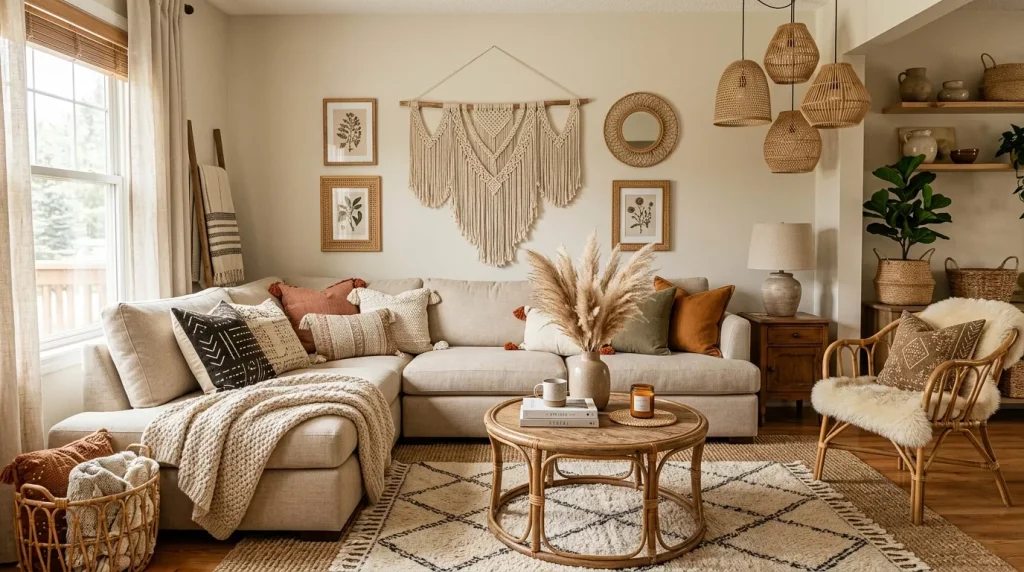
Step 6 — Pick the Right Size for the Room
| Room Size | Sofa Recommendation | Approximate Width |
|---|---|---|
| Small (under 150 sq ft) | Apartment sofa or loveseat | 70–84 inches |
| Medium (150–250 sq ft) | Standard 3-seat sofa | 84–96 inches |
| Large (250–400 sq ft) | Large sofa or small sectional | 96–120 inches |
| Open plan or very large | Full sectional | 120+ inches |
Sofa Fabric Comparison: What’s Right for a Cozy Living Room?
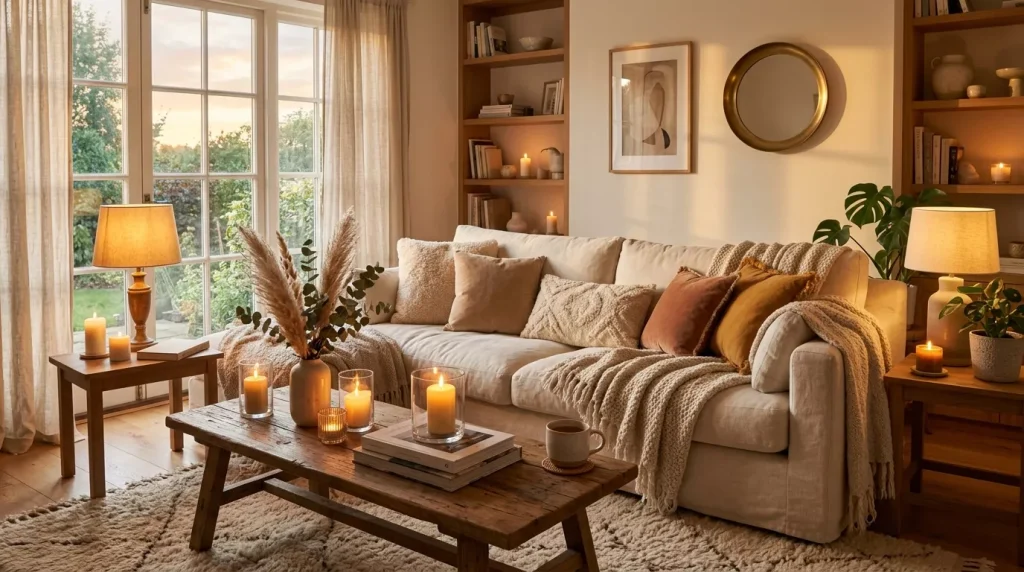
| Fabric | Cozy Factor | Durability | Maintenance | Best For |
|---|---|---|---|---|
| Velvet | ★★★★★ | Moderate | Medium | Adults, formal-casual rooms |
| Bouclé | ★★★★★ | Moderate | Medium | Modern, cozy aesthetic rooms |
| Linen blend | ★★★★☆ | Good | Medium | Relaxed, natural-style rooms |
| Performance fabric | ★★★★☆ | Excellent | Low | Families, pets, high-use rooms |
| Cotton | ★★★★☆ | Moderate | Medium | Casual, everyday rooms |
| Leather | ★★★☆☆ | Excellent | Low | Modern, formal living rooms |
| Faux leather | ★★★☆☆ | Good | Low | Budget-conscious, easy-clean rooms |
| Microfiber | ★★★★☆ | Very good | Very low | Families, pets, kids |
Pros and Cons of the Most Popular Cozy Sofa Types
Sectional Sofa
Pros:
- Maximum seating and lounging space
- Great for families and larger rooms
- Creates a natural room anchor
- Chaise extension offers true lying-down comfort
Cons:
- Hard to move and rearrange
- Overwhelming in smaller rooms
- Harder to fit through narrow doorways
Roll Arm Sofa
Pros:
- Classic, timeless silhouette
- Deeply comfortable arms double as headrests
- Works in almost any decorating style
- Available in virtually every upholstery option
Cons:
- Rolled arms take up seat-width space
- Not the sleekest option for very modern rooms

Modular Sofa
Pros:
- Highly flexible configuration
- Scales with your space and family size
- Easy to move section by section
- Can replace individual pieces if one wears out
Cons:
- Seams between sections can shift with use
- Often more expensive than equivalent fixed sofas
- Quality varies widely — some look great, feel uncomfortable

Common Mistakes to Avoid When Buying a Sofa for a Cozy Living Room
1. Buying Based Entirely on Photos
Showroom and product photos are lit and styled to look their absolute best. Always verify seat depth, fabric texture, and cushion fill details from written specs — and sit in it if at all possible.
2. Going Too Small to “Save Space”
A sofa that’s undersized for the room looks awkward and often sits in the middle of too much empty floor space. In most rooms, a properly sized sofa — even if it feels big initially — grounds the space and makes it feel cozier, not smaller.
3. Choosing a Tight-Weave Fabric for a High-Traffic Room
Beautiful fabrics like silk-blend linen or delicate textured weaves wear poorly in rooms with pets, kids, or frequent guests. Save them for guest rooms or low-use spaces.
4. Forgetting About Cushion Fill Longevity
Down-filled cushions are luxuriously soft initially but require regular fluffing and will compress over time. Pocket spring cushions wrapped in down alternative hold their shape better over years of use. Ask exactly what’s inside before buying.
5. Ignoring the Leg Height
Low legs or legless sofas sit closer to the floor — which can feel cozy — but they also make the room feel heavier and can be harder for older adults to get up from. Higher legs (5–8 inches) open up the floor visually and are easier to clean under. Match leg height to both your aesthetic and practical needs.
6. Assuming “Soft Showroom Feel” Means Durable Comfort
Some sofas feel amazing on day one because of thick, soft foam that simply breaks down within a year of regular use. Ask about foam density — anything under 1.8 lb/cubic foot for seat cushions is a red flag for longevity.
Quick Tips for a Cozier Sofa Setup
Tip 1: Layer your sofa with at least three different textures — a woven throw, a velvet cushion, and a knit pillow. The visual and tactile richness makes the whole setup feel warmer and more inviting.
Tip 2: A sofa that floats in the room — pulled away from the wall — almost always feels cozier than one pushed flat against it. Even 6–8 inches of breathing room makes a difference.
Tip 3: Use odd numbers of cushions. Three or five looks more natural and relaxed than two or four — the imperfection reads as lived-in, which is exactly the quality a cozy living room needs.
Tip 4: Match your sofa’s back height to how you use it. If you regularly fall asleep on the sofa, a high back is genuinely worth prioritizing. If you mostly sit upright, a lower back opens up the room visually.
Tip 5: A large area rug anchored under the front legs of the sofa creates a grounded, defined seating zone that makes the entire sofa setup feel more intentional and warm.
Tip 6: Add a small side table or tray on an ottoman next to the sofa. Having a place to set a book, a mug, or a phone without reaching far is a small thing that dramatically improves how comfortable and settled you feel.
FAQs: Best Sofas for a Cozy Living Room
Q1. What seat depth should I look for in a cozy sofa?
For genuine coziness — the kind where you can sit back fully, tuck your feet up, or lie sideways comfortably — aim for a seat depth between 22 and 26 inches. Anything under 20 inches tends to keep you sitting upright rather than relaxing, which is fine for formal seating but not ideal for a cozy living room. Deep sectionals and pillow-back sofas typically hit the 24–26-inch range, which is the sweet spot for true lounging comfort.
Q2. What’s the most durable sofa fabric for a busy household?
Performance fabrics are the clear winner for high-traffic, high-mess households. Brands producing performance weaves — tightly constructed synthetic or blended fabrics treated for stain and moisture resistance — offer sofas that handle pets, kids, spills, and daily use without sacrificing the look of a well-designed room. Microfiber is a close second: extremely durable, easy to clean, and available in colors and textures that read as genuinely stylish. Avoid untreated linen, silk blends, or delicate textured weaves in busy family living rooms.
Q3. How do I know if a sofa will stay comfortable after a year of use?
Look at the cushion fill and foam density. High-resilience foam with a density of 1.8 lb/cubic foot or higher maintains its shape significantly better than cheaper, lighter foam. Cushions filled with wrapped pocket springs and a down or fiber topper combine both support and softness and tend to hold up well over time. Also check the frame construction — kiln-dried hardwood with corner-blocked joints will outlast cheaper frames by years. Always look for a warranty of at least one year on the frame and cushions.
Q4. Can a sectional sofa work in a smaller living room?
Yes, but it requires careful sizing. A smaller sectional — sometimes called an apartment sectional — typically ranges from 100 to 110 inches on the longer side, which is manageable in a medium-sized room. The key is ensuring there’s at least 30–36 inches of walkway around the sofa and that the chaise or corner piece doesn’t block natural traffic paths through the room. In a small space, a sectional that’s even slightly too large dominates the room in a way that feels claustrophobic rather than cozy. Measure twice before ordering.
Q5. Is a leather sofa a good choice for a cozy living room?
Leather is durable, easy to clean, and genuinely beautiful — but it’s not naturally the coziest material, especially in colder climates where it takes time to warm up to body temperature. If leather appeals to you aesthetically, the coziness gap can be bridged with generous throw blankets, textured cushions, and warm lighting. Full-grain or semi-aniline leather, which is softer and more supple than corrected-grain leather, feels more comfortable against skin. For a purely cozy priority, fabric — particularly velvet, bouclé, or performance weave — generally wins.
Q6. How long should a quality sofa last?
A well-made sofa with a hardwood frame, quality cushion fill, and durable upholstery should last between 7 and 15 years with regular use. Budget sofas with MDF or particleboard frames and low-density foam typically show significant wear within 3–5 years — sagging cushions, creaking frames, and deteriorating upholstery. Investing in a sofa at the higher end of your budget is one of the rare cases where the price genuinely reflects the longevity and daily comfort you get in return.
Conclusion: The Right Sofa Changes Everything
The best sofa for a cozy living room isn’t always the most expensive one, the most stylish one, or the one that looked perfect on a website. It’s the one that fits your specific room, serves your actual daily habits, holds up to the real life happening in your home, and makes you feel like you genuinely don’t want to get up.
That combination — the right depth, the right fabric, the right size, and the right style — is absolutely achievable when you approach the decision with the right information.
Use the step-by-step guide here to work through each element. Measure your room before you browse. Sit on every sofa you’re seriously considering. Ask about the frame and cushion fill before you commit. And remember: a sofa that works perfectly for your life is always a better buy than one that merely looks great in photos.
Start with your measurements today — that single step, more than any other, will prevent the most common and most expensive sofa-buying mistake of all.