Dark Kitchen Cabinet Ideas That Transform Your Space

Dark Kitchen Cabinet Ideas to Elevate Your Kitchen Design
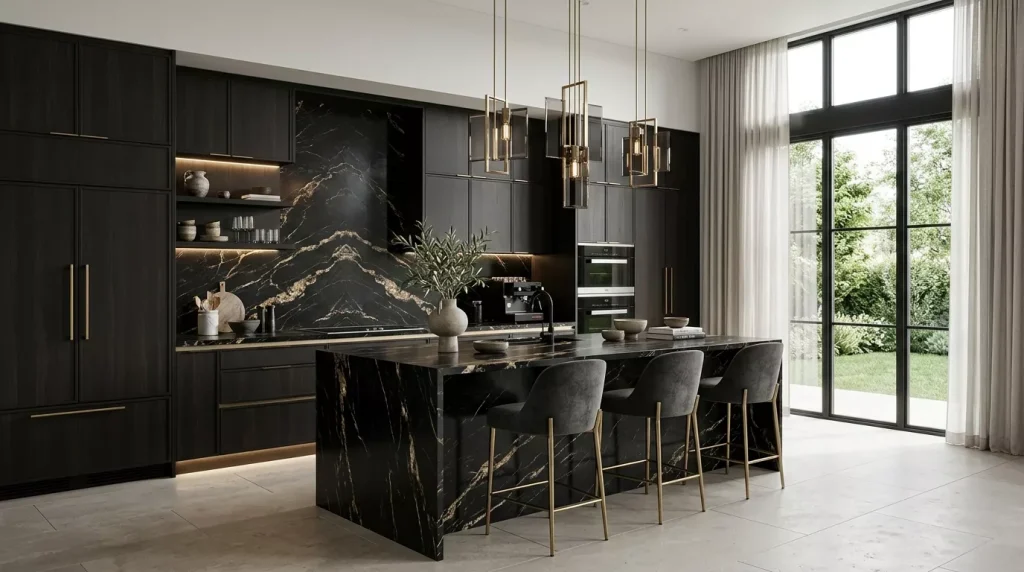
If you’ve been scrolling through home design feeds lately, you’ve probably noticed one thing — dark kitchen cabinet ideas are having a serious moment. And honestly? It’s not hard to see why.
Dark cabinets bring a level of sophistication and warmth that white or light-colored cabinetry simply can’t match. Whether you’re drawn to deep navy blues, rich forest greens, or the timeless drama of matte black, going dark is a design choice that makes a real statement.
This guide covers everything you need to know — from choosing the right shade to pairing dark cabinets with countertops, hardware, and lighting.
Why Dark Kitchen Cabinets Are Worth Considering
For a long time, all-white kitchens ruled the interior design world. Light, airy, and “clean” was the goal. But tastes have shifted, and homeowners are now craving kitchens that feel lived-in, dramatic, and personal.
Dark kitchen cabinets deliver exactly that. They ground a space visually, create a sense of luxury, and — here’s the part most people don’t expect — they actually hide everyday mess better than light cabinetry.
Smudges, grease splatters, and fingerprints are practically invisible on a charcoal or deep blue cabinet. That’s a very practical win for a busy kitchen.
Popular Dark Kitchen Cabinet Colors to Consider
Not all dark is created equal. The shade you choose completely changes the mood of your kitchen. Here’s a breakdown of the most popular options:
1. Matte Black Cabinets
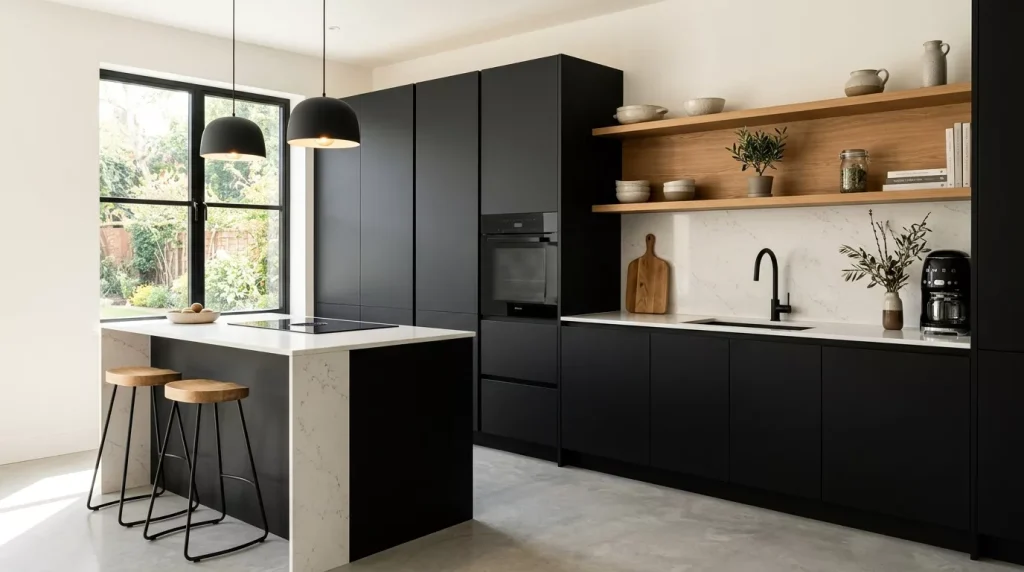
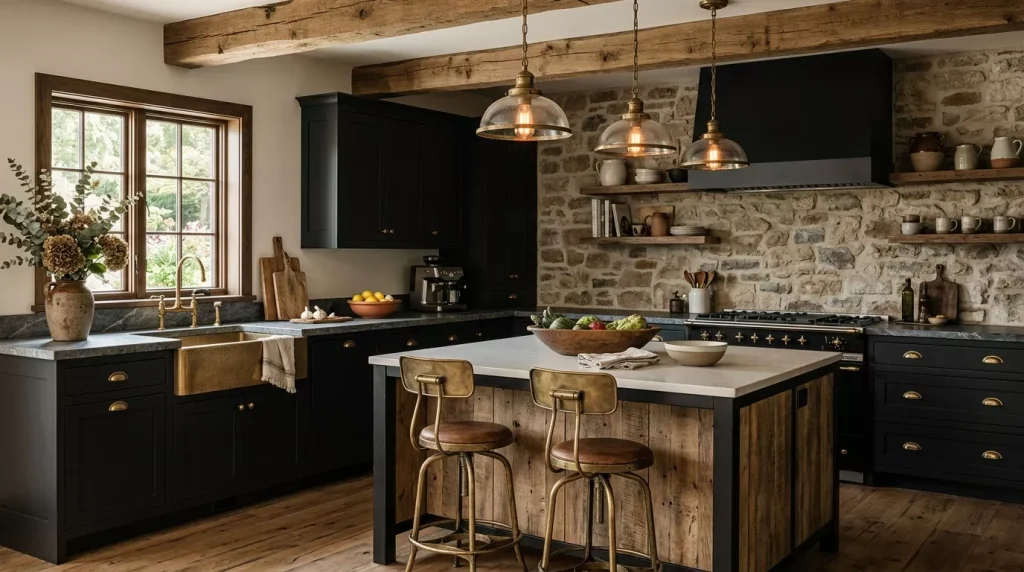
Black kitchen cabinets are bold and unapologetic. A matte finish (rather than glossy) keeps things from feeling too stark or clinical. Pair with warm wood accents, brass hardware, and stone countertops for a balanced, editorial look.
2. Charcoal Gray Cabinets
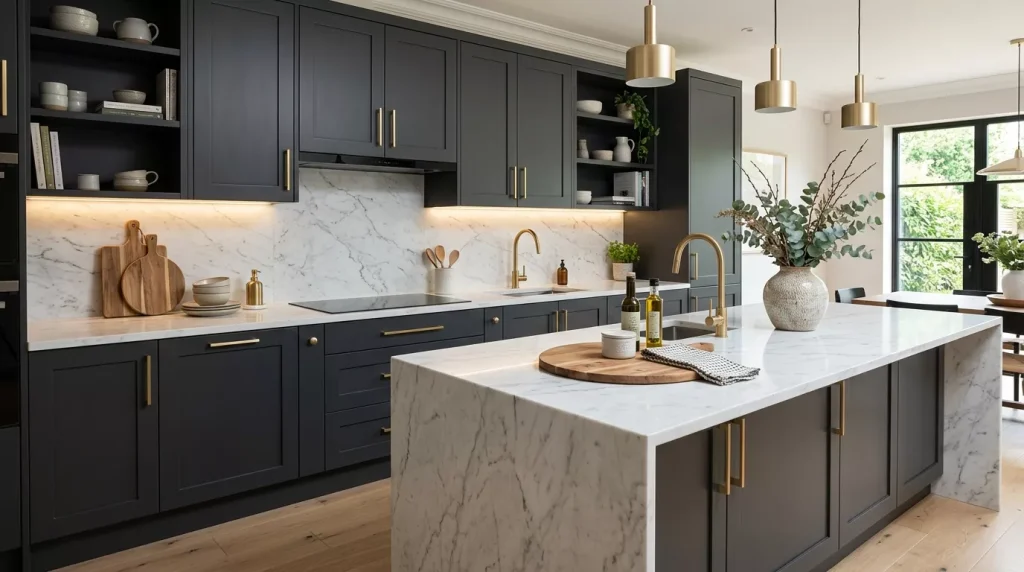
If true black feels too intense, charcoal gray is the perfect middle ground. It reads as dark and moody but has enough warmth to feel cozy. It works beautifully with white marble countertops and chrome or nickel hardware.
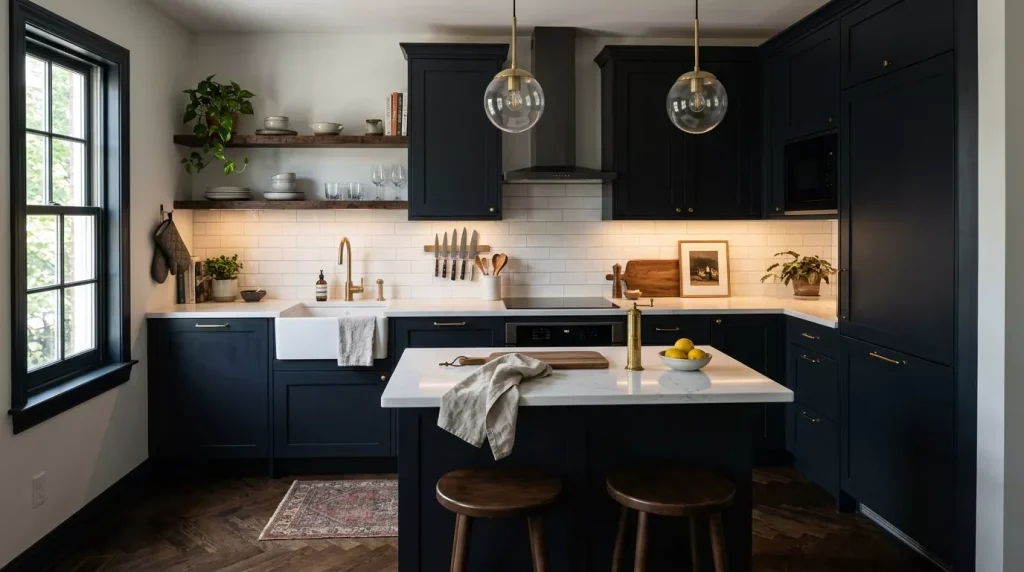
3. Navy Blue Cabinets
Navy is arguably the most popular dark cabinet color right now — and for good reason. It’s rich, timeless, and pairs well with almost everything. Navy lower cabinets with white or cream uppers is a pairing that never gets old.
4. Forest Green Cabinets
Deep green cabinets feel fresh and organic. Think emerald, hunter green, or sage-leaning deep greens. These work especially well in kitchens with natural materials like raw wood shelving or stone backsplashes.
5. Deep Plum or Burgundy Cabinets
These are bold choices, but in the right space — especially with gold or bronze hardware — they create a kitchen that feels like it belongs in an upscale restaurant. Not for the faint of heart, but undeniably stunning.
Dark Kitchen Cabinet Ideas by Style
Modern and Minimalist
For a sleek, contemporary look, go with flat-front (slab-style) dark cabinets in matte black or graphite. Skip the hardware entirely and opt for push-to-open mechanisms. Keep countertops simple — waterfall quartz or concrete works beautifully here.
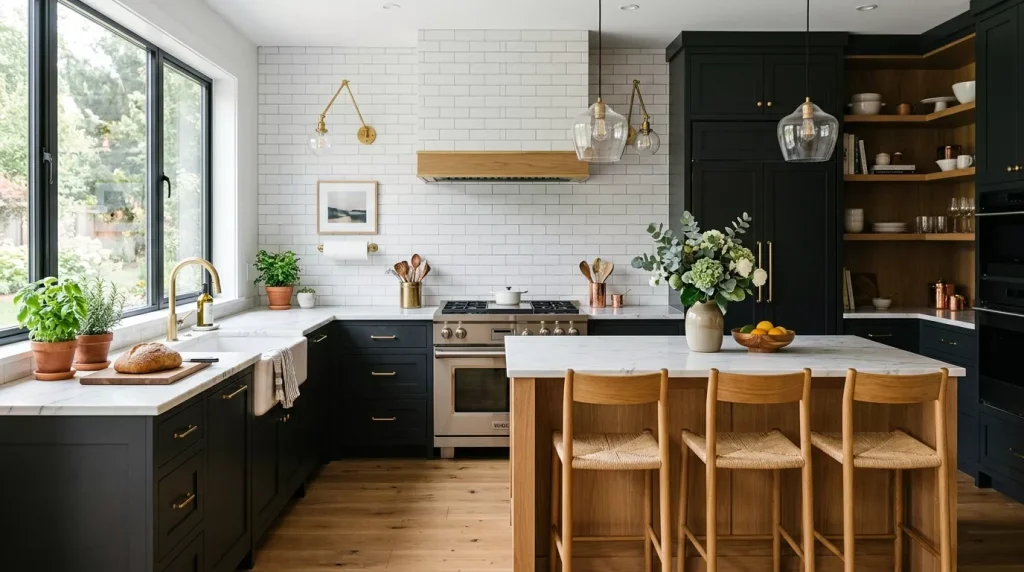
The key to modern dark kitchens is restraint. One dark color, clean lines, and minimal clutter.
Traditional and Classic
Dark cabinets work just as well in traditional kitchens. Think raised-panel cabinetry in deep navy or forest green, with antique brass hardware and a farmhouse sink. Add open shelving with white dishes for contrast and breathing room.
Transitional Style
Can’t decide between modern and traditional? Transitional kitchens split the difference perfectly. Dark Shaker-style cabinets in charcoal or dark green, paired with quartz countertops and matte black fixtures, hit the sweet spot between classic and contemporary.
Industrial Aesthetic
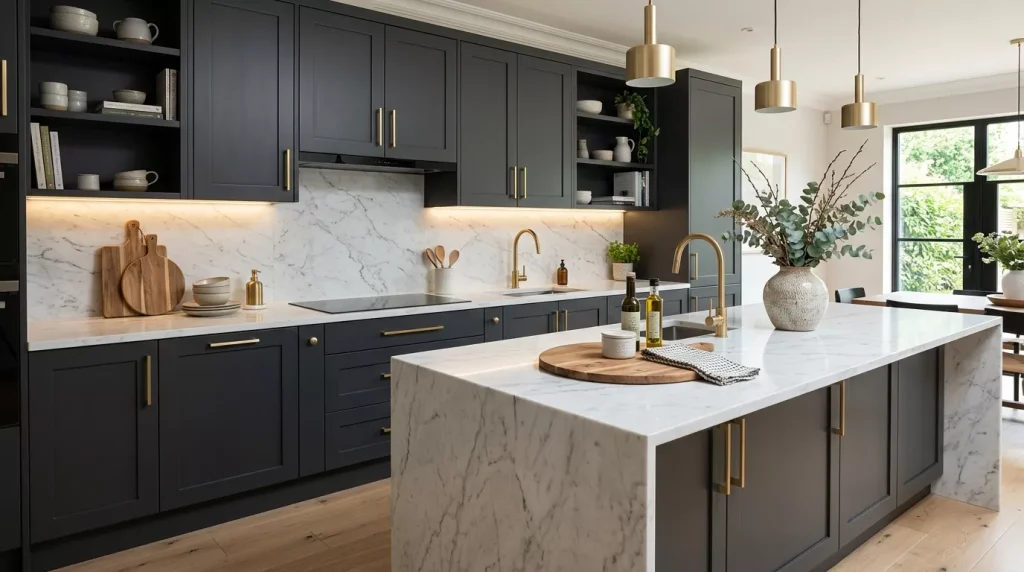
For industrial-style kitchens, black or very dark gray cabinets are a natural fit. Pair with exposed brick or concrete walls, open shelving in black metal, and Edison bulb pendant lights. Raw and cool.
Dark Kitchen Cabinets: Pros and Cons
Before you commit, here’s an honest look at what you’re getting into.
| Pros | Cons | |
|---|---|---|
| Appearance | Dramatic, luxurious, editorial | Can make small kitchens feel smaller |
| Maintenance | Hides grease and spills well | Shows dust more than light cabinets |
| Versatility | Works across many design styles | Harder to change direction later |
| Resale Value | Increasingly desirable among buyers | May not appeal to all buyers |
| Lighting | Creates cozy, intimate atmosphere | Needs good lighting to avoid feeling cave-like |
Overall: Dark cabinets are a strong design choice — but they work best when the space has enough natural light or is well-lit artificially.
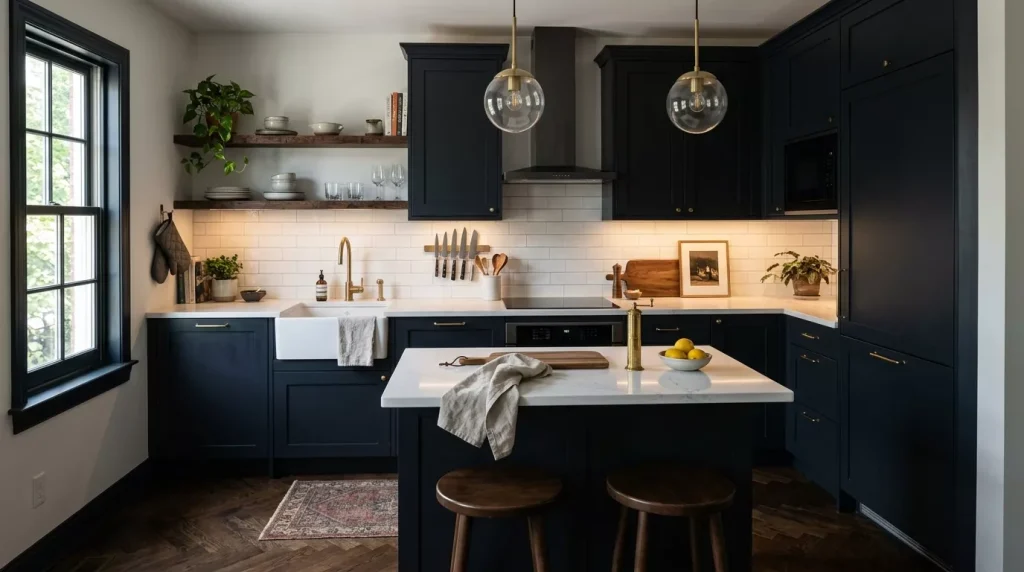
Best Countertop Pairings for Dark Kitchen Cabinets
Choosing the right countertop is arguably more important than the cabinet color itself. Here are the pairings that consistently look best:
- Dark cabinets + white marble countertops — Classic contrast, always elegant
- Dark cabinets + butcher block countertops — Warm, organic, and rich
- Dark cabinets + light quartz — Low-maintenance and clean-looking
- Dark cabinets + concrete countertops — Industrial and modern
- Dark cabinets + matching dark countertops — Moody and dramatic (best for larger kitchens)
Avoid going too matchy-matchy. If your cabinets are dark brown, a dark wood countertop can blend everything together in a way that loses definition.
How to Choose the Right Hardware for Dark Cabinets
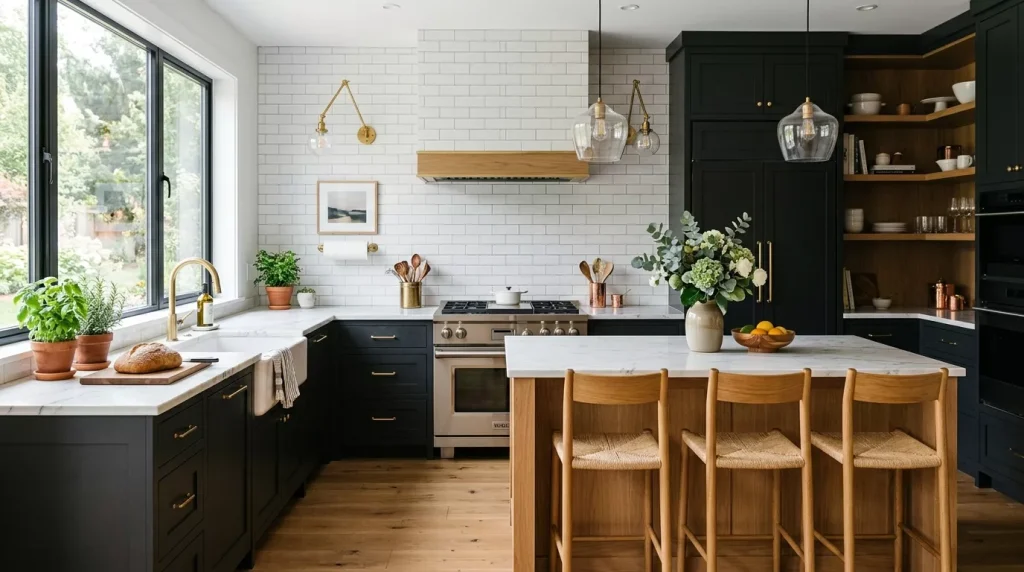
Hardware is the jewelry of your kitchen — it completes the look. Here’s what works best with dark cabinetry:
Brass and Gold Hardware Warm metallic tones against dark cabinets create a rich, luxurious contrast. This combination works especially well with navy blue, forest green, or black cabinets.
Matte Black Hardware For a tone-on-tone approach, matte black hardware on black cabinets looks sleek and intentional. It keeps things visually calm and contemporary.
Satin Nickel or Chrome These cooler-toned metals pair beautifully with charcoal gray or dark blue cabinets. They add a clean, modern touch without competing for attention.
Antique Bronze If you’re going for a traditional or rustic feel, antique bronze hardware on deep green or dark brown cabinets is a winning combination.
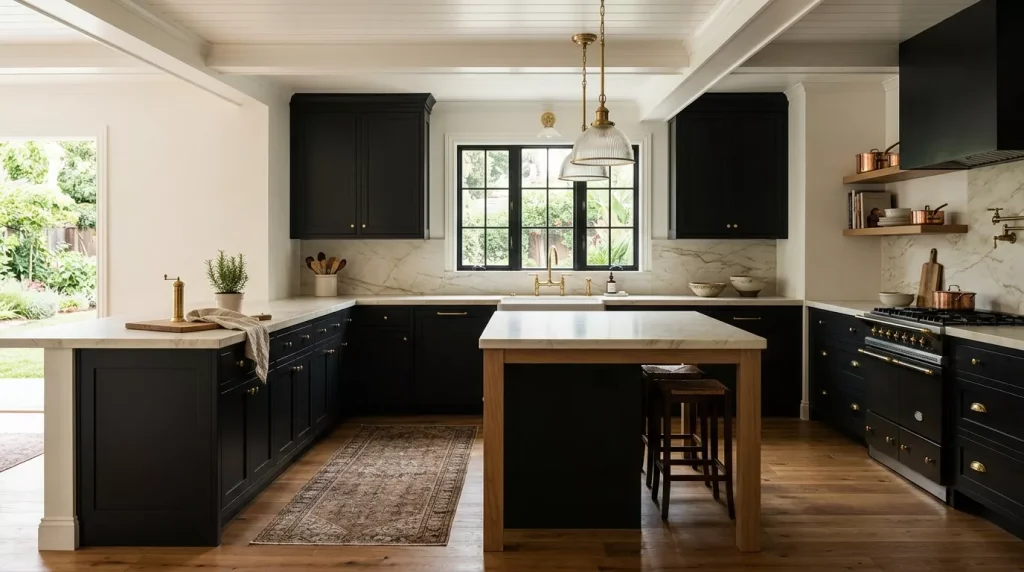
Lighting Strategies for Dark Kitchen Cabinets
This is where many people go wrong. Dark cabinets absorb light — so you need to plan your lighting carefully to keep the kitchen functional and inviting.
Under-Cabinet Lighting This is non-negotiable with dark cabinetry. LED strip lighting underneath upper cabinets illuminates countertops and prevents the kitchen from feeling dim.
Pendant Lights Hanging pendants over an island or peninsula add focused task lighting and visual interest. Rattan, glass, or metal pendants all work depending on your style.
Recessed Ceiling Lights A grid of recessed lights ensures even, general illumination. Pair with dimmers so you can control the ambiance.
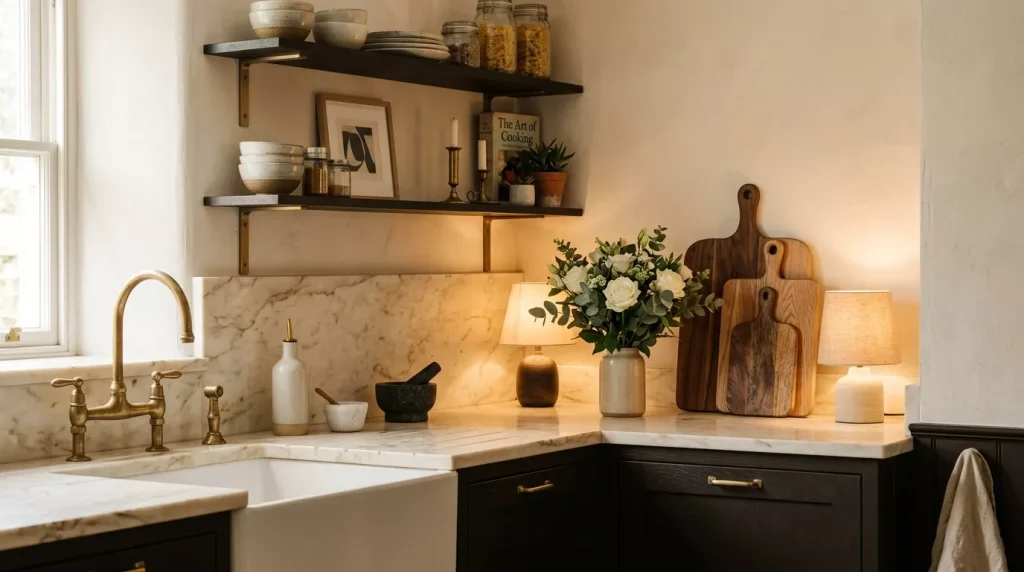
Statement Ceiling Fixture In smaller kitchens without an island, a chandelier or bold ceiling fixture becomes the focal point while adding necessary light.
Step-by-Step Guide: Planning Your Dark Kitchen Cabinet Redesign
Whether you’re doing a full renovation or just refreshing your existing cabinets, here’s a practical roadmap:
Step 1: Assess Your Space Start with your kitchen’s size and natural light. Small kitchens with limited windows can still have dark cabinets — but you’ll need to compensate with good artificial lighting and lighter countertops or backsplashes.
Step 2: Choose Your Color Pull paint chips or cabinet samples and live with them in your space for a few days. Light changes throughout the day, and a color that looks stunning in the morning might feel oppressive by evening.
Step 3: Plan the Layout Decide whether you want all-dark cabinets or a two-tone approach. Many designers recommend dark on the lower cabinets and lighter uppers — it keeps the kitchen feeling open while still delivering drama.
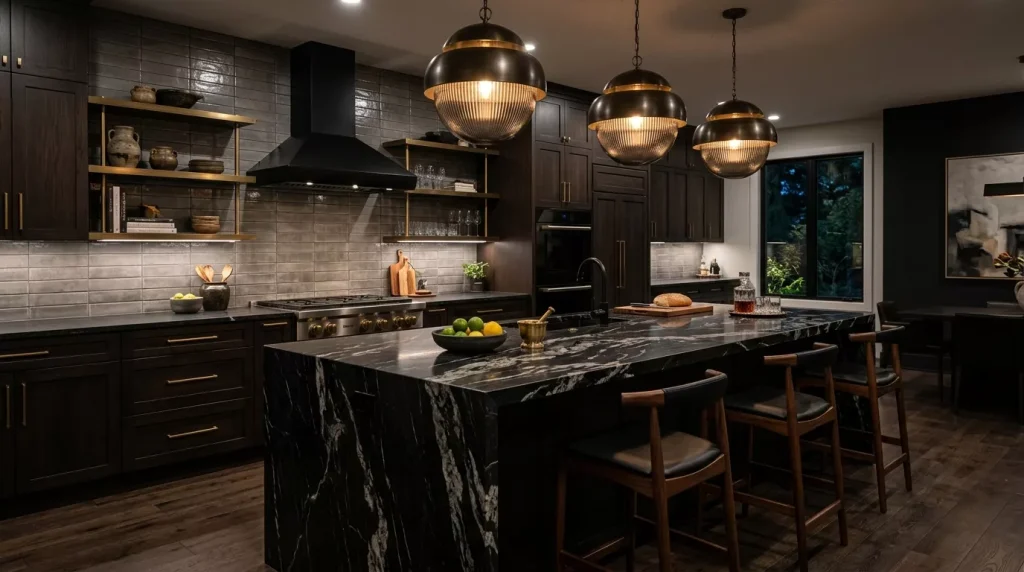
Step 4: Select Countertops and Backsplash Once you’ve committed to your cabinet color, choose countertops and a backsplash that complement rather than compete. Light countertops offer contrast; a simple tile or stone backsplash ties it all together.
Step 5: Lock In Hardware and Fixtures Finish handles, faucets, and lighting fixtures should all speak the same design language. Mixing metals is fine — but stick to two maximum.
Step 6: Plan Your Lighting Work with an electrician if needed to plan under-cabinet lighting, recessed lights, and any pendant additions before cabinets are installed.
Step 7: Install and Style Once everything is in, style thoughtfully. Open shelving, plants, and light-colored accessories can soften the drama and make the space feel lived-in.
Tips for Making Dark Kitchen Cabinets Work
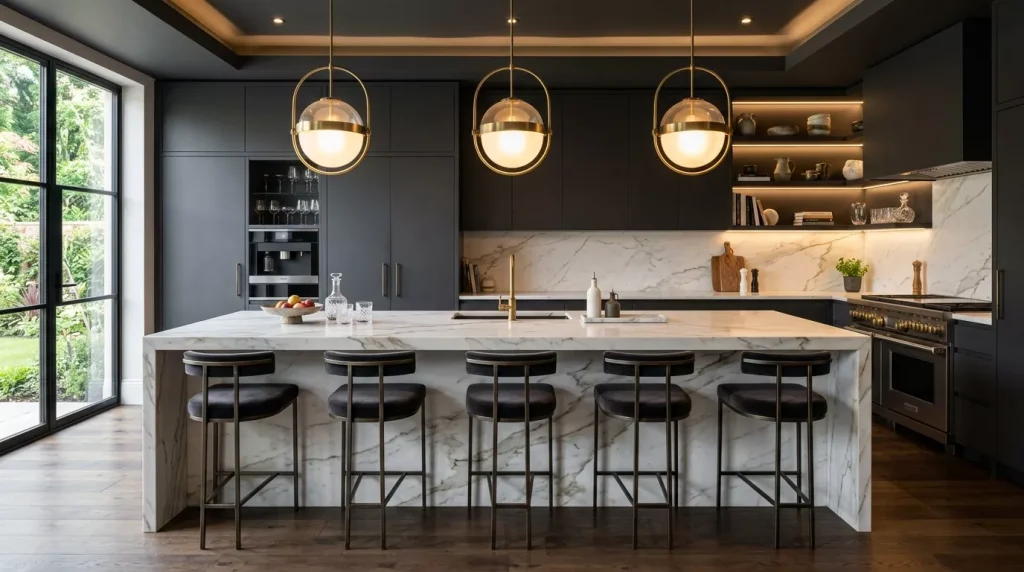
- Use light-colored flooring — Pale wood or light tile grounds the cabinets without making the room feel heavy
- Add contrast with a lighter backsplash — White, cream, or soft gray subway tiles pop against dark cabinets
- Don’t forget the ceiling — A white ceiling reflects light and visually lifts the room
- Layer your lighting — Task, ambient, and accent lighting all play a role
- Use open shelving strategically — A few open shelves with light-colored dishes or plants breaks up solid dark stretches
- Sample before committing — Paint a test section of your existing cabinets before ordering custom cabinetry
Common Mistakes to Avoid with Dark Cabinets
Going too dark in a tiny kitchen without proper lighting This is the most common issue. Without solid lighting design, dark cabinets in a small space can feel claustrophobic. Solve it with under-cabinet LEDs and a well-placed pendant.
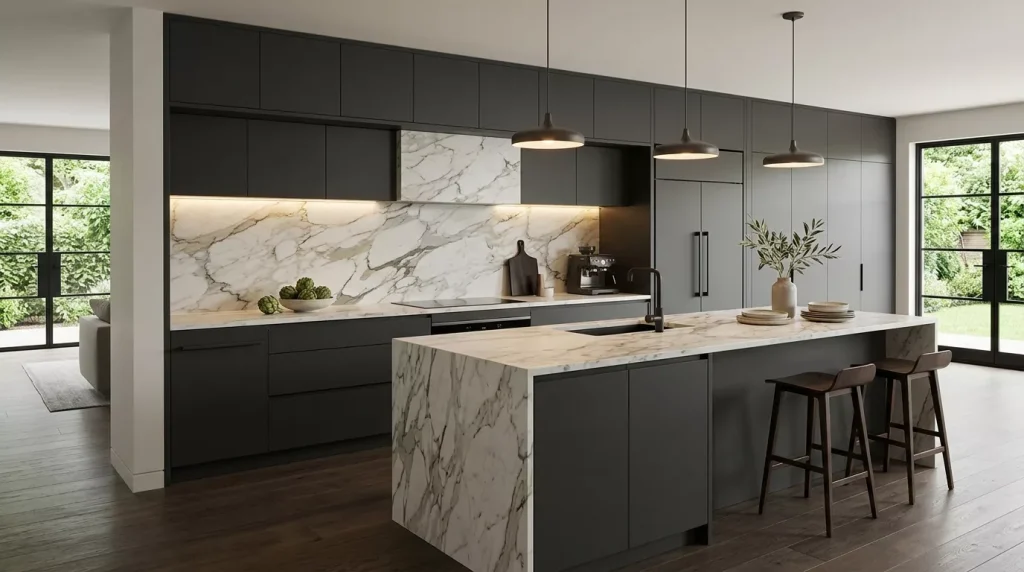
Choosing glossy finishes without considering reflections High-gloss dark cabinets look stunning in photos, but in real life they show every fingerprint and scratch almost immediately. Matte or satin finishes are far more forgiving for daily use.
Neglecting the backsplash Dark cabinets and a dark backsplash with dark countertops can make a kitchen feel like a tunnel. At least one element — usually the backsplash or countertop — should offer contrast.
Matching all hardware to the cabinet color While tone-on-tone can work, invisible hardware makes a kitchen feel unfinished. A pop of metal — even something subtle like matte black on black cabinets — adds definition.
Ignoring paint undertones Dark green with a yellow undertone clashes with cool-gray countertops. Always look at the undertones in your cabinet color and ensure your countertops, flooring, and walls complement rather than fight.
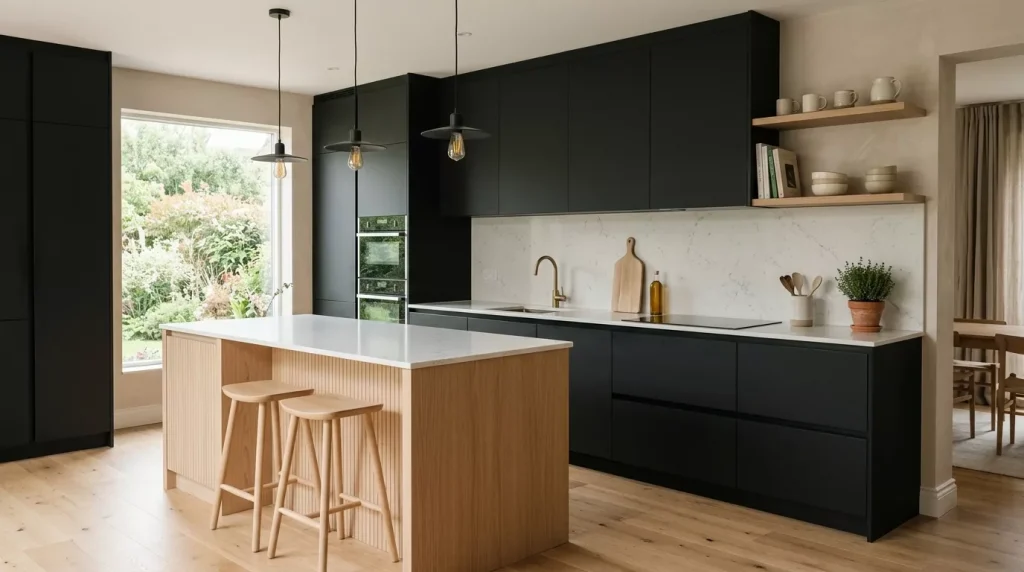
Dark Kitchen Cabinets: Full Comparison at a Glance
| Cabinet Color | Best Pairing | Ideal Style | Maintenance Level |
|---|---|---|---|
| Matte Black | Warm wood, brass hardware | Modern, industrial | Medium (dust visible) |
| Charcoal Gray | White quartz, chrome fixtures | Transitional, contemporary | Medium |
| Navy Blue | White marble, gold hardware | Classic, coastal, transitional | Low–Medium |
| Forest Green | Natural stone, bronze hardware | Rustic, traditional, eclectic | Low–Medium |
| Deep Plum | Cream countertops, antique brass | Maximalist, traditional | Medium |
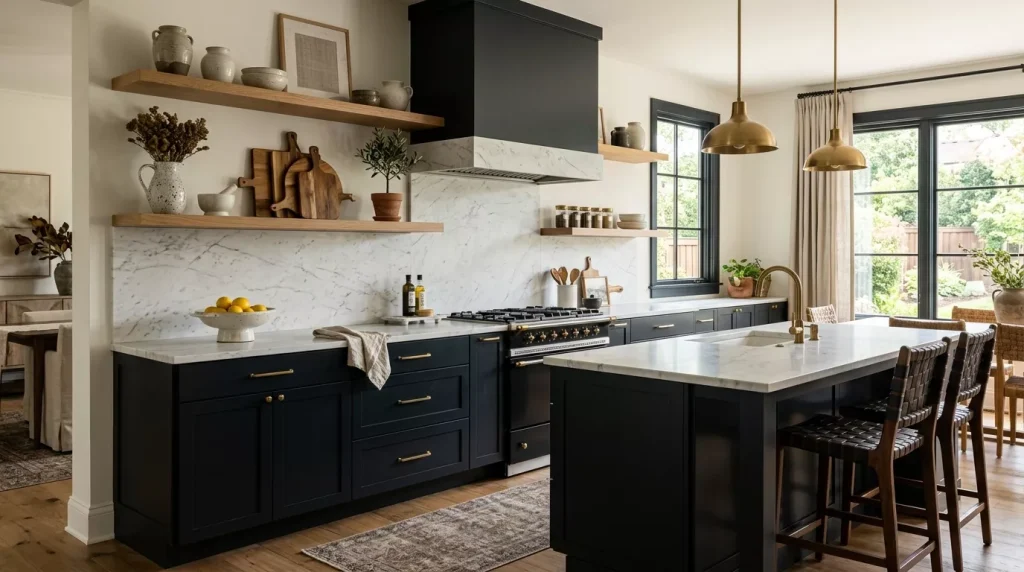
Conclusion
Dark kitchen cabinet ideas aren’t just a passing trend — they’re a design shift toward kitchens that feel intentional, atmospheric, and genuinely personal. Whether you go full drama with matte black or keep things sophisticated with navy blue, dark cabinetry has the power to completely transform your space.
The key is thoughtful planning. Pair your dark kitchen cabinets with the right countertops, invest in good lighting, and choose hardware that ties everything together. Get those details right, and you’ll have a kitchen that feels as impressive in person as it does in photos.
Ready to make the leap? Start with a few paint samples, live with the colors in your space, and let the transformation begin.
Frequently Asked Questions
Q1: Do dark kitchen cabinets make a kitchen look smaller?
They can, but it’s not inevitable. With the right lighting — particularly under-cabinet LEDs and good ceiling fixtures — dark cabinets can feel cozy and intimate rather than cramped. Lighter countertops and backsplashes help balance the visual weight.
Q2: What’s the most popular dark kitchen cabinet color right now?
Navy blue and forest green are extremely popular at the moment, closely followed by matte black and charcoal gray. Navy in particular has proven to be a long-lasting choice that doesn’t feel dated quickly.
Q3: Are dark kitchen cabinets hard to keep clean?
Ironically, dark cabinets hide grease and food spills better than white ones. However, they do show dust and light smudges more noticeably. A quick wipe-down with a microfiber cloth a few times a week keeps them looking sharp.
Q4: Can I paint my existing cabinets dark instead of replacing them?
Absolutely. Cabinet painting is one of the most cost-effective kitchen upgrades available. A professional cabinet painter can transform your existing boxes with proper sanding, priming, and a quality finish coat. The key is proper prep — shortcuts lead to peeling.
Q5: What hardware finish works best with dark cabinets?
Brass and gold tones are the most universally flattering against dark cabinets. They add warmth and contrast beautifully. Matte black hardware also works well for a sleeker, more modern look. The choice ultimately depends on your overall style direction.
Q6: Should upper and lower cabinets both be dark?
Not necessarily. Many kitchens use dark lower cabinets and lighter uppers for balance — it’s one of the most popular combinations in contemporary kitchen design. However, all-dark kitchens can look stunning when properly lit. It comes down to the size of your space and personal preference.
Q7: What flooring works best with dark kitchen cabinets?
Light-to-medium wood tones, white tile, or pale gray flooring all work well. They provide contrast that prevents the kitchen from feeling too heavy. Very dark floors combined with dark cabinets can work in large kitchens with excellent lighting, but it’s a bolder commitment.