Terracotta Living Room Ideas: Cozy & Stylish Decor

Terracotta Living Room Ideas: Warm, Earthy Inspiration for Every Home
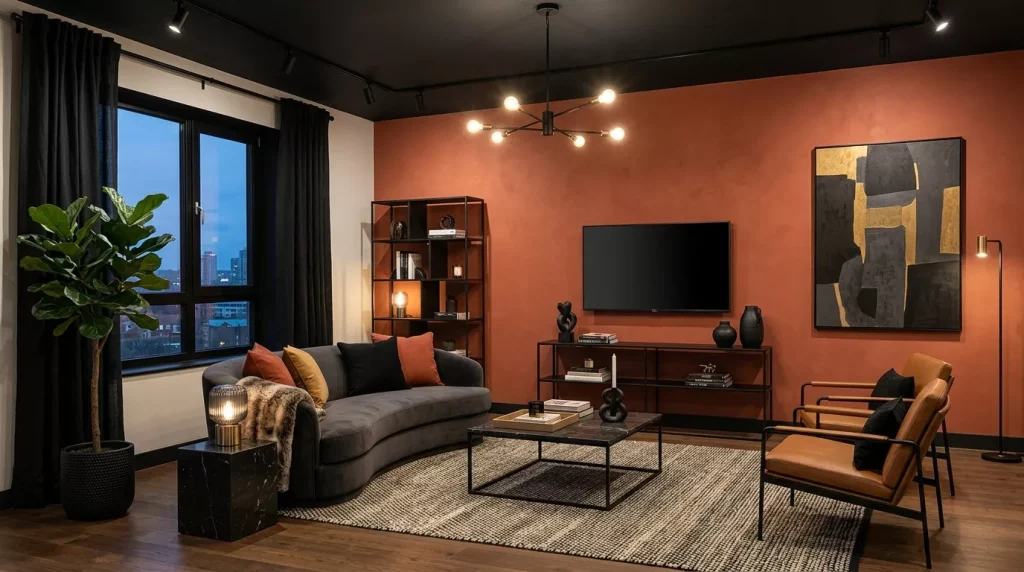
If you’ve been browsing home decor inspiration lately, you’ve probably noticed one shade showing up again and again: terracotta. These terracotta living room ideas have been taking over interior design feeds for a simple reason — the color brings instant warmth, character, and a sense of “lived-in” comfort that feels both grounded and stylish.
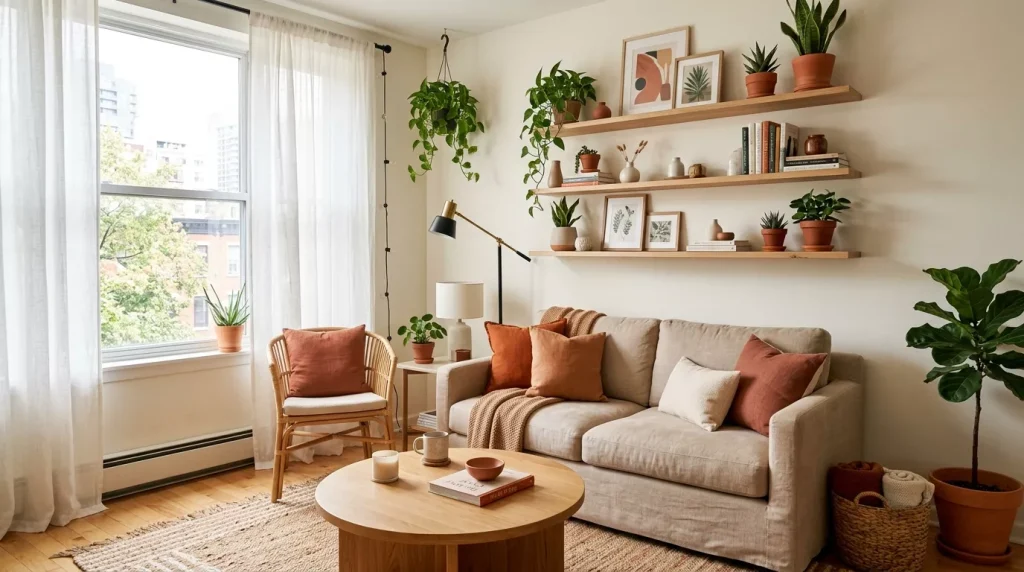
Whether you’re planning a full room refresh or just want to add a few earthy touches here and there, terracotta has a way of turning a flat, forgettable space into something that actually feels like home.
In this guide, we’ll go through color pairings, design styles, a step-by-step planning process, common mistakes, and answers to the questions people ask most when decorating with terracotta.
Why Terracotta Works So Well in Living Rooms
Terracotta isn’t just a passing trend — it’s a color that’s literally named after baked clay, and that warmth comes through in every shade of it. Think sun-soaked Mediterranean walls, desert pottery, and old brick courtyards.
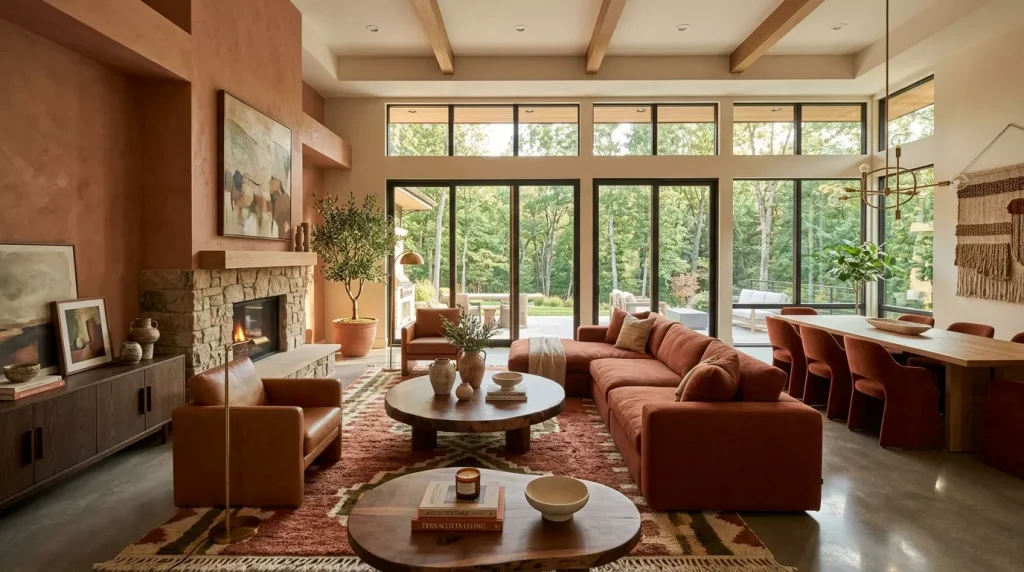
Here’s what makes it such a smart choice for living spaces:
- It’s a warm neutral, so it plays nicely with both bold accent colors and soft, muted palettes.
- It adds visual depth without feeling heavy or dark, unlike chocolate browns or deep maroons.
- It looks good in almost any light — natural daylight makes it glow, while lamp light in the evening gives it a soft, amber tone.
- It blends indoor and outdoor aesthetics beautifully, especially in homes with natural textures like wood, linen, or stone.
In short, terracotta does a lot of work visually while still feeling relaxed, not staged.
Popular Terracotta Living Room Color Combinations
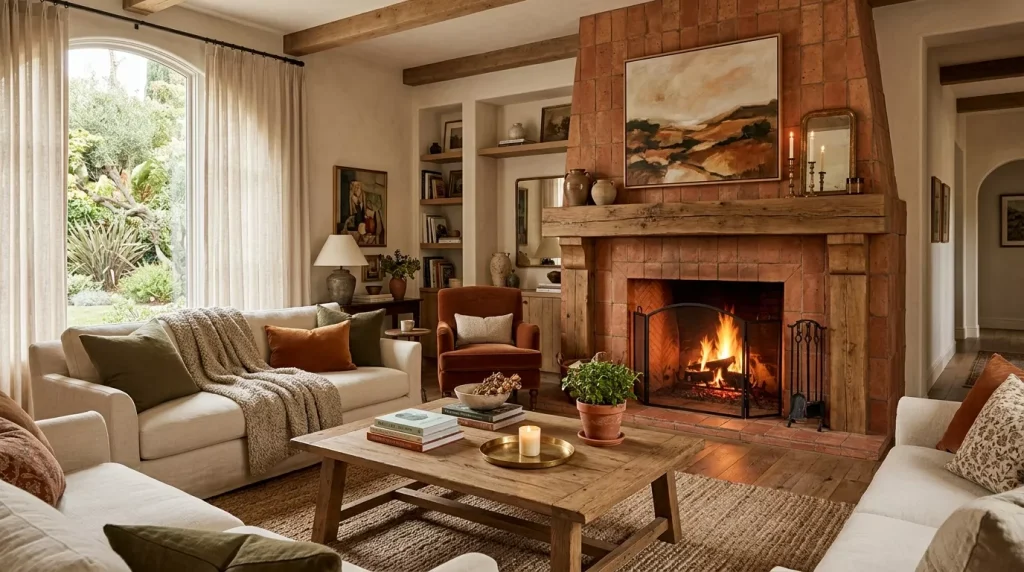
Before you start picking furniture or paint, it helps to settle on a color palette. Terracotta is flexible, but some pairings simply work better than others depending on the mood you’re going for.
| Color Pairing | Mood It Creates | Best For |
|---|---|---|
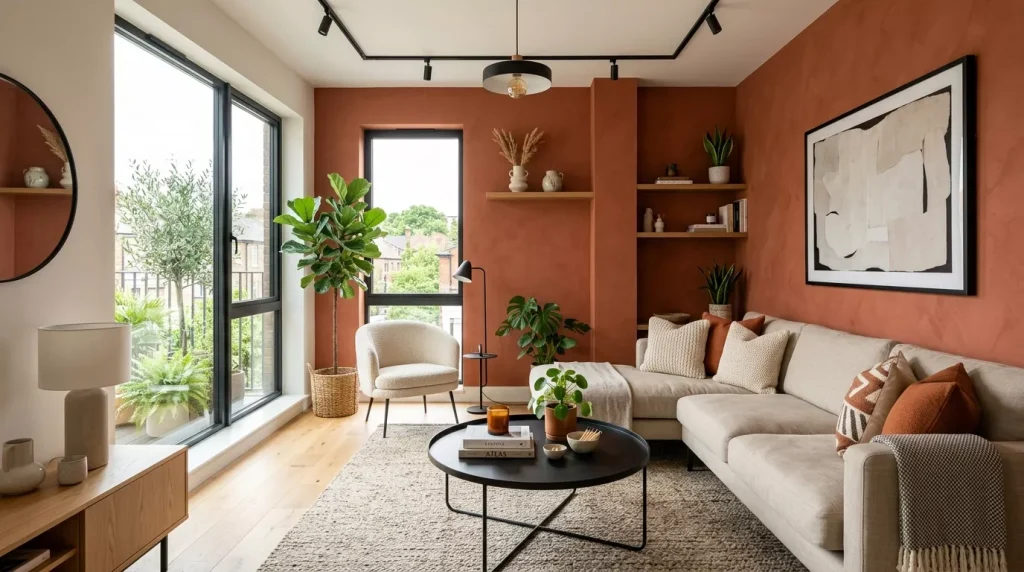
| Terracotta + Cream/Off-white | Soft, airy, sunlit | Small rooms or apartments needing brightness |
| Terracotta + Sage Green | Earthy, calming, natural | Plant-lovers, boho or organic spaces |
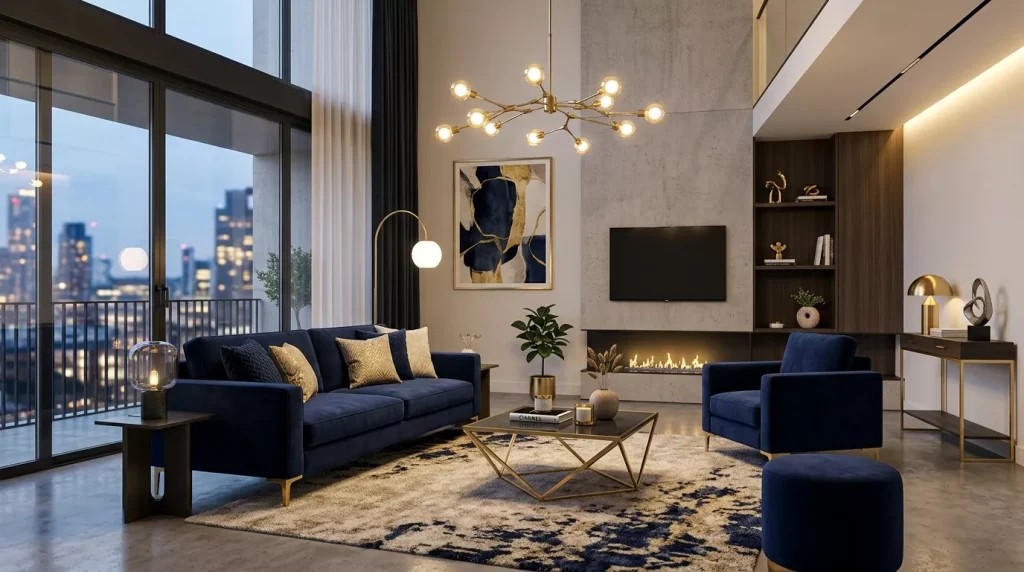
| Terracotta + Navy Blue | Rich, grounded, slightly formal | Living rooms with darker furniture |
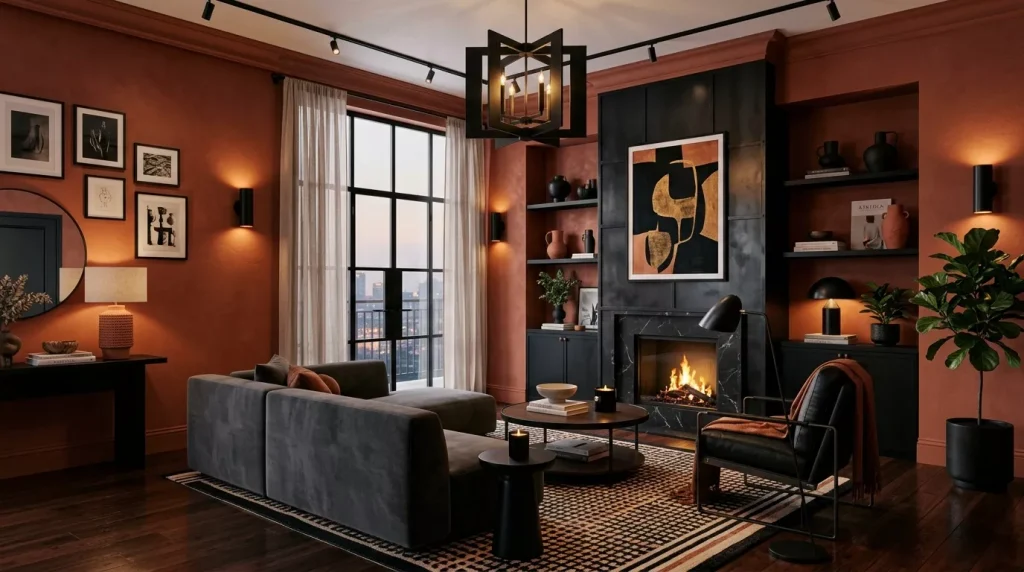
| Terracotta + Charcoal/Black | Bold, modern, dramatic | Contemporary or industrial-style homes |
| Terracotta + Mustard Yellow | Vibrant, retro-inspired | Open-plan or eclectic spaces |
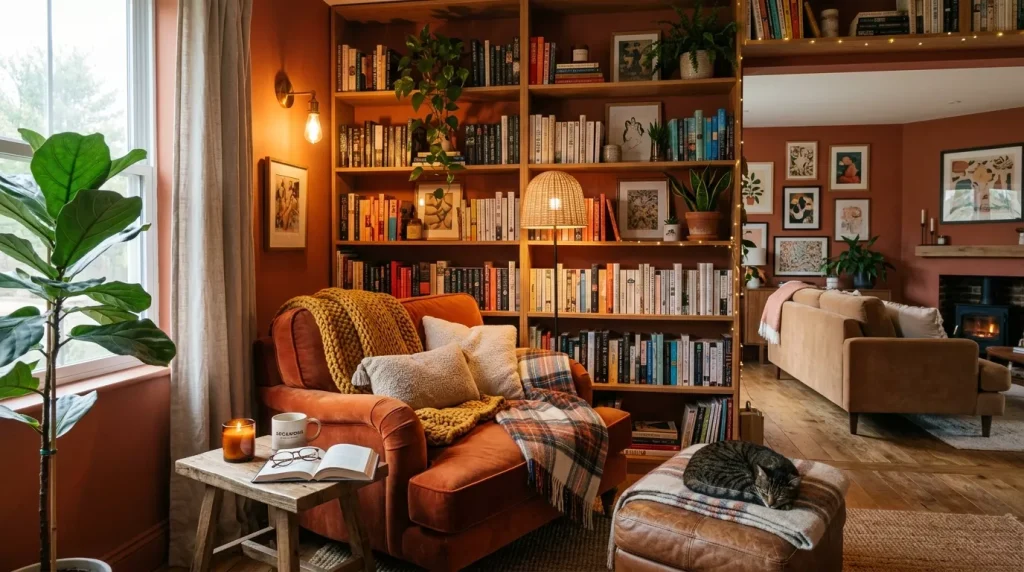
| Terracotta + Dusty Pink | Warm, soft, romantic | Cozy reading nooks or accent corners |
A good rule of thumb: pick one dominant pairing for your base (walls, sofa, rug) and let a second or third color show up in smaller doses through cushions, art, or accessories.
Terracotta Living Room Ideas by Style
Terracotta isn’t limited to one type of decor — it adapts well across several popular design styles. Here are four approaches to consider.
1. Bohemian Terracotta Living Room
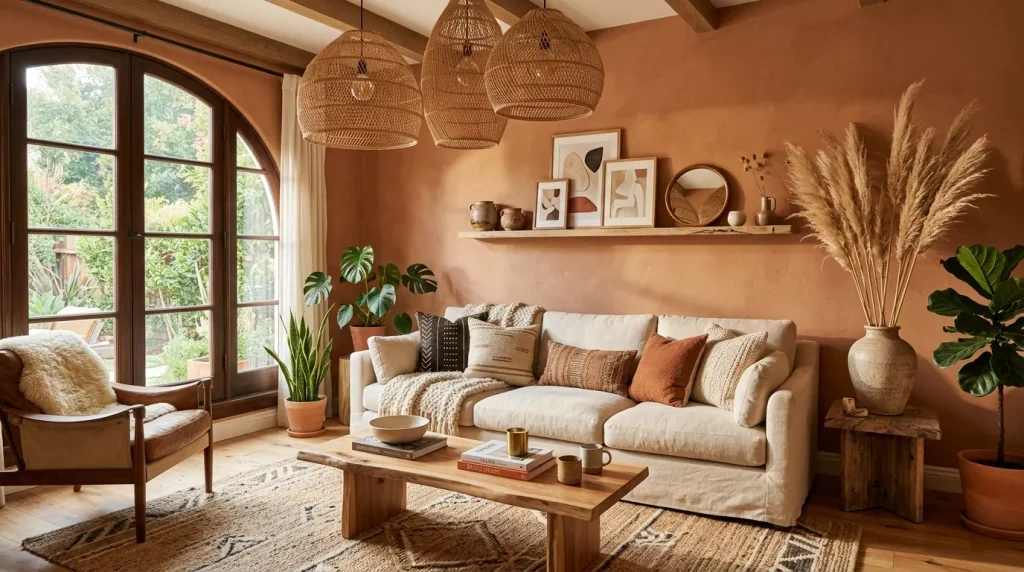
This is probably the style most associated with terracotta, and for good reason. Think layered textiles, woven rugs, rattan furniture, and lots of greenery.
To pull this off, mix patterned cushions in terracotta, mustard, and cream tones, add a jute or wool rug, and bring in macrame wall hangings or wooden wall art. The goal is a relaxed, slightly cluttered-but-curated feel.
2. Modern Minimalist Terracotta Living Room
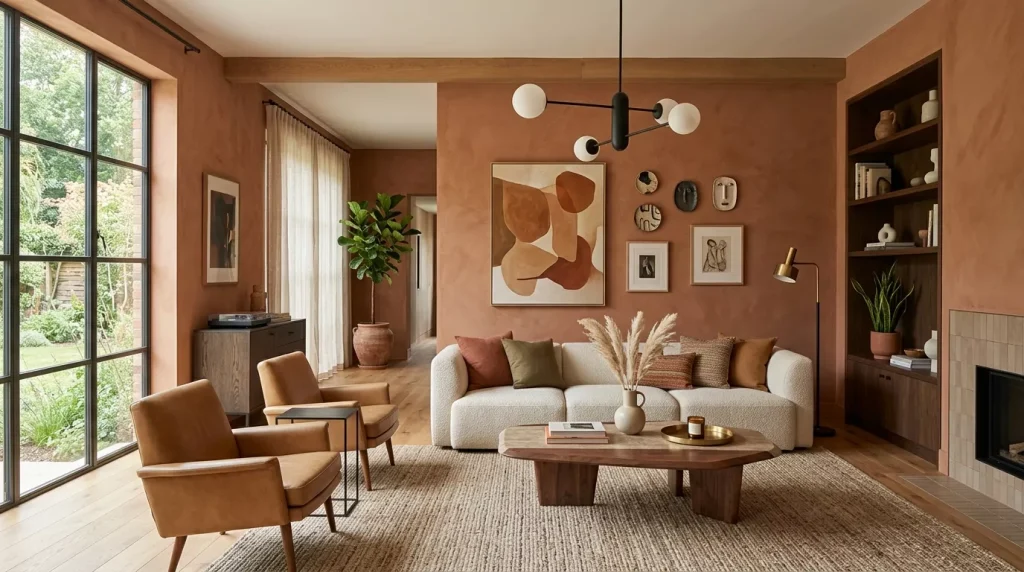
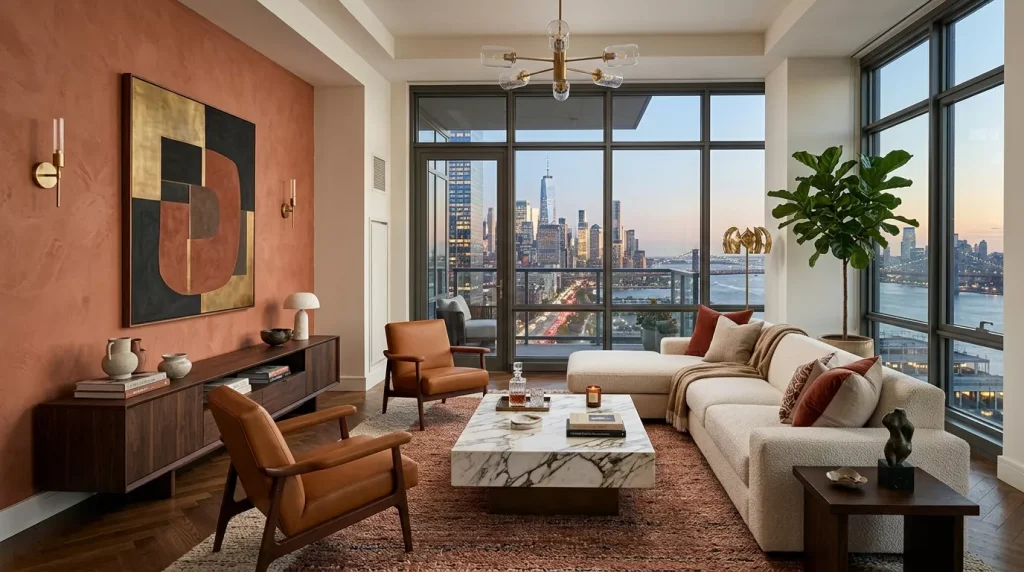
If bold patterns aren’t your thing, terracotta can still work in a clean, minimalist space. Keep walls in soft white or warm beige, then add one terracotta accent — a statement sofa, an accent wall, or a large area rug.
Stick to simple shapes and avoid clutter. The terracotta should stand out precisely because everything else around it is calm and uncluttered.
3. Rustic or Traditional Terracotta Living Room
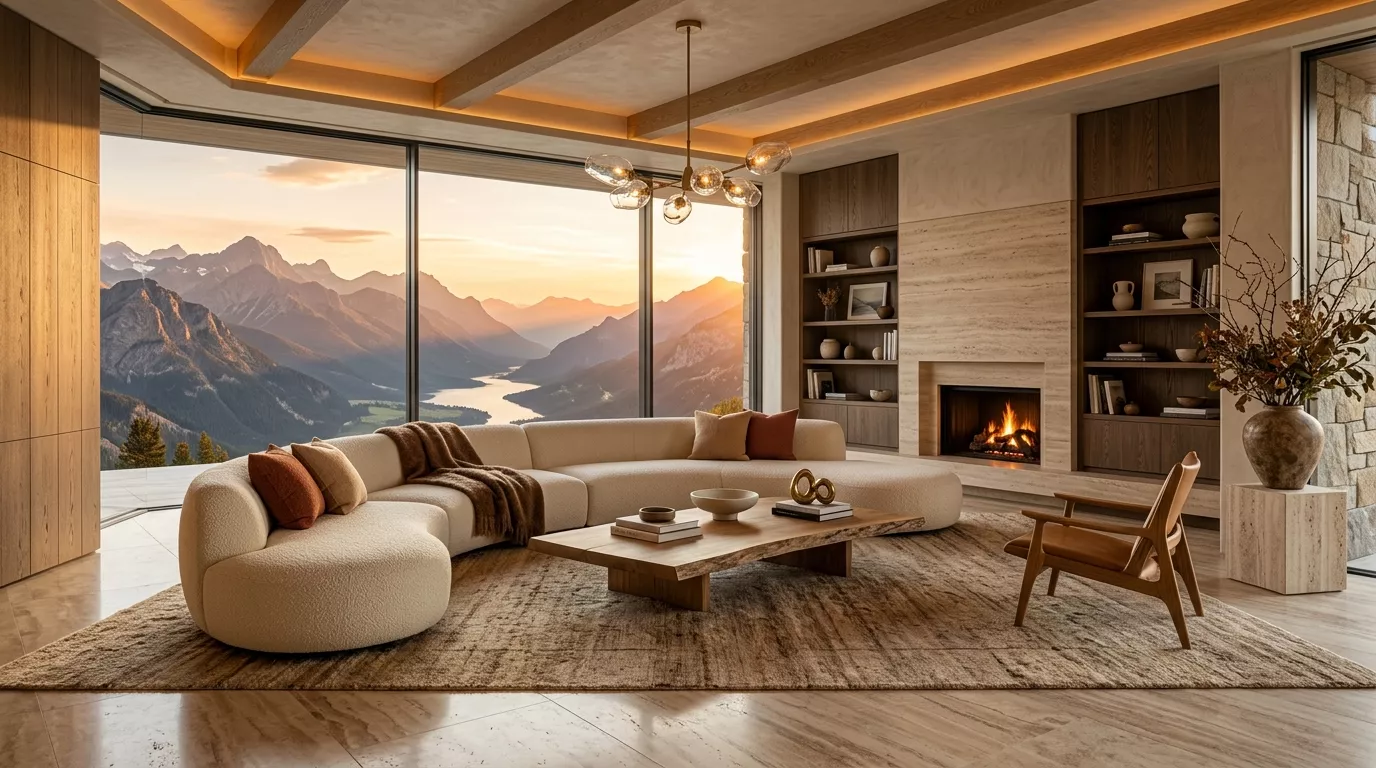
This style leans into the “baked earth” origin of the color. Exposed wood beams, leather armchairs, terracotta floor tiles, and warm lighting all work together here.
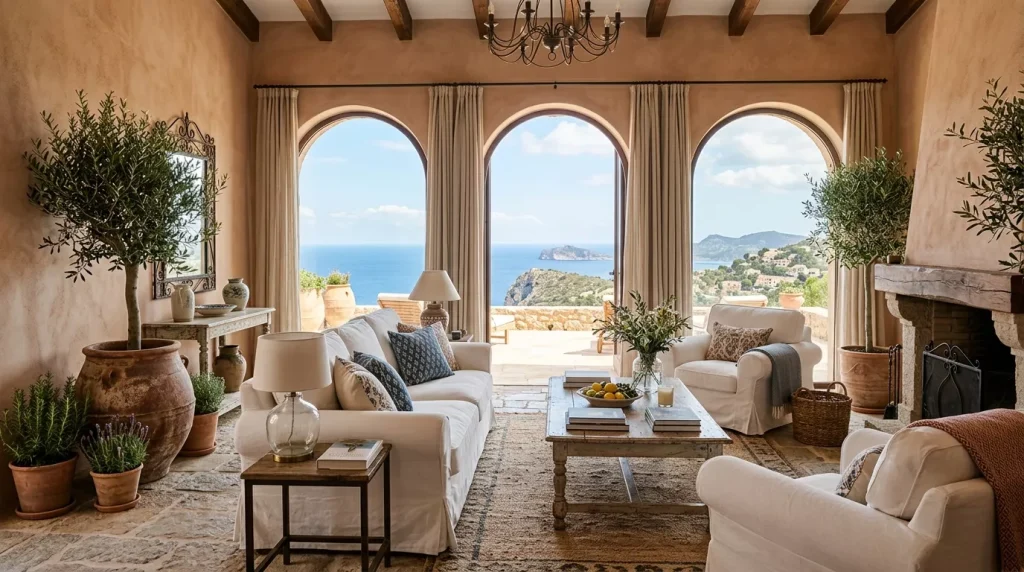
Pair terracotta walls or furniture with deep brown leather, wrought-iron details, and natural stone accents for a cozy, cabin-like feel.
4. Scandinavian-Inspired Terracotta Living Room
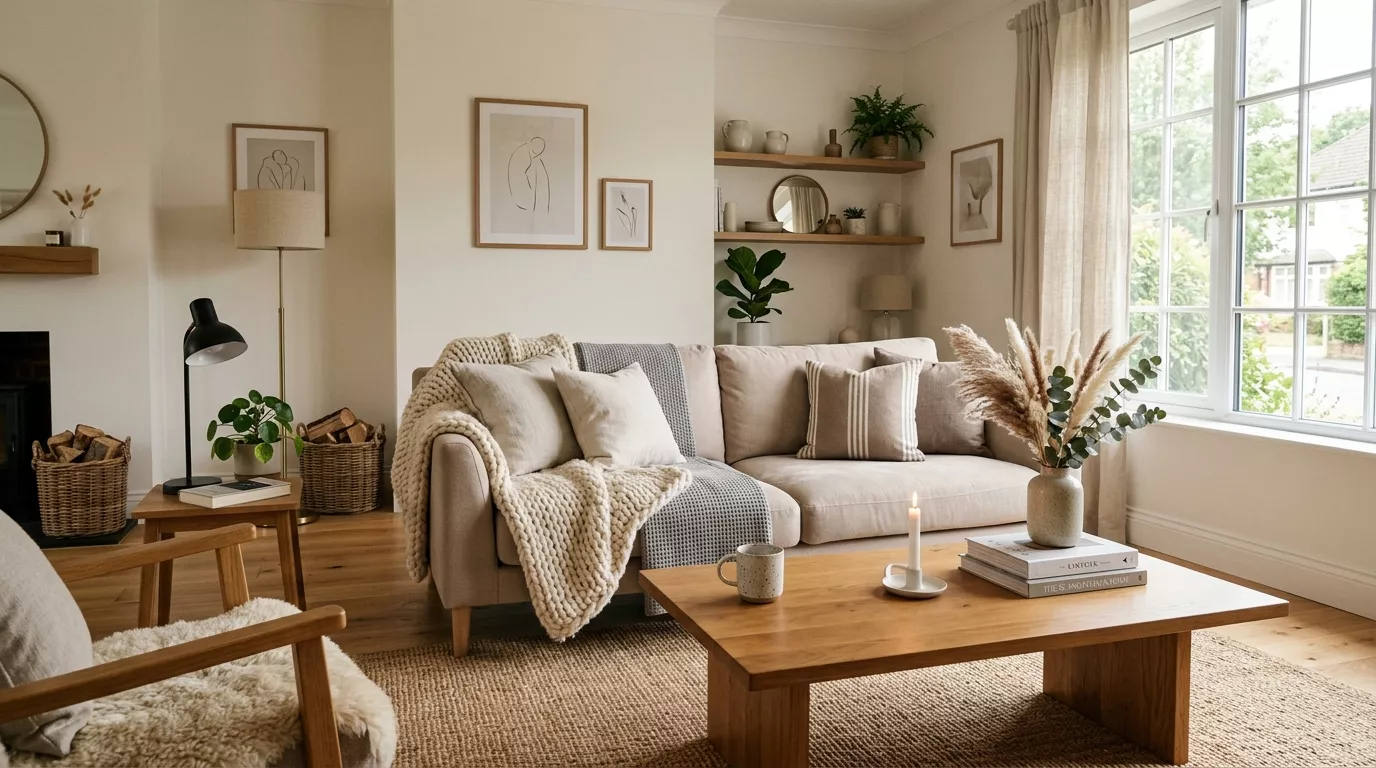
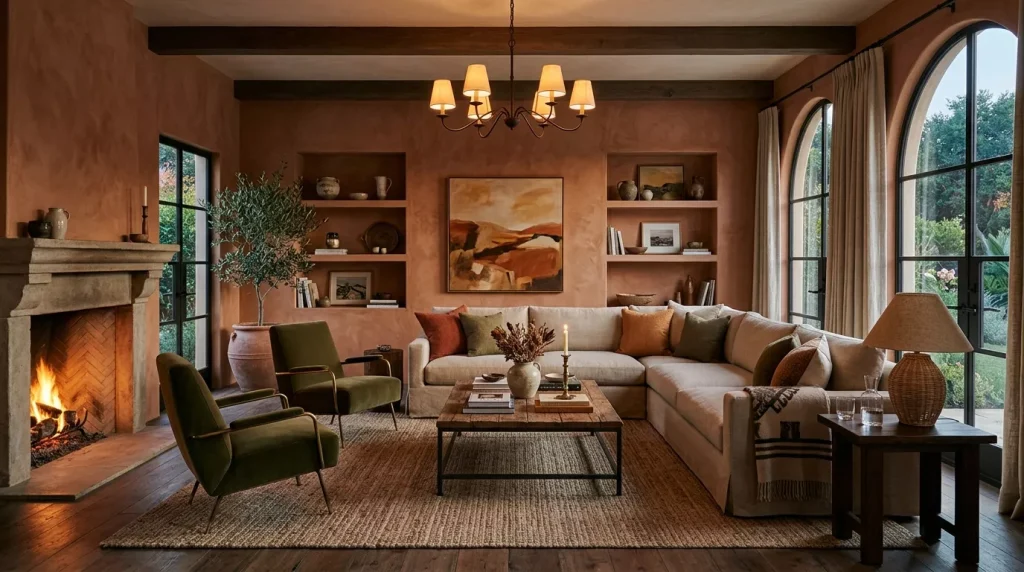
Scandinavian design is known for being light, airy, and neutral — so terracotta here works best as an accent rather than the main event.
Use light oak or birch furniture, white or pale grey walls, and bring terracotta in through throw blankets, cushions, ceramic vases, or a single statement chair.
How to Bring Terracotta Into Your Living Room
You don’t need to repaint your entire living room to enjoy this color. Here are the main areas where terracotta tends to make the biggest impact:
- Walls – An accent wall behind the sofa or TV unit is a low-commitment way to test the color.
- Sofas and accent chairs – A terracotta sofa becomes the focal point, so balance it with neutral walls and flooring.
- Textiles – Cushions, throws, curtains, and rugs are the easiest and cheapest way to introduce terracotta without a major renovation.
- Wall art and decor – Abstract prints, pottery, and ceramic vases in terracotta tones add personality without overwhelming the space.
- Flooring – Terracotta tiles or terracotta-toned wood flooring give an old-world, grounded feel, especially in open-plan homes.

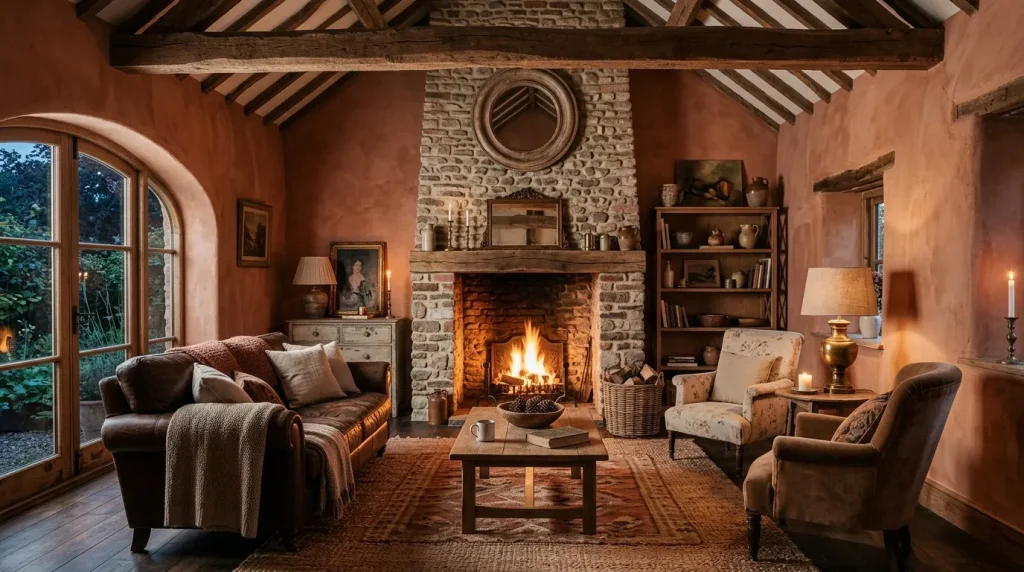
If you’re unsure where to start, textiles are the safest entry point — they’re affordable, easy to swap out, and let you “test drive” the color before committing to anything bigger.
Step-by-Step Guide: Planning Your Terracotta Living Room
Here’s a simple process to follow if you’re starting from scratch.
- Pick your starting point. Decide whether terracotta will be on your walls, your main furniture piece, or just accessories. This decision shapes everything else.
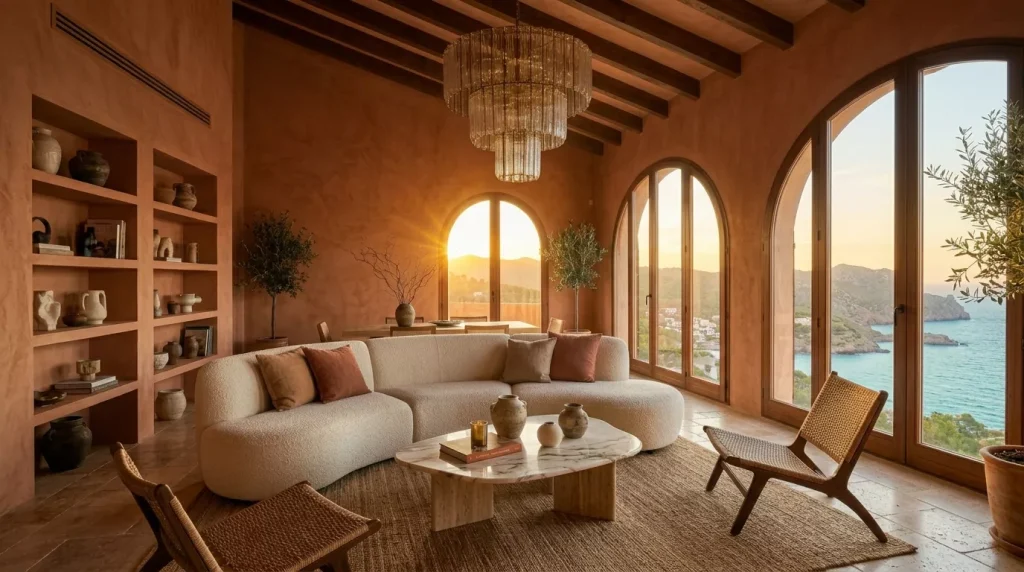
- Choose a wall treatment. If you’re not painting the whole room, consider a single accent wall, textured plaster, or even terracotta-toned wallpaper for a softer look.
- Select your base furniture color. Neutral sofas (cream, beige, or off-white) work well if your walls are terracotta. If your walls stay neutral, a terracotta sofa or armchair becomes your statement piece.
- Layer in textiles. Add cushions, throws, and a rug that either match your terracotta tone or complement it using the color pairings from the table above.
- Add accent pieces. Vases, candles, framed art, and ceramics in terracotta or earthy tones tie the room together.
- Bring in greenery. Plants add a fresh contrast to warm tones and soften the overall look — try fiddle leaf figs, pothos, or snake plants.
- Adjust your lighting. Warm white bulbs (around 2700K–3000K) bring out the cozy side of terracotta, while cooler lighting can make it feel slightly flat.
Terracotta vs Other Warm Earthy Tones
Terracotta often gets grouped with similar warm shades, but they’re not interchangeable. Here’s how it compares to a few common alternatives.
| Tone | Undertone | Pairs Well With | Overall Feel |
|---|---|---|---|
| Terracotta | Warm, slightly muted orange-red | Cream, sage, navy | Earthy, cozy, grounded |
| Rust | Deeper, more brown-red | Mustard, forest green | Moody, autumnal |
| Burnt Orange | Brighter, more saturated | Teal, charcoal | Bold, energetic |
| Clay | Lighter, pinkish-beige | Soft pastels, white | Soft, gentle, calm |
| Brick Red | Cooler, more muted red | Grey, navy | Industrial, classic |
If you’re aiming for a warm but not overpowering space, terracotta tends to sit in a sweet spot — it’s bolder than clay but softer than burnt orange or brick red.
Pros and Cons of a Terracotta Living Room
Like any design choice, terracotta has its strengths and a few things worth considering before you commit.
Pros:
- Creates a warm, welcoming atmosphere that feels cozy year-round.
- Pairs well with a wide range of other colors, making it easy to update later.
- Works across multiple design styles, from boho to modern to traditional.
- Hides minor wear and texture better than very light or very dark colors.
- Photographs beautifully in natural light, which is great if you enjoy styling for social media or just love a sunlit room.
Cons:
- Can feel overwhelming if used on every wall in a small, low-light room.
- Some shades may clash with cool-toned existing furniture (greys with blue undertones, for example).
- May not suit homes that lean heavily toward cool, minimalist color schemes.
- Bold terracotta walls can be harder to repaint or cover later if you change your mind.
Tips for Styling a Terracotta Living Room
A few small details can make a big difference when working with this color.
- Test paint samples on your actual wall at different times of day — terracotta can look noticeably different in morning versus evening light.
- Mix textures (linen, jute, ceramic, wood) rather than relying on color alone to create interest.
- Use terracotta as roughly 60% of your color scheme, with a secondary color at 30% and an accent color at 10% for balance.
- Add metallic touches like brass or copper accents — they complement terracotta’s warm undertones nicely.
- Don’t forget the ceiling and trim — sometimes a warm white trim looks better against terracotta than a stark bright white.
Common Mistakes to Avoid
Even with a color this forgiving, a few missteps can throw off the whole look.
- Going too dark in a small room. Full terracotta walls in a tiny, low-light living room can make the space feel cramped rather than cozy.
- Ignoring undertones. Some terracottas lean more orange, others more pink or brown — check how they interact with your existing flooring and furniture before committing.
- Overloading on pattern. Terracotta already has presence, so pairing it with too many busy patterns can make a room feel chaotic.
- Skipping contrast. Without lighter or cooler tones to balance it, an all-warm palette can start to feel flat after a while.
- Forgetting lighting changes. A color that looks perfect under daytime light might feel completely different under yellow evening bulbs — always test both.
Final Thoughts
Terracotta has stuck around as a favorite for interior design because it strikes a rare balance: warm without being overwhelming, earthy without feeling dated, and flexible enough to fit almost any style. Whether you go all-in with terracotta walls or simply add a few cushions and a vase, these terracotta living room ideas can help your space feel more intentional, cozy, and personal.
If you’re planning a refresh, start small — pick one element, see how it feels in your space, and build from there. Your living room doesn’t need a complete overhaul to feel warmer and more inviting; sometimes a single well-placed terracotta accent is all it takes to change the whole mood of the room.
Frequently Asked Questions
1. Does terracotta work in a small living room?
Yes, but it’s best used as an accent rather than on every wall. A terracotta feature wall, rug, or sofa can add warmth without making a small space feel boxed in.
2. What flooring goes best with a terracotta living room?
Light to medium wood tones, natural stone, and neutral-colored tiles all work well. Avoid flooring with strong cool undertones, like grey-blue stained wood, as it can clash slightly with terracotta’s warmth.
3. Is terracotta a good choice for north-facing rooms?
Yes, actually — terracotta can help warm up a room that doesn’t get much direct sunlight, since it has a naturally cozy, sun-baked quality even in lower light.
4. Can terracotta be combined with grey furniture?
It can, but check the undertone of your grey first. Warmer greys (with beige or brown undertones) pair more smoothly with terracotta than cool, blue-toned greys.
5. How do I add terracotta without repainting my walls?
Cushions, throws, rugs, curtains, and ceramic decor are the easiest ways to bring in terracotta. These items are also simple to swap out later if your style changes.
6. Does terracotta go out of style quickly?
Terracotta has been used in interiors for centuries, so it tends to feel more timeless than trendy. Unlike very specific trend colors, it pairs with classic materials like wood, linen, and stone, which helps it stay relevant.