Dusty Blue Living Room Ideas for a Cozy, Modern Look

Dusty Blue Living Room Ideas for a Cozy, Modern Look

Tired of staring at a living room that feels either too sterile or too matchy? Dusty blue living room ideas have become a go-to solution for homeowners who want a space that feels calm, current, and a little bit moody without tipping into cold or boring territory. It’s the kind of blue that looks expensive even when your furniture isn’t.
What makes dusty blue different from regular blue is the gray undertone running through it. That softness is exactly what makes it so easy to live with day to day, whether your style leans modern, traditional, or somewhere in between. Below, you’ll find everything you need to plan, shop for, and style a dusty blue living room from scratch.
Why Dusty Blue Works So Well in Living Rooms
Living rooms get used constantly, which means the color on the walls needs to hold up to everyday life without feeling exhausting to look at.
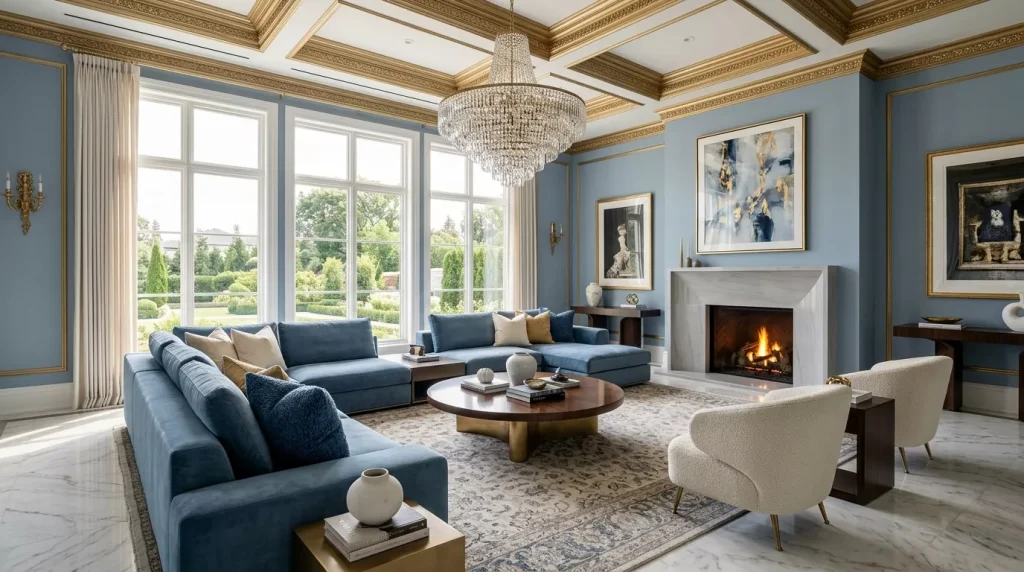
Dusty blue checks that box in a way bright or saturated colors often can’t. Here’s what makes it such a strong choice:
- It’s a true neutral substitute. Dusty blue reads almost like a colored gray, so it works with nearly any existing furniture you already own.
- It flatters most lighting situations. Unlike pure blue, which can turn icy under cool bulbs, the gray base in dusty blue keeps it looking soft in both warm and cool light.
- It photographs well. If you care about how your space looks online or in photos, dusty blue tends to look consistent across different cameras and lighting setups.
- It pairs with both warm and cool metals. Brass, gold, black iron, and brushed nickel all look intentional against it.
This combination of calm and sophistication is exactly why interior designers keep reaching for it season after season.
How to Choose the Right Dusty Blue Shade (Step-by-Step)
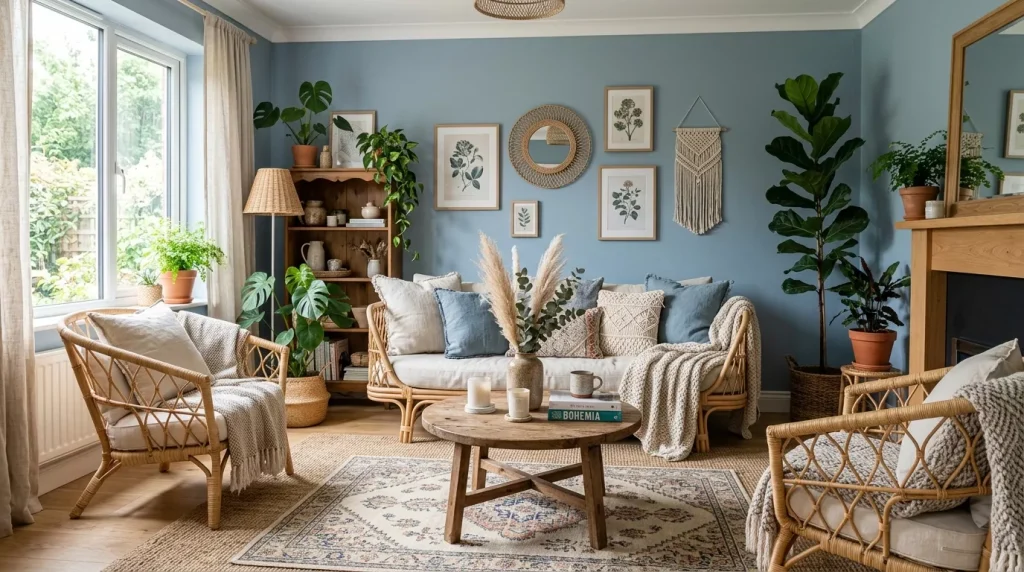
Walk into any paint store and you’ll find dozens of blues that all claim to be “dusty.” Here’s how to narrow it down without getting overwhelmed.
Step 1: Decide How Gray or How Blue You Want It
Some dusty blues lean closer to slate gray, while others lean closer to a soft denim. Hold a few swatches side by side in natural light to see which direction feels right for your space.
Step 2: Check the Room’s Natural Light
North-facing rooms tend to get cooler light, which can push dusty blue toward looking flat or gray. South- and west-facing rooms get warmer light, which usually brings out more of the blue.
Step 3: Sample It on Multiple Walls
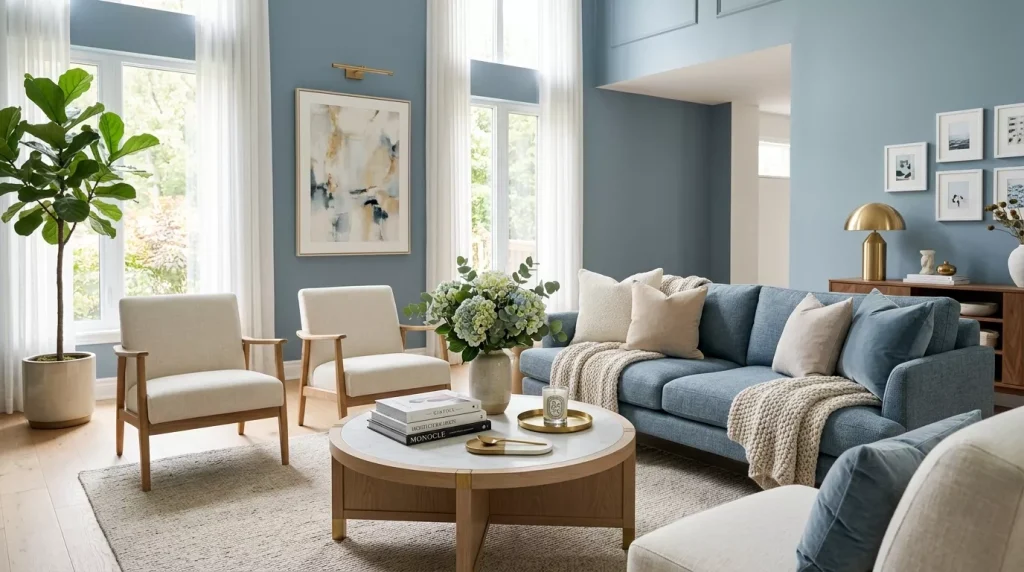
Paint large swatches on at least two different walls, since the same color can look noticeably different depending on which direction it faces.
Step 4: Decide Between an Accent Wall and a Full Room
A single accent wall behind the sofa or fireplace is a low-commitment way to test the color before painting an entire room.
Step 5: Choose Your Finish
- Matte or eggshell – best for hiding imperfections and giving the color a soft, elegant look.
- Satin – slightly easier to clean, great for high-traffic living rooms with kids or pets.
- Avoid high gloss on large wall areas, since it can make dusty blue look more plastic than soft.
Dusty Blue Living Room Ideas by Element
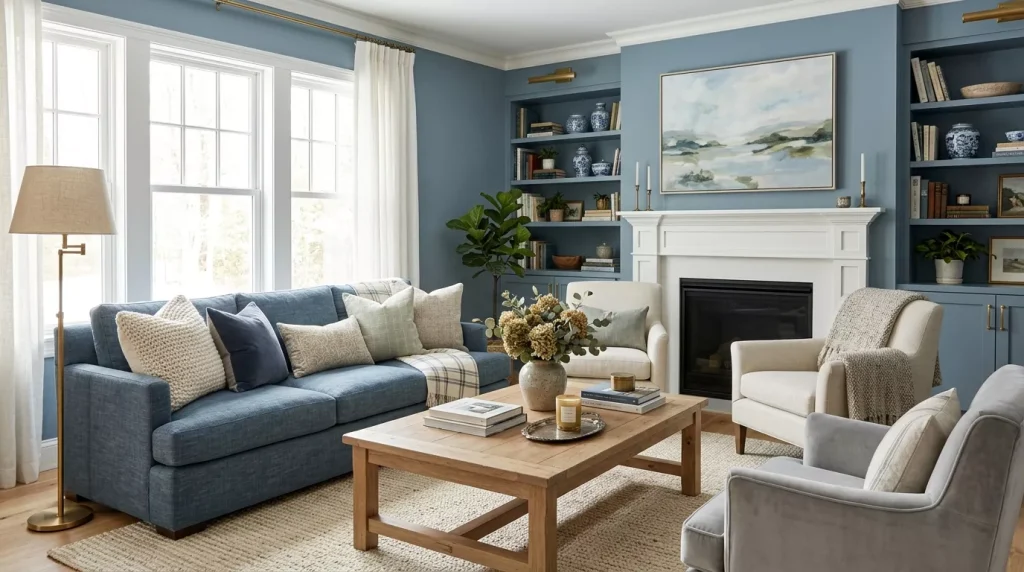
Once your shade is picked, it’s time to map out where dusty blue shows up throughout the room.
Walls
- Paint all four walls for a fully immersive, moody feel in rooms with good natural light.
- Use a single accent wall behind the main seating area to anchor the room without overwhelming it.
- Try a half-wall treatment: dusty blue on the bottom, white or cream above, divided by a simple wood trim.
Sofa and Seating
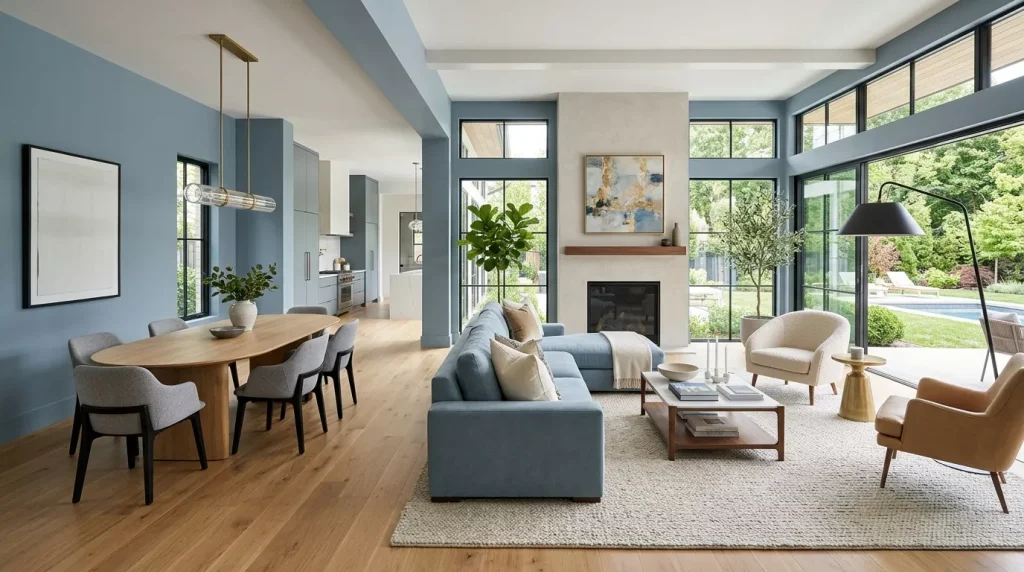
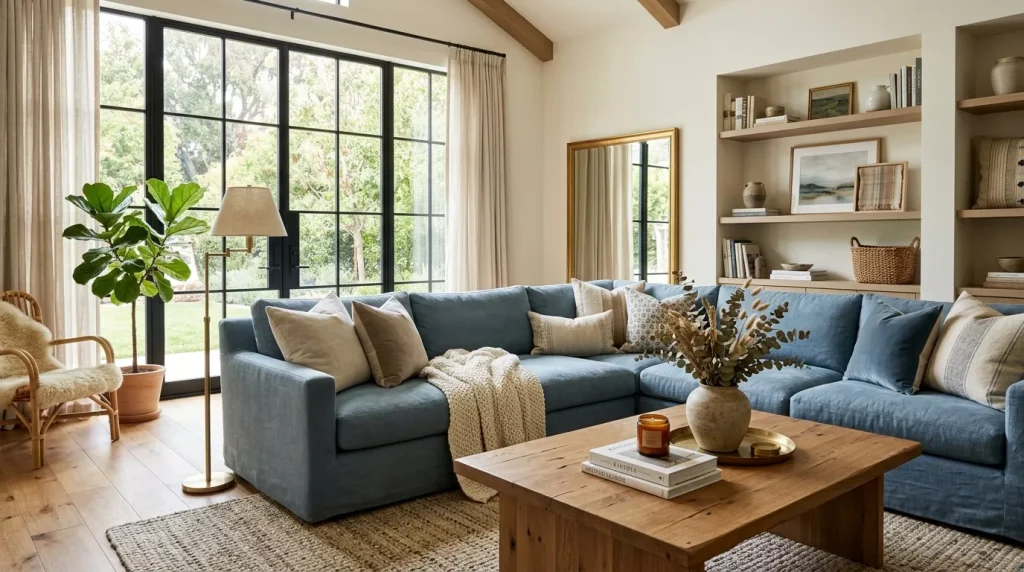
- A dusty blue sofa works as a statement piece in an otherwise neutral room with white or cream walls.
- If your walls are already dusty blue, balance them with a neutral sofa in cream, oatmeal, or warm gray.
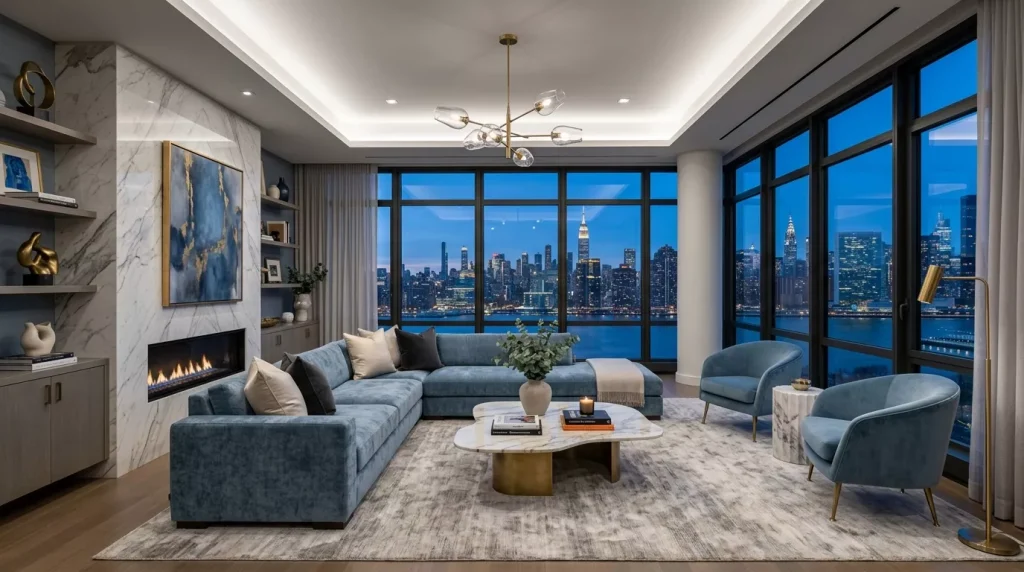
- Velvet or boucle upholstery in dusty blue adds texture and keeps the color from looking flat.
Rugs and Textiles
- A patterned rug that pulls in dusty blue alongside cream, rust, or soft gray ties the room together.
- Add throw pillows in complementary textures — linen, velvet, and woven cotton — rather than matching the wall color exactly.
- Layer in a chunky knit throw blanket for warmth and visual contrast.
Furniture and Wood Tones
- Warm wood tones (oak, walnut) soften dusty blue and keep the room from feeling too cool.
- Black metal furniture frames (coffee tables, shelving) add a modern edge against the softness of the blue.
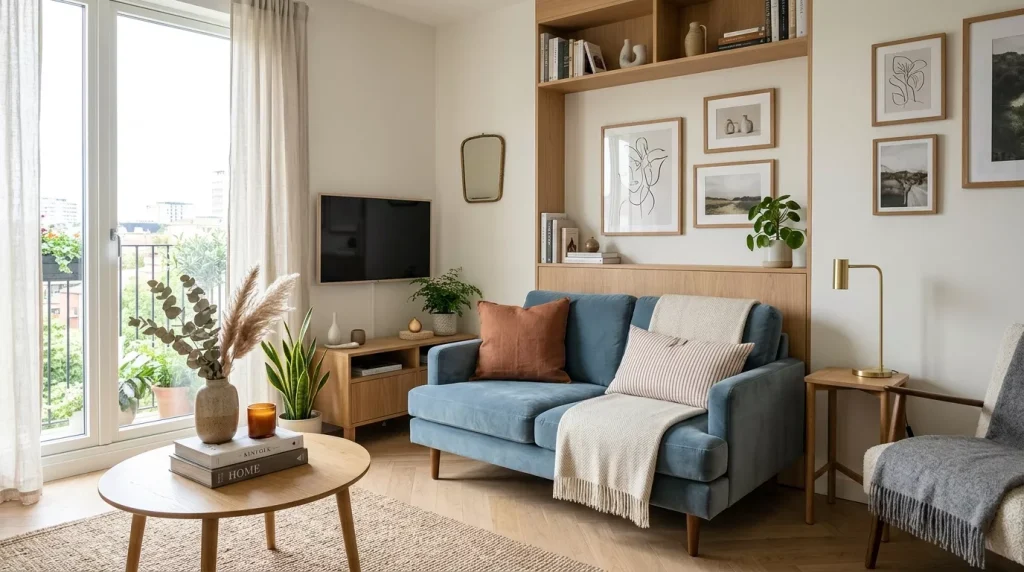
- White-painted furniture keeps the look airy and works especially well in smaller living rooms.
Lighting and Accessories
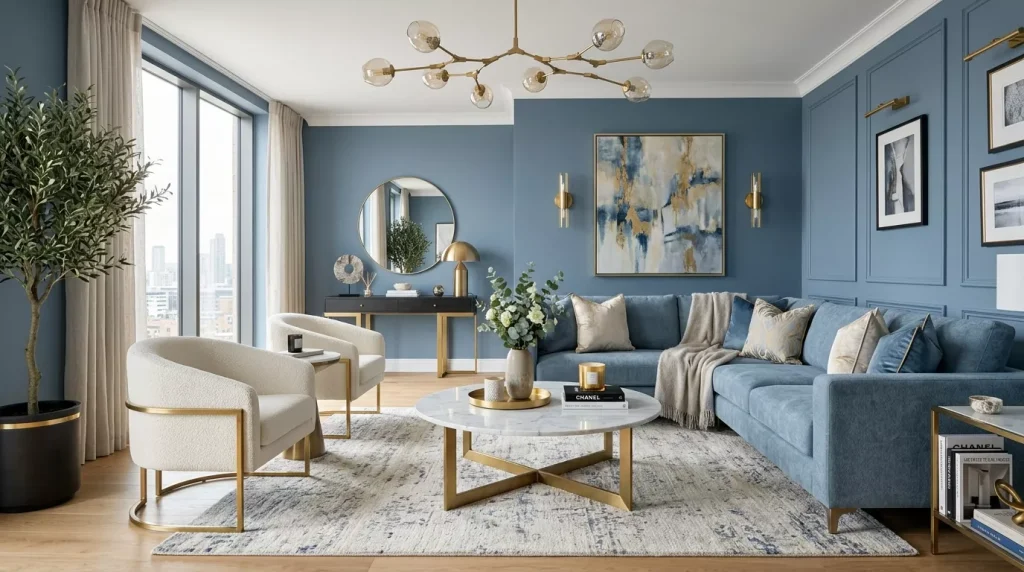
- Use warm white bulbs to prevent dusty blue from reading as cold or gray at night.
- Brass or gold light fixtures add warmth and a touch of glam against the muted blue tone.
- Layer in greenery, woven baskets, and ceramic vases in cream or terracotta to break up the cool tone.
Best Color Pairings With Dusty Blue
Choosing the right supporting colors makes the difference between a room that looks curated and one that looks accidental.
| Pairing | Mood Created | Best For |
|---|---|---|
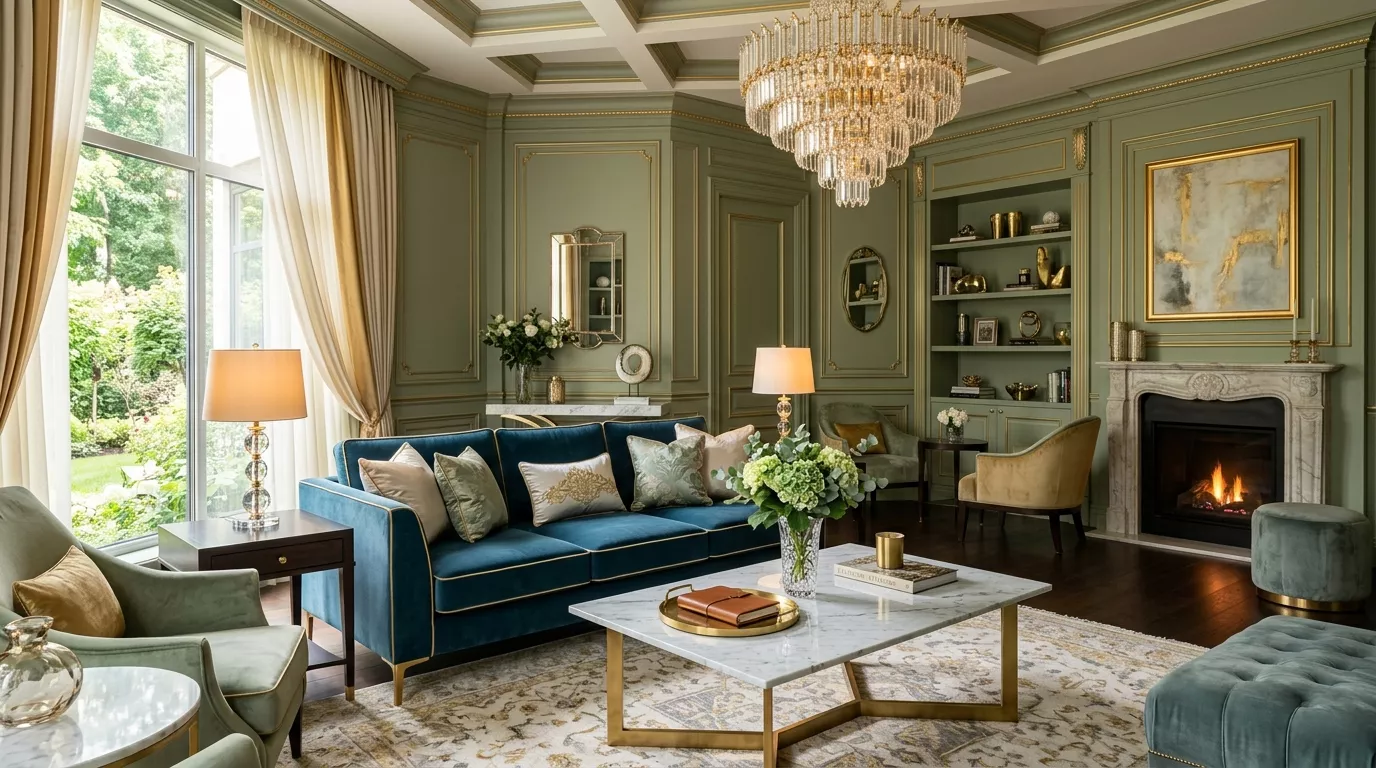
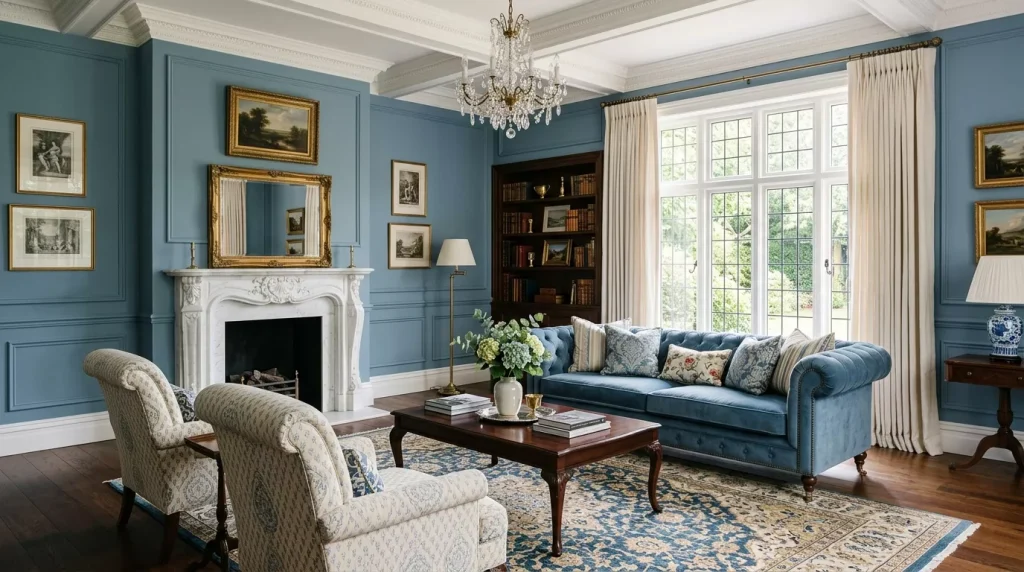
| Dusty blue + cream + brass | Elegant, warm, timeless | Traditional or transitional living rooms |
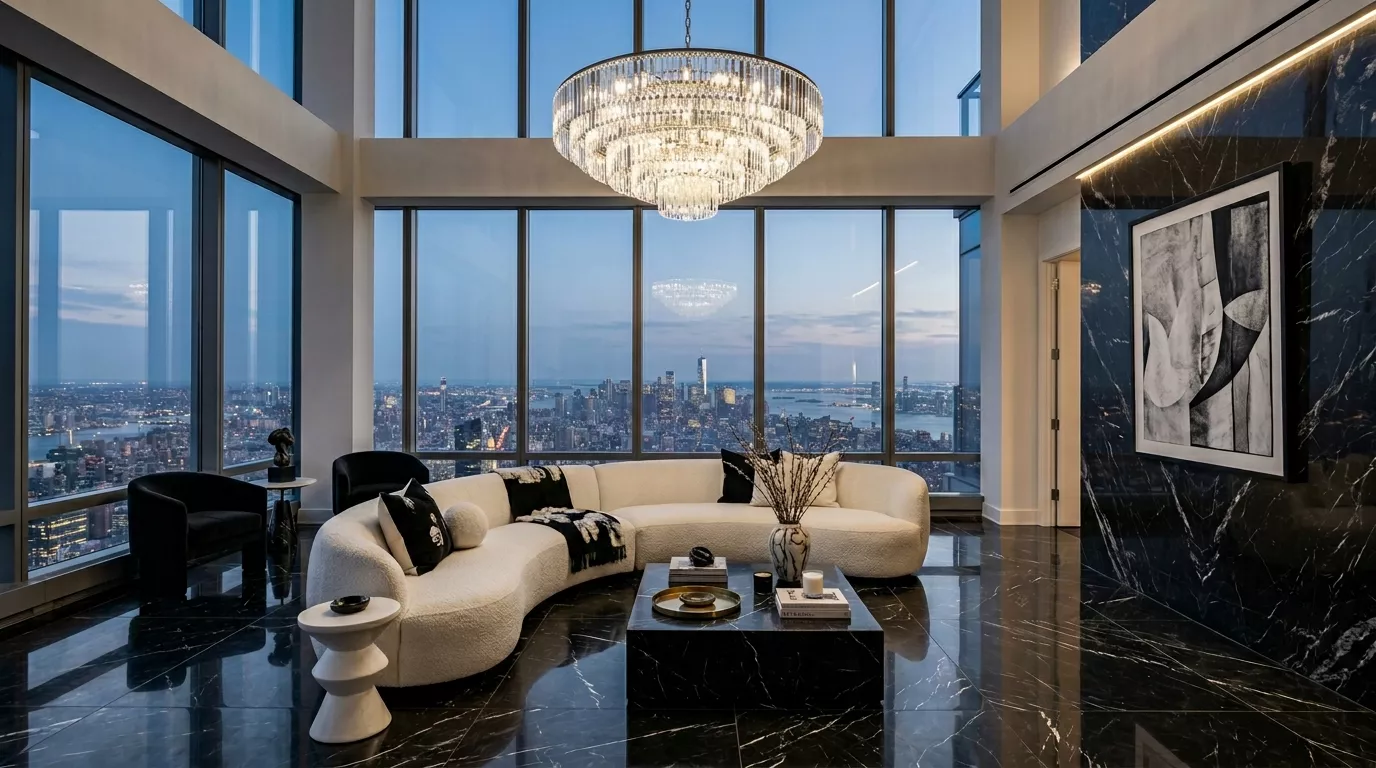
| Dusty blue + charcoal + white | Modern, crisp, grounded | Contemporary or minimalist living rooms |
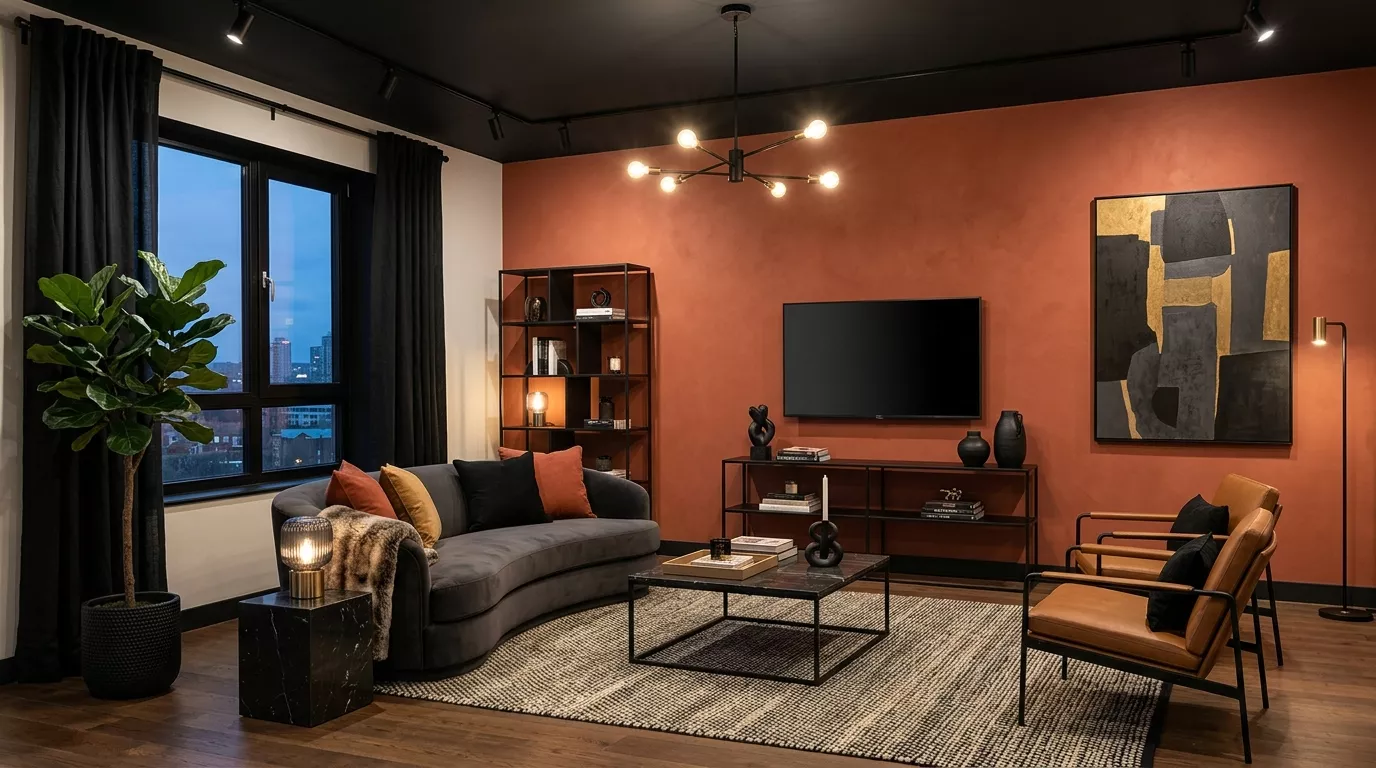
| Dusty blue + terracotta | Earthy, warm, balanced | Bohemian or eclectic living rooms |
| Dusty blue + blush pink | Soft, romantic, gentle | Smaller or feminine-leaning living rooms |
| Dusty blue + mustard yellow | Vintage-inspired, cozy | Retro or mid-century modern living rooms |
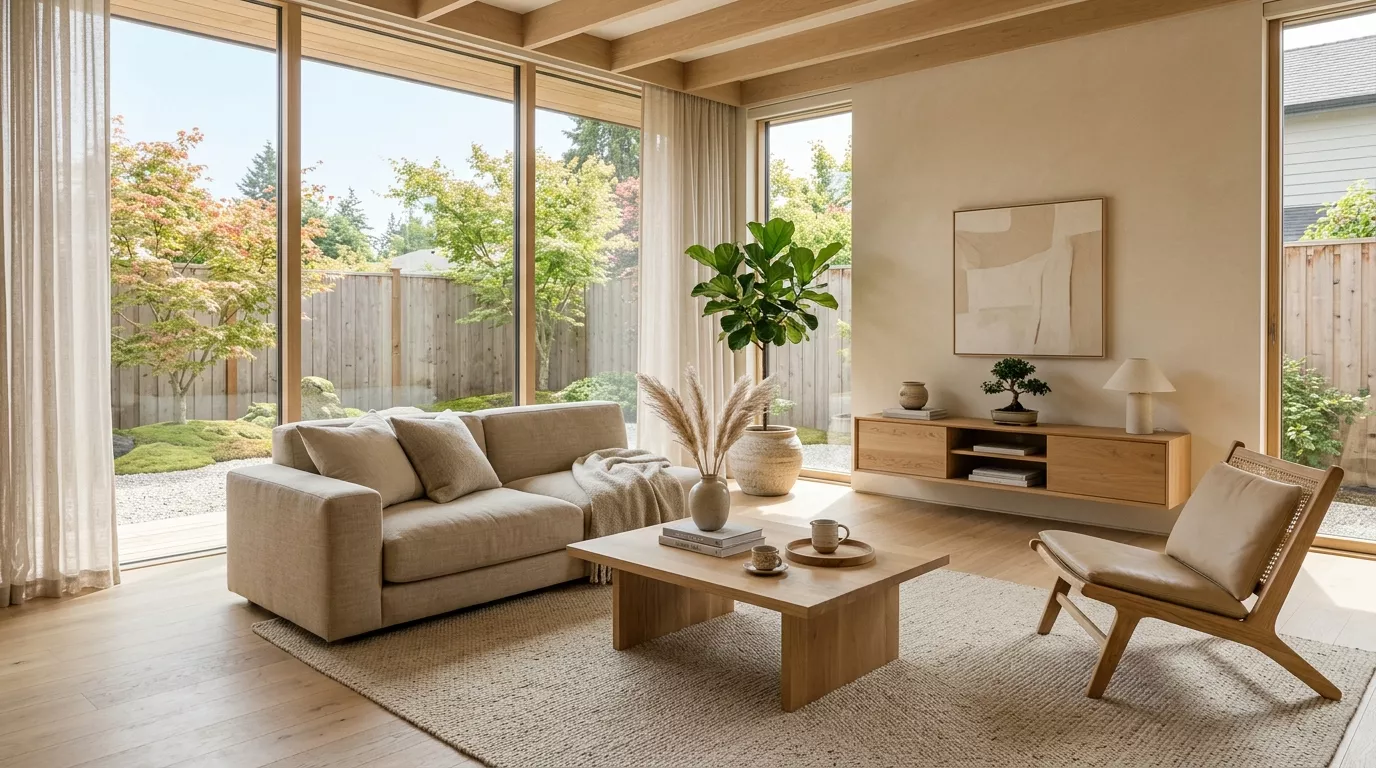
| Dusty blue + natural wood + rattan | Relaxed, Scandinavian-inspired | Small or minimalist living rooms |
A simple way to keep things cohesive: pick one pairing from this table and repeat it across at least three elements in the room — for example, the rug, the throw pillows, and a piece of art.
Dusty Blue vs Other Popular Living Room Colors
Not sure if dusty blue is the right call for your space? Here’s how it compares to other commonly used living room colors.
| Color | Mood | Maintenance/Practicality | Trend Longevity |
|---|---|---|---|
| Dusty blue | Calm, sophisticated, slightly moody | Hides dust and scuffs well | High — steady, not overly trendy |
| Warm beige | Cozy, traditional, neutral | Very forgiving, easy to maintain | Very high — a timeless default |
| Sage green | Earthy, fresh, calming | Moderate, shows some wear | High — currently very popular |
| Charcoal gray | Bold, dramatic, modern | Can show dust and lint more visibly | High — reliable, modern classic |
| Soft pink | Light, romantic, gentle | Can look dated if overdone | Moderate — trend-sensitive |
Dusty blue lands in a nice middle ground: it has more personality than beige but feels far less committal than a bold charcoal or saturated jewel tone.
Pros and Cons of a Dusty Blue Living Room
Before committing to paint cans and new furniture, it’s worth weighing the upsides against a few practical downsides.
Pros:
- Feels calming without being boring, which suits a room meant for relaxing and entertaining
- Works as a neutral-adjacent color, so it pairs with almost any existing decor
- Flatters both warm and cool metal finishes, giving you more shopping flexibility
- Hides everyday dust, light scuffs, and shadows better than bright white walls
- Suits a wide range of design styles, from coastal to modern farmhouse to traditional
Cons:
- Can look flat or gray in rooms with very little natural light
- The wrong undertone can clash with existing wood floors or furniture
- Some dusty blue paint shades vary significantly between brands, so swatches don’t always match the can
- A fully monochrome dusty blue room can feel a little cold without enough texture or warm accents
- Bold dusty blue furniture (like a sofa) is a bigger investment than a quick paint refresh
Tips for Decorating With Dusty Blue
A handful of small decisions can make a dusty blue living room look polished instead of half-finished.
- Follow a simple ratio. Let dusty blue cover roughly 50-60% of the room (walls or major furniture), with neutrals making up the rest and one accent color sprinkled throughout.
- Mix at least two textures. Smooth painted walls paired with a woven rug, linen curtains, or a knit throw keep the room from feeling flat.
- Add one warm metal finish. Brass or gold instantly keeps dusty blue from feeling too cool or clinical.
- Bring in real wood. A wood coffee table, console, or shelving unit grounds the room and adds warmth.
- Use plants generously. Greenery softens dusty blue’s cooler undertone and adds life to the space.
- Test your paint at night too. Lamp light and overhead lighting can shift dusty blue noticeably compared to how it looks during the day.
Common Mistakes to Avoid
Even a flattering color like dusty blue can fall flat without a little planning. Here’s what to watch for.
- Skipping the swatch test. Dusty blue can look completely different depending on lighting direction, so always test before committing to a full room.
- Pairing it with the wrong wood undertone. Cool-toned gray wood floors next to a warm dusty blue (or vice versa) can create an odd, slightly clashing effect.
- Going monochrome without contrast. A room that’s entirely dusty blue — walls, sofa, and curtains all matching — often looks flat instead of inviting.
- Forgetting warm accents. Without at least a touch of brass, wood, or warm neutral, dusty blue rooms can start to feel a little cold or sterile.
- Choosing a shade that’s too saturated for a small space. A deeper dusty blue can make a small, dim living room feel heavier than intended.
- Ignoring the ceiling and trim. Leaving trim a stark white sometimes creates harsh contrast; a softer off-white often blends more naturally with dusty blue walls.
Final Thoughts
Dusty blue living room ideas offer one of the most flexible ways to bring color into your home without sacrificing the calm, livable feel a living room needs. Whether you go bold with all four walls or ease in with a single accent wall and a few throw pillows, the key is balancing the coolness of the blue with warm textures, wood tones, and metallic accents.
Start small if you’re still deciding — a few dusty blue pillows or a patterned rug can tell you a lot about whether you’ll love the color before you commit to paint.
If you’re ready to give your living room a fresh, sophisticated feel, pick one element this week — a wall, a sofa, or even just a rug — and start building your dusty blue color scheme from there. Sometimes one small change is all it takes to make a room finally feel finished.
Frequently Asked Questions
1. Does dusty blue make a living room feel smaller?
Not usually. Because dusty blue has a gray undertone, it tends to recede slightly like a neutral would, rather than visually shrinking the room the way a bold, saturated color might.
2. What wood tones pair best with dusty blue walls?
Warm woods like oak, walnut, and honey-toned pine tend to balance dusty blue’s coolness nicely. Cooler gray-toned woods can work too, but they may need a warm accent elsewhere in the room to avoid feeling flat.
3. Is dusty blue too cold for a cozy living room?
Not if you balance it correctly. Pairing dusty blue with warm metals, natural wood, and soft textiles like wool or linen keeps the room feeling cozy rather than sterile.
4. Can dusty blue work in a small living room?
Yes, especially lighter or softer dusty blue shades. Smaller rooms generally do best with a single accent wall or with the color introduced through furniture and textiles rather than all four walls.
5. What’s the difference between dusty blue and regular blue?
Dusty blue has a noticeably higher gray content, which mutes the color and gives it a softer, more sophisticated look compared to a brighter, more saturated blue.
6. Does dusty blue work with patterned curtains or rugs?
Definitely. Dusty blue acts almost like a neutral, so it pairs well with patterns that include complementary tones like cream, rust, or soft gray.
7. What lighting works best with a dusty blue living room?
Warm white bulbs, generally in the 2700K to 3000K range, help keep dusty blue looking soft and inviting rather than cold or gray, especially in the evening.
8. Should I paint the ceiling dusty blue too?
It depends on the room. In living rooms with high ceilings and good natural light, a dusty blue ceiling can create a cozy, enveloping effect. In smaller or darker rooms, it’s usually safer to keep the ceiling a lighter neutral.