All White Kitchen Ideas for a Clean, Timeless Home

All White Kitchen Ideas for a Clean, Timeless Home
There’s a reason all white kitchen ideas dominate home design magazines, renovation shows, and real estate listings year after year. White kitchens feel open, clean, and endlessly adaptable — and unlike bold color choices that can feel exciting one year and exhausting the next, a well-designed white kitchen tends to age with quiet confidence.

But here’s what most people get wrong: they think “all white” means simple. It doesn’t. Getting a white kitchen right takes real thought — the right shade of white, the right textures, the right contrast, the right lighting. Done carelessly, it can feel cold, flat, or impossibly hard to keep clean. Done well, it feels like a kitchen you never want to leave.
This guide walks you through everything — design styles, cabinet options, countertop choices, backsplash ideas, hardware pairings, lighting, common mistakes, and practical steps for designing a white kitchen that’s actually livable.
Why All White Kitchens Never Really Go Out of Style
Every few years, someone declares the white kitchen dead. And every few years, it comes roaring back — because it was never really a trend to begin with. It’s a baseline.

White kitchens work because they reflect light, making spaces feel larger and brighter than they are. They photograph beautifully, which matters both for resale value and for enjoying your own space. They also serve as a neutral canvas — meaning you can change your accent colors, textiles, and accessories without touching a single cabinet.
The other practical advantage? White kitchens tend to appeal broadly when you sell. Buyers can project their own style onto a white kitchen far more easily than onto a boldly colored one.
But perhaps the best reason is this: white is not one color. It’s dozens. And the interplay between warm whites, cool whites, creamy whites, and bright whites — layered across cabinets, walls, countertops, and tile — creates a richness that most people don’t anticipate until they’re standing in a well-designed white kitchen.
All White Kitchen Ideas by Design Style
The same color can tell very different stories depending on how you style it.

Modern and Minimalist White Kitchens
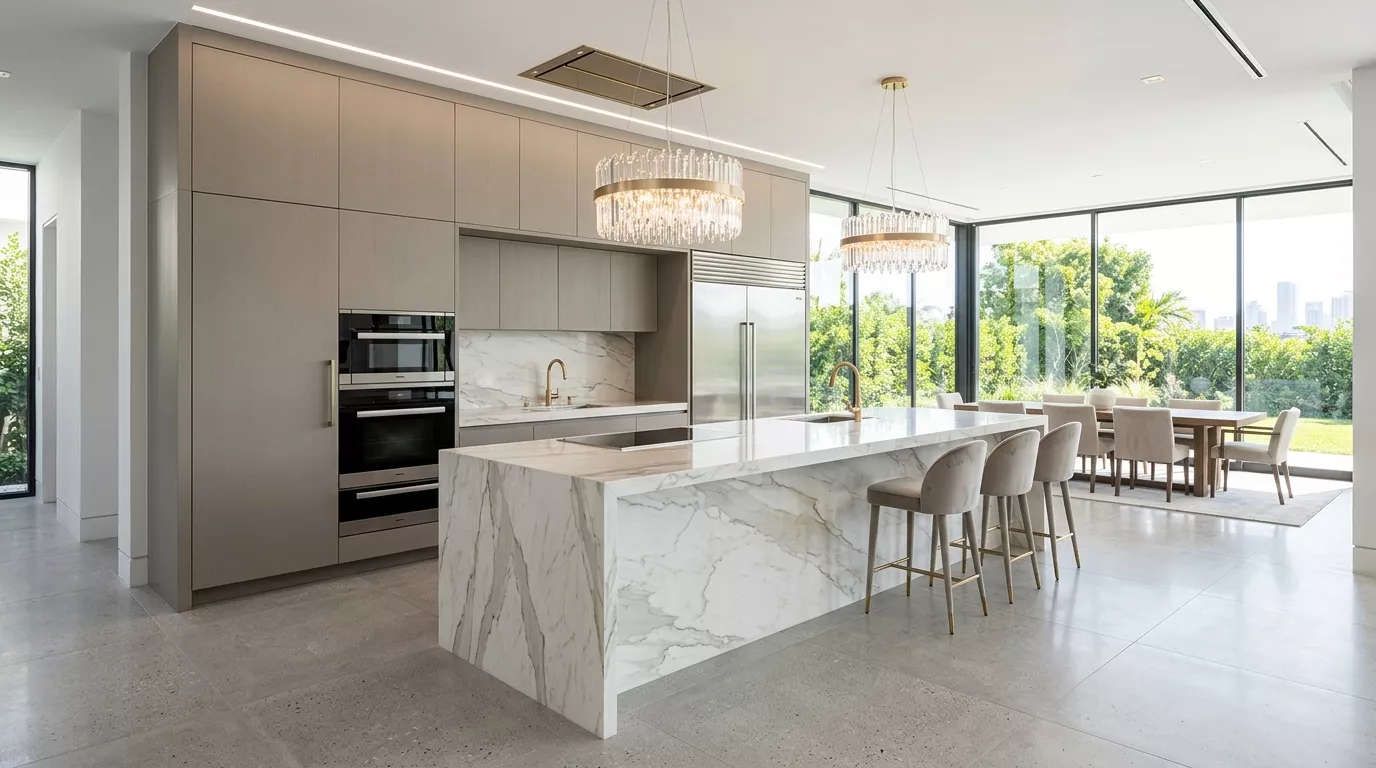
In a modern white kitchen, the emphasis is on flat-front cabinetry, invisible hardware, seamless surfaces, and architectural restraint. The white isn’t soft or warm here — it’s precise.
Key elements:
- Flat-panel or slab-door cabinets with integrated pulls or push-to-open mechanisms
- Quartz countertops in pure white or light gray
- Large-format porcelain tile floors in white or warm gray
- Under-cabinet LED lighting
- Minimal decor — a single plant, clean countertops, no fuss

This style rewards quality over quantity. The cleaner the lines, the higher the finish standard needs to be.
Traditional and Shaker Style White Kitchens
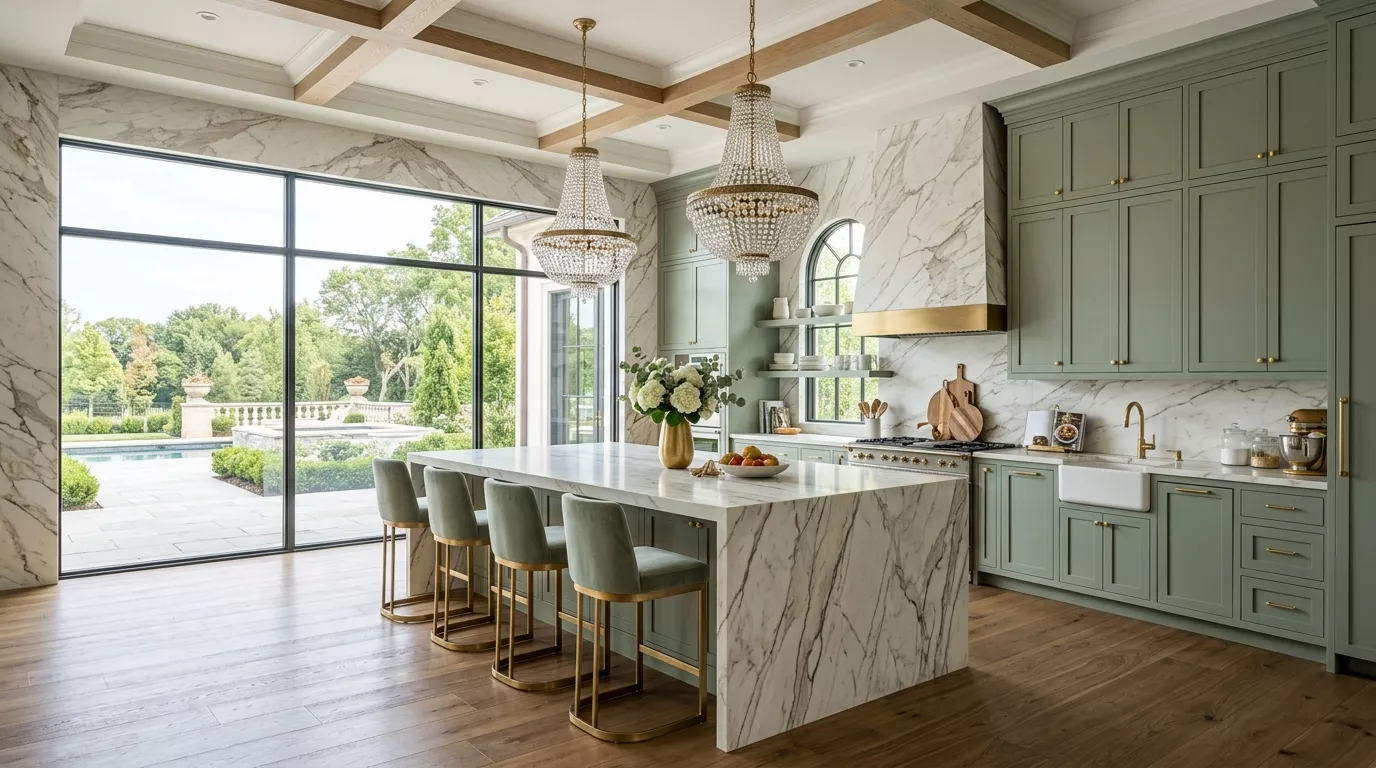
Shaker cabinets — with their simple recessed-panel doors — are the most popular cabinet style in white kitchens, and for good reason. They’re architectural without being ornate, and they suit everything from a farmhouse cottage to a classic city townhouse.
Key elements:

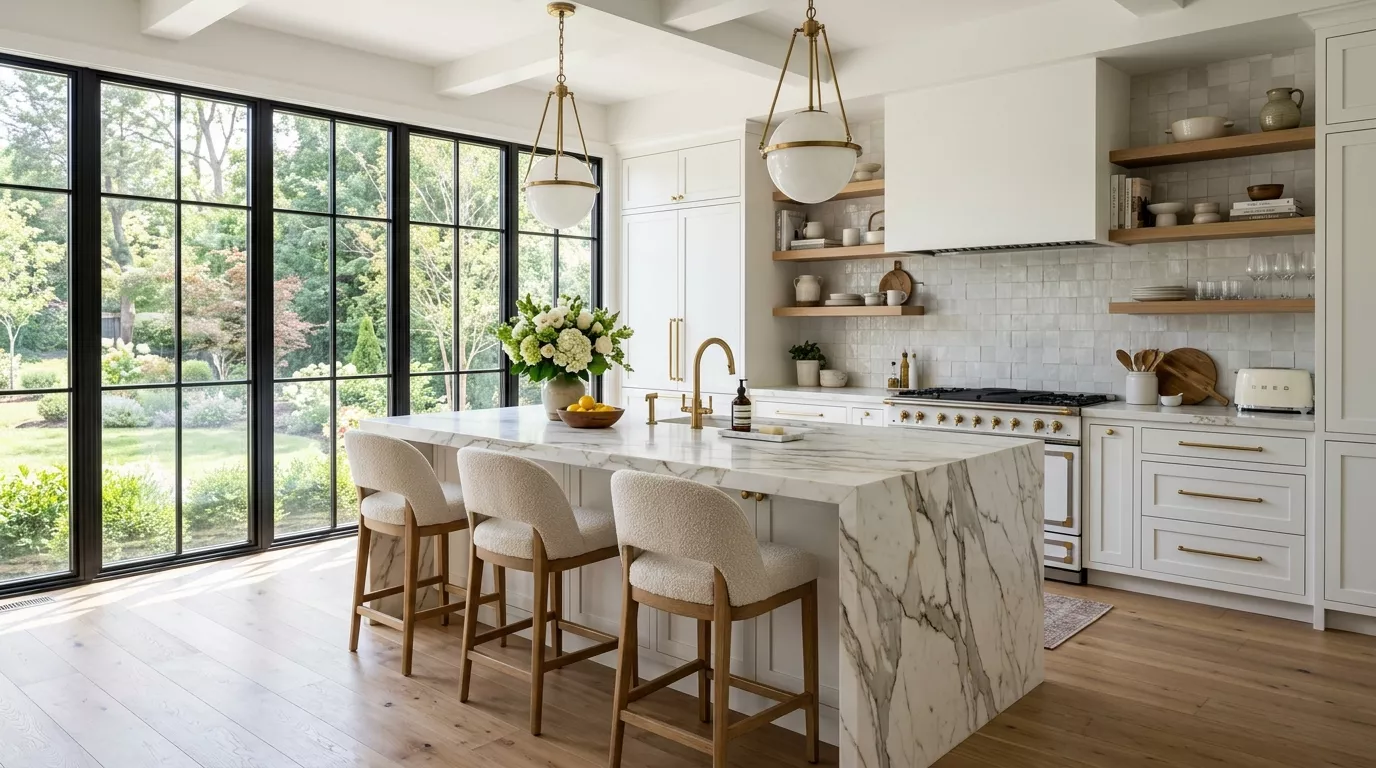
- White shaker cabinets (upper and lower, or two-tone with a colored island)
- Marble or quartz countertops with subtle veining
- Subway tile backsplash in white with contrasting grout
- Brass, brushed gold, or oil-rubbed bronze hardware
- Open shelving for a few displayed items — cookbooks, ceramics, plants
This is the white kitchen that feels most “home” — warm, livable, and classic without being stuffy.
Farmhouse and Cottage White Kitchens
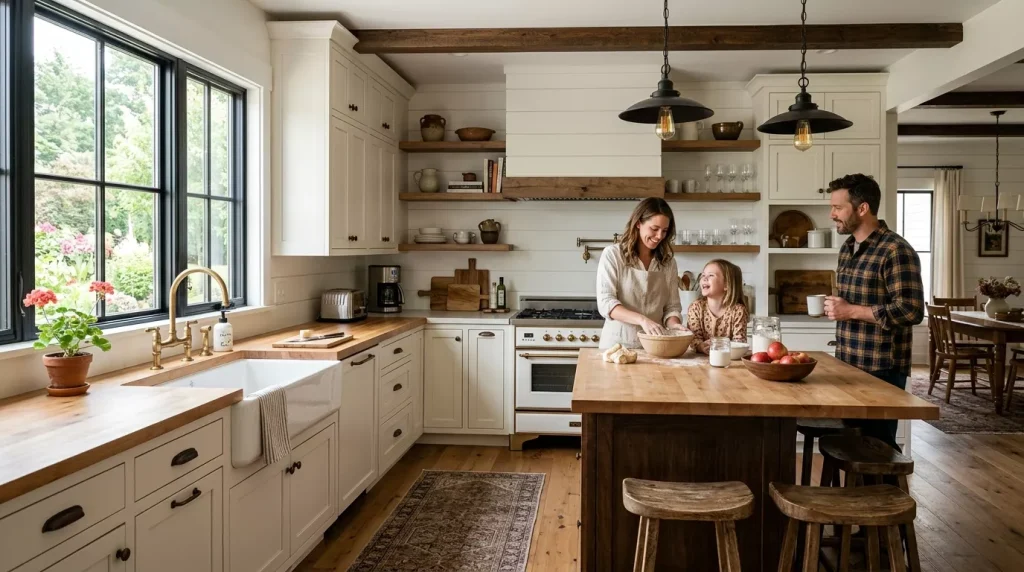
The farmhouse white kitchen leans into texture, imperfection, and character. Think beadboard, apron-front sinks, open shelving, and a mix of materials that looks collected over time rather than designed in an afternoon.
Key elements:

- Inset or beadboard-panel cabinets in a warm off-white (not a stark bright white)
- Apron-front farmhouse sink in white porcelain or fireclay
- Butcher block or honed marble countertops
- Open shelving with wooden brackets
- Vintage or antique-inspired faucets in chrome or unlacquered brass
- Patterned tile floor (black and white checkerboard is a classic)
Transitional White Kitchens
Transitional design sits comfortably between traditional and modern — and white is its native language. Clean lines but with warmth. Simple hardware but with personality. This is probably the most popular category for homeowners who want their kitchen to feel current without being style-forward.
Key elements:
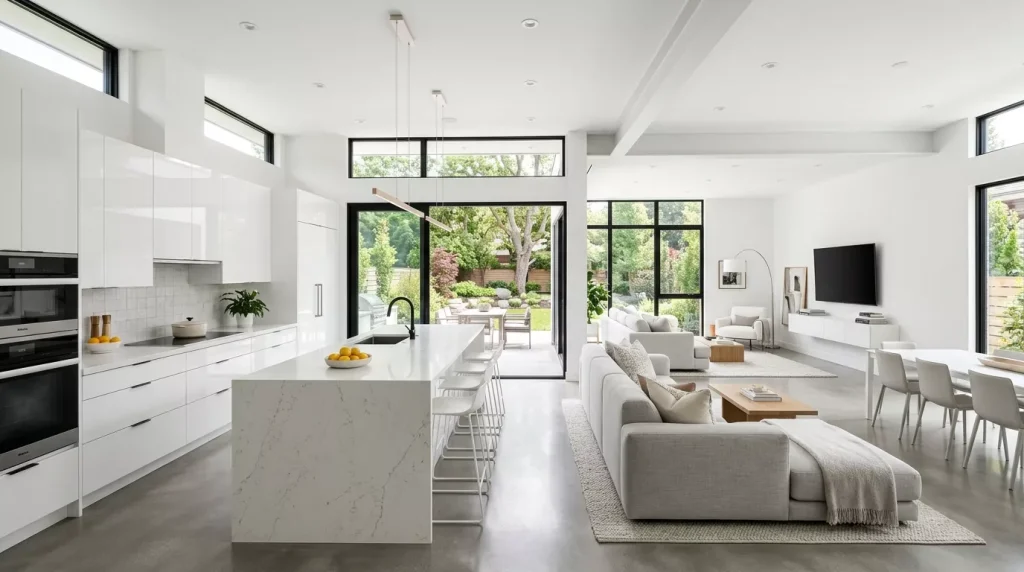
- Shaker cabinets paired with a simple quartz countertop
- Mixed metals — brushed nickel or chrome with subtle brass accents
- A white subway tile or zellige backsplash
- White upper cabinets with a slightly different tone or warm wood lower cabinets
- Warm white LED lighting throughout
Choosing the Right Shade of White — This Is Everything
If you take nothing else from this guide, take this: not all whites are the same, and choosing the wrong one is the most common mistake in white kitchen design.
White paint and cabinet finishes come in warm, cool, and neutral tones — and your choice should respond to your kitchen’s light source, your flooring, and your countertops.

| White Tone | Undertone | Best Pairing | Avoid Pairing With |
|---|---|---|---|
| Bright white | None / blue-gray | Modern, cool gray countertops | Warm wood, cream tile |
| Warm white | Yellow or cream | Traditional, wood accents | Cool gray or slate |
| Off-white / Cream | Beige or yellow | Farmhouse, marble counters | Stark white appliances |
| Soft white | Pink or gray | Transitional, mixed materials | Deeply warm wood tones |
The safest approach: test your chosen white on the actual cabinet or wall surface, in your kitchen’s light, at different times of day. Morning light and evening artificial light will often read the color completely differently.
All White Kitchen Countertop Options
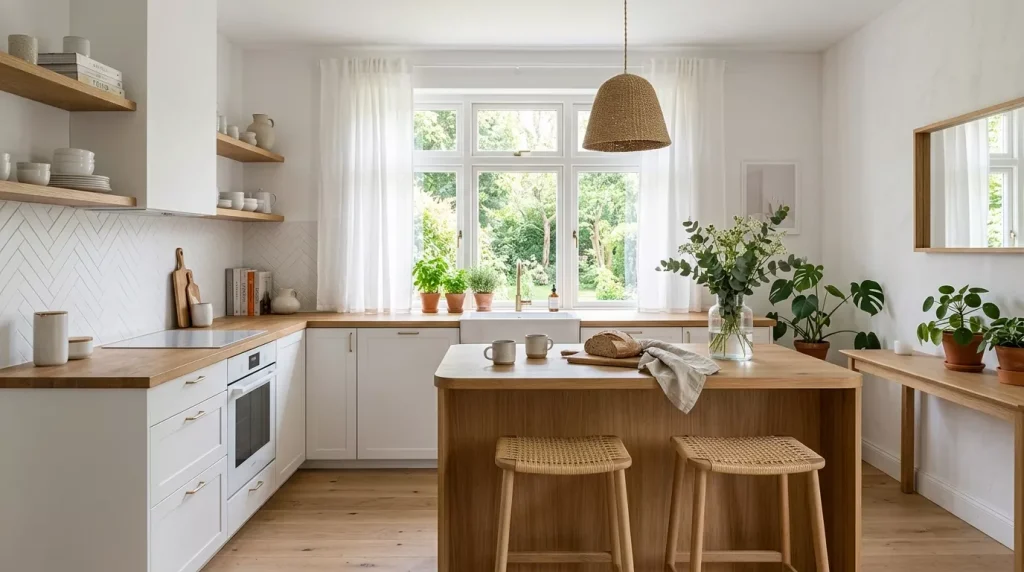
Countertops are where white kitchens often get their most character — because “all white” doesn’t mean “all flat.”
Marble: The dream option for many. Carrara marble in particular has a soft white base with gray veining that adds depth without introducing color. It’s beautiful and genuine — but it’s also porous and requires sealing. It’s not for everyone’s lifestyle.
Quartz: The practical answer to marble. White quartz options like Calacatta Gold-look or Silestone White Storm give you the visual richness of marble with far better durability and zero maintenance. For busy kitchens, this is usually the smarter call.
Butcher block: A warm white kitchen with a butcher block countertop (in maple or ash) is one of the most livable, beautiful combinations in residential design. The wood adds warmth and texture that prevents the kitchen from feeling clinical. It does require oiling and care, but it ages with genuine character.
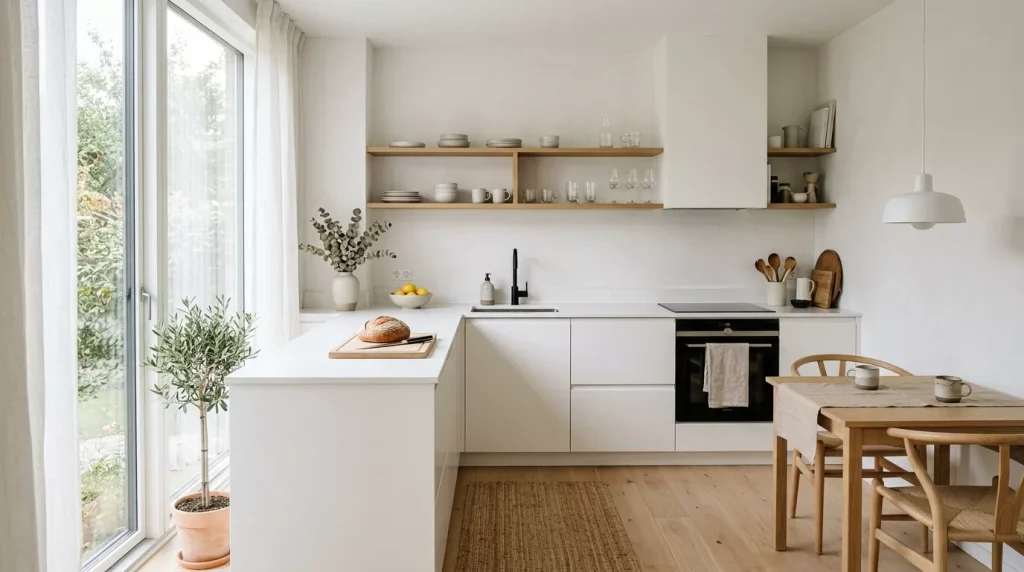
Concrete: Polished or matte concrete in a light gray-white tone creates a distinctly modern, industrial-leaning surface. It works especially well with flat-front cabinetry and matte black fixtures.
Honed Calacatta Marble: For kitchens that want softness over shine, honed marble (matte finish) reads more casual and tactile than polished — less hotel, more home.
Backsplash Ideas for an All White Kitchen
The backsplash is one of the best places to add visual interest in a white kitchen without introducing color.
Classic white subway tile: The most versatile choice. Standard 3×6 subway tiles in white with light or contrasting grout are clean, timeless, and work with virtually every cabinet style.
Zellige tile: Handmade, slightly irregular Moroccan tile with a glossy, uneven surface. In white, zellige creates a living shimmer that shifts with the light — it’s simple in color but complex in texture.
Large-format slab backsplash: A single piece of marble or porcelain slab behind the cooktop eliminates grout lines and creates a seamlessly luxurious look. Particularly strong in modern kitchens.

Herringbone tile: White tiles laid in a herringbone pattern add geometry and movement without color. Works in both traditional and transitional kitchens.
Beadboard paneling: In farmhouse or cottage kitchens, painted white beadboard as a backsplash is affordable, charming, and perfectly on-character.
Fluted or ribbed tile: A newer choice gaining popularity — vertical ribbing in white creates shadow and dimension that flat tile can’t match.
Hardware and Fixtures: Where Personality Lives in an All White Kitchen
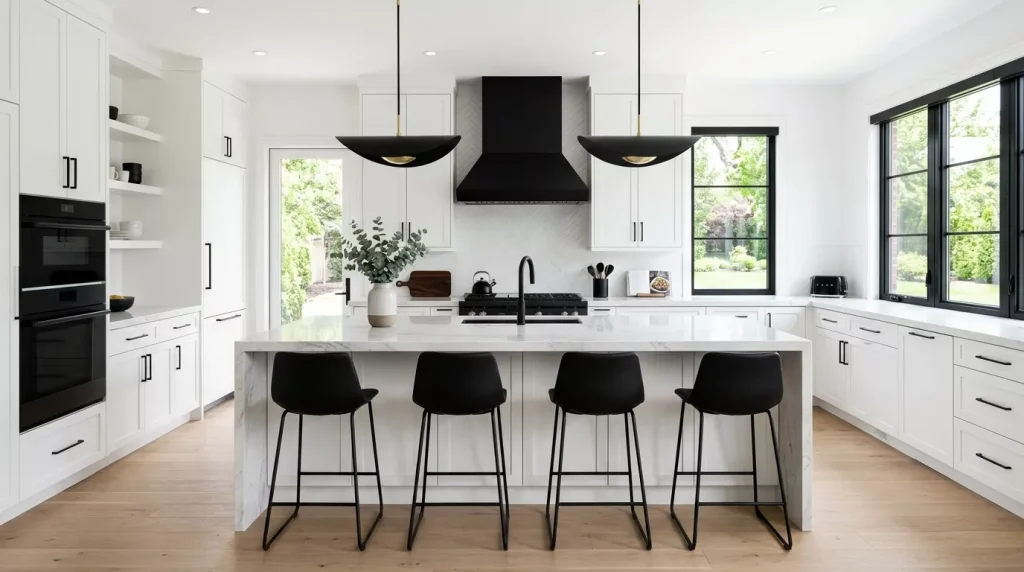
In an all white kitchen, hardware and fixtures carry an outsized design load. They’re often the first thing people notice — and they anchor the whole style direction.
| Hardware Finish | Style Direction | Mood |
|---|---|---|
| Polished brass | Traditional, maximalist | Warm, glamorous |
| Brushed gold | Transitional, modern | Warm, refined |
| Brushed nickel | Transitional, clean | Neutral, versatile |
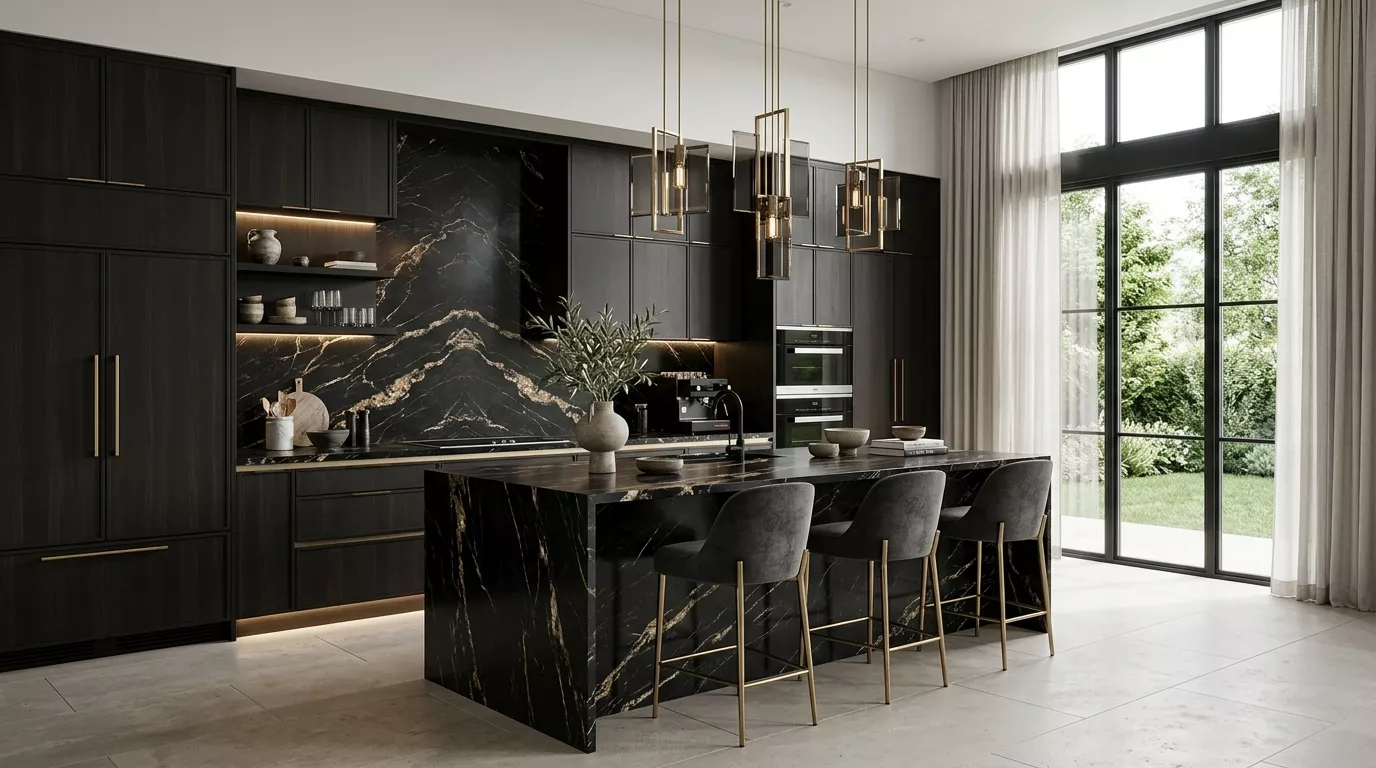
| Matte black | Modern, contemporary | Bold, graphic |
| Chrome | Modern, classic | Crisp, clean |
| Oil-rubbed bronze | Farmhouse, rustic | Dark, warm, characterful |
| Unlacquered brass | Vintage, eclectic | Warm, aged, living finish |
Rule of thumb: Choose one finish and use it consistently — cabinet pulls, faucet, pendant lights, and towel hooks. Mixing metals is possible but requires experience. When in doubt, commit to one.

The sink is also a statement in a white kitchen. An apron-front farmhouse sink in white fireclay pairs beautifully with traditional or farmhouse styles. An undermount sink in stainless or white keeps the countertop seamless and clean for modern kitchens.
Lighting for All White Kitchens
White kitchens need warm, layered lighting. Without it, all that white can feel washed out or hospital-like.
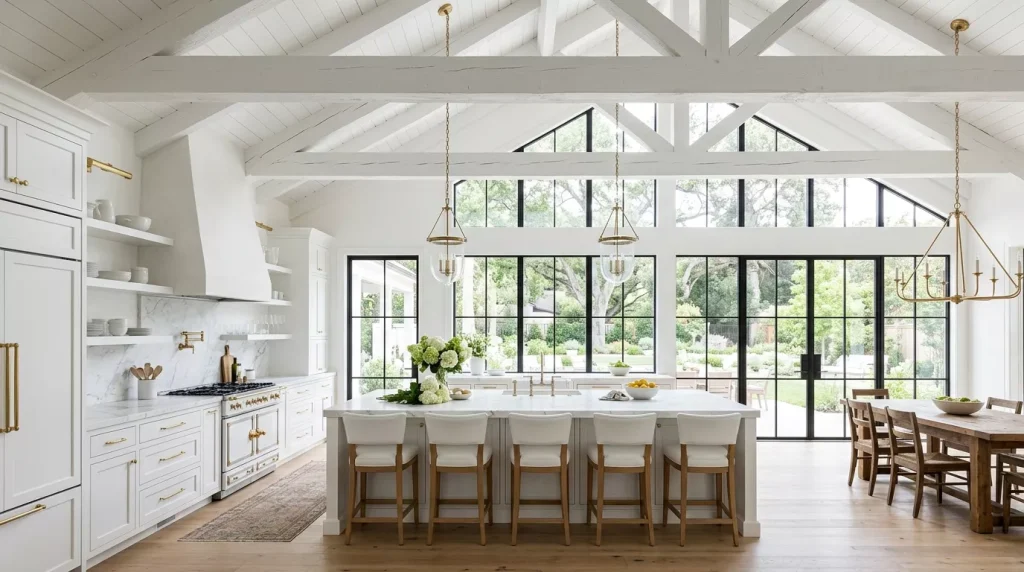
Pendant lights: Over an island, pendants are both functional and decorative. Choose fixtures in brass, black, or a sculptural ceramic that introduces a material element. Avoid purely industrial or overly quirky styles that clash with a clean white backdrop.
Under-cabinet lighting: Non-negotiable in a white kitchen. It adds task lighting exactly where you need it and creates a warm ambient glow at night. LED strips in a warm white (2700K–3000K) are the best option.

Recessed lighting: Works as a base layer for ambient light, but should never be your only source. Too much recessed lighting in a white kitchen creates a flat, showroom feel.
Statement ceiling fixture: In kitchens without an island, a single statement fixture — a lantern, a drum shade, or a sculptural pendant — anchors the room visually.
Natural light: If your kitchen has good window exposure, don’t fight it with heavy curtains. Sheer linen panels or no window treatment at all keeps light flowing and makes the white palette sing.
Pros and Cons of an All White Kitchen
| Pros | Cons |
|---|---|
| Timeless and broadly appealing | Shows dirt, grease, and stains more visibly |
| Makes any kitchen feel larger and brighter | Requires regular cleaning and maintenance |
| Versatile canvas for changing decor | Can feel cold or sterile if poorly executed |
| Increases resale appeal | All-white appliances can look flat without contrast |
| Pairs with any accent color or material | Choosing the wrong white tone is an easy mistake |
| Photographs beautifully | Bold design risks fall flat without texture |
Step-by-Step Guide: How to Design an All White Kitchen

Step 1: Decide your white tone first Before you choose cabinets, countertops, or anything else, identify your light conditions and choose your white tone — warm, cool, or neutral. Everything else flows from this decision.
Step 2: Choose your cabinet style Flat-front for modern. Shaker for transitional or traditional. Inset or beadboard for farmhouse. Match the cabinet profile to the overall home style, not just the kitchen in isolation.
Step 3: Select your countertop material Pick your countertop based on how you actually use your kitchen. High-traffic family kitchen? Quartz. Occasional cooking, love aesthetics? Marble. Want warmth and character? Butcher block.

Step 4: Choose your backsplash Use the backsplash to introduce texture, not color. Zellige for artisanal warmth, subway tile for timeless simplicity, slab for seamless luxury, fluted tile for contemporary depth.
Step 5: Pick your hardware and fixtures Commit to one metal finish and apply it throughout — pulls, faucet, light fixtures, and accessories. This single decision has more visual impact than most people expect.
Step 6: Plan your lighting layers Install recessed lighting as a base, then add under-cabinet strips, and select pendants or a statement fixture. Set all of them on dimmers.
Step 7: Bring in texture and organic elements A white kitchen without texture reads sterile. Wood cutting boards, a ceramic fruit bowl, linen dish towels, a small herb garden on the windowsill — these small elements give the kitchen life and make the white feel intentional rather than default.
Common Mistakes to Avoid
1. Using one flat white throughout White walls + white glossy cabinets + white glossy tile = a room that feels like a dentist’s office. Vary your finishes — matte walls, satin cabinets, glossy tile — for depth.
2. Skipping contrast entirely An all-white kitchen without any contrast element looks unfinished. Contrast comes from hardware, grout lines, countertop veining, wood accents, or a statement light fixture. You don’t need color — you need contrast.
3. Ignoring undertones Warm-white cabinets next to cool-white walls will look dirty or mismatched. Always check undertones before committing.
4. Choosing purely decorative lighting A beautiful pendant over an island that casts poor light defeats the purpose. Always balance aesthetics with actual lumens and color temperature.
5. Forgetting about floor color White kitchens often look floating and disconnected when the floor is too similar in tone. A wood floor, dark tile, or patterned tile grounds the space and prevents it from looking blank.
6. Over-cluttering the countertops The reason white kitchens look so good in photos is because of negative space. Real life creep — appliances, mail, kids’ stuff — destroys the look. Plan your storage carefully and keep countertops edited.
Tips for a Better All White Kitchen
- Use two slightly different whites — one for uppers, one for lowers or the island — to create visual interest without introducing color
- Choose warm white LED bulbs (2700K–3000K) to keep the kitchen from feeling cold under artificial light
- Incorporate one natural material — wood, stone, or linen — to prevent a clinical feel
- Install a bold faucet as a statement piece; in a white kitchen, even a beautiful tap becomes sculptural
- Use open shelving for a few carefully chosen items — white kitchens benefit from a little deliberate display
- Add a potted herb or trailing plant near the window for life and color without disrupting the palette
- Consider a non-white grout on white subway tile — charcoal or warm gray grout makes the tile pattern readable and prevents a blank-wall effect
FAQs: All White Kitchen Ideas
Q1: Are all white kitchens hard to keep clean?
They do show grease splatters, water spots, and fingerprints more readily than darker kitchens — but that doesn’t mean they’re impossible to maintain. The key is choosing surfaces that are easy to wipe down. Quartz countertops, porcelain tile backsplashes, and painted cabinets in a satin or semi-gloss finish all clean easily with a damp cloth. The kitchens that struggle are ones with painted flat-finish cabinets or unsealed marble — those require more care. With the right material choices, a white kitchen is no harder to maintain than any other color.
Q2: What accent colors work best with an all white kitchen?
Almost anything works, which is part of the appeal. For warmth, go with brass hardware, warm wood, or terracotta accessories. For freshness, sage green plants or linen dish towels in olive are beautiful. For drama, matte black fixtures or dark-veined marble countertops provide contrast. Natural wood — whether flooring, open shelves, or a butcher block section — is probably the most universally flattering accent in a white kitchen because it adds warmth without introducing a competing color.
Q3: Should I use the same white for cabinets and walls?
Not necessarily — and often it’s better if you don’t. Using the exact same white on cabinets and walls can make the kitchen feel like one flat surface. A slightly warmer white on the walls (or even a soft warm gray) with a crisper white on the cabinets creates definition and makes the cabinetry stand out architecturally. Test both options on actual surfaces in your kitchen before deciding.
Q4: What flooring works best in an all white kitchen?
Wide-plank hardwood in a warm honey, medium oak, or natural tone is the most popular pairing — it grounds the white palette with warmth and texture. For a more contemporary look, large-format light gray or warm-toned porcelain tile keeps the clean aesthetic while providing contrast underfoot. Checkerboard tile (black and white, or navy and white) works beautifully in farmhouse or vintage-style white kitchens. Avoid very dark floors in small white kitchens — they can feel dramatic in large spaces but heavy in smaller ones.
Q5: Is an all white kitchen a good idea if I have children or pets?
It can be, with the right material choices. The concern is legitimate — kids and pets mean more mess — but it’s manageable. Opt for quartz (not marble) countertops, choose cabinets in a semi-gloss or satin finish that wipes clean, and use porcelain tile rather than painted backsplash panels. A wood floor with a good polyurethane coating is easier to maintain than carpet or unsealed stone. The bigger adjustment is mental: accepting that a kitchen is a working room, and that wipe-down maintenance is just part of owning a white one.
Q6: How do I make a small kitchen look good in all white?
White is genuinely one of the best colors for small kitchens because it reflects light and reduces visual weight. Maximize the effect by keeping upper cabinets full-height (extending to the ceiling), choosing integrated or push-to-open hardware to reduce visual clutter, installing under-cabinet lighting, and using a light-toned floor. A large mirror or mirrored backsplash can also expand the sense of space. The key mistake in small white kitchens is over-decorating — keep countertops clear and let the white space do its job.
Conclusion: The White Kitchen Is Worth Getting Right
All white kitchen ideas earn their enduring popularity because they deliver something rare in design: a space that feels simultaneously simple and sophisticated, calm and alive, timeless and current.
The secret isn’t in choosing white. It’s in choosing the right white, pairing it with the right textures and finishes, layering light thoughtfully, and editing ruthlessly. A white kitchen isn’t a blank canvas — it’s a deliberate one.
Whether you’re designing from scratch, planning a full renovation, or just looking for a few changes that make your existing kitchen feel more cohesive, start with the fundamentals in this guide. Get your white tone right. Choose materials that suit your lifestyle. Commit to one hardware finish. Layer in warmth through wood, lighting, and organic elements.
The white kitchen you’ve been saving to your inspiration board is completely achievable — start with one decision today and build from there.